
Mhealth Apps Market Outlook: Size, Share, Trends, Growth Analysis, Competitive Landscape & Forecast, 2026-2033

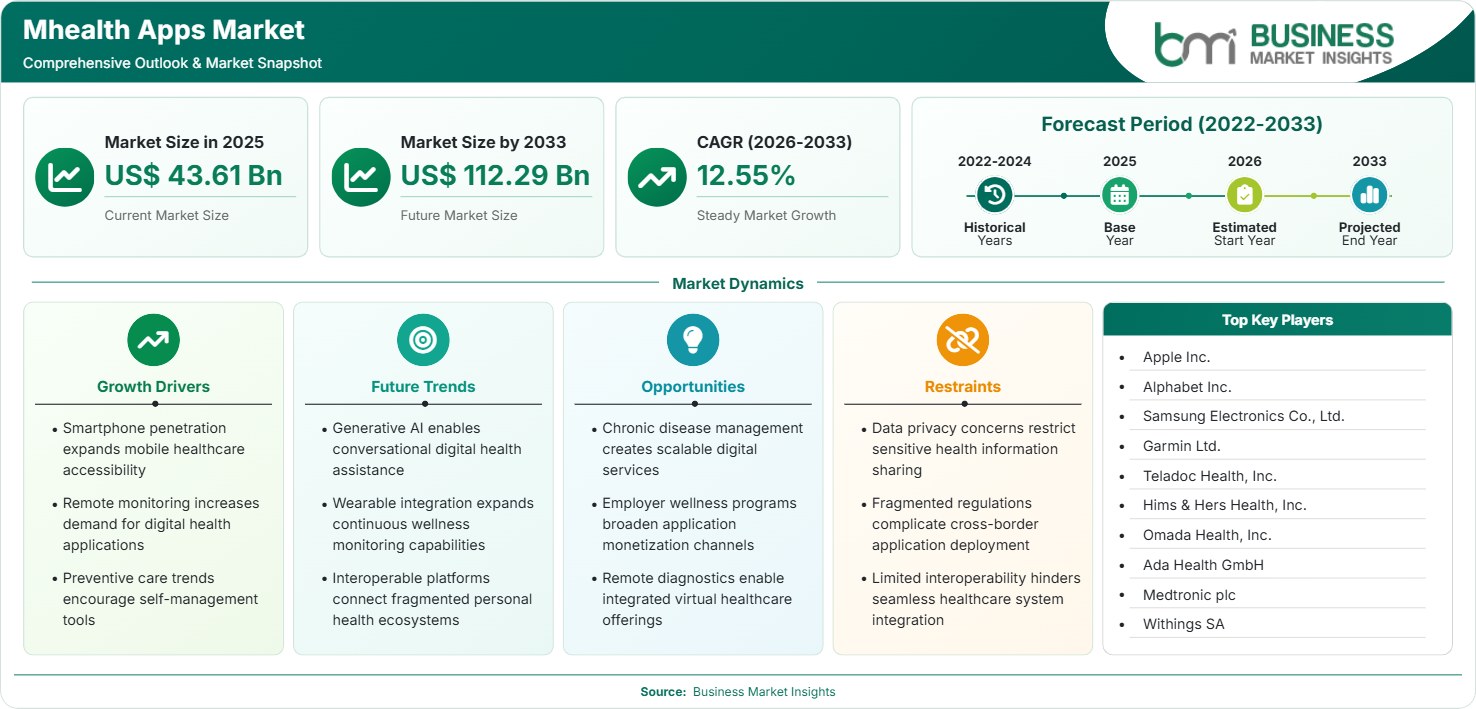
The Mhealth Apps Market size was valued at US$ 43.61 Billion in 2025 and is projected to reach US$ 112.29 Billion by 2033, growing at a CAGR of 12.55% during 2026–2033, driven by connected monitoring, personalized wellness, chronic disease management, and expanding digital care ecosystems.

Report Coverage
  • App Type: Disease & Treatment Management, Wellness Management, Others
  • Application: Monitoring Services, Fitness Solutions, Diagnostic Services, Treatment Services, Others
  • Market Place: Google Play Store, Apple App Store, Others
US$ 43.61 Bn Market size in 2025
US$ 112.29 Bn Market Size by 2033
12.55% CAGR, 2026 - 2033
2026-2033 Forecast Period

AI Overview

Mhealth Apps Market Summary

  • North America Region: North America holds a Mhealth Apps Market share of 35%–38% in 2025, growing with a CAGR of 12.8%–13.6%, influenced by connected care adoption, high digital health spending, chronic disease management, wearable integration, reimbursement opportunities, and mature smartphone infrastructure. The US remains the regional anchor, supported by employer-sponsored digital care, health-plan integration, remote monitoring, and consumer wellness subscriptions, with a 12.9%–13.7% CAGR during 2026–2033.
  • Fastest Growing Region: Asia Pacific holds a market share of 25%–29% in 2025, growing with a CAGR of 14.0%–15.0%, supported by smartphone penetration, expanding telehealth infrastructure, affordable applications, government digital-health programs, rising chronic disease burdens, and increasing investment across India, China, Japan, and Southeast Asia.
  • Leading Segment: Wellness Management holds a market share of 45%–49% in 2025, growing with a CAGR of 12.0%–12.8%, supported by fitness tracking, nutrition planning, stress management, wearable synchronization, subscription models, preventive-health awareness, and consumer preference for continuous lifestyle monitoring through smartphones.
  • High Growth Segment: Diagnostic Services holds a Mhealth Apps Market share of 10%–14% in 2025, growing with a CAGR of 14.5%–15.5%, driven by smartphone-enabled screening, connected sensors, home testing, artificial intelligence, image analysis, decentralized diagnostics, and integration between consumer applications and clinical workflows.
  • Key Market Opportunity: The strongest opportunity lies in applications connecting consumer-generated health data with clinical systems, enabling personalized prevention, continuous monitoring, medication adherence, early intervention, and outcome-based digital care models across underserved populations.
  • Major Market Players: Apple Inc.; Alphabet Inc.; Samsung Electronics Co., Ltd.; Garmin Ltd.; Teladoc Health, Inc.; Hims & Hers Health, Inc.; Omada Health, Inc.; Ada Health GmbH; Medtronic plc; Withings SA.
Strategic Insights

Mhealth Apps Market: Strategic Insights

Mhealth Apps Market Strategic Framework
FREE PDF
Request your free sample
Request free sample
Stakeholder View

Key Takeaways

  • The ecosystem is evolving from app developers competing for downloads toward interconnected platforms combining software, devices, healthcare providers, insurers, pharmacies, and data infrastructure. Competitive strength increasingly depends on interoperability, recurring engagement, clinical credibility, and the ability to convert user-generated data into actionable services.
  • Disease and treatment management offers substantial commercial upside because recurring medication reminders, chronic-condition monitoring, pregnancy support, and disease-specific workflows create frequent interaction. Applications that connect users with clinicians, pharmacies, diagnostic providers, or insurers can develop stronger monetization pathways than advertising-led wellness models.
  • Artificial intelligence is becoming a product-layer differentiator rather than a standalone feature. Generative interfaces, predictive alerts, automated summaries, personalized coaching, and multimodal data interpretation can improve engagement, although providers must establish safeguards against inaccurate health recommendations.
  • Asia Pacific presents a compelling investment case because mobile-first healthcare delivery can bypass infrastructure limitations associated with conventional care. India, China, Japan, and Southeast Asian markets provide diverse opportunities across affordable wellness applications, remote monitoring, digital diagnostics, and localized disease-management services.
  • Investment and M&A activity increasingly favors platforms capable of combining virtual care, consumer engagement, connected devices, and clinical services. Teladoc Health’s 2025 acquisition of UpLift and its broader connected-care strategy illustrate how established platforms are expanding capabilities through targeted consolidation.
  • App-store economics remain strategically important because discoverability, ratings, privacy disclosures, subscription conversion, and platform policies influence customer acquisition. Developers therefore increasingly balance direct-to-consumer distribution with employer, insurer, provider, and device partnerships.
Geographic Outlook

Mhealth Apps Market Regional Highlights

North America Mhealth Apps Market

North America had a market share of 35% - 38% in 2025 and is projected to grow at 12.8% - 13.6% during the forecast period of 2026 - 2033. North America has developed digital health technology, healthcare spending, reimbursement systems, and wearables. The US Mhealth Apps Market is the key revenue source, while Canada helps grow the market through the adoption of virtual care and connected monitoring. The applications related to the management of chronic diseases, mental health, and employer-based healthcare will have significant commercial viability.

  • Health applications increasingly integrate wearable measurements, virtual consultations, medical records, and care-management workflows, enabling providers to maintain patient engagement between appointments and identify changes requiring intervention.
  • Employers increasingly use wellness and behavioral-health applications to support workforce engagement, preventive care, stress management, and chronic-condition programs while seeking measurable utilization and outcome improvements.
  • Applications with APIs, electronic health record connectivity, and structured data-sharing capabilities gain competitive advantages because providers require mobile platforms that complement established clinical workflows.
  • Venture and strategic investment increasingly favors platforms combining software with diagnostics, monitoring, virtual care, and personalized coaching rather than isolated lifestyle applications.

US Mhealth Apps Market

The US accounts for 82%–86% of North American revenue in 2025 and is projected to see a 12.9%–13.7% CAGR in the Mhealth Apps Market over 2026–2033. Healthy healthcare expenditure, employer-sponsored benefit programs, inclusion in insurance plans, consumer willingness to pay for subscriptions, and advanced digital infrastructure drive adoption of applications. According to Teladoc Health, over 93 million Americans had access to at least one of its products or services in 2025.

  • Health plans increasingly use mobile interfaces to coordinate benefits, encourage adherence, deliver coaching, and connect members with virtual or in-person care pathways.
  • Premium wellness services increasingly monetize personalized coaching, advanced analytics, nutrition programs, sleep insights, and connected-device functionality through recurring subscription models.
  • AI-enabled health assistants are moving into mainstream consumer platforms, creating opportunities for personalized guidance while increasing demand for safety controls, evidence-based outputs, and transparent limitations.

Europe Mhealth Apps Market

Europe accounted for 24%–27% in 2025 and is projected to grow at a CAGR of 11.7%–12.5% in the Mhealth Apps Market during 2033. Germany continues to be a key market owing to healthcare digitization, reimbursement systems, and technological adoption. The United Kingdom and France represent further scale owing to the development of virtual care and public health digitization. Spain and Italy present lucrative opportunities owing to the increasing adoption of consumer wellness, mobile phone monitoring, and chronic disease management services.

  • Germany's digital-health reimbursement pathways and structured healthcare digitization support applications capable of demonstrating clinical value and integration with established providers.
  • United Kingdom NHS-oriented digital transformation creates demand for remote monitoring, appointment support, self-management, and applications that improve patient access without increasing clinical workload.
  • France public and private healthcare modernization supports applications focused on chronic disease management, prevention, medication adherence, and patient communication.
  • High-growth markets Spain and Italy offer expanding opportunities as consumer wellness adoption combines with increasing demand for accessible digital services and remote health management.

Asia Pacific Mhealth Apps Market

Asia Pacific region had a market share of 25%-29% in 2025 and is expected to have a CAGR of 14.0%-15.0% till 2033; consequently, this region is estimated to become the fastest-growing regional Mhealth Apps Market. Opportunities in the region stem from China, Japan, and India, while Southeast Asia plays an indirect role through mobile-first health care services. Factors such as affordable mobile phones, increased broadband availability, digitization policies, urbanization, and the need to manage chronic diseases would contribute to the adoption of the technology.

  • India's mobile-first healthcare models can expand access to wellness, teleconsultation, medication reminders, and chronic-condition support while addressing geographic differences in provider availability.
  • China's large digital ecosystems, sophisticated consumer platforms, and connected-device adoption create opportunities for integrated wellness, monitoring, diagnostics, and disease-management applications.
  • Japan's aging population and strong healthcare technology infrastructure support applications focused on medication adherence, remote monitoring, rehabilitation, and long-term condition management.
  • Southeast Asia's smartphone-led access, expanding digital payments, and uneven physical healthcare infrastructure create demand for affordable applications supporting prevention, telehealth, and health information access.

Rest of World Mhealth Apps Market

Rest of World held a 12%–15% market share in 2025 and is expected to expand at a 11.0%–12.0% CAGR during the forecast period in the Mhealth Apps Market. The growing use of smartphones, private funding for digital health services, and virtual consultations have been instrumental in the growth in South and Central America. Brazil and Mexico represent valuable business opportunities, while the Middle East is benefiting from its digital transformation initiatives. Markets in the Gulf region feature strong technology investments, while Africa offers future growth through a mobile-first approach to delivering care and decentralization of health monitoring.

Brazil represents the largest opportunity in Latin America, with Mexico and Colombia representing growth opportunities in the region. In the Middle East and Africa, Saudi Arabia, the United Arab Emirates, and South Africa are major markets, supported by healthcare modernization, connectivity investment, and growing interest in remote services.

  • Brazil and Mexico consumer digital-health adoption creates opportunities for localized applications combining virtual care, wellness management, prescription support, and chronic-condition engagement.
  • Gulf market national healthcare transformation programs encourage investments in digital infrastructure, artificial intelligence, connected monitoring, and patient-facing applications.
  • South Africa mobile health platforms can improve continuity of care where geographic and provider constraints make conventional follow-up difficult.
  • Regional localization, multilingual interfaces, low-bandwidth functionality, local payment options, and culturally relevant health content can improve adoption across fragmented emerging markets.
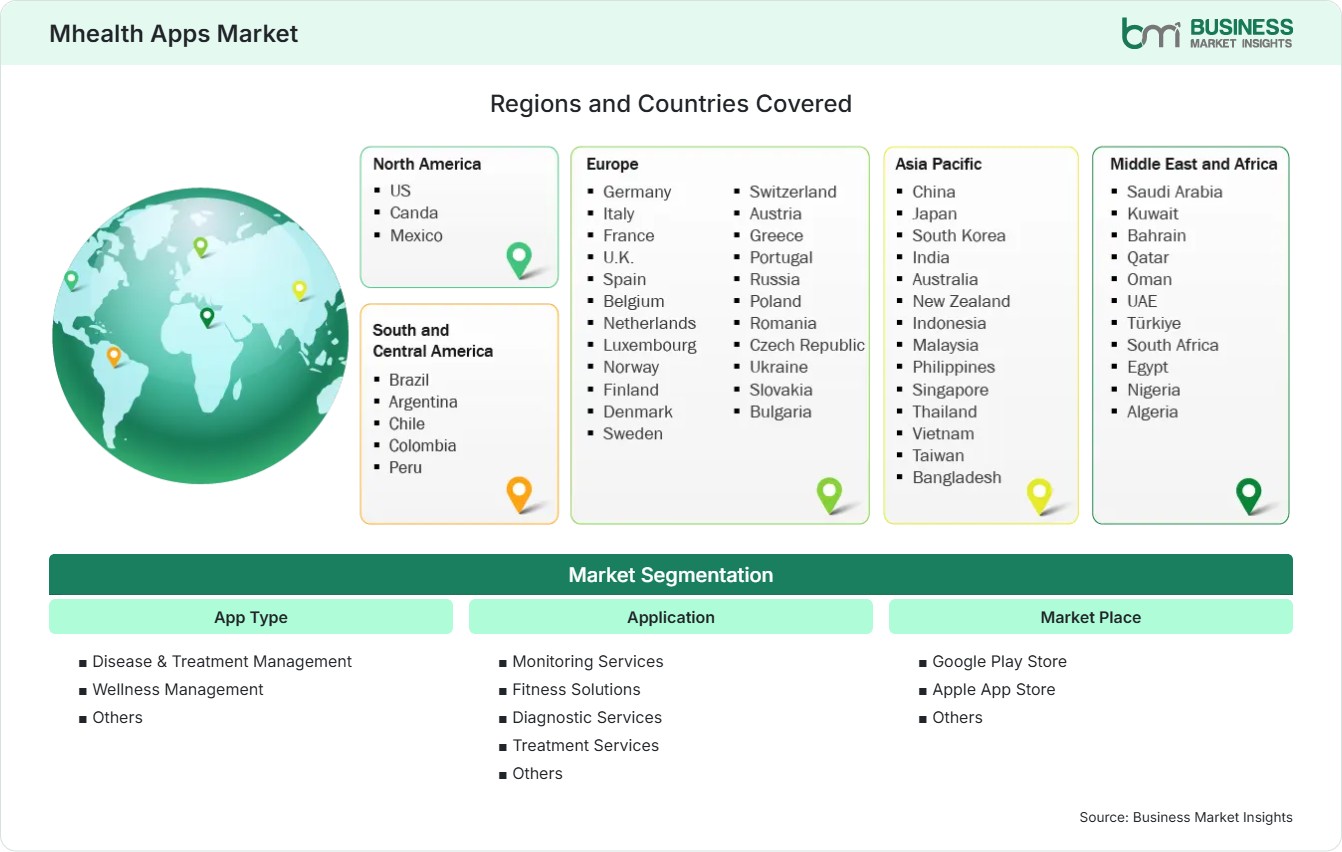
Global Market Geography
FREE PDF
Request your free sample
Request free sample
Segment Analysis

Mhealth Apps Market Segmentation

App Type

Wellness Management commands the lion’s share of 45%-49% in 2025 and grows at a CAGR of 12.0%-12.8% from 2026 to 2033. Reasons for this include consumer awareness, wearable use, knowledge of preventive health care, and coach subscriptions. Disease and treatment management remain strategic, as repeated clinical interventions create opportunities for partnerships among providers, insurers, pharmaceutical companies, and employers. The Mhealth Apps Market is broadening to include clinically focused processes.

  • Disease & Treatment Management: Supports chronic conditions, care coordination, medication adherence, and specialized health journeys, creating recurring engagement through personalized reminders, monitoring, educational content, and provider connectivity.
    • Healthcare Providers/Insurance: Provider and insurer applications improve member engagement, benefits access, appointment coordination, care navigation, and adherence while generating structured information for population-health management.
    • Medication Reminders: Reminder tools encourage consistent medication schedules, refill awareness, and treatment routines, particularly benefiting chronic-condition users requiring repeated therapies and coordinated follow-up.
    • Women's Health and Pregnancy: Applications support cycle tracking, fertility planning, pregnancy milestones, maternal education, symptom logging, and personalized reminders, creating opportunities for sustained engagement across reproductive-health journeys.
    • Disease Specific: Disease-focused applications provide tailored monitoring, education, symptom management, and behavioral support for conditions requiring frequent self-management and longitudinal engagement.
  • Wellness Management: Wellness applications address preventive health through measurable lifestyle goals, personalized recommendations, connected-device data, and behavioral engagement. Consumer expectations increasingly favor integrated experiences spanning fitness, sleep, nutrition, and stress.
    • Fitness: Fitness applications provide exercise tracking, workout planning, activity monitoring, coaching, and performance analytics, with wearable synchronization strengthening personalization and subscription conversion.
    • Lifestyle and Stress: These applications address sleep, mindfulness, relaxation, behavioral routines, and stress reduction, benefiting from increasing consumer interest in mental wellbeing and sustainable lifestyle practices.
    • Diet and Nutrition: Nutrition applications support food logging, calorie tracking, meal planning, macro analysis, and personalized dietary recommendations, increasingly integrating image recognition and connected health data.
  • Others: Other applications address health information, community engagement, administrative support, and specialized use cases that complement broader wellness and clinical workflows.

Application

Monitoring Services are important application types, as regular data collection enables personalized interventions and health management. Fitness solutions have high consumer adoption rates, and Diagnostic Services are expected to grow rapidly due to advances in smartphone sensors, connected devices, and home diagnostics. Treatment Services gain advantages due to virtual care, medication adherence, and coaching services. Overall, Mhealth Apps Market trends show that it becomes more advantageous to have multi-use platforms rather than single-function ones.

  • Monitoring Services: Enables continuous tracking of vital signs, activity, sleep, symptoms, and disease indicators, particularly when applications synchronize with wearables and connected medical devices.
  • Fitness Solutions: Supports exercise planning, activity tracking, coaching, performance analytics, and personalized routines, with social features and subscriptions strengthening engagement.
  • Diagnostic Services: Connects mobile interfaces with screening tools, connected sensors, image analysis, questionnaires, and home tests, expanding access to preliminary assessment and decentralized diagnostics.
  • Treatment Services: Supports medication adherence, virtual consultation, therapy, rehabilitation, coaching, and follow-up, enabling healthcare organizations to extend interaction beyond physical facilities.

Market Place

Google Play Store and Apple App Store remain the leading distribution channels, as the Android and iOS platforms have large user bases, established payment mechanisms, robust security measures, and standardized application discovery. However, other distribution channels are still important in certain markets and business contexts. Applications are now being designed by developers with respect to privacy, subscriptions, app stores, interoperability, and cross-platforms.

  • Google Play Store: Provides extensive Android reach across developed and emerging economies, supporting mass-market wellness applications, regional healthcare services, and low-cost digital products.
  • Apple App Store: Offers strong penetration among premium-device users and supports integrated health experiences through Apple Health, wearables, subscriptions, and privacy-focused data architecture.
Market Forces

Mhealth Apps Market Dynamics

Key Market Drivers

Expansion of Connected Wearable Health Ecosystems

The use of wearables is revolutionizing applications by providing continuous data on activity, sleep, heart rate, and other physiological metrics. Google Health has managed to merge wearable data, Health Connect, Apple Health, and some medical records into a single ecosystem, showing the direction the future of health data ecosystems is taking. Such a level of interoperability enhances market growth because applications can offer more personalized feedback than wearable devices. There is Apple's Health application that tracks medications, sleep, exercise, and trends. With shrinking sensors, applications can go from recording to prediction and personalization. The resulting Mhealth Apps Market will favor applications that support device diversity, synchronization, and the translation of measures into action.

Rising Chronic Disease Self-Management Requirements

Chronic disease management involves regular digital engagement due to the regular need for monitoring, medication adherence, lifestyle changes, education, and follow-ups. The use of mobile apps allows all these processes to occur outside clinical settings. In January 2025, Teladoc Health had more than 1 million active enrollees in its chronic disease management programs, supported by connectivity devices, personalization, and expert coaching for diabetes, high blood pressure, prediabetes, and weight management. It shows how application-based engagement can occur alongside clinical care at scale. The same opportunities exist in cardiovascular, metabolic, respiratory, and behavioral health. Therefore, the Mhealth Apps Market growth will depend on applications capable of sustained engagement rather than just downloads.

AI-Enabled Personalization and Health Guidance

AI is emerging as an important differentiator, as end-users now demand health applications that can interpret health data rather than just present it. Google has recently launched its Health Coach, powered by Gemini, which provides customized advice to end users on physical fitness, sleep habits, and overall wellness, taking into account the user's context and health data from connected systems. This feature may help automate advice, identify trends, personalize exercise programs, analyze behavior, and increase engagement. But to leverage its business value, it must be done responsibly, as it involves producing health-related outputs that require appropriate precautions and transparency. The best Mhealth Apps Market would include the convenience of AI and scientific health content, human supervision, privacy settings, and transparency about limitations.

Key Market Opportunities

Integration With Provider and Insurance Workflows

Applications that connect consumers to providers and insurers have the potential to transition from consumer-facing monetization strategies to recurring revenue streams for the enterprise. APIs and record interoperability can be leveraged for scheduling, care navigation, care reminders, benefits management, remote monitoring, and referrals. Teladoc Health’s Prism Platform provides a good example in this regard, as it connects both digital and community-based providers and uses data insights to fill care gaps. The Mhealth Apps Market Forecasts are likely to increasingly rely on enterprise-level app integration as healthcare organizations seek digital engagement strategies that avoid parallel processes. Value can be captured through licensing, per-member, employer programs, payer partnerships, and outcomes-linked agreements.

Expansion of Mobile Diagnostic and Home Testing Services

Mobile diagnostic capabilities have the potential to bring certain diagnostic tests closer to patients. Smartphone cameras, sensor technology, home test kits, and AI-assisted imaging interpretations can bring preliminary testing out of traditional settings. Withings has brought the U-Scan urine analysis feature into the app environment, demonstrating that consumer apps can serve as platforms for advanced home measurements. Potential future uses would include assessing cardiovascular risks, metabolic processes, sleep-related measurements, reproductive health, and decentralized testing. The potential business model would involve selling the hardware along with application subscriptions or diagnostic alliances. Developers who can clinically validate their tests and interpret the data would create more valuable apps than those that just use user inputs.

Localized Mobile Health Platforms in Emerging Markets

The emerging markets provide scope for developing applications, especially to address local healthcare challenges, rather than developing applications based on the needs of developed countries. Language localization, low-bandwidth operations, mobile payments, low-cost subscriptions, remote consultations, and offline education can help increase adoption rates. India and South-East Asia offer great potential, as mobile devices can serve as the primary point of access for consumers to digital services. There is scope to collaborate with pharmacies, clinics, insurance companies, employers, and public health initiatives to enable denials at lower acquisition costs. Localization will enable applications to address rising healthcare access issues, maternal health needs, and other gaps in healthcare access.

Market Restraints and Challenges

Privacy, Security, and Regulatory Complexity

Factor: The information used by health applications is sensitive, including health records, drugs, biometric data, geographic location, and behavioral information. This means that privacy management is integral to their functioning. Impact: Any security breach, lack of consent management systems, and improper data sharing will reduce user confidence and lead to regulatory action, thereby increasing compliance costs. Privacy is one of the attributes of the Apple Health Application because it encrypts and manages access in its systems. They need to separate wellness functionality from medical functionality to address compliance issues when claims are diagnostic or therapeutic. International work complicates matters because different laws govern privacy and health care.

User Engagement and Application Fragmentation

Factor: Consumers tend to install multiple fitness and health care applications, resulting in fragmentation and lower user engagement with applications that offer similar feature sets. Impact: High levels of churn could affect subscription-based business models, increasing costs and devaluing longitudinal data accumulated by developers. More than just basic tracking capabilities must be built into applications, including personalization, compatibility, notification, coaching, and insights. Fragmentation is also relevant in the case of healthcare companies, where doctors have information from applications and devices that are incompatible with one another. Healthcare interface and data exchange can overcome this problem, but they require large investments in technology and collaboration with other organizations. This means that competition favors platforms that can integrate various health care functions into a single platform.

Company Analysis

Competitive Landscape

The Mhealth Apps Market analysis indicates the competitive dynamics have shifted from app-based to ecosystem-based, encompassing software, hardware, clinical care, data, and subscriptions. Successful players differentiate themselves through interoperability, AI, clinical partnerships, wearables, and consumer trust.

Company Name

Overview

Products and Services relevant to this market

Apple Inc.

Technology company with a large consumer device ecosystem and strong emphasis on integrated personal health data and privacy.

Apple Health, Apple Fitness+, health data management, medication tracking, activity monitoring, cycle tracking, and Apple Watch integration.

Alphabet Inc.

Diversified technology company developing consumer health platforms through Google Health, Fitbit, Android, and artificial intelligence capabilities.

Google Health, Fitbit, Health Connect, Google Health Coach, wearable synchronization, wellness analytics, and health-data integration.

Samsung Electronics Co., Ltd.

Global electronics manufacturer combining smartphones, smartwatches, sensors, and digital health software within its connected-device ecosystem.

Samsung Health, Galaxy Watch integration, activity and sleep monitoring, nutrition tracking, wellness programs, and connected health features.

Garmin Ltd.

Wearable technology specialist focused on fitness, sports performance, activity monitoring, and increasingly comprehensive personal wellness analytics.

Garmin Connect, fitness tracking, training analytics, sleep monitoring, activity data, health metrics, and wearable-device synchronization.

Teladoc Health, Inc.

Virtual-care provider integrating digital engagement, clinical services, coaching, and chronic-condition management across employer and payer channels.

Teladoc app, virtual consultations, chronic-care programs, mental health, coaching, remote monitoring, and connected care platforms.

Hims & Hers Health, Inc.

Consumer health platform providing personalized digital healthcare experiences and direct access to clinicians and treatments.

Hims & Hers applications, virtual consultations, health programs, medication management, wellness services, and personalized care pathways.

Omada Health, Inc.

Digital health company specializing in chronic-condition management through technology-enabled behavior change and clinical support.

Digital diabetes prevention, hypertension management, musculoskeletal programs, connected devices, coaching, and personalized care.

Ada Health GmbH

Digital health technology company focused on symptom assessment and personalized health guidance through AI-supported platforms.

Ada Health assessment, symptom checking, personalized guidance, clinical decision support, and digital health engagement tools.

Medtronic plc

Medical technology company combining connected medical devices with digital platforms to support disease management and patient monitoring.

Diabetes management technologies, connected monitoring, patient-support applications, remote data capabilities, and therapy-management solutions.

Withings SA

Connected-health technology company specializing in consumer devices and digital applications for continuous health and wellness monitoring.

Withings App, smart scales, blood-pressure monitoring, sleep tracking, U-Scan integration, ECG-enabled devices, and health analytics.

Trust & Transparency

Research Methodology

The market analysis combines proprietary research with secondary data from government agencies, company disclosures, regulatory filings, industry databases and expert interviews. Market estimates are validated through data triangulation, cross-market benchmarking and analyst review.

View Full Research Methodology

Questions Answered

Frequently Asked Questions

What does the Mhealth Apps Market report help businesses evaluate?

The report helps stakeholders evaluate market size, regional opportunities, application priorities, competitive positioning, technology trends, growth drivers, restraints, investment opportunities, and segment-level dynamics across app type, application, and marketplace categories.

How can developers improve adoption in emerging markets?

Localization is essential. Developers can improve adoption through regional languages, affordable pricing, low-bandwidth functionality, mobile payments, offline resources, local clinical partnerships, and workflows designed around the healthcare-access constraints of individual countries.

Which business models are emerging beyond application downloads?

Subscription services, employer contracts, insurer arrangements, provider licensing, connected-device bundles, diagnostic partnerships, and outcome-linked contracts are gaining strategic importance. These models allow developers to monetize continuous engagement while embedding applications into broader healthcare and wellness ecosystems.

How is artificial intelligence changing mobile health applications?

AI enables applications to interpret longitudinal data, personalize recommendations, summarize information, automate coaching, and identify behavioral patterns. Google Health Coach demonstrates the shift toward conversational and adaptive health guidance, although developers must maintain appropriate safety controls and distinguish wellness support from clinical diagnosis.

What factors determine the commercial success of Mhealth Apps?

User retention, clinical credibility, interoperability, privacy, personalization, and distribution partnerships increasingly determine commercial performance. Applications that solve recurring healthcare or wellness needs generally have stronger opportunities to develop subscription, enterprise, or payer-supported revenue models than applications based only on occasional information access.

Access the Full Mhealth Apps Market Report

Get segment-level forecasts, regional estimates, competitive benchmarking, company profiles and downloadable Excel datasets.

Access the full Mhealth Apps Market Report
350 pages PDF & Excel | 2026-09-21
Similar Research

Related Market Reports