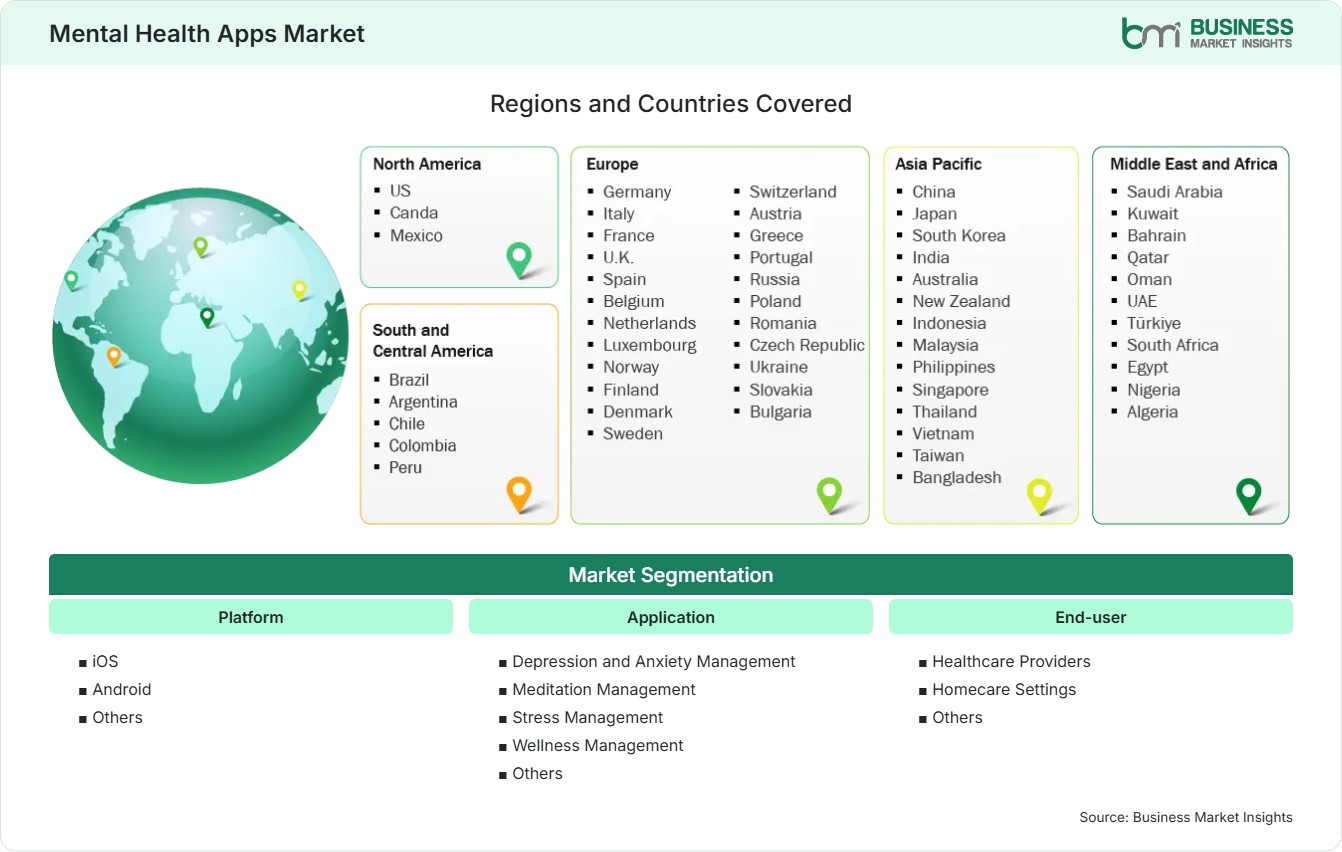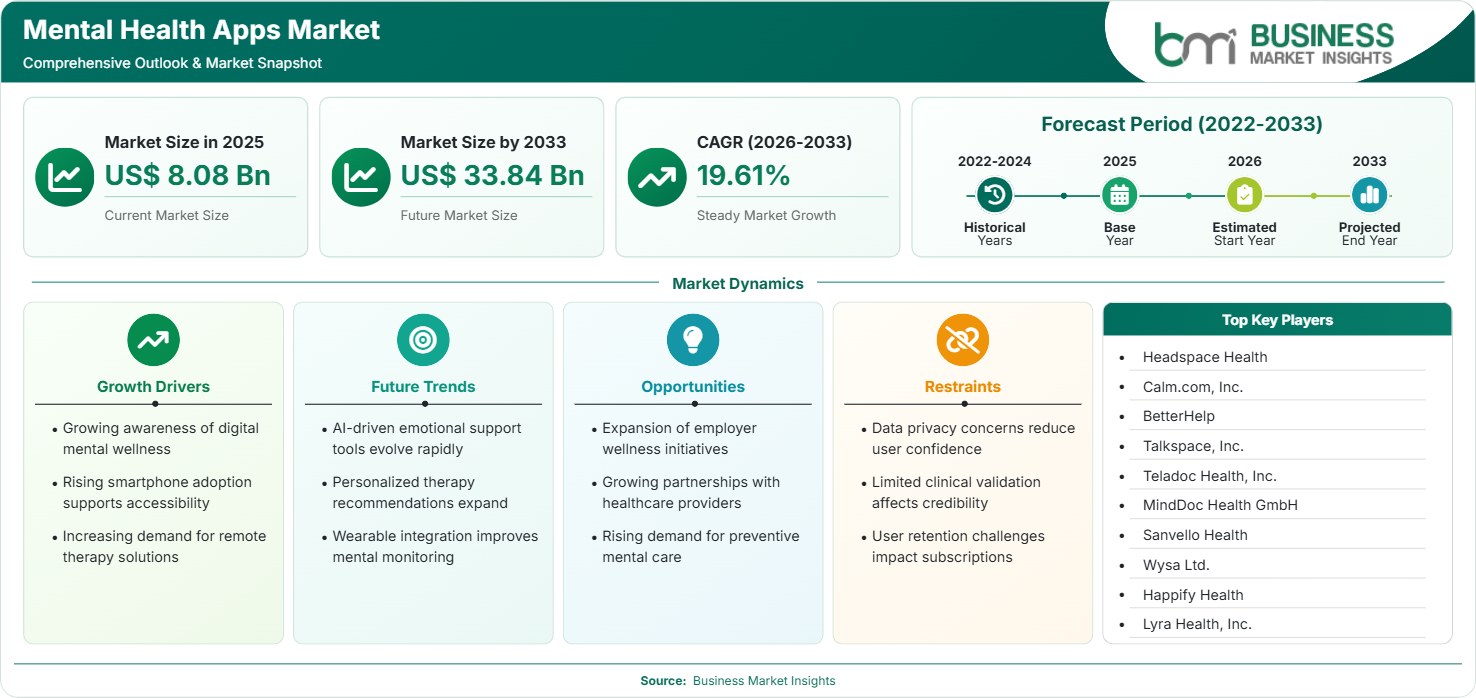
Mental Health Apps Market Regional Highlights
North America Mental Health Apps Market
North America accounted for 37%–40% of the Mental Health Apps Market Share in 2025 and is expected to register a CAGR of 18.6%–19.4% during 2026–2033. High digital healthcare adoption, favorable telehealth policies, expanding employer wellness programs, and increasing awareness of mental well-being continue strengthening market demand across the region.
- Employer-sponsored mental wellness programs continue increasing subscriptions to digital behavioral health applications across corporate organizations.
- Growing integration of mental health applications with telemedicine platforms enhances accessibility and continuity of care.
- Healthcare providers increasingly utilize mobile applications to support patient engagement and long-term therapy adherence.
- Rising investments in AI-enabled behavioral healthcare technologies continue accelerating product innovation and commercialization.
US Mental Health Apps Market
The U.S. represented 82%–85% of the North American market in 2025 and is projected to grow at a CAGR of 18.9%–19.7% through 2033. Expanding digital healthcare adoption, increasing behavioral health awareness, and growing reimbursement support continue driving nationwide market development.
- Digital cognitive behavioral therapy platforms are gaining wider acceptance among healthcare providers and employers.
- Rising prevalence of anxiety, depression, and stress-related disorders supports sustained demand for mobile mental wellness solutions.
- Strong venture capital investment encourages innovation across digital therapeutics and AI-powered behavioral health applications.
- Integration with wearable devices enhances personalized mental health monitoring and user engagement.
Europe Mental Health Apps Market
Europe held 28%–31% market share in 2025 and is anticipated to expand at a CAGR of 18.3%–19.0% during 2026–2033. Germany leads regional adoption, while the United Kingdom demonstrates the fastest growth due to expanding digital health initiatives and increasing access to virtual mental healthcare.
- National digital healthcare strategies continue encouraging adoption of clinically supported mental wellness applications.
- Increasing collaborations between public healthcare systems and digital health companies strengthen market expansion.
- Employer wellness investments support greater utilization of behavioral health applications.
- Growing acceptance of digital therapeutics improves accessibility to preventive mental healthcare services.
Asia Pacific Mental Health Apps Market
Asia Pacific accounted for 24%–27% market share in 2025 and is projected to witness the strongest Mental Health Apps Market Forecasts, growing at a CAGR of 21.1%–22.0% during 2026–2033. China leads regional revenue generation, while India records the fastest growth because of expanding smartphone adoption, improving internet connectivity, and increasing awareness of mental wellness.
- Rapid smartphone penetration continues expanding access to affordable digital mental healthcare solutions.
- Government-supported digital health initiatives encourage wider adoption of behavioral wellness platforms.
- Rising urbanization and workplace stress increase demand for meditation and stress management applications.
- Growing healthcare digitization strengthens integration between mobile health platforms and clinical services.
- Expanding investments in AI-powered healthcare startups accelerate product innovation across the region.
Rest of World Mental Health Apps Market
The Rest of World region represented 6%–9% market share in 2025 and is forecast to grow at a CAGR of 19.2%–20.0% through 2033. Brazil leads adoption across South America, while the United Arab Emirates records the fastest growth owing to increasing digital healthcare investments and expanding mental health awareness initiatives.
- Government awareness campaigns continue reducing stigma associated with seeking mental healthcare support.
- Telehealth expansion increases accessibility to behavioral health services across underserved communities.
- Employer wellness initiatives continue supporting adoption of digital mental health platforms.
- Increasing smartphone ownership and internet accessibility improve market penetration for mobile healthcare applications.