
Cardiovascular Health Supplements Market Outlook: Size, Share, Trends, Growth Analysis, Competitive Landscape & Forecast, 2026-2033

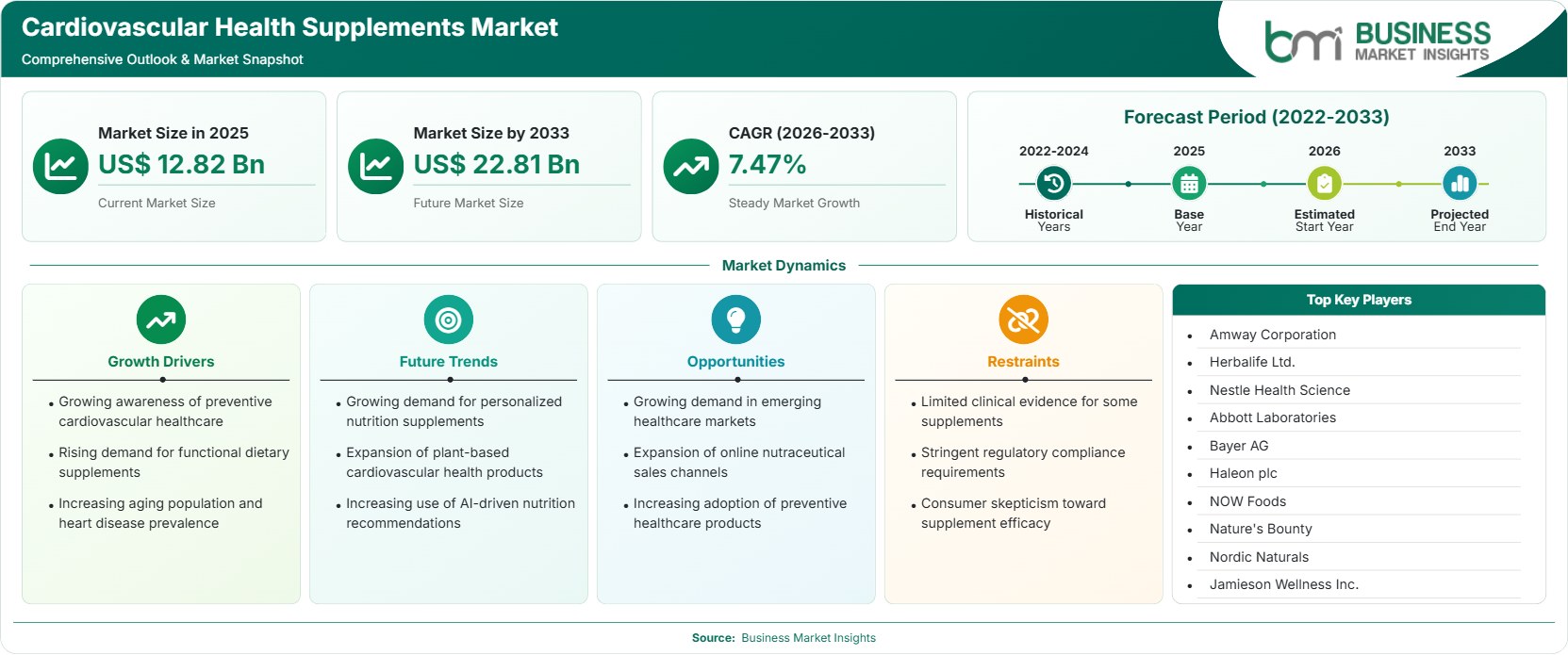
The Cardiovascular Health Supplements Market size was valued at US$ 12.82 Billion in 2025 and is projected to reach US$ 22.81 Billion by 2033, growing at a CAGR of 7.47% from 2026 to 2033. Rising preventive healthcare awareness, increasing demand for functional nutrition products, aging demographics, and expanding digital supplement channels are creating new opportunities for manufacturers and wellness brands.

Report Coverage
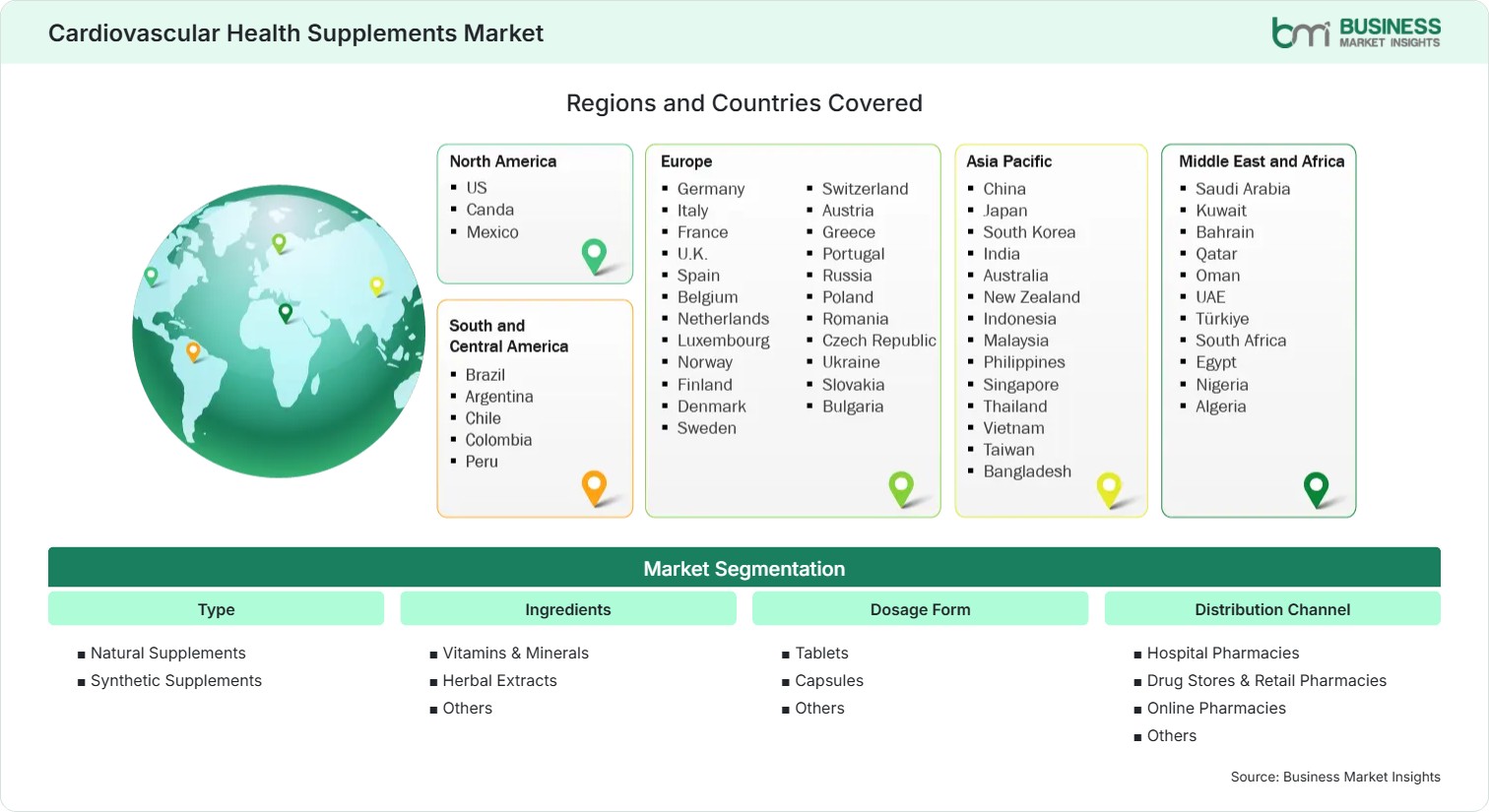
  • Type: Natural Supplements, Synthetic Supplements
  • Ingredients: Vitamins & Minerals, Herbal Extracts, Others
  • Dosage Form: Tablets, Capsules, Others
  • Distribution Channel: Hospital Pharmacies, Drug Stores & Retail Pharmacies, Online Pharmacies, Others
US$ 12.82 Bn Market size in 2025
US$ 22.81 Bn Market Size by 2033
7.47% CAGR, 2026 - 2033
2026-2033 Forecast Period

AI Overview

Cardiovascular Health Supplements Market Summary

  • North America Region: North America accounted for approximately 36%–40% market share in 2025 and is projected to grow at a 7.0%–7.5% CAGR during 2026–2033. Growth is supported by increasing consumer focus on preventive cardiovascular care, high supplement adoption, established nutraceutical companies, and rising demand for clinically positioned products. The U.S. remains the largest regional contributor due to strong wellness spending, widespread dietary supplement usage, and increasing interest in heart health management, with an estimated 7.1%–7.6% CAGR during 2026–2033.
  • Fastest Growing Region: Asia Pacific held approximately 25%–29% market share in 2025 and is expected to expand at a 8.0%–8.6% CAGR during 2026–2033. Growth is driven by increasing health awareness, rising disposable income, expanding middle-class populations, growing cardiovascular disease burden, and increasing availability of nutritional supplements through online platforms.
  • Leading Segment: Natural Supplements accounted for approximately 62%–66% market share in 2025 and are projected to grow at a 7.6%–8.1% CAGR during 2026–2033. Consumer preference for plant-based ingredients, clean-label formulations, and preventive wellness solutions continues supporting segment leadership.
  • High Growth Segment: Online Pharmacies are expected to register a 9.0%–9.6% CAGR during 2026–2033 due to increasing digital healthcare adoption, convenience-focused purchasing behavior, subscription-based supplement models, and wider access to specialized cardiovascular nutrition products.
  • Key Market Opportunity: Expansion into emerging healthcare markets, increasing digital supplement distribution, and rising demand for personalized nutrition products are creating opportunities for companies developing evidence-supported cardiovascular health solutions.
  • Major Market Players: Amway Corporation, Herbalife Ltd., Nestlé Health Science, Abbott Laboratories, Bayer AG, Haleon plc, NOW Foods, Nature's Bounty, Nordic Naturals, and Jamieson Wellness Inc.
Strategic Insights

Cardiovascular Health Supplements Market: Strategic Insights

Cardiovascular Health Supplements Market Strategic Framework
FREE PDF
Request your free sample
Request free sample
Stakeholder View

Key Takeaways

  • The market ecosystem is shifting toward preventive wellness, with manufacturers, ingredient suppliers, retailers, and digital platforms collaborating to expand cardiovascular nutrition accessibility.
  • Natural formulations containing plant-based ingredients, vitamins, minerals, and functional compounds represent major growth opportunities as consumers increasingly prefer lifestyle-oriented health solutions.
  • Innovation is focused on improving supplement effectiveness through enhanced absorption technologies, personalized nutrition approaches, and scientifically supported ingredient combinations.
  • Asia Pacific presents a strong expansion opportunity due to rising cardiovascular health awareness, improving healthcare access, and increasing adoption of online supplement purchasing.
  • Industry consolidation is increasing through partnerships, acquisitions, and portfolio expansion as established nutrition companies strengthen their presence in cardiovascular wellness categories.
  • Digital commerce is becoming an important competitive factor, enabling brands to reach consumers directly and develop personalized engagement strategies.
Geographic Outlook

Cardiovascular Health Supplements Market Regional Highlights

North America Cardiovascular Health Supplements Market

North America accounted for approximately 36%–40% of the Cardiovascular Health Supplements Market share in 2025 and is projected to grow at a 7.0%–7.5% CAGR during 2026–2033. The region benefits from strong consumer awareness, established nutraceutical companies, high supplement usage, and increasing preventive healthcare adoption. The U.S. remains the dominant contributor due to rising demand for heart health products, aging demographics, and expanding online supplement sales. Growth is supported by innovation in natural ingredients and personalized nutrition solutions.

  • The U.S. leads regional demand due to strong consumer spending on dietary supplements, increasing wellness awareness, and widespread availability of cardiovascular support products.
  • Canada is witnessing higher adoption of preventive nutrition products as consumers focus on maintaining heart health through lifestyle-based approaches.
  • Leading supplement manufacturers are investing in clinically supported formulations containing omega-3, vitamins, minerals, and botanical ingredients.
  • Online retail platforms are expanding accessibility by offering subscription models and personalized supplement recommendations for consumers.

US Cardiovascular Health Supplements Market

The United States represented approximately 82%–86% of North America's Cardiovascular Health Supplements Market share in 2025 and is expected to grow at a 7.1%–7.6% CAGR from 2026 to 2033. Demand is supported by high awareness of cardiovascular wellness, strong supplement purchasing behavior, and increasing preference for preventive health solutions. Rising healthcare costs and growing interest in self-care are encouraging consumers to adopt supplements supporting cholesterol management, heart function, and overall cardiovascular wellness.

  • Consumers are increasingly selecting supplements containing scientifically recognized ingredients such as omega-3 fatty acids and essential nutrients.
  • Retailers and online platforms are expanding cardiovascular supplement availability through broader product portfolios and targeted marketing strategies.
  • Aging consumers are contributing to increased demand for products supporting long-term heart health and healthy aging.
  • Manufacturers are focusing on transparency, ingredient traceability, and evidence-based product positioning to build consumer trust.

Europe Cardiovascular Health Supplements Market

Europe accounted for approximately 22%–26% market share in 2025 and is projected to grow at a 6.8%–7.4% CAGR during 2026–2033. The region is supported by increasing preventive healthcare adoption, rising interest in natural wellness products, and growing awareness of cardiovascular risk factors. Germany, the United Kingdom, and France represent leading markets due to strong healthcare systems, supplement consumption, and demand for functional nutrition products. Regulatory focus on quality and safety continues shaping product development.

  • Germany is a major market due to strong consumer interest in nutritional supplements and demand for scientifically supported wellness products.
  • The United Kingdom is witnessing growth through online supplement channels and increasing adoption of preventive healthcare practices.
  • France is expanding cardiovascular supplement consumption as consumers seek natural approaches for maintaining heart wellness.
  • European companies are emphasizing clean-label formulations and sustainable sourcing to align with changing consumer preferences.
  • Regulatory compliance and quality certifications are influencing competitive strategies among regional supplement manufacturers.

Asia Pacific Cardiovascular Health Supplements Market

Asia Pacific represented approximately 25%–29% of the Cardiovascular Health Supplements Market in 2025 and is expected to achieve the fastest growth at a 8.0%–8.6% CAGR during 2026–2033. Growth is driven by increasing healthcare awareness, rising disposable income, expanding urban populations, and growing cardiovascular disease prevalence. China, Japan, India, and South Korea are key markets due to increasing adoption of dietary supplements and expanding digital commerce platforms.

  • China is experiencing increased demand due to rising health awareness, expanding middle-class consumers, and broader supplement distribution networks.
  • India is witnessing growth through increasing preventive healthcare adoption and rising availability of nutritional products through online channels.
  • Japan shows strong demand for functional supplements due to aging demographics and consumer focus on healthy longevity.
  • South Korea is adopting cardiovascular supplements through wellness-focused consumers and advanced e-commerce platforms.
  • Southeast Asian markets are attracting investment as healthcare awareness and supplement accessibility continue improving.

Rest of World Cardiovascular Health Supplements Market

The Rest of World region accounted for approximately 10%–14% of global revenue in 2025 and is projected to grow at a 7.5%–8.2% CAGR during 2026–2033. Latin America, the Middle East, and Africa are gradually increasing supplement adoption due to improving health awareness, rising chronic disease concerns, and expanding retail infrastructure in Cardiovascular Health Supplements Market. Brazil, Mexico, Saudi Arabia, and South Africa are emerging markets with increasing demand for preventive cardiovascular products.

  • Brazil is expanding supplement adoption as consumers increasingly focus on preventive healthcare and nutritional wellness solutions.
  • Mexico is witnessing rising interest in functional supplements due to growing awareness of cardiovascular health management.
  • Saudi Arabia is increasing demand through healthcare modernization programs and rising consumer focus on wellness products.
  • South Africa is adopting nutritional supplements as healthcare providers and consumers emphasize preventive health approaches.
  • Regional distributors are strengthening supply networks to improve access to cardiovascular supplement products.
Global Market Geography
FREE PDF
Request your free sample
Request free sample
Segment Analysis

Cardiovascular Health Supplements Market Segmentation

Type

Type segmentation is influenced by consumer preference for ingredient transparency, natural wellness solutions, and scientifically formulated products. Natural Supplements accounted for approximately 62%–66% market share in 2025 and are projected to grow at a 7.6%–8.1% CAGR during 2026–2033. Increasing demand for plant-based ingredients, clean-label products, and preventive healthcare solutions is supporting segment Cardiovascular Health Supplements Market expansion. Consumers are increasingly seeking supplements perceived as safer and aligned with long-term wellness goals.

  • Natural Supplements: Natural supplements are gaining traction due to consumer preference for botanical ingredients, clean-label formulations, and preventive cardiovascular wellness products.
  • Synthetic Supplements: Synthetic supplements continue supporting cardiovascular nutrition through standardized formulations, controlled nutrient delivery, and consistent ingredient quality across healthcare and retail channels.

Ingredients

Ingredient segmentation reflects increasing demand for targeted cardiovascular support through vitamins, minerals, herbal compounds, and functional nutrients. Vitamins & Minerals accounted for approximately 40%–44% market share in 2025 and are expected to grow at a 7.3%–7.9% CAGR during 2026–2033. Growth is supported by widespread consumer familiarity, nutritional deficiency concerns, and preventive health adoption. Manufacturers are developing combination products that address multiple cardiovascular wellness requirements in Cardiovascular Health Supplements Market.

  • Vitamins & Minerals: These ingredients remain widely adopted due to their role in supporting overall heart function, nutritional balance, and preventive wellness routines.
  • Herbal Extracts: Herbal extracts are gaining popularity as consumers seek plant-derived cardiovascular support products with traditional and functional health benefits.

Dosage Form

Dosage form segmentation is shaped by consumer convenience, product effectiveness, and purchasing preferences. Tablets accounted for approximately 45%–49% market share in 2025 and are projected to grow at a 7.2%–7.8% CAGR during 2026–2033 due to affordability, longer shelf life, and ease of consumption. Manufacturers are improving formulations through advanced delivery technologies and combination nutrient products to enhance consumer acceptance.

  • Tablets: Tablets remain popular due to convenient storage, cost efficiency, controlled dosage, and widespread availability across pharmacies and retail outlets.
  • Capsules: Capsules are increasingly preferred for improved swallowing comfort, faster formulation development, and delivery of specialized cardiovascular ingredients.

Distribution Channel

Distribution channel segmentation is evolving with increased digital adoption, retail expansion, and direct-to-consumer strategies. Drug Stores & Retail Pharmacies accounted for approximately 42%–46% market share in 2025 and are expected to grow at a 7.0%–7.6% CAGR during 2026–2033. Retail channels continue benefiting from consumer trust, physical product accessibility, and pharmacist guidance. However, online channels are expanding rapidly due to convenience and broader product selection in Cardiovascular Health Supplements Market.

  • Hospital Pharmacies: Hospital pharmacies support cardiovascular supplement access through healthcare recommendations and integration with patient wellness programs.
  • Drug Stores & Retail Pharmacies: Retail pharmacies remain a major distribution channel due to strong consumer accessibility, established purchasing habits, and availability of multiple supplement brands.
  • Online Pharmacies: Online pharmacies are expanding through convenience, subscription models, digital health platforms, and personalized product recommendations for cardiovascular wellness consumers.
Market Forces

Cardiovascular Health Supplements Market Dynamics

Key Market Drivers

Growing awareness of preventive cardiovascular healthcare

Increasing awareness regarding cardiovascular disease prevention is encouraging consumers to adopt supplements as part of broader wellness routines. Rising health consciousness, greater access to digital health information, and increasing emphasis on lifestyle management are supporting demand for cardiovascular nutrition products. The market growth is influenced by consumers seeking preventive solutions before the onset of severe cardiovascular conditions. These changing behaviours are also shaping Cardiovascular Health Supplements Market trends, with manufacturers developing products containing omega-3 fatty acids, vitamins, minerals, and botanical ingredients. Companies are focusing on transparent labelling, scientific validation, and targeted formulations to strengthen consumer confidence. Growing emphasis on self-care and preventive healthcare is expected to support long-term market expansion.

Rising demand for functional dietary supplements

Growing consumer interest in functional nutrition is increasing demand for supplements designed to provide specific health benefits beyond basic nutrition. Cardiovascular support products containing ingredients such as omega-3, CoQ10, magnesium, and herbal extracts are gaining popularity among health-conscious consumers. The growth in wellness-driven lifestyle choices, increased disposable income, and the need for convenience regarding health concerns is driving consumer uptake through both retail and online routes. Manufacturers of nutritional supplements have reacted to this trend through developing combination products that serve several health needs pertaining to heart wellness. Advances in product dosage forms, ingredient delivery systems, and personalized nutrition are adding value to product differentiation. Functional nutritional supplements are fast becoming an important segment in the prevention-oriented health care sector.

Increasing aging population and heart disease prevalence

The rise in aging population and the incidence of cardiovascular diseases is leading to an increase in the need for supplements that promote heart health. Nutritional supplements are being embraced more by older customers in their quest for healthy aging, especially those concerned with controlling their cholesterol levels and other functions related to heart health. Programs aimed at raising awareness in health care and the availability of information on preventive care have motivated consumers to consider taking supplements sooner. Supplements that cater specifically to the nutritional needs of the elderly are being developed by manufacturers. Increasing risks due to sedentary lifestyle and diet are also fuelling demand in the market.

Key Market Opportunities

Growing demand in emerging healthcare markets

Emerging healthcare markets are creating significant opportunities for cardiovascular supplement manufacturers due to improving healthcare access, rising disposable income, and increasing awareness of preventive nutrition. Countries across Asia Pacific, Latin America, and the Middle East are witnessing growing interest in dietary supplements as consumers become more focused on maintaining long-term health. Expanding retail infrastructure and increasing availability of imported wellness products are supporting market penetration. The Cardiovascular Health Supplements Market Forecasts indicate continued opportunities for companies developing affordable, accessible, and culturally relevant formulations for emerging consumers. Local partnerships, regional distribution networks, and targeted education initiatives can help brands strengthen their presence in developing healthcare markets.

Expansion of online nutraceutical sales channels

The growth of online nutraceutical platforms is creating new avenues for growth by enhancing accessibility and convenience for consumers. Digital methods offer supplement makers access to larger audiences using direct-to-consumer models, subscriptions, and tailored product suggestions. In addition, online platforms enable supplement producers to provide information about their products and educate consumers on how to use them. The growing availability of smartphones and digital payments is helping fuel e-commerce growth in emerging and developed markets. The nutraceutical companies are also using digital marketing initiatives and partnering online to improve customer relationships. Online shopping is changing the supplement business by reducing dependence on traditional retail outlets.

Increasing adoption of preventive healthcare products

Growing adoption of preventive healthcare products is creating opportunities for cardiovascular supplement companies to expand beyond traditional nutrition categories. Consumers are increasingly prioritizing proactive health management through supplements, exercise, and lifestyle modifications. Healthcare providers and wellness platforms are encouraging preventive approaches to reduce long-term health risks. Manufacturers are developing targeted cardiovascular formulations that align with consumer interest in personalized wellness solutions. Increasing demand for products supporting healthy aging, metabolic balance, and overall wellness is encouraging innovation across ingredient combinations and delivery formats. Companies investing in evidence-supported formulations and consumer education strategies are positioned to benefit from the continued shift toward prevention-focused healthcare models.

Market Restraints and Challenges

Limited clinical evidence for some supplements

Factor: Some cardiovascular supplements face challenges due to limited clinical evidence supporting specific health claims, variations in study quality, and inconsistent validation of certain ingredients. Impact: Limited scientific support can reduce consumer confidence, create regulatory challenges, and affect adoption among healthcare professionals recommending preventive products. Although many ingredients have established nutritional benefits, the level of clinical validation differs across formulations and product categories. Manufacturers are increasing investments in research studies, ingredient testing, and evidence-based marketing to improve credibility. Strengthening scientific documentation and conducting well-designed clinical trials remain important for expanding acceptance among consumers, healthcare providers, and regulatory authorities.

Stringent regulatory compliance requirements

Factor: Cardiovascular supplements are subject to strict regulations related to ingredient approval, labeling standards, safety requirements, and health claims across different markets. Impact: Complex regulatory frameworks can increase product development timelines, compliance costs, and market entry challenges for manufacturers operating internationally. Companies must adapt formulations and marketing strategies according to regional requirements while maintaining product quality and transparency. Regulatory differences between countries can complicate global expansion strategies, particularly for smaller supplement brands. Manufacturers are investing in quality assurance systems, regulatory expertise, and standardized production processes to manage compliance requirements and maintain consumer trust in competitive markets.

Company Analysis

Competitive Landscape

The competitive landscape includes global nutrition companies, healthcare organizations, ingredient specialists, and wellness brands focusing on cardiovascular supplement innovation, consumer health awareness, and expanding distribution networks. The Cardiovascular Health Supplements Market analysis highlights competition around natural formulations clinically supported ingredients, personalized nutrition, and digital commerce expansion.

Company Name

Overview

Products and Services relevant to this market

Amway Corporation

Global direct-selling nutrition company offering wellness and dietary supplement products.

Cardiovascular supplements, vitamins, minerals, and nutritional wellness solutions.

Herbalife Ltd.

Nutrition company providing health, wellness, and supplement products worldwide.

Dietary supplements, functional nutrition products, and heart health support formulations.

Nestlé Health Science

Healthcare nutrition company focused on science-based nutritional solutions.

Specialized nutrition products, supplements, and wellness-focused formulations.

Abbott Laboratories

Healthcare company providing nutrition and consumer health products.

Nutritional supplements, wellness products, and cardiovascular support solutions.

Bayer AG

Global healthcare company with consumer health and nutrition offerings.

Heart health supplements, vitamins, minerals, and wellness products.

Haleon plc

Consumer healthcare company specializing in wellness and self-care brands.

Nutritional supplements, vitamins, and preventive healthcare products.

NOW Foods

Natural products company offering supplements and wellness solutions.

Omega-3 supplements, vitamins, minerals, and cardiovascular nutrition products.

Nature's Bounty

Supplement brand focused on vitamins and nutritional products.

Heart health supplements, herbal products, and nutrient-based formulations.

Nordic Naturals

Nutrition company specializing in omega-based health supplements.

Omega-3 products, fish oil supplements, and cardiovascular wellness solutions.

Jamieson Wellness Inc.

Canadian wellness company producing vitamins and nutritional supplements.

Vitamins, minerals, natural supplements, and cardiovascular health products.

Trust & Transparency

Research Methodology

The market analysis combines proprietary research with secondary data from government agencies, company disclosures, regulatory filings, industry databases and expert interviews. Market estimates are validated through data triangulation, cross-market benchmarking and analyst review.

View Full Research Methodology

Questions Answered

Frequently Asked Questions

How does the Cardiovascular Health Supplements Market Report help businesses?

The report provides insights into market trends, competitive strategies, regional opportunities, product developments, and industry challenges, helping companies evaluate expansion plans and investment decisions.

What role does personalized nutrition play in cardiovascular health supplements market?

Personalized nutrition enables companies to develop targeted supplement solutions based on individual health goals, lifestyle factors, and nutritional requirements. Advances in health data analysis are encouraging brands to create more customized cardiovascular wellness products.

Why are natural cardiovascular supplements gaining popularity?

Natural supplements are gaining popularity due to increasing consumer preference for clean-label products, plant-based ingredients, and preventive wellness solutions. Consumers are increasingly seeking products perceived as aligned with healthy lifestyles and long-term nutritional support.

How are online channels changing supplement purchasing behavior?

Online channels are improving consumer access to cardiovascular supplements through wider product selection, subscription services, digital education, and convenient purchasing options. Brands are using e-commerce platforms to engage directly with consumers and provide personalized product recommendations.

What ingredients are commonly used in cardiovascular supplements?

Cardiovascular supplements commonly include omega-3 fatty acids, vitamins, minerals, herbal extracts, CoQ10, and other functional nutrients. These ingredients are selected to support heart wellness, nutritional balance, and preventive health routines among consumers.

Access the Full Cardiovascular Health Supplements Market Report

Get segment-level forecasts, regional estimates, competitive benchmarking, company profiles and downloadable Excel datasets.

Access the full Cardiovascular Health Supplements Market Report
350 pages PDF & Excel | 2026-08-07
Similar Research

Related Market Reports