
Cardiovascular Stents Market Outlook: Size, Share, Trends, Growth Analysis, Competitive Landscape & Forecast, 2026-2033

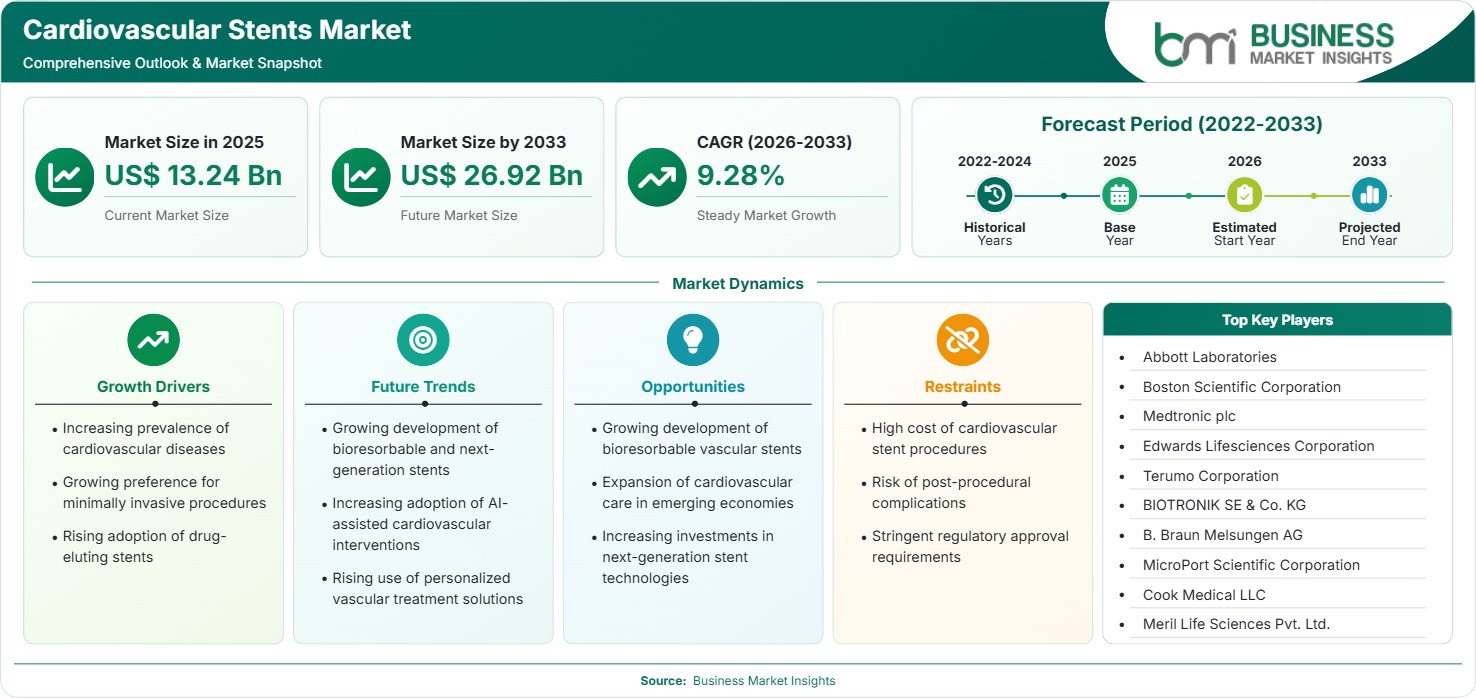
The Cardiovascular Stents Market size was valued at US$ 13.24 Billion in 2025 and is projected to reach US$ 26.92 Billion by 2033, growing at a CAGR of 9.28% from 2026 to 2033, driven by rising cardiovascular disease prevalence, minimally invasive treatment adoption, advanced stent technologies, and expanding cardiac care infrastructure.

Report Coverage
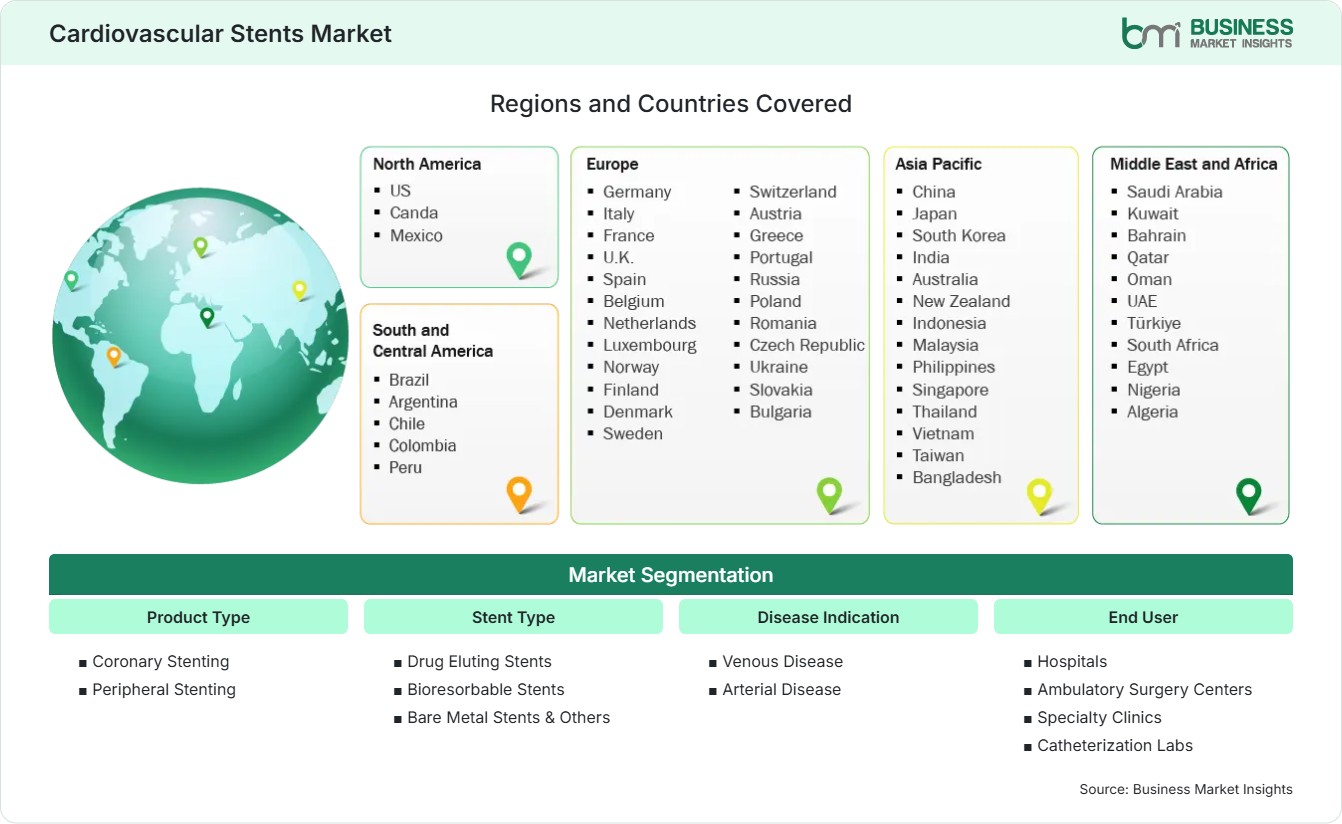
  • Product Type: Coronary Stenting, Peripheral Stenting
  • Stent Type: Drug Eluting Stents, Bioresorbable Stents, Bare Metal Stents & Others
  • Disease Indication: Venous Disease, Arterial Disease
  • End User: Hospitals, Ambulatory Surgery Centers, Specialty Clinics, Catheterization Labs
US$ 13.24 Bn Market size in 2025
US$ 26.92 Bn Market Size by 2033
9.28% CAGR, 2026 - 2033
2026-2033 Forecast Period

01 AI Overview

Cardiovascular Stents Market Summary

  • North America Region: North America holds a market share of 38%–41% in 2025, growing with a CAGR of 8%–10% influenced by advanced cardiac healthcare infrastructure, high procedure volumes, technological innovation, and favorable reimbursement systems. The US market demonstrates strong adoption with a CAGR of 8%–10% during 2026–2033, supported by cardiovascular research, hospital networks, and minimally invasive interventions.
  • Fastest Growing Region: Asia Pacific holds a market share of 27%–30% in 2025, expanding with a CAGR of 10%–12% due to increasing cardiovascular disease burden, healthcare investment, improving medical accessibility, and rising adoption of advanced interventional cardiology procedures across emerging economies.
  • Leading Segment: Coronary Stenting holds a market share of 65%–68% in 2025, growing with a CAGR of 8%–10% due to high coronary artery disease prevalence, widespread PCI procedures, technological advancements, and increasing preference for minimally invasive cardiovascular interventions.
  • High Growth Segment: Bioresorbable Stents hold a market share of 8%–11% in 2025, advancing with a CAGR of 11%–13% due to next-generation vascular solutions, reduced long-term complications, ongoing clinical innovation, and demand for patient-focused cardiovascular therapies.
  • Key Market Opportunity: Development of bioresorbable vascular platforms, expansion of cardiovascular treatment access in emerging markets, and investments in next-generation stent materials are creating opportunities for manufacturers and healthcare providers.
  • Major Market Players: Abbott Laboratories, Boston Scientific Corporation, Medtronic plc, Edwards Lifesciences Corporation, Terumo Corporation, BIOTRONIK SE & Co. KG, B. Braun Melsungen AG, MicroPort Scientific Corporation, Cook Medical LLC, and Meril Life Sciences Pvt. Ltd.
02 Strategic Insights

Cardiovascular Stents Market: Strategic Insights

Cardiovascular Stents Market Strategic Framework
FREE PDF
Request your free sample
Request free sample
03 Stakeholder View

Key Takeaways

  • Cardiovascular stent manufacturers are shifting toward advanced biomaterials, drug-coated technologies, and patient-specific solutions to improve clinical outcomes and differentiate product portfolios.
  • Coronary interventions remain the primary revenue opportunity, while peripheral and bioresorbable stent technologies provide additional growth avenues through specialized cardiovascular applications.
  • Innovation priorities are focused on biodegradable materials, improved drug-eluting mechanisms, imaging compatibility, and enhanced stent designs for complex vascular anatomies.
  • Asia Pacific offers significant investment potential due to rising cardiovascular disease incidence, healthcare infrastructure development, and increasing adoption of advanced interventional procedures.
  • Strategic collaborations, technology acquisitions, and research partnerships are increasing as companies seek competitive advantages in next-generation cardiovascular device development.
  • Healthcare providers are increasingly adopting minimally invasive cardiac procedures to reduce hospitalization periods, improve recovery outcomes, and optimize resource utilization.
04 Geographic Outlook

Cardiovascular Stents Market Regional Highlights

North America Cardiovascular Stents Market

North America accounted for a 38%–41% share in 2025 and is projected to register a CAGR of 8%–10% from 2026–2033. The region maintains leadership due to advanced healthcare systems, high cardiovascular procedure volumes, and strong adoption of innovative medical devices. The Cardiovascular Stents Market share reflects significant demand from hospitals, catheterization laboratories, and specialized cardiac centers. The United States remains the primary contributor.

  • The United States continues leading regional demand through advanced cardiac facilities, reimbursement support, and high PCI procedure adoption.
  • Canada is expanding cardiovascular intervention capabilities through healthcare modernization and increasing access to specialized treatment centers.
  • Medical device companies are investing in clinical research to develop safer and more effective stent technologies.
  • Hospitals are adopting advanced imaging-guided procedures to improve accuracy and patient outcomes during interventions.

US Cardiovascular Stents Market

The United States represented a 32%–35% share in 2025 and is expected to achieve a CAGR of 8%–10% between 2026–2033. The country benefits from strong healthcare expenditure, established cardiovascular treatment infrastructure, and high adoption of minimally invasive procedures. The Cardiovascular Stents Market is supported by technological innovation, clinical research, and increasing demand for advanced coronary intervention solutions.

  • Hospitals are increasing adoption of drug-eluting stents to improve treatment effectiveness and reduce restenosis risks.
  • Cardiovascular specialists are using advanced catheterization technologies to enhance procedural precision and outcomes.
  • Research institutions are supporting development of next-generation stent platforms with improved biological compatibility.

Europe Cardiovascular Stents Market

Europe accounted for a 24%–27% share in 2025 and is forecast to grow at a CAGR of 7%–9% during 2026–2033. The region benefits from established healthcare systems, increasing cardiovascular disease management initiatives, and strong medical device innovation. Germany, the United Kingdom, and France represent leading markets, while Spain and Italy demonstrate steady adoption through expanding interventional cardiology services.

  • Germany maintains strong demand through advanced hospitals, medical technology expertise, and high cardiovascular procedure availability.
  • The United Kingdom is expanding minimally invasive cardiac treatment through healthcare system modernization and technology adoption.
  • France is investing in cardiovascular research and specialized cardiac care facilities.
  • European manufacturers are focusing on innovative materials and improved stent performance characteristics.

Asia Pacific Cardiovascular Stents Market

Asia Pacific represented a 27%–30% share in 2025 and is projected to grow at a CAGR of 10%–12% between 2026–2033. The region demonstrates strong growth potential due to rising cardiovascular disease prevalence, improving healthcare access, and increasing medical technology investments. China, India, Japan, and South Korea are major contributors, with India and Southeast Asian countries showing rapid expansion.

  • China is increasing adoption through healthcare infrastructure expansion and domestic medical device development.
  • India is experiencing rising demand due to cardiovascular disease burden and improved access to cardiac procedures.
  • Japan and South Korea continue adopting advanced stent technologies through developed healthcare systems.
  • Southeast Asian countries are expanding cardiac care capabilities through public and private healthcare investments.

Rest of World Cardiovascular Stents Market

South and Central America accounted for a 5%–7% share in 2025, while the Middle East and Africa contributed a combined 4%–6% share. These regions are expected to grow at CAGRs of 8%–10% and 9%–11%, respectively, supported by improving cardiac care infrastructure, rising disease awareness, healthcare investments, and increasing availability of minimally invasive procedures. Brazil, Mexico, UAE, and Saudi Arabia represent important markets due to healthcare modernization.

  • Brazil is expanding cardiovascular intervention capabilities through improved hospital infrastructure and increasing access to catheterization procedures.
  • Mexico is witnessing rising demand for cardiac devices due to increasing cardiovascular disease prevalence and healthcare investments.
  • UAE is developing advanced cardiac centers supporting adoption of innovative stent technologies and specialized procedures.
  • Saudi Arabia is investing in healthcare transformation programs increasing access to advanced cardiovascular treatments.
Global Market Geography
FREE PDF
Request your free sample
Request free sample
05 Segment Analysis

Cardiovascular Stents Market Segmentation

Product Type

Product Type segmentation is dominated by coronary stenting due to the high global burden of coronary artery disease and widespread percutaneous coronary intervention procedures. Coronary Stenting accounted for a 65%–68% share in 2025 and is projected to grow at a CAGR of 8%–10% between 2026–2033. The Cardiovascular Stents Market scope continues expanding through advanced drug delivery technologies, improved implant designs, and broader cardiovascular treatment access.

  • Coronary Stenting: Addresses coronary artery blockages through minimally invasive procedures. Adoption is supported by high coronary disease prevalence, established PCI techniques, and continuous innovation in stent designs.
  • Peripheral Stenting: Supports treatment of peripheral artery diseases affecting blood vessels outside the heart. Demand is increasing due to rising vascular disorders and improved minimally invasive treatment approaches.

Stent Type

Stent Type segmentation reflects continuous innovation toward improved safety, efficacy, and long-term patient outcomes. Drug Eluting Stents (DES) represented the leading category with a 70%–73% share in 2025 and are expected to grow at a CAGR of 8%–10% between 2026–2033. The segment benefits from reduced restenosis rates, advanced drug coatings, and widespread physician preference.

  • Drug Eluting Stents (DES): Release therapeutic agents to reduce tissue growth after implantation. Adoption remains high due to clinical effectiveness and strong physician acceptance.
  • Bioresorbable Stents: Provide temporary vascular support before naturally degrading. Growth is supported by research focused on reducing long-term complications and improving patient outcomes.
  • Bare Metal Stents & Others: Serve specific clinical applications requiring conventional stent solutions. Usage continues in selected procedures where cost considerations influence treatment decisions.

Disease Indication

Disease Indication segmentation is primarily driven by arterial disease due to increasing coronary and peripheral artery conditions worldwide. Arterial Disease applications accounted for a 75%–78% share in 2025 and are projected to expand at a CAGR of 9%–11% between 2026–2033. Increasing cardiovascular screening, aging populations, and improved intervention capabilities support continued segment development.

  • Venous Disease: Covers stent applications for venous obstruction and related vascular conditions. Adoption is increasing through improved device designs and growing awareness of venous interventions.
  • Arterial Disease: Represents major demand due to coronary and peripheral artery disorders. Growth is supported by rising cardiovascular risk factors and minimally invasive treatment preference.

End User

End User segmentation highlights hospitals as the dominant adoption channel due to advanced cardiac infrastructure, specialized personnel, and higher procedure volumes. Hospitals accounted for a 60%–63% share in 2025 and are expected to grow at a CAGR of 8%–10% between 2026–2033. Expansion of catheterization facilities and advanced cardiovascular programs supports market development.

  • Hospitals: Remain the primary users due to advanced infrastructure, cardiac specialists, and high-volume interventional procedures.
  • Ambulatory Surgery Centers: Are gaining adoption through outpatient cardiovascular procedures, shorter recovery periods, and increasing healthcare efficiency requirements.
  • Specialty Clinics: Support focused cardiovascular care through specialized treatment programs and growing patient access to intervention services.
  • Catheterization Labs: Enable complex cardiac procedures using advanced imaging and intervention technologies. Growth is supported by increasing PCI procedure volumes.
06 Market Forces

Cardiovascular Stents Market Dynamics

Key Market Drivers

Increasing Prevalence of Cardiovascular Diseases

The increasing global burden of cardiovascular disorders is a major factor supporting demand for stent-based interventions. According to the World Health Organization, cardiovascular diseases remain the leading cause of mortality globally, accounting for approximately 17.9 million deaths annually. Rising obesity, diabetes, hypertension, and aging populations are increasing the need for vascular treatment solutions. The Cardiovascular Stents Market trends indicate stronger demand for effective minimally invasive devices as healthcare providers focus on reducing cardiovascular complications. Expanding diagnostic capabilities and improved access to cardiac procedures are further supporting adoption across developed and emerging healthcare systems.

Growing Preference for Minimally Invasive Procedures

Patient preference towards the use of minimal invasive cardiovascular procedures is on the rise owing to the faster recovery time involved in the process, lower requirement for hospitalization, and efficiency in the process. Procedures involving percutaneous coronary intervention through stenting have gained popularity as an alternative to the conventional surgery procedure for the right candidates. Hospitals have been making investments in catheterization labs and other imaging tools in order to enhance the precision of treatment. The rising cost of health care is leading to procedures that maximize efficiency.

Rising Adoption of Drug-Eluting Stents

Drug-eluting stents continue gaining adoption due to their ability to reduce restenosis risk through controlled medication release. Advancements in coating technologies, polymer designs, and drug formulations are improving safety profiles and clinical performance. Physicians increasingly prefer DES solutions for complex lesions and patients requiring durable vascular support. The Cardiovascular Stents Market growth is supported by continuous product improvements and strong clinical acceptance of drug-based technologies. Manufacturers are focusing on developing thinner struts, improved flexibility, and enhanced biocompatibility to address evolving clinical requirements.

Key Market Opportunities

Growing Development of Bioresorbable Vascular Stents

The development of bioresorbable vascular stents represents a significant opportunity as manufacturers focus on reducing long-term complications associated with permanent implants. These next-generation devices are designed to provide temporary vessel support before gradually dissolving, potentially improving vascular healing and reducing chronic inflammation concerns. Increasing research investments, clinical evaluations, and material innovation are supporting advancement in biodegradable polymers and bioresorbable metal technologies. The Cardiovascular Stents Market Forecasts indicate increasing opportunities for companies developing safer, patient-focused implant solutions that address unmet needs in complex cardiovascular interventions.

Expansion of Cardiovascular Care in Emerging Economies

Emerging countries are creating growth opportunities due to rising rates of heart disease, improved healthcare facilities, and the provision of advanced cardiovascular procedures. Countries in Asia Pacific, Latin America, and the Middle East are establishing healthcare facilities, including hospitals and cath labs, and acquiring modern medical equipment. Increased healthcare spending, government policies, and private-sector investments are ensuring greater access to cardiovascular interventions. Manufacturers that develop distribution channels and devise cost-effective stents can benefit from rising demand among underprivileged populations needing minimally invasive cardiac interventions.

Increasing Investments in Next-Generation Stent Technologies

The investment in stents of the next generation is becoming fast-paced as manufacturers concentrate on performance enhancement, safety, and clinical results. The research efforts are focused on novel biomaterials, stent architecture, drug delivery mechanism, and personalized cardiological applications. Collaboration among medical devices companies, research organizations, and healthcare providers is helping in building innovative pipelines. Rising need for better procedural results is motivating manufacturers to come up with technologies that can cater to difficult vascular cases. Companies that can blend technological innovation and clinical performance will be able to seize opportunities in this market.

Market Restraints and Challenges

High Cost of Cardiovascular Stent Procedures

Factor: Cardiovascular stent procedures involve expensive medical devices, specialized catheterization facilities, imaging systems, and skilled healthcare professionals, increasing overall treatment costs. Impact: High procedural expenses can limit accessibility in price-sensitive markets and create challenges for healthcare systems managing treatment affordability. Elaborate technology in terms of drug delivery from stents or their bioresorbability has high costs of production. While reimbursement enhancements have made it easier to use such devices in the developed nations, cost has become an issue for adoption in less developed countries.

Risk of Post-Procedural Complications

Factor: Cardiovascular stent procedures carry potential risks including restenosis, thrombosis, inflammation, and delayed healing depending on patient conditions and device characteristics. Impact: These complications can influence physician preference, increase follow-up requirements, and affect patient outcomes. The aim of innovation has been to enhance stents material, coatings, and drug release techniques to lower adverse reactions. Nevertheless, issues such as safety and clinical effectiveness are still relevant factors when choosing a device. It is essential for manufacturers to keep investing in product development through an evidence-based approach.

07 Company Analysis

Competitive Landscape

The competitive environment is shaped by technological innovation, clinical research capabilities, regulatory expertise, and expanding cardiovascular device portfolios. Cardiovascular Stents Market analysis indicates that leading companies are focusing on drug-eluting technologies, bioresorbable materials, advanced delivery systems, and improved procedural outcomes. Market participants are strengthening their positions through product launches, strategic collaborations, clinical studies, and expansion into emerging healthcare markets.

Company Name

Overview

Products and Services relevant to this market

Abbott Laboratories

Global healthcare company specializing in cardiovascular medical devices and diagnostics.

Coronary stents, drug-eluting stents, vascular intervention technologies.

Boston Scientific Corporation

Medical technology company focused on minimally invasive cardiovascular solutions.

Drug-eluting stents, coronary intervention systems, vascular devices.

Medtronic plc

Global medical technology company serving cardiovascular and surgical markets.

Coronary stents, peripheral vascular solutions, intervention technologies.

Edwards Lifesciences Corporation

Medical device company focused on structural heart and cardiovascular therapies.

Cardiovascular devices, catheter-based solutions, advanced cardiac technologies.

Terumo Corporation

Japanese medical technology company providing cardiovascular intervention products.

Coronary stents, catheter systems, vascular intervention products.

BIOTRONIK SE & Co. KG

Cardiovascular technology company specializing in vascular intervention solutions.

Drug-eluting stents, vascular devices, interventional cardiology products.

B. Braun Melsungen AG

Healthcare company providing medical devices and vascular solutions.

Vascular access products, intervention devices, cardiovascular technologies.

MicroPort Scientific Corporation

Medical device company developing cardiovascular intervention technologies.

Coronary stents, vascular products, cardiac intervention systems.

Cook Medical LLC

Medical device manufacturer offering minimally invasive healthcare solutions.

Vascular stents, catheter-based products, cardiovascular devices.

Meril Life Sciences Pvt. Ltd.

Medical technology company focused on affordable healthcare innovations.

Coronary stents, cardiovascular intervention devices, vascular solutions.

10 Trust & Transparency

Research Methodology

The market analysis combines proprietary research with secondary data from government agencies, company disclosures, regulatory filings, industry databases and expert interviews. Market estimates are validated through data triangulation, cross-market benchmarking and analyst review.

View Full Research Methodology

11 Questions Answered

Frequently Asked Questions

Why are bioresorbable stents gaining attention?

Bioresorbable stents are gaining interest because they provide temporary vascular support and aim to reduce long-term complications associated with permanent implant materials.

What does the Cardiovascular Stents Market Report cover?

The report evaluates market size, segmentation, regional performance, competitive landscape, technological trends, growth drivers, challenges, and future opportunities.

How are emerging economies influencing market expansion?

Emerging economies are supporting growth through healthcare infrastructure development, increasing medical investments, expanding cardiac centers, and improving patient access to advanced cardiovascular treatments.

Which product segment dominates cardiovascular stent adoption?

Coronary stenting represents the leading product segment due to the high prevalence of coronary artery disease and widespread use of percutaneous coronary intervention procedures.

What factors are driving the Cardiovascular Stents Market growth?

The market is driven by increasing cardiovascular disease prevalence, rising adoption of minimally invasive procedures, technological improvements in drug-eluting stents, and expanding access to cardiovascular care facilities worldwide.

Access the Full Cardiovascular Stents Market Report

Get segment-level forecasts, regional estimates, competitive benchmarking, company profiles and downloadable Excel datasets.

Access the full Cardiovascular Stents Market Report
350 pages PDF & Excel | 2026-08-05