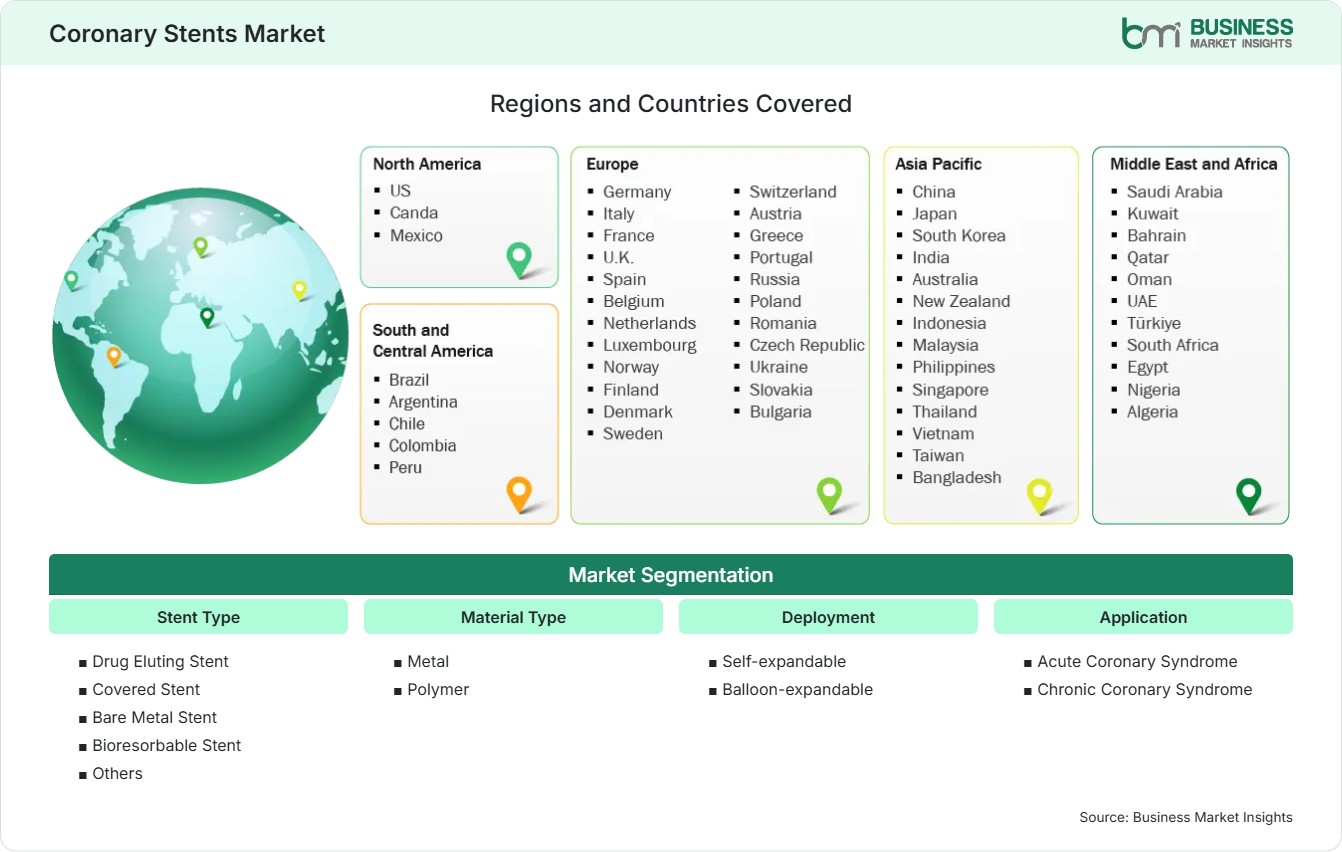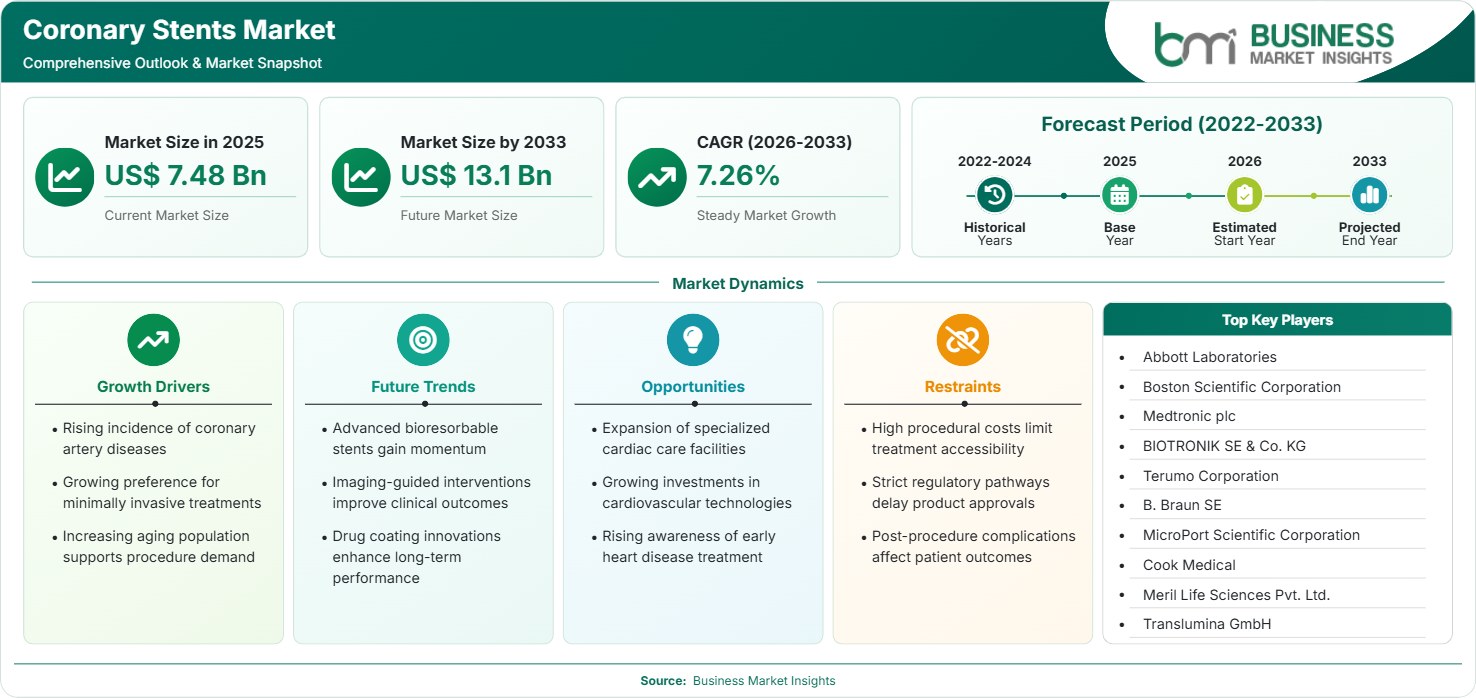
Coronary Stents Market Regional Highlights
North America Coronary Stents Market
North America accounts for 36%–39% Coronary Stents Market share in 2025 and is projected to expand at a CAGR of 6.9%–7.4% during 2026–2033. The region benefits from advanced healthcare infrastructure, strong reimbursement systems, widespread adoption of minimally invasive cardiac procedures, and continuous innovation in cardiovascular medical devices. Increasing prevalence of coronary artery disease and favorable clinical guidelines continue supporting procedure volumes across hospitals and specialty cardiac centers.
- Advanced catheterization laboratories continue increasing adoption of next-generation coronary stent technologies.
- Favorable reimbursement frameworks support higher utilization of minimally invasive coronary intervention procedures.
- Strong clinical research activities accelerate commercialization of innovative cardiovascular devices.
- Aging demographics continue increasing demand for coronary artery disease treatment across healthcare systems.
US Coronary Stents Market
The United States contributes 83%–86% of North American revenue and is expected to register a CAGR of 7.0%–7.5% through 2026–2033. High cardiovascular disease burden, advanced interventional cardiology infrastructure, and continuous adoption of innovative stent technologies support sustained market expansion.
- Hospitals continue investing in advanced imaging and catheterization technologies to improve procedural outcomes.
- Growing prevalence of obesity, diabetes, and hypertension increases demand for coronary interventions.
- Clinical adoption of advanced drug-eluting stents continues strengthening treatment effectiveness.
- Healthcare providers increasingly emphasize early diagnosis and minimally invasive cardiovascular care.
Europe Coronary Stents Market
Europe represents 26%–29% market share in 2025 and is projected to expand at a CAGR of 6.7%–7.2% during the forecast period. Well-established healthcare systems, increasing elderly populations, and rising investment in cardiovascular disease management continue supporting regional growth. Germany leads regional demand, while Poland records the fastest expansion through improving healthcare infrastructure and increasing interventional cardiology procedures.
- Public healthcare investments continue strengthening cardiovascular treatment capacity across major European countries.
- Hospitals increasingly adopt advanced drug-eluting technologies for complex coronary interventions.
- Growing physician awareness supports wider implementation of evidence-based treatment protocols.
- Medical device innovation continues improving procedural safety and long-term clinical performance.
Asia Pacific Coronary Stents Market
Asia Pacific accounts for 28%–31% market share in 2025 and is expected to record the fastest 8.0%–8.6% CAGR during 2026–2033. Rising cardiovascular disease incidence, expanding healthcare infrastructure, increasing healthcare expenditure, and growing patient awareness continue driving regional demand. China remains the leading market, while India records the fastest growth owing to expanding cardiac hospitals and improving healthcare accessibility.
- Government healthcare investments continue expanding access to advanced cardiovascular procedures.
- Rising lifestyle-related cardiovascular disorders increase demand for coronary intervention therapies.
- Expansion of specialized cardiac hospitals improves treatment accessibility across emerging economies.
- Domestic manufacturers continue strengthening regional availability of affordable coronary stent products.
Rest of World Coronary Stents Market
The Rest of World region represents 5%–8% market share in 2025 and is projected to register a CAGR of 6.8%–7.3% during 2026–2033. Improving healthcare infrastructure, increasing cardiovascular screening programs, and expanding access to specialized cardiac care continue supporting demand across Latin America, the Middle East, and Africa.
- Brazil remains the leading regional market through continued expansion of cardiovascular treatment facilities.
- Gulf countries continue investing in specialized cardiac hospitals and advanced medical technologies.
- Public health initiatives encourage earlier diagnosis and treatment of coronary artery disease.
- Increasing private healthcare investment improves availability of minimally invasive cardiac procedures.