
Equine Health Market Outlook: Size, Share, Trends, Growth Analysis, Competitive Landscape & Forecast, 2026–2033

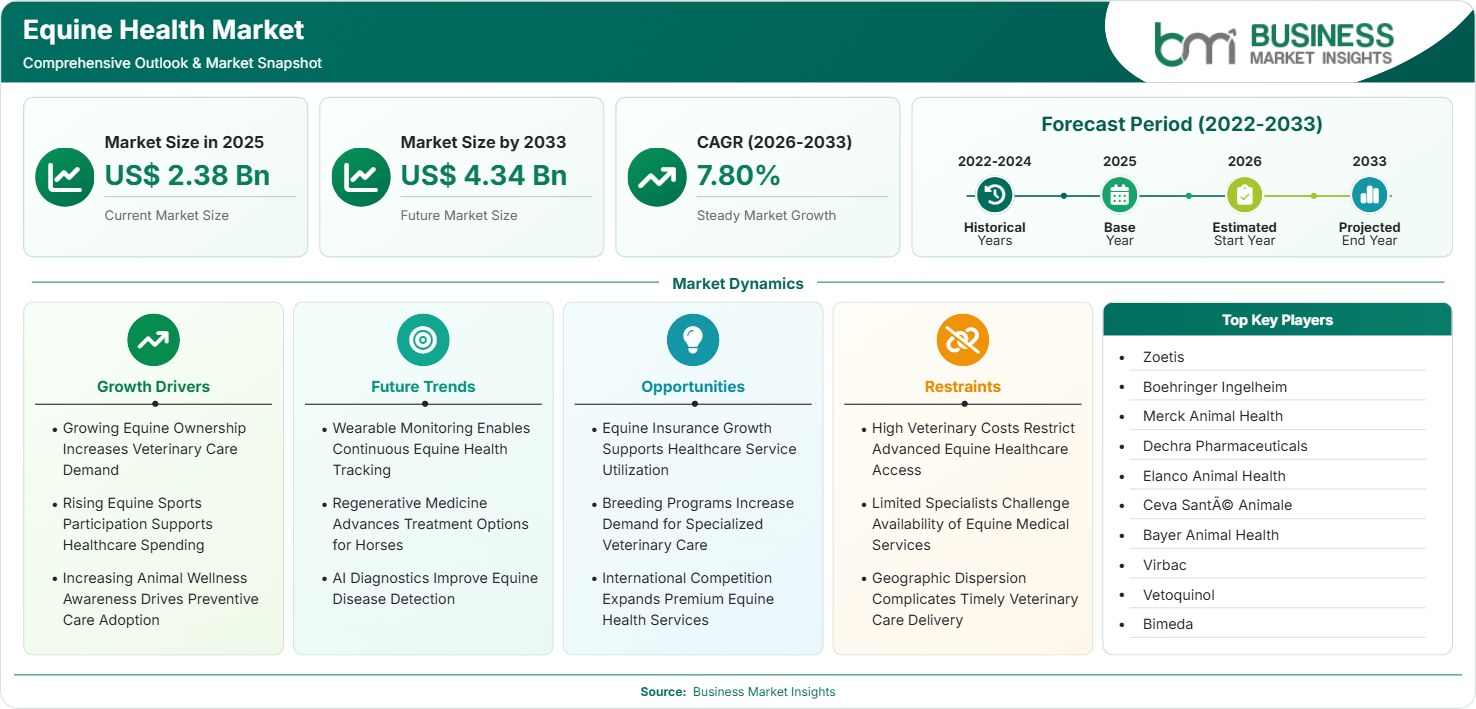
The Equine Health Market size was valued at US$ 2.38 billion in 2025 and is projected to reach US$ 4.34 billion by 2033, growing at a CAGR of 7.80% during 2026–2033. Growing equine ownership, rising sports horse participation, preventive veterinary care adoption, advanced therapeutics, and increasing investments in animal wellness are creating opportunities across pharmaceutical, vaccine, and nutritional healthcare segments.

Report Coverage
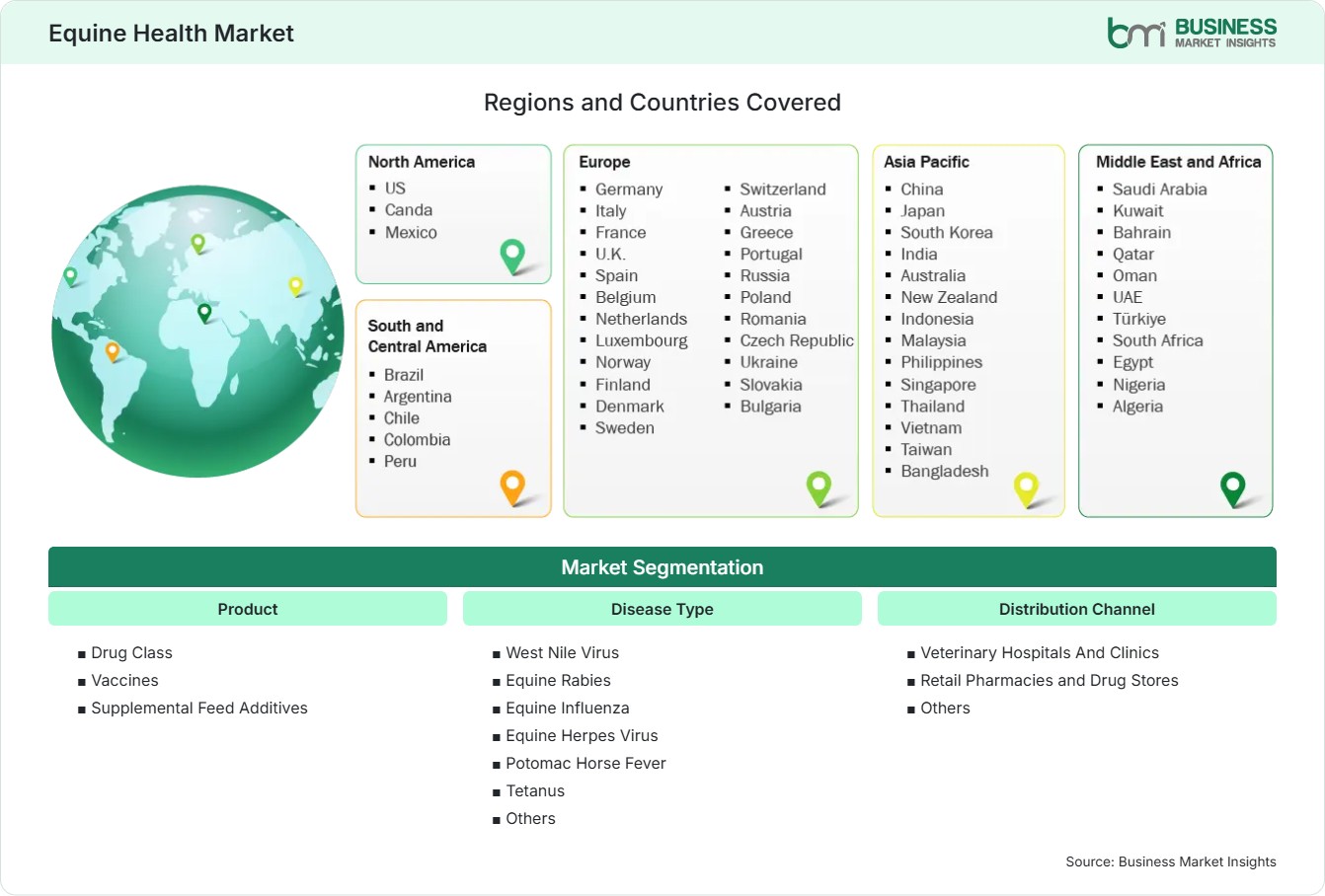
  • Product: Drug Class, , Vaccines , Supplemental Feed Additives
  • Disease Type: West Nile Virus, Equine Rabies, Equine Influenza, Equine Herpes Virus, Potomac Horse Fever, Tetanus, Others
  • Distribution Channel: Veterinary Hospitals And Clinics, Retail Pharmacies and Drug Stores, Others
US$ 2.38 Bn Market size in 2025
US$ 4.34 Bn Market Size by 2033
7.80% CAGR, 2026 - 2033
2026-2033 Forecast Period

01 AI Overview

Equine Health Market Summary

  • North America Region: North America holds a leading position with a share ranging between 38%–41% in 2025 and is projected to grow at a CAGR of 7.2%–7.8% through 2033. Strong equine ownership, established veterinary infrastructure, high spending on companion animal care, and widespread preventive healthcare practices support regional demand. The U.S. represents approximately 85%–88% of North America’s revenue and is expected to grow at a CAGR of 7.3%–7.9%, supported by equine sports activities, advanced veterinary services, and increasing adoption of preventive treatments.
  • Fastest Growing Region: Asia Pacific represents the fastest-growing region with a share ranging between 18%–22% in 2025 and is expected to expand at a CAGR of 8.5%–9.2% through 2033. Increasing equine sports activities, expanding veterinary networks, rising disposable income, breeding investments, and growing awareness of animal health management are accelerating market development across regional economies.
  • Leading Segment: Drug Class represents the leading product segment with a share ranging between 45%–48% in 2025 and is projected to grow at a CAGR of 7.5%–8.1% through 2033. Demand for therapeutic solutions addressing infections, inflammation, parasites, and disease management continues supporting segment leadership across veterinary practices.
  • High Growth Segment: Vaccines represent the high-growth product segment with a share ranging between 22%–25% in 2025 and are expected to expand at a CAGR of 8.2%–8.8% through 2033. Increasing focus on preventive healthcare, disease control programs, and improved vaccination protocols is supporting stronger adoption among horse owners and veterinary professionals.
  • Key Market Opportunity: Increasing adoption of equine insurance, specialized breeding programs, international competitions, and premium veterinary services is creating opportunities for companies developing advanced preventive, therapeutic, and wellness-focused healthcare solutions.
  • Major Market Players: Zoetis Inc., Boehringer Ingelheim Animal Health, Merck Animal Health, Dechra Pharmaceuticals PLC, Elanco Animal Health Incorporated, Ceva Santé Animale, Bayer Animal Health, Virbac, Vetoquinol, and Bimeda.
02 Strategic Insights

Equine Health Market: Strategic Insights

Equine Health Market Strategic Framework
FREE PDF
Request your free sample
Request free sample
03 Stakeholder View

Key Takeaways

  • The equine healthcare ecosystem is becoming more integrated, connecting pharmaceutical manufacturers, veterinary hospitals, clinics, breeders, sports organizations, and animal health distributors. Stronger collaboration is improving access to specialized treatments and preventive solutions.
  • Preventive healthcare, vaccine adoption, and therapeutic products addressing infectious and inflammatory conditions represent important growth opportunities as owners increasingly prioritize long-term animal wellness.
  • Innovation is shifting toward advanced veterinary medicines, improved vaccine technologies, nutritional support products, and diagnostic approaches that enable earlier disease detection and more effective treatment management.
  • North America remains a strategic market due to established veterinary infrastructure, strong equine sports culture, high healthcare spending, and continued demand for premium animal health services.
  • Competitive strategies are increasingly focused on portfolio expansion, veterinary partnerships, acquisitions, and distribution improvements as companies seek stronger positions in specialized animal healthcare categories.
  • Companies investing in preventive care solutions, digital veterinary services, specialized therapeutics, and customer education initiatives are better positioned to capture evolving demand across global equine healthcare markets.
04 Geographic Outlook

Equine Health Market Regional Highlights

North America Equine Health Market

North America accounted for approximately 38%–41% of the Equine Health Market share in 2025 and is projected to expand at a CAGR of 7.2%–7.8% through 2033. The region benefits from established veterinary infrastructure, strong equine sports participation, advanced healthcare services, and high preventive care adoption. The U.S. represents approximately 85%–88% of regional demand, supported by professional racing, breeding activities, veterinary innovation, and premium healthcare spending.

  • Strong equine ownership across the region continues supporting demand for pharmaceuticals, vaccines, supplements, and specialized veterinary services focused on disease prevention and animal wellness.
  • Advanced veterinary hospitals and clinics are increasing adoption of diagnostic technologies, therapeutic solutions, and preventive treatment protocols for sport and companion horses.
  • The presence of organized equestrian competitions is encouraging owners and trainers to prioritize performance maintenance, injury management, and long-term healthcare planning.
  • Pharmaceutical companies are expanding product portfolios through research, partnerships, and improved distribution networks to address evolving equine healthcare requirements.

US Equine Health Market

The U.S. represented approximately 85%–88% of North America’s equine healthcare demand in 2025 and is anticipated to grow at a CAGR of 7.3%–7.9% during 2026–2033. Strong equine ownership, extensive veterinary facilities, racing and competition activities, and higher willingness to invest in animal wellness continue supporting market development.

  • Horse racing, breeding programs, and recreational riding activities create consistent demand for preventive treatments, vaccines, and specialized veterinary care.
  • Veterinary professionals are increasingly adopting advanced treatment approaches for infectious diseases, inflammation management, and performance-related health conditions.
  • Premium equine care services are expanding as owners seek comprehensive wellness programs, regular monitoring, and specialized healthcare support.
  • Growing awareness regarding preventive medicine is encouraging early intervention and improved disease management practices among horse owners.

Europe Equine Health Market

Europe represented approximately 29%–32% of global revenue in 2025 and is expected to expand at a CAGR of 7.4%–8.0% through 2033. Germany, France, and the United Kingdom remain important markets due to strong equestrian traditions, veterinary expertise, breeding programs, and established competition infrastructure supporting healthcare demand.

  • Strong equestrian sports participation across European countries continues generating demand for advanced veterinary medicines and performance-supporting healthcare products.
  • Regulatory focus on animal welfare is encouraging adoption of preventive healthcare practices and responsible treatment approaches within equine populations.
  • Established breeding industries are supporting demand for specialized veterinary services, reproductive health solutions, and long-term animal management programs.
  • Veterinary research capabilities across Europe are contributing to development of improved diagnostics, vaccines, and therapeutic solutions for equine diseases.

Asia Pacific Equine Health Market

Asia Pacific accounted for approximately 18%–22% of the Equine Health Market in 2025 and is projected to register the fastest growth with a CAGR of 8.5%–9.2% through 2033. China, India, and Australia are key contributors, supported by increasing equestrian activities, expanding veterinary networks, rising investments in breeding programs, and improving awareness of animal healthcare.

  • Growth in recreational riding and competitive equestrian activities is increasing demand for veterinary medicines, vaccines, and nutritional healthcare products.
  • Expanding urban wealth and premium animal ownership trends are encouraging greater spending on professional equine healthcare services.
  • Veterinary infrastructure development is improving access to specialized treatments and preventive healthcare programs across emerging markets.
  • International companies are strengthening regional partnerships to improve product availability and address increasing healthcare requirements.

Rest of World Equine Health Market

The Rest of World region contributed approximately 8%–11% of global revenue in 2025 and is projected to grow at a CAGR of 7.6%–8.3% through 2033. Latin America maintains importance due to equine breeding and agricultural activities, while Middle Eastern markets are expanding through premium racing events, investment in horse facilities, and growing demand for specialized veterinary services.

South and Central American markets benefit from established horse populations, breeding activities, and increasing adoption of veterinary healthcare products. Middle East and Africa regions are witnessing growth through equestrian tourism, racing investments, and development of advanced animal care facilities.

  • Brazil and Argentina continue supporting regional demand through breeding programs, agricultural applications, and increasing utilization of veterinary healthcare solutions.
  • Middle Eastern countries are expanding premium equine healthcare services through investments in racing infrastructure and international competition facilities.
  • Veterinary distributors are improving market access by strengthening partnerships with pharmaceutical companies and healthcare providers.
  • Growing awareness of animal welfare and preventive care is encouraging adoption of modern equine health management practices.
Global Market Geography
FREE PDF
Request your free sample
Request free sample
05 Segment Analysis

Equine Health Market Segmentation

Product

The Drug Class segment represented approximately 45%–48% of the market in 2025 and is projected to grow at a CAGR of 7.5%–8.1% through 2033. The Equine Health Market scope is expanding as veterinary professionals increasingly require effective therapeutic solutions for disease treatment, infection management, inflammation control, and preventive healthcare applications.

  • Drug Class: Therapeutic medicines remain essential for managing infections, inflammation, parasitic conditions, and other equine health challenges across veterinary settings.
  • Anti-Infective: Anti-infective treatments support disease management by addressing bacterial and infectious conditions requiring targeted veterinary intervention.
  • Anti-Inflammatory: Anti-inflammatory products are widely used for injury management, pain control, mobility support, and performance-related healthcare requirements.
  • Parasiticides: Parasiticide products remain important for maintaining animal health by preventing parasite-related conditions and supporting routine veterinary care programs.
  • Vaccines: Vaccines support preventive healthcare by reducing disease risks and improving long-term health management across equine populations.
  • Inactivated: Inactivated vaccines provide reliable disease prevention solutions and are widely used within established veterinary vaccination programs.
  • Live Attenuated: Live attenuated vaccines support immune response development and disease prevention strategies under veterinary supervision.
  • Recombinant: Recombinant vaccines represent advanced preventive approaches offering targeted protection and improved vaccine technology opportunities.
  • Supplemental Feed Additives: Supplemental feed additives support overall wellness, nutritional balance, recovery, and performance maintenance among different horse categories.

Disease Type

The Equine Influenza segment represented a significant disease category in 2025 and is projected to grow at a CAGR of 7.7%–8.3% through 2033. Increasing preventive healthcare adoption, vaccination programs, and disease monitoring practices are supporting demand across multiple equine disease management categories.

  • West Nile Virus: Healthcare providers emphasize prevention and vaccination strategies due to disease risks affecting equine populations in vulnerable regions.
  • Equine Rabies: Rabies prevention continues supporting vaccination adoption due to serious health implications and regulatory requirements.
  • Equine Influenza: Influenza management remains important because of its contagious nature and impact on performance horses.
  • Equine Herpes Virus: Veterinary attention toward respiratory and neurological conditions supports demand for targeted prevention and treatment solutions.
  • Potomac Horse Fever: Awareness of regional disease risks encourages preventive healthcare practices among horse owners and veterinarians.
  • Tetanus: Tetanus prevention remains a critical healthcare requirement through routine vaccination and preventive treatment programs.

Distribution Channel

Veterinary Hospitals And Clinics represented the leading distribution channel in 2025 and is projected to grow at a CAGR of 7.6%–8.2% through 2033. Professional veterinary guidance, specialized treatment capabilities, and increasing preventive healthcare adoption continue supporting channel growth.

  • Veterinary Hospitals And Clinics: Veterinary facilities remain the primary source for diagnosis, treatment, vaccination, and specialized healthcare management.
  • Retail Pharmacies and Drug Stores: Retail channels support convenient access to commonly used healthcare products, supplements, and routine veterinary supplies.
  • Others: Alternative channels continue supporting product availability through specialized distributors, online platforms, and equine care suppliers.
06 Market Forces

Equine Health Market Dynamics

Key Market Drivers

Growing Equine Ownership Increases Veterinary Care Demand

With the growing number of horse owners interested in horse riding for leisure, participating in sports, breeding, or simply keeping them as pets, there is an increasing need for professional healthcare solutions. The owners are paying more attention to preventive measures, regular check-ups, vaccinations, and proper animal nutrition to keep them healthy. The Equine Health Market growth is driven by increased understanding of the importance of holistic veterinary care and the growing number of specialist service providers. The growth of the equine market and the emergence of premium ownership segments drive companies to develop products for horse healthcare.

Rising Equine Sports Participation Supports Healthcare Spending

The development of sports such as show jumping, dressage, and other forms of equestrianism creates a need for medical products that support success, recovery, and injury prevention. Sport horses need regular check-ups by veterinarians, therapeutic medicines, nutritional supplements, and preventive care to stay healthy during the course of their active lives. The growth of international contests and professional training programs is making horse owners and organizations pay more attention to specialized healthcare. The Equine Health Market trends show rising interest in products aimed at performance maintenance, mobility, and long-term animal health.

Increasing Animal Wellness Awareness Drives Preventive Care Adoption

The growing concern about animal well-being and preventive medicine is changing how horse owners manage their horses' health. Rather than concentrating only on treatment when an animal falls ill, there is an increasing tendency toward preventive health care, including vaccination, feeding supplements, routine checks, and disease prevention. Professionals working with animals emphasize the importance of early diagnostics and wellness programs. Increased availability of information and effective veterinary communication are driving the change. This trend drives companies to develop more preventive care products to maintain the good health of animals.

Key Market Opportunities

Equine Insurance Growth Supports Healthcare Service Utilization

The expanding scope of equine insurance coverage is creating new possibilities for greater access to healthcare services, as treatment costs become significantly lower due to reduced risk. Insurance coverage may encourage owners to conduct regular check-ups, have their horses diagnosed, and provide proper treatment. As more insurance companies offer more extensive coverage packages, demand for professional veterinary services will increase. According to the Equine Health Market forecasts, financial safety measures enable increased use of high-quality services. Pharmaceutical and diagnostic companies that offer veterinary services may benefit from working with insurance companies.

Breeding Programs Increase Demand for Specialized Veterinary Care

Expanding professional breeding programs have increased the need for specialized veterinary services dedicated to reproduction, disease prevention, and animal management. Breeders will need advanced medical options to help keep their valuable horses healthy and perform better throughout their breeding process. Increased investment in high-quality bloodlines and breeding will create opportunities for companies that specialize in therapeutics, diagnostics, and wellness programs. Veterinarians with expertise in reproduction, genetics, and preventive medicine are well-positioned to meet this growing need. Market players can further enhance their opportunities by providing solutions for breeding farms and valuable animals.

International Competition Expands Premium Equine Health Services

The growth in international horse racing competitions is contributing to the rising need for quality healthcare solutions. Professionals and horse owners will need quality healthcare support to ensure that their horses maintain their standards. The international competitions are driving the development of veterinary facilities, mobile veterinary services, and advanced treatment services. Opportunities for companies include providing healthcare solutions that address the needs of sport horses. The growth of international competition networks is also driving collaborations among veterinary professionals, pharmaceutical companies, and the equestrian community to ensure access to quality healthcare.

Market Restraints and Challenges

High Veterinary Costs Restrict Advanced Equine Healthcare Access

Factor: Implementing more advanced veterinary services, medications, diagnostics, and care usually entails considerable costs. Impact: The high cost of these services could limit people's access to the best healthcare, especially for those who are sensitive to healthcare costs and those running small firms. While there has been an increase in awareness of preventive care, cost remains a barrier to adopting more advanced treatment measures. The firms should ensure that their products are cost-effective and their delivery systems are affordable. Expanding insurance coverage and creating robust veterinary networks might help overcome financial barriers. Affordability management will remain important in ensuring greater accessibility of equine healthcare services.

Limited Specialists Challenge Availability of Equine Medical Services

Factor: A lack of specialists and experts who can provide medical care for horses limits the availability of advanced medical care in specific regions. Impact: The lack of specialists and experts may lead to delayed detection, treatment, and adoption of healthcare practices among horse owners. There is also an opportunity to encounter greater difficulties in rural areas and emerging markets due to a lack of essential veterinary resources and specialists. Increasing the number of professional training programs, advancing veterinary education, and enhancing service networks can address the shortage of specialists. Knowledge generation and geographical access through investments by firms and healthcare organizations can enhance the provision of healthcare services.

07 Company Analysis

Competitive Landscape

The Equine Health Market analysis highlights competition among pharmaceutical companies, animal health specialists, veterinary solution providers, and healthcare distributors focused on improving disease management and preventive care. Companies are strengthening their positions through product innovation, therapeutic portfolio expansion, strategic partnerships, and improved veterinary service support. Market participants are increasingly emphasizing vaccines, pharmaceuticals, nutritional solutions, and specialized healthcare programs to address changing requirements among horse owners, breeders, and veterinary professionals.

Company Name

Overview

Products and Services relevant to this market

Zoetis Inc.

Global animal health company providing veterinary medicines and healthcare solutions.

Equine vaccines, pharmaceuticals, diagnostics, parasiticides, and wellness products.

Boehringer Ingelheim Animal Health

Animal health company focused on preventive healthcare and veterinary innovation.

Equine vaccines, therapeutics, disease prevention products, and veterinary solutions.

Merck Animal Health

Global animal healthcare provider serving livestock and companion animal segments.

Equine vaccines, medicines, preventive healthcare products, and disease management solutions.

Dechra Pharmaceuticals PLC

Veterinary pharmaceutical company specializing in prescription healthcare products.

Equine medicines, therapeutic products, and veterinary treatment solutions.

Elanco Animal Health Incorporated

Animal health company developing products supporting animal wellness and disease management.

Equine therapeutics, parasiticides, healthcare products, and veterinary support solutions.

Ceva Santé Animale

Global veterinary healthcare company focused on animal disease prevention.

Equine vaccines, pharmaceuticals, and preventive healthcare solutions.

Bayer Animal Health

Animal health business providing veterinary medicines and healthcare products.

Equine pharmaceuticals, parasite control products, and animal wellness solutions.

Virbac

Veterinary pharmaceutical company specializing in animal health products.

Equine medicines, vaccines, nutritional solutions, and preventive healthcare products.

Vetoquinol

Animal health company developing veterinary medicines and healthcare solutions.

Equine therapeutics, supplements, and veterinary pharmaceutical products.

Bimeda

Animal health company focused on veterinary pharmaceutical solutions.

Equine healthcare products, supplements, and therapeutic treatments.

10 Trust & Transparency

Research Methodology

The market analysis combines proprietary research with secondary data from government agencies, company disclosures, regulatory filings, industry databases and expert interviews. Market estimates are validated through data triangulation, cross-market benchmarking and analyst review.

View Full Research Methodology

11 Questions Answered

Frequently Asked Questions

What does the Equine Health Market report indicate about future competition?

The report indicates that competition will increasingly focus on preventive healthcare innovation, specialized therapeutics, veterinary partnerships, and improved accessibility. Companies developing reliable products, strengthening distribution networks, and supporting veterinary professionals are expected to improve their competitive positioning.

Why are vaccines becoming more important in equine healthcare?

Vaccines are becoming more important because they help prevent infectious diseases, support herd health management, and reduce risks associated with equine populations. Increasing awareness of disease prevention and veterinary recommendations is encouraging broader vaccination adoption among horse owners.

How is preventive healthcare changing equine management?

Preventive healthcare is shifting equine management toward early diagnosis, routine vaccination, nutritional support, and regular veterinary monitoring. Owners are increasingly adopting proactive approaches to reduce disease risks, improve animal longevity, and maintain performance capabilities.

Which applications present the strongest opportunity for equine healthcare growth?

Sport horses, breeding programs, companion horses, and premium equestrian facilities provide strong opportunities. These applications require regular healthcare monitoring, preventive treatments, performance support solutions, and specialized veterinary services, creating demand for advanced products and professional healthcare programs.

What factors are improving Equine Health Market return on investment?

Improved preventive care adoption, increased demand for specialized veterinary services, expanding equine insurance coverage, and rising investments in premium horse healthcare are improving market value. Companies focusing on vaccines, therapeutics, diagnostics, and wellness solutions can benefit from stronger demand among owners, breeders, and professional equestrian organizations.

Access the Full Equine Health Market Report

Get segment-level forecasts, regional estimates, competitive benchmarking, company profiles and downloadable Excel datasets.

Access the full Equine Health Market Report
350 pages PDF & Excel | 2026-08-11