
Cold Flu Supplements Market Outlook: Size, Share, Trends, Growth Analysis, Competitive Landscape & Forecast, 2026-2033

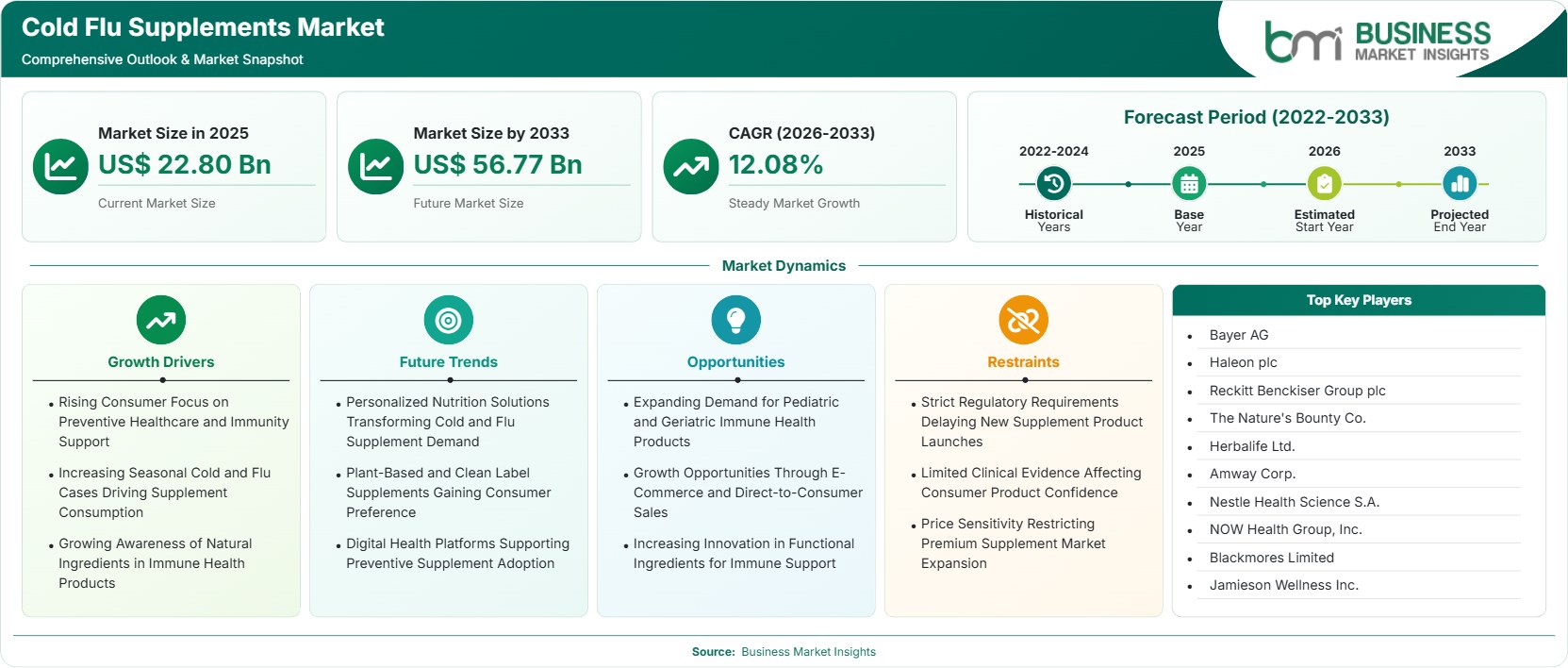
The Cold Flu Supplements Market size was valued at US$ 22.80 billion in 2025 and is projected to reach US$ 56.77 billion by 2033, growing at a CAGR of 12.08% during 2026–2033, driven by preventive healthcare, immunity awareness, seasonal illness prevalence, natural ingredients, e-commerce expansion, and functional ingredient innovation.

Report Coverage
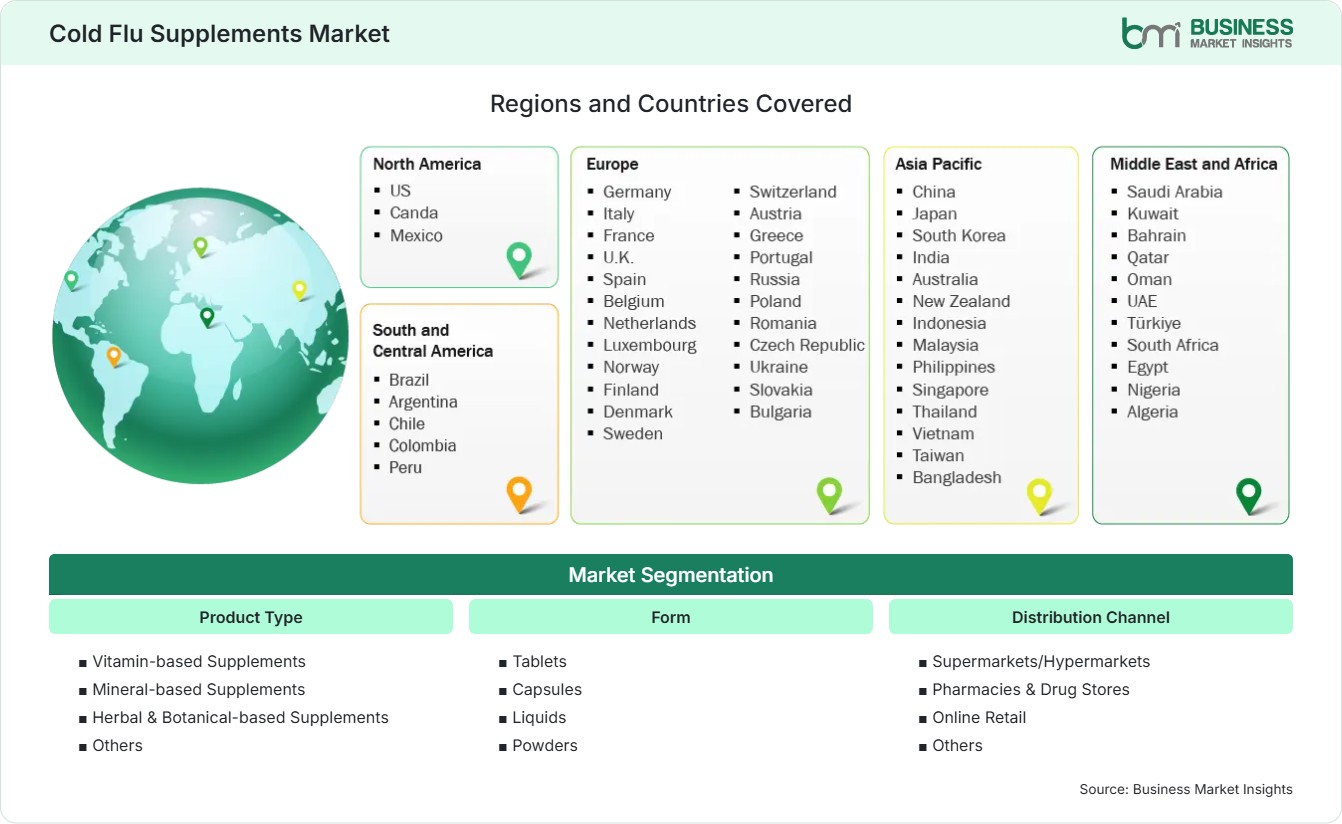
  • Product Type: Vitamin-based Supplements, Mineral-based Supplements, Herbal & Botanical-based Supplements, Others
  • Form: Tablets, Capsules, Liquids, Powders
  • Distribution Channel: Supermarkets/Hypermarkets, Pharmacies & Drug Stores, Online Retail, Others
US$ 22.80 Bn Market size in 2025
US$ 56.77 Bn Market Size by 2033
12.08% CAGR, 2026 - 2033
2026-2033 Forecast Period

01 AI Overview

Cold Flu Supplements Market Summary

  • North America Region: North America holds a 34%–38% share in 2025, growing with a CAGR of 11.0%–12.0%, influenced by preventive healthcare spending, strong supplement penetration, consumer immunity awareness, pharmacy distribution, and expanding online wellness purchasing.
  • Fastest Growing Region: Asia Pacific holds a 25%–29% share in 2025, growing with a CAGR of 13.5%–14.5%, supported by rising disposable income, preventive healthcare adoption, traditional herbal medicine integration, expanding e-commerce, and growing awareness of immune-support products.
  • Leading Segment: Vitamin-based Supplements hold a 38%–42% share in 2025, growing with a CAGR of 11.5%–12.5%, driven by established consumer familiarity, broad availability, immunity positioning, and increasing demand for convenient nutritional support.
  • High Growth Segment: Online Retail holds a 17%–21% Cold Flu Supplements market share in 2025, growing with a CAGR of 15.0%–16.0%, supported by digital health discovery, subscription purchasing, broader product selection, promotional pricing, and direct-to-consumer brand strategies.
  • Key Market Opportunity: Pediatric and geriatric formulations, personalized immune nutrition, evidence-backed botanicals, functional ingredients, and digitally enabled supplement purchasing create opportunities for differentiated brands and specialized product portfolios.
  • Major Market Players: Bayer AG, Haleon plc, Reckitt Benckiser Group plc, The Nature's Bounty Co., Herbalife Ltd., Amway Corp., Nestlé Health Science S.A., NOW Health Group, Inc., Blackmores Limited, and Jamieson Wellness Inc.
02 Strategic Insights

Cold Flu Supplements Market: Strategic Insights

Cold Flu Supplements Market Strategic Framework
FREE PDF
Request your free sample
Request free sample
03 Stakeholder View

Key Takeaways

  • The value chain is incorporating ingredient suppliers, formula specialists, contract manufacturers, supplement brands, pharmacies, supermarkets, marketplaces, and direct consumer portals, making channel strategy as critical as innovation.
  • Vitamin-based formulations serve as the commercial core, whereas those containing herbs and botanicals provide differentiation on a natural basis. The online retail route delivers the greatest channel advantage for wellness products as consumers conduct more online research and purchases.
  • Product development is shifting toward multifunctional formulas combining vitamins, minerals, botanicals, antioxidants, probiotics, and functional ingredients, with greater emphasis on dosage convenience, clean labels, and evidence-backed claims.
  • Asia Pacific presents the strongest expansion opportunity as rising healthcare awareness, increasing disposable income, traditional herbal practices, and e-commerce penetration support broader adoption of immune-support supplements.
  • Strategic activity is likely to favor companies with recognizable brands, clinically supported ingredients, differentiated formulations, and omnichannel distribution capabilities, while established consumer health groups continue strengthening portfolios through partnerships and targeted acquisitions.
  • Regulatory compliance and substantiation are becoming competitive assets. Companies capable of demonstrating ingredient quality, transparent sourcing, manufacturing consistency, and scientifically supported benefits can command stronger consumer trust and reduce commercialization risks.
04 Geographic Outlook

Cold Flu Supplements Market Regional Highlights

North America Cold Flu Supplements Market

North America accounted for a 34%–38% share in 2025 and is projected to grow at an 11.0%–12.0% CAGR during 2026–2033. The region benefits from established supplement consumption, widespread pharmacy access, strong consumer awareness of immune health, and high digital purchasing penetration. The US represents the primary regional Cold Flu Supplements market, supported by established brands, extensive retail networks, and strong demand for convenient immunity-support formats across seasonal and year-round wellness routines.

  • Consumers increasingly incorporate immune-support products into wider preventive health routines, generating demand beyond acute seasonal illness periods.
  • Drug stores remain important purchase destinations because consumers associate professional healthcare environments with product quality, established brands, and convenient access to recognized immune-support formulations.
  • Online retail is gaining share as consumers compare ingredients, read reviews, access specialized products, and use subscription models for recurring supplement purchases.
  • Demand is shifting toward clean-label, clinically supported, and multifunctional formulas, allowing established manufacturers to differentiate products through ingredient quality, formulation expertise, and transparent labeling.

US Cold Flu Supplements Market

The US held a 29%–33% share of global demand in 2025 and is expected to expand at a 10.5%–11.5% CAGR through 2033. A mature dietary supplement culture, strong consumer spending, pharmacy accessibility, and extensive online retail infrastructure support continued expansion. The cold flu supplements market is increasingly influenced by immunity positioning, ingredient transparency, personalized wellness, convenient dosage formats, and growing consumer interest in products combining seasonal respiratory support with broader nutritional benefits.

  • High consumer familiarity with dietary supplements supports repeat purchasing and facilitates new product introductions across vitamin, mineral, botanical, and combination formulations.
  • Supermarkets, pharmacies, drug stores, and digital marketplaces provide extensive product availability, allowing brands to reach consumers across both planned wellness purchases and seasonal demand cycles.
  • Manufacturers are increasingly emphasizing branded ingredients, botanical extracts, functional compounds, and combination formulas designed to differentiate products within a crowded immune-support category.

Europe Cold Flu Supplements Market

Europe represented a 22%–26% share in 2025 and is projected to register a 10.0%–11.0% CAGR through 2033. Germany leads regional demand, supported by established pharmacy channels and consumer acceptance of nutritional supplements, while the UK maintains strong branded consumer health activity. Poland offers comparatively faster growth at 12.0%–13.0% CAGR as modern retail, pharmacy penetration, and online purchasing expand. Regulatory compliance remains central to product positioning.

  • Germany benefits from established pharmacy distribution, high consumer awareness of vitamins and minerals, and strong demand for immune-support products during seasonal respiratory illness periods.
  • The UK offers a strong environment for branded consumer health products, supported by supermarket accessibility, pharmacy networks, and rapidly expanding digital wellness purchasing.
  • Poland represents a higher-growth opportunity as household healthcare awareness increases and modern retail and online channels broaden access to supplement products.
  • European regulatory frameworks encourage manufacturers to emphasize compliant claims, ingredient safety, and substantiated communication, increasing the importance of scientific and regulatory capabilities.

Asia Pacific Cold Flu Supplements Market

Asia Pacific captured a 25%–29% share in 2025 and APAC Cold Flu Supplements Market forecast to achieve a 13.5%–14.5% CAGR through 2033, making it the fastest-growing region. China leads regional demand, while Japan and Australia provide mature consumer markets. India is expected to grow at 15.0%–16.0% CAGR as preventive healthcare awareness, traditional botanical usage, disposable income, and digital commerce expand. Localized formulations and culturally relevant ingredients provide additional differentiation opportunities.

  • China combines substantial consumer health demand with strong e-commerce penetration, expanding wellness spending, and growing interest in traditional and modern immune-support ingredients.
  • India offers strong growth potential as preventive healthcare awareness increases and consumers increasingly access vitamins, minerals, herbal products, and combination supplements through digital channels.
  • Japan provides a sophisticated market for functional health products, supported by aging demographics, high health awareness, and established consumer acceptance of nutritional supplementation.
  • Australia benefits from a developed complementary health sector, strong natural product positioning, and established supplement brands with opportunities for premium immune-support formulations.

Rest of World Cold Flu Supplements Market

South and Central America represented a 7%–10% share in 2025 and is expected to grow at a 11.0%–12.0% CAGR through 2033, supported by expanding retail access and rising health awareness. Brazil leads regional demand, while Mexico benefits from modern retail and online commerce. Middle East and Africa represented a 5%–8% share, growing at a 9.5%–10.5% CAGR, with GCC markets providing premium wellness opportunities.

  • Brazil offers the strongest South American opportunity as consumers increasingly seek vitamins, herbal products, and immune-support formulations through pharmacies, supermarkets, and digital channels.
  • Mexico benefits from established pharmaceutical retail networks and increasing digital commerce, supporting wider access to branded supplements and convenient immunity-focused product formats.
  • Gulf markets provide opportunities for premium nutritional supplements as consumers increasingly prioritize wellness, preventive healthcare, and high-quality imported health products.
  • South Africa remains an important regional market where pharmacy distribution, consumer health awareness, and expanding online retail can support gradual category penetration.
Global Market Geography
FREE PDF
Request your free sample
Request free sample
05 Segment Analysis

Cold Flu Supplements Market Segmentation

Product Type

Product Type remains a core competitive dimension, with Vitamin-based Supplements leading at a 38%–42% share in 2025 and a 11.5%–12.5% CAGR during 2026–2034. Mineral and botanical products provide differentiation, while combination formulas increasingly address multiple consumer needs.

  • Vitamin-based Supplements: Vitamin C and vitamin D products benefit from broad consumer familiarity, strong immunity associations, extensive retail availability, and convenient formulations supporting recurring seasonal and preventive wellness purchases.
  • Mineral-based Supplements: Zinc-focused formulations remain relevant for immune-support positioning, with demand influenced by consumer awareness, combination formulas, convenient dosage formats, and increasing interest in targeted nutritional supplementation.
  • Herbal & Botanical-based Supplements: Botanical products benefit from natural ingredient preferences and traditional wellness practices, with innovation increasingly focused on elderberry, echinacea, and scientifically characterized plant extracts.
  • Others: Combination products and specialized functional formulations provide differentiation by integrating multiple nutrients or functional ingredients, targeting consumers seeking broader immune-support benefits through simplified supplementation routines.

Form

Form segmentation is increasingly influenced by convenience, portability, dosage preferences, and consumer lifestyle. Cold Flu Supplements Market trends increasingly favor convenient formats that improve adherence, support differentiated branding, and attract younger wellness-focused consumers.

  • Tablets: Tablets remain widely used due to affordability, manufacturing efficiency, dosage consistency, long shelf life, and extensive availability across pharmacies, supermarkets, and online retail platforms.
  • Capsules: Capsules support botanical and combination formulations, offering convenient consumption, premium positioning, and compatibility with ingredients requiring specialized delivery or controlled formulation approaches.
  • Liquids: Liquid supplements appeal to consumers seeking easier swallowing and flexible dosing, with particular potential among children, older adults, and consumers preferring rapid-consumption formats.
  • Powders: Powders enable flexible serving sizes and functional combinations, while single-serve sachets and drink-mix formats provide convenience for active consumers seeking portable immune-support products.

Distribution Channel

Distribution Channel remains strategically important as consumers increasingly combine traditional healthcare purchasing with digital discovery. Pharmacies and drug stores provide credibility, while supermarkets and hypermarkets offer mass-market visibility.

  • Supermarkets/Hypermarkets: These channels provide high consumer traffic and broad product visibility, supporting impulse purchases and seasonal promotions for mainstream vitamins, minerals, and immune-support supplements.
  • Pharmacies & Drug Stores: Pharmacies benefit from consumer trust and healthcare associations, making them particularly important for established brands and consumers seeking guidance or recognizable product formulations.
  • Online Retail: Online platforms enable extensive product discovery, comparison, subscriptions, personalized recommendations, and direct-to-consumer engagement, supporting faster category expansion and broader geographic reach.
  • Others: Health food stores, specialty wellness retailers, clinics, and direct selling channels provide targeted access to consumers seeking specialized, premium, natural, or practitioner-recommended supplement products.
06 Market Forces

Cold Flu Supplements Market Dynamics

Key Market Drivers

Rising Consumer Focus on Preventive Healthcare and Immunity Support

In preventive healthcare, the use of supplements is shifting from curing diseases to wellness management. There is a growing demand for products that are based on factors such as immunity support, nutrient requirements, and wellness maintenance throughout the year. Growth of Market is supported by this behaviour change since vitamins, minerals, and herbs can be a part of the consumers’ daily wellness regime as opposed to purchasing them only during the season of respiratory problems. This market trend is reinforced by greater health information availability, and the expansion of personalized wellness services.

Increasing Seasonal Cold and Flu Cases Driving Supplement Consumption

The fluctuations in respiratory disease during seasonal changes lead to periodic increases in consumer interest in their immune system function, especially during cold seasons when there are more respiratory infections. As a result, consumers may boost their purchase of such products as vitamin C, zinc, vitamin D, herbal supplements, and combined formulas. The seasonal demand leads to intense marketing moments for the manufacturer and retailer and provides an opportunity for better preparation.

Growing Awareness of Natural Ingredients in Immune Health Products

There is increased consumer interest in products that contain recognizable and natural ingredients, leading to the increasing demand for herbal and botanical immune supporting products. There is an increase in the use of such ingredients as Elderberry, Echinacea, Ginger, and others in supplements that target immune support and seasonal health. Growth of the market show increased interest in natural, minimally processed products with transparent ingredient sourcing and botanicals that align more closely with holistic wellness products.

Key Market Opportunities

Expanding Demand for Pediatric and Geriatric Immune Health Products

Pediatric and geriatric consumers are unique consumer groups since their dietary demands, consumption tastes, and product requirements vary significantly from regular adult populations. Children prefer like liquids, powders, gummies, or even flavored forms while elderly prefer easier swallowing, combined nutrition, and even better health care needs. Companies can develop unique portfolios for such products by formulating them according to age group requirements and providing instructions on appropriate dosages and delivery mechanisms. The opportunity also extends to caregivers, who frequently influence purchasing decisions for both children and older adults.

Growth Opportunities Through E-Commerce and Direct-to-Consumer Sales

E-commerce is making supplements more accessible due to removal of geographical barriers, facilitating education about products and promoting repeat purchases through subscription programs. The direct-to-consumer model helps suppliers gather information about consumers, make personalized suggestions, test new formulas and build relationships without completely depending upon traditional retail middlemen. It is especially beneficial for specialty products which can occupy limited shelf space at retail locations.

Increasing Innovation in Functional Ingredients for Immune Support

Ingredient innovation is creating opportunities beyond traditional vitamin and mineral products. Manufacturers are investigating functional botanicals, standardized plant extracts, probiotics, prebiotics, postbiotics, antioxidants, and combination formulations designed to support broader immune health positioning. This creates potential for premium products that differentiate through proprietary ingredient blends and evidence-based formulation strategies. Innovation can also address consumer demand for personalized nutrition by tailoring formulations to age, lifestyle, dietary preference, and seasonal needs.

Market Restraints and Challenges

Strict Regulatory Requirements Delaying New Supplement Product Launches

Factor: Companies that manufacture dietary supplements have to adhere to diverse regulations regarding the composition, safety, labeling, health claims, manufacturing processes, and promotional activities associated with such products. Regulatory approval and substantiation processes can result in delays and increased cost of bringing new products into the market, especially those with innovative components or particular claims about their function. Impact: Such delays may hinder commercialization and limit the positioning of certain products.

Limited Clinical Evidence Affecting Consumer Product Confidence

Factor: Evidence regarding the efficacy and dosages of certain ingredients and formulations can differ substantially, especially when it comes to plant-based substances and multiple-ingredient supplements. The consumers may be faced with contradicting statements about the efficacy and proper usage of certain products that do not have solid scientific backing for their health claims. Impact: Insufficient evidence can decrease consumer trust and hinder justifying premium pricing.

07 Company Analysis

Competitive Landscape

Competitive landscape includes global consumers’ health care products firms, nutraceuticals, direct selling firms, and firms involved in natural health. Cold Flu Supplements Market analysis reveals that top companies compete on the basis of brand recognition, product formulation, ingredient quality, distribution channel, science-backed products, and omnichannel approach.

Company Name

Overview

Products and Services relevant to this market

Bayer AG

Global life sciences company with established consumer healthcare and nutritional health capabilities across international markets.

Consumer health products, vitamins, minerals, nutritional supplements, and wellness solutions supporting immunity and seasonal health needs.

Haleon plc

Global consumer healthcare company with strong brands spanning vitamins, minerals, supplements, and everyday health categories.

Immune-support supplements, vitamins, minerals, wellness products, consumer health brands, and nutritional health solutions.

Reckitt Benckiser Group plc

Global consumer health company with established healthcare brands and extensive international distribution capabilities.

Consumer healthcare products, nutritional supplements, wellness solutions, and health-focused products distributed through multiple retail channels.

The Nature's Bounty Co.

Supplement company focused on vitamins, minerals, herbs, and nutritional wellness products for mainstream consumers.

Vitamin C, vitamin D, zinc, herbal supplements, immune-support products, capsules, tablets, and other nutritional formats.

Herbalife Ltd.

Global nutrition company operating through direct-selling channels and offering broad wellness and nutritional supplement portfolios.

Vitamins, minerals, botanical ingredients, nutritional supplements, immune-support products, powders, and personalized wellness solutions.

Amway Corp.

Global direct-selling company with a major nutrition portfolio and established consumer wellness distribution network.

Nutritional supplements, vitamins, minerals, botanical products, immune-support formulations, and wellness-focused nutrition products.

Nestlé Health Science S.A.

Specialized nutrition company focused on science-based health, nutrition, and wellness solutions across consumer and clinical markets.

Nutritional supplements, functional nutrition products, vitamins, minerals, botanical ingredients, and specialized health solutions.

NOW Health Group, Inc.

Family-owned natural products company offering extensive vitamins, minerals, herbs, and nutritional supplement portfolios.

Vitamin C, zinc, herbal products, botanical supplements, capsules, powders, liquids, and immune-support formulations.

Blackmores Limited

Australian natural health company with established nutritional supplement brands and broad Asia Pacific distribution.

Vitamins, minerals, herbal supplements, immune-support products, nutritional formulations, capsules, tablets, and wellness products.

Jamieson Wellness Inc.

Canadian consumer health company specializing in vitamins, minerals, supplements, and branded natural health products.

Vitamins, minerals, herbal supplements, immune-support products, nutritional formulations, tablets, capsules, and wellness solutions.


10 Trust & Transparency

Research Methodology

The market analysis combines proprietary research with secondary data from government agencies, company disclosures, regulatory filings, industry databases and expert interviews. Market estimates are validated through data triangulation, cross-market benchmarking and analyst review.

View Full Research Methodology

11 Questions Answered

Frequently Asked Questions

What makes online retail important for cold flu supplements market report?

Online retail provides greater assortment, consumer reviews, subscription options, direct engagement, and geographic reach than many physical retail formats.

How is personalization influencing supplement development?

Personalization is encouraging brands to consider age, lifestyle, dietary preferences, seasonal needs, and individual wellness goals when developing products.

Why are combination formulations gaining attention?

Combination formulations simplify supplementation by bringing multiple vitamins, minerals, botanicals, and functional ingredients into a single product.

How can supplement companies improve consumer trust?

Companies can build trust through transparent source of their ingredients, proper labeling, standardized botanical extract, third party testing, and scientific claims.

What consumer demographic offers the greatest untapped potential?

Children and older adults represent attractive opportunities because their supplement preferences and nutritional requirements differ from mainstream adult consumers.

Access the Full Cold Flu Supplements Market Report

Get segment-level forecasts, regional estimates, competitive benchmarking, company profiles and downloadable Excel datasets.

Access the full Cold Flu Supplements Market Report
350 pages PDF & Excel | 2026-08-04