
Vegan Supplements Market Outlook: Size, Share, Trends, Growth Analysis, Competitive Landscape & Forecast, 2026-2033

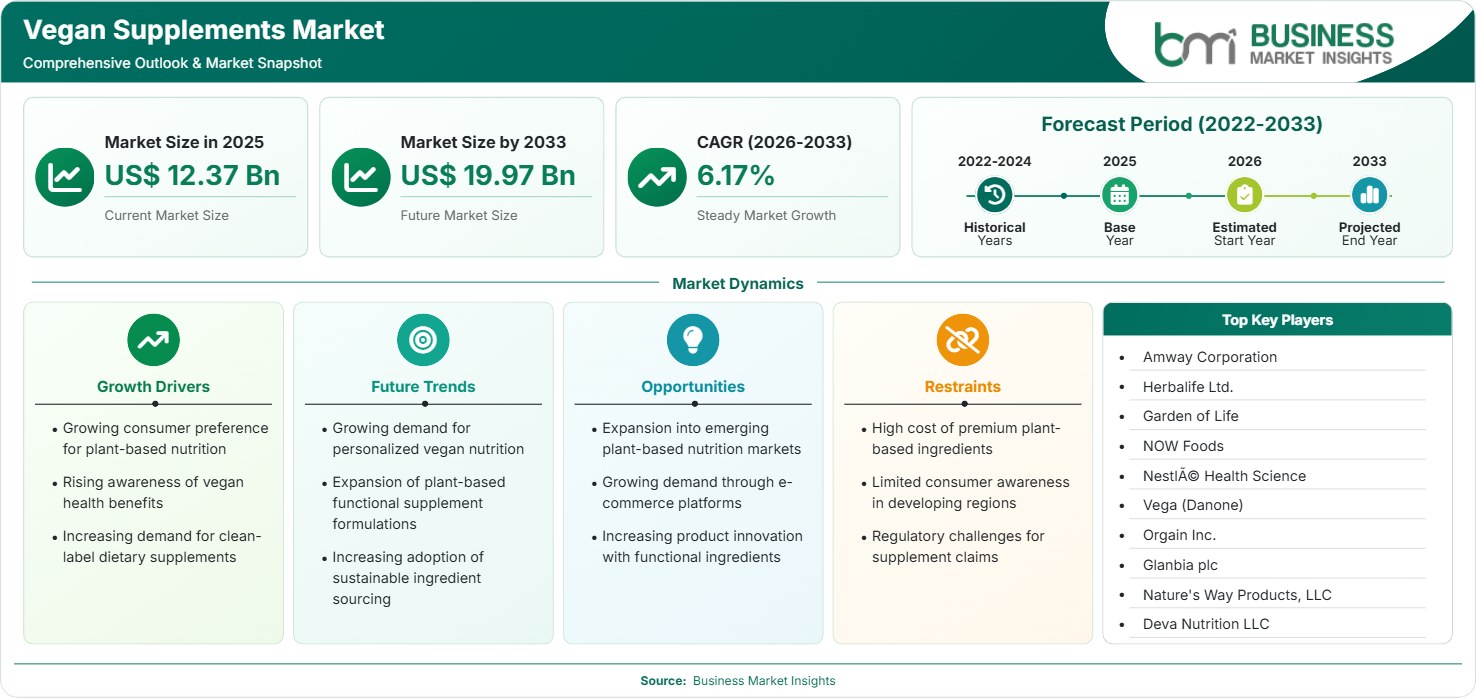
The Vegan Supplements Market size was valued at US$ 12.37 Billion in 2025 and is projected to reach US$ 19.97 Billion by 2033, growing at a CAGR of 6.17% during 2026–2033, driven by plant-based nutrition adoption, clean-label demand, wellness awareness, functional ingredient innovation, and expanding digital retail opportunities.

Report Coverage
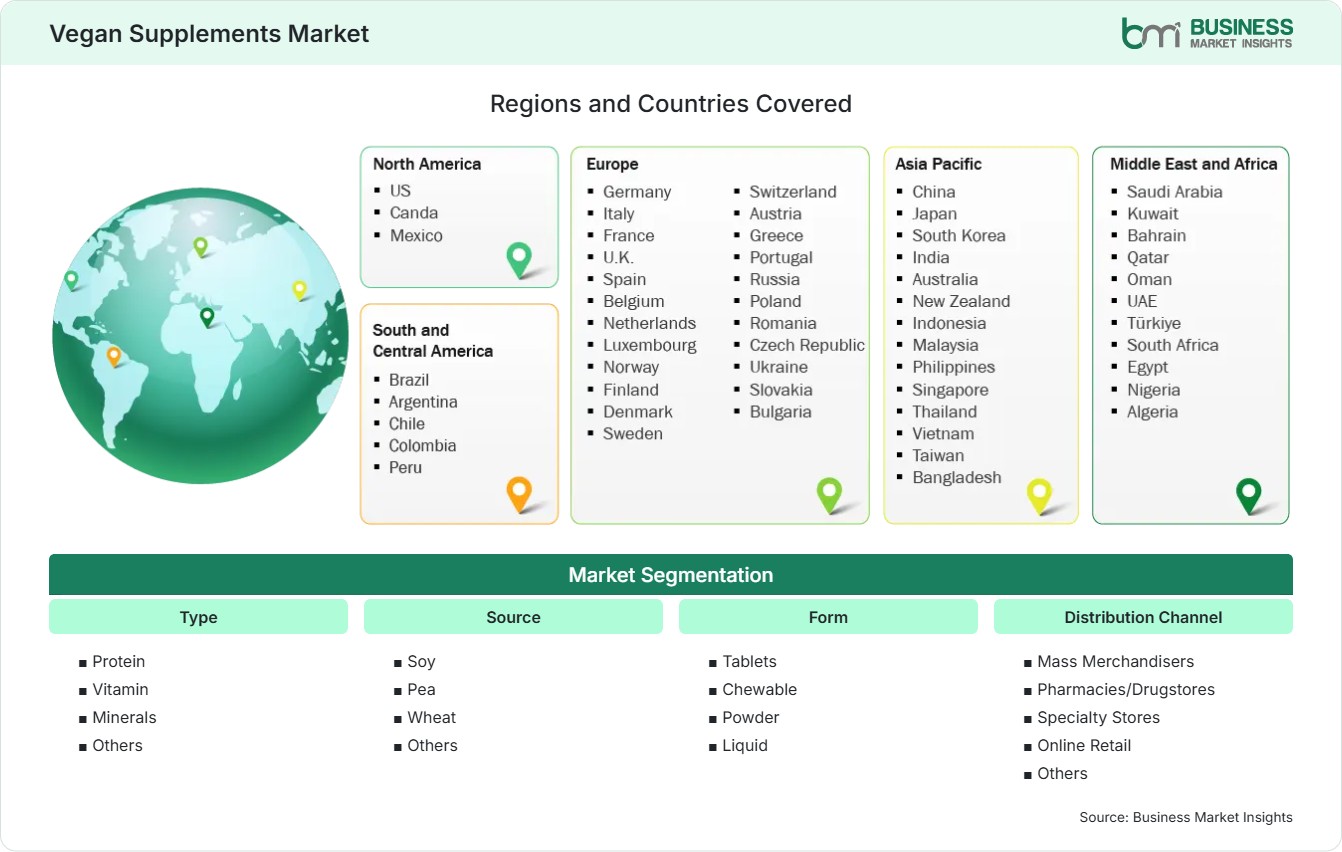
  • Type: Protein, Vitamin, Minerals, Others
  • Source: Soy, Pea, Wheat, Others
  • Form: Tablets, Chewable, Powder, Liquid
  • Distribution Channel: Mass Merchandisers, Pharmacies/Drugstores, Specialty Stores, Online Retail, Others
US$ 12.37 Bn Market size in 2025
US$ 19.97 Bn Market Size by 2033
6.17% CAGR, 2026 - 2033
2026-2033 Forecast Period

AI Overview

Vegan Supplements Market Summary

  • North America Region: North America holds a 38%–42% share in 2025, growing with a CAGR of 5.8%–6.3% during 2026–2033, influenced by strong vegan lifestyle adoption, health awareness, premium nutrition demand, and advanced supplement distribution networks. The US market demonstrates consistent expansion due to increasing plant-based diets, consumer wellness spending, and established supplement brands, supported by a CAGR of 5.9%–6.4% between 2026 and 2033.
  • Fastest Growing Region: Asia Pacific holds a 20%–24% share in 2025, expanding at a CAGR of 6.8%–7.3% during 2026–2033, supported by rising health consciousness, growing middle-class populations, e-commerce expansion, and increasing acceptance of plant-derived nutritional products.
  • Leading Segment: Protein supplements hold a 42%–46% share in 2025, progressing with a CAGR of 6.3%–6.8% during 2026–2033, driven by sports nutrition demand, vegan fitness communities, muscle health awareness, and increasing preference for plant-based protein alternatives.
  • High Growth Segment: Liquid supplements hold a 12%–16% share in 2025, advancing at a CAGR of 7.0%–7.5% during 2026–2033, supported by convenience trends, faster consumption formats, functional formulations, and growing demand for ready-to-use nutrition products.
  • Key Market Opportunity: Opportunities are emerging through personalized vegan nutrition, emerging market expansion, functional formulations, digital commerce growth, and innovative plant-based ingredient development.
  • Major Market Players: Amway Corporation, Herbalife Ltd., Garden of Life, NOW Foods, Nestlé Health Science, Vega (Danone), Orgain Inc., Glanbia plc, Nature's Way Products, LLC, Deva Nutrition LLC.
Strategic Insights

Vegan Supplements Market: Strategic Insights

Vegan Supplements Market Strategic Framework
FREE PDF
Request your free sample
Request free sample
Stakeholder View

Key Takeaways

  • The market ecosystem is evolving through collaboration among ingredient suppliers, supplement manufacturers, retailers, nutrition brands, and digital platforms focused on plant-based health solutions.
  • Protein-based supplements represent a major growth opportunity due to increasing fitness participation, sports nutrition demand, and consumer preference for sustainable protein alternatives.
  • Innovation is shifting toward functional formulations incorporating adaptogens, probiotics, vitamins, minerals, and advanced plant-derived ingredients to improve product differentiation.
  • Asia Pacific provides significant expansion potential due to rising health awareness, growing disposable income, and increasing adoption of online nutrition product purchasing.
  • Strategic partnerships and portfolio expansion are increasing as companies seek stronger positions in plant-based nutrition, functional wellness, and sustainable ingredient markets.
  • Digital commerce is becoming an important growth channel by improving consumer access, enabling direct engagement, and supporting personalized vegan supplement recommendations.
Geographic Outlook

Vegan Supplements Market Regional Highlights

North America Vegan Supplements Market

North America accounted for a 38%–42% share in 2025 and is projected to grow at a CAGR of 5.8%–6.3% during 2026–2033. The region maintains leadership due to high consumer awareness, established supplement companies, and strong demand for plant-based nutrition products. The Vegan Supplements Market growth is influenced by clean-label trends, sports nutrition demand, and wellness-focused purchasing behavior.

  • The United States represents the largest regional contributor due to strong demand for vegan nutrition products, fitness supplements, and premium wellness formulations among health-conscious consumers.
  • Canada demonstrates growth through increasing plant-based food adoption, sustainability awareness, and expanding availability of vegan supplements across retail and online channels.
  • Supplement manufacturers are investing in innovative plant-based formulations to meet consumer demand for improved taste, performance, and nutritional benefits.
  • Digital platforms are strengthening product accessibility by enabling consumers to compare ingredients, reviews, and nutritional information before purchasing.

US Vegan Supplements Market

The US accounted for a 32%–36% share within North America in 2025 and is expected to register a CAGR of 5.9%–6.4% during 2026–2033. The country remains a key innovation center due to strong supplement consumption patterns, fitness culture, and demand for sustainable nutrition solutions. The Vegan Supplements Market share in the US is supported by established brands, broad retail availability, and increasing interest in plant-based wellness.

  • Consumer preference for clean-label products is encouraging companies to develop transparent formulations with recognizable plant-based ingredients.
  • Fitness communities are increasing demand for vegan protein supplements designed for muscle support, recovery, and active lifestyles.
  • Online nutrition platforms are expanding market reach by providing convenient purchasing options and subscription-based supplement models.
  • Manufacturers are focusing on sustainable sourcing practices to strengthen brand positioning among environmentally conscious consumers.

Europe Vegan Supplements Market

Europe represented a 26%–30% share in 2025 and is expected to expand at a CAGR of 5.7%–6.2% during 2026–2033. The region benefits from strong sustainability awareness, growing vegan populations, and increasing demand for ethical and clean-label nutrition products. Germany, the United Kingdom, and France are leading markets due to established health and wellness industries. The Vegan Supplements Market share in Europe is supported by consumer interest in plant-based diets, premium supplements, and transparent ingredient sourcing.

  • Germany is a major market due to strong consumer awareness of sustainable nutrition, developed health product retail channels, and increasing demand for vegan wellness solutions.
  • The United Kingdom demonstrates growth through rising vegan adoption, sports nutrition demand, and expansion of specialized plant-based supplement brands.
  • France is witnessing increasing interest in natural nutrition products as consumers seek healthier lifestyles and environmentally responsible supplement options.
  • European manufacturers are emphasizing organic certifications, sustainable sourcing, and transparent labeling to strengthen consumer trust.
  • Regulatory focus on supplement quality and ingredient safety is encouraging companies to improve formulation standards and product credibility.

Asia Pacific Vegan Supplements Market

Asia Pacific accounted for a 20%–24% share in 2025 and is projected to grow at a CAGR of 6.8%–7.3% during 2026–2033. The region represents the fastest-growing market due to rising health awareness, increasing disposable income, expanding e-commerce platforms, and growing interest in preventive nutrition. China, India, Japan, and Australia are important contributors due to evolving consumer preferences and increasing availability of plant-based products. The Vegan Supplements Market in Asia Pacific is supported by lifestyle changes and wellness trends.

  • China is expanding through increasing health consciousness, digital retail growth, and rising demand for nutritional supplements among urban consumers.
  • India presents strong opportunities due to growing fitness awareness, expanding middle-class populations, and increasing acceptance of plant-based nutrition products.
  • Japan demonstrates demand through aging population needs, preventive healthcare focus, and interest in high-quality functional supplements.
  • Australia supports regional development through established wellness markets and strong consumer preference for natural and sustainable products.
  • Regional companies are investing in localized formulations to address specific nutritional requirements and consumer preferences.

Rest of World Vegan Supplements Market

Latin America and Middle East & Africa accounted for a 6%–10% share in 2025 and are projected to grow at a CAGR of 5.5%–6.0% during 2026–2033. These regions are developing through increasing health awareness, expanding retail infrastructure, and growing interest in wellness products. Brazil, Mexico, UAE, and South Africa represent emerging markets due to rising consumer spending and improving access to nutritional supplements. The market remains developing but offers opportunities through digital commerce and product education.

  • Brazil is witnessing increasing demand for plant-based nutrition products due to wellness trends and expanding health-conscious consumer segments.
  • Mexico is developing through improving retail availability, growing fitness participation, and increasing awareness of nutritional supplementation.
  • UAE is experiencing demand growth through premium wellness consumption and rising interest in international health product brands.
  • South Africa provides opportunities through expanding health retail networks and increasing awareness of plant-based dietary choices.
  • Regional markets require stronger consumer education and affordable product offerings to accelerate broader adoption.
Global Market Geography
FREE PDF
Request your free sample
Request free sample
Segment Analysis

Vegan Supplements Market Segmentation

Type

The Type segment is led by Protein supplements, which accounted for a 40%–45% share in 2025 and is projected to grow at a CAGR of 6.0%–6.5% between 2026–2033. Consumer demand is shifting toward plant-based nutrition products supporting fitness, immunity, and overall wellness. The Vegan Supplements Market scope is expanding through diversified formulations containing proteins, vitamins, minerals, and functional ingredients. Protein supplements represent the leading category due to increasing sports nutrition demand.

  • Protein: Protein supplements dominate due to fitness trends, muscle health awareness, and increasing demand for sustainable plant-derived protein sources.
  • Vitamin: Vitamin supplements are gaining adoption through preventive healthcare trends, immunity support requirements, and consumer focus on nutritional balance.
  • Minerals: Mineral supplements support wellness needs by addressing nutritional gaps and providing essential nutrients through plant-based formulations.

Source

The Source segment is led by Soy-based supplements, which accounted for a 35%–40% share in 2025 and is projected to grow at a CAGR of 6.0%–6.5% between 2026–2033. Plant-based ingredient selection influences nutritional performance, consumer perception, and product positioning. The trends reflect increasing preference for sustainable, allergen-conscious, and easily digestible sources. Soy, pea, and wheat-based ingredients remain important due to availability and formulation flexibility.

  • Soy: Soy-based supplements remain popular due to high protein content, affordability, and established use in plant-based nutrition products.
  • Pea: Pea-based supplements are gaining demand due to allergen-friendly properties, sustainability benefits, and strong amino acid profiles.
  • Wheat: Wheat-based supplements support nutritional applications through plant protein availability and established ingredient processing capabilities.

Form

The Form segment is dominated by Powder supplements, which accounted for a 45%–50% share in 2025 and are expected to grow at a CAGR of 6.0%–6.5% between 2026–2033. Product format preferences are influenced by convenience, portability, and consumer lifestyle requirements. The segment is evolving through improved formulation technologies and enhanced consumer experiences. Powder formats maintain strong adoption, while liquid supplements are gaining interest through convenience-driven consumption patterns.

  • Tablets: Tablets provide convenience, accurate dosage, and extended shelf stability, supporting widespread adoption across health-conscious consumers.
  • Chewable: Chewable supplements attract consumers seeking easier consumption formats, improved taste, and convenient nutritional support.
  • Powder: Powder supplements remain popular due to versatility, customization options, and suitability for protein-based nutrition applications.
  • Liquid: Liquid supplements are growing through ready-to-consume formats, fast absorption preferences, and demand for convenient wellness products.

Distribution Channel

The Distribution Channel segment is led by Online Retail, which accounted for a 30%–35% share in 2025 and is projected to expand at a CAGR of 6.0%–6.5% between 2026–2033. Distribution strategies are evolving through digital commerce, specialty wellness retailers, and expanding health-focused product availability. The Vegan Supplements Market trends indicate increasing consumer preference for convenient purchasing, subscription models, and direct-to-consumer platforms. Online Retail is gaining momentum due to accessibility, product variety, and consumer review influence.

  • Mass Merchandisers: Mass merchandisers provide broad consumer access through established retail networks, competitive pricing, and availability of popular vegan supplement brands.
  • Pharmacies/Drugstores: Pharmacies and drugstores support consumer trust through healthcare-oriented environments and accessibility for wellness-focused supplement purchases.
  • Specialty Stores: Specialty stores attract consumers seeking premium vegan products, expert guidance, and specialized nutrition solutions.
  • Online Retail: Online retail is expanding through convenience, wider product selection, digital marketing, and direct consumer engagement strategies.
Market Forces

Vegan Supplements Market Dynamics

Key Market Drivers

Growing consumer preference for plant-based nutrition

Consumer preferences for plant nutrition are growing as people opt for sustainable, ethical, and health-oriented substitutes for regular dietary supplements. Increasing consumer interest in veganism and eco-friendly practices, along with the need for ingredient transparency, is pushing customers towards plant-based supplements. The fitness community, wellness-oriented customers, and younger generations are responsible for the growth of vegan proteins, vitamins, and functional nutrition. The Vegan Supplements Market growth is supported by changing dietary habits, rising demand for sustainable wellness solutions, and broader acceptance of plant-based ingredients across mainstream nutrition categories.

Rising awareness of vegan health benefits

Awareness about health benefits from vegans is influencing the adoption of plant-based supplements among consumers in their wellness programs. Growing knowledge about nutritional balance, preventive healthcare, and essential nutrients is helping to facilitate the use of plant-based supplements among health-conscious people. Consumers are opting for supplements that help maintain immunity, energy levels, muscle fitness, and general wellness without using any animal-based ingredients. The Vegan Supplements Market trends indicate growing demand for products that combine nutritional benefits with clean formulations. Companies are investing in education-focused marketing and scientific research to strengthen consumer confidence in the effectiveness of vegan supplements.

Increasing demand for clean-label dietary supplements

The increasing popularity of clean-label dietary supplements is impacting the development of new product offerings within the nutrition sector. There has been a tendency among consumers to favour dietary supplements with familiar ingredients, fewer additives, clear labels, and sustainable manufacturing processes. This trend is prompting food companies to develop new products using plant-based proteins, natural extracts, vitamins, and sustainably sourced minerals. Retailers have been expanding their clean nutrition offerings to meet the growing needs of their consumers. Market growth is driven by demand for greater transparency and functional nutrition options.

Key Market Opportunities

Expansion into emerging plant-based nutrition markets

Inclusion in the emerging markets for plant-based nutrition opens up immense possibilities owing to an increase in health consciousness and shifting diet habits among the consumers in developing nations. With rising disposable income levels, urbanization, and availability of nutritious products, vegan supplements have begun to find their footing among new consumer bases. There is scope for companies to increase their market penetration through local product formulation, collaboration with regional firms, and affordable pricing. The Vegan Supplements Market Forecasts indicate that emerging markets will become important contributors through broader availability and increasing acceptance of plant-based health products.

Growing demand through e-commerce platforms

Increasing customer demand through e-commerce portals offers new opportunities for vegan supplement companies, including greater accessibility, customer interaction, and purchases. E-commerce portals allow companies to connect with more customers, give information about their products and develop relationships with them. Through subscription offers, individualized recommendations, and e-marketing activities, the companies are working to retain their customers and increase the visibility of their products. Customers are using e-commerce portals to review ingredients, certificates, reviews, and nutritional value before purchasing supplements. Small companies can compete through digital markets without physical stores. The growth of mobile commerce and logistics infrastructures will further promote online sales.

Increasing product innovation with functional ingredients

Increasing product innovation with functional ingredients is creating opportunities for companies to develop differentiated vegan supplements targeting specific wellness needs. Manufacturers are incorporating probiotics, botanical extracts, antioxidants, adaptogens, and specialized nutrients to enhance product value. Consumers are looking for products that boost their immunity, digestive system, energy levels, and personal needs other than just nutrition. Modern formulation technologies have enhanced the flavour, absorption rate, and stability of these products. Companies engaged in research and development can benefit from this market segment by developing their own high-value functional products. Innovation in formulation technologies and ingredients will open new applications for such products.

Market Restraints and Challenges

High cost of premium plant-based ingredients

Factor: Specialty ingredients, organic certifications, sustainable sourcing practices, and advanced processing requirements increase production expenses for vegan supplements. Impact: Higher manufacturing costs can increase retail prices, limit affordability, and restrict adoption among price-sensitive consumers. In addition, corporations must streamline their supply chains and become more efficient in sourcing materials and implementing cost-effective production processes in response to cost pressure issues. Another thing that may influence costs is the variation in the availability of ingredients. Companies are considering working together with suppliers and finding alternative sources for ingredients to better manage their costs.

Limited consumer awareness in developing regions

Factor: Lack of knowledge regarding vegan supplement benefits, limited nutrition education, and lower product familiarity affect purchasing decisions. Impact: Reduced awareness can slow adoption rates, increase marketing requirements, and delay penetration into emerging markets. Investments in education, communication, and availability of product information are key to building consumer confidence. Collaboration with healthcare professionals, retailers, and technology is an important way of increasing awareness and encouraging adoption. Increasing the level of consumer awareness on the benefits of plant-based nutrition is critical for sustainable development in developing areas.

Company Analysis

Competitive Landscape

The Vegan Supplements Market analysis highlights a competitive environment influenced by plant-based nutrition innovation, clean-label product development, sustainable ingredient sourcing, and expanding digital distribution channels. Leading companies are focusing on functional formulations, improved nutritional performance, brand differentiation, and consumer engagement strategies to strengthen their positions in the global supplement industry.

Company Name

Overview

Products and Services relevant to this market

Amway Corporation

Global direct-selling health and wellness company offering nutrition, lifestyle, and supplement products across multiple markets.

Provides plant-based nutrition supplements, wellness products, and dietary solutions through established distribution networks.

Herbalife Ltd.

Global nutrition company focused on health, wellness, weight management, and active lifestyle products.

Offers plant-based protein supplements, nutrition products, and wellness formulations supporting vegan consumers.

Garden of Life

Health nutrition brand specializing in organic, clean-label, and natural supplement solutions.

Provides vegan vitamins, minerals, protein supplements, and certified plant-based nutrition products.

NOW Foods

Supplement manufacturer offering natural health products, vitamins, minerals, and nutritional solutions.

Develops vegan-friendly supplements including plant proteins, vitamins, minerals, and specialty formulations.

Nestlé Health Science

Global nutrition-focused company developing science-based health and wellness products.

Provides nutritional supplements, plant-based wellness products, and innovative nutrition solutions.

Vega (Danone)

Plant-based nutrition brand focused on vegan protein, wellness, and functional nutrition products.

Offers vegan protein powders, nutritional supplements, and plant-based performance nutrition products.

Orgain Inc.

Nutrition company specializing in organic, clean, and plant-based nutritional products.

Provides vegan protein powders, shakes, bars, and plant-based supplement solutions.

Glanbia plc

Global nutrition company focused on performance nutrition and ingredient solutions.

Develops plant-based protein ingredients and nutritional products for wellness applications.

Nature's Way Products, LLC

Natural supplement company offering vitamins, herbal products, and wellness solutions.

Provides vegan vitamins, minerals, herbal supplements, and plant-derived nutritional products.

Deva Nutrition LLC

Vegan supplement company focused on certified vegan vitamins and nutritional products.

Offers vegan multivitamins, minerals, and specialty dietary supplements for plant-based consumers.

Trust & Transparency

Research Methodology

The market analysis combines proprietary research with secondary data from government agencies, company disclosures, regulatory filings, industry databases and expert interviews. Market estimates are validated through data triangulation, cross-market benchmarking and analyst review.

View Full Research Methodology

Questions Answered

Frequently Asked Questions

How does the Vegan Supplements Market Report support businesses?

The report provides strategic insights into segment performance, regional opportunities, competitive positioning, consumer trends, and future investment areas.

What role do functional ingredients play in vegan supplements?

Functional ingredients help brands develop targeted products supporting immunity, digestion, energy, recovery, and personalized wellness requirements beyond basic nutritional supplementation.

Why are online channels important for brands in vegan supplements market?

Online channels provide wider accessibility, consumer education opportunities, personalized recommendations, subscription models, and direct brand engagement with health-conscious customers.

How are companies improving vegan supplement product quality?

Companies are improving quality through better ingredient sourcing, advanced extraction methods, improved formulations, certifications, and research focused on nutritional effectiveness.

What is driving demand for vegan supplements among consumers?

Demand is increasing due to rising interest in plant-based diets, clean-label products, sustainability concerns, fitness trends, and greater awareness of preventive nutrition benefits.

Access the Full Vegan Supplements Market Report

Get segment-level forecasts, regional estimates, competitive benchmarking, company profiles and downloadable Excel datasets.

Access the full Vegan Supplements Market Report
350 pages PDF & Excel | 2026-08-31
Similar Research

Related Market Reports