
Zinc Supplements Market Outlook: Size, Share, Trends, Growth Analysis, Competitive Landscape & Forecast, 2026-2033

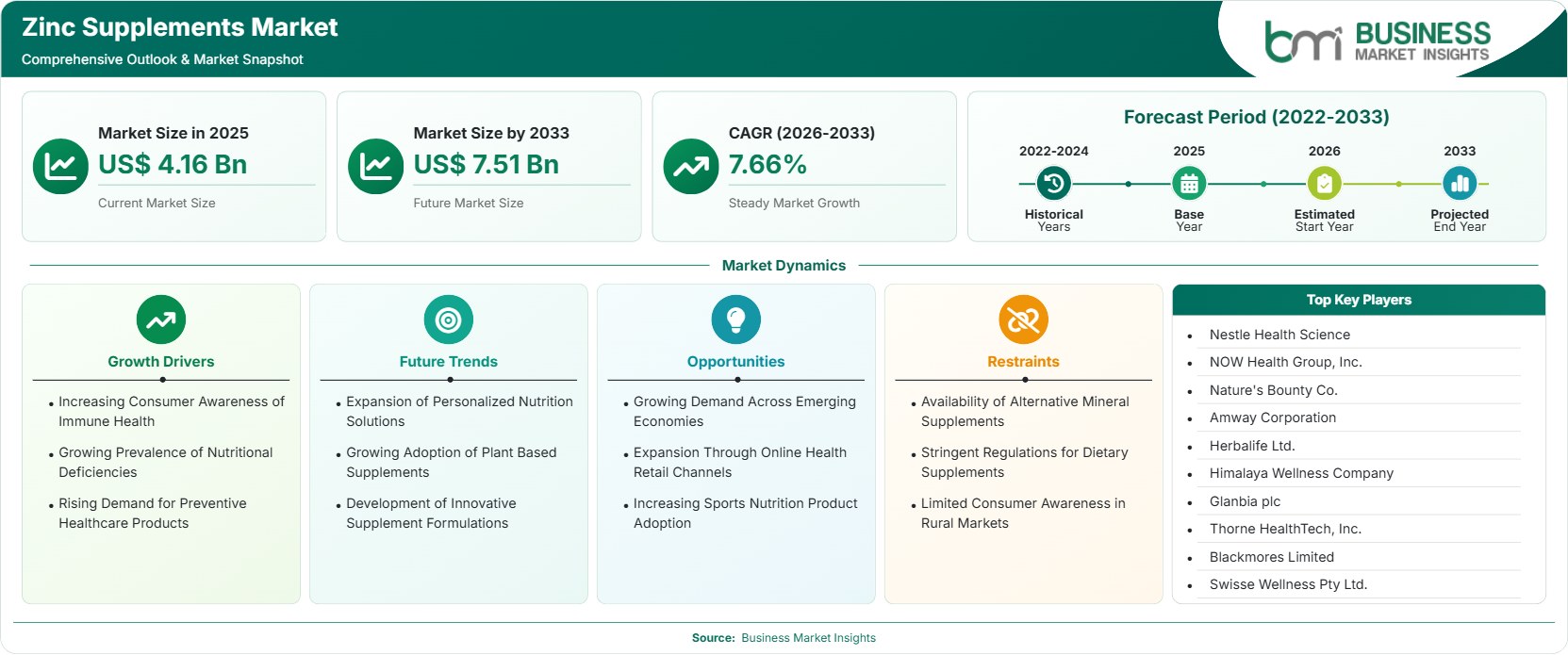
The Zinc Supplements Market size was valued at US$ 4.16 Billion in 2025 and is projected to reach US$ 7.51 Billion by 2033, growing at a CAGR of 7.66% during 2026–2033. Rising awareness of immune health, increasing nutritional deficiencies, expanding preventive healthcare adoption, and growing online supplement accessibility continue creating attractive opportunities for manufacturers worldwide.

Report Coverage
  • Type: Zinc Gluconate, Zinc Citrate, Zinc Picolinate, Zinc Sulfate, Others
  • Form: Tablets, Capsules, Liquids, Others
  • Application: Immunity Support, General Wellness, Skin & Hair Health, Others
  • Distribution Channel: Supermarkets/Hypermarkets, Pharmacies & Drug Stores, Specialty Stores, Online Retail
US$ 4.16 Bn Market size in 2025
US$ 7.51 Bn Market Size by 2033
7.66% CAGR, 2026 - 2033
2026-2033 Forecast Period

AI Overview

Zinc Supplements Market Summary

  • North America Region: North America holds 34%–37% of global revenue in 2025 and is expected to expand at a 7.2%–7.5% CAGR during 2026–2033. High dietary supplement awareness, strong retail penetration, clinical nutrition adoption, and premium product innovation continue supporting demand. The United States dominates the regional market through widespread consumer adoption, advanced healthcare infrastructure, and expanding personalized nutrition products, advancing at a 7.3%–7.7% CAGR.
  • Fastest Growing Region: Asia Pacific accounts for 26%–29% of market revenue in 2025 and is forecast to register the fastest 8.5%–8.9% CAGR through 2033. Rising disposable incomes, increasing health awareness, expanding e-commerce, growing preventive healthcare spending, and government nutrition initiatives continue accelerating regional consumption.
  • Leading Segment: Zinc Gluconate represents 36%–39% of total revenue in 2025 and is projected to grow at a 7.5%–7.8% CAGR during the forecast period. High bioavailability, widespread clinical acceptance, and extensive application in immunity supplements continue supporting its market leadership.
  • High Growth Segment: Online Retail accounts for 21%–24% of revenue in 2025 while recording the highest 9.2%–9.6% CAGR through 2033. Expanding digital commerce platforms, subscription-based wellness services, and direct-to-consumer supplement brands continue strengthening online sales.
  • Key Market Opportunity: Increasing consumer preference for preventive healthcare, personalized nutrition, and scientifically formulated dietary supplements creates substantial opportunities for manufacturers introducing innovative zinc formulations through omnichannel distribution networks.
  • Major Market Players: Nestlé Health Science, NOW Health Group, Inc., Nature's Bounty Co., Amway Corporation, Herbalife Ltd., Himalaya Wellness Company, Glanbia plc, Thorne HealthTech, Inc., Blackmores Limited, and Swisse Wellness Pty Ltd.
Strategic Insights

Zinc Supplements Market: Strategic Insights

Zinc Supplements Market Strategic Framework
FREE PDF
Request your free sample
Request free sample
Stakeholder View

Key Takeaways

  • The industry value chain is becoming increasingly integrated as ingredient suppliers, contract manufacturers, branded nutrition companies, healthcare providers, and online retailers collaborate to improve product quality, supply chain resilience, and consumer accessibility.
  • Immunity support applications continue offering the strongest commercial opportunities because preventive healthcare adoption and growing nutritional awareness are encouraging consumers to incorporate zinc supplementation into daily wellness routines.
  • Innovation is shifting toward highly bioavailable zinc formulations, combination products with vitamins and minerals, sugar-free delivery formats, and personalized nutrition solutions supported by scientific research and digital health platforms.
  • Asia Pacific presents the strongest regional investment opportunity owing to rapid urbanization, rising disposable income, expanding digital commerce, and increasing government focus on nutritional health improvement programs.
  • Companies are expanding through strategic acquisitions, product launches, digital marketing initiatives, and partnerships with healthcare practitioners to strengthen premium supplement portfolios while increasing direct consumer engagement and long-term brand loyalty.
Geographic Outlook

Zinc Supplements Market Regional Highlights

North America Zinc Supplements Market

North America accounted for 34%–37% of global revenue in 2025 and is projected to expand at a 7.2%–7.5% CAGR during 2026–2033. High consumer awareness regarding preventive healthcare, mature dietary supplement adoption, and widespread availability through pharmacies and digital retail channels continue supporting regional demand. The Zinc Supplements Market share remains the largest globally because of established healthcare infrastructure, strong consumer spending, and continuous product development.

  • Rising consumer awareness regarding immunity, healthy aging, and micronutrient intake continues driving demand for premium zinc supplements supported by healthcare professionals and expanding wellness education initiatives.
  • Growing popularity of personalized nutrition programs and scientifically formulated dietary supplements encourages manufacturers to introduce targeted zinc formulations addressing different consumer health requirements.
  • Expanding e-commerce penetration and subscription-based wellness services improve accessibility while enabling manufacturers to strengthen direct-to-consumer distribution and customer engagement strategies.
  • Product innovation focusing on clean-label ingredients, vegan formulations, and highly bioavailable zinc compounds strengthens premium market positioning while supporting long-term industry expansion.

US Zinc Supplements Market

The United States Zinc Supplements Market represented 83%–86% of North American revenue in 2025 and is expected to grow at a 7.3%–7.7% CAGR through 2033. High healthcare awareness, increasing preventive nutrition spending, strong dietary supplement consumption, and widespread retail availability continue supporting stable market expansion.

  • Healthcare professionals increasingly recommend micronutrient supplementation to support immunity, healthy aging, and nutritional balance across diverse consumer groups.
  • Large retail pharmacy networks and digital health platforms continue expanding product accessibility through omnichannel distribution strategies.
  • Strong investments in clinical research and evidence-based nutrition improve consumer confidence in premium zinc supplement formulations.

Europe Zinc Supplements Market

Europe contributed 27%–30% of global revenue during 2025 and is projected to register a 7.0%–7.4% CAGR through 2033. Growing health consciousness, aging populations, and increasing demand for preventive nutrition continue supporting market development. Germany remains the leading regional market, while Poland demonstrates the fastest expansion at 7.8%–8.2% CAGR due to increasing supplement adoption and improving healthcare awareness.

  • Expanding preventive healthcare programs continue encouraging greater consumption of dietary supplements across adult and elderly populations.
  • Demand for clean-label, vegan, and naturally formulated nutritional supplements supports continuous product innovation throughout the region.
  • Pharmaceutical distribution networks and specialty nutrition retailers strengthen product availability across both developed and emerging European markets.
  • Increasing consumer preference for scientifically validated formulations encourages manufacturers to invest in clinical research and quality assurance.

Asia Pacific Zinc Supplements Market

Asia Pacific represented 26%–29% of global revenue in 2025 and is forecast to record the fastest 8.5%–8.9% CAGR through 2033. Rising disposable incomes, increasing nutrition awareness, expanding healthcare expenditure, and rapidly growing digital commerce continue supporting strong regional growth. China remains the largest regional market, while India records the fastest expansion at 9.0%–9.4% CAGR owing to growing preventive healthcare awareness and expanding supplement accessibility.

  • Government nutrition initiatives and public health awareness campaigns encourage greater adoption of vitamin and mineral supplementation.
  • Rapid expansion of online retail platforms improves accessibility across urban and semi-urban consumer markets.
  • Domestic supplement manufacturers continue introducing affordable products tailored to regional nutritional requirements.
  • Growing sports nutrition and fitness participation support rising consumption among younger consumer demographics.

Rest of World Zinc Supplements Market

The Rest of World region accounted for 10%–12% of global revenue during 2025 and is expected to expand at a 7.4%–7.8% CAGR through 2033. Improving healthcare access, expanding pharmacy networks, and increasing nutrition awareness continue strengthening market development. Brazil leads South & Central America, while Saudi Arabia records the fastest regional growth at 8.0%–8.4% CAGR, supported by rising healthcare investments and wellness initiatives.

  • Expanding retail pharmacy infrastructure improves consumer access to dietary supplements across emerging healthcare markets.
  • Increasing government campaigns addressing micronutrient deficiencies continue supporting long-term supplement consumption.
  • Rising disposable income enables greater spending on preventive healthcare and premium wellness products.
  • International supplement manufacturers continue expanding regional distribution partnerships to strengthen market presence and product availability.
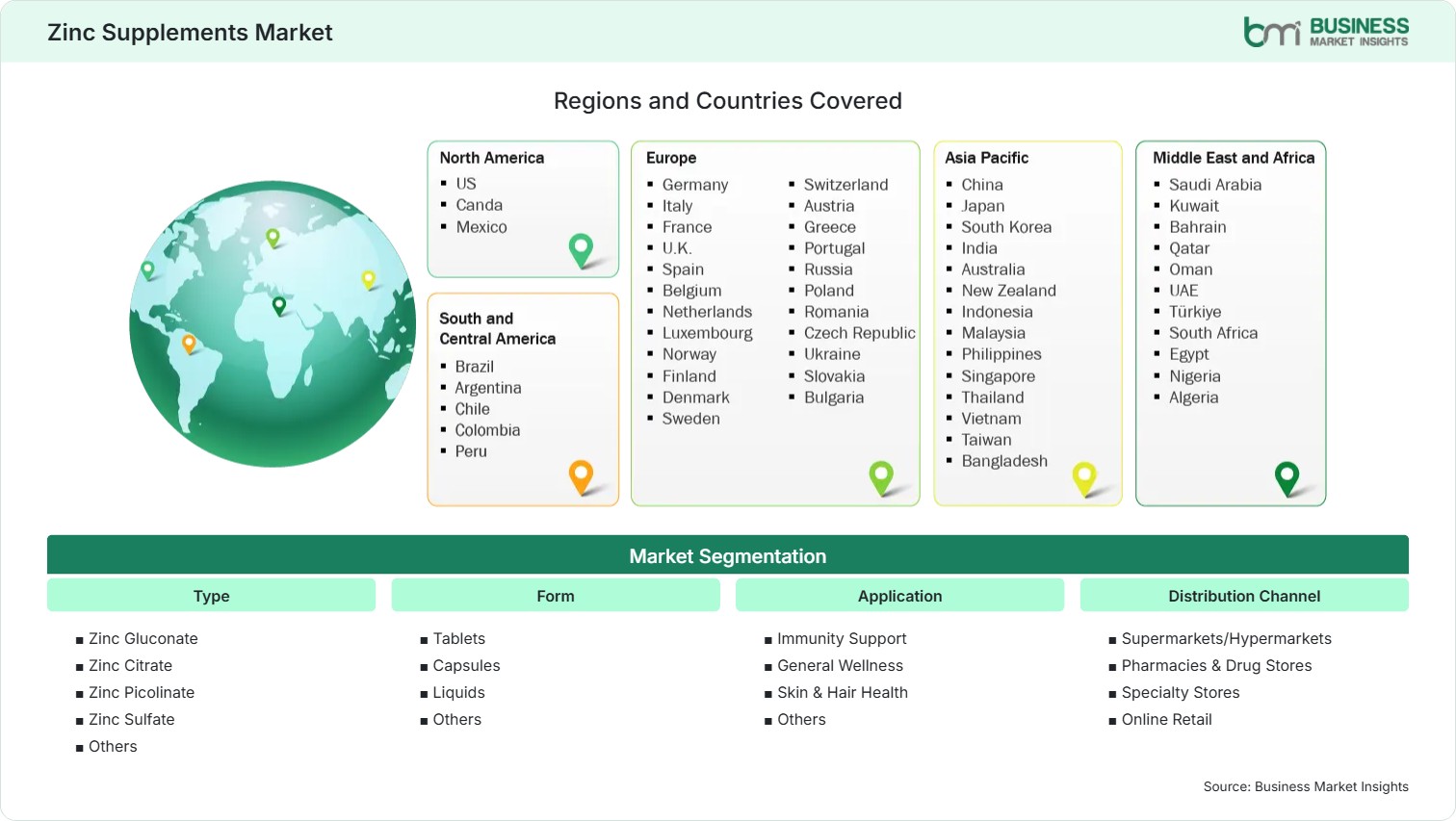
Global Market Geography
FREE PDF
Request your free sample
Request free sample
Segment Analysis

Zinc Supplements Market Segmentation

Product Type

The Product Type segment accounted for 44%–47% of total revenue in 2025 and is projected to expand at a 7.7%–8.0% CAGR through 2033. Consumer preference for highly bioavailable formulations, improved absorption, and clinically supported ingredients continues shaping purchasing decisions. The Zinc Supplements Market scope continues expanding as manufacturers diversify formulations to address immunity, metabolic health, and personalized nutrition requirements across different age groups.

  • Zinc Gluconate: The most widely consumed formulation because of its high bioavailability, excellent gastrointestinal tolerance, and broad use in immunity, wellness, and daily nutritional supplementation.
  • Zinc Sulfate: Frequently recommended for correcting zinc deficiency through cost-effective supplementation and pharmaceutical formulations supported by established clinical usage.
  • Zinc Citrate: Increasingly preferred in premium nutritional products due to improved absorption characteristics and growing consumer demand for high-quality dietary supplements.
  • Zinc Picolinate: Gains popularity among health-conscious consumers because of enhanced absorption efficiency and application in premium wellness formulations.
  • Zinc Oxide: Commonly incorporated into fortified nutritional products and selected supplement formulations requiring stable composition and economical manufacturing.

Form

The Form segment represented 38%–41% of market revenue in 2025 and is anticipated to grow at a 7.8%–8.2% CAGR through 2033. Product convenience, dosage flexibility, and consumer lifestyle preferences continue driving innovation across oral supplement formats while manufacturers expand premium delivery technologies.

  • Tablets: Continue dominating retail sales because of dosage accuracy, affordability, extended shelf life, and widespread consumer familiarity.
  • Capsules: Preferred for superior swallowing comfort, faster disintegration, and compatibility with premium ingredient formulations targeting wellness-conscious consumers.
  • Powder: Increasingly adopted in sports nutrition, personalized health programs, and beverage mixes offering flexible dosage customization.
  • Liquid: Growing demand among pediatric and geriatric populations supports wider adoption because of convenient administration and improved compliance.
  • Gummies: Rapidly gaining popularity through pleasant taste, consumer convenience, and expanding acceptance among children and young adults.

Distribution Channel

Distribution Channel generated 42%–45% of industry revenue in 2025 while advancing at a 8.0%–8.4% CAGR through 2033. Omnichannel retail strategies continue improving product accessibility while digital platforms accelerate consumer engagement and purchasing convenience.

  • Pharmacies & Drug Stores: Remain the leading sales channel owing to pharmacist recommendations, consumer trust, and wide availability of clinically recognized supplement brands.
  • Supermarkets & Hypermarkets: Provide extensive shelf visibility and convenient purchasing opportunities for mainstream nutritional supplement consumers.
  • Online Retail: Records the fastest expansion through subscription models, product comparison features, digital marketing, and direct-to-consumer brand strategies.
  • Specialty Stores: Continue attracting health-conscious consumers seeking premium, organic, and practitioner-recommended supplement formulations.

Application

Application-based demand accounted for 40%–43% of market revenue during 2025 and is projected to register a 7.6%–8.0% CAGR through 2033. The Zinc Supplements Market trends indicate increasing adoption across preventive healthcare, immune support, and specialized nutritional applications supported by expanding consumer awareness.

  • Immune Health: Represents the largest application because consumers increasingly prioritize preventive wellness and daily nutritional support.
  • Bone Health: Supports skeletal maintenance through complementary supplementation alongside calcium and vitamin D formulations.
  • Skin Health: Growing consumer interest in beauty-from-within products continues supporting zinc supplementation for dermatological wellness.
  • General Wellness: Broad consumer adoption reflects increasing focus on balanced nutrition, healthy aging, and preventive healthcare lifestyles.

End User

The End User segment accounted for 46%–49% of market demand in 2025 and is forecast to expand at a 7.5%–7.9% CAGR during the forecast period. Manufacturers continue developing age-specific formulations addressing evolving nutritional requirements across different consumer demographics.

  • Adults: Constitute the largest consumer base owing to widespread preventive healthcare adoption, workplace wellness initiatives, and increasing nutritional awareness.
  • Children: Pediatric supplementation continues expanding through fortified products addressing dietary deficiencies and healthy growth requirements.
  • Pregnant Women: Growing physician recommendations support increased supplementation for maternal nutrition and fetal development.
  • Older Adults: Rising aging populations encourage greater utilization of zinc supplements supporting immunity, healthy aging, and nutritional balance.
Market Forces

Zinc Supplements Market Dynamics

Key Market Drivers

Growing Consumer Awareness of Preventive Healthcare

Consumers are increasingly prioritizing preventive healthcare over reactive treatment, driving consistent demand for vitamin and mineral supplementation. Public health campaigns along with rising awareness about nutrition deficiencies are some of the factors that have led to regular consumption of zinc as an aid to good health. The Zinc Supplements Market growth is driven by increased expenditure on healthcare, adoption of self-care methods, and high availability through retail distribution channels including pharmacies and web portals. Healthcare experts still promote the use of zinc supplements among those whose diet lacks zinc, while manufacturers work on developing quality formulations using premium ingredients and educating consumers.

Rising Incidence of Zinc Deficiency Worldwide

Zinc deficiency continues to be a matter of nutrition in different developing and developed countries because of poor diet consumption, malabsorption issues, and changes in eating habits. Agencies like WHO have always stressed on the need for proper nutrition of micronutrients. With more and more cases of nutritional deficiencies being identified clinically, doctors are now prescribing zinc supplements to patients regardless of age. This trend is being bolstered by more awareness in healthcare and availability of affordable supplement products, especially in those nations with national nutrition programs.

Increasing Demand for Immunity Support Products

The market demand for immune support nutritional supplements is on the rise as consumers make it a point to include such products in their wellness regime. Zinc is one of the most recognized minerals that contribute to immune support, prompting companies to develop new products that comprise vitamins, probiotics, and herbal extract along with zinc. The Zinc Supplements Market trends show innovation in the form of gummy, capsule, chewable, and liquid variants that help enhance compliance. Premium products backed by science and personal nutrition solutions will drive future demand.

Key Market Opportunities

Expansion of Personalized Nutrition Solutions

Personalized nutrition continues transforming the dietary supplement industry as consumers increasingly seek products tailored to individual health goals, lifestyle preferences, and nutritional requirements. Incorporating the benefits of technology such as digital health platforms, wearable devices, and nutrition assessment systems allows manufacturers to come up with customized supplementation systems that contain zinc. The Zinc Supplements Market Forecasts report indicates that there are going to be attractive business prospects for premium supplement companies that have the ability to provide scientifically formulated supplements, subscription-based wellness programs, and direct to consumer nutritional products.

Growing E-commerce and Direct-to-Consumer Sales

Rapid expansion of digital retail platforms has significantly improved accessibility for dietary supplements across both developed and emerging markets. Consumers increasingly prefer online purchasing because of greater product variety, competitive pricing, subscription services, and convenient home delivery. Manufacturers continue investing in digital marketing, consumer education, and data-driven customer engagement strategies to strengthen brand visibility. The continued growth of direct-to-consumer business models also enables companies to collect consumer insights, accelerate product launches, and improve long-term customer retention while reducing dependence on traditional retail channels.

Increasing Demand from Emerging Markets

Opportunities that exist in emerging markets include the growth of dietary supplement consumption due to development of better health care systems, increased disposable income levels, urbanization, and increased awareness of nutrition issues. Government efforts to promote preventive healthcare services and solve micronutrient deficiencies through nutrition programs, as well as increased manufacturing, marketing, and distribution by multinational companies, are driving the process of market growth. Growth of the middle class population and development of the pharmacy channel have made this possible.

Market Restraints and Challenges

Stringent Regulatory Compliance for Dietary Supplements

Factor: Zinc supplement manufacturers must comply with varying regulatory frameworks governing product safety, ingredient quality, labeling requirements, manufacturing standards, and health claims across multiple countries. Impact: Regulatory complexity increases product development costs, extends approval timelines, and requires continuous investment in quality assurance, documentation, and compliance systems, particularly for companies expanding into international markets.

Availability of Alternative Nutritional Products

Factor: Consumers can obtain zinc through fortified foods, balanced diets, multivitamins, and combination mineral supplements, reducing dependence on standalone zinc products. Impact: Intense competition across the broader nutritional supplement industry places pressure on pricing, product differentiation, and marketing investment, encouraging manufacturers to emphasize clinical evidence, premium formulations, and innovative delivery formats to maintain competitive advantage.

Company Analysis

Competitive Landscape

Competition within the zinc supplements industry is shaped by product innovation, clinical validation, premium ingredient sourcing, and omnichannel distribution strategies. The Zinc Supplements Market analysis indicates that leading manufacturers are expanding personalized nutrition portfolios, strengthening digital commerce capabilities, and investing in clean-label formulations to differentiate products and improve consumer loyalty.

Company Name

Overview

Products and Services Relevant to this Market

Nestlé Health Science

Global nutrition company focused on science-based consumer health and medical nutrition solutions with a broad international presence.

Zinc-containing dietary supplements, medical nutrition products, vitamins, minerals, personalized nutrition solutions, and consumer wellness products.

NOW Health Group, Inc.

Manufacturer of natural health products recognized for extensive dietary supplement and wellness portfolios distributed globally.

Zinc capsules, zinc tablets, mineral supplements, immune health products, and nutritional wellness formulations.

Nature's Bounty Co.

Well-established dietary supplement company offering vitamins and minerals supported by quality-focused manufacturing and research.

Zinc supplements, multivitamins, immune support products, nutritional supplements, and wellness formulations.

Amway Corporation

Global direct-selling company providing nutrition and wellness products supported by research and international distribution networks.

Zinc-containing supplements, vitamin blends, immune health products, personalized nutrition, and dietary wellness solutions.

Herbalife Ltd.

International nutrition company delivering science-backed health products through an extensive independent distributor network.

Dietary supplements, micronutrient formulations, wellness products, immune support supplements, and nutrition programs.

Himalaya Wellness Company

Consumer healthcare company specializing in herbal and nutritional products with expanding global operations.

Zinc formulations, herbal nutritional supplements, immunity products, wellness tablets, and healthcare solutions.

Glanbia plc

Global nutrition company serving performance nutrition, wellness, and ingredient markets through multiple brands.

Functional nutrition products, mineral supplements, sports nutrition, and ingredient solutions supporting dietary supplement manufacturers.

Thorne HealthTech, Inc.

Premium nutritional supplement manufacturer emphasizing scientific research, quality assurance, and personalized health solutions.

Zinc supplements, clinical nutrition products, wellness formulations, personalized nutrition, and health assessment solutions.

Blackmores Limited

Australian natural healthcare company offering evidence-based vitamins, minerals, and nutritional supplements.

Zinc tablets, mineral supplements, immunity products, wellness formulations, and preventive healthcare products.

Swisse Wellness Pty Ltd.

International wellness brand providing premium nutritional supplements supported by quality-focused product development.

Zinc supplements, multivitamins, beauty nutrition products, immune health formulations, and general wellness supplements.

Trust & Transparency

Research Methodology

The market analysis combines proprietary research with secondary data from government agencies, company disclosures, regulatory filings, industry databases and expert interviews. Market estimates are validated through data triangulation, cross-market benchmarking and analyst review.

View Full Research Methodology

Questions Answered

Frequently Asked Questions

What does this Zinc Supplements Market Report include?

The report provides comprehensive insights into market size, segmentation, regional performance, competitive landscape, growth opportunities, emerging trends, strategic developments, and future outlook.

What major trends are influencing industry development?

Personalized nutrition, clean-label formulations, premium bioavailable ingredients, digital health integration, direct-to-consumer sales, and scientifically validated wellness products are shaping future industry development and consumer purchasing behavior.

Which region is expected to experience the fastest growth?

Asia Pacific is forecast to record the highest growth owing to expanding healthcare awareness, rising disposable incomes, government nutrition initiatives, growing e-commerce penetration, and increasing adoption of preventive healthcare products.

Which product segment leads the market?

Zinc gluconate represents the leading product type because of its high bioavailability, established clinical acceptance, favorable gastrointestinal tolerance, and broad application across immunity, wellness, and nutritional supplementation products.

What factors are driving the Zinc Supplements Market?

Growing awareness of preventive healthcare, increasing incidence of micronutrient deficiencies, expanding immunity-focused nutrition, rising healthcare expenditure, and wider product availability through pharmacies and online retail channels are the primary factors supporting market growth.

Access the Full Zinc Supplements Market Report

Get segment-level forecasts, regional estimates, competitive benchmarking, company profiles and downloadable Excel datasets.

Access the full Zinc Supplements Market Report
350 pages PDF & Excel | 2026-08-25