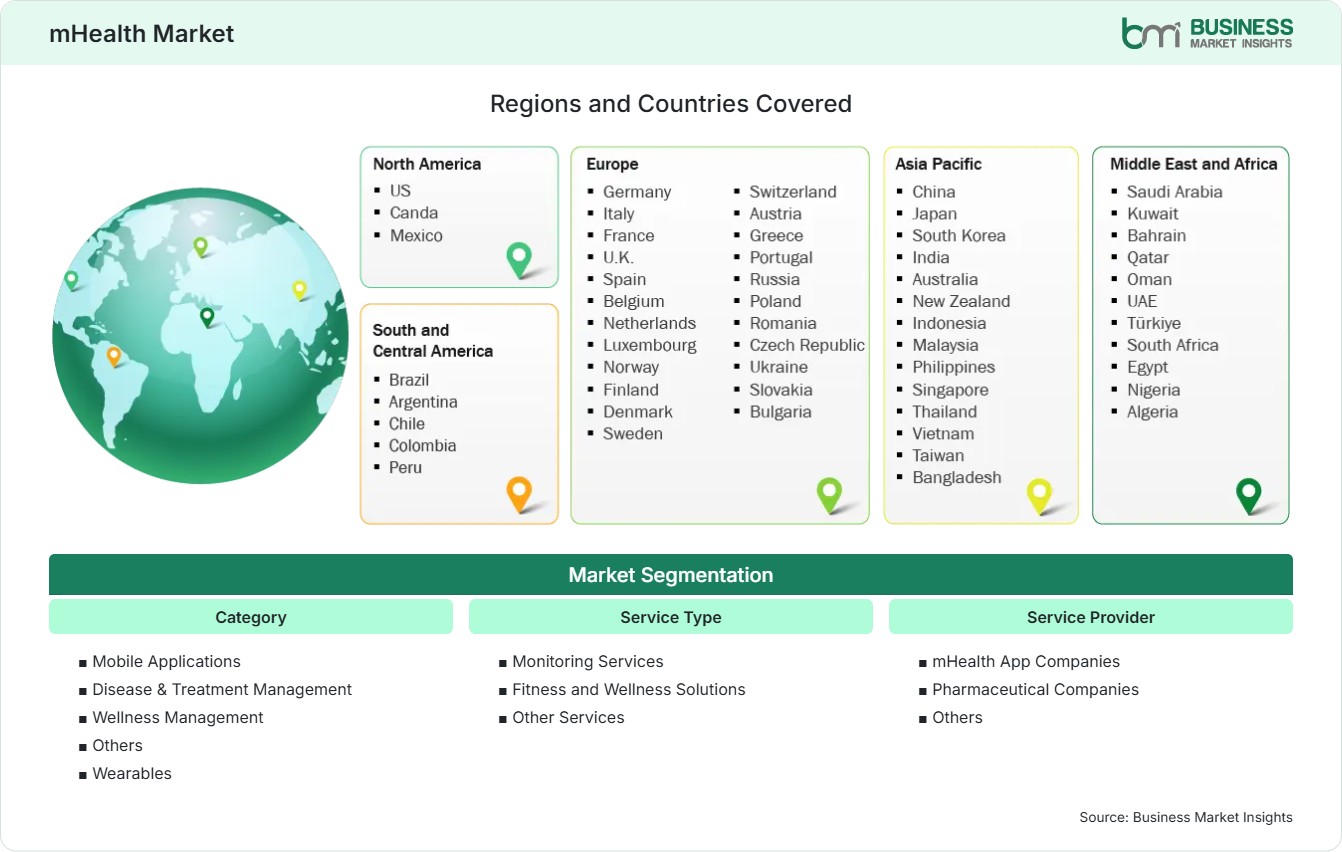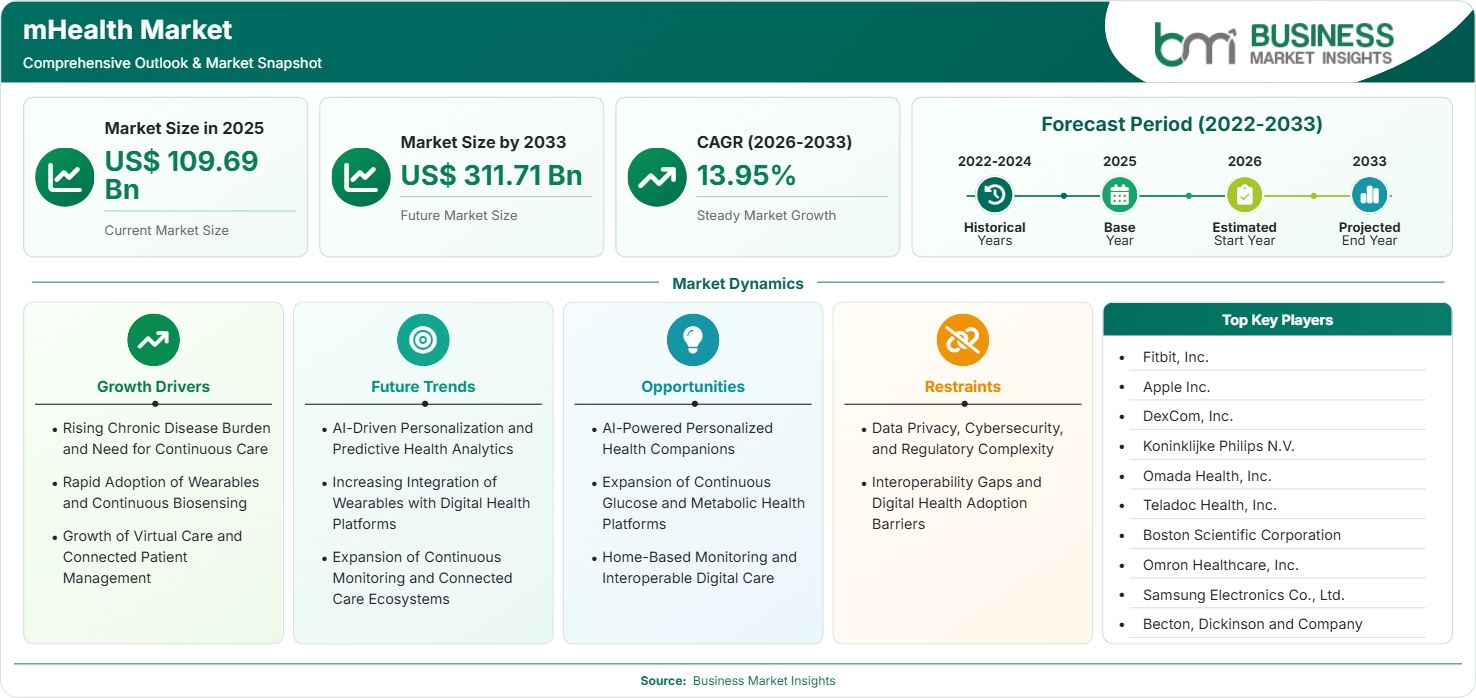
mHealth Market Regional Highlights
North America mHealth Market
North America holds a 36%–39% share in 2025 and records a 12.8%–13.6% CAGR during 2026–2033. The region benefits from high smartphone ownership, mature digital-health infrastructure, widespread wearable adoption, advanced healthcare systems, and strong investment in remote monitoring. The United States represents the principal market, while Canada contributes through virtual care, chronic disease programs, and digital public-health initiatives. mHealth Market share remains concentrated across consumer wellness, diabetes monitoring, telehealth, chronic disease management, cardiac monitoring, and healthcare-provider applications.
- Chronic disease management is driving recurring digital engagement as healthcare providers increasingly use connected devices and applications to monitor patients between appointments and identify changes requiring clinical attention.
- Consumer health platforms are adding clinical-grade features such as sleep-apnea screening, cardiovascular notifications, medication tracking, hearing assessments, and personalized health trends.
- Employer and insurer programs are expanding digital-health adoption through virtual care, weight management, diabetes support, behavioral health, and preventive wellness services.
- Healthcare providers increasingly require interoperability so mobile applications can exchange patient-generated data with clinical systems, supporting coordinated care rather than isolated consumer tracking.
US mHealth Market
The U.S. represents 81%–85% of North American demand in 2025 and records a 13.0%–13.8% CAGR during 2026–2033. The market combines advanced medical infrastructure with a large technology ecosystem and high consumer willingness to adopt connected health products. Demand spans virtual care, remote monitoring, glucose management, cardiac care, fitness, women's health, medication management, and digital therapeutics.
- Connected glucose monitoring is moving beyond insulin-dependent diabetes toward broader metabolic and preventive-health applications, increasing the addressable population for biosensing and personalized coaching.
- Wearable companies are increasingly using AI to translate complex biometric information into actionable daily guidance rather than presenting raw measurements.
- Healthcare organizations are investing in remote patient monitoring to support chronic disease management while reducing avoidable hospital visits and improving continuity between clinical encounters.
Europe mHealth Market
Europe holds a 28%–31% mHealth Market share in 2025 and records a 12.1%–13.0% CAGR during 2026–2033. Germany, the United Kingdom, France, the Netherlands, Spain, Italy, and the Nordic countries are important markets. European adoption is shaped by digital-health policies, aging populations, chronic disease management, strong public healthcare systems, and growing demand for remote care. The United Kingdom and Germany provide strong opportunities for connected monitoring and digital therapeutics, while Nordic markets emphasize digitally enabled patient care.
- Germany provides a large opportunity through digital-health adoption, chronic disease management, prescription-linked applications, and growing integration of mobile tools into formal healthcare pathways.
- The United Kingdom combines strong telehealth adoption with digital therapeutics, remote monitoring, clinical applications, and growing emphasis on care delivered outside traditional hospitals.
- France and Spain are expanding digital-health infrastructure through virtual care, connected monitoring, preventive programs, and technology-enabled chronic disease management.
- Nordic countries provide favorable environments for digital monitoring, consumer health applications, remote care, and interoperable health-information ecosystems supported by high digital maturity.
Asia Pacific mHealth Market
Asia Pacific holds a 23%–26% mHealth Market share in 2025 and records a 15.5%–17.0% CAGR during 2026–2033, making it the fastest-growing region. China, India, Japan, South Korea, Australia, Singapore, and Southeast Asia are major markets. Smartphone penetration, digital payments, telemedicine adoption, improving healthcare access, and rising chronic disease burdens are creating strong demand. Lower-cost wearables and mobile applications can reach populations underserved by conventional healthcare infrastructure, while large technology ecosystems support rapid product development.
- China provides scale through digital healthcare platforms, connected-device manufacturing, telemedicine, chronic disease management, and increasing adoption of consumer health applications.
- India is expanding mobile health through smartphones, telemedicine, digital public-health infrastructure, low-cost wearables, medication applications, and chronic disease management programs.
- Japan and South Korea offer sophisticated opportunities in aging care, remote monitoring, wearable sensors, hospital connectivity, and personalized preventive health.
- Southeast Asia is creating demand through healthcare-access initiatives, smartphone adoption, teleconsultations, wellness applications, and mobile-first solutions for geographically dispersed populations.
Rest of World mHealth Market
Rest of World holds a 12%–15% mHealth Market share in 2025 and records a 10.5%–12.0% CAGR during 2026–2033. Latin America benefits from smartphone penetration, telemedicine, private healthcare expansion, and chronic disease burdens, with Brazil and Mexico representing leading markets. The Middle East is investing in digital hospitals, smart-health initiatives, and connected care, while Africa offers long-term opportunities through mobile-first services that can reduce dependence on physical infrastructure.
- Brazil provides strong opportunities across diabetes management, telemedicine, fitness applications, connected monitoring, and digital healthcare platforms supporting large urban and regional populations.
- Mexico combines growing private healthcare capacity with mobile connectivity, chronic disease management, telehealth, and digital patient-engagement programs.
- Gulf countries are investing in smart hospitals, connected health infrastructure, virtual care, AI-enabled monitoring, and personalized wellness services to improve healthcare efficiency.
- African markets provide a significant mobile-first opportunity for remote consultations, maternal health, medication reminders, disease monitoring, and public-health communication where traditional access remains constrained.