
Marine Fuel Optimization Market Outlook: Size, Share, Trends, Growth Analysis, Competitive Landscape & Forecast, 2022-2033

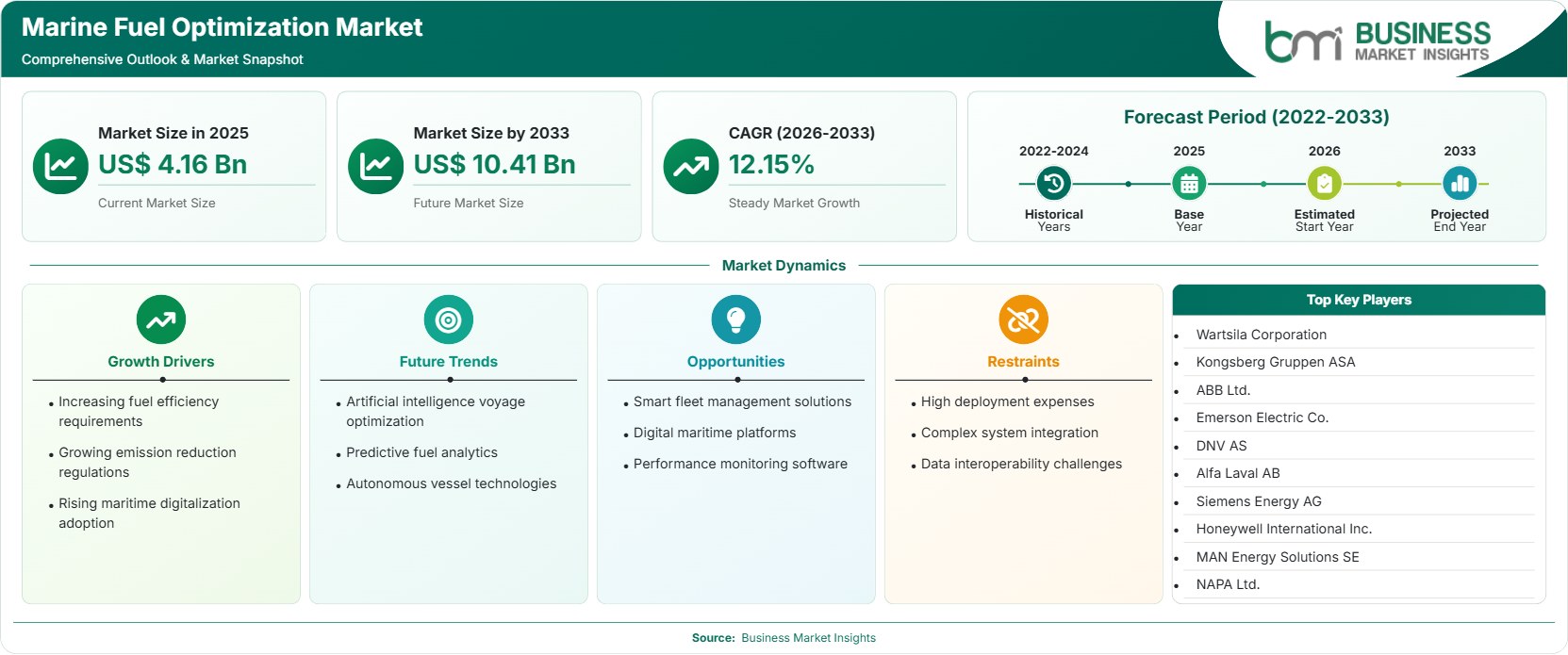
The Marine Fuel Optimization Market size was valued at US$ 4.16 billion in 2025 and is projected to reach US$ 10.41 billion by 2033, growing at a CAGR of 12.15% during 2026–2033. Rising fuel-efficiency requirements, stringent emissions-reduction regulations, and increasing maritime digitalization are accelerating market growth. In contrast, smart fleet management, AI-powered analytics, and digital maritime platforms create significant long-term opportunities.

Report Coverage
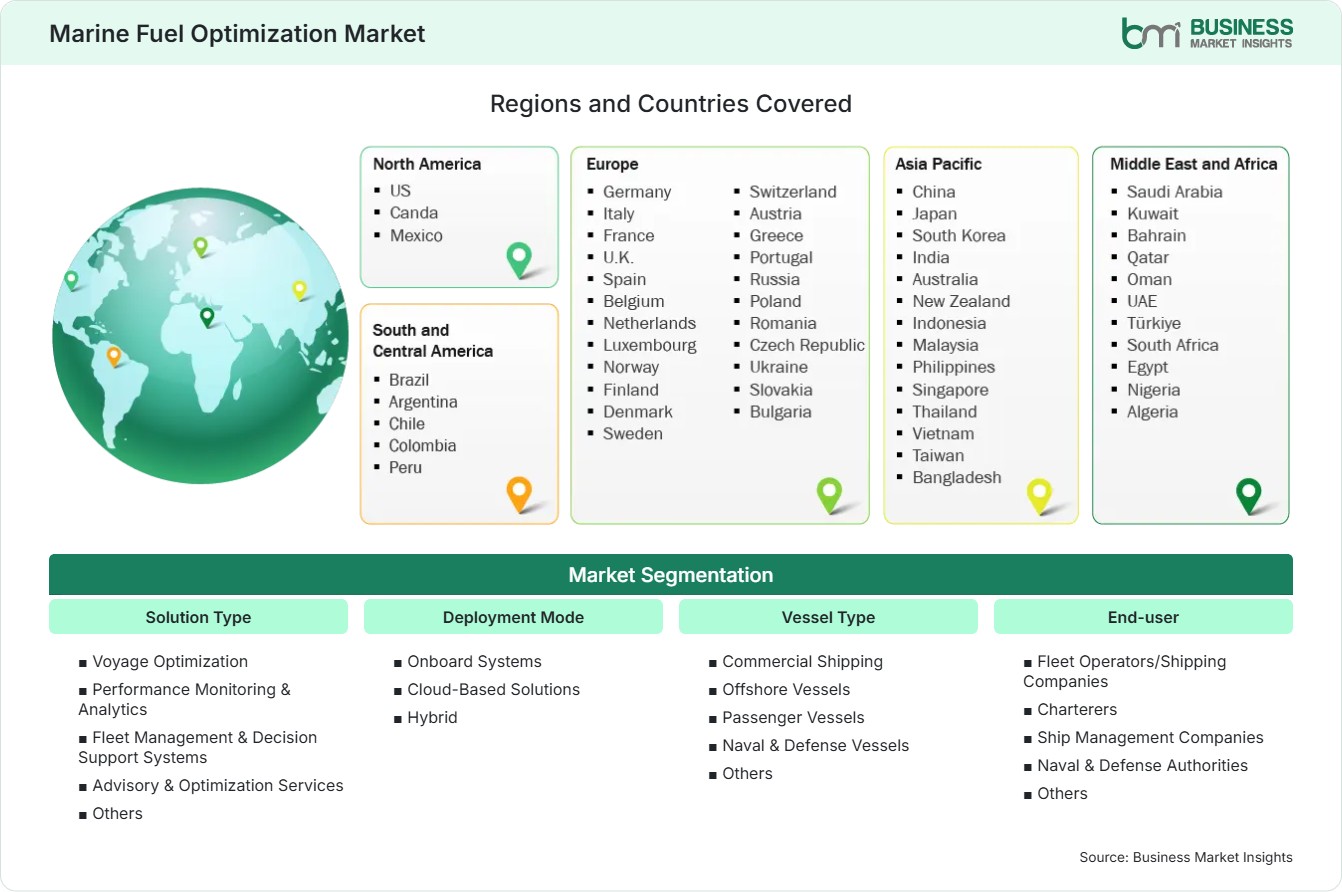
  • Solution Type: Voyage Optimization, Performance Monitoring & Analytics, Fleet Management & Decision Support Systems, Advisory & Optimization Services, Others
  • Deployment Mode: Onboard Systems, Cloud-Based Solutions, Hybrid
  • Vessel Type: Commercial Shipping, Offshore Vessels, Passenger Vessels, Naval & Defense Vessels, Others
  • End-user: Fleet Operators/Shipping Companies, Charterers, Ship Management Companies, Naval & Defense Authorities, Others
US$ 4.16 Bn Market size in 2025
US$ 10.41 Bn Market Size by 2033
12.15% CAGR, 2026 - 2033
2026-2033 Forecast Period

01 AI Overview

Marine Fuel Optimization Market Summary

  • North America: North America holds 27%–30% market share in 2025 and is expected to expand at a CAGR of 11.2%–12.0% during 2026–2033. Strong investments in regulatory compliance, fleet modernization, and digital vessel management continue to support regional growth. The U.S. market is projected to grow at a CAGR of 11.5%–12.3% through 2033.
  • Fastest Growing Region: Asia Pacific accounts for 34%–37% of the market in 2025 and is forecast to register a CAGR of 13.0%–14.0% during 2026–2033. Expanding maritime trade, port modernization, increasing shipbuilding activity, and the rapid adoption of intelligent fleet management systems continue to drive demand.
  • Leading Segment: Performance Monitoring & Analytics represents 29%–32% market share in 2025 and is anticipated to grow at a CAGR of 12.5%–13.3% through 2033. Continuous monitoring of fuel consumption, engine performance, and operational efficiency supports cost reduction and regulatory compliance.
  • High Growth Segment: Cloud-Based Solutions account for 36%–39% market share in 2025 and are projected to register a CAGR of 13.5%–14.5% during 2026–2033. Remote accessibility, centralized fleet monitoring, and scalable deployment continue accelerating adoption among global shipping operators.
  • Key Market Opportunity: Growing implementation of AI-enabled voyage optimization, predictive analytics, and integrated digital fleet platforms provides significant opportunities to reduce fuel costs, improve operational efficiency, and support maritime decarbonization initiatives.
  • Major Market Players: Wärtsilä Corporation, Kongsberg Gruppen ASA, ABB Ltd., Emerson Electric Co., DNV AS, Alfa Laval AB, Siemens Energy AG, Honeywell International Inc., MAN Energy Solutions SE, NAPA Ltd.
02 Strategic Insights

Marine Fuel Optimization Market: Strategic Insights

marine-fuel-optimization-market-market-strategic-framework
FREE PDF
Request your free sample
Request free sample
03 Stakeholder View

Key Takeaways

  • The market ecosystem is shifting toward integrated digital platforms that combine voyage optimization, performance analytics, fleet management, and predictive maintenance into a unified operational framework.
  • Commercial shipping remains the primary revenue-generating vessel category as operators increasingly invest in fuel optimization technologies to improve profitability and regulatory compliance.
  • Artificial intelligence, cloud computing, Internet of Things sensors, and digital twin technologies are transforming vessel performance management and enabling data-driven operational decisions.
  • Asia Pacific offers the strongest investment opportunity due to rapid shipbuilding activities, expanding port infrastructure, increasing maritime trade, and growing digitalization across regional shipping fleets.
  • Strategic collaborations among marine technology providers, software developers, classification societies, and shipping companies are accelerating innovation and deployment of next-generation optimization solutions.
04 Geographic Outlook

Marine Fuel Optimization Market Regional Highlights

North America Marine Fuel Optimization Market

North America Marine Fuel Optimization Market share accounts for 27%–30% of the global market in 2025 and is expected to grow at a CAGR of 11.2%–12.0% through 2033. Investments in smart shipping technologies, stricter environmental regulations, and digital fleet management platforms continue supporting regional expansion.

  • Increasing adoption of AI-enabled voyage optimization software.
  • Strong focus on reducing fuel consumption and emissions.
  • Growing investments in connected vessel technologies.
  • Rising modernization of commercial shipping fleets.

US Marine Fuel Optimization Market

The United States represents the largest North American market and is projected to register a CAGR of 11.5%–12.3% during the forecast period. Fleet modernization, digital navigation technologies, and regulatory compliance initiatives continue driving adoption.

  • High deployment of cloud-based fleet management systems.
  • Growing investment in predictive maintenance software.
  • Expansion of intelligent maritime monitoring solutions.

Europe Marine Fuel Optimization Market

Europe holds 25%–28% market share in 2025 and is expected to grow at a CAGR of 11.8%–12.6%. Strict emission regulations and sustainable shipping initiatives continue encouraging the adoption of fuel optimization technologies. Norway leads the region, while Germany records strong growth.

  • EU environmental regulations accelerate technology adoption.
  • Norway leads maritime digital innovation.
  • Germany invests in intelligent shipping infrastructure.
  • Increasing deployment of hybrid vessel monitoring platforms.

Asia Pacific Marine Fuel Optimization Market

Asia Pacific leads the market share with 34%–37% in 2025 and is forecast to grow at a CAGR of 13.0%–14.0% through 2033. China dominates regional revenue, while India remains the fastest-growing country due to expanding shipping activities and port modernization.

  • Expanding commercial shipping supports solution demand.
  • Growing investment in smart ports and digital logistics.
  • Rising adoption of cloud-based optimization software.
  • Increasing government focus on sustainable maritime transport.

Rest of World Marine Fuel Optimization Market

The Rest of World region accounts for 10%–12% of the market and is projected to grow at a CAGR of 11.5%–12.5% during 2026–2033. Brazil, the UAE, and Saudi Arabia continue investing in maritime infrastructure, offshore operations, and digital fleet management.

  • Expansion of offshore energy projects supports demand.
  • Smart port developments encourage digital transformation.
  • Increasing investment in vessel performance solutions.
  • Growing modernization of regional shipping fleets.
global-market-geography
FREE PDF
Request your free sample
Request free sample
05 Segment Analysis

Marine Fuel Optimization Market Segmentation

Solution Type

The Solution Type segment accounted for 44%–47% of the market in 2025 and is expected to register a CAGR of 12.4%–13.2% during 2026–2033. Increasing demand for operational efficiency, fuel savings, and emission compliance is driving the adoption of intelligent optimization software across commercial and naval fleets. The Marine Fuel Optimization Market scope continues expanding with AI-enabled analytics and integrated decision-support systems.

  • Voyage Optimization: Enables operators to determine the most fuel-efficient routes using weather forecasts, vessel performance data, and real-time navigation information, reducing fuel consumption and voyage costs.
  • Performance Monitoring & Analytics: Supports continuous monitoring of engine performance, fuel efficiency, and operational parameters, helping operators improve maintenance planning and optimize vessel performance.
  • Fleet Management & Decision Support Systems: Integrates fleet-wide operational data to improve scheduling, resource utilization, regulatory compliance, and strategic decision-making across multiple vessels.
  • Advisory & Optimization Services: Provides expert consulting, operational assessments, and customized optimization strategies to improve fuel efficiency and overall fleet performance.

Deployment Mode

The Deployment Mode segment represented 30%–33% of the market in 2025 and is projected to grow at a CAGR of 12.6%–13.4% through 2033. Increasing adoption of digital maritime technologies, cloud computing, and remote fleet monitoring continues to support deployment across global shipping operations.

  • Onboard Systems: Deliver real-time monitoring and optimization directly from the vessel, enabling immediate operational decisions and continuous performance tracking.
  • Cloud-Based Solutions: Provide centralized monitoring, remote analytics, software updates, and scalable fleet management capabilities across geographically distributed vessels.
  • Hybrid: Combines onboard processing with cloud connectivity to enhance operational reliability, data security, and decision-making while maintaining continuous vessel communication.

Vessel Type

The Vessel Type segment accounted for 35%–38% market share in 2025 and is anticipated to expand at a CAGR of 12.3%–13.1% during the forecast period. Rising fuel costs and environmental regulations encourage vessel operators to deploy advanced optimization technologies across diverse maritime applications.

  • Commercial Shipping: Represents the largest application owing to high fuel consumption, extensive international trade, and increasing focus on operational efficiency.
  • Offshore Vessels: Adoption is driven by the need to reduce operating expenses and improve fuel management during offshore energy exploration and production activities.
  • Passenger Vessels: Cruise operators increasingly implement optimization systems to improve voyage efficiency, reduce emissions, and enhance passenger service reliability.
  • Naval & Defense Vessels: Defense organizations utilize fuel optimization technologies to improve mission readiness, operational efficiency, and fleet sustainability while lowering lifecycle costs.

End-User

The End-User segment held 31%–34% market share in 2025 and is expected to grow at a CAGR of 12.1%–12.9% through 2033. Increasing digital transformation and regulatory compliance initiatives continue driving adoption among commercial and government maritime organizations.

  • Fleet Operators / Shipping Companies: Lead adoption by investing in intelligent fuel management platforms to reduce operational expenses, improve fleet efficiency, and achieve sustainability targets.
  • Charterers: Utilize optimization solutions to improve voyage planning, reduce charter costs, and enhance operational transparency across shipping operations.
  • Ship Management Companies: Implement centralized monitoring systems to optimize vessel performance, maintenance scheduling, and regulatory compliance for managed fleets.
  • Naval & Defense Authorities: Deploy advanced optimization platforms to improve fuel efficiency, mission planning, operational readiness, and long-term fleet management.
06 Market Forces

Marine Fuel Optimization Market Dynamics

Key Market Drivers

Increasing fuel efficiency requirements

Marine Fuel Optimization Market growth is being driven by the increasing adoption of advanced fuel optimization technologies by shipping companies seeking to reduce operational costs, improve efficiency, and enhance fleet performance. The increasing cost of fuel oil, reduced profit margins, and stiff competition in the shipping business have compelled ship owners to adopt artificial intelligence-based technologies, including analysis tools, voyage optimization software, performance monitoring systems, and predictive maintenance solutions. These advanced technologies ensure maximum fuel savings, optimal voyage planning, reduced engine wear and tear, low emissions, and increased productivity.

Growing emission reduction regulations

The strict environmental regulations imposed by international maritime agencies have been instrumental in the growing acceptance and implementation of the latest fuel optimization technologies across the entire global shipping sector. The shipping firms are increasingly employing digital solutions, voyage optimization, and performance monitoring tools to lower greenhouse gas emissions, maximize vessel efficiency, reduce environmental impacts, and improve overall performance. These solutions help shipping firms comply with international environmental guidelines, operate sustainably, and save money.

Rising maritime digitalization adoption

The increase in the use of connected ships, Internet of Things sensors, cloud computing, artificial intelligence, and sophisticated digital solutions is revolutionizing the maritime sector in the global shipping industry. The digital tools help to monitor the performance of the vessels, collect data in real time, conduct predictive maintenance, and make decisions based on data analytics, thus helping to increase efficiency, fuel optimization, utilization of assets, and fleet management capabilities of the industry that is experiencing changes in the Marine Fuel Optimization Market trends.

Key Market Opportunities

Smart fleet management solutions

The growing popularity of intelligent fleet management systems has created numerous business opportunities for technology firms in the marine transportation sector. With AI-enabled decision support systems, predictive maintenance, and operational analytics, ship owners will be able to increase efficiency by maximizing resource use, minimizing fuel consumption, improving voyage planning, and reducing downtime. Digital technologies will also lead to improved fleet performance, regulatory compliance, better safety management, and other important benefits.

Digital maritime platforms

Integration into the digital ecosystem is allowing the shipping industry to link its navigation system, engine performance tracking, weather forecasting, fuel optimization, and fleet management software through a cloud-based platform that brings all these factors together. Integration of this kind will increase visibility across operations, decision-making, vessel performance management, and predictive maintenance, thereby creating an excellent Marine Fuel Optimization Market Forecast. Additionally, it strengthens regulatory compliance, reduces operational inefficiencies, and accelerates long-term digital transformation strategies across global maritime fleets.

Performance monitoring software

The rising demand for performance monitoring software is a need to have insight into engine efficiency, fuel usage, and the general condition of the vessel in real time from ship operators and fleet managers. The software offers opportunities to predict potential engine failures, improve fuel efficiency by optimizing operating conditions, reduce operational costs and downtime, and enable compliance with strict regulatory standards.

Market Restraints and Challenges

High deployment expenses

Factor: Implementing advanced fuel optimization platforms requires substantial investment in software, onboard monitoring equipment, IoT sensors, communication infrastructure, cloud-based analytics, and employee training. Integration with existing vessel management systems and ongoing maintenance further increase implementation costs.

Impact: Initial capital costs and implementation difficulties can be a deterrent for small and mid-sized shipping firms due to limited financial resources. Despite the potential benefits of reduced fuel consumption, increased efficiency, lower emissions, and minimized maintenance costs, high initial costs remain one of the main obstacles to their adoption in the market.

Complex system integration

Factor: Integrating optimization platforms with legacy navigation systems, engine controls, and fleet management software can be technically challenging.

Impact: Integration difficulties can lead to longer implementation times, greater reliance on specialized technical expertise, and delayed ROI, especially for operators with older vessel fleets. This can lead to higher deployment costs, a longer system testing period, and operational disruptions.

07 Company Analysis

Competitive Landscape

The Marine Fuel Optimization Market analysis highlights a competitive landscape characterized by continuous investments in digital shipping technologies, AI-powered analytics, and intelligent fleet management platforms. Leading companies are expanding their marine software portfolios through product innovation, strategic partnerships, and integrated vessel performance solutions to strengthen their global market presence.

Company Name

Overview

Products and Services Relevant to this Market

Wärtsilä Corporation

Global marine technology company providing smart shipping and sustainable maritime solutions.

Voyage optimization software, fleet performance monitoring, energy management, and digital marine solutions.

Kongsberg Gruppen ASA

Leading provider of maritime automation, navigation, and digital vessel management technologies.

Fleet optimization, navigation systems, vessel automation, and performance analytics software.

ABB Ltd.

Technology company delivering electrification and automation solutions for marine operations.

Marine energy management, propulsion optimization, vessel monitoring, and digital automation solutions.

Emerson Electric Co.

Industrial technology company specializing in automation and asset performance management.

Marine automation systems, predictive maintenance, process monitoring, and fuel optimization solutions.

DNV AS

Classification society offering digital assurance and maritime advisory services.

Vessel performance analytics, digital verification, fleet optimization, maritime consulting.

Alfa Laval AB

An engineering company focused on energy efficiency and environmental technologies.

Fuel conditioning systems, marine efficiency solutions, and emission reduction technologies.

Siemens Energy AG

Energy technology company supporting digitalization and the efficient operation of marine vessels.

Energy management systems, automation solutions, and vessel performance optimization.

Honeywell International Inc.

Industrial technology provider delivering connected maritime solutions.

Fleet monitoring, industrial automation, predictive analytics, and operational optimization software.

MAN Energy Solutions SE

Marine engine manufacturer offering digital efficiency and optimization technologies.

Engine performance management, fuel optimization, digital monitoring, propulsion solutions.

NAPA Ltd.

Maritime software company specializing in vessel performance and voyage optimization.

Voyage optimization, stability software, performance analytics, fleet management solutions.

08 Industry Activity

Recent Developments

October 2025

Bureau Veritas Marine & Offshore announced the launch of OptiCARBON, a predictive digital platform designed to help shipowners optimize fleet energy use, fuel consumption, and regulatory compliance through advanced vessel modeling and scenario analysis.

June 2025

Wärtsilä announced that Ocean Network Express (ONE) selected its Fit4Power engine optimization solution for the containership ONE Maestro, enabling an expected average 13% reduction in fuel consumption while lowering emissions and extending engine life.

May 2025

Lloyd's Register OneOcean announced that TotalEnergies had adopted its Route Optimization solution across its shipping operations, using machine learning-based fuel models and voyage optimization to reduce fuel consumption and CO₂ emissions. Initial trials achieved fuel savings of 725 metric tons and reduced CO₂ emissions by 2,256 metric tons.

April 2025

OneOcean announced the launch of OneOcean 2025, a major update to its digital voyage planning platform featuring enhanced passage planning, fleet-wide operational efficiency, and voyage optimization capabilities to help reduce fuel consumption and improve compliance.

10 Trust & Transparency

Research Methodology

The market analysis combines proprietary research with secondary data from government agencies, company disclosures, regulatory filings, industry databases and expert interviews. Market estimates are validated through data triangulation, cross-market benchmarking and analyst review.

View Full Research Methodology

11 Questions Answered

Frequently Asked Questions

What Marine Fuel Optimization Market report opportunities are expected to shape future market growth?

Key opportunities include the adoption of smart fleet management solutions, AI-enabled digital maritime platforms, cloud-based optimization software, and advanced performance monitoring technologies that improve operational efficiency and sustainability.

Who are the major companies operating in the market?

Major participants include Wärtsilä Corporation, Kongsberg Gruppen ASA, ABB Ltd., Emerson Electric Co., DNV AS, Alfa Laval AB, Siemens Energy AG, Honeywell International Inc., MAN Energy Solutions SE, and NAPA Ltd.

Which solution segment holds the largest market share?

Performance Monitoring & Analytics is the leading solution segment, accounting for 29%–32% of the market in 2025, owing to its ability to improve fuel efficiency, reduce operating costs, and support predictive maintenance.

Which region dominates the market?

Asia Pacific leads the market with a 34%–37% share in 2025, driven by expanding commercial shipping, shipbuilding, port modernization, and rising investment in digital maritime technologies.

What is driving the Marine Fuel Optimization Market?

The market is driven by increasing fuel-efficiency requirements, stringent emission regulations, maritime digitalization, rising fuel costs, and the growing adoption of AI-powered voyage optimization and performance-monitoring technologies.

Access the Full Marine Fuel Optimization Market Report

Get segment-level forecasts, regional estimates, competitive benchmarking, company profiles and downloadable Excel datasets.

Access the full Marine Fuel Optimization Market Report
350 pages PDF & Excel | 2026-07-31