Market Summary
Executive Summary and Global Market Analysis
Marine fuel injection systems are precision-engineered assemblies that meter, pressurize, and deliver fuel into marine engines at controlled timing and volume. Their operating role extends beyond combustion delivery because injector behavior influences efficiency stability, load response, and emissions performance across propulsion and auxiliary engine platforms. As vessel operators confront stricter operating requirements, these systems have become integral to engine reliability strategies and retrofit planning.
Market momentum is supported by tighter emissions compliance requirements, continued fleet maintenance cycles, and the need for accurate fuel delivery under variable operating conditions. Shipowners are placing greater emphasis on combustion control because fuel quality differences, engine wear, and route-specific duty patterns can materially affect performance consistency. This operating context strengthens demand for components that improve spray precision, pressure management, and electronic calibration.
Segment distribution reflects the technical diversity of marine propulsion systems. Fuel injectors remain central because replacement frequency and calibration needs keep them closely tied to service demand, while pumps, valves, and control units shape system responsiveness and fuel metering discipline. Diesel-based configurations retain broad use across existing fleets, whereas natural gas-compatible systems are drawing attention where operators prioritize cleaner combustion pathways. Two-stroke engines align with large commercial propulsion needs, while four-stroke platforms support flexible deployment across support and defense vessels.
Technology progression is moving the industry toward electronically managed injection architectures, higher pressure consistency, and broader compatibility with alternative fuels. Manufacturers are refining control logic and component durability to support dual-fuel operations, reduce combustion irregularities, and simplify maintenance diagnostics. This evolution is repositioning fuel injection systems from mechanical subsystems to performance-management assets within modern engine design.
Competitive positioning is shaped by engineering depth, aftermarket reach, and the ability to support changing fuel strategies without compromising engine integrity. Suppliers that combine precision components with service expertise are better placed to address overhaul schedules, retrofit requirements, and long-horizon fleet efficiency targets. As procurement decisions increasingly weigh lifecycle performance, the market continues to favor technically differentiated and service-oriented offerings.
Segment Analysis
Marine Fuel Injection System Market Segmentation
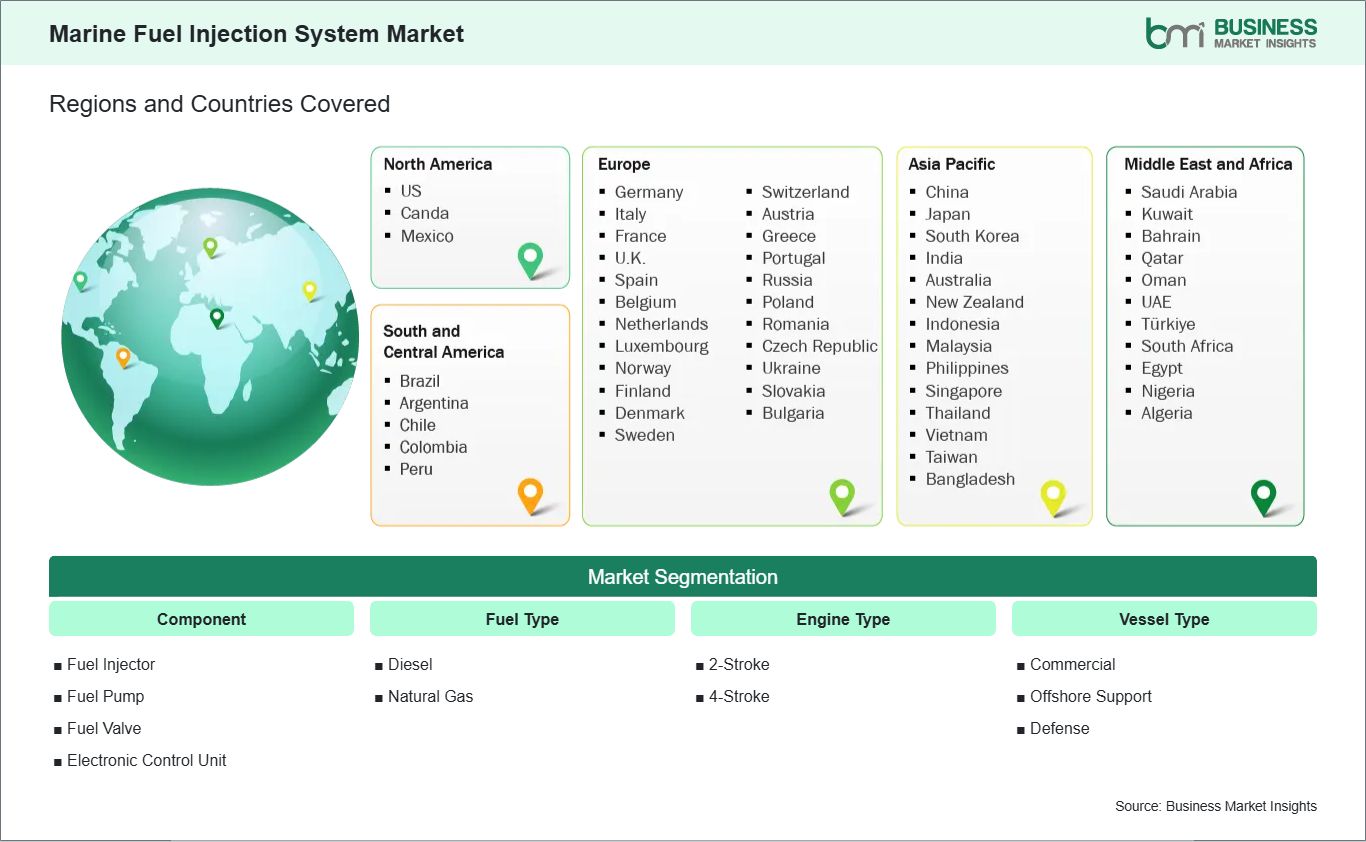
The market is segmented by component, fuel type, engine type, and vessel type. Each category reflects distinct maintenance priorities, combustion requirements, and operating environments.
By Component
- Fuel Injector: Supports precise atomization for stable combustion under changing engine loads
- Fuel Pump: Maintains delivery pressure required for efficient marine engine performance
- Fuel Valve: Regulates flow transitions to improve control during dynamic operating cycles
- Electronic Control Unit: Coordinates injection timing and volume through electronic engine management
By Fuel Type
- Diesel: Remains established across fleets requiring proven combustion reliability and service familiarity
- Natural Gas: Gains attention where lower-emission propulsion pathways influence engine selection
By Engine Type
- 2-Stroke: Aligns with large propulsion systems demanding continuous heavy-duty fuel delivery
- 4-Stroke: Fits versatile marine operations requiring responsive load management and compact integration
- Commercial: Represents high-utilization operations with strong maintenance and replacement demand
- Offshore Support: Requires resilient injection control across variable duty cycles and harsh conditions
- Defense: Prioritizes operational dependability, fuel discipline, and mission-ready propulsion performance
By Vessel Type
- Commercial: Represents high-utilization operations with strong maintenance and replacement demand
- Offshore Support: Requires resilient injection control across variable duty cycles and harsh conditions
- Defense: Prioritizes operational dependability, fuel discipline, and mission-ready propulsion performance
Market Forces
Marine Fuel Injection System Market Drivers and Opportunities
Emission Compliance and Combustion Precision Requirements
Tighter marine emissions frameworks are intensifying the need for fuel delivery systems that maintain accurate timing, stable pressure, and cleaner combustion behavior. Operators require injection hardware that can respond to fuel variability, engine load fluctuations, and long operating cycles without undermining reliability. This need supports wider installation of refined injectors, pumps, valves, and control units across propulsion platforms where operational consistency remains a procurement priority.
The impact extends beyond regulatory alignment because better fuel metering can improve engine responsiveness, maintenance planning, and combustion stability in demanding marine service. Commercial fleets, offshore operators, and defense programs all depend on equipment that supports dependable output under complex duty cycles. As a result, fuel injection system upgrades are becoming relevant not only for compliance programs but also for long-term efficiency management and asset preservation strategies.
Alternative Fuel Integration and Electronic Control Innovation
The shift toward natural gas and other lower-emission marine fuels is opening room for injection architectures that can manage new combustion characteristics with greater precision. Electronic control innovation is supporting this transition by refining injection sequencing, pressure calibration, and diagnostic visibility across mixed operating conditions. These developments create practical use cases in retrofits, dual-fuel configurations, and next-generation engine platforms seeking cleaner and more adaptive fuel delivery.
Future scope lies in broader deployment across fleets modernizing propulsion assets for fuel flexibility, digital oversight, and longer service life. Suppliers that align product design with electronic engine management and alternative fuel readiness can expand their role in both OEM and retrofit channels. Over time, this opportunity can influence replacement demand, system differentiation, and the strategic direction of marine engine investment.
Size and Share Analysis
Marine Fuel Injection System Market Size and Share Analysis
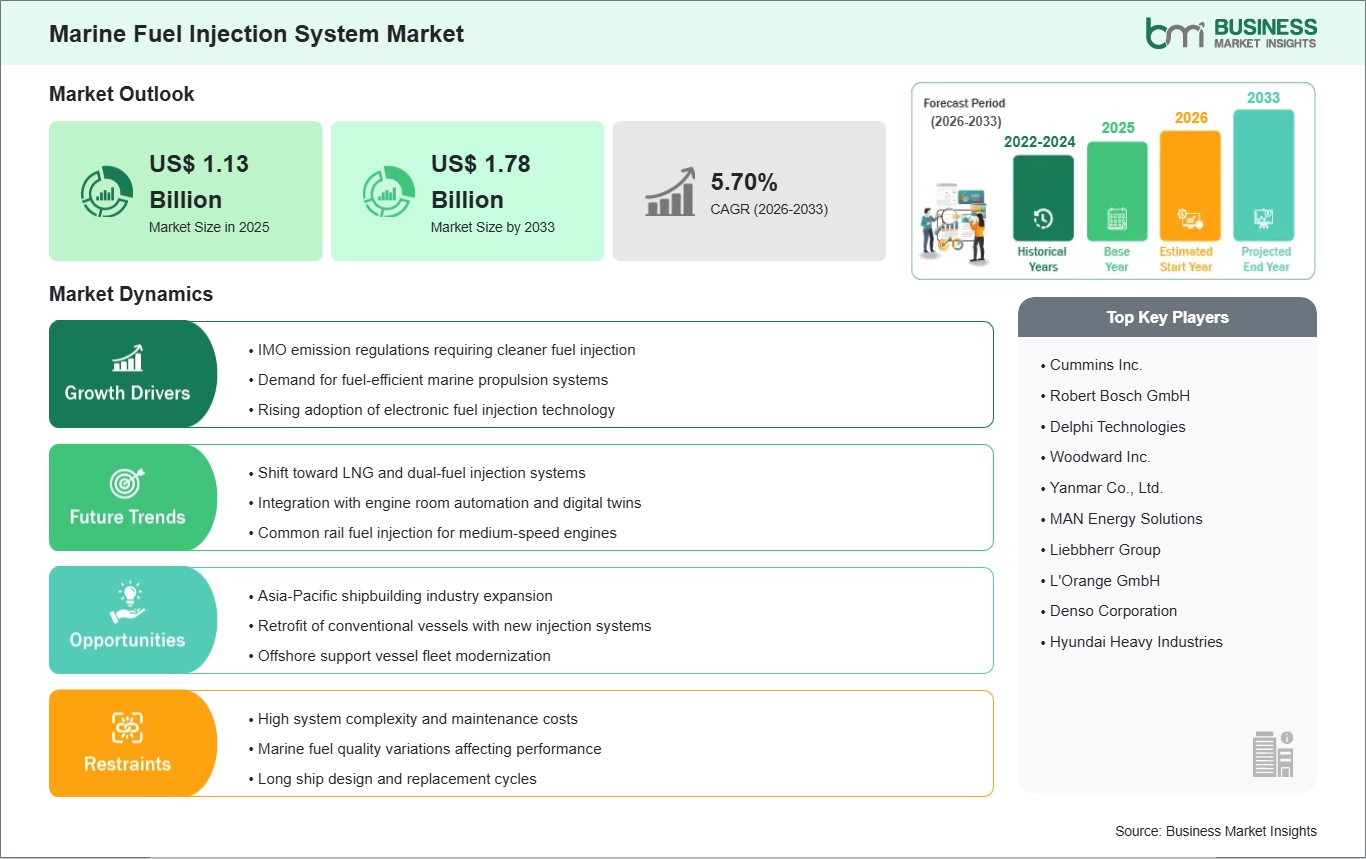
The Marine Fuel Injection System market size is expected to reach US$ 1.78 Billion by 2033 from US$ 1.13 Billion in 2025. This trajectory indicates a market shaped by replacement cycles, emission-led upgrades, and gradual integration of electronically managed fuel delivery across marine propulsion systems.
By component, fuel injectors hold a prominent position because they face continuous wear exposure and require close performance calibration during vessel operation. Fuel pumps, valves, and electronic control units remain essential to pressure stability, flow regulation, and injection timing, especially as engines move toward more precise combustion management. Across fuel types, diesel maintains broad relevance, while natural gas systems reflect the sector’s interest in cleaner operating pathways.
Commercial vessels represent the leading application environment due to intensive operating schedules, large installed engine bases, and recurring maintenance requirements. Offshore support vessels require dependable injection control under variable load conditions, which reinforces demand for durable and responsive system designs. Defense vessels also contribute a specialized requirement profile centered on mission reliability, controlled fuel delivery, and performance assurance across demanding duty cycles.
Report Coverage
Marine Fuel Injection System Market Report Coverage and Deliverables
The "Marine Fuel Injection System Market Size and Forecast (2022-2033)" report provides a detailed analysis of the market covering the areas below:
- Market size and forecast at global, regional, and country levels for all the key market segments covered under the scope
- Market trends, as well as market dynamics such as drivers, restraints, and key opportunities
- Market analysis covering key market trends, global and regional framework, major players, regulations, and recent market developments
- Industry landscape and competition analysis covering market concentration, heat map analysis, prominent players, and recent developments for the market
- Detailed company profiles, including SWOT analysis
Geographic Insights
Marine Fuel Injection System Market Geographic Insights
The Marine Fuel Injection System market shows diverse regional adoption patterns influenced by fleet composition, shipbuilding capacity, emissions compliance priorities, and propulsion modernization strategies. At the global level, the industry reflects a balance between replacement-driven demand and system upgrades tied to cleaner combustion and improved control accuracy. Markets with strong marine engineering ecosystems tend to advance earlier in electronic control integration and fuel-flexible injection development.
North America maintains relevance through naval programs, commercial fleet servicing, and specialized marine engine support activities. Demand in the region is shaped by retrofit requirements, operational reliability standards, and interest in systems that improve diagnostic visibility across working fleets. The market benefits from a strong service orientation, where maintenance quality, component performance, and compliance readiness influence procurement decisions more directly than large-scale shipbuilding volume.
Asia Pacific presents a dynamic environment because major shipbuilding nations, large commercial fleets, and industrial supply networks intersect within the region. Demand is supported by new vessel activity, overhaul schedules, and continued attention to combustion efficiency in high-utilization marine operations. Manufacturers and suppliers operating here are also positioned to respond quickly to changes in engine specifications, which strengthens the region’s importance in both production and deployment.
Europe remains influential through its regulatory discipline, advanced marine engineering capabilities, and active development of lower-emission propulsion solutions. The region places greater emphasis on technically sophisticated injection systems that align with fuel transition goals and precise engine management. Emerging markets in the Middle East and Africa, along with South and Central America, show selective uptake linked to commercial shipping activity, offshore operations, and gradual modernization of installed marine engine bases.
Industry Activity
Recent Developments
The Marine Fuel Injection System Market is evaluated by gathering qualitative and quantitative data post primary and secondary research, which includes important corporate publications, association data, and databases. Recent developments and news in the market include:
- In September 2025, Swiss marine power company WinGD will offer the first ethanol-fuelled two-stroke marine engine next year, with deliveries for newbuild and retrofit applications starting in 2027. The announcement follows a decade of investigation into ethanol fuel—including full-scale engine tests in 2018—and the successful launch of a methanol-fuelled engine that uses the same combustion concept and is subject to the same safety regulations as the new ethanol engine.
- In October 2025, Rolls-Royce has successfully tested the world’s first high-speed marine engine powered exclusively by methanol on its test bench in Friedrichshafen. Together with their partners in the meOHmare research project, Rolls-Royce engineers have thus reached an important milestone on the road to climate-neutral and environmentally friendly propulsion solutions for shipping.
Trust & Transparency
Research Methodology
The market analysis combines proprietary research with secondary data from government agencies, company disclosures, regulatory filings, industry databases and expert interviews. Market estimates are validated through data triangulation, cross-market benchmarking and analyst
review.
View Full Research Methodology
Key Sources Referred:
World Bank: Global Trade IndicatorsWorld Trade Organization (WTO)International Monetary Fund (IMF)International Trade Administration (ITA)Company WebsitesCompany Annual ReportsCompany Investor Presentations