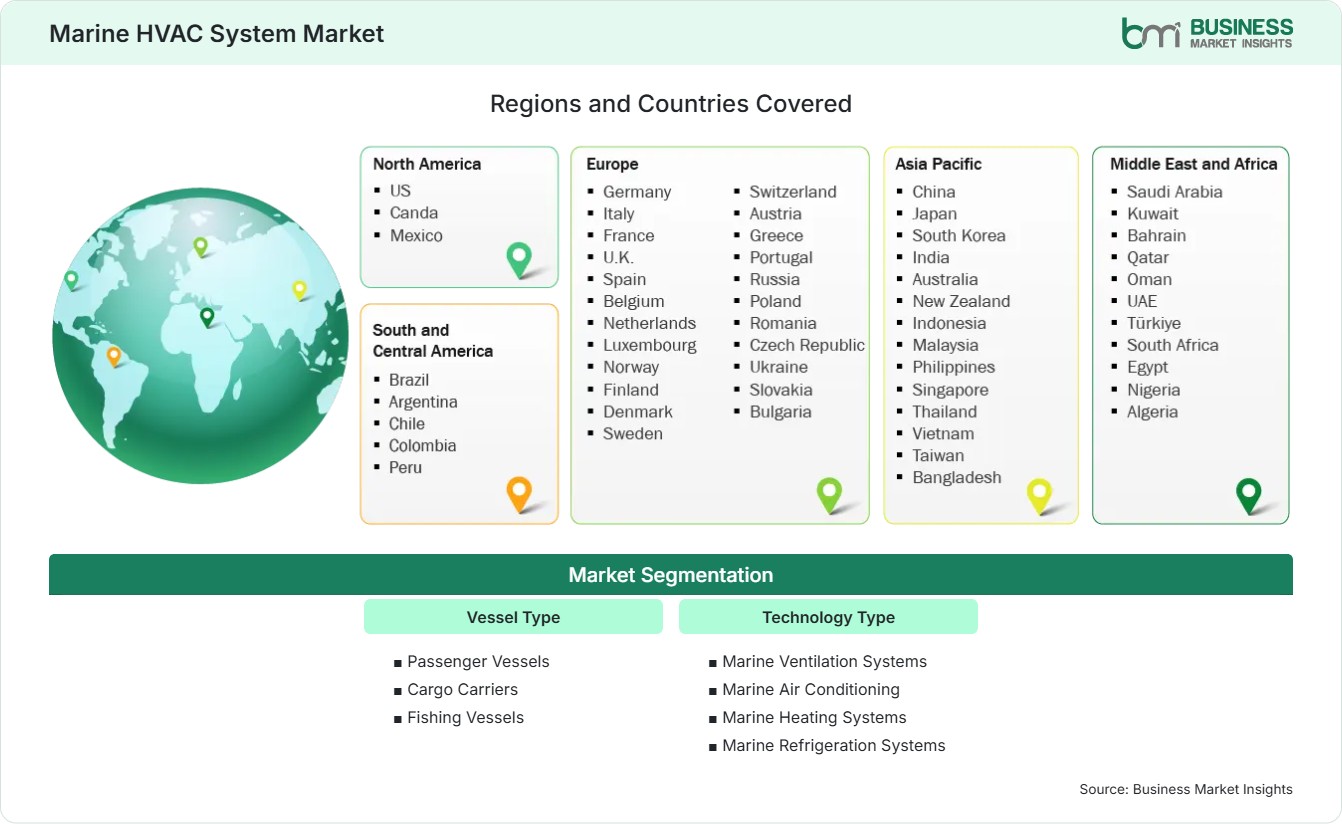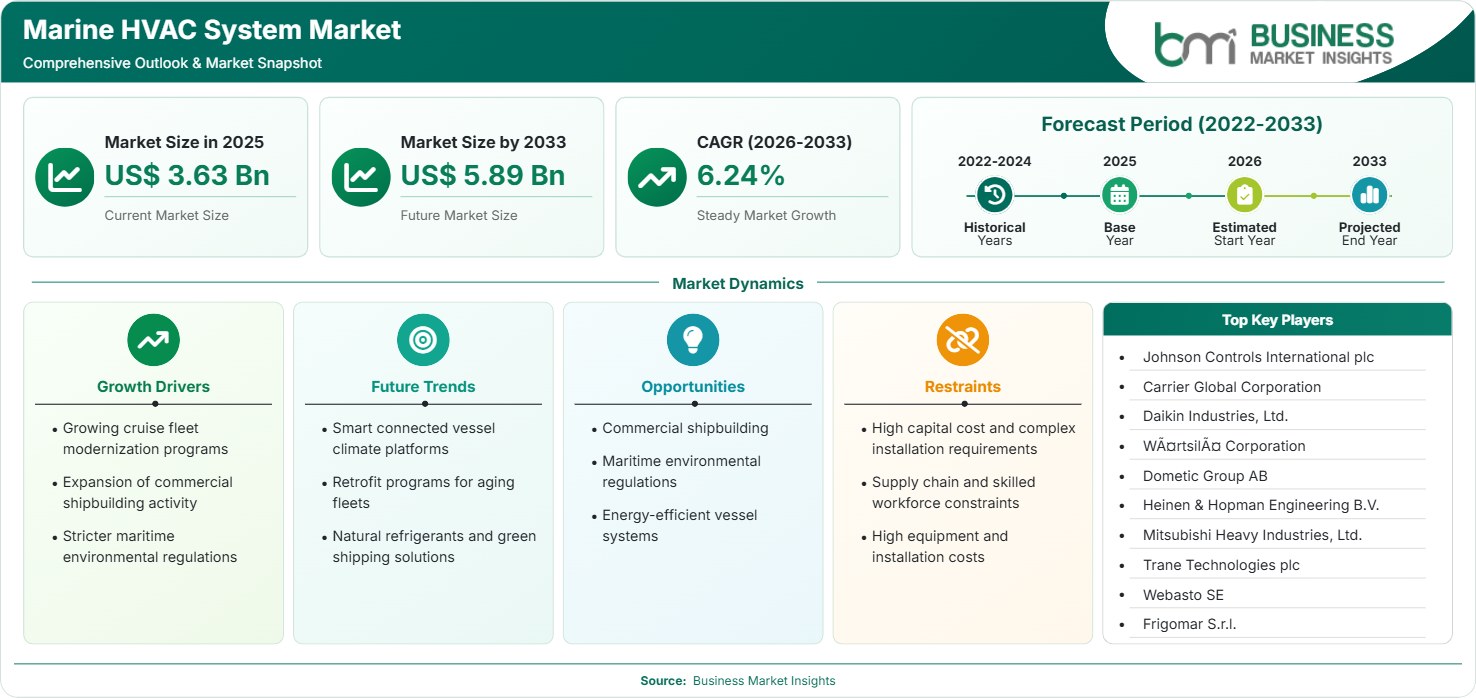
Marine HVAC System Market Regional Highlights
North America Marine HVAC System Market
North America accounts for 31%–34% Marine HVAC System Market share in 2025 and is projected to expand at 5.4%–5.9% CAGR through 2033. The region benefits from naval modernization programs, cruise fleet refurbishment initiatives, offshore energy support activity, and widespread adoption of digital vessel-management systems. Fleet operators increasingly invest in energy-efficient ventilation, refrigeration, and climate-control technologies to reduce fuel consumption and comply with environmental regulations while maintaining passenger comfort and cargo integrity.
- Defense vessel procurement continues supporting demand for advanced air-handling and environmental-control technologies.
- Cruise refurbishment projects encourage replacement of aging cooling and ventilation installations.
- Offshore support fleets increasingly prioritize lifecycle efficiency and condition-monitoring capabilities.
- Refrigerant-transition regulations promote adoption of environmentally compliant systems.
US Marine HVAC System Market
The U.S. represents 74%–78% of the regional Marine HVAC System Market and advances at 5.5%–6.0% CAGR. Demand is supported by naval vessel construction, cruise terminal investments, and marine technology upgrades. Ship operators increasingly adopt integrated monitoring, automation, and energy-management solutions to optimize onboard comfort and reduce operational costs. Growing interest in low-emission vessel technologies further supports modernization activities.
- Naval fleet enhancements generate demand for highly reliable climate-control infrastructure.
- Cruise operators focus on passenger-comfort upgrades and intelligent energy management.
- Digitized maintenance programs increase adoption of connected HVAC platforms.
- Environmental compliance requirements encourage retrofitting of legacy equipment.
Europe Marine HVAC System Market
Europe holds 25%–28% share in 2025 and records 5.8%–6.3% CAGR. Maritime sustainability initiatives, vessel retrofits, and advanced shipbuilding expertise strengthen regional demand. Germany and Norway remain leading markets, while Poland and Türkiye demonstrate faster growth due to expanding shipyard activity. The region's focus on decarbonization encourages the deployment of efficient refrigeration, ventilation, and heating technologies across commercial and passenger fleets.
- EU environmental regulations accelerate replacement of older marine climate-control systems.
- Norway leads innovation in energy-efficient maritime technologies.
- Cruise and ferry operators expand modernization investments across Northern Europe.
- Shipyard automation supports integration of intelligent onboard environmental systems.
Asia Pacific Marine HVAC System Market
Asia Pacific commands 29%–32% Marine HVAC System Market share and delivers the fastest expansion at 7.3%–7.8% CAGR. China, South Korea, and Japan dominate production activity, while India and Southeast Asia emerge as high-growth markets. Strong commercial shipbuilding pipelines, export-focused manufacturing, and increasing regional trade volumes drive equipment demand. The region remains central to global vessel construction, creating sustained opportunities across installation and service markets.
- China remains the largest shipbuilding center and a major equipment demand generator.
- South Korea supports growth through LNG carrier and offshore vessel production.
- India experiences accelerating maritime infrastructure investment and fleet expansion.
- Regional cargo movement strengthens demand for refrigeration and ventilation systems.
- Smart-ship adoption increases installation of connected HVAC technologies.
Rest of World Marine HVAC System Market
The Rest of World region accounts for 11%–14% share and expands at 6.2%–6.7% CAGR. South & Central America benefit from offshore energy activity and fisheries modernization. The Middle East and Africa gain momentum through port expansion, offshore projects, and commercial fleet investments. Brazil leads regional demand, while Saudi Arabia and the UAE demonstrate notable growth driven by maritime diversification initiatives.
- Offshore developments support upgrades of vessel environmental-control equipment.
- Fisheries fleets increasingly utilize refrigeration-focused solutions.
- Gulf countries invest in maritime logistics and commercial shipping infrastructure.
- Port expansion projects reinforce long-term vessel support requirements.