
Mammography Systems Market Outlook: Size, Share, Trends, Growth Analysis, Competitive Landscape & Forecast, 2022-2033

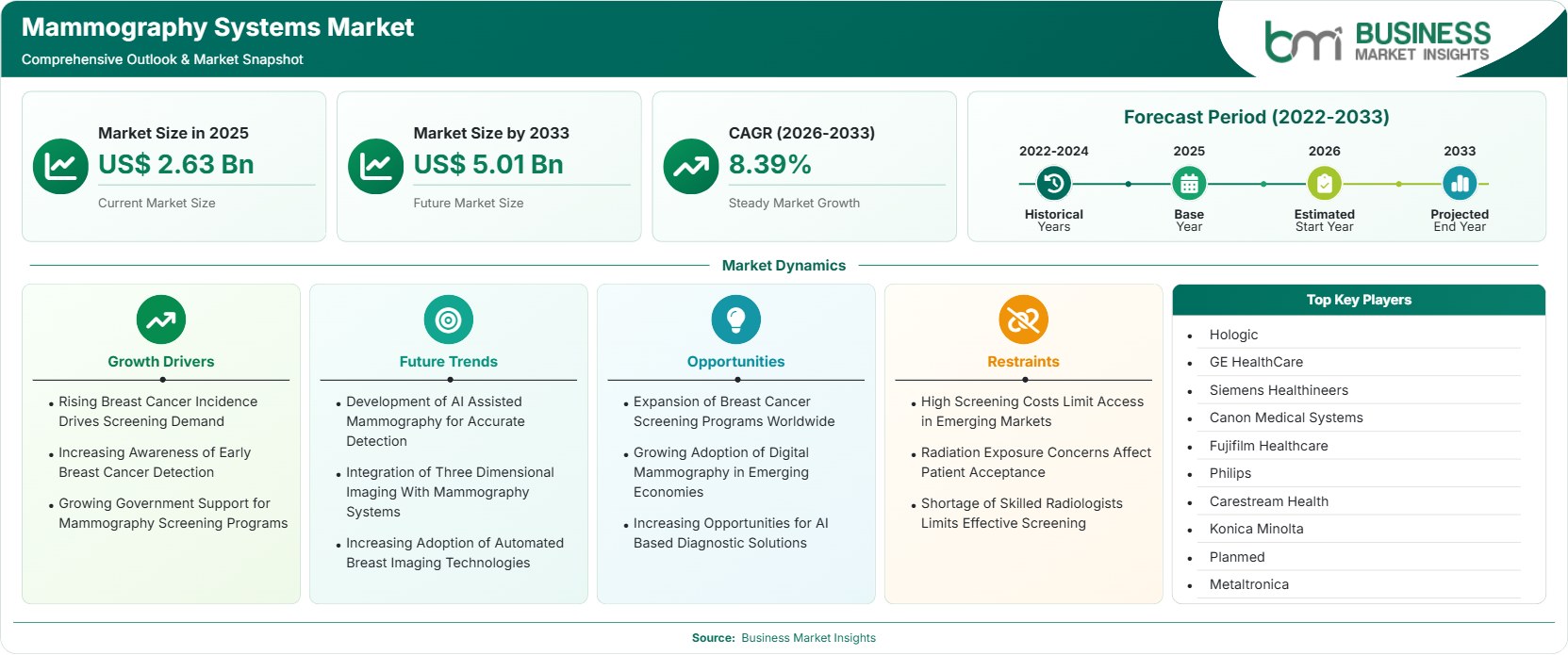
The Mammography Systems Market size was valued at US$ 2.63 billion in 2025 and is projected to reach US$ 5.01 billion by 2033, growing at a CAGR of 8.39% during 2026–2033, driven by rising breast cancer incidence, greater screening awareness, expanding public health programs, digital imaging adoption, and AI-enabled diagnostic opportunities.

Report Coverage
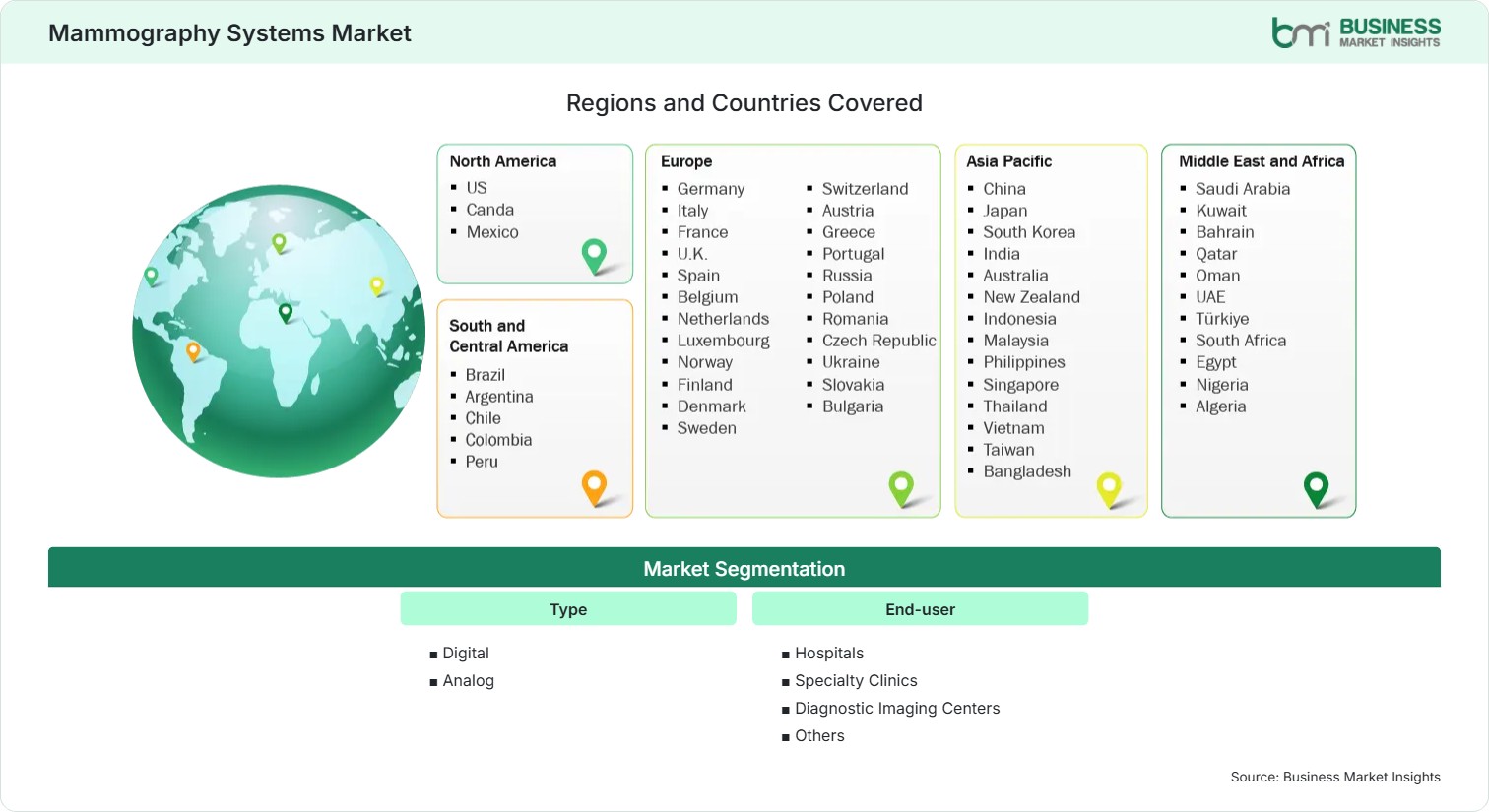
  • Type: Digital, Analog
  • End-user: Hospitals, Specialty Clinics, Diagnostic Imaging Centers, Others
US$ 2.63 Bn Market size in 2025
US$ 5.01 Bn Market Size by 2033
8.39% CAGR, 2026 - 2033
2026-2033 Forecast Period

01 AI Overview

Mammography Systems Market Summary

  • North America Region: North America held an estimated 35%–39% share in 2025 and is projected to grow at a 7.6%–8.0% CAGR, supported by established screening infrastructure, high awareness, favorable reimbursement, replacement demand, and AI adoption. The U.S. market is projected to expand at a 7.7%–8.1% CAGR, supported by organized screening and advanced diagnostic imaging.
  • Fastest Growing Region: Asia Pacific held an estimated 23%–27% share in 2025 and is projected to grow at a 10.1%–10.5% CAGR, driven by increasing breast cancer awareness, healthcare infrastructure development, expanding screening programs, and growing adoption of digital mammography.
  • Leading Segment: Digital mammography held an estimated 86%–90% share in 2025 and is projected to grow at an 8.7%–9.1% CAGR, supported by superior image management, workflow integration, improved diagnostic capabilities, and compatibility with AI-assisted analysis.
  • High Growth Segment: Diagnostic imaging centers held an estimated 17%–21% share in 2025 and are projected to grow at a 9.2%–9.6% CAGR, driven by outpatient imaging growth, specialized screening services, and rising demand for accessible diagnostic facilities.
  • Key Market Opportunity: Expanding screening programs and AI-enabled imaging create opportunities for manufacturers to improve early detection, diagnostic accuracy, workflow efficiency, and screening access across underserved populations.
  • Major Market Players: Hologic, GE HealthCare, Siemens Healthineers, Canon Medical Systems, Fujifilm Healthcare, Philips, Carestream Health, Konica Minolta, Planmed, Metaltronica.
02 Strategic Insights

Mammography Systems Market: Strategic Insights

mammography-systems-market-market-strategic-framework
FREE PDF
Request your free sample
Request free sample
03 Stakeholder View

Key Takeaways

  • Screening infrastructure remains the central demand engine, but future growth increasingly depends on expanding access beyond major hospitals into specialty clinics, diagnostic centers, and community-based screening programs.
  • Digital systems offer the strongest commercial position because they support advanced image processing, electronic storage, remote consultation, workflow integration, and AI-enabled diagnostic applications.
  • AI is becoming an important technology differentiator, helping radiologists prioritize suspicious findings, improve workflow efficiency, and potentially reduce interpretation variability without replacing clinical judgment.
  • Asia Pacific offers an attractive expansion opportunity as breast cancer awareness, healthcare investment, and screening capacity increase across countries with historically lower access to organized mammography.
  • Competitive differentiation is shifting from hardware specifications alone toward integrated platforms combining imaging, software, service, cybersecurity, data management, and clinical workflow support.
  • Manufacturers targeting emerging markets can gain traction through cost-efficient digital systems, flexible financing, local service networks, and partnerships with public health agencies and diagnostic providers.
04 Geographic Outlook

Mammography Systems Market Regional Highlights

North America Mammography Systems Market

North America held an estimated 35%–39% share in 2025, with the Mammography Systems Market share supported by established breast cancer screening infrastructure, high patient awareness, advanced imaging capabilities, and strong healthcare spending. The region is projected to grow at a 7.6%–8.0% CAGR through 2033.

  • Hospitals and diagnostic providers continue replacing older equipment with advanced digital platforms that improve image quality, workflow efficiency, connectivity, and integration with broader imaging ecosystems.
  • AI-assisted interpretation is gaining attention as healthcare providers seek tools that can support radiologist productivity, prioritize suspicious cases, and manage growing diagnostic workloads.
  • Replacement demand remains important because established screening networks require periodic equipment upgrades to maintain technological performance and meet evolving clinical requirements.
  • Public awareness initiatives and organized screening programs continue supporting examination volumes, creating recurring demand for reliable imaging systems across hospitals and specialized diagnostic facilities.

US Mammography Systems Market

The U.S. represented an estimated 32%–36% share in 2025 and is projected to grow at a 7.7%–8.1% CAGR through 2033. The Mammography Systems Market in the country benefits from extensive screening infrastructure, established reimbursement pathways, high awareness, and strong adoption of advanced diagnostic technologies. Demand is increasingly shaped by digital replacement cycles, tomosynthesis capabilities, AI-assisted interpretation, and efforts to improve screening accessibility across underserved populations.

  • Healthcare providers are investing in advanced digital imaging platforms to improve diagnostic workflows and support more efficient screening and follow-up examination processes.
  • AI-based software is attracting interest because radiology departments face increasing workloads and require technologies that can support prioritization and clinical decision-making.
  • Screening access remains a policy priority, encouraging partnerships among healthcare providers, public health organizations, and diagnostic networks to reach underserved communities.
  • Equipment replacement programs create recurring opportunities as hospitals and imaging centers upgrade systems to improve performance, connectivity, and patient experience.

Europe Mammography Systems Market

Europe held an estimated 26%–30% share in 2025 and is projected to grow at a 7.9%–8.3% CAGR through 2033. Germany, the UK, France, and Italy represent leading Mammography Systems Markets supported by established healthcare systems and screening infrastructure. Germany is projected to grow at a 8.1%–8.5% CAGR, while the UK and France benefit from screening modernization and increasing interest in AI-supported diagnostic technologies.

  • Germany represents a major opportunity because established screening infrastructure and advanced healthcare facilities support continued adoption of digitally enabled mammography systems.
  • The UK provides growth opportunities through screening program modernization, equipment replacement, and efforts to improve diagnostic capacity across national healthcare services.
  • France benefits from organized screening initiatives and investments in diagnostic imaging, supporting demand for advanced digital systems and workflow-enhancing technologies.
  • Italy offers opportunities through healthcare modernization and the expansion of diagnostic imaging capabilities in hospitals and specialized facilities.

Asia Pacific Mammography Systems Market

Asia Pacific represented an estimated 23%–27% share in 2025 and is projected to grow at a 10.1%–10.5% CAGR through 2033. China, Japan, India, and South Korea lead regional demand, while India is projected to grow at a 11.0%–11.4% CAGR. Increasing awareness, expanding healthcare infrastructure, rising screening needs, and digital technology adoption are creating substantial opportunities for manufacturers.

  • China represents a major growth opportunity as healthcare investment, breast cancer awareness, and diagnostic imaging capacity expand across urban and developing healthcare markets.
  • India offers particularly strong potential as screening awareness rises and healthcare providers expand diagnostic services, although affordability and specialist availability remain important adoption considerations.
  • Japan benefits from mature healthcare infrastructure and advanced imaging capabilities, supporting replacement demand and adoption of sophisticated digital diagnostic technologies.
  • South Korea provides opportunities through advanced healthcare infrastructure, technology adoption, and increasing use of digitally integrated diagnostic imaging systems.

Rest of World Mammography Systems Market

South and Central America accounted for an estimated 7%–9% share in 2025 and are projected to grow at a 8.6%–9.0% CAGR through 2033. Brazil and Mexico lead regional demand. The Middle East and Africa represented an estimated 6%–8% share and are projected to grow at a 9.1%–9.5% CAGR, supported by improving healthcare infrastructure and expanding screening initiatives.

  • Brazil provides opportunities through breast cancer awareness campaigns, healthcare infrastructure investment, and increasing demand for modern diagnostic imaging systems in public and private facilities.
  • Mexico benefits from growing screening awareness and healthcare modernization, although affordability and geographic access remain important factors influencing equipment deployment.
  • Saudi Arabia is expanding healthcare capabilities and specialized medical services, creating opportunities for advanced mammography systems in hospitals and diagnostic centers.
  • The UAE provides opportunities through private healthcare investment, advanced diagnostic infrastructure, and growing demand for technologically sophisticated imaging solutions.
global-market-geography
FREE PDF
Request your free sample
Request free sample
05 Segment Analysis

Mammography Systems Market Segmentation

Type

Digital mammography held an estimated 86%–90% share in 2025 and is projected to grow at an 8.7%–9.1% CAGR between 2026–2034. Digital platforms dominate because they enable efficient image storage, advanced processing, remote access, and integration with AI tools. Analog systems continue serving selected facilities but face gradual replacement as healthcare providers prioritize digitally connected imaging workflows.

  • Digital: Digital systems support advanced image processing, electronic storage, connectivity, and AI integration, making them increasingly preferred for screening, diagnosis, workflow efficiency, and data management.
  • Analog: Analog systems remain relevant in selected lower-resource facilities but face replacement pressure as healthcare providers seek improved image management, connectivity, and diagnostic capabilities.

End-user

Hospitals held an estimated 51%–55% share in 2025 and are projected to grow at a 7.8%–8.2% CAGR between 2026–2034. Hospitals remain central to screening and diagnostic pathways because they provide integrated clinical services and specialist access. Diagnostic imaging centers are gaining importance as outpatient care expands, while specialty clinics increasingly support focused breast health services.

  • Hospitals: Hospitals proavide comprehensive screening, diagnosis, and treatment pathways, supporting demand for advanced mammography systems integrated with radiology departments and broader clinical workflows.
  • Specialty Clinics: Specialty clinics increasingly provide focused breast health services, creating demand for compact, digitally connected systems that support specialized examination and diagnostic workflows.
  • Diagnostic Imaging Centers: Imaging centers benefit from growing outpatient diagnostics and screening demand, requiring efficient digital systems capable of handling higher patient volumes and rapid image processing.
  • Others: Other facilities include community-based and specialized healthcare settings where mammography access can improve screening coverage, particularly among populations underserved by major diagnostic centers.
06 Market Forces

Mammography Systems Market Dynamics

Key Market Drivers

Rising Breast Cancer Incidence Drives Screening Demand

Growing cases of breast cancer will continue to drive the demand for screening and imaging diagnostic solutions within health care settings. According to the World Health Organization, breast cancer is the most prevalent form of cancer throughout the world. The mammography systems market growth is being driven by growing numbers of examinations, increased capabilities in diagnostics, and investment in breast health services. In addition, there is a focus on more technologically advanced digital imaging solutions that offer high-quality imaging and good patient throughput rates.

Increasing Awareness of Early Breast Cancer Detection

Awareness among women regarding their risk of breast cancer and the advantages of early detection has helped in motivating women to engage in screening activities. There has been increasing awareness among the general public about the significance of screening due to public health campaigns and patient advocates, along with healthcare providers. Increased demand for such activities will be more pronounced in developing countries because awareness of this issue has not been sufficient in the past, thus keeping women from participating in screening activities.

Growing Government Support for Mammography Screening Programs

Government-led screening programs are fueling the steady demand for mammography systems through the expansion of organized screening programs and the increasing availability of early detection facilities. The Mammography Systems Market trend is contributing towards equipment procurement, the establishment of screening centers, and the replacement of outdated imaging systems. Public spending assumes significance in the case of emerging markets, where the basic infrastructure for screening services is being developed. Suppliers of medical equipment with a flexible portfolio, strong service capabilities, and proven success in government procurement have good opportunities ahead.

Key Market Opportunities

Expansion of Breast Cancer Screening Programs Worldwide

An expansion of screening programs is an avenue for imaging equipment suppliers, especially in countries where screening programs are not yet widespread. Public health campaigns will lead to an increased number of examinations being performed and will motivate the creation of special diagnosis centers. This goal can be facilitated by manufacturers with the help of digital and mobile systems, service provision, and training programs. The greatest opportunities arise when governments simultaneously conduct awareness campaigns and invest in infrastructure.

Growing Adoption of Digital Mammography in Emerging Economies

Digital mammography offers an opportunity for new healthcare delivery systems to circumvent certain constraints of older analog technology and to build more integrated diagnostic processes. Digital technology facilitates imaging storage, transfer, and even consultations, while enabling various software applications. The need for cost-effective digital machines will grow as healthcare institutions increase their screening capabilities. The vendors may take advantage of this by offering systems with enhanced functionality, cost savings, and financing options. The local partnerships will be helpful in meeting the technological needs and maintenance of the equipment.

Increasing Opportunities for AI Based Diagnostic Solutions

AI-driven mammograms are one of the most promising growth areas for the Mammography Systems Market, amid increasing pressure on healthcare systems from higher screening volumes and a shortage of well-trained radiologists. Software will help with image processing, prioritization of suspect images, and workflow optimization, which could improve efficiency. It is believed that the best business models will be those that combine imaging equipment with an AI solution rather than with separate software. Manufacturers and technology developers should look into partnerships with healthcare facilities, software vendors, and research institutes to speed up the process of clinical validation.

Market Restraints and Challenges

High Screening Costs Limit Access in Emerging Markets

Factor: Mammography screening can involve equipment acquisition, facility investment, maintenance, staffing, and patient service costs that create financial barriers in lower-resource healthcare systems.

Impact: The high level of total cost will be a factor that restricts screening capability and postpones updating the aging machine. Manufacturers can minimize such restrictions by providing efficient digital platforms and financing arrangements, as well as mobile screening and local support services. Nevertheless, affordability remains a major issue in countries with limited health care budgets.

Radiation Exposure Concerns Affect Patient Acceptance

Factor: Mammography uses low-dose X-ray radiation, and concerns about radiation exposure can discourage some patients from participating in routine screening.

Impact: Hesitancy might lead to decreased compliance with screenings and fewer examinations, especially among those with inadequate knowledge of the associated health benefits and risks. To address such hesitations, manufacturers have developed innovations to optimize dosing, improve detectors, and develop better imaging procedures that enable accurate diagnoses while exposing patients to lower levels of radiation. The medical practitioner’s role in this aspect will involve explaining the benefits of these screening tests to patients.

07 Company Analysis

Competitive Landscape

The competitive environment includes global medical imaging companies, specialized breast imaging manufacturers, diagnostic technology providers, and established healthcare technology firms. The Mammography Systems Market analysis is shaped by image quality, digital capabilities, tomosynthesis integration, AI functionality, patient comfort, workflow connectivity, service networks, and regulatory compliance.

Company Name

Overview

Products and Services relevant to this market

Hologic

Major women’s health technology company with a strong focus on breast imaging and diagnostics.

Digital mammography systems, 3D breast imaging, tomosynthesis, biopsy solutions, and breast health technologies.

GE HealthCare

Global medical technology company offering comprehensive diagnostic imaging solutions for healthcare providers.

Digital mammography systems, breast imaging technologies, imaging software, and diagnostic workflow solutions.

Siemens Healthineers

Global healthcare technology provider with advanced diagnostic imaging and breast imaging capabilities.

Digital mammography, breast tomosynthesis, imaging systems, clinical applications, and workflow technologies.

Canon Medical Systems

Medical imaging company providing diagnostic technologies across hospitals and specialized imaging facilities.

Mammography and breast imaging solutions, diagnostic imaging technologies, software, and service support.

Fujifilm Healthcare

Healthcare technology provider with imaging expertise and solutions supporting diagnostic workflows.

Digital mammography, breast imaging systems, imaging software, and diagnostic workflow technologies.

Philips

Global health technology company serving diagnostic imaging and clinical care markets.

Breast imaging systems, digital diagnostic technologies, imaging software, and integrated healthcare solutions.

Carestream Health

Imaging technology company providing digital imaging products and healthcare workflow solutions.

Digital mammography technologies, imaging solutions, image management, and healthcare workflow support.

Konica Minolta

Technology company providing diagnostic imaging and healthcare information management solutions.

Digital mammography, breast imaging technologies, imaging software, and healthcare IT solutions.

Planmed

Specialist medical imaging company focused on mammography and breast imaging technologies.

Digital mammography systems, breast tomosynthesis, imaging accessories, and related diagnostic solutions.

Metaltronica

Italian medical imaging manufacturer specializing in mammography and breast diagnostic equipment.

Digital mammography systems, breast imaging equipment, tomosynthesis technologies, and related solutions.


10 Trust & Transparency

Research Methodology

The market analysis combines proprietary research with secondary data from government agencies, company disclosures, regulatory filings, industry databases and expert interviews. Market estimates are validated through data triangulation, cross-market benchmarking and analyst review.

View Full Research Methodology

11 Questions Answered

Frequently Asked Questions

What is the Mammography Systems Market forecast through 2033?

The market forecast indicates continued expansion as screening programs grow, digital imaging adoption increases, AI-supported diagnostics advance, and healthcare providers invest in modern breast imaging infrastructure.

Which regions offer strong growth opportunities?

Asia Pacific offers strong potential as breast cancer awareness increases, screening infrastructure expands, and healthcare providers adopt digital diagnostic technologies across developing and established markets.

How is AI influencing mammography?

AI can support radiologists by prioritizing suspicious examinations, assisting image interpretation, improving workflow efficiency, and helping manage increasing screening volumes, although clinical oversight remains essential.

Why are digital mammography systems gaining preference?

Digital systems enable efficient image storage, advanced processing, electronic sharing, workflow integration, and compatibility with AI-enabled diagnostic technologies, making them increasingly valuable for modern screening programs.

What is driving demand for mammography systems?

The Mammography Systems Market report identifies increasing breast cancer incidence, greater awareness of early detection, government-supported screening initiatives, expanding diagnostic infrastructure, and replacement of older imaging equipment with advanced digital systems as key demand drivers.

Access the Full Mammography Systems Market Report

Get segment-level forecasts, regional estimates, competitive benchmarking, company profiles and downloadable Excel datasets.

Access the full Mammography Systems Market Report
350 pages PDF & Excel | 2026-08-03