
Level Transmitter Market Outlook: Size, Share, Trends, Growth Analysis, Competitive Landscape & Forecast, 2026-2033

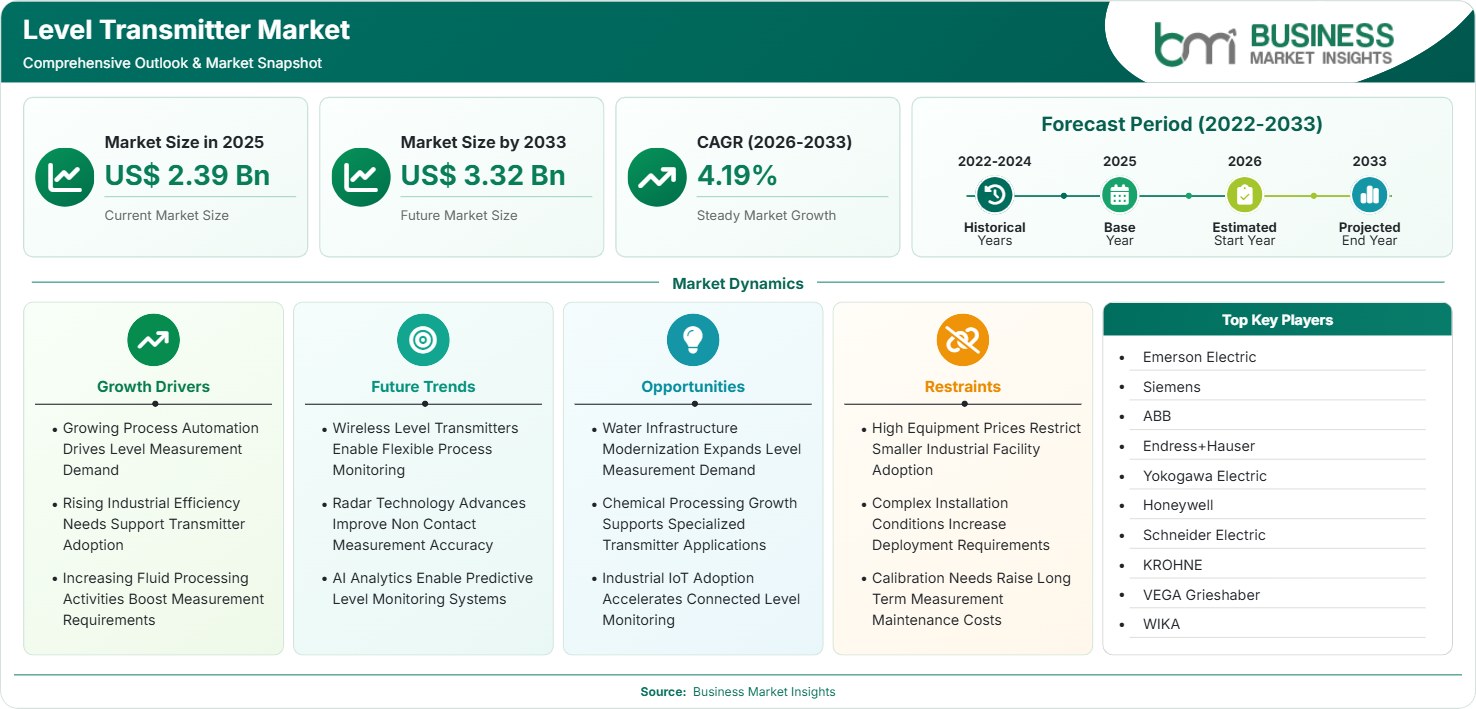
The Level Transmitter Market size was valued at US$ 2.39 billion in 2025 and is projected to reach US$ 3.32 billion by 2033, growing at a CAGR of 4.19% during 2026–2033. Increasing process automation, industrial efficiency requirements, fluid processing expansion, and rising adoption of intelligent measurement technologies are creating opportunities for advanced transmitter manufacturers.

Report Coverage
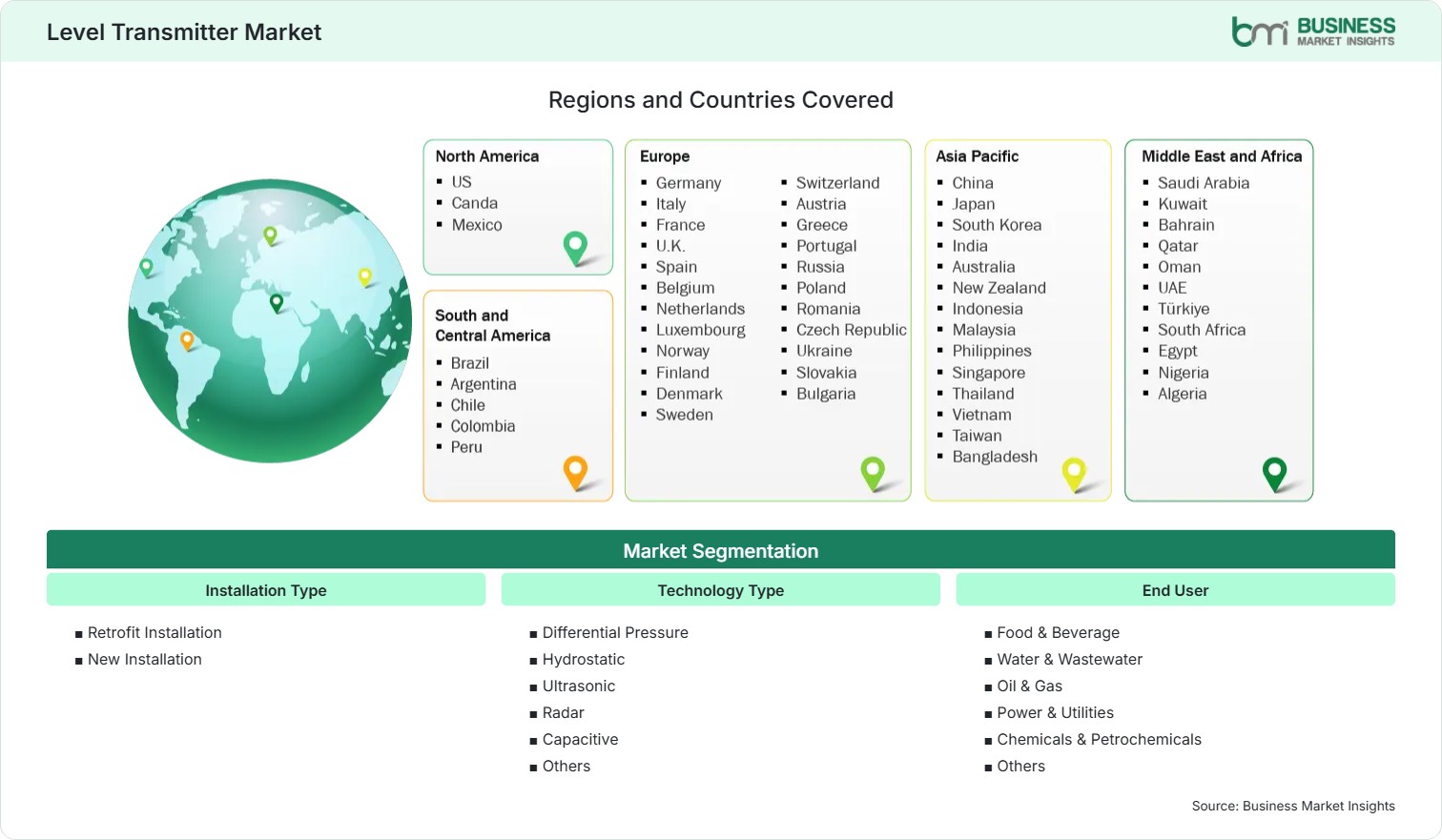
  • Installation Type: Retrofit Installation, New Installation
  • Technology Type: Differential Pressure, Hydrostatic, Ultrasonic, Radar, Capacitive, Others
  • End User: Food & Beverage, Water & Wastewater, Oil & Gas, Power & Utilities, Chemicals & Petrochemicals, Others
US$ 2.39 Bn Market size in 2025
US$ 3.32 Bn Market Size by 2033
4.19% CAGR, 2026 - 2033
2026-2033 Forecast Period

01 AI Overview

Level Transmitter Market Summary

  • North America Region: North America holds a strong position with a share ranging between 30%–33% in 2025 and is projected to grow at a CAGR of 3.8%–4.4% during 2026–2033. The region benefits from process automation adoption, industrial modernization, and replacement of conventional measurement systems. The United States remains a major contributor due to energy operations, manufacturing upgrades, and digital industrial transformation. The U.S. Level Transmitter Market is expected to grow at a CAGR of 4.0%–4.6% through 2033, supported by automation investments.
  • Fastest Growing Region: Asia Pacific represents the fastest-growing region with a share ranging between 34%–37% in 2025 and is expected to expand at a CAGR of 4.8%–5.4% through 2033. Manufacturing expansion, water infrastructure development, and increasing industrial automation adoption are accelerating demand for reliable level measurement solutions.
  • Leading Segment: Radar technology represents the leading segment with a share ranging between 28%–31% in 2025 and is projected to grow at a CAGR of 4.5%–5.1% through 2033. High accuracy, non-contact measurement capability, and suitability for challenging industrial environments support adoption across process industries.
  • High Growth Segment: Water & Wastewater represents a high-growth end-user segment with a share ranging between 18%–21% in 2025 and is expected to expand at a CAGR of 5.0%–5.6% through 2033. Infrastructure modernization, water conservation initiatives, and demand for automated monitoring systems are supporting growth.
  • Key Market Opportunity: Industrial IoT integration, modernization of water infrastructure, and demand for connected process monitoring solutions are creating opportunities for manufacturers developing intelligent transmitters with improved accuracy, remote access, and predictive maintenance capabilities.
  • Major Market Players: Emerson Electric, Siemens, ABB, Endress+Hauser, Yokogawa Electric, Honeywell, Schneider Electric, KROHNE, VEGA Grieshaber, and WIKA.
02 Strategic Insights

Level Transmitter Market: Strategic Insights

Level Transmitter Market Strategic Framework
FREE PDF
Request your free sample
Request free sample
03 Stakeholder View

Key Takeaways

  • Industrial measurement ecosystems are shifting toward intelligent monitoring solutions that integrate transmitters with automation systems, control platforms, and data-driven operational management tools.
  • Water and wastewater infrastructure, chemical processing, and energy industries present strong adoption opportunities as organizations prioritize efficiency, reliability, and improved process visibility.
  • Technology development is focused on radar-based measurement, wireless connectivity, improved sensor performance, and advanced diagnostics to support complex industrial applications.
  • Asia Pacific provides attractive investment opportunities due to manufacturing expansion, infrastructure development, and increasing adoption of automation technologies across emerging economies.
  • Strategic partnerships between automation providers, measurement specialists, and industrial operators are shaping competitive strategies and accelerating technology deployment.
  • Growing focus on operational optimization is encouraging industries to replace traditional measurement equipment with advanced transmitters capable of supporting digital transformation.
04 Geographic Outlook

Level Transmitter Market Regional Highlights

North America Level Transmitter Market

North America accounted for approximately 30%–33% of global revenue in 2025 and is expected to expand at a CAGR of 3.8%–4.4% through 2033. The region maintains strong demand due to established process industries, automation infrastructure, and modernization initiatives across energy, manufacturing, and water management sectors. The Level Transmitter Market share in the region is supported by replacement demand for aging measurement systems and increasing adoption of connected industrial technologies.

  • The United States represents the primary regional contributor due to strong presence of energy, chemical, and manufacturing industries requiring accurate process monitoring.
  • Industrial facilities are adopting intelligent transmitters to improve operational efficiency, reduce downtime, and enhance measurement reliability across production environments.
  • Energy companies are upgrading monitoring infrastructure to support efficient resource management and improved process control.
  • Digital transformation programs are increasing demand for transmitters compatible with industrial communication networks and automation platforms.

US Level Transmitter Market

The United States represents the largest contributor within North America, supported by advanced industrial infrastructure, automation adoption, and demand from energy and manufacturing sectors. The market is projected to grow at a CAGR of 4.0%–4.6% through 2033 as industries invest in efficient monitoring solutions. Growing focus on process optimization and equipment modernization is strengthening adoption across multiple applications.

  • Oil and gas operators are implementing advanced level measurement technologies for storage, processing, and production applications.
  • Manufacturing facilities are upgrading instrumentation systems to improve productivity and process accuracy.
  • Industrial IoT adoption is supporting integration of connected transmitters with centralized monitoring platforms.

Europe Level Transmitter Market

Europe represented approximately 26%–29% of global revenue in 2025 and is projected to grow at a CAGR of 3.6%–4.2% through 2033. The region benefits from advanced manufacturing capabilities, stringent industrial efficiency requirements, and increasing adoption of automated process control systems. Germany leads regional demand, while France and the United Kingdom are expanding adoption through industrial modernization.

  • Germany maintains leadership through strong automation capabilities and a developed chemical and manufacturing ecosystem.
  • France is increasing adoption of advanced transmitters across process industries and infrastructure projects.
  • The United Kingdom supports demand through energy sector modernization and industrial efficiency initiatives.
  • Sustainability programs are encouraging industries to improve monitoring accuracy and resource management.

Asia Pacific Level Transmitter Market

Asia Pacific accounted for approximately 34%–37% of global revenue in 2025 and is expected to register the fastest CAGR of 4.8%–5.4% through 2033. Industrial expansion, manufacturing growth, and infrastructure investments are strengthening regional adoption. China remains the leading market, while India, Japan, and Southeast Asian economies are increasing deployment of advanced measurement systems.

  • China is expanding transmitter adoption through manufacturing growth, chemical processing activities, and industrial automation investments.
  • India is increasing demand through water infrastructure development, industrial projects, and process optimization initiatives.
  • Japan continues adopting advanced automation technologies across manufacturing and precision industries.
  • Southeast Asian countries are modernizing industrial facilities with improved measurement and control systems.

Rest of World Level Transmitter Market

Rest of World regions contribute approximately 7%–10% of global revenue in 2025 and are projected to grow at a CAGR of 4.2%–4.8% through 2033. Middle Eastern and Latin American markets are witnessing adoption through energy development, industrial expansion, and water management initiatives. Growing investment in process infrastructure is improving opportunities for measurement technology providers.

  • Middle Eastern countries are adopting advanced transmitters across oil, gas, and industrial processing facilities.
  • Latin American industries are upgrading process monitoring systems to improve operational efficiency.
  • Infrastructure development projects are supporting demand for reliable measurement solutions.
  • Industrial modernization initiatives are increasing adoption of automated monitoring technologies.
Global Market Geography
FREE PDF
Request your free sample
Request free sample
05 Segment Analysis

Level Transmitter Market Segmentation

Installation Type

The Installation Type segment highlights adoption patterns based on industrial requirements, facility conditions, and modernization strategies. New Installation represents a major deployment approach due to expanding industrial facilities and automation projects. Retrofit Installation demand is increasing as existing plants upgrade measurement infrastructure. The Level Transmitter Market scope continues expanding with industries seeking efficient monitoring systems for improved process reliability.

  • Retrofit Installation: Supports modernization of existing facilities by replacing conventional measurement systems with advanced transmitters offering improved accuracy and digital connectivity.
  • New Installation: Gains adoption through greenfield industrial projects requiring integrated automation systems, advanced process control, and efficient measurement infrastructure.

Technology Type

The Technology Type segment reflects increasing demand for accurate and reliable measurement solutions across process industries. Radar technology remains a leading technology category due to non-contact measurement advantages and suitability for complex operating environments. The Level Transmitter Market trend indicates increasing preference for intelligent measurement technologies supporting automation, remote monitoring, and improved operational efficiency.

  • Differential Pressure: Provides reliable measurement for industrial applications involving tanks, vessels, and process systems requiring proven monitoring methods.
  • Hydrostatic: Supports liquid level measurement applications through pressure-based monitoring across water, chemical, and industrial processing environments.
  • Ultrasonic: Enables non-contact measurement for applications requiring flexible installation, corrosion resistance, and reduced maintenance requirements.
  • Radar: Offers high accuracy and reliable performance in challenging environments with changing temperatures, pressure conditions, and material characteristics.
  • Capacitive: Supports measurement applications involving liquids and solids through electrical property variations and process monitoring requirements.
  • Others: Includes emerging measurement technologies developed for specialized industrial applications requiring customized monitoring capabilities.

End User

The End User segment demonstrates adoption across industries requiring accurate level monitoring for process efficiency, safety, and resource management. Water & Wastewater represents a high-growth application area due to infrastructure modernization and increasing automation requirements. The Level Transmitter Market growth is supported by demand from industries improving operational control and optimizing fluid handling processes.

  • Food & Beverage: Uses level transmitters for hygienic processing, storage monitoring, and efficient management of liquid-based production systems.
  • Water & Wastewater: Adopts advanced measurement solutions for treatment facilities, storage systems, and resource management operations.
  • Oil & Gas: Requires reliable level monitoring across production, storage, and processing facilities operating under demanding conditions.
  • Power & Utilities: Utilizes transmitters for efficient monitoring of fluids, reservoirs, and operational systems within energy facilities.
  • Chemicals & Petrochemicals: Drives adoption through complex processing requirements and demand for accurate measurement in hazardous environments.
06 Market Forces

Level Transmitter Market Dynamics

Key Market Drivers

Growing Process Automation Drives Level Measurement Demand

The growing need for automation in the manufacturing industry, as well as in other industries such as the energy, chemical, and utility sectors, is driving growth in level measurement solutions. Automation necessitates the use of transmitters that enable efficient production processes, process monitoring, and minimized process interruptions. Digitally enabled transmitters are becoming a significant element of contemporary control systems. According to the Level Transmitter Market analysis, industries are focusing on smart instrumentation to increase productivity and provide greater process visibility.

Rising Industrial Efficiency Needs Support Transmitter Adoption

Efficiency is a priority among industry operators as they concentrate on minimizing waste and making the best use of resources, resulting in an increased need for measurement equipment. Level transmitters enable businesses to exercise process control through constant monitoring of liquid and material levels. Various industries are opting to employ modern measurement methods in place of conventional techniques due to their ability to support sound decision-making and stability. The increased importance of production improvements is driving the adoption of level transmitters within manufacturing plants, energy plants, and processing industries.

Increasing Fluid Processing Activities Boost Measurement Requirements

Growth of fluid management operations in the oil and gas sector, chemical industry, water treatment facilities, and power plants is driving the demand for level gauges. Accurate measurement is crucial for ensuring safety in operations, proper inventory management, and manufacturing efficiency. With increased investments in infrastructure and capacity expansion, there is an impetus to use level transmitters at both new and existing sites. The manufacturers are emphasizing products that can operate in demanding conditions, including pressure and temperature fluctuations and corrosion.

Key Market Opportunities

Water Infrastructure Modernization Expands Level Measurement Demand

The modernization of water utility infrastructure is providing level transmitter companies with immense potential, owing to the growing adoption of efficient monitoring and management systems. Old water utility networks need advanced measurement systems to improve their storage, treatment, and distribution processes. The development of such advanced systems enables real-time monitoring and automation in water utility networks. The growing emphasis on efficiency is making intelligent measurement systems increasingly popular. Firms that produce affordable technologies can capitalize on the growing number of water management initiatives.

Chemical Processing Growth Supports Specialized Transmitter Applications

The rise in chemical processing activities has increased the demand for transmitters capable of operating in challenging environments. The chemical industry needs reliable, robust level measurement devices that can withstand corrosive substances, fluctuating pressures, and process complexities. There is an increasing need for radar and measurement devices due to their reliability and low maintenance needs. With the increase in capacity and automation levels at chemical companies, there will be a rising demand for transmitter systems tailored to specific applications. Companies that provide tough and accurate transmitters can capitalize on this trend.

Industrial IoT Adoption Accelerates Connected Level Monitoring

The rising adoption of the Industrial Internet of Things (IIoT) provides opportunities to integrate level monitoring systems into digital platforms and analytics systems. Many industries today are looking for real-time data to facilitate their decision-making process. The use of smart transmitters capable of communicating facilitates remote monitoring and integration into industrial networks. The Level Transmitter Market forecast is based on the growing requirement of intelligent instruments that facilitate digital transformation. Organizations that can develop connected solutions with diagnostic capabilities and interoperability on automation platforms have a chance to capitalize on the growing adoption of IIoT.

Market Restraints and Challenges

High Equipment Prices Restrict Smaller Industrial Facility Adoption

Factor: Transmitters that come with intelligence, digitalization, and specialized measurement properties have higher costs than other transmitters. Impact: Small-scale plants may be hesitant to adopt because of financial constraints. The manufacturing industries are increasingly emphasizing scalability and cost-effectiveness. Nevertheless, price considerations remain relevant when deciding which technologies to employ, especially for small-scale industries seeking to improve processes without significant investment.

Complex Installation Conditions Increase Deployment Requirements

Factor: The industrial environment presents tough conditions, such as temperature fluctuations, corrosive substances, pressure changes, and installation challenges. Impact: Installation challenges may lead to prolonged installation time, more complex technical specifications, and additional maintenance needs. Expert knowledge is needed to select and install suitable measurement technologies. Companies are working on adaptable systems that offer greater flexibility and ease of installation. Nonetheless, installation complexity remains a factor when adopting such devices.

07 Company Analysis

Competitive Landscape

The competitive environment includes automation companies, industrial instrumentation providers, and measurement technology specialists developing solutions for process industries. The Level Transmitter Market analysis indicates that companies are focusing on digitalization, advanced sensing technologies, connectivity features, and application-specific solutions to improve measurement accuracy and operational efficiency.

Company Name

Overview

Products and Services relevant to this market

Emerson Electric

Global automation technology provider delivering measurement and control solutions for industrial applications.

Level transmitters, radar measurement systems, differential pressure transmitters, process automation solutions, and digital monitoring technologies.

Siemens

Technology company providing automation, digitalization, and industrial measurement solutions across multiple sectors.

Level measurement instruments, ultrasonic transmitters, radar systems, process control solutions, and industrial automation platforms.

ABB

Industrial technology company offering automation, electrification, and measurement solutions for process industries.

Level transmitters, process instrumentation, digital measurement solutions, automation systems, and industrial monitoring technologies.

Endress+Hauser

Measurement and instrumentation specialist focused on process industry solutions and industrial automation.

Radar level transmitters, ultrasonic instruments, hydrostatic measurement solutions, and process monitoring systems.

Yokogawa Electric

Industrial automation company providing measurement, control, and digital solutions for process industries.

Level measurement instruments, radar systems, process analyzers, automation platforms, and industrial control solutions.

Honeywell

Technology company providing automation, safety, and industrial process solutions worldwide.

Level transmitters, process control systems, sensing technologies, and industrial monitoring solutions.

Schneider Electric

Energy management and automation company supporting industrial digital transformation initiatives.

Industrial measurement solutions, automation systems, connected monitoring technologies, and process management platforms.

KROHNE

Measurement technology company specializing in industrial instrumentation and process measurement solutions.

Level transmitters, radar measurement devices, ultrasonic systems, and process instrumentation solutions.

VEGA Grieshaber

Measurement technology provider specializing in level and pressure measurement solutions.

Radar level transmitters, guided wave radar systems, ultrasonic instruments, and industrial measurement technologies.

WIKA

Instrumentation manufacturer supplying measurement solutions for industrial applications globally.

Level measurement instruments, pressure-based solutions, process monitoring systems, and industrial instrumentation technologies.

10 Trust & Transparency

Research Methodology

The market analysis combines proprietary research with secondary data from government agencies, company disclosures, regulatory filings, industry databases and expert interviews. Market estimates are validated through data triangulation, cross-market benchmarking and analyst review.

View Full Research Methodology

11 Questions Answered

Frequently Asked Questions

What factors influence selection of level transmitter technologies?

Technology selection depends on application requirements, measurement accuracy, operating conditions, material characteristics, installation complexity, and compatibility with existing automation systems. Industries evaluate transmitter performance, reliability, maintenance requirements, and integration capabilities before selecting suitable solutions.

What does the Level Transmitter Market report cover?

The report covers installation types, technology categories, end-user industries, regional developments, competitive strategies, and major market influencing factors. It provides insights into adoption patterns, technological developments, and growth opportunities across industrial applications.

How is industrial IoT influencing level transmitter adoption?

Industrial IoT is enabling connected transmitters with remote monitoring, real-time data access, and improved predictive maintenance capabilities. Integration with digital industrial platforms allows companies to optimize processes, reduce downtime, and improve decision-making through better operational visibility.

Why are radar level transmitters gaining adoption?

Radar level transmitters are gaining popularity because they provide accurate non-contact measurement and perform reliably under challenging temperature, pressure, and material conditions. Their lower maintenance requirements and suitability for demanding applications make them valuable for process industries seeking operational stability.

What industries are driving demand for level transmitters?

Oil and gas, chemicals, water and wastewater, food and beverage, power generation, and manufacturing industries are driving adoption of level transmitters due to increasing requirements for accurate process monitoring. These industries use advanced measurement solutions to improve efficiency, enhance safety, and maintain reliable operations across complex industrial environments.

Access the Full Level Transmitter Market Report

Get segment-level forecasts, regional estimates, competitive benchmarking, company profiles and downloadable Excel datasets.

Access the full Level Transmitter Market Report
350 pages PDF & Excel | 2026-08-11