
Leukemia Therapeutics Market Outlook: Size, Share, Trends, Growth Analysis, Competitive Landscape & Forecast, 2026-2033

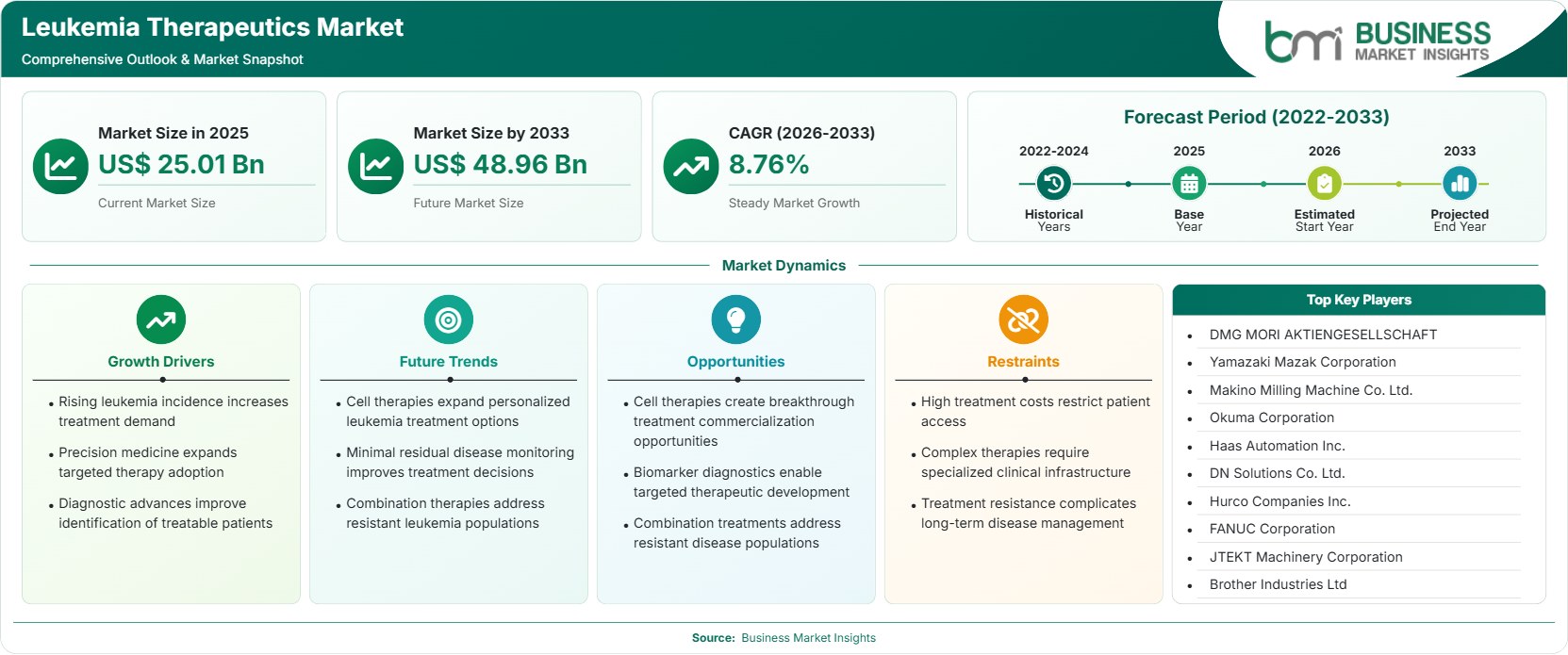
The Leukemia Therapeutics Market size was valued at US$ 25.01 Billion in 2025 and is projected to reach US$ 48.96 Billion by 2033, growing at a CAGR of 8.76% during 2026–2033, driven by targeted therapies, molecular diagnostics, treatment innovation, and expanding access to specialized oncology care.

Report Coverage
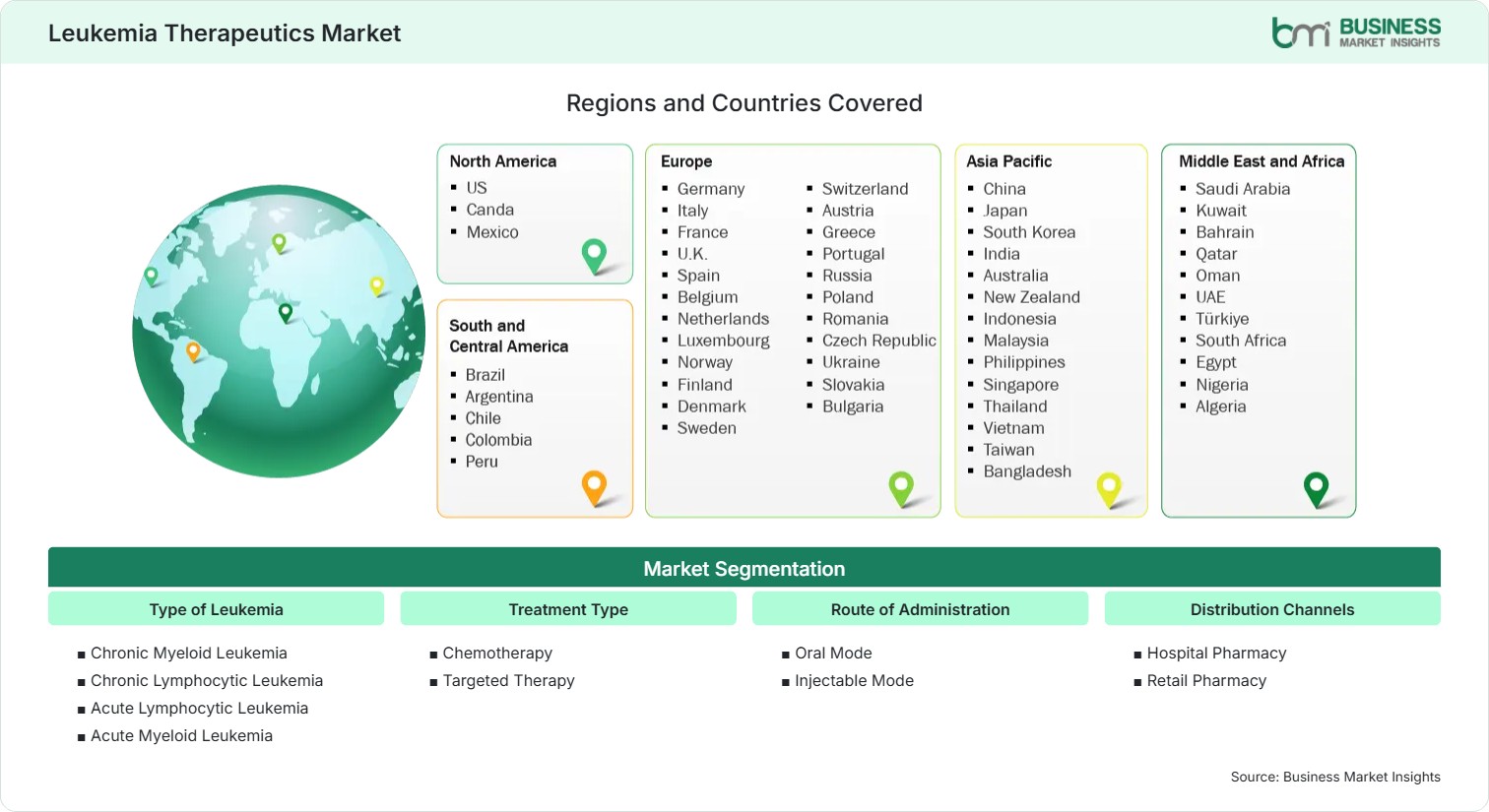
  • Type of Leukemia: Chronic Myeloid Leukemia , Chronic Lymphocytic Leukemia , Acute Lymphocytic Leukemia , Acute Myeloid Leukemia
  • Treatment Type: Chemotherapy, Targeted Therapy
  • Route of Administration: Oral Mode, Injectable Mode
  • Distribution Channels: Hospital Pharmacy, Retail Pharmacy
US$ 25.01 Bn Market size in 2025
US$ 48.96 Bn Market Size by 2033
8.76% CAGR, 2026 - 2033
2026-2033 Forecast Period

AI Overview

Leukemia Therapeutics Market Summary

  • North America Region: North America holds an estimated 35%–39% Leukemia Therapeutics Market share in 2025, with a projected CAGR of 8.20%–9.10% during 2026–2033, supported by advanced oncology infrastructure, targeted medicines, clinical research, and reimbursement opportunities. The US benefits from pharmaceutical innovation, specialized hematology centers, and regulatory pathways supporting novel leukemia treatments, with a projected CAGR of 8.30%–9.20% during 2026–2033.
  • Fastest Growing Region: Asia Pacific accounts for an estimated 21%–25% share in 2025, with a projected CAGR of 10.00%–11.20% during 2026–2033, driven by expanding cancer care infrastructure, diagnostic improvements, pharmaceutical investment, and broader access to leukemia treatment across emerging healthcare systems.
  • Leading Segment: Chronic Myeloid Leukemia (CML) represents an estimated 29%–33% share in 2025, with a projected CAGR of 7.80%–8.80% during 2026–2033, supported by long-term tyrosine kinase inhibitor use, treatment monitoring, improved survival, and continued demand for disease management.
  • High Growth Segment: Targeted Therapy is estimated to account for 42%–46% share in 2025, with a projected CAGR of 10.00%–11.30% during 2026–2033, driven by molecularly guided treatment, resistance management, novel inhibitors, and growing adoption of precision oncology approaches.
  • Key Market Opportunity: Treatment personalization, oral targeted medicines, molecular testing, and improved access in emerging economies create opportunities for differentiated therapies, companion diagnostics, and integrated leukemia care models.
  • Major Market Players: Novartis AG, Bristol-Myers Squibb Company, Pfizer Inc., F. Hoffmann-La Roche Ltd, AbbVie Inc., AstraZeneca PLC, Merck KGaA, Johnson & Johnson, Amgen Inc., and BeiGene, Ltd.
Strategic Insights

Leukemia Therapeutics Market: Strategic Insights

Leukemia Therapeutics Market Strategic Framework
FREE PDF
Request your free sample
Request free sample
Stakeholder View

Key Takeaways

  • The value chain connects drug discovery companies, clinical research organizations, diagnostic laboratories, manufacturers, wholesalers, hospitals, and pharmacies. Product success depends on clinical differentiation, reliable manufacturing, and access to treatment pathways.
  • Targeted therapy offers opportunities in genetically defined AML and resistant CML or CLL populations. Companies developing combination strategies can address treatment sequencing, relapse, and patient-specific response patterns.
  • Small-molecule inhibitors, antibody-based approaches, cellular therapies, and molecular diagnostics are influencing product development. Research priorities include improved selectivity, reduced toxicity, and treatment durability.
  • Asia Pacific provides opportunities for companies supporting diagnostic capacity, specialist training, and affordable treatment access. Growth strategies must reflect country-specific regulatory requirements, healthcare financing, and distribution structures.
  • Pharmaceutical companies continue to use licensing, acquisitions, and strategic partnerships to access oncology pipelines. Deals can accelerate commercialization while distributing clinical development and regulatory risk.
  • Treatment adoption depends on more than efficacy. Manufacturing consistency, medication adherence, adverse-event management, physician familiarity, and patient monitoring affect real-world product utilization.
Geographic Outlook

Leukemia Therapeutics Market Regional Highlights

North America Leukemia Therapeutics Market

North America held an estimated 35%–39% Leukemia Therapeutics Market share in 2025, with a projected CAGR of 8.20%–9.10% during 2026–2033. Established cancer centers, innovative drug pipelines, and strong specialist networks support adoption. The region benefits from molecular testing, oral targeted medicines, and clinical trial activity. The United States represents the principal commercial market, while Canada contributes through public healthcare systems and specialized treatment centers. Reimbursement negotiations, treatment affordability, and regulatory evidence requirements influence commercial performance across the region.

  • Specialized hematology centers support the adoption of complex treatment protocols and provide infrastructure for clinical trials involving targeted and cellular therapies.
  • Pharmaceutical companies prioritize molecularly defined patient populations, particularly where diagnostic testing can guide treatment selection and response monitoring.
  • Oral medicines can improve outpatient treatment continuity, although adherence and long-term monitoring remain important for chronic leukemia management.
  • Pricing pressure and payer requirements influence the commercial positioning of innovative therapies, particularly when multiple treatment alternatives are available.

US Leukemia Therapeutics Market

The United States accounted for an estimated 29%–33% of the global market in 2025, with a projected CAGR of 8.30%–9.20% during 2026–2033. Its commercial environment combines specialist oncology infrastructure, pharmaceutical research, and regulatory oversight. Academic medical centers contribute to clinical development and treatment innovation. FDA decisions can influence prescribing options and competitive dynamics. Access varies with insurance coverage, treatment setting, and product pricing, making market penetration dependent on clinical evidence, reimbursement, and physician adoption.

  • FDA approvals for targeted therapies expand treatment options for genetically defined leukemia populations and selected relapsed or refractory cases.
  • Academic institutions contribute to early-stage clinical research, biomarker validation, and treatment protocols for difficult-to-manage hematologic malignancies.
  • Payers and healthcare providers increasingly evaluate clinical benefit, safety, and total treatment costs when adopting new therapies.

Europe Leukemia Therapeutics Market

Europe represented an estimated 26%–30% of the Leukemia Therapeutics Market share in 2025, with a projected CAGR of 7.60%–8.60% during 2026–2033. Oncology infrastructure and specialist treatment capabilities exist in Germany, the UK, France, and Italy. Both Germany and the UK remain relevant for innovation and adoption, whereas Poland and Spain present potential markets for healthcare modernization. National-level access is determined by national reimbursement policies, health technology assessment, procurement, and treatment protocols. Regulatory convergence helps innovation, although market launch differs.

  • Germany benefits from specialized hospitals, clinical research activity, and established hematology services supporting complex treatment delivery.
  • The United Kingdom provides a structured environment for evidence-based adoption, with access shaped by national assessment and commissioning processes.
  • France and Italy support specialist oncology care, while regional differences in funding and procurement influence treatment availability.
  • Central and Eastern European countries offer expansion opportunities through diagnostic investment and improved access to specialized cancer medicines.

Asia Pacific Leukemia Therapeutics Market

The Asia Pacific market accounted for 21%–25% in 2025, with a CAGR of 10.00%–11.20% for the Leukemia Therapeutics Market from 2026 to 2033. Countries such as China, Japan, South Korea, and India are significant markets, each with unique healthcare and pharmaceutical environments. China and Japan have well-developed facilities for oncological research, whereas India has potential due to its growing specialist services and pharmaceutical industry.

  • China combines domestic pharmaceutical development with expanding oncology infrastructure and growing demand for advanced leukemia medicines.
  • Japan's aging population and established specialist care network support demand for chronic disease management and innovative hematology treatments.
  • India provides opportunities for affordable medicines, hospital expansion, and diagnostic improvements, particularly in major metropolitan and regional centers.
  • South Korea supports biopharmaceutical research and advanced clinical services, creating opportunities for targeted treatment development and commercialization partnerships.

Rest of World Leukemia Therapeutics Market

South and Central America represented an estimated 5%–7% share in 2025, with a projected CAGR of 8.50%–9.70% during 2026–2033. Brazil and Mexico provide important commercial opportunities through large patient populations and specialist hospital networks. Leukemia Therapeutics Market access varies by public procurement, private insurance, and pharmaceutical pricing.

The Middle East and Africa accounted for an estimated 6%–8% share in 2025, with a projected CAGR of 8.80%–10.00% during 2026–2033. Gulf healthcare investment and selected African urban centers support specialized care expansion, while affordability and diagnostic availability remain key constraints.

  • Brazil and Mexico provide opportunities for pharmaceutical suppliers supporting specialist oncology services and public-sector treatment programs.
  • Gulf countries are investing in healthcare modernization, advanced hospitals, and specialized treatment capabilities for hematologic malignancies.
  • South Africa and other regional centers face access challenges linked to specialist availability, diagnostic infrastructure, and treatment financing.
  • Partnerships with local distributors and healthcare providers can support market access where direct commercial infrastructure is limited.
Global Market Geography
FREE PDF
Request your free sample
Request free sample
Segment Analysis

Leukemia Therapeutics Market Segmentation

Type of Leukemia

Leukemia subtypes vary due to differences in biology, progression, treatment, and disease duration. The CML and CLL segments support the need for prolonged targeted treatment, whereas the AML and ALL segments require intensive treatment. The CML segment accounts for 29%-33% market share of the Leukemia Therapeutics Market in 2025, and its CAGR will be 7.80%-8.80% between 2026 and 2033.

  • Chronic Myeloid Leukemia (CML): Long-term tyrosine kinase inhibitor therapy supports demand for oral medicines, treatment monitoring, and resistance management across chronic disease populations.
  • Chronic Lymphocytic Leukemia (CLL): Targeted inhibitors and combination regimens are reshaping treatment sequencing, especially for older patients and those requiring continuous disease control.
  • Acute Lymphocytic Leukemia (ALL): Intensive chemotherapy, targeted approaches, and cellular therapies address acute disease, with pediatric and adult populations requiring distinct treatment strategies.
  • Acute Myeloid Leukemia (AML): Molecularly defined treatment and combination regimens support innovation, while relapse and patient fitness create demand for differentiated therapeutic approaches.

Treatment Type

Treatment method segmentation includes distinguishing between cytotoxic treatment methods, which are conventional, and medicines targeting specific pathways in the cell. Targeted therapy had a market share of 42%–46% in 2025 and a CAGR of 10.00%–11.30% for 2026–2033. The treatment method is determined by leukemia type, molecular findings, disease stage, and prior treatment.

  • Chemotherapy: Cytotoxic medicines remain central to intensive acute leukemia treatment, combination protocols, and selected maintenance or salvage settings.
  • Targeted Therapy: Molecular inhibitors and biomarker-directed treatments support precision care, offering opportunities to improve response, manage resistance, and develop combination strategies.

Route of Administration

The route of administration influences factors such as treatment setting, compliance, healthcare resource needs, and convenience. Oral drugs aid in delivering drugs through an outpatient setting and help manage chronic diseases, while injectable drugs are still important for aggressive chemotherapy and certain targeted or immunotherapies. The future of the Leukemia Therapeutics Market category will depend on product development, treatment efficacy, and suitability.

  • Oral Mode: Oral medicines facilitate outpatient treatment and long-term administration, with adherence support and drug interaction management influencing therapeutic outcomes.
  • Injectable Mode: Injectable therapies remain important for intensive regimens, hospital-based treatment, and medicines requiring supervised administration or specialized clinical infrastructure.

Distribution Channels

The distribution channel links drug manufacturers to healthcare providers and patients. Hospital pharmacies remain relevant for injectables, complex treatment schedules, and special prescriptions. Retail pharmacies play a role in administering oral medications and reorders. Channel selection is guided by prescription issues, payment issues, the need for cold storage, and treatment management.

  • Hospital Pharmacy: Hospital pharmacies support specialized treatment, inpatient and outpatient oncology services, medication management, and coordination with hematology teams.
  • Retail Pharmacy: Retail pharmacies facilitate access to oral therapies and repeat prescriptions, with availability shaped by distribution agreements, reimbursement, and patient demand.
Market Forces

Leukemia Therapeutics Market Dynamics

Key Market Drivers

Expansion of Molecularly Guided Leukemia Treatment

Molecular classification is strengthening the connection between diagnosis and treatment selection. In CML, BCR::ABL1-directed therapy provides a defined therapeutic strategy, while AML treatment development increasingly considers mutations such as NPM1 and FLT3. The choice of targeted therapy requires laboratory capabilities, accurate diagnostics, and interpretation. As diagnostics infrastructure advances, drug companies will be able to create drugs for accurately characterized patients. This will aid in driving the Leukemia Therapeutics Market growth through product differentiation and combination therapy. Adoption will also depend on evidence showing the clinical value, safety, and compatibility of the drugs with existing treatment methods. Thus, there is complementarity among diagnostic companies, drug firms, and specialized hospitals in implementing molecular diagnostic results in practice.

Growing Use of Targeted and Oral Treatment Strategies

Targeted drugs are reshaping treatment paradigms by targeting biological processes involved in leukemia initiation and progression. Oral inhibitors can help treat chronic leukemia in an outpatient setting, reducing the number of administrations and allowing for continuous treatment. The success of these products in the market depends on adherence, potential drug interactions, resistance, and patient monitoring. Another approach, becoming increasingly relevant, involves using combinations of drugs when monotherapy may not be enough or when different treatment sequences are required. The Leukemia Therapeutics Market trends landscape involves the shift towards more targeted and easier-to-administer products.

Investment in Advanced Hematology Research and Product Development

Pharma and biotech companies remain focused on developing drugs for leukemia treatment using small-molecule, immune, and cell-based approaches. Development needs to address drug resistance, durable responses, and refractory disease, among other issues. Clinical trials now rely on molecular characteristics to select patients and assess treatment effectiveness in certain patient groups. Collaboration can offer capital and other resources to smaller companies for product development. Research productivity is influenced by clinical trial design, patient selection, biomarkers, and evidence of clinical efficacy, among others. The above aspects affect product differentiation and chances of successful development.

Key Market Opportunities

Expansion of Precision Therapies for Genetically Defined Leukemia

Genetically defined leukemia populations provide opportunities for therapies designed around specific disease mechanisms. AML programs focused on mutations and abnormal signaling pathways can address patients who require alternatives after treatment failure. Companion diagnostics, molecular testing, and decision-support systems can enhance uptake through proper identification of target patients. Leukemia Therapeutics Market Forecasts must account for variations in mutation rates, access to testing, and treatments across nations. Partnerships with manufacturers, diagnostic laboratories, and specialty centers can be sought to generate data. Commercial success will hinge on the effectiveness, safety, regulatory clearance, and positioning of the new treatment relative to other drugs in current therapy pathways. The size of the patient population and competing treatments need to be considered.

Improving Access Through Affordable Formulations and Regional Partnerships

The development of markets in developing countries will provide pharmaceutical companies with an opportunity to make their leukemia medicines available in ways that enable them to be affordably formulated, distributed, and used through local healthcare systems. The oral formulation will facilitate the administration of medicines in countries where hospital infrastructure is insufficiently advanced, provided that proper diagnostics and monitoring are performed. Nevertheless, leukemia therapy requires specialized expertise, appropriate diagnostics, and management of treatment-related adverse effects. The companies need to evaluate the reimbursement and procurement policies in such countries before entering the market.

Development of Combination Regimens and Treatment Monitoring Services

Opportunities to enhance disease management and overcome resistance exist with combination therapies. Complementary mechanisms of action, dosing, and patient populations can be evaluated to see which combinations have clinical benefit. Monitoring services could help with compliance, determination of molecular response, and detection of side effects. The monitoring services could be incorporated into specialist networks, testing collaborations, and patient assistance programs. Development of combinations must include evidence of improved outcomes from an additional treatment component, without introducing toxicity or intolerability. Firms with oncology offerings can expand their applications and enhance ties with prescribers through combination development.

Market Restraints and Challenges

High Treatment Costs and Uneven Reimbursement Access

Factor: Innovative drugs used in leukemia treatment may entail considerable research, development, and production costs, and long-term treatment may add up to overall costs for the patient or payer. Impact: The high cost of treatment will affect access to the drug, the initiation of the treatment program, and the financial burden on the health sector. Reimbursement policies vary by country and health insurance type, thereby affecting the adoption and accessibility of the innovation. Hospitals may insist on clinical evidence and budget considerations when adopting costly innovations in treatment programs.

Clinical Complexity, Treatment Resistance, and Safety Management

Factor: Leukemias are heterogeneous cancers from a biological perspective, and their treatment success may depend on various molecular properties, patient fitness, past treatment history, and tumor aggressiveness. Resistance and potential side effects can complicate the choice of appropriate treatment and the measurement of treatment effectiveness in patients. Impact: The disease's elevated complexity complicates the development process, reduces the likelihood of a single treatment, and necessitates specialized medical expertise. Companies should consider evidence of efficacy, safety concerns, dosing issues, and combination treatments. Treatment delivery could be difficult in places where there is no diagnosis and specialization in medicine.

Company Analysis

Competitive Landscape

The competitive environment combines established pharmaceutical companies with biotechnology specialists developing targeted, immune-based, and molecularly directed treatments. The Leukemia Therapeutics Market analysis considers portfolio breadth, clinical differentiation, regulatory progress, manufacturing capabilities, and commercial access. The following companies represent relevant active participants across leukemia treatment categories.

Company Name

Overview

Products and Services relevant to this market

Novartis AG

Global pharmaceutical company with an established oncology portfolio and experience in hematologic malignancies.

Targeted leukemia medicines, oncology research, clinical development, and commercial distribution.

Bristol-Myers Squibb Company

Pharmaceutical company with a broad oncology portfolio and expertise in innovative cancer therapies.

Targeted treatments, hematology medicines, clinical trials, and oncology support services.

Pfizer Inc.

Diversified pharmaceutical company with oncology research and marketed cancer treatments.

Leukemia-related targeted therapies, oncology development, and pharmaceutical distribution.

F. Hoffmann-La Roche Ltd

Healthcare company active in oncology therapeutics and diagnostic technologies.

Hematology medicines, diagnostic solutions, research partnerships, and treatment monitoring.

AbbVie Inc.

Biopharmaceutical company with a significant focus on hematology and oncology.

Targeted leukemia treatments, combination therapies, clinical research, and patient support.

AstraZeneca PLC

Global biopharmaceutical company developing targeted medicines across cancer indications.

Hematology therapies, molecular research, clinical development, and commercial oncology operations.

Merck KGaA

Science and technology company with pharmaceutical and healthcare activities.

Oncology research, pharmaceutical development, and relevant therapeutic and diagnostic capabilities.

Johnson & Johnson

Healthcare company with pharmaceutical operations serving oncology and hematology treatment markets.

Cancer therapeutics, clinical research, specialty medicines, and healthcare partnerships.

Amgen Inc.

Biotechnology company with experience in oncology and hematology medicines.

Targeted and biologic therapies, clinical development, manufacturing, and oncology commercialization.

BeiGene, Ltd.

Biotechnology company focused on developing and commercializing innovative cancer treatments.

Hematology and oncology medicines, targeted therapies, research, and international commercialization.

Trust & Transparency

Research Methodology

The market analysis combines proprietary research with secondary data from government agencies, company disclosures, regulatory filings, industry databases and expert interviews. Market estimates are validated through data triangulation, cross-market benchmarking and analyst review.

View Full Research Methodology

Questions Answered

Frequently Asked Questions

Where can stakeholders access the Leukemia Therapeutics Market Report?

The report provides a structured assessment of market size, regional dynamics, treatment categories, competitive activity, and growth opportunities across the forecast period. Users should verify specific commercial and clinical details against current primary sources.

What should investors assess when evaluating emerging leukemia medicines?

Investors should consider clinical evidence, target population, regulatory status, competitive positioning, manufacturing readiness, reimbursement conditions, and the commercial potential of the therapy within established treatment pathways.

How do oral and injectable therapies differ in clinical use?

Oral therapies can support outpatient treatment and long-term administration, while injectable medicines are often used in intensive treatment or supervised clinical settings. The appropriate route depends on the drug, disease, and patient requirements.

What role do molecular diagnostics play in leukemia treatment?

Molecular diagnostics help identify disease-associated alterations and support treatment selection in appropriate patient populations. Testing can also assist in monitoring treatment response and identifying changes that may influence subsequent therapy.

Which factors influence treatment selection for leukemia?

Treatment selection depends on leukemia subtype, molecular characteristics, disease status, patient age, fitness, previous treatment, and clinical risk factors. Physicians evaluate efficacy, tolerability, treatment goals, and monitoring requirements when selecting a therapeutic approach.

Access the Full Leukemia Therapeutics Market Report

Get segment-level forecasts, regional estimates, competitive benchmarking, company profiles and downloadable Excel datasets.

Access the full Leukemia Therapeutics Market Report
350 pages PDF & Excel | 2026-09-23
Similar Research

Related Market Reports