Laser Cutting Machines Market Regional Highlights
North America Laser Cutting Machines Market
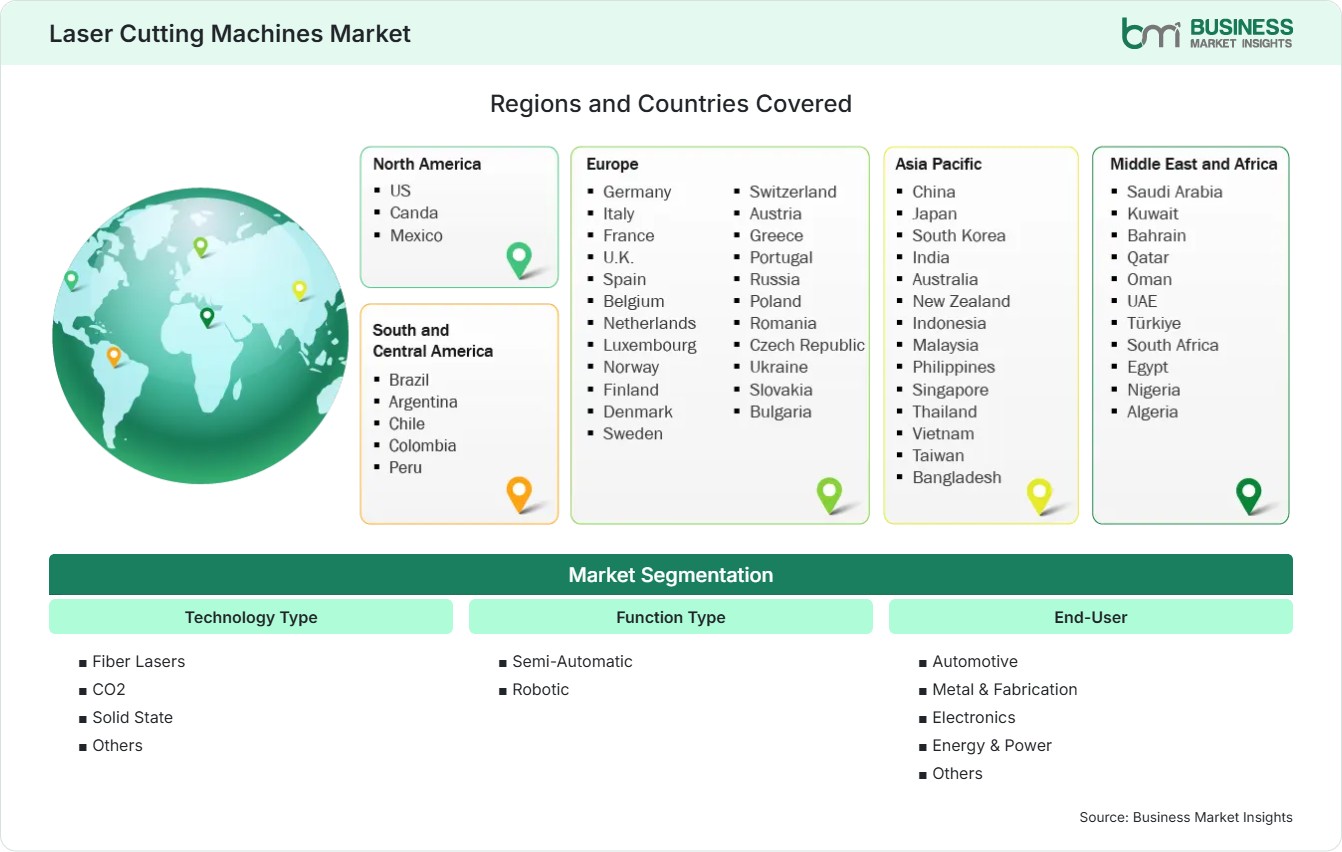
North America accounts for 27%–30% Laser Cutting Machines Market share in 2025 and is expected to register a CAGR of 12.2%–12.8% during 2026–2033. Growth is supported by advanced manufacturing infrastructure, widespread industrial automation, aerospace production, and continuous investments in precision fabrication technologies. Manufacturers continue replacing conventional machining systems with automated laser equipment to improve production flexibility, quality, and operational efficiency.
- Automotive and aerospace manufacturers continue investing in high-speed laser cutting equipment for lightweight component production.
- Smart factory adoption supports integration of robotic laser cutting systems with digital manufacturing platforms.
- Growing investment in precision metal fabrication strengthens equipment replacement across industrial facilities.
- Demand for automated manufacturing continues encouraging adoption of AI-enabled production monitoring solutions.
US Laser Cutting Machines Market
The United States contributes 82%–85% of North American revenue and is projected to grow at a CAGR of 12.4%–13.0% through the forecast period. Strong industrial investment, digital manufacturing initiatives, and technological innovation continue supporting equipment modernization across major manufacturing industries.
- Industrial automation investments continue improving manufacturing productivity across automotive and aerospace sectors.
- Expansion of electric vehicle production supports demand for precision laser fabrication systems.
- Increasing investment in Industry 4.0 technologies accelerates adoption of connected manufacturing equipment.
- High-value manufacturing continues driving replacement of conventional metal processing technologies.
Europe Laser Cutting Machines Market
Europe represents 25%–28% market share in 2025 and is expected to expand at a CAGR of 12.0%–12.6% during 2026–2033. Germany remains the largest regional market because of its advanced machinery manufacturing sector, while Italy records the fastest growth through expanding industrial automation investments and precision engineering activities.
- German manufacturers continue investing in advanced laser processing equipment for industrial production.
- Automotive electrification increases demand for precision metal cutting technologies.
- Smart manufacturing initiatives support greater adoption of robotic laser systems across factories.
- Industrial machinery exports continue strengthening regional equipment demand.
Asia Pacific Laser Cutting Machines Market
Asia Pacific accounts for 41%–44% market share in 2025 and is projected to register the fastest CAGR of 14.0%–14.7% through 2026–2033. Rapid industrialization, expanding electronics manufacturing, automotive production, and increasing factory automation continue supporting substantial equipment demand. China leads regional consumption, while India records the highest growth owing to expanding manufacturing capacity and government-supported industrial development.
- Electronics manufacturing expansion continues increasing demand for precision laser cutting systems.
- Government manufacturing initiatives encourage investments in advanced industrial machinery.
- Automotive component production strengthens demand for high-speed laser processing equipment.
- Rising export-oriented manufacturing supports continuous modernization of fabrication facilities.
Rest of World Laser Cutting Machines Market
The Rest of World region holds 5%–8% market share in 2025 and is expected to expand at a CAGR of 12.5%–13.1% during the forecast period. Industrial diversification, infrastructure investment, and manufacturing modernization continue supporting market development across Latin America and the Middle East & Africa.
- Brazil remains the leading Latin American market through expanding industrial manufacturing investments.
- GCC countries continue strengthening advanced manufacturing capabilities through industrial diversification strategies.
- Metal fabrication industries increasingly adopt automated cutting technologies to improve productivity.
- Infrastructure development projects continue supporting demand for fabricated steel components and precision processing equipment.