Land-Based Military SATCOM Market Regional Highlights
North America Land-Based Military SATCOM Market
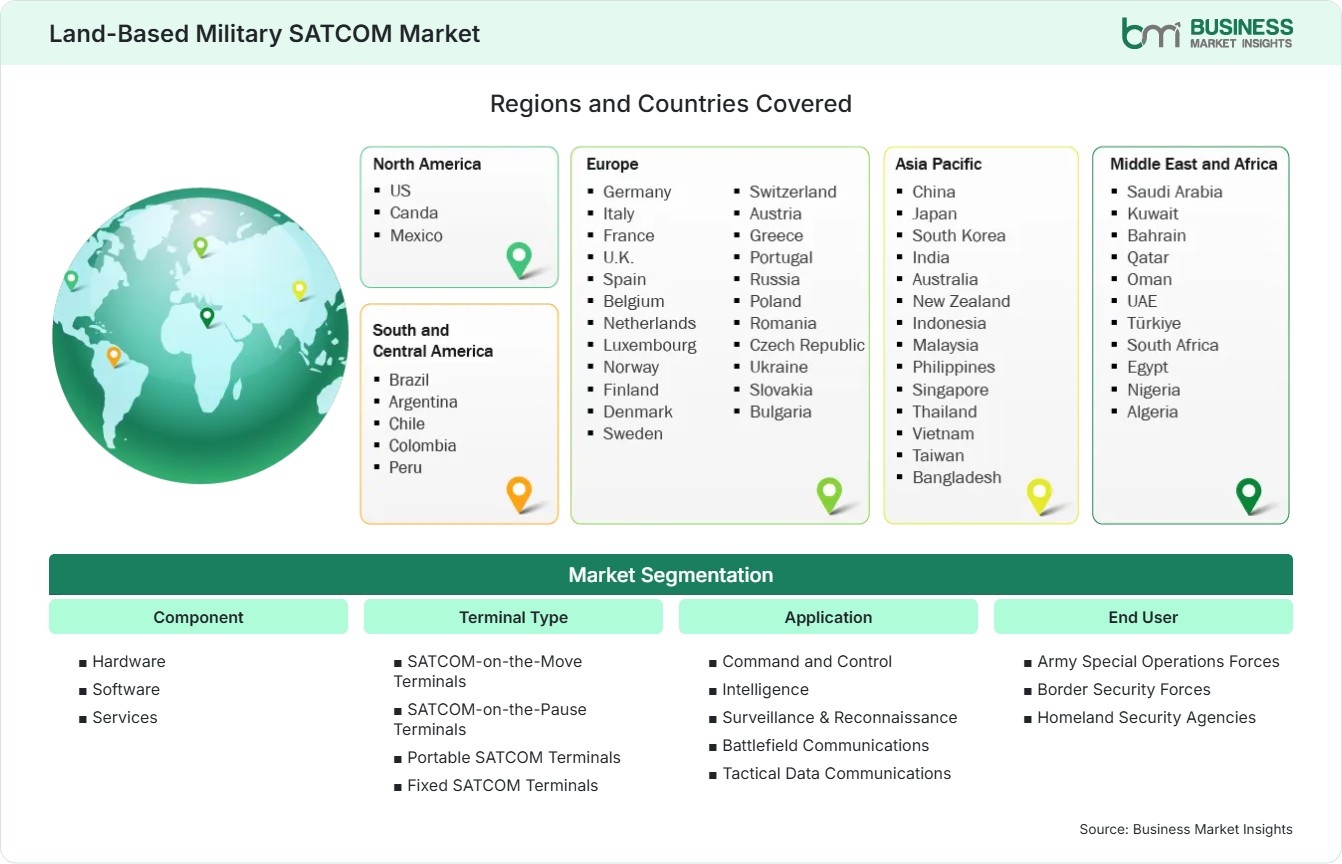
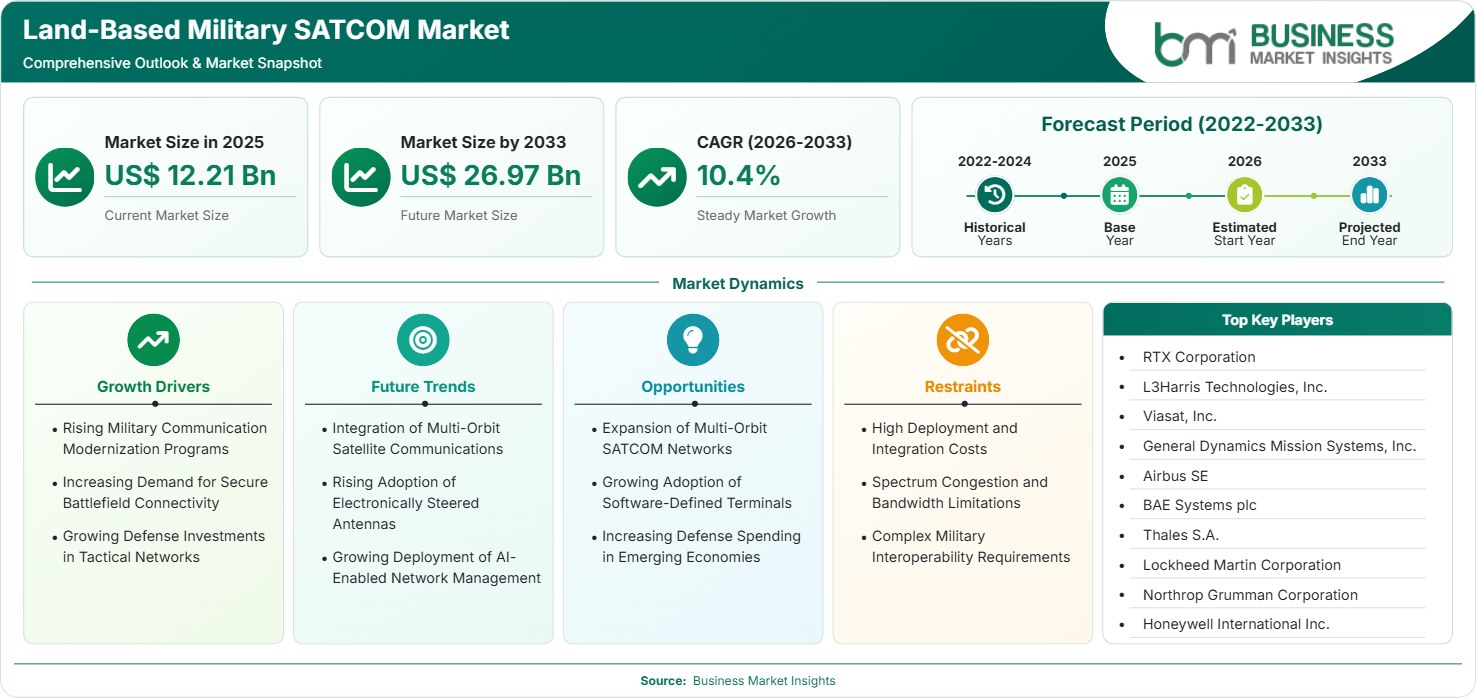
North America accounted for 37%–40% of the global market in 2025 and is projected to expand at a CAGR of 9.8%–10.3% during 2026–2033. The region maintains leadership due to robust defense spending, continuous military communication modernization, deployment of resilient tactical SATCOM networks, and strong investments in multi-orbit satellite architectures. The Land-Based Military SATCOM Market share remains the highest globally owing to extensive procurement programs across the United States and Canada, supported by increasing electronic warfare preparedness and secure battlefield communication initiatives.
- The United States continues leading regional procurement through modernization of tactical communication infrastructure, expansion of software-defined SATCOM terminals, and integration of secure multi-domain battlefield communication capabilities supporting joint military operations.
- Canada continues investing in resilient defense communication systems through satellite modernization initiatives, Arctic surveillance capabilities, and interoperable command-and-control networks supporting NATO missions and national security operations.
- Increasing collaboration between government agencies and major defense contractors accelerates deployment of anti-jamming technologies, electronically steered antennas, and encrypted communication systems designed for contested operational environments.
- Rising adoption of multi-orbit communication architectures integrating GEO, MEO, and LEO satellite constellations enhances operational flexibility, network resilience, and uninterrupted communication across mobile military platforms.
- Strong defense research funding encourages innovation in tactical networking, cybersecurity integration, and artificial intelligence-enabled spectrum management for future battlefield communication systems.
US Land-Based Military SATCOM Market
The United States represented 31%–34% of the global market in 2025 and is anticipated to register a CAGR of 9.9%–10.4% through 2026–2033. Ongoing modernization of command-and-control systems further supports Land-Based Military SATCOM Market growth across military ground forces.
- The U.S. Department of Defense continues strengthening Joint All-Domain Command and Control (JADC2) initiatives through secure satellite-enabled communication infrastructure supporting interoperable military operations.
- Growing procurement of SATCOM-on-the-Move terminals improves communication continuity for armored vehicles, mobile command centers, and expeditionary forces operating in contested environments.
- Expansion of low-Earth-orbit satellite connectivity strengthens resilient military communications while reducing latency for tactical operations requiring real-time situational awareness.
- Defense agencies increasingly collaborate with commercial satellite operators to improve communication redundancy, operational resilience, and network flexibility during military missions.
Europe Land-Based Military SATCOM Market
Europe accounted for 24%–27% of global revenue in 2025 and is expected to grow at a CAGR of 10.2%–10.8% through 2026–2033. Increasing geopolitical tensions, NATO capability enhancement programs, and modernization of secure tactical communication infrastructure continue supporting regional expansion.
- Germany leads regional demand through modernization of tactical communication infrastructure, satellite-enabled command systems, and integrated battlefield networking supporting NATO interoperability objectives.
- Poland is projected to expand at a CAGR of 11.1%–11.6%, driven by rising defense expenditure, border security enhancement, and procurement of advanced mobile SATCOM capabilities.
- France and the United Kingdom continue strengthening sovereign satellite communication capabilities while integrating resilient tactical communication technologies across land forces.
- European defense collaboration programs promote interoperability, secure data exchange, and modernization of encrypted communication infrastructure supporting multinational military operations.
- Growing investments in electronic warfare resilience and cybersecurity strengthen regional adoption of advanced military SATCOM technologies.
Asia Pacific Land-Based Military SATCOM Market
Asia Pacific captured 24%–27% of global revenue in 2025 and is forecast to register the fastest CAGR of 11.4%–11.9% during 2026–2033. Regional expansion is driven by rising defense budgets, territorial security concerns, indigenous satellite development, and modernization of tactical battlefield communication systems.
- China continues leading regional procurement by expanding military satellite constellations, secure communication infrastructure, and integrated tactical networking supporting modern battlefield operations.
- India is projected to grow at a CAGR of 11.8%–12.3%, supported by indigenous defense manufacturing initiatives, satellite modernization programs, and expanding tactical communication deployments.
- Japan and South Korea continue investing in resilient satellite communication capabilities to improve defense readiness, maritime surveillance, and multi-domain operational coordination.
- Increasing collaboration between regional governments and domestic defense manufacturers accelerates deployment of software-defined SATCOM terminals and secure battlefield communication systems.
- Expansion of national satellite programs supports improved communication resilience, encrypted connectivity, and enhanced interoperability among regional defense organizations.
Rest of World Land-Based Military SATCOM Market
The Rest of the World represented 9%–11% of global market revenue in 2025 and is anticipated to expand at a CAGR of 10.1%–10.7% during 2026–2033. Growth is supported by increasing defense modernization across the Middle East and South & Central America, alongside greater investments in secure tactical communication infrastructure and border surveillance systems.
Middle Eastern countries continue strengthening military satellite communication capabilities through advanced defense procurement, while South & Central American nations focus on improving command interoperability, border security, and disaster response communications using resilient satellite-based tactical networks.
- Saudi Arabia remains the leading Middle Eastern market, supported by defense modernization initiatives and procurement of advanced military communication systems.
- The United Arab Emirates continues expanding secure satellite communication infrastructure to strengthen operational readiness and regional defense coordination.
- Brazil leads South & Central America through increasing military communication modernization and deployment of advanced SATCOM-enabled command systems.
- South Africa continues investing in secure defense communication technologies supporting border security, peacekeeping operations, and national defense modernization.
- Growing defense cooperation with international partners supports wider adoption of resilient satellite communication technologies across emerging military markets.