
Industrial and Institutional Cleaning Chemicals Market Outlook: Size, Share, Trends, Growth Analysis, Competitive Landscape & Forecast, 2026-2033

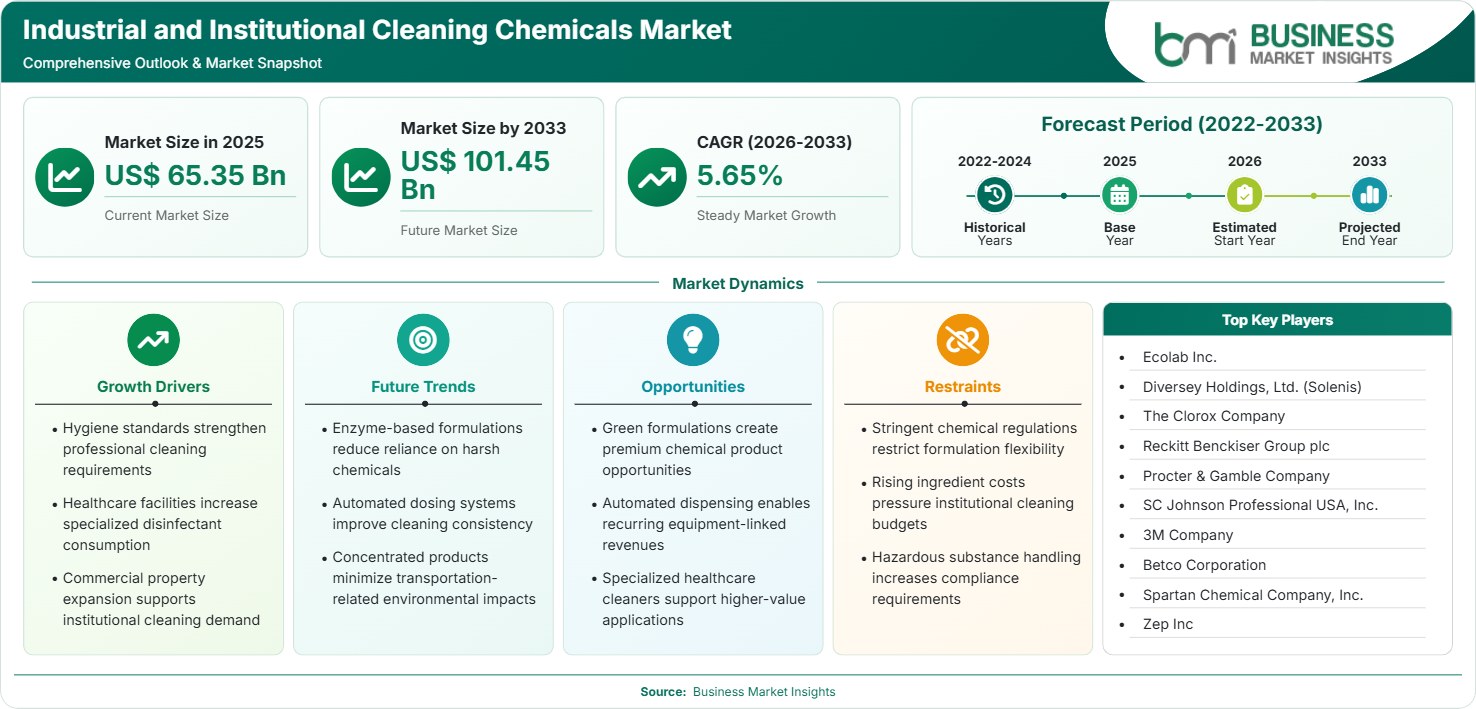
The Industrial and Institutional Cleaning Chemicals Market size was valued at US$ 65.35 Billion in 2025 and is projected to reach US$ 101.45 Billion by 2033, growing at a CAGR of 5.65% during 2026–2033. Key drivers include tightening hygiene regulations, expanding commercial infrastructure, food safety compliance, healthcare sanitation requirements, and sustainable chemistry adoption. Opportunities are emerging through bio-based formulations, smart dispensing platforms, and institutional cleaning automation.

Report Coverage
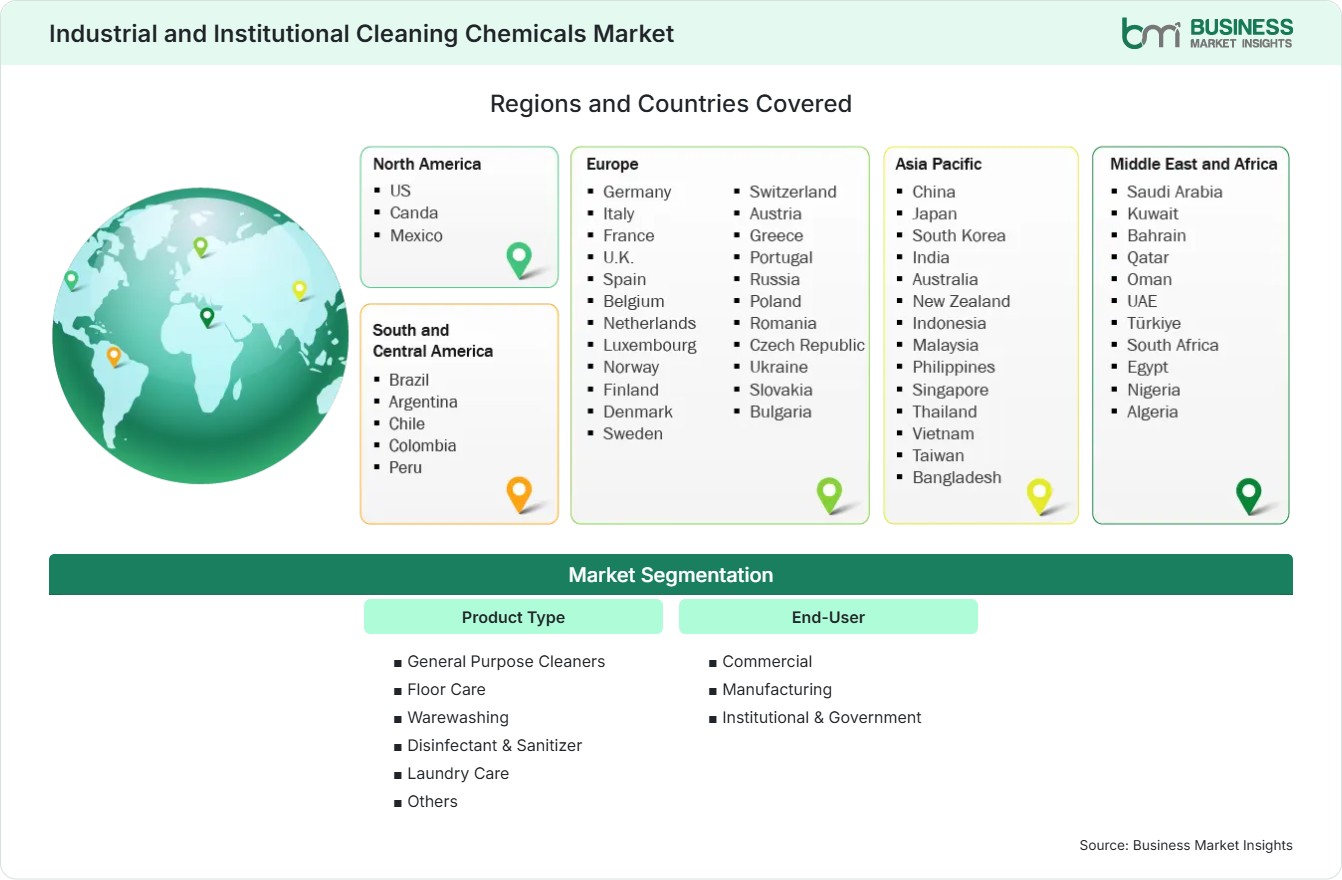
  • Product Type: General Purpose Cleaners, Floor Care, Warewashing, Disinfectant & Sanitizer, Laundry Care, Others
  • End-User: Commercial, Manufacturing, Institutional & Government
US$ 65.35 Bn Market size in 2025
US$ 101.45 Bn Market Size by 2033
5.65% CAGR, 2026 - 2033
2026-2033 Forecast Period

AI Overview

Industrial and Institutional Cleaning Chemicals Market Summary

  • North America Region: North America holds a market share of 35%–38% in 2025, growing at a CAGR of 4.8%–5.2% during 2026–2033. Growth is supported by healthcare hygiene mandates, foodservice sanitation standards, sustainable formulations, facility modernization initiatives, and increasing adoption of automated dispensing systems across commercial cleaning operations.
    US market benefits from healthcare, hospitality, and food processing demand, advancing at an estimated 4.9%–5.3% CAGR.
  • Fastest Growing Region: Asia Pacific holds a market share of 28%–31% in 2025, growing at a CAGR of 6.8%–7.3% during 2026–2033. Growth stems from industrialization, healthcare infrastructure expansion, urban sanitation investments, manufacturing development, rising institutional facilities, regulatory enforcement, and increasing awareness of workplace hygiene standards.
  • Leading Segment: Commercial accounts for 42%–45% of the Industrial and Institutional Cleaning Chemicals Market share in 2025, expanding at a CAGR of 5.3%–5.8%. Demand arises from hospitality growth, facility management outsourcing, retail expansion, high cleaning frequencies, sanitation compliance requirements, and broader adoption of professional cleaning programs.
  • High Growth Segment: Disinfectant & Sanitizer accounts for 20%–23% share in 2025, advancing at a CAGR of 6.7%–7.2%. Growth reflects infection control priorities, healthcare investments, food safety requirements, institutional hygiene practices, and continued adoption of advanced surface disinfection technologies.
  • Key Market Opportunity: Growing demand for concentrated formulations, environmentally preferable chemistries, connected dispensing systems, and performance monitoring platforms creates value opportunities while reducing chemical consumption, packaging waste, labor requirements, and operating costs.
  • Major Market Players: Ecolab Inc.; Diversey Holdings, Ltd. (Solenis); The Clorox Company; Reckitt Benckiser Group plc; Procter & Gamble Company; SC Johnson Professional USA, Inc.; 3M Company; Betco Corporation; Spartan Chemical Company, Inc.; Zep Inc.
Strategic Insights

Industrial and Institutional Cleaning Chemicals Market: Strategic Insights

Industrial and Institutional Cleaning Chemicals Market Strategic Framework
FREE PDF
Request your free sample
Request free sample
Stakeholder View

Key Takeaways

  • The market ecosystem increasingly integrates chemical suppliers, dispensing technology providers, contract cleaning firms, distributors, and facility managers, creating value through service-based cleaning solutions.
  • Healthcare facilities, food processing operations, hospitality properties, and large commercial campuses present the most attractive medium-term growth opportunities due to stringent sanitation requirements.
  • Product innovation is shifting toward enzyme-based cleaners, bio-derived surfactants, concentrated formulations, and digitally monitored dispensing platforms that enhance performance while reducing waste.
  • Asia Pacific offers an attractive investment case due to industrial expansion, healthcare infrastructure development, urbanization trends, and growing institutional spending on hygiene.
  • Strategic acquisitions and portfolio expansion remain common as leading suppliers seek stronger exposure to infection prevention, sustainability-focused products, and institutional cleaning technologies.
  • Sustainability reporting requirements are increasing customer focus on packaging reduction, chemical efficiency, water conservation, and greener procurement standards.
Geographic Outlook

Industrial and Institutional Cleaning Chemicals Market Regional Highlights

North America Industrial and Institutional Cleaning Chemicals Market

North America represented 35%–38% of the Industrial and Institutional Cleaning Chemicals Market share in 2025 and is projected to grow at 4.8%–5.2% CAGR through 2033. Strong demand originates from healthcare systems, hospitality operators, foodservice chains, and industrial manufacturers. Advanced procurement practices, strict sanitation regulations, and widespread automation adoption support stable consumption. Environmental compliance requirements are encouraging greater use of concentrated, low-impact formulations across institutional and commercial environments.

  • Healthcare compliance requirements support ongoing adoption of premium disinfectants and high-performance sanitation programs across hospitals, clinics, and long-term care facilities.
  • Foodservice operators prioritize cleaning consistency, supporting automated dosing systems and standardized chemical management practices.
  • Facility management outsourcing continues to increase demand for professional-grade cleaning products and integrated service solutions.
  • Sustainability initiatives encourage concentrated formulations and reduced packaging waste across commercial facilities.

US Industrial and Institutional Cleaning Chemicals Market

The US accounts for approximately 78%–82% of North American demand and advances at 4.9%–5.3% CAGR. Large healthcare networks, commercial real estate assets, educational facilities, and food processing operations sustain strong product consumption. Regulatory oversight from sanitation and workplace safety agencies continues to encourage advanced cleaning protocols. Institutional operators increasingly deploy connected dispensing platforms to improve compliance and operating efficiency.

  • Healthcare infection-control investments continue supporting premium disinfectant demand across acute-care settings.
  • Large facility operators increasingly adopt digital compliance monitoring and chemical usage analytics.
  • Hospitality and foodservice sectors remain major purchasers of cleaning and sanitation solutions.
  • Sustainability-focused procurement policies favor concentrated and environmentally preferable formulations.

Europe Industrial and Institutional Cleaning Chemicals Market

Europe occupied a market share of 24%-27% in 2025 and is expected to have a CAGR of 4.9%-5.4% in the Industrial and Institutional Cleaning Chemicals Market. The key drivers of growth include stringent environmental laws, sophisticated hygiene standards, and a commitment to sustainability. Germany leads the region in consumption, and Eastern Europe is experiencing faster growth. The adoption of green chemistry and the circular economy concept is boosting the use of low-impact cleaning technologies.

  • Germany remains the largest market, supported by manufacturing strength and institutional hygiene investment.
  • Poland and selected Eastern European countries demonstrate faster growth due to infrastructure modernization.
  • EU sustainability initiatives encourage development of bio-based and biodegradable chemistries.
  • Healthcare and food processing continue driving demand for compliant sanitation solutions.

Asia Pacific Industrial and Institutional Cleaning Chemicals Market

Asia Pacific is projected to hold a market share of 28%-31% in 2025 and to have the highest CAGR of 6.8%-7.3%. Asia Pacific is characterized by high industrial growth, improved healthcare facilities, commercial building construction, and rising hygiene consciousness, all of which drive consumption. The leading demand in the region is seen in China, while India boasts the highest growth rate.

  • China remains the largest regional consumer due to manufacturing scale and commercial infrastructure.
  • India records the highest growth rate owing to healthcare and urban infrastructure investments.
  • Hospitality expansion drives stronger use of professional-grade cleaning formulations.
  • Rising food safety requirements support adoption of advanced sanitation chemicals.
  • Institutional modernization encourages automated dispensing and monitoring technologies.

Rest of World Industrial and Institutional Cleaning Chemicals Market

The Rest of World accounts for 9%-11% of market share and is projected to grow at a CAGR of 5.8%-6.3% through 2033. South and Central America benefit from investments in food processing and commercialization. The Middle East and Africa are developing rapidly owing to healthcare projects, hotels, and public sanitation facilities. There is growing regional demand for affordable, concentrated cleaners.

  • Brazil remains the leading Latin American market due to industrial and commercial activity.
  • Gulf countries drive Middle Eastern demand through tourism and healthcare investment programs.
  • South Africa remains a key African institutional cleaning market.
  • Public hygiene initiatives support adoption of disinfectants and sanitizers.
  • Infrastructure development creates new opportunities across commercial facilities.
Global Market Geography
FREE PDF
Request your free sample
Request free sample
Segment Analysis

Industrial and Institutional Cleaning Chemicals Market Segmentation

Product Type

This segment accounts for about 58%–61% of market share in 2025 and is estimated to grow at a 5.6%–6.0% CAGR. The scope of the Industrial and Institutional Cleaning Chemicals Market continues to widen as there is a need for specialized formulations for sanitation, surface treatment, infection control, laundering, and efficiency.

  • General Purpose Cleaners: Widely used across offices, hospitality facilities, educational institutions, and healthcare environments where versatile daily cleaning performance remains essential.
  • Floor Care: Demand is supported by commercial infrastructure expansion and requirements for surface protection, appearance maintenance, and operational safety.
  • Warewashing: Growth is tied to restaurants, institutional kitchens, and foodservice operations requiring compliance with hygiene standards.
  • Disinfectant & Sanitizer: The Industrial and Institutional Cleaning Chemicals Market trends increasingly favor advanced infection-prevention formulations for healthcare and food-contact environments.
  • Laundry Care: Institutional laundries require products delivering stain removal, textile preservation, and operational efficiency.

End-User

The end-user segment accounts for about 39%–42% market share in 2025 and is projected to grow at a CAGR of 5.4%–5.9%. Demand trends depend on regulations, facility intensity, sanitation standards, and operational practices followed in commercial, institutional, and industrial settings.

  • Commercial: Hotels, retail facilities, restaurants, and office complexes require high-frequency cleaning and sanitation programs.
  • Manufacturing: Production facilities depend on specialized cleaning solutions supporting equipment reliability and workplace hygiene.
  • Institutional & Government: Schools, hospitals, public facilities, and government buildings require consistent sanitation and infection-control measures.
Market Forces

Industrial and Institutional Cleaning Chemicals Market Dynamics

Key Market Drivers

Expansion of Healthcare and Infection Prevention Programs

The prevention of hospital-acquired infections continues to be an important driver of demand. Health institutions are improving their sanitation procedures, leading to increased consumption of disinfectants, cleaners, and hygiene supplies. WHO guidelines for infection prevention and control provide a framework for cleaning procedures worldwide. More investment is being made in hospitals within emerging nations, leading to additional institutional demand. This leads to a need for efficient, reliable performance, regulatory compliance, and operational efficiency, driving continued purchases in healthcare environments and supporting long-term category expansion.

Growth in Food Processing and Foodservice Hygiene Standards

Safety laws keep upping the ante on cleaning efficiency in factories, restaurants, and other kitchens. The use of warewashing, surface sanitizing, and specialized cleaning products is vital for preventing contamination. Increased manufacturing of packaged foods and organized food service systems will increase procurement demands in developed and developing nations. Needs related to traceability, audits, and risk management drive people toward professional cleaning products that consistently meet hygiene standards while improving productivity and reducing labor dependence.

Sustainability-Led Product Innovation

Environmental expectations are setting new directions for product development. Companies are offering more concentrated laundry detergents, less toxic formulations, enzyme cleaners, biodegradable surfactants, and packaging-reduction programs. The sustainability goals set by commercial and institutional clients are also influencing purchasing decisions. Such approaches contribute to increased efficiency and reduced transportation and storage needs, waste production, and overall environmental impact.

Key Market Opportunities

Smart Dispensing and Connected Facility Management

Digitalization provides a very promising approach for dosing systems, consumption monitoring, and compliance analytics. Visibility into chemical use, productivity, and the effectiveness of cleaning operations is required by a growing number of companies. Additional value could be added to the process by providing software solutions, sensors, automated dosing, and preventive maintenance for cleaning chemicals. This helps optimize operations, reduce excess chemical use, comply with regulatory requirements, and improve cost control. The Industrial and Institutional Cleaning Chemicals Market Forecasts report an increasing trend towards the deployment of intelligent facility management systems in healthcare, hospitality, food service, education, and industrial settings.

Bio-Based and Green Chemistry Solutions

Demand for environmentally friendly cleaning solutions is surging among multinational companies, hospitals, schools, and other public-sector buyers. Companies that manufacture cleaning solutions using renewable feedstocks, biodegradable surfactants, less harmful chemicals, and low-carbon-footprint manufacturing processes could gain a competitive advantage and build customer loyalty. The procurement process now includes sustainability as a criterion, which opens the possibility of developing unique product lines. Bio-based cleaning products are also consistent with a company's environmental, social, and governance goals and thus have high pricing power and long-term contracts.

Emerging Market Institutional Infrastructure

Construction in the healthcare, education, and hospitality sectors, development in commercial real estate, and industrialization in emerging nations generate significant untapped demand. Urbanization and growth in the middle class are leading to higher hygiene standards and increased spending on professional cleaning solutions. Firms that are capable of meeting performance, cost, compliance, and local product requirements will be able to penetrate the market effectively. Distributive strategies, local production facilities, technical abilities, and localization will remain key success factors. The institutional arrangements in the Asia Pacific region, the Middle East, Africa, and Latin America offer a good starting point for market expansion.

Market Restraints and Challenges

Raw Material Price Volatility

Factor: Inconsistency in the cost of surfactants, solvents, specialty chemicals, packaging materials, and other chemicals used during production makes planning very difficult. Impact: Narrow margins reduce room for maneuver and lead to lower profitability, especially in highly competitive markets with long-term procurement contracts. Supply issues, associated with logistics problems, changes in energy prices, political developments, and sourcing concerns, further increase procurement risk. It is important for manufacturers to balance cost management, product quality, regulatory compliance, and strong customer relationships.

Regulatory Complexity Across Regions

Factor: The varying rules on ingredient restrictions, labeling, environmental protection, chemical registration, and worker safety across nations complicate compliance for manufacturers and distributors. Impact: The time required to develop a product increases and becomes more costly, and expansion into international markets faces additional difficulties. Large investments in testing, certifications, documentation, ingredient testing, and regulatory knowledge are essential to remain competitive in the market. Such compliance tasks may pose a serious challenge for small players within the industry.

Company Analysis

Competitive Landscape

The Industrial and Institutional Cleaning Chemicals Market analysis reflects competition centered on formulation performance, sustainability, infection prevention expertise, technical service capabilities, and global distribution reach.

Company Name

Overview

Products and Services relevant to this market

Ecolab Inc.

Global hygiene and water management leader serving institutional and industrial customers worldwide.

Disinfectants, warewashing chemicals, floor care products, laundry solutions, dispensing systems.

Diversey Holdings, Ltd. (Solenis)

Major provider of hygiene, infection prevention, and facility care technologies.

TASKI floor care, disinfectants, sanitation chemicals, institutional cleaning systems.

The Clorox Company

Leading cleaning and disinfection solutions manufacturer with strong institutional presence.

Surface disinfectants, sanitizers, wipes, facility cleaning products.

Reckitt Benckiser Group plc

Global consumer and professional hygiene products supplier.

Disinfectants, sanitation products, infection prevention solutions.

Procter & Gamble Company

Diversified cleaning products company with professional solutions portfolio.

Institutional detergents, floor care and sanitation products.

SC Johnson Professional USA, Inc.

Specialist provider focused on workplace hygiene and professional cleaning.

Hand hygiene, disinfectants, surface cleaning and maintenance solutions.

3M Company

Industrial technology leader with cleaning and facility-care offerings.

Surface maintenance, cleaning chemicals, janitorial systems.

Betco Corporation

Professional cleaning products manufacturer serving facility management customers.

Floor care, disinfectants, cleaners, dispensing technology.

Spartan Chemical Company, Inc.

Independent cleaning solutions specialist serving institutional markets.

Industrial cleaners, sanitizers, laundry and floor care chemicals.

Zep Inc.

Industrial maintenance and cleaning chemicals supplier.

Degreasers, disinfectants, industrial cleaners, specialty formulations.

Trust & Transparency

Research Methodology

The market analysis combines proprietary research with secondary data from government agencies, company disclosures, regulatory filings, industry databases and expert interviews. Market estimates are validated through data triangulation, cross-market benchmarking and analyst review.

View Full Research Methodology

Questions Answered

Frequently Asked Questions

What does the Industrial and Institutional Cleaning Chemicals Market Report typically evaluate?

A comprehensive report evaluates market size, demand drivers, competitive positioning, regional opportunities, technology trends, regulatory impacts, and long-term growth outlooks.

How is sustainability influencing purchasing decisions?

Organizations increasingly prioritize concentrated formulations, biodegradable ingredients, reduced packaging waste, and lower environmental impact when selecting cleaning solutions.

Which product category shows the strongest momentum?

Disinfectant and sanitizer products demonstrate strong momentum because of infection-prevention priorities, healthcare expansion, and more rigorous hygiene standards across institutions.

Which region offers the strongest growth potential through 2033?

Asia Pacific is expected to remain the fastest-growing region due to rapid industrialization, healthcare development, urbanization, and expanding institutional infrastructure investments.

What factors are shaping future demand for industrial and institutional cleaning chemicals?

Demand is being driven by healthcare sanitation requirements, food safety regulations, sustainability initiatives, commercial infrastructure expansion, and increasing adoption of automated dispensing technologies.

Access the Full Industrial and Institutional Cleaning Chemicals Market Report

Get segment-level forecasts, regional estimates, competitive benchmarking, company profiles and downloadable Excel datasets.

Access the full Industrial and Institutional Cleaning Chemicals Market Report
350 pages PDF & Excel | 2026-09-21
Similar Research

Related Market Reports