
Aroma Chemicals Market Outlook: Size, Share, Trends, Growth Analysis, Competitive Landscape & Forecast, 2026-2033

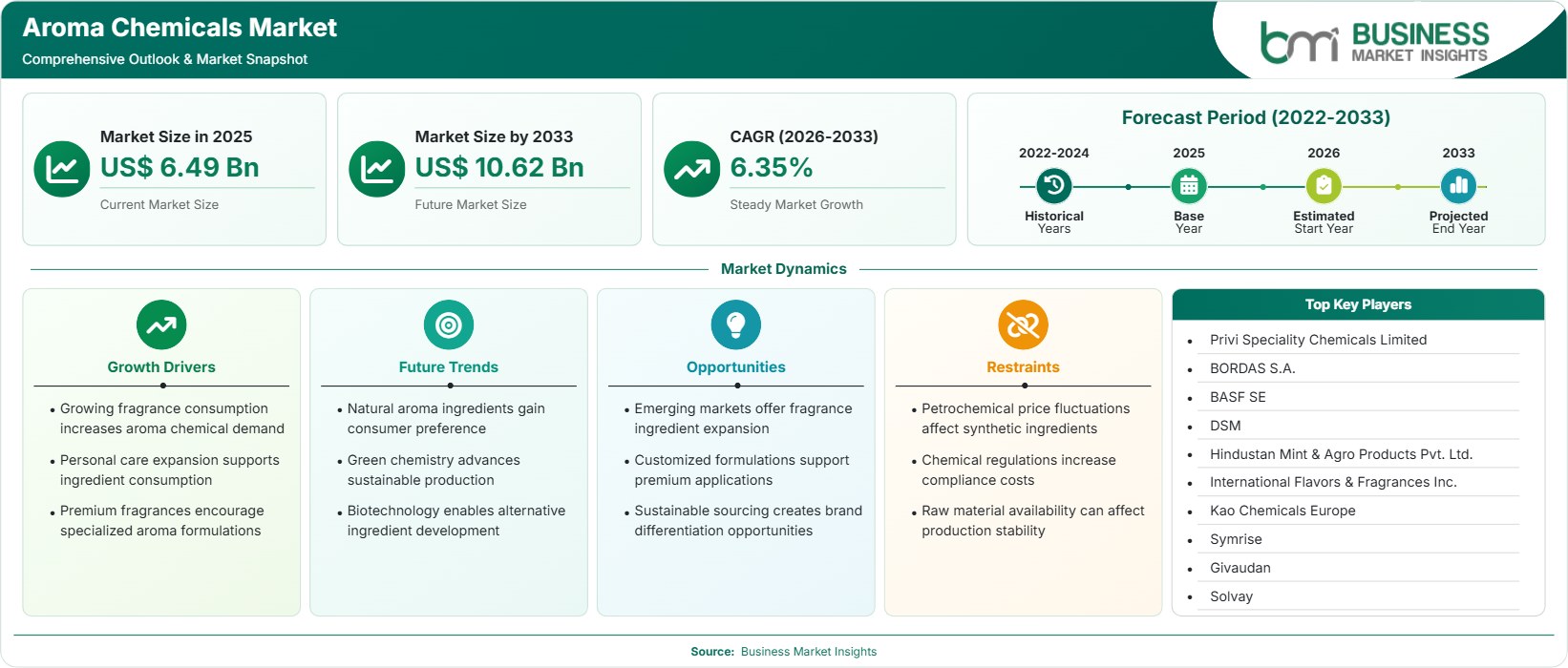
The Aroma Chemicals Market size was valued at USD 6.49 Billion in 2025 and is projected to reach USD 10.62 Billion by 2033, growing at a CAGR of 6.35% during 2026–2033. Rising fragrance consumption, expanding personal care industries, increasing demand for premium scent formulations, and growing adoption of natural aroma ingredients continue creating attractive opportunities across global end-use sectors.

Report Coverage
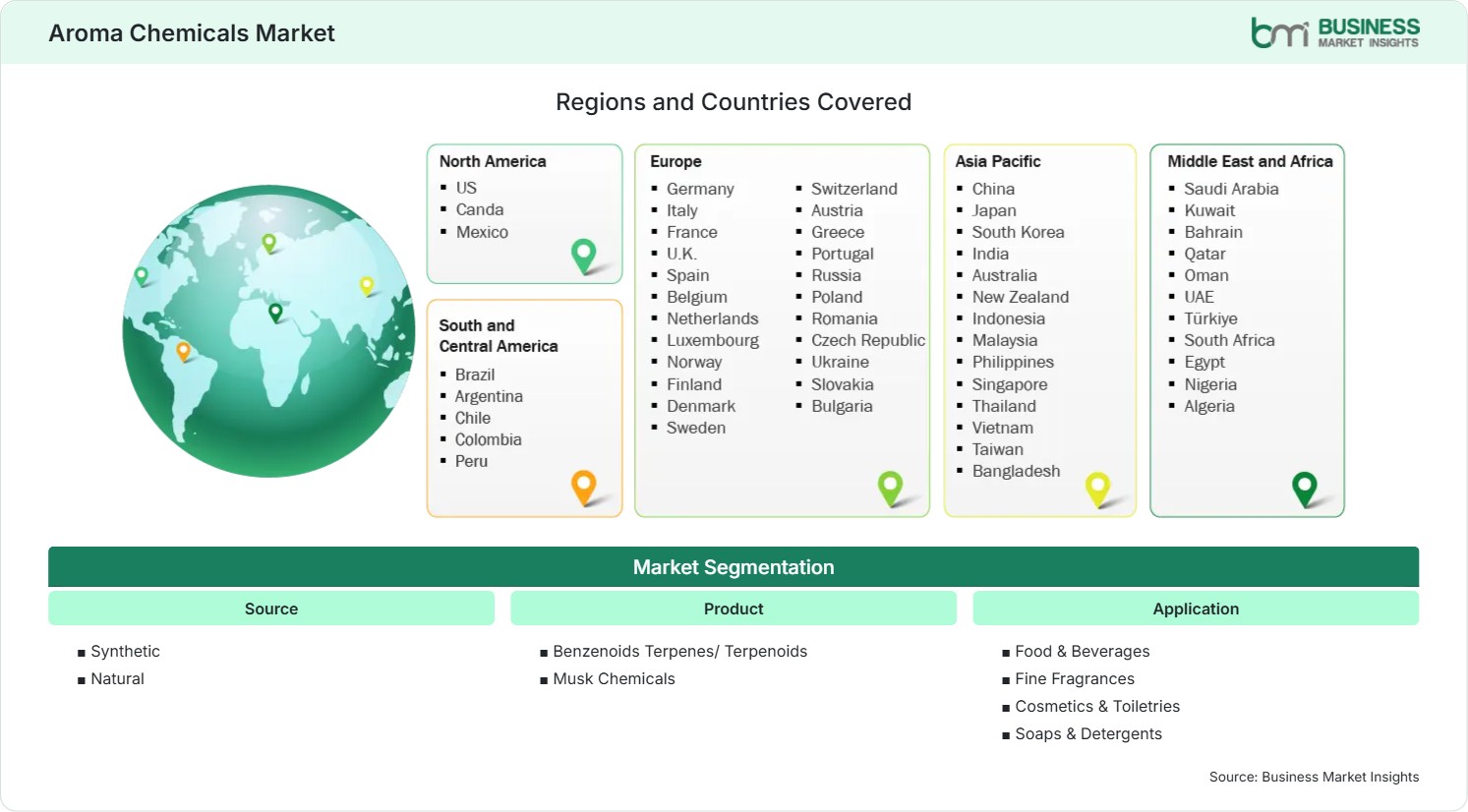
  • Source: Synthetic, Natural
  • Product: Benzenoids Terpenes/ Terpenoids, Musk Chemicals
  • Application: Food & Beverages, Fine Fragrances, Cosmetics & Toiletries, Soaps & Detergents
US$ 6.49 Bn Market size in 2025
US$ 10.62 Bn Market Size by 2033
6.35% CAGR, 2026 - 2033
2026-2033 Forecast Period

01 AI Overview

Aroma Chemicals Market Summary

  • North America Region: North America holds 24%–27% share in 2025 and is projected to grow at a 5.8%–6.4% CAGR during 2026–2033. Premium fragrance demand, personal care innovation, increasing clean-label ingredient adoption, and strong consumer spending support ongoing market expansion across multiple applications. U.S. demand remains strong through fragrance innovation and cosmetic-product launches, expanding at 5.9%–6.5% CAGR.
  • Fastest Growing Region: Asia Pacific accounts for 39%–43% share in 2025 and is forecast to expand at a 7.0%–7.7% CAGR during 2026–2033. Growing middle-class consumption, strong cosmetics demand, expanding fragrance manufacturing, and increasing premium-product adoption continue accelerating market development.
  • Leading Segment: Synthetic represents 62%–66% share in 2025 and is expected to grow at a 5.9%–6.5% CAGR. Consistent product quality, large-scale production capabilities, and broad formulation flexibility support segment leadership.
  • High Growth Segment: Fine Fragrances account for 28%–32% share in 2025 and are projected to expand at a 7.2%–7.9% CAGR. Rising demand for premium scents, luxury products, and personalized fragrance experiences continues stimulating consumption.
  • Key Market Opportunity: Sustainable aroma molecules, bio-based fragrance ingredients, and customized sensory solutions create growth opportunities for manufacturers seeking premium positioning and long-term differentiation.
  • Major Market Players: Privi Speciality Chemicals Limited, BORDAS S.A., BASF SE, dsm-firmenich AG, Hindustan Mint & Agro Products Pvt. Ltd., International Flavors & Fragrances Inc., Kao Chemicals Europe, S.L.U., Symrise AG, Givaudan SA, Solvay S.A.
02 Strategic Insights

Aroma Chemicals Market: Strategic Insights

Aroma Chemicals Market Strategic Framework
FREE PDF
Request your free sample
Request free sample
03 Stakeholder View

Key Takeaways

  • The value chain increasingly integrates raw-material suppliers, aroma-chemical producers, fragrance houses, personal care manufacturers, and consumer-goods companies to improve innovation and supply reliability.
  • Fine fragrances and premium personal care applications offer the strongest value-creation opportunities due to increasing consumer willingness to spend on differentiated sensory experiences.
  • Bio-based aroma compounds and sustainable sourcing strategies are becoming important innovation priorities within product-development pipelines.
  • Asia Pacific provides the strongest regional growth opportunity because of expanding consumer markets, increasing cosmetics demand, and strong manufacturing investments.
  • Strategic acquisitions, formulation partnerships, and ingredient-development collaborations remain central competitive strategies among leading producers.
  • Premiumization trends across beauty, wellness, and household-care categories continue supporting demand for advanced aroma-chemical solutions.
04 Geographic Outlook

Aroma Chemicals Market Regional Highlights

North America Aroma Chemicals Market

North America represented 24%–27% Aroma Chemicals Market share in 2025 and is projected to expand at a 5.8%–6.4% CAGR through 2033. Strong consumer demand for premium fragrances, personal care products, and household-care formulations continues supporting regional growth. Leading fragrance houses and ingredient innovators operate extensive research capabilities in the region, accelerating new product development. Growing preference for sustainable and naturally inspired formulations is creating additional opportunities for specialty aroma chemicals across multiple end-use categories.

  • Premium fragrance manufacturers continue investing in innovative scent profiles to attract consumers seeking differentiated sensory experiences.
  • Personal care brands increasingly utilize specialty aroma ingredients to strengthen product positioning and customer loyalty.
  • Growing demand for bio-based and responsibly sourced ingredients is influencing formulation strategies across fragrance applications.
  • Household-care manufacturers continue incorporating advanced aroma solutions to enhance consumer perception and product performance.
  • Research and development activities remain strong, supporting continuous innovation in fragrance chemistry and ingredient performance.

US Aroma Chemicals Market

The United States accounts for approximately 78%–82% Aroma Chemicals Market share within North America and is expected to grow at a 5.9%–6.5% CAGR during 2026–2033. Strong consumer spending on beauty, wellness, and premium fragrance products drives demand. Manufacturers continue introducing innovative scent solutions designed to meet evolving preferences for personalization, sustainability, and product differentiation across fine fragrances, cosmetics, and household goods.

  • Fragrance innovation remains a key focus area among consumer-goods companies seeking product differentiation.
  • Clean-label and sustainable ingredient preferences continue influencing aroma-chemical procurement strategies.
  • Personal care brands increasingly launch premium product lines requiring sophisticated fragrance formulations.
  • Investments in specialty ingredient development are strengthening domestic production and innovation capabilities.

Europe Aroma Chemicals Market

Europe accounted for 29%–32% share in 2025 and is anticipated to expand at a 5.9%–6.6% CAGR through 2033. The region maintains strong leadership in fragrance creation, premium cosmetics manufacturing, and specialty aroma ingredient development. France remains the largest market due to its globally recognized fragrance industry, while Spain demonstrates faster growth supported by expanding personal care production. Manufacturers increasingly focus on sustainable aroma compounds, regulatory compliance, and premium fragrance innovation to strengthen competitiveness across regional and export markets.

  • France leads regional demand through established fragrance houses, luxury-brand presence, and extensive aroma-ingredient development capabilities.
  • Spain and Italy continue recording growth supported by expanding cosmetics manufacturing and increasing demand for premium scent formulations.
  • Sustainability initiatives are encouraging greater adoption of renewable and naturally sourced aroma ingredients across multiple applications.
  • Regulatory standards continue stimulating investment in higher-performance and compliant aroma-chemical formulations.
  • Continuous product innovation supports growing utilization across personal care, fragrances, and home-care applications.

Asia Pacific Aroma Chemicals Market

Asia Pacific represented 39%–43% share in 2025 and is forecast to register the highest growth at 7.0%–7.7% CAGR through 2033. Rapid urbanization, increasing disposable income, and growing demand for beauty and personal care products continue to support market expansion. China remains the largest regional consumer due to its extensive manufacturing base and domestic demand, while India demonstrates the strongest growth through expanding cosmetics, fine fragrance, and food-processing industries. Strong regional production capabilities further support long-term market development.

  • China benefits from substantial fragrance manufacturing capacity and increasing consumption of premium personal care products.
  • India demonstrates strong momentum driven by beauty-sector expansion and rising demand for differentiated consumer products.
  • Regional producers continue investing in modern aroma-ingredient production technologies to improve quality and supply reliability.
  • Growing consumer preference for premium fragrances creates opportunities for high-value aroma compounds.
  • Expanding food and beverage industries continue supporting demand for flavor and aroma ingredient applications.

Rest of World Aroma Chemicals Market

Rest of World accounted for 8%–11% share in 2025 and is expected to expand at a 6.1%–6.8% CAGR through 2033. South and Central America benefit from increasing cosmetics demand and expanding consumer spending. The Middle East and Africa region is witnessing growth through luxury fragrance consumption and rising investments in beauty-product retailing. Brazil remains the largest regional market, while the United Arab Emirates records significant growth supported by strong demand for premium fragrance products and luxury consumer goods.

  • Luxury fragrance consumption continues increasing across Middle Eastern markets, supporting demand for sophisticated aroma formulations.
  • Brazil remains a key market due to its large beauty and personal care industry.
  • Rising retail penetration improves accessibility of premium consumer products utilizing specialty fragrance ingredients.
  • Local manufacturers increasingly invest in differentiated scent formulations to support product positioning initiatives.
  • Growing urban populations continue driving consumption of cosmetics, toiletries, and household-care products.
Global Market Geography
FREE PDF
Request your free sample
Request free sample
05 Segment Analysis

Aroma Chemicals Market Segmentation

Source

Synthetic aroma chemicals accounted for approximately 62%–66% share in 2025 and are projected to expand at a 5.9%–6.5% CAGR through 2034. The Aroma Chemicals Market scope continues broadening because synthetic ingredients offer consistent quality, scalability, formulation flexibility, and cost efficiency. Manufacturers continue investing in advanced synthesis technologies to improve product performance while meeting evolving consumer expectations regarding fragrance quality and safety.

  • Synthetic: Widely utilized due to reliable supply availability, cost effectiveness, formulation consistency, and compatibility across diverse fragrance and flavor applications.
  • Natural: Growing demand is supported by consumer preference for botanical ingredients, sustainability initiatives, and premium product positioning strategies.

Product

Benzenoids Terpenes/ Terpenoids represented approximately 48%–52% share in 2025 and are expected to grow at a 6.3%–6.9% CAGR through 2034. These compounds remain essential building blocks for fragrance creation, flavor formulations, and specialty aroma applications. Strong usage across consumer goods and industrial fragrance development continues supporting segment leadership.

  • Benzenoids Terpenes/ Terpenoids: Extensively used in fragrances, flavors, personal care products, and specialty formulations requiring distinctive aromatic profiles.
  • Musk Chemicals: Demand continues rising across premium fragrances and personal care applications due to their lasting scent characteristics and formulation value.

Application

Fine Fragrances accounted for approximately 28%–32% share in 2025 and are projected to expand at a 7.2%–7.9% CAGR through 2034. The Aroma Chemicals Market trends indicate growing consumer interest in premium fragrances, personalized scent experiences, and luxury beauty products. Continuous innovation in fragrance compositions continues supporting demand for sophisticated aroma compounds across global markets.

  • Food & Beverages: Aroma chemicals support flavor enhancement, sensory differentiation, product consistency, and consumer appeal across processed-food and beverage categories.
  • Fine Fragrances: Premium scent creation continues driving demand for complex, high-quality aroma ingredients and customized fragrance formulations.
  • Cosmetics & Toiletries: Beauty and personal care manufacturers utilize aroma ingredients to improve brand identity, sensory appeal, and product differentiation.
  • Soaps & Detergents: Household-care products rely on aroma chemicals to enhance fragrance performance and consumer product experience.
06 Market Forces

Aroma Chemicals Market Dynamics

Key Market Drivers

Growing fragrance consumption increases aroma chemical demand

Rising global demand for premium fragrances, personal grooming products, and lifestyle-oriented consumer goods continues to stimulate aroma chemical consumption. The Aroma Chemicals Market growth trajectory is supported by increasing spending on beauty and wellness products, particularly among urban consumers seeking differentiated sensory experiences. The producers of perfumes continue adding new and novel fragrances to their range of products in response to the changing tastes of consumers. The need for complex aroma compounds, which offer better performance features, increases in luxury perfumes, air care products, and premium household formulas. Higher availability through the retail channels and increased investments by brands to differentiate themselves also contribute to higher demand.

Personal care expansion supports ingredient consumption

The continued growth of cosmetics, skincare, haircare, and personal hygiene products is increasing demand for advanced aroma ingredients globally. Aroma chemical blends are used by manufacturers to add value and increase appeal of products. Premiumization in the personal care sector is driving the use of intricate fragrances and expensive sensory ingredients. Consumer interest in grooming and wellness is adding to the development of innovative products. Increasing adoption of beauty products in developing countries is another opportunity for the market players.

Premium fragrances encourage specialized aroma formulations

Luxury and niche fragrance segments are creating demand for highly specialized aroma compounds capable of delivering distinctive and long-lasting scent experiences. Consumers now require personalized fragrances and formulations, prompting perfume manufacturers to develop new ingredients. Luxury perfume producers use highly developed aroma chemicals in order to provide consumers with unique fragrances that perform exceptionally. Growth in luxury products and categories further stimulates demand for high-quality perfume ingredients.

Key Market Opportunities

Emerging markets offer fragrance ingredient expansion

Rapid economic development, rising disposable incomes, and evolving consumer lifestyles continue creating opportunities across emerging economies. Aroma Chemicals Market Forecasts indicate strong demand potential in Asia Pacific, the Middle East, Latin America, and Africa as beauty, personal care, and household-product consumption increases. Expanding retail infrastructure and growing e-commerce penetration improve consumer access to premium products incorporating sophisticated aroma compounds. Manufacturers establishing local production capabilities and distribution networks can benefit from increasing regional demand. Strong demographic growth and urbanization trends further support long-term expansion opportunities.

Customized formulations support premium applications

Differentiation in fragrance is what brands are looking for to succeed in the market and build consumer loyalty. Fragrance development presents opportunities for the aroma chemical manufacturers who have the ability to provide a custom solution to the needs of their customers. In order to formulate personalized consumer products, niche fragrances and high-end beauty products, companies need advanced formulation capabilities and unique aroma chemicals.

Sustainable sourcing creates brand differentiation opportunities

Increasing sustainability goals within the fragrance and personal care sectors are driving up the need for sustainable ingredients. Companies that have put in efforts in developing bio-based aroma molecules, green chemistry practices, and sustainable sourcing methods will be able to enhance their competitive advantage. Customers tend to prefer sustainable products, which makes it necessary for brands to use sustainable ingredients in their formulations.

Market Restraints and Challenges

Petrochemical price fluctuations affect synthetic ingredients

Factor: A substantial share of synthetic aroma chemicals relies on petrochemical-derived feedstocks whose prices are influenced by energy markets, supply disruptions, and global economic conditions. Impact: Volatile raw-material costs can affect production economics, pricing strategies, and profitability throughout the supply chain. Manufacturers may experience challenges maintaining stable margins during periods of input-cost volatility. Strategic sourcing and operational efficiency initiatives remain important for mitigating exposure to feedstock price fluctuations.

Chemical regulations increase compliance costs

Factor: Aroma chemical manufacturers must comply with evolving regulatory requirements concerning product safety, environmental impact, ingredient disclosure, and manufacturing practices. Impact: Regulatory adherence increases testing, certification, reformulation, and documentation costs. Compliance obligations may extend product-development timelines and create additional operational complexity. Industry participants continue investing in regulatory expertise and sustainable innovation to ensure compliance while maintaining competitiveness. Regulatory management remains a critical challenge influencing market dynamics and long-term product strategies.

07 Company Analysis

Competitive Landscape

The Aroma Chemicals Market analysis reflects competition driven by fragrance innovation, sustainable ingredient development, manufacturing scale, formulation expertise, and expansion into premium consumer-product applications.

Company Name

Overview

Products and Services relevant to this market

Privi Speciality Chemicals Limited

Specialty chemical manufacturer focused on aroma and fragrance ingredient production.

Aroma chemicals, terpene derivatives, fragrance intermediates, and specialty chemical solutions.

BORDAS S.A.

Fragrance ingredient producer serving flavor, fragrance, and specialty-chemical industries.

Aroma compounds, fragrance ingredients, natural extracts, and formulation solutions.

BASF SE

Global chemical company with extensive capabilities in aroma ingredients and specialty chemicals.

Aroma chemicals, fragrance ingredients, personal care materials, and industrial chemical solutions.

dsm-firmenich AG

Leading fragrance, nutrition, and specialty ingredient company serving global markets.

Aroma molecules, fragrance compositions, specialty ingredients, and innovation services.

Hindustan Mint & Agro Products Pvt. Ltd.

Manufacturer of mint oils, essential oils, and aroma ingredients.

Natural aroma compounds, essential oils, flavor ingredients, and fragrance solutions.

International Flavors & Fragrances Inc.

Global leader in flavors, fragrances, and ingredient technologies.

Aroma chemicals, fragrance systems, flavor solutions, and sensory innovation services.

Kao Chemicals Europe, S.L.U.

Specialty chemical producer serving personal care and fragrance applications.

Aroma ingredients, cosmetic materials, specialty surfactants, and performance chemicals.

Symrise AG

International fragrance and flavor company focused on sensory innovation.

Aroma compounds, fragrance ingredients, cosmetic solutions, and flavor technologies.

Givaudan SA

Global fragrance and flavor leader with extensive formulation expertise.

High-value aroma chemicals, fragrance systems, flavor ingredients, and innovation services.

Solvay S.A.

Specialty chemicals company supporting fragrance and industrial ingredient markets.

Aroma chemicals, specialty intermediates, performance ingredients, and industrial solutions.

10 Trust & Transparency

Research Methodology

The market analysis combines proprietary research with secondary data from government agencies, company disclosures, regulatory filings, industry databases and expert interviews. Market estimates are validated through data triangulation, cross-market benchmarking and analyst review.

View Full Research Methodology

11 Questions Answered

Frequently Asked Questions

What insights does an Aroma Chemicals Market Report provide?

An Market Report provides insights into market size, competitive positioning, ingredient innovation, regional demand patterns, application trends, and future growth opportunities.

How does sustainability influence the market?

Sustainability encourages the development of bio-based ingredients, renewable sourcing practices, green chemistry technologies, and environmentally responsible fragrance formulations.

Which application segment is growing the fastest?

Fine fragrances represent the fastest-growing application segment due to increasing luxury-product consumption and demand for personalized fragrance experiences.

Why are synthetic aroma chemicals widely used?

Synthetic aroma chemicals provide formulation consistency, cost efficiency, scalability, and reliable supply, making them essential across large-scale fragrance and flavor applications.

What are aroma chemicals used for?

Aroma chemicals are used in fragrances, cosmetics, toiletries, food and beverage flavoring, soaps, detergents, and household products to enhance sensory characteristics and product appeal.

Access the Full Aroma Chemicals Market Report

Get segment-level forecasts, regional estimates, competitive benchmarking, company profiles and downloadable Excel datasets.

Access the full Aroma Chemicals Market Report
350 pages PDF & Excel | 2026-08-20