
Guillain Barre Syndrome Treatment Market Outlook: Size, Share, Trends, Growth Analysis, Competitive Landscape & Forecast, 2026-2033

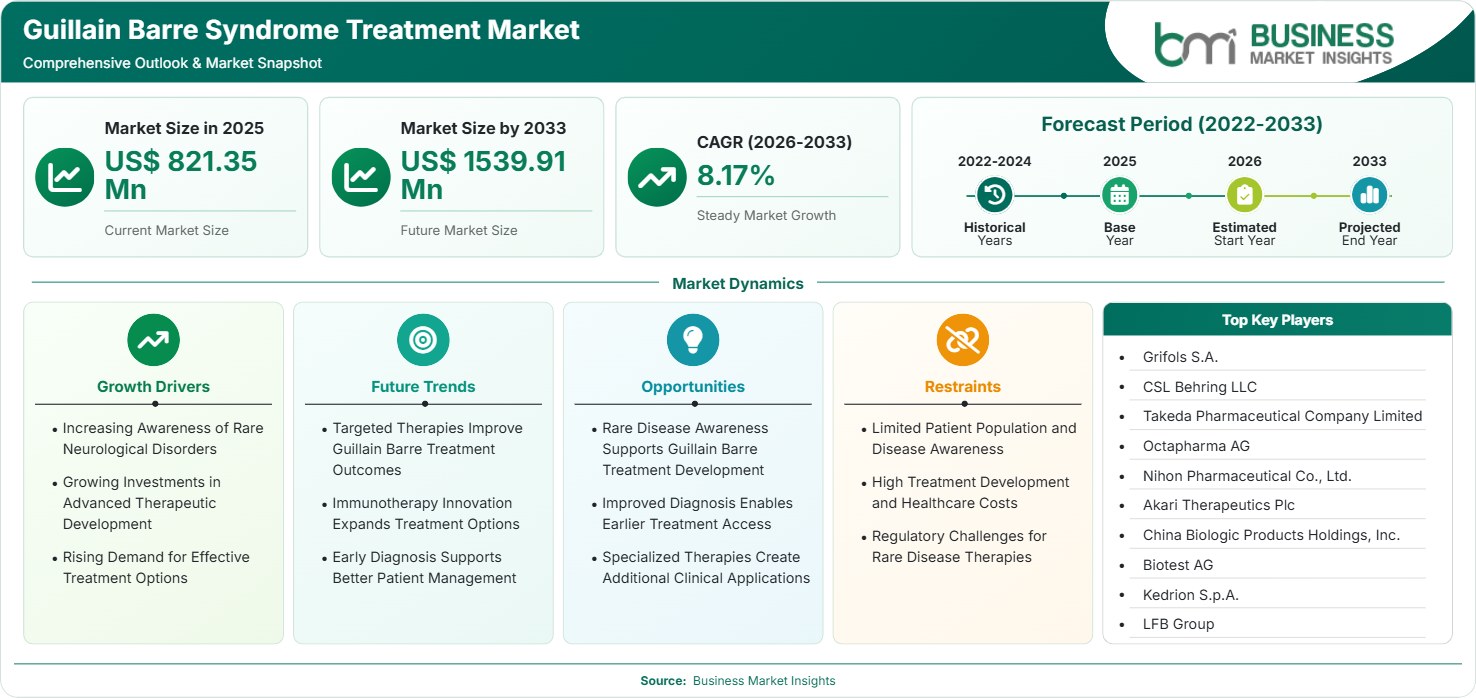
The Guillain Barre Syndrome Treatment Market size was valued at US$ 821.35 Million in 2025 and is projected to reach US$ 1539.91 Million by 2033, growing at a CAGR of 8.17% during 2026–2033, driven by rising autoimmune disease prevalence, expanding immunoglobulin therapies, improved diagnostic access, and increasing healthcare investments supporting neurological disorder treatment advancements globally.

Report Coverage
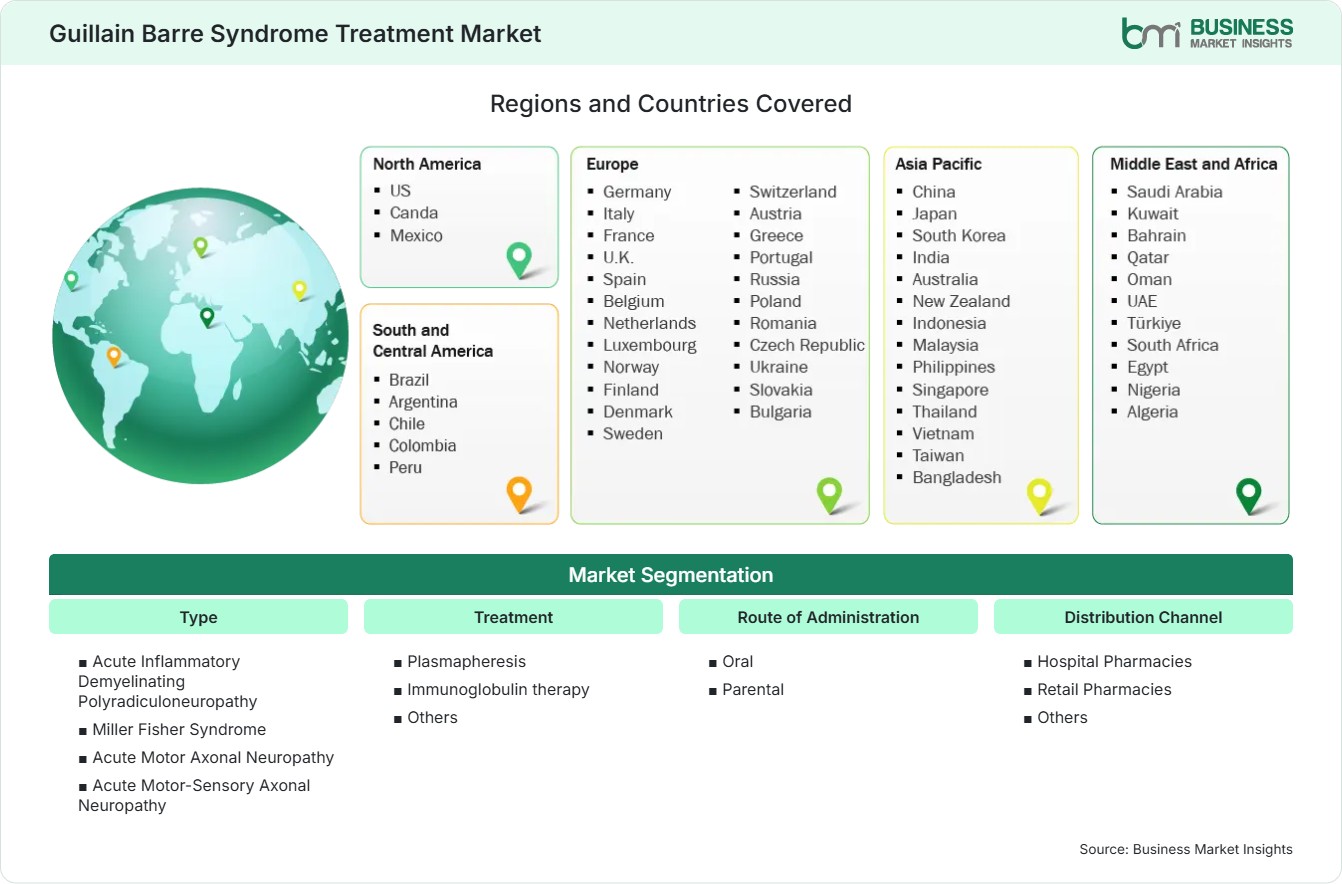
  • Type: Acute Inflammatory Demyelinating Polyradiculoneuropathy, Miller Fisher Syndrome, Acute Motor Axonal Neuropathy, Acute Motor-Sensory Axonal Neuropathy
  • Treatment: Plasmapheresis, Immunoglobulin therapy, Others
  • Route of Administration: Oral,Parental
  • Distribution Channel: Hospital Pharmacies, Retail Pharmacies, Others
US$ 821.35 Mn Market size in 2025
US$ 1539.91 Mn Market Size by 2033
8.17% CAGR, 2026 - 2033
2026-2033 Forecast Period

AI Overview

Guillain Barre Syndrome Treatment Market Summary

  • North America Region: North America holds a market share of 38%–42% in 2025, growing with a CAGR of 7.5%–8.2% influenced by advanced healthcare infrastructure, strong reimbursement, and rising autoimmune disease incidence. The United States demonstrates steady growth with approximately 7.8% CAGR driven by increasing neurological disorder diagnosis rates and widespread immunoglobulin therapy adoption.
  • Fastest Growing Region: Asia Pacific holds Guillain Barre Syndrome Treatment Market share of 20%–24% in 2025, growing with a CAGR of 9.5%–10.5% driven by expanding healthcare access, improving diagnostic infrastructure, and increasing government healthcare spending across emerging economies and urban populations.
  • Leading Segment: Immunoglobulin therapy holds market share of 55%–60% in 2025, growing with a CAGR of 8.2%–8.9% driven by high clinical efficacy, widespread physician preference, and increasing availability of intravenous immunoglobulin formulations globally.
  • High Growth Segment: Plasmapheresis holds market share of 30%–35% in 2025, growing with a CAGR of 8.8%–9.6% supported by improved hospital infrastructure, rising adoption in acute care settings, and increasing availability of specialized neurological treatment centers worldwide.
  • Key Market Opportunity: Expanding biologics pipeline and emerging complement inhibitors create strong opportunities for advanced therapies, improving patient outcomes and addressing unmet needs in severe and treatment-resistant Guillain Barre Syndrome cases globally.
  • Major Market Players: Grifols S.A., CSL Behring LLC, Takeda Pharmaceutical Company Limited, Octapharma AG, Nihon Pharmaceutical Co., Ltd., Akari Therapeutics Plc, China Biologic Products Holdings, Inc., Biotest AG, Kedrion S.p.A., LFB Group
Strategic Insights

Guillain Barre Syndrome Treatment Market: Strategic Insights

Guillain Barre Syndrome Treatment Market Strategic Framework
FREE PDF
Request your free sample
Request free sample
Stakeholder View

Key Takeaways

  • The market ecosystem is heavily dependent on plasma-derived therapies, with a concentrated supply chain dominated by global fractionation companies controlling raw material sourcing, processing, and distribution, influencing pricing dynamics and treatment availability.
  • Immunoglobulin therapy continues to present the highest revenue-generating opportunity due to its established clinical effectiveness and ease of administration compared to invasive procedures such as plasmapheresis, particularly in hospital settings.
  • Innovation is shifting toward targeted biologics, including complement inhibitors and monoclonal antibodies, which are being evaluated in clinical trials to improve recovery speed and reduce relapse risk in severe patient populations.
  • Asia Pacific presents a compelling investment opportunity, supported by improving healthcare infrastructure, increasing disease awareness, and expanding insurance coverage, particularly in countries such as China and India.
  • Strategic mergers, plasma collection network expansions, and long-term supply agreements are becoming critical as companies aim to secure raw plasma supply and strengthen global distribution capabilities in a competitive landscape.
  • Digital health integration, including remote monitoring and AI-supported diagnosis, is emerging as an additional value layer, enhancing early detection and optimizing treatment planning for neurological disorders.
Geographic Outlook

Guillain Barre Syndrome Treatment Market Regional Highlights

North America Guillain Barre Syndrome Treatment Market

North America accounts for 38%–42% of market share in 2025, with a CAGR of 7.5%–8.2% between 2026 and 2033. Good diagnostic rates and favorable reimbursement schemes have facilitated the adoption of advanced treatments. The Guillain Barre Syndrome Treatment Market has continued to lead in terms of market share because of advanced neurological care infrastructure and well-developed plasma donation facilities. The rising incidence of infections and aging populations continues to influence Market growth in this region, reinforcing its global leadership position.

  • Strong plasma collection infrastructure ensures steady supply of immunoglobulin therapies, enabling large-scale treatment availability and supporting clinical adoption across hospitals and specialized neurological care centers in the region.
  • Favorable reimbursement policies across the US and Canada reduce treatment costs for patients, increasing accessibility to high-cost therapies such as intravenous immunoglobulin and plasmapheresis procedures.
  • High prevalence awareness driven by organizations like WHO and CDC improves early diagnosis, allowing timely intervention, which enhances recovery outcomes and reduces long-term neurological disability risks.
  • Presence of leading pharmaceutical companies and advanced R&D facilities accelerates innovation in biologics and complement inhibitors, strengthening therapeutic pipelines and long-term treatment effectiveness.

US Guillain Barre Syndrome Treatment Market

The United States accounts for an 80% to 85% market share in North America by 2025, with a CAGR of 7.6% to 8.3% in the Guillain Barre Syndrome Treatment Market. Superior healthcare facilities and greater affordability of treatments are major factors in treatment success. The rising prevalence of autoimmune diseases and the presence of robust clinical trials contribute to continuous growth. The country benefits from widespread availability of neurologists and rapid integration of innovative biologics, reinforcing its dominance in the regional treatment landscape.

  • Extensive insurance coverage and Medicare support improve patient access to expensive therapies, including IVIG, reducing financial barriers and increasing treatment penetration among aging populations and high-risk groups.
  • Growing clinical trials landscape supports development of advanced biologics, including complement inhibitors, accelerating innovation and offering new treatment options for severe Guillain Barre Syndrome cases.
  • High hospitalization rates for neurological disorders enable rapid diagnosis and intervention, improving recovery outcomes and reducing long-term complications among patients across diverse demographic groups.

Europe Guillain Barre Syndrome Treatment Market

Europe has a market share of 25%–28% and is growing at a CAGR of 7.8%–8.5%. Countries like Germany and France lead because of their advanced health care systems; however, Eastern Europe exhibits a high growth rate. The growth is propelled by increased incidences of neurodegenerative disorders and the use of plasma-derived products. The government-sponsored health care and rare disease programs make the therapy affordable and accessible.

  • Western Europe benefits from established plasma fractionation facilities, ensuring a consistent supply of immunoglobulin therapies and enabling efficient distribution across public healthcare systems.
  • Germany and France lead the regional market due to advanced neurological research and high healthcare expenditure, while Spain and Italy show steady adoption of modern treatment protocols.
  • Eastern Europe demonstrates higher growth potential with improving healthcare infrastructure and increasing government investment in rare disease treatment programs, enhancing therapy accessibility.
  • Regulatory support from the European Medicines Agency accelerates approval of novel biologics, enabling faster market entry for advanced therapies targeting autoimmune neurological disorders.

Asia Pacific Guillain Barre Syndrome Treatment Market

Asia Pacific has an average market share of 20%-24% by 2025, with a CAGR of 9.5%-10.5% in the Guillain Barre Syndrome Treatment Market, and thus, is the fastest-growing region. Healthcare infrastructure development and increased disease awareness drive growth in this region. Countries like China and India are leaders in terms of patient pool, whereas Japan is ahead in adopting treatments. Growth in healthcare expenditure and hospitalization drives growth.

  • Rising incidence of neurological disorders linked to infections and environmental factors increases demand for timely diagnosis and treatment across densely populated countries such as China and India.
  • Government healthcare initiatives and insurance expansion improve affordability of high-cost therapies, enabling broader patient access to immunoglobulin treatments in emerging economies.
  • Japan leads in advanced treatment adoption due to strong healthcare infrastructure and high per capita healthcare expenditure, supporting early diagnosis and effective disease management.
  • Increasing investment in hospital infrastructure and specialized neurological centers enhances treatment capacity, supporting rapid adoption of plasmapheresis and biologic therapies across the region.

Rest of World Guillain Barre Syndrome Treatment Market

The Rest of World segment commands an 8% to 12% market share in 2025 at a CAGR of 8.5% to 9.2%. Both Latin America and the Middle East and Africa are witnessing growing availability of healthcare services. Increased awareness and evolving infrastructure are making the treatment more acceptable. Despite its high cost, global assistance and healthcare reform have increased the availability of the therapy, supporting gradual expansion in these regions.

  • Latin America shows steady growth driven by improving healthcare systems in Brazil and Mexico, along with increasing awareness of neurological disorders and access to diagnostic services.
  • Middle East countries are investing in advanced hospital infrastructure and specialized care facilities, enabling adoption of high-end therapies such as immunoglobulin and plasmapheresis treatments.
  • Africa faces challenges related to affordability and limited healthcare infrastructure, but international health initiatives are improving access to essential treatments and diagnostic capabilities.
  • Global health organizations are supporting capacity building and disease monitoring, improving early detection and management of Guillain Barre Syndrome in underserved regions.
Global Market Geography
FREE PDF
Request your free sample
Request free sample
Segment Analysis

Guillain Barre Syndrome Treatment Market Segmentation

Type

This type segment represents about 40%-45% market share in 2025, with a CAGR of 8.0%-8.6%. Higher incidence of various neurological conditions and advanced diagnostic technologies are contributing to the segment's growth. The Guillain Barre Syndrome Treatment Market scope in this segment is expanding due to the better categorization of the disease types, enabling targeted treatment approaches and improved clinical outcomes.

  • Acute Inflammatory Demyelinating Polyradiculoneuropathy: Dominates due to higher incidence globally, driven by immune-mediated nerve damage and strong clinical familiarity among neurologists, enabling early diagnosis and standardized treatment protocols across healthcare systems.
  • Miller Fisher Syndrome: Characterized by ophthalmoplegia and ataxia, this subtype is gaining diagnostic attention due to improved antibody testing, supporting targeted therapeutic approaches and increasing awareness among specialists.
  • Acute Motor Axonal Neuropathy: Shows increasing incidence in Asia, driven by infection-linked triggers, requiring intensive care management and contributing to growing demand for immunotherapy treatments.
  • Acute Motor-Sensory Axonal Neuropathy: Associated with severe outcomes, this subtype drives demand for advanced therapies and intensive care support, contributing to rising healthcare costs and treatment complexity.

Treatment

The treatment component has the highest market share, at 55%-60%, and is growing at a CAGR of 8.2%-8.9%. Immunoglobulin therapy has the largest market share due to its high clinical effectiveness and ease of administration. The Guillain Barre Syndrome Treatment Market trends are driven by increased use of combination therapies and support care services.

  • Plasmapheresis: Widely used in acute cases, this procedure removes harmful antibodies from blood, improving recovery outcomes and gaining adoption in advanced hospital settings with specialized neurological care facilities.
  • Immunoglobulin therapy: Preferred treatment option due to non-invasive administration and strong clinical outcomes, widely adopted across developed healthcare systems and increasingly accessible in emerging markets.

Route of Administration

The market segment holds a 50%-55% share in 2025 and is projected to grow at a CAGR of 8.1%-8.7%. The parenteral route is widely used because it provides rapid action in acute diseases. The rise in the use of treatment methodologies in hospitals and advancements in drug delivery systems fuel the growth in this market segment, expanding and improving treatment efficiency across healthcare settings.

  • Oral: Limited usage due to slower onset of action, primarily used in supportive care and long-term rehabilitation scenarios where immediate intervention is not required.
  • Parenteral: Dominates due to rapid drug delivery and effectiveness in acute cases, widely used for immunoglobulin therapy and critical care management in hospital settings.

Distribution Channel

The distribution channel segment constitutes 45%-50% market share in 2025 with a growth rate of 7.8%-8.4% CAGR of the Guillain-Barré Syndrome Treatment Market. Hospital pharmacies dominate market share due to the complexities involved in the treatment process. More penetration of retail pharmacies and e-channels in the distribution chain has increased access, especially in developing nations.

  • Hospital Pharmacies: Primary distribution channel due to the need for specialized storage and administration of therapies, ensuring controlled delivery and monitoring of treatment outcomes in clinical settings.
  • Retail Pharmacies: Growing gradually with increasing outpatient care, supporting accessibility of supportive medications and post-treatment therapies for recovery and rehabilitation.
Market Forces

Guillain Barre Syndrome Treatment Market Dynamics

Key Market Drivers

Rising Global Burden of Autoimmune Neurological Disorders

The rising prevalence of autoimmune neurological disorders is a major driver of market growth. Global Burden of Disease statistics reveal that Guillain Barre Syndrome affected over 150,000 individuals worldwide in 2019, with steady growth across regions. Infections, such as Campylobacter infections, as well as viral epidemics, contribute to disease development. The Guillain Barre Syndrome Treatment Market growth is also driven by an aging population and increased survival rates. Awareness among healthcare providers helps with early diagnosis and treatment, thereby driving global market growth.

Expansion of Plasma-Derived Therapy Infrastructure

The development of fractionation centers and networks has increased the availability of immunoglobulin products worldwide. Increased financial investments by pharma organizations have improved production capability and ensured reliable supply chains. The rising demand for intravenous immunoglobulins is driven by their efficacy and safety. Advances in manufacturing technologies have reduced the risk of contamination and enabled scale-up production. These developments have facilitated the use of plasma-based products, which help healthcare professionals manage critical situations efficiently while providing continuous treatment in different parts of the world with varying levels of healthcare infrastructure.

Advancements in Diagnostic and Intensive Care Capabilities

As a result of improved diagnostic methods, which include electrophysiological testing and biomarker identification, early diagnosis of Guillain Barre Syndrome is becoming a possibility. The healthcare system is making greater use of ICU units to better manage patients. Severe cases, according to the WHO, require special attention due to risks such as respiratory failure. All these developments are contributing to improved recovery rates. As a result of accurate diagnoses, there will be fewer cases of misdiagnosis and delay in starting treatment, thus increasing the demand for therapeutic interventions.

Key Market Opportunities

Emergence of Targeted Biologics and Complement Inhibitors

The development of targeted biologics, including complement inhibitors, represents a lucrative opportunity to expand the market. They are designed to treat patients with severe and hard-to-treat conditions by blocking particular immune responses. There is an increase in funding directed towards conducting clinical trials and seeking product approvals to speed up the creation process. Pharmaceutical firms are concentrating on personalizing therapies to enhance their effectiveness and minimize the side effects. According to the Guillain Barre Syndrome Treatment Market Forecasts, there is a good prospect for advanced treatment techniques beyond conventional immunoglobulin and plasmapheresis.

Growing Healthcare Investment in Emerging Economies

In emerging markets across Asia-Pacific and Latin America, many investments are being made in the healthcare sector, improving access to neurological treatment. Efforts by governments to build healthcare infrastructure have helped implement innovative therapies. There is also increased insurance coverage, which has led to lower treatment costs, providing greater access to treatment. There is greater awareness of rare diseases, leading to earlier diagnosis and treatment. All these developments have created immense growth opportunities for pharma companies to expand their presence and address unmet medical needs among underserved populations.

Integration of Digital Health and Remote Monitoring

Technologies such as remote patient monitoring and AI-based diagnosis are rapidly changing the field of neurology. They enable early symptom detection and consistent patient monitoring, leading to better outcomes. Doctors use telemedicine services to treat their patients living far away. Data analysis helps to design individualized treatment plans and makes clinical decisions more efficient. The integration of digital technologies makes healthcare provision more efficient, reduces hospitalizations, and creates new opportunities for improving patient management in complex neurological conditions.

Market Restraints and Challenges

High Cost of Immunoglobulin Therapies

Factor: Immunoglobulin therapies are expensive due to complex plasma collection and processing requirements.

Impact: Exorbitant treatment costs reduce access, especially in developing nations. Restricted reimbursement policies also hinder access, causing delays in the treatment process and, in turn, poor clinical results. Plasma-based products used for treatment have increased the treatment process's vulnerability to supply disruptions, making treatment more expensive and reducing overall treatment affordability across global healthcare systems.

Limited Awareness and Diagnostic Challenges in Developing Regions

Factor: Lack of awareness and insufficient diagnostic infrastructure in developing regions hinder early detection of Guillain Barre Syndrome.

Impact: Late diagnosis causes the disease to progress at a more advanced stage, making its treatment more complicated and leading to higher chances of death. There is a limited number of neurologists and centers providing specialized treatment, thus limiting the availability of treatment options and slowing market growth in emerging economies.

Company Analysis

Competitive Landscape

The Guillain Barre Syndrome Treatment Market analysis highlights a moderately consolidated competitive environment dominated by plasma fractionation leaders and specialized biologics developers. Companies are focusing on expanding plasma collection networks, enhancing immunoglobulin production capacity, and advancing targeted biologics pipelines. Strategic collaborations, geographic expansion, and regulatory approvals remain central to strengthening competitive positioning and ensuring long-term supply stability.

Company Name

Overview

Products and Services relevant to this market

Grifols S.A.

Spain-based global healthcare company specializing in plasma-derived medicines with a strong global plasma collection network and advanced fractionation capabilities supporting neurological therapies.

Offers intravenous immunoglobulin (IVIG) products and plasma-derived therapies widely used for treating Guillain Barre Syndrome, supported by strong manufacturing and global distribution capabilities.

CSL Behring LLC

US-based biotechnology company and subsidiary of CSL Limited, focused on plasma-derived and recombinant therapies addressing rare and serious diseases globally.

Provides IVIG therapies and specialty plasma products used in autoimmune neurological conditions, supported by extensive R&D and plasma sourcing infrastructure.

Takeda Pharmaceutical Company Limited

Japan-based global biopharmaceutical leader formed after acquisition of Shire plc, with strong presence in rare diseases and plasma-derived therapies.

Offers immunoglobulin therapies and rare disease treatments, including products targeting neurological disorders and immune-mediated conditions globally.

Octapharma AG

Switzerland-based human protein products manufacturer with extensive expertise in plasma fractionation and recombinant protein development for rare diseases.

Supplies IVIG products and plasma-derived therapies for autoimmune conditions, with a strong focus on safety, purity, and clinical effectiveness.

Nihon Pharmaceutical Co., Ltd.

Japan-based pharmaceutical company specializing in blood plasma products and rare disease therapies with strong domestic presence.

Provides immunoglobulin therapies and plasma-derived products used in neurological disorder treatment, particularly within Asian healthcare systems.

Akari Therapeutics Plc

UK-based biotechnology company focused on developing complement inhibitors targeting autoimmune and inflammatory diseases.

Develops advanced biologics targeting complement pathways, offering potential next-generation treatments for severe Guillain Barre Syndrome cases.

China Biologic Products Holdings, Inc.

China-based plasma-based biopharmaceutical company with extensive plasma collection network and manufacturing facilities.

Produces immunoglobulin products and plasma-derived therapies, supporting growing demand for neurological disorder treatments in Asia Pacific.

Biotest AG

Germany-based biotechnology company focused on plasma proteins and immunological therapies with a strong European presence.

Offers IVIG products and immunotherapy solutions used in treating autoimmune conditions including Guillain Barre Syndrome.

Kedrion S.p.A.

Italy-based biopharmaceutical company specializing in plasma-derived therapies with a global distribution footprint.

Provides immunoglobulin therapies and plasma-derived medicinal products supporting treatment of rare and autoimmune diseases worldwide.

LFB Group

France-based biopharmaceutical company focused on developing plasma-derived and recombinant proteins for serious and rare diseases.

Manufactures immunoglobulin therapies and specialty biologics used in neurological and immune-mediated disorder treatment.

Trust & Transparency

Research Methodology

The market analysis combines proprietary research with secondary data from government agencies, company disclosures, regulatory filings, industry databases and expert interviews. Market estimates are validated through data triangulation, cross-market benchmarking and analyst review.

View Full Research Methodology

Questions Answered

Frequently Asked Questions

What challenges are impacting market growth?

High treatment costs, limited access to therapies in developing regions, and dependence on plasma-derived products create supply constraints and affordability challenges, impacting overall treatment accessibility and market penetration.

How are emerging therapies influencing market dynamics?

Emerging biologics such as complement inhibitors are transforming treatment approaches by targeting specific immune pathways, improving outcomes in severe cases, and expanding therapeutic options beyond traditional therapies.

Which region is expected to dominate the market during the forecast period?

North America is expected to maintain dominance due to strong healthcare infrastructure, high awareness levels, and widespread availability of advanced treatment options supported by favorable reimbursement policies.

What factors are driving the growth of the Guillain Barre Syndrome Treatment Market Report?

Rising prevalence of autoimmune neurological disorders, increasing healthcare expenditure, improved diagnostic capabilities, and expanding availability of immunoglobulin therapies are key factors driving sustained market expansion globally.

What are the primary treatment options available for Guillain Barre Syndrome?

Immunoglobulin therapy and plasmapheresis are the primary treatments. Immunoglobulin therapy is widely preferred due to ease of administration, while plasmapheresis is used in severe cases to remove harmful antibodies effectively.

Access the Full Guillain Barre Syndrome Treatment Market Report

Get segment-level forecasts, regional estimates, competitive benchmarking, company profiles and downloadable Excel datasets.

Access the full Guillain Barre Syndrome Treatment Market Report
350 pages PDF & Excel | 2026-09-21
Similar Research

Related Market Reports