
Green Methanol Ships Market Outlook: Size, Share, Trends, Growth Analysis, Competitive Landscape & Forecast, 2026-2033

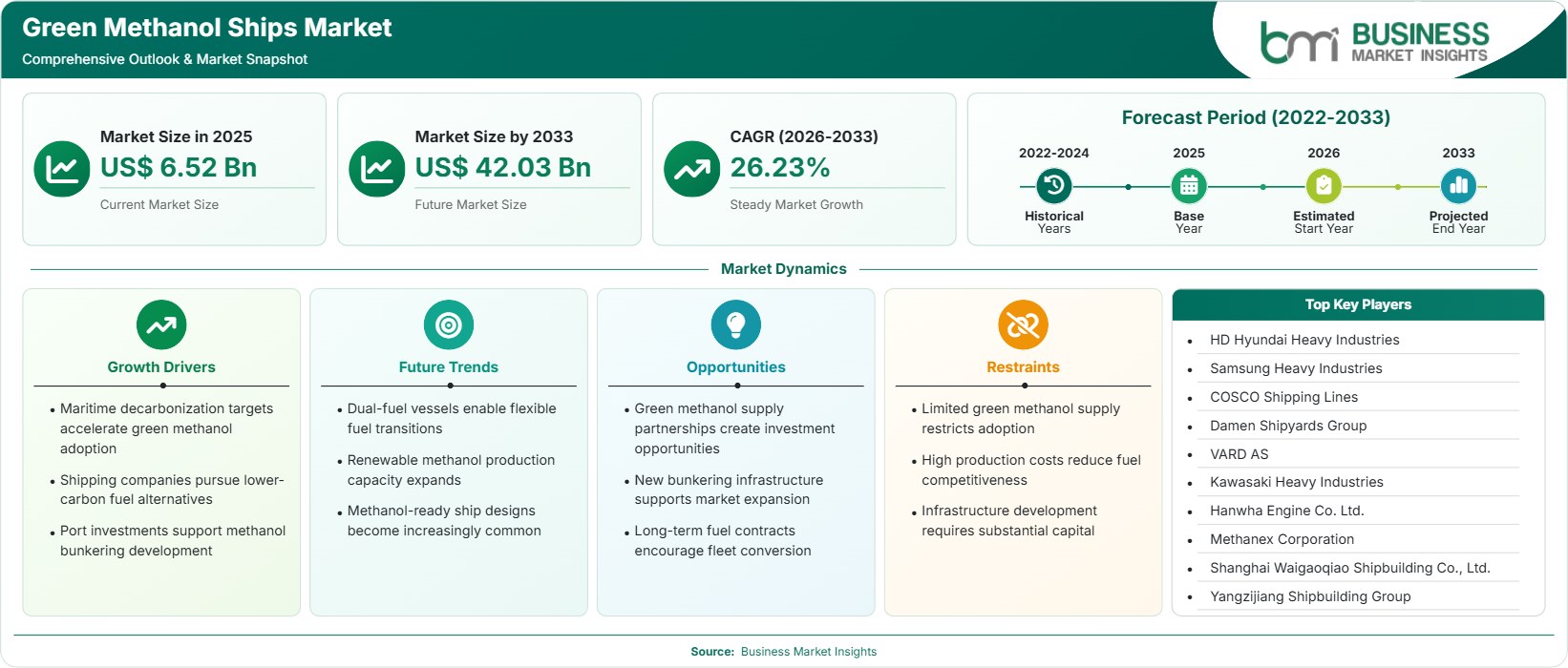
The Green Methanol Ships Market size was valued at USD 6.52 Billion in 2025 and is projected to reach USD 42.03 Billion by 2033, growing at a CAGR of 26.23% during 2026–2033. Maritime decarbonization targets, expanding green fuel ecosystems, increasing vessel orders, and growing investments in methanol bunkering infrastructure are creating substantial opportunities across the global shipping industry.

Report Coverage
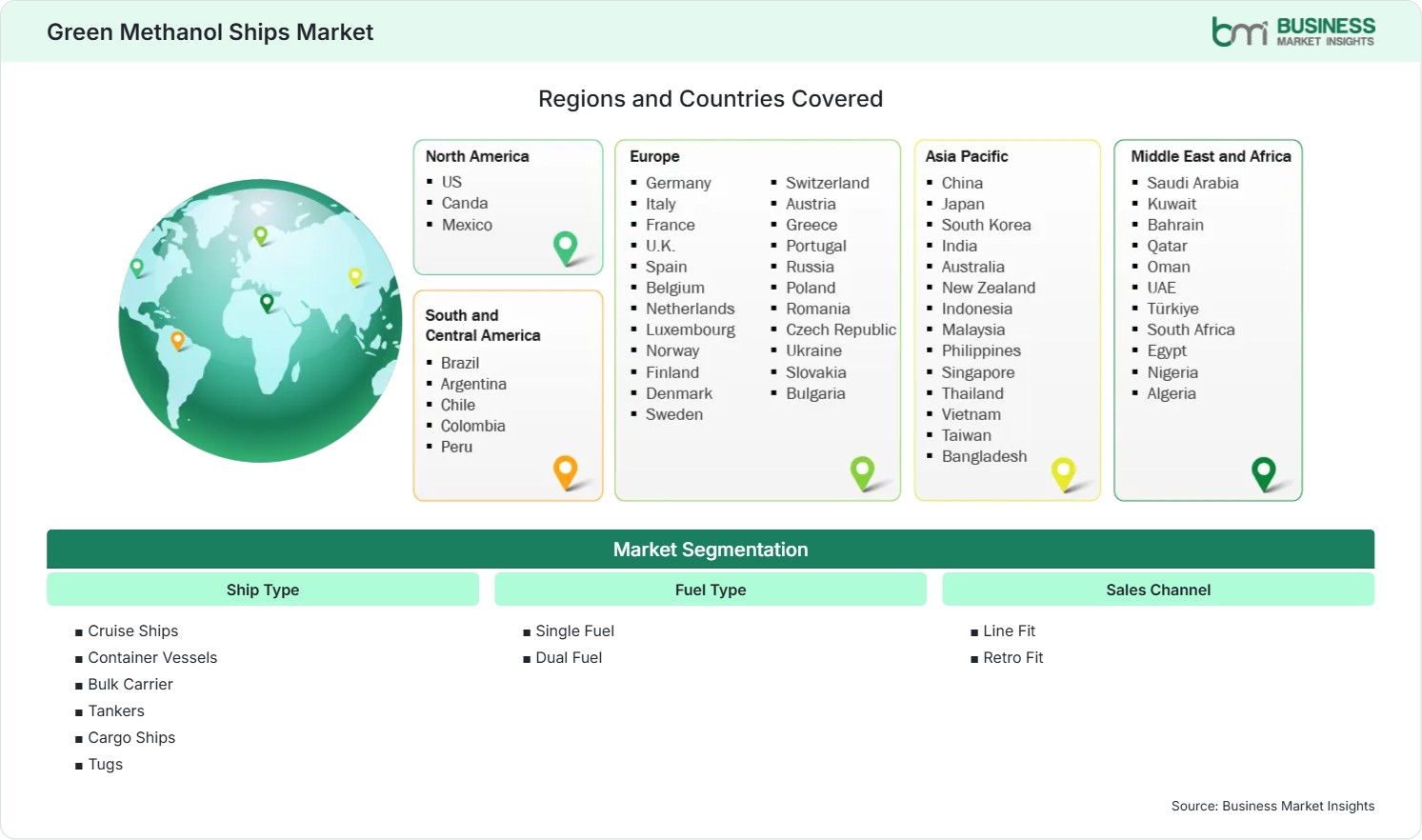
  • Ship Type: Cruise Ships, Container Vessels, Bulk Carrier, Tankers, Cargo Ships, Tugs
  • Fuel Type: Single Fuel, Dual Fuel
  • Sales Channel: Line Fit, Retro Fit
US$ 6.52 Bn Market size in 2025
US$ 42.03 Bn Market Size by 2033
26.23% CAGR, 2026 - 2033
2026-2033 Forecast Period

01 AI Overview

Green Methanol Ships Market Summary

  • North America Region: North America holds 16%–19% share in 2025 and is projected to grow at a 24.1%–25.0% CAGR during 2026–2033. Port decarbonization strategies, fleet modernization programs, growing alternative-fuel investments, and emerging green-fuel supply chains continue strengthening commercial adoption across major shipping corridors. US market benefits from expanding clean-fuel initiatives and marine infrastructure investments, growing at 24.6%–25.4% CAGR.
  • Fastest Growing Region: Asia Pacific accounts for 42%–46% share in 2025 and is forecast to expand at a 27.8%–28.9% CAGR during 2026–2033. Shipbuilding leadership, expanding green methanol production, increasing vessel orders, and supportive maritime decarbonization policies continue accelerating industry expansion.
  • Leading Segment: Container Vessels represent 33%–37% share in 2025 and are expected to grow at a 27.0%–28.1% CAGR. Extensive order books, strong sustainability commitments from liner operators, and long-distance shipping requirements support segment leadership.
  • High Growth Segment: Dual Fuel vessels account for 61%–65% share in 2025 and are projected to expand at a 28.2%–29.1% CAGR. Operational flexibility, fuel availability considerations, and compliance with evolving emissions regulations continue driving adoption.
  • Key Market Opportunity: Expansion of integrated green methanol production, bunkering infrastructure, and strategic fuel-supply partnerships enables faster fleet decarbonization while creating new revenue opportunities across maritime value chains.
  • Major Market Players: HD Hyundai Heavy Industries Co., Ltd., Samsung Heavy Industries Co., Ltd., COSCO SHIPPING Lines Co., Ltd., Damen Shipyards Group N.V., VARD AS, Kawasaki Heavy Industries, Ltd., Hanwha Engine Co., Ltd., Methanex Corporation, Shanghai Waigaoqiao Shipbuilding Co., Ltd., Yangzijiang Shipbuilding (Holdings) Ltd.
02 Strategic Insights

Green Methanol Ships Market: Strategic Insights

Green Methanol Ships Market Strategic Framework
FREE PDF
Request your free sample
Request free sample
03 Stakeholder View

Key Takeaways

  • The market ecosystem increasingly integrates shipbuilders, engine manufacturers, fuel producers, shipping companies, port operators, and logistics providers to accelerate deployment of low-carbon maritime solutions.
  • Container vessel applications and dual-fuel configurations provide the strongest commercial opportunities due to growing order pipelines and operational flexibility requirements.
  • Technological innovation is increasingly focused on engine efficiency, fuel-storage optimization, onboard safety systems, and emissions-reduction performance improvements.
  • Asia Pacific represents the most attractive regional investment destination because of its dominance in shipbuilding activity and expanding green-fuel infrastructure networks.
  • Strategic partnerships between shipowners, ports, and methanol suppliers are becoming critical for securing long-term fuel availability and supporting fleet expansion plans.
  • Vertical integration across fuel production, bunkering infrastructure, and vessel deployment is emerging as a major competitive differentiator.
04 Geographic Outlook

Green Methanol Ships Market Regional Highlights

North America Green Methanol Ships Market

North America represented 16%–19% Green Methanol Ships Market share in 2025 and is projected to expand at a 24.1%–25.0% CAGR through 2033. Regional demand has been driven by decarbonization efforts undertaken by shipping companies, clean energy investments, and the modernization of maritime infrastructure. Big ports have continued to explore capabilities that can support the use of alternative fuels, while shipping companies assess the feasibility of their methanol-driven fleets in terms of compliance and sustainability.

  • Port authorities are investing in future-ready fueling capabilities to support adoption of alternative marine fuels and strengthen long-term competitiveness.
  • Growing collaboration among fuel producers, vessel operators, and infrastructure providers is accelerating ecosystem development.
  • Regulatory pressure to reduce maritime emissions continues encouraging investment in cleaner propulsion technologies.
  • Fleet renewal projects are increasingly incorporating methanol-compatible vessel specifications to meet emerging sustainability requirements.
  • Expansion of clean-fuel supply chains strengthens confidence among vessel owners considering fleet transitions.

US Green Methanol Ships Market

The United States accounts for approximately 74%–78% Green Methanol Ships Market share within North America and is expected to grow at a 24.6%–25.4% CAGR during 2026–2033. Port modernization initiatives, alternative-fuel investments, and rising participation from shipping and logistics companies support market expansion. Vessel operators are increasingly evaluating green methanol solutions to align with emissions-reduction objectives while maintaining operational flexibility across domestic and international maritime routes.

  • Major ports continue assessing methanol bunkering opportunities to support future vessel deployments.
  • Shipping companies are increasing investment in low-carbon fleet modernization strategies.
  • Energy-sector participants are exploring green methanol production opportunities linked to maritime demand.
  • Public and private partnerships continue supporting development of alternative-fuel infrastructure.

Europe Green Methanol Ships Market

Europe accounted for 28%–32% share in 2025 and is anticipated to expand at a 25.4%–26.5% CAGR through 2033. Strong maritime decarbonization mandates, expanding alternative-fuel infrastructure, and aggressive climate objectives continue supporting regional leadership in sustainable shipping. Norway remains a leading adopter due to extensive green-shipping initiatives, while Denmark demonstrates strong growth through investments in methanol-fueled vessel deployment. Major ports across Northern Europe are increasingly developing bunkering infrastructure to support emerging green-fuel ecosystems.

  • Norway continues leading adoption through strong policy support, green maritime programs, and growing deployment of alternative-fuel vessels.
  • Denmark demonstrates accelerated growth driven by shipping-company investments and expanding methanol supply partnerships.
  • European ports are increasingly investing in bunkering capabilities and supporting infrastructure for alternative fuels.
  • Regulatory pressure to reduce maritime emissions continues encouraging fleet modernization and clean-fuel adoption.
  • Strategic collaboration among shipbuilders, operators, and fuel suppliers strengthens commercialization of green methanol shipping solutions.

Asia Pacific Green Methanol Ships Market

Asia Pacific represented 42%–46% share in 2025 and is projected to register the highest growth at 27.8%–28.9% CAGR through 2033. Dominance in global shipbuilding, increasing green methanol production capacity, and strong vessel-order pipelines are driving regional expansion. China remains the largest market due to large-scale shipbuilding activity, while South Korea demonstrates rapid growth through advanced marine-engine technologies and alternative-fuel vessel construction. Government support and industrial investment continue strengthening regional competitiveness.

  • China benefits from extensive shipbuilding infrastructure and growing investment in green-fuel maritime ecosystems.
  • South Korea continues advancing methanol-capable vessel technologies through innovation in marine propulsion systems.
  • Regional shipyards are experiencing increasing order volumes for dual-fuel and methanol-powered vessels.
  • Expansion of renewable-methanol production projects strengthens long-term fuel supply potential.
  • Maritime decarbonization targets are encouraging shipping companies to accelerate alternative-fuel fleet strategies.

Rest of World Green Methanol Ships Market

Rest of World accounted for 7%–10% share in 2025 and is anticipated to expand at a 25.8%–26.8% CAGR through 2033. South and Central America are witnessing growing interest in alternative marine fuels linked to renewable-energy development. The Middle East and Africa region is emerging as an important production and bunkering hub through investments in green hydrogen and methanol manufacturing projects. Brazil leads regional maritime decarbonization initiatives, while the United Arab Emirates demonstrates significant infrastructure development potential.

  • Renewable-energy investments support development of green methanol supply chains across emerging maritime economies.
  • Gulf countries are positioning themselves as future alternative-fuel bunkering hubs for international shipping routes.
  • Increasing port modernization projects are strengthening readiness for methanol-fueled vessel operations.
  • Export-oriented shipping industries are exploring cleaner fuel alternatives to improve sustainability performance.
  • Strategic energy-transition initiatives continue encouraging investments in marine-fuel infrastructure and vessel deployment.
Global Market Geography
FREE PDF
Request your free sample
Request free sample
05 Segment Analysis

Green Methanol Ships Market Segmentation

Ship Type

Container Vessels account for approximately 33%–37% share in 2025 and are projected to expand at a 27.0%–28.1% CAGR through 2034. The Green Methanol Ships Market scope continues broadening as major shipping operators increasingly prioritize methanol-fueled container fleets to meet emissions targets and enhance sustainability performance. Strong vessel-order backlogs and global trade requirements continue supporting segment leadership.

  • Cruise Ships: Sustainability commitments from cruise operators are encouraging adoption of alternative-fuel technologies for emissions reduction and environmental compliance.
  • Container Vessels: Large fleet modernization programs and strong decarbonization objectives continue supporting significant demand for methanol-powered solutions.
  • Bulk Carrier: Growing pressure to reduce emissions in commodity transportation is encouraging evaluation of alternative-fuel vessel technologies.
  • Tankers: Operators increasingly explore methanol-fuel options to align fleet performance with evolving environmental standards.
  • Cargo Ships: Shipping companies seek efficient low-carbon propulsion systems to improve sustainability performance across logistics operations.
  • Tugs: Port-service operators are adopting cleaner propulsion technologies to support local emissions-reduction initiatives and operational sustainability.

Fuel Type

Dual Fuel vessels represent approximately 61%–65% share in 2025 and are expected to grow at 28.2%–29.1% CAGR through 2034. Operational flexibility, fuel-security considerations, and the ability to transition gradually toward low-carbon fuels continue strengthening segment adoption. Vessel owners increasingly prioritize propulsion systems capable of operating across multiple fuel pathways.

  • Single Fuel: Adoption remains concentrated in operations with reliable green methanol availability and clearly defined sustainability objectives.
  • Dual Fuel: Flexibility to operate using conventional and alternative fuels makes these systems attractive for long-term fleet planning.

Sales Channel

Line Fit installations accounted for approximately 68%–72% share in 2025 and are projected to expand at 27.1%–28.0% CAGR through 2034. The Green Methanol Ships Market trends indicate increasing preference for newbuild vessels designed specifically for methanol operations, enabling optimized performance, compliance, and fuel-system integration from initial construction stages.

  • Line Fit: New vessel construction increasingly incorporates methanol compatibility to support long-term decarbonization strategies.
  • Retro Fit: Existing fleet operators continue evaluating conversion projects as methanol infrastructure and fuel availability improve.
06 Market Forces

Green Methanol Ships Market Dynamics

Key Market Drivers

Maritime decarbonization targets accelerate green methanol adoption

International shipping companies are increasingly adopting alternative marine fuels to align with emissions-reduction objectives and evolving environmental regulations. The Green Methanol Ships Market growth trajectory is supported by industry-wide efforts to lower greenhouse gas emissions, reduce dependency on conventional marine fuels, and improve sustainability performance. Green methanol provides flexibility to work well with current fuel systems, with a relatively smaller need for adaptation of infrastructure compared to certain other fuels. Shipping companies are placing large orders for methanol-enabled ships in order to prepare themselves in terms of regulations as well as meeting their sustainability goals. All these trends are resulting in investments in several sectors.

Shipping companies pursue lower-carbon fuel alternatives

Vessel operators are increasingly evaluating fuel pathways that balance environmental performance with operational practicality. Green methanol is proving to be a promising choice because it can help meet carbon-reduction goals while remaining flexible. Ship operators are deploying methanol-powered vessels as part of efforts to renew their fleets and become more competitive and environmentally friendly. With increased demand from shippers and logistics partners for low-emission transport, the demand for green methanol vessels keeps rising in container, bulk, and special ship categories.

Port investments support methanol bunkering development

Port authorities worldwide are investing in infrastructure capable of supporting alternative marine fuels. Enhancing methanol bunker networks improves access to fuel and reduces risk for vessels when choosing the fleet modification process. The development of proper infrastructure and investments into the storage and distribution of the fuel are improving the operating environment for methanol-fueled ships. Increased availability of bunkering services is helping build confidence of ship owners and speed up the decision-making process.

Key Market Opportunities

Green methanol supply partnerships create investment opportunities

Strategic partnerships between fuel producers, shipping companies, and infrastructure operators are creating attractive commercial opportunities. Long-term supply agreements provide fuel-security advantages while supporting development of integrated maritime decarbonization ecosystems. Green Methanol Ships Market Forecasts indicate increasing investment in renewable methanol production facilities as vessel deployment accelerates. Companies capable of establishing reliable fuel-supply networks may secure significant competitive advantages. Integration across fuel production, logistics, and maritime operations is expected to become an increasingly important component of industry growth strategies.

New bunkering infrastructure supports market expansion

Growing investment in bunkering facilities is strengthening the operational foundation for methanol-powered vessels. Increased fueling capacity at major international ports will enable greater ship deployment and expanded routing options. Those who provide the infrastructure can take advantage of increased demand as a result of their investments in new fleets and sustainability within the marine industry. Investing in bunkering systems now will allow stakeholders to capitalize on future fuel distribution.

Long-term fuel contracts encourage fleet conversion

Long-term fuel procurement agreements help mitigate supply uncertainty and improve economic visibility for shipping operators. Secure supply of green methanol provides a basis for strategic planning of ship fleets and enables investments into alternative fuel ships. Producers of fuel will also benefit from reliable demand forecasts enabling them to expand their production capacities. With growing confidence in future supply reliability, increasing number of shipping companies will continue to make decisions about their fleet renovation and construction of new vessels.

Market Restraints and Challenges

Limited green methanol supply restricts adoption

Factor: Global production capacity for green methanol remains limited relative to anticipated future demand from maritime operators. Impact: Availability limitations in fuel supplies might hinder the timing of fleet rollouts and cause concerns about future fuel supplies. The shipping industry needs guarantees for supplies before investing in new vessels. This situation will hinder market expansion due to lack of production facilities. More funding for production of renewable methanol should be sought.

High production costs reduce fuel competitiveness

Factor: Green methanol production currently requires significant investment in renewable energy, carbon-capture technologies, and advanced processing facilities. Impact: An increase in prices might diminish economic feasibility relative to standard marine fuels, especially in times of market fluctuation. Cost differentials will affect investment plans and hinder commercialization. Parties within the industry sector are still focused on advancing technology, scale, and logistics to achieve cost competitiveness.

07 Company Analysis

Competitive Landscape

The Green Methanol Ships Market analysis reflects growing competition across shipbuilding, marine propulsion systems, fuel production, and maritime infrastructure development as stakeholders position themselves within the emerging low-carbon shipping ecosystem.

Company Name

Overview

Products and Services relevant to this market

HD Hyundai Heavy Industries Co., Ltd.

Global shipbuilder with strong capabilities in alternative-fuel vessel design and construction.

Methanol-powered vessels, marine engineering services, shipbuilding solutions, and propulsion integration technologies.

Samsung Heavy Industries Co., Ltd.

Major shipbuilder focused on advanced marine technologies and sustainable shipping solutions.

Green methanol vessel construction, marine systems integration, and low-emission ship technologies.

COSCO SHIPPING Lines Co., Ltd.

International shipping operator actively investing in fleet decarbonization initiatives.

Methanol-capable container vessels, sustainable shipping services, and fleet modernization programs.

Damen Shipyards Group N.V.

Shipbuilding company specializing in innovative vessel platforms and maritime engineering.

Methanol-ready vessels, retrofit solutions, and alternative-fuel maritime technologies.

VARD AS

Designer and builder of specialized vessels for offshore and marine applications.

Alternative-fuel vessel designs, marine engineering, and sustainable shipbuilding solutions.

Kawasaki Heavy Industries, Ltd.

Diversified industrial company with marine propulsion and vessel-development expertise.

Marine engines, alternative-fuel technologies, ship systems, and engineering services.

Hanwha Engine Co., Ltd.

Marine-engine specialist supporting next-generation propulsion developments.

Dual-fuel engines, methanol-capable propulsion technologies, and marine power systems.

Methanex Corporation

Leading methanol producer supporting development of low-carbon marine fuel ecosystems.

Methanol supply, fuel solutions, logistics support, and alternative-fuel market development.

Shanghai Waigaoqiao Shipbuilding Co., Ltd.

Large commercial shipbuilder serving global shipping operators.

Methanol-ready vessel construction, ship engineering, and commercial shipbuilding services.

Yangzijiang Shipbuilding (Holdings) Ltd.

Prominent Asian shipbuilder focused on advanced and sustainable vessel platforms.

Green methanol vessels, retrofit capabilities, and commercial shipbuilding solutions.

10 Trust & Transparency

Research Methodology

The market analysis combines proprietary research with secondary data from government agencies, company disclosures, regulatory filings, industry databases and expert interviews. Market estimates are validated through data triangulation, cross-market benchmarking and analyst review.

View Full Research Methodology

11 Questions Answered

Frequently Asked Questions

What insights does a Green Methanol Ships Market Report provide?

A Market Report provides analysis of market size, fleet trends, fuel infrastructure development, competitive dynamics, shipbuilding activity, regulatory developments, and future growth opportunities.

Why are dual-fuel vessels growing rapidly?

Dual-fuel technology provides operational flexibility, allowing vessels to operate on methanol and conventional fuels while infrastructure and fuel availability continue developing.

Which vessel type leads the market?

Container vessels currently represent the leading segment due to substantial fleet-renewal programs, large vessel-order pipelines, and strong sustainability commitments from global shipping operators.

Why is green methanol gaining traction in shipping?

Green methanol offers a practical pathway for maritime decarbonization through lower emissions, compatibility with existing marine technologies, and growing industry support for alternative fuels.

What are green methanol ships?

Green methanol ships are vessels designed or retrofitted to operate using methanol produced from renewable sources, helping reduce lifecycle emissions compared with conventional marine fuels.

Access the Full Green Methanol Ships Market Report

Get segment-level forecasts, regional estimates, competitive benchmarking, company profiles and downloadable Excel datasets.

Access the full Green Methanol Ships Market Report
350 pages PDF & Excel | 2026-08-20