Van Market Regional Highlights
North America Van Market
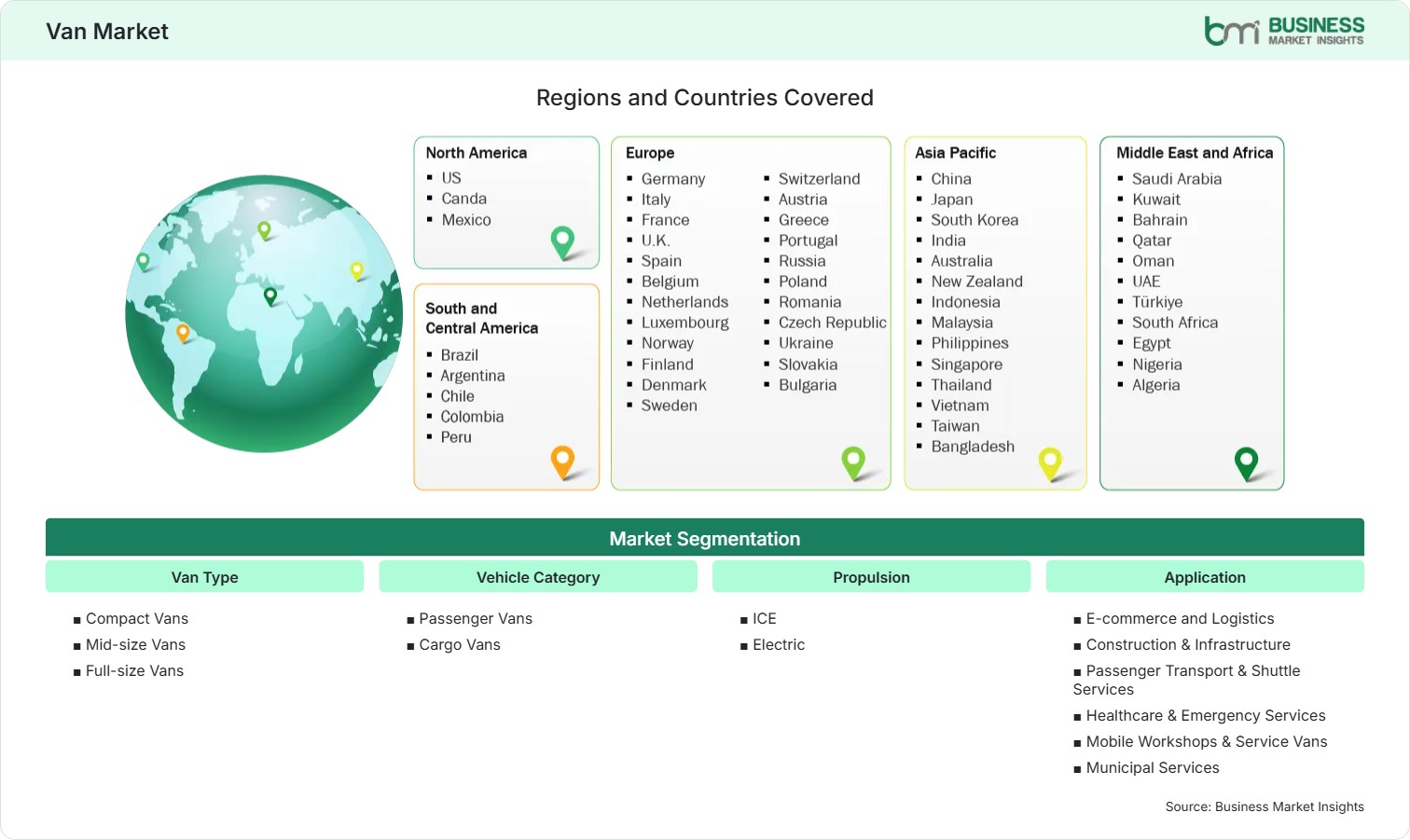
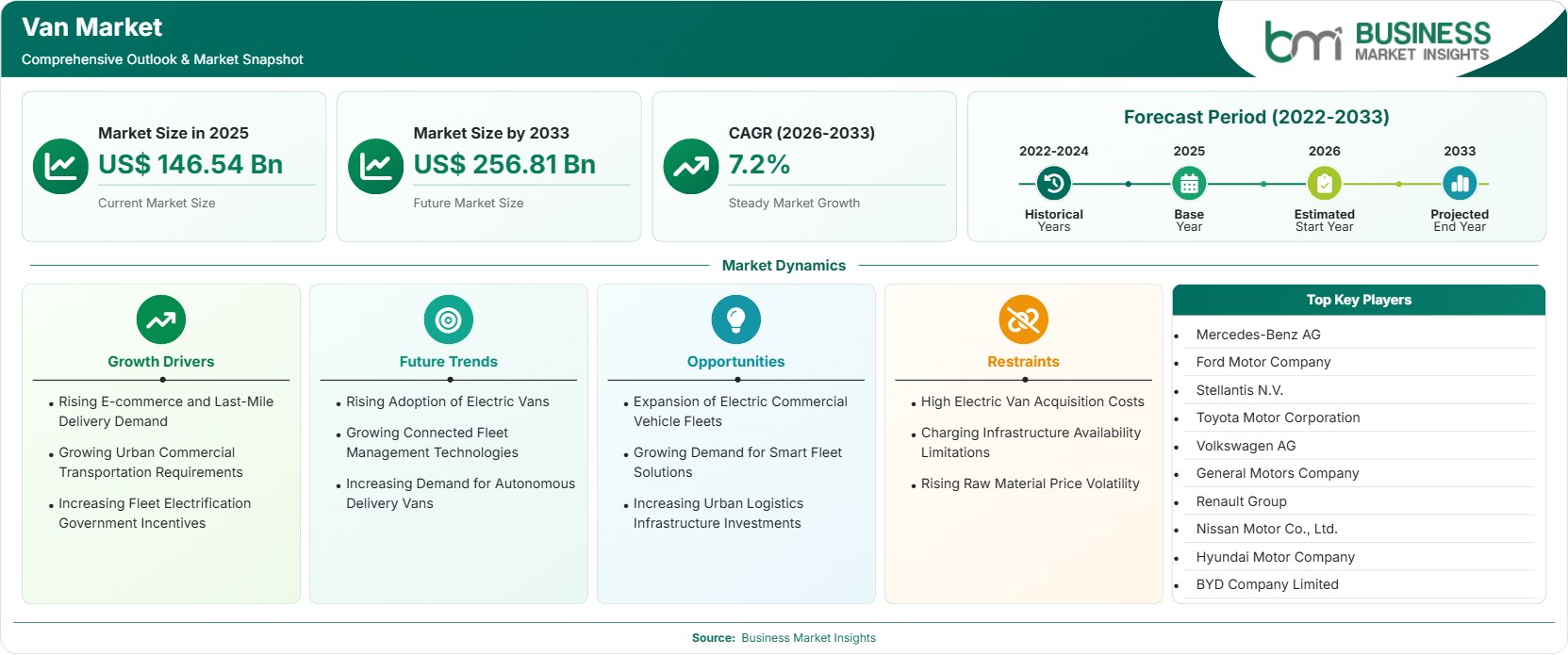
North America represents the largest regional market, accounting for 34%–37% of global revenue in 2025 while expanding at a CAGR of 6.8%–7.4% through 2026–2033. Strong demand from parcel delivery companies, commercial fleet replacement programs, and increasing electric commercial vehicle deployment continues to strengthen the Van Market share across the region. Fleet modernization, stricter emission standards, and investments in connected transportation technologies are supporting long-term industry expansion.
The expansion of delivery fleets for e-commerce businesses with electric and smart cargo vans will continue to help in achieving operational efficiencies and lowering costs in line with tightening environmental laws.
Fleet operators are replacing aging internal combustion vehicles with advanced electric and hybrid commercial vans equipped with telematics, predictive maintenance systems, and enhanced safety technologies to improve utilization rates.
Investments by public authorities in infrastructure for charging stations and clean transportation programs will continue incentivizing the electrification of fleets across municipalities, transport logistics companies, and passenger shuttle operators in the area.
Firms providing commercial leases are offering flexible financing and fleet management options that allow small and medium-sized enterprises to upgrade their fleets without requiring significant upfront capital.
US Van Market
The US is estimated to account for 29%-32% of global revenue in 2025 and is expected to witness a CAGR of 6.9%-7.5% in 2026-2033. Increased spending on warehouse automation and fulfillment centers is fueling demand for modern commercial vehicles. Moreover, sustainability goals set by enterprises are boosting the deployment of electric commercial vehicles.
National parcel delivery businesses are continually increasing their use of electric commercial vehicles thanks to the expansion of charging facilities and improved technologies for managing fleets.
Growth in healthcare logistics, food distribution, and mobile service businesses is increasing demand for customized commercial vans with enhanced storage and operational capabilities.
Federal and state incentives for zero-emission transportation continue to motivate fleet owners to phase out aging fleets and opt for electric alternatives with lower operating costs.
Advanced telematics, driver monitoring technologies, and predictive maintenance platforms are improving fleet utilization while reducing downtime across commercial transportation operations.
Europe Van Market
Europe’s share of the Van market will be 27%-30% in 2025, with a projected CAGR of 7.1%-7.8% through 2033. Stringent environmental regulations, low-emission zones, and increasing electrification of commercial vehicles will continue to boost demand. Germany leads in contributing to market growth, whereas the UK shows the fastest adoption rate in Europe.
Germany is leading regional production due to its strong capacity in automotive manufacturing and continued investments in electric commercial vehicles for industrial and logistical purposes.
The United Kingdom records one of the strongest growth rates as fleet operators rapidly replace diesel commercial vehicles with battery-electric alternatives for urban distribution.
France is increasing the provision of public incentives for electric fleets in commercial applications while promoting sustainable transport.
European manufacturers are strengthening regional battery supply chains and localized production facilities to improve supply security and reduce manufacturing costs.
Asia Pacific Van Market
Asia Pacific accounts for 28%–31% of the global share and is projected to witness the fastest CAGR of 8.1%–8.8% from 2026 to 2033. Growth in manufacturing operations, urban freight transportation, and favorable government policies on electric mobility are key factors fueling regional growth. China is the leading Van market, whereas India reports the fastest growth rate.
China continues leading commercial electric vehicle manufacturing through large-scale battery production, supportive industrial policies, and expanding domestic logistics demand.
India demonstrates rapid fleet expansion driven by booming e-commerce, infrastructure development, and increasing adoption of electric commercial vehicles for urban logistics.
Japan and South Korea remain important innovation hubs focused on advanced commercial vehicle technologies, connected mobility solutions, and hydrogen-powered transportation research.
Southeast Asian economies continue investing in logistics infrastructure, industrial parks, and commercial transportation modernization supporting long-term fleet expansion.
Rest of World Van Market
Rest of World contributes 8%–11% of global revenue in 2025 while expanding at a CAGR of 6.5%–7.2% through 2033. Latin America is benefiting from expanding logistics and retail distribution networks, whereas the Middle East and Africa are witnessing rising investments in commercial transportation supporting construction, municipal services, and public mobility.
The development of industry and infrastructure is spurring the modernization of fleets across developing nations, while government-supported sustainable transport programs are driving a rise in electric commercial vehicle ownership.
Brazil remains the largest Latin American Van market owing to expanding logistics operations, food distribution, and regional commercial transportation requirements.
Mexico benefits from increasing automotive manufacturing investments and cross-border trade activities supporting commercial fleet expansion.
The United Arab Emirates continues investing in smart mobility initiatives, sustainable transportation infrastructure, and commercial fleet modernization across logistics and municipal services.
South Africa is witnessing gradual adoption of connected commercial vehicles as logistics operators modernize fleets to improve operational efficiency and transportation reliability.