
Ship Breaking Market Outlook: Size, Share, Trends, Growth Analysis, Competitive Landscape & Forecast, 2026-2033

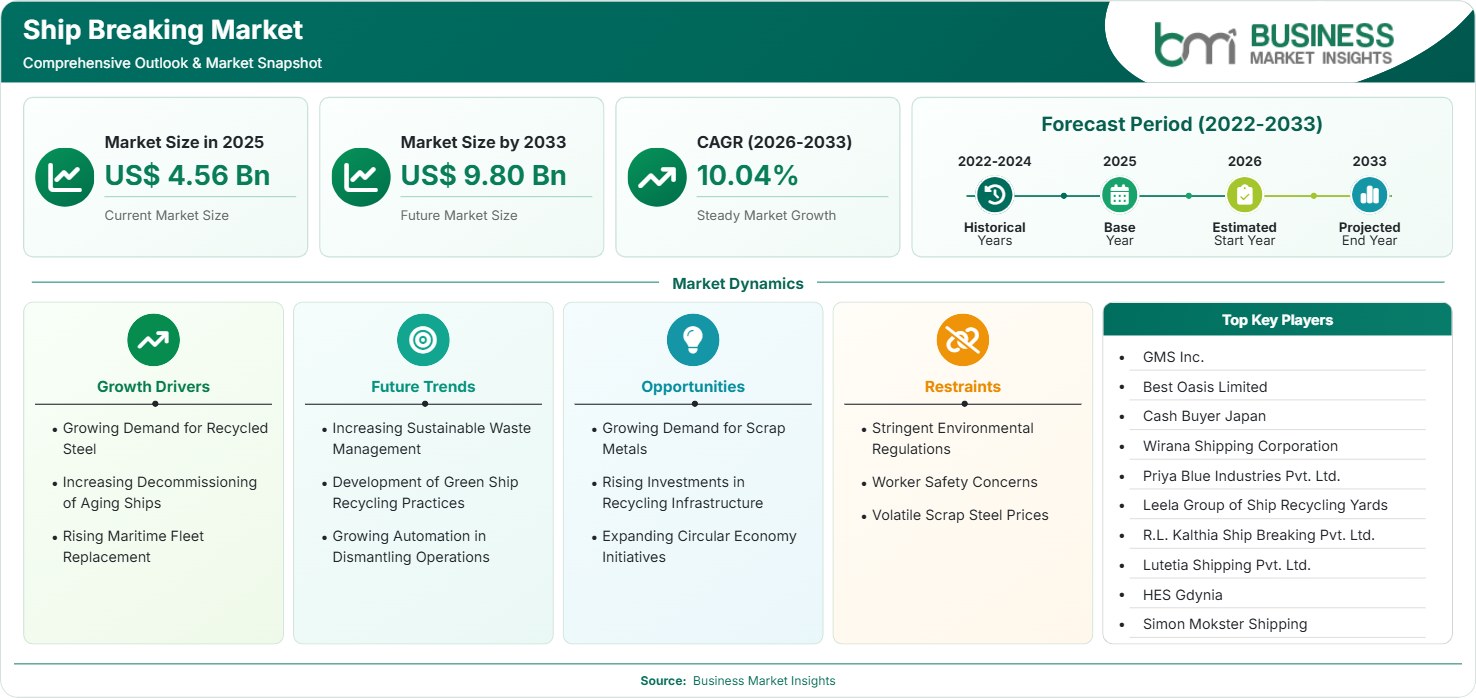
The Ship Breaking Market size was valued at US$ 4.56 Billion in 2025 and is projected to reach US$ 9.80 Billion by 2033, growing at a CAGR of 10.04% during 2026–2033, driven by rising demand for recycled steel, aging vessel decommissioning, circular economy initiatives, and investments in sustainable recycling infrastructure.

Report Coverage
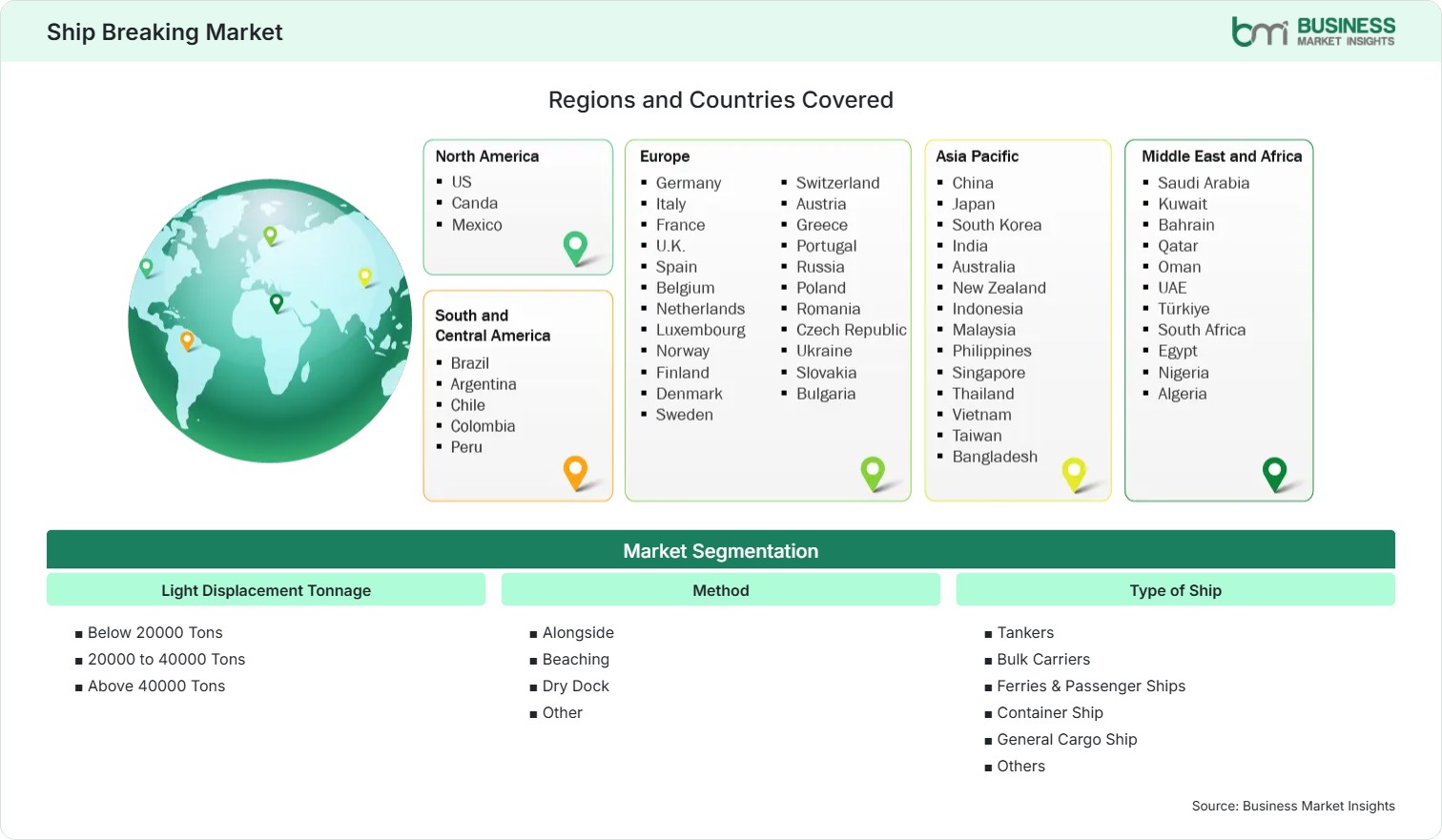
  • Light Displacement Tonnage: Below 20000 Tons, 20000 to 40000 Tons, Above 40000 Tons
  • Method: Alongside, Beaching, Dry Dock, Other
  • Type of Ship: Tankers, Bulk Carriers, Ferries & Passenger Ships, Container Ship, General Cargo Ship, Others
US$ 4.56 Bn Market size in 2025
US$ 9.80 Bn Market Size by 2033
10.04% CAGR, 2026 - 2033
2026-2033 Forecast Period

AI Overview

Ship Breaking Market Summary

  • North America Region: North America holds a share range of 12%–15% in 2025, growing with a CAGR range of 8%–10% during 2026–2033, supported by fleet modernization, environmental compliance, recycled material demand, and sustainable maritime practices. The US market demonstrates steady adoption with a CAGR range of 8%–9% through 2033, supported by naval recycling programs and infrastructure upgrades.
  • Fastest Growing Region: Asia Pacific represents the fastest growing region with a share range of 58%–62% in 2025, expanding at a CAGR range of 11%–13% during 2026–2033, driven by ship recycling capacity, lower processing costs, port development, and increasing circular economy investments.
  • Leading Segment: Bulk Carriers account for a leading share range of 32%–36% in 2025, advancing at a CAGR range of 10%–12% during 2026–2033, influenced by vessel retirement cycles, steel recovery requirements, and demand for efficient recycling operations.
  • High Growth Segment: Above 40,000 Tons LDT segment holds a share range of 28%–32% in 2025, growing at a CAGR range of 11%–13% during 2026–2033, supported by large vessel dismantling, material recovery, and upgraded recycling yards.
  • Key Market Opportunity: Expansion of certified recycling facilities, adoption of environmentally compliant dismantling methods, and rising demand for recovered metals create opportunities for sustainable maritime value chains and long-term industrial investments.
  • Major Market Players: GMS Inc., Best Oasis Limited, Cash Buyer Japan, Wirana Shipping Corporation, Priya Blue Industries Pvt. Ltd., Leela Group of Ship Recycling Yards, R.L. Kalthia Ship Breaking Pvt. Ltd., Lutetia Shipping Pvt. Ltd., HES Gdynia, Simon Mokster Shipping.
Strategic Insights

Ship Breaking Market: Strategic Insights

Ship Breaking Market Strategic Framework
FREE PDF
Request your free sample
Request free sample
Stakeholder View

Key Takeaways

  • Ship recycling ecosystems are becoming more structured as ship owners, recycling yards, steel processors, and regulatory bodies increasingly collaborate to improve material recovery efficiency and environmental compliance.
  • Large vessel dismantling provides significant growth potential because high-capacity ships generate substantial volumes of recoverable steel, machinery components, and reusable maritime equipment.
  • Technology adoption is shifting toward improved hazardous material management, digital inventory tracking, automated sorting systems, and safer dismantling processes that enhance operational productivity.
  • South Asian recycling hubs present strong investment opportunities due to established maritime infrastructure, skilled labor availability, and increasing adoption of internationally recognized recycling standards.
  • Strategic partnerships and consolidation activities are increasing as companies seek certified facilities, expanded recycling capacity, and access to growing volumes of decommissioned vessels.
  • Sustainable ship recycling practices are becoming a competitive differentiator as customers prioritize environmentally responsible dismantling partners and transparent material recovery processes.
Geographic Outlook

Ship Breaking Market Regional Highlights

North America Ship Breaking Market

North America holds a share range of 12%–15% in 2025 and is projected to expand at a CAGR range of 8%–10% during 2026–2033. The region benefits from naval vessel recycling programs, environmental regulations, and increasing demand for recovered metals. Ship Breaking Market share remains supported by established maritime infrastructure in the United States and Canada. Growing sustainability requirements are encouraging operators to adopt certified dismantling practices and advanced waste management systems.

  • The United States maintains a strong position through naval ship recycling activities, port infrastructure investments, and increasing focus on environmentally responsible vessel disposal practices.
  • Canada contributes through marine asset recycling initiatives, regulatory compliance improvements, and demand for recovered steel from decommissioned commercial and industrial vessels.
  • Regional operators are adopting improved hazardous material handling systems to align with international recycling standards and enhance operational efficiency.
  • Investments in modern recycling facilities are supporting safer dismantling methods and improving the competitiveness of North American recycling operations.

US Ship Breaking Market

The US market accounts for a share range of 10%–13% in 2025, growing at a CAGR range of 8%–9% during 2026–2033. The country benefits from military vessel recycling programs, commercial fleet renewal, and established regulatory oversight. Ship Breaking Market growth in the United States is influenced by demand for recycled materials and modernization of dismantling facilities. Increasing environmental requirements are encouraging operators to improve safety standards and waste recovery capabilities.

  • The US maritime sector generates recycling opportunities from aging vessels requiring compliant dismantling and resource recovery solutions.
  • Government-led naval vessel disposal programs provide stable demand for specialized recycling yards and certified processing capabilities.
  • Private ship owners are increasingly selecting environmentally responsible recycling partners to meet sustainability objectives and regulatory expectations.
  • Investment in advanced recycling technologies is improving operational transparency, worker safety, and material recovery performance.

Europe Ship Breaking Market

Europe represents a share range of 15%–18% in 2025 and is expected to grow at a CAGR range of 7%–9% during 2026–2033. The region emphasizes environmentally compliant recycling practices through strict maritime regulations and approved facility requirements. Countries including Norway, Germany, and the Netherlands demonstrate strong capabilities, while emerging opportunities exist in Turkey. Market share reflects increasing demand for sustainable vessel disposal solutions across European shipping networks.

  • European regulations promoting responsible ship recycling are encouraging owners to select certified facilities listed under approved recycling frameworks.
  • Turkey remains a significant regional recycling hub due to experienced yards, strategic location, and competitive dismantling capabilities.
  • Northern European countries are investing in circular economy models that improve steel recovery and reduce maritime waste generation.
  • European shipping companies are increasingly integrating recycling considerations into vessel lifecycle management strategies.

Asia Pacific Ship Breaking Market

Asia Pacific dominates with a share range of 58%–62% in 2025 and records a CAGR range of 11%–13% during 2026–2033. The region benefits from established ship recycling clusters, lower operational costs, skilled workforce availability, and high vessel dismantling capacity. Countries including India, Bangladesh, China, and Pakistan support regional expansion. Ship Breaking Market trends indicate rising investments in compliant recycling yards and sustainable material recovery technologies.

  • India continues expanding recycling capabilities through improved yard infrastructure, regulatory alignment, and adoption of safer dismantling practices.
  • Bangladesh remains a major recycling destination due to extensive coastal facilities and strong demand for recovered steel materials.
  • China supports recycling activities through industrial capabilities, shipbuilding expertise, and integrated steel processing networks.
  • Pakistan is strengthening recycling capacity through infrastructure improvements and increasing focus on environmentally controlled operations.

Rest of World Ship Breaking Market

South and Central America, along with Middle Eastern and African countries, represent a share range of 8%–11% in 2025 and are projected to grow at a CAGR range of 7%–9% during 2026–2033. Regional opportunities are supported by expanding maritime activities, port development, and increasing interest in recycled materials. Brazil, the UAE, and selected African coastal economies are exploring sustainable recycling infrastructure.

  • Brazil is developing maritime recycling opportunities through expanding industrial capabilities and demand for recovered metals from retired vessels.
  • Middle Eastern countries are evaluating ship recycling investments due to port expansion projects and growing maritime logistics activities.
  • African coastal economies present future opportunities through infrastructure development and increasing focus on resource recovery industries.
  • Regional governments are encouraging environmentally compliant recycling practices to attract international shipping companies and investors.
  • Improved technical training programs are supporting workforce development for safer and more efficient dismantling operations.
Global Market Geography
FREE PDF
Request your free sample
Request free sample
Segment Analysis

Ship Breaking Market Segmentation

Light Displacement Tonnage (LDT)

Light Displacement Tonnage (LDT) segmentation reflects vessel size, dismantling complexity, and material recovery potential across recycling facilities. This segment holds a share range of 28%–32% in 2025 and is projected to expand at a CAGR range of 9%–11% during 2026–2033. Ship Breaking Market scope is influenced by efficient steel recovery, infrastructure capability, and demand for handling diverse vessel categories.

  • Below 20,000 Tons: Smaller vessels support recycling activities through flexible dismantling requirements, lower processing complexity, and demand from regional recycling yards handling aging commercial fleets.
  • 20,000 to 40,000 Tons: Medium-sized vessels represent balanced recycling opportunities due to manageable dismantling processes, consistent material recovery volumes, and adoption across established ship recycling facilities.
  • Above 40,000 Tons: Large vessels create higher-value recycling opportunities through significant steel recovery, specialized yard requirements, and increasing demand for efficient dismantling infrastructure.

Method

Method-based segmentation highlights differences in operational approach, environmental performance, and infrastructure requirements among recycling facilities. The segment accounts for a share range of 22%–26% in 2025 and grows at a CAGR range of 10%–12% during 2026–2033. Ship Breaking Market trends indicate increasing preference for controlled dismantling methods that improve safety, resource recovery, and regulatory compliance.

  • Alongside: Alongside dismantling enables controlled vessel positioning and supports recycling operations requiring specialized equipment, skilled labor, and efficient material handling procedures.
  • Beaching: Beaching remains widely used due to lower infrastructure requirements, cost advantages, and suitability for high-volume recycling activities in coastal regions.
  • Dry Dock: Dry dock dismantling provides enhanced environmental control, improved worker safety, and better hazardous material management for complex vessel recycling projects.

Type of Ship

Ship type segmentation determines recycling demand based on vessel lifecycle, operational intensity, and replacement cycles. This segment represents a share range of 42%–46% in 2025 and is expected to grow at a CAGR range of 10%–12% during 2026–2033. Market trends are shaped by aging fleets, shipping cycles, and demand for recovered maritime materials.

  • Tankers: Tanker recycling demand is influenced by vessel age, regulatory requirements, and replacement cycles requiring specialized handling of complex maritime structures.
  • Bulk Carriers: Bulk carriers represent major recycling opportunities due to fleet aging, high steel content, and frequent replacement requirements across global shipping networks.
  • Ferries & Passenger Ships: Ferries and passenger vessels require specialized dismantling approaches due to passenger facilities, safety systems, and diverse onboard materials.
  • Container Ship: Container ship recycling demand is supported by fleet modernization, increasing vessel sizes, and replacement of older ships with efficient models.
  • General Cargo Ship: General cargo vessels contribute to recycling volumes through widespread global operations, aging fleets, and demand for recovered metals.
Market Forces

Ship Breaking Market Dynamics

Key Market Drivers

Growing Demand for Recycled Steel

The growing demand for recycled steel is propelling the Ship Breaking Market owing to the need for lower carbon raw materials. Recycled steel from disused ships not only helps in fulfilling industry needs but also cuts down dependency on primary manufacturing. Ship breaking industry dynamics are impacted by the growing popularity of circular economy, infrastructure building, and industry demands for secondary raw materials. Processing plants are enhancing their sorting and recycling abilities in order to boost their material recovery rates.

Increasing Decommissioning of Aging Ships

The retirement of aging vessels is creating consistent recycling opportunities as shipping companies replace older fleets with efficient models. Factor such as vessel age, maintenance costs, and environmental regulations influence decommissioning decisions. Increased global shipping trade activities have caused the growth of the number of ships that will need management at the end of their life cycle. Growth in the Ship Breaking Market will be boosted by higher disposal needs of bulk carriers, tankers, and containers. Upgrading of recycling facilities will happen due to the fact that recycling yards want to recycle larger ships. Environmental policies will lead to fleet renewal and thus more recycling ships.

Rising Maritime Fleet Replacement

Fleet replacement programs are accelerating demand for professional recycling services as shipping operators modernize their assets. Factors like fuel efficiency objectives, carbon emissions reductions, and new technologies are affecting how ships are replaced. The objectives set by the International Maritime Organization to reduce carbon emissions have prompted operators to replace old ships with newer models. Trends in the market include the increasing need for better facilities to break down sophisticated ship structures and extract useful materials. Recycling firms are adjusting themselves accordingly with better ways to dismantle ships and train their employees.

Key Market Opportunities

Growing Demand for Scrap Metals

The rising requirement for scrap metals across steel manufacturing and industrial sectors is creating new opportunities for recycling operators. Factor such as infrastructure expansion, resource conservation goals, and raw material supply pressures are increasing demand for recovered metals from dismantled vessels. Recycling plants may gain advantage from better sorting, processing, and distribution of their materials. Ship Breaking Market Forecasts reveal that advanced recycling infrastructure may improve the bottom line and contribute to the goals of the circular economy. Companies that are utilizing modern material recovery technology have the potential to take advantage of growing demand for secondary materials.

Rising Investments in Recycling Infrastructure

Investment in modern recycling infrastructure is creating opportunities for facilities to improve operational capacity, environmental compliance, and worker safety. Factor such as government initiatives, international maritime standards, and demand for certified recycling yards are encouraging infrastructure upgrades. Development in the areas of dismantling technology, systems to manage hazardous materials, and digital tracking is increasingly becoming key areas for investment. This will allow recycling firms to deal with larger ships without compromising on sustainability requirements. Expansion in infrastructure development in the Asia Pacific region and other new regions will create more growth opportunities for such firms.

Expanding Circular Economy Initiatives

Circular economy initiatives are encouraging maritime stakeholders to integrate recycling into vessel lifecycle planning. Factor such as sustainability commitments, material reuse objectives, and environmental reporting requirements are creating opportunities for certified recycling operators. Shipowners are considering end-of-life disposal issues while procuring vessels. Such a development is likely to lead to the rise in demand for transparency regarding the process of dismantling and recovery of materials. Circular economy-based recycling firms can boost their competitiveness by utilizing resources efficiently, generating less waste, and establishing collaborations with steel manufacturers.

Market Restraints and Challenges

Stringent Environmental Regulations

Factor: Increasing environmental regulations related to hazardous material handling, waste disposal, and recycling standards are raising operational requirements for ship recycling facilities. Impact: Compliance costs are increasing as companies invest in approved infrastructure, monitoring systems, and pollution control measures. International frameworks such as the Hong Kong International Convention are encouraging safer recycling practices but require substantial investment from operators. Smaller facilities may face challenges meeting certification requirements due to limited financial resources. However, adherence to regulations remains essential for improving industry credibility and attracting international shipping customers.

Worker Safety Concerns

Factor: Ship dismantling involves complex operations involving heavy structures, hazardous substances, and challenging working conditions, creating occupational safety risks. Impact: Companies must invest in protective equipment, workforce training, and safety management systems to reduce workplace incidents. Recycling facilities handling large vessels require specialized procedures for cutting, lifting, and material removal activities. Inadequate safety practices can result in regulatory penalties, operational disruptions, and reputational concerns. Increasing focus on responsible recycling is pushing operators to adopt improved safety frameworks.

Company Analysis

Competitive Landscape

The Ship Breaking Market analysis highlights a competitive environment shaped by recycling capacity, environmental compliance, material recovery expertise, and strategic partnerships. Leading companies are focusing on expanding certified facilities, improving dismantling technologies, and strengthening relationships with ship owners seeking sustainable end-of-life solutions.

Company Name

Overview

Products and Services relevant to this market

GMS Inc.

Global maritime services company specializing in vessel recycling, cash buying, and asset management solutions across international shipping markets.

Provides ship recycling services, vessel acquisition, recycling supervision, and sustainable dismantling support for commercial vessels.

Best Oasis Limited

Maritime recycling company supporting vessel acquisition and responsible recycling operations through established global shipping networks.

Offers ship recycling coordination, vessel purchasing services, and environmentally managed dismantling solutions for ship owners.

Cash Buyer Japan

Marine asset purchasing specialist involved in vessel acquisition and recycling market activities.

Provides cash buying services, vessel evaluation, and recycling support for end-of-life maritime assets.

Wirana Shipping Corporation

International ship recycling and cash buying company with extensive experience in maritime asset transactions.

Delivers vessel purchasing, recycling coordination, market intelligence, and sustainable ship disposal services.

Priya Blue Industries Pvt. Ltd.

Indian ship recycling company operating recycling yards with focus on compliant dismantling practices.

Provides vessel dismantling, steel recovery, machinery recycling, and environmentally responsible recycling solutions.

Leela Group of Ship Recycling Yards

Ship recycling operator based in India supporting maritime asset dismantling activities.

Offers vessel recycling, material recovery, and ship dismantling services through dedicated recycling facilities.

R.L. Kalthia Ship Breaking Pvt. Ltd.

Indian ship recycling company engaged in dismantling vessels and recovering reusable materials.

Provides ship breaking operations, steel processing, equipment recovery, and recycling yard services.

Lutetia Shipping Pvt. Ltd.

Maritime company involved in vessel recycling and related shipping asset activities.

Supports ship acquisition, recycling management, and end-of-life vessel processing solutions.

HES Gdynia

European maritime company associated with port and vessel handling activities.

Provides maritime infrastructure services, vessel handling support, and recycling-related operational capabilities.

Simon Mokster Shipping

Norwegian shipping company involved in maritime operations and vessel lifecycle management.

Supports offshore vessel operations, fleet management, and end-of-life vessel transition activities.

Trust & Transparency

Research Methodology

The market analysis combines proprietary research with secondary data from government agencies, company disclosures, regulatory filings, industry databases and expert interviews. Market estimates are validated through data triangulation, cross-market benchmarking and analyst review.

View Full Research Methodology

Questions Answered

Frequently Asked Questions

How can companies benefit from the Ship Breaking Market Report?

The report provides insights into regional opportunities, recycling trends, competitive developments, segmentation dynamics, and investment areas supporting strategic decisions for maritime stakeholders.

What technologies are improving ship recycling operations?

Digital inventory systems, hazardous material tracking, advanced cutting equipment, and improved waste management technologies are enhancing safety, efficiency, and transparency across modern recycling facilities.

Which ship type creates the highest recycling opportunities?

Bulk carriers and large commercial vessels generate substantial recycling opportunities due to high steel content, aging fleets, and frequent replacement cycles driven by operational efficiency and environmental compliance requirements.

How does ship recycling support sustainability objectives?

Ship recycling reduces maritime waste by recovering steel, machinery, and reusable components while lowering demand for primary raw materials. Responsible dismantling practices also support resource efficiency and environmental protection goals.

What factors are driving the Ship Breaking Market expansion?

Increasing vessel retirement, recycled steel demand, circular economy initiatives, and stricter environmental requirements are encouraging ship owners and recycling companies to adopt structured dismantling operations with improved material recovery systems.

Access the Full Ship Breaking Market Report

Get segment-level forecasts, regional estimates, competitive benchmarking, company profiles and downloadable Excel datasets.

Access the full Ship Breaking Market Report
350 pages PDF & Excel | 2026-08-07
Similar Research

Related Market Reports