
Genome Sequencing Market Outlook: Size, Share, Trends, Growth Analysis, Competitive Landscape & Forecast, 2026-2033

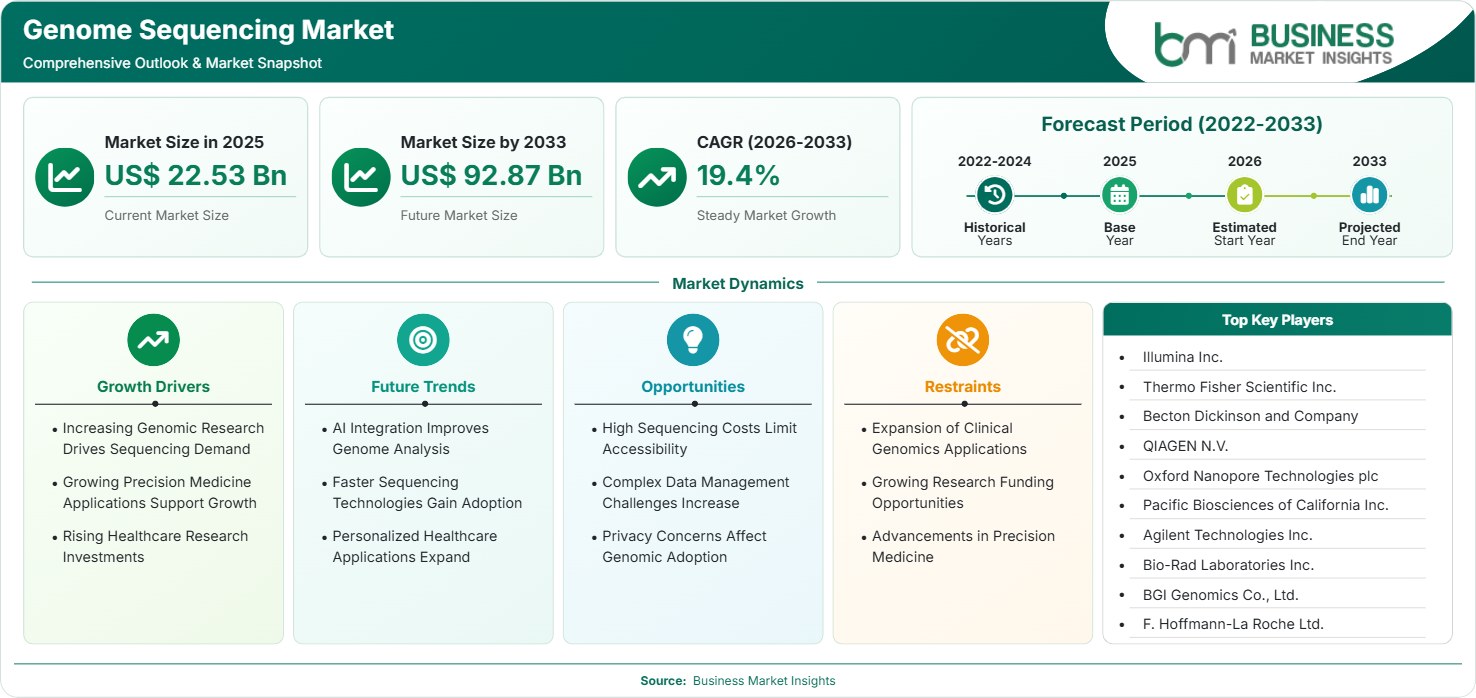
The Genome Sequencing Market size was valued at US$ 22.53 billion in 2025 and is projected to reach US$ 92.87 billion by 2033, growing at a CAGR of 19.4% during 2026–2033, driven by precision medicine adoption, declining sequencing costs, expanding genomic research, clinical diagnostics growth, and rising investments in biotechnology infrastructure.

Report Coverage
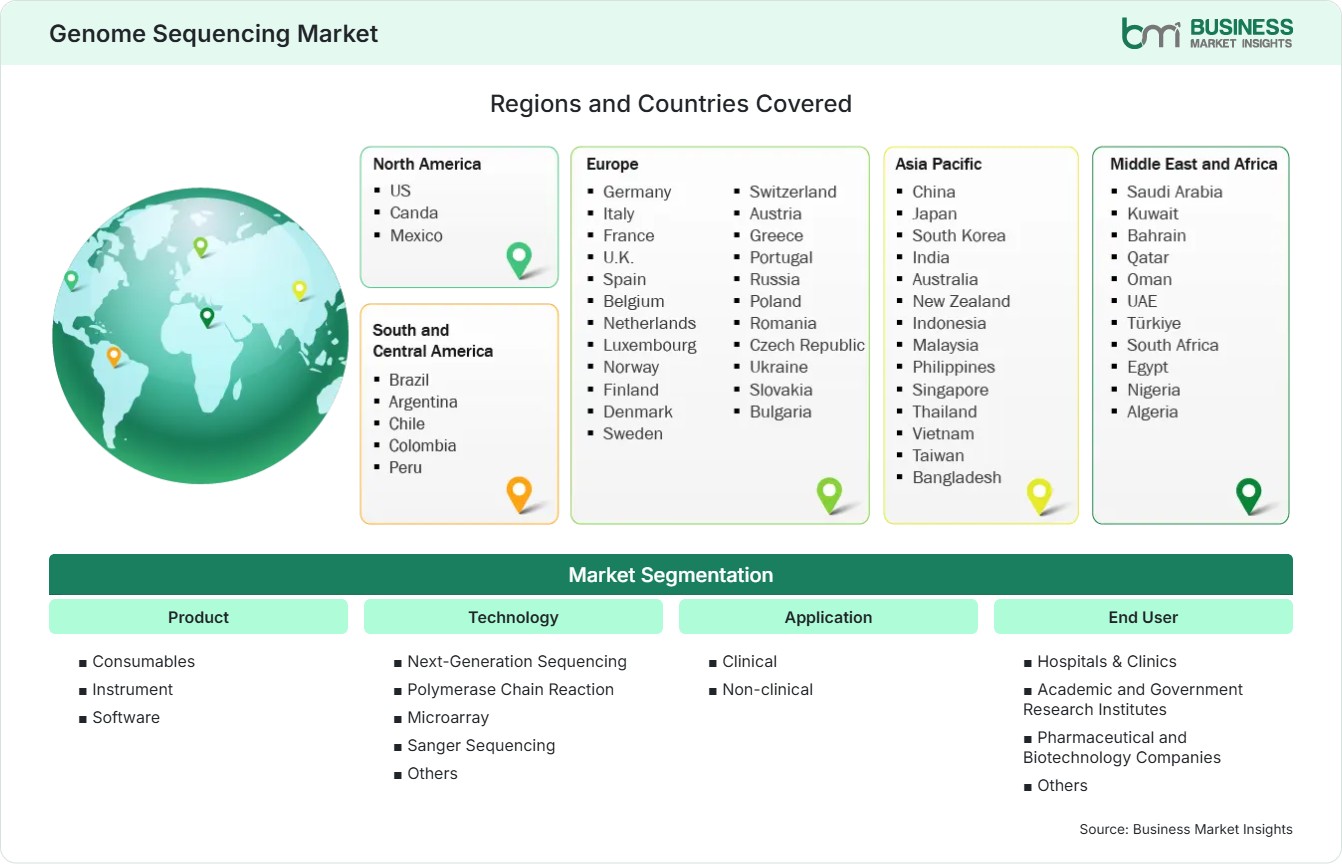
  • Product: Consumables, Instrument, Software
  • Technology: Next-Generation Sequencing, Polymerase Chain Reaction, Microarray, Sanger Sequencing, Others
  • Application: Clinical, Non-clinical
  • End User: Hospitals & Clinics, Academic and Government Research Institutes, Pharmaceutical and Biotechnology Companies, Others
US$ 22.53 Bn Market size in 2025
US$ 92.87 Bn Market Size by 2033
19.4% CAGR, 2026 - 2033
2026-2033 Forecast Period

01 AI Overview

Genome Sequencing Market Summary

  • North America Region: North America holds a market share of 38%–41% in 2025, growing with a CAGR of 18%–20% influenced by advanced healthcare infrastructure, genomic research funding, and precision medicine adoption. The US market demonstrates strong expansion through clinical sequencing applications and biotechnology investments, registering a CAGR of 18%–20% between 2026–2033.
  • Fastest Growing Region: Asia Pacific accounts for a share of 25%–28% in 2025, expanding with a CAGR of 21%–23% supported by increasing genomic research, healthcare modernization, biotechnology investments, and government-led sequencing initiatives.
  • Leading Segment: Next-Generation Sequencing represents the leading technology segment with a share of 68%–71% in 2025, expanding at a CAGR of 20%–22% due to broad clinical adoption, research applications, and high-throughput sequencing capabilities.
  • High Growth Segment: Software represents a high-growth product segment with a share of 12%–15% in 2025, achieving a CAGR of 22%–24% driven by genomic data management, bioinformatics advancement, and analytical requirements.
  • Key Market Opportunity: Expansion of personalized medicine, population genomics programs, clinical diagnostics, and AI-powered genomic analysis is creating significant opportunities for sequencing technology providers.
  • Major Market Players: Illumina Inc., Thermo Fisher Scientific Inc., Becton Dickinson and Company, QIAGEN N.V., Oxford Nanopore Technologies plc, Pacific Biosciences of California Inc., Agilent Technologies Inc., Bio-Rad Laboratories Inc., BGI Genomics Co., Ltd., and F. Hoffmann-La Roche Ltd.
02 Strategic Insights

Genome Sequencing Market: Strategic Insights

genome-sequencing-market-market-strategic-framework
FREE PDF
Request your free sample
Request free sample
03 Stakeholder View

Key Takeaways

  • The market ecosystem is expanding through collaboration among sequencing technology providers, biotechnology companies, healthcare institutions, research organizations, and pharmaceutical developers.
  • Clinical diagnostics, oncology research, rare disease identification, and personalized medicine applications represent major growth opportunities for sequencing solution providers.
  • Innovation is shifting toward long-read sequencing, automated workflows, cloud-based genomic analysis, and AI-supported interpretation platforms.
  • Asia Pacific provides a strong investment opportunity due to expanding genomic programs, biotechnology development, and increasing healthcare modernization initiatives.
  • Companies are strengthening competitive positions through technology launches, strategic collaborations, acquisitions, and expansion of sequencing capabilities.
  • Data management, bioinformatics infrastructure, and analytical solutions are becoming essential components of future genomic healthcare ecosystems.
04 Geographic Outlook

Genome Sequencing Market Regional Highlights

North America Genome Sequencing Market

North America represents the leading regional market with a share of 38%–41% in 2025 and is projected to grow at a CAGR of 18%–20% during 2026–2033. Strong research infrastructure, healthcare innovation, and genomic medicine adoption support regional leadership. Genome Sequencing Market share remains concentrated in the United States due to significant investment in biotechnology and advanced clinical sequencing applications.

  • The United States leads through genomic research programs and precision medicine initiatives.
  • Biotechnology companies are expanding sequencing applications across healthcare and research sectors.
  • Healthcare institutions are increasing adoption of genomic diagnostic technologies.
  • Canada is strengthening genomics capabilities through research investments and collaborations.

US Genome Sequencing Market

The US market holds a share of 34%–37% in 2025 and is estimated to register a CAGR of 18%–20% from 2026–2033. The country remains a major contributor due to advanced healthcare infrastructure, strong biotechnology presence, and extensive genomic research activities. Clinical applications, pharmaceutical research, and precision medicine initiatives continue supporting market development.

  • Genomic testing adoption is increasing across oncology and rare disease diagnostics.
  • Pharmaceutical companies are utilizing sequencing for drug discovery and development.
  • Research institutions are expanding genomic analysis capabilities.
  • Government-supported initiatives continue encouraging sequencing innovation.

Europe Genome Sequencing Market

Europe accounts for a share of 24%–27% in 2025 and is expected to expand at a CAGR of 18%–20% during 2026–2033. The region benefits from strong healthcare systems, genomic research networks, and increasing precision medicine initiatives. Germany, the United Kingdom, and France are leading markets, while Switzerland and the Netherlands show growing sequencing research activity.

  • Germany supports sequencing adoption through advanced healthcare research infrastructure.
  • The United Kingdom is expanding genomic medicine programs and clinical applications.
  • France is increasing investment in biotechnology and genomic research.
  • Switzerland and the Netherlands are strengthening life science innovation ecosystems.

Asia Pacific Genome Sequencing Market

Asia Pacific represents the fastest-growing regional market with a share of 25%–28% in 2025 and a projected CAGR of 21%–23% during 2026–2033. Genome Sequencing Market growth is driven by the expansion of biotechnology, healthcare modernization, and increasing investments in genomic research. China, India, Japan, and South Korea are key contributors, with China and India demonstrating strong development potential.

  • China is expanding sequencing infrastructure through government-supported genomic initiatives.
  • India is increasing genomic research capabilities through biotechnology investments.
  • Japan is advancing precision medicine and clinical sequencing applications.
  • South Korea is supporting genomic innovation through healthcare technology programs.

Rest of World Genome Sequencing Market

Rest of World markets represent a share of 8%–11% in 2025 and are projected to grow at a CAGR of 17%–19% during 2026–2033. Latin America, Middle East, and Africa markets are developing through healthcare infrastructure improvements, research investments, and increasing access to genomic technologies. Brazil, Mexico, UAE, and South Africa represent important regional contributors.

  • Brazil is expanding genomic research through healthcare modernization programs.
  • Mexico is improving access to molecular diagnostics and sequencing technologies.
  • UAE is investing in genomic healthcare initiatives and biotechnology infrastructure.
  • South Africa is developing sequencing capabilities through research collaborations.
global-market-geography
FREE PDF
Request your free sample
Request free sample
05 Segment Analysis

Genome Sequencing Market Segmentation

Product

The product segment includes consumables, instruments, and software used for genomic analysis, sequencing workflows, and data interpretation. The segment accounted for a share of 100% in 2025 and is projected to expand at a CAGR of 19%–21% between 2026–2034. Genome Sequencing Market scope is expanding as laboratories, healthcare providers, and research institutions adopt integrated sequencing solutions for clinical diagnostics, drug discovery, and genomic research applications.

  • Consumables: Consumables represent a major component due to recurring requirements for sequencing workflows. Growing testing volumes, research activities, and clinical applications support continued demand for sequencing materials.
  • Instrument: Instruments support sequencing operations through advanced platforms with improved accuracy, throughput, and automation. Increasing adoption among research institutions and healthcare organizations drives technological upgrades.
  • Software: Software solutions are gaining importance through genomic data analysis, interpretation, and workflow management. Increasing sequencing volumes are creating demand for advanced bioinformatics and analytical platforms.

Technology

The technology segment includes next-generation sequencing, polymerase chain reaction, microarray, Sanger sequencing, and other sequencing approaches. The segment represented a share of 100% in 2025 and is expected to grow at a CAGR of 19%–21% during 2026–2034. Advances in sequencing accuracy, speed, and data processing capabilities are influencing technology adoption across research and clinical environments.

  • Next-Generation Sequencing: Next-generation sequencing remains widely adopted due to high-throughput capabilities, broad applications, and improved sequencing efficiency across clinical and research workflows.
  • Polymerase Chain Reaction: Polymerase chain reaction supports targeted genomic analysis and diagnostic testing. Demand is influenced by established laboratory applications and molecular testing requirements.
  • Microarray: Microarray technology supports genomic profiling and genetic variation analysis. Adoption continues through applications in research studies, biomarker identification, and disease investigation.
  • Sanger Sequencing: Sanger sequencing remains relevant for targeted sequencing applications requiring high accuracy. Its established workflow supports use in validation and specialized genetic analysis.

Application

The application segment covers clinical and non-clinical uses of sequencing technologies across healthcare, research, and biotechnology sectors. The segment accounted for a share of 100% in 2025 and is forecast to expand at a CAGR of 19%–21% during 2026–2034. Increasing genomic adoption across diagnostics, research, and therapeutic development is supporting broader application growth.

  • Clinical: Clinical applications are expanding through disease diagnosis, genetic testing, oncology profiling, and personalized treatment planning. Growing precision healthcare adoption supports sequencing integration in medical workflows.
  • Non-clinical: Non-clinical applications include research, agriculture, biotechnology studies, and population genomics. Increasing academic and pharmaceutical research activities are supporting sequencing utilization.

End User

The end user segment includes hospitals & clinics, academic and government research institutes, pharmaceutical and biotechnology companies, and other organizations using sequencing technologies. The segment represented a share of 100% in 2025 and is projected to grow at a CAGR of 19%–21% between 2026–2034. Expanding genomic research and clinical implementation are supporting adoption.

  • Hospitals & clinics: Hospitals and clinics are increasing sequencing adoption for diagnostics, disease monitoring, and personalized healthcare applications. Growing clinical genomics integration supports demand for sequencing solutions.
  • Academic and Government Research institutes: Academic and government research institutes utilize sequencing technologies for genomic studies, population research, and scientific discoveries. Increased research funding supports technology adoption.
  • Pharmaceutical and Biotechnology companies: Pharmaceutical and biotechnology companies are adopting sequencing for drug discovery, biomarker development, and therapeutic research. Growing precision medicine initiatives are driving usage.
06 Market Forces

Genome Sequencing Market Dynamics

Key Market Drivers

Increasing Genomic Research Drives Sequencing Demand

Increasing genomic research activities are accelerating the adoption of sequencing technologies across academic institutions, biotechnology companies, and healthcare organizations. Researchers are utilizing sequencing platforms for genetic discovery, disease understanding, population studies, and therapeutic development. Growing investments in genomic initiatives are supporting demand for advanced sequencing tools and analytical solutions. The market growth is influenced by expanding research applications, technological improvements, and increasing availability of sequencing platforms. The Genome Sequencing Market trends indicate greater adoption of high-throughput sequencing, automation, and integrated bioinformatics solutions. As genomic datasets continue expanding, organizations are investing in technologies that improve sequencing efficiency, accuracy, and interpretation capabilities across multiple research and healthcare applications.

Growing Precision Medicine Applications Support Growth

The increase in precision medicine utilization scenarios will continue to fuel the demand for genome sequencing tools, helping with personalized diagnostics, choosing appropriate treatments, and assessing patient risks related to certain diseases. Genomic information is being used to inform medical decisions in various ways, especially in cancer treatment, rare diseases, and genetic disorders. Sequencing information is used in the pharmaceutical industry to develop personalized drugs and discover biomarkers. Improved sequencing accuracy and advances in data analysis make it easier to use genomic information in clinical settings. The rising adoption of genomics in healthcare creates long-term demand for sequencing technologies.

Rising Healthcare Research Investments

Growing investments in healthcare research are helping to develop sequencing technologies by providing more funding for genomics research projects, biotechnological development, and clinical studies. Governments, research facilities, and private entities are investing in knowledge regarding genetic systems and healthcare innovations. Growing investment will drive the development of technologies for sequencing, data analysis, and interpretation. Pharmaceutical organizations are increasing their genomics research to fast-track their therapeutic development process. Growing research infrastructure in the developed and developing countries has created new growth prospects for sequencing players.

Key Market Opportunities

Expansion of Clinical Genomics Applications

The rise in the clinical applications of genomics is creating several business opportunities as healthcare professionals increasingly use sequencing technologies to diagnose diseases, plan treatments, and monitor illnesses. The fields of oncology, rare disease treatment, and genetic disease testing are examples where genomics is playing an increasing role. Healthcare facilities and diagnostic centers are investing in infrastructure that enables sequencing, thereby providing personalized healthcare services. Businesses involved in developing sequencing technologies that are reliable and efficient could gain from growing clinical use.

Growing Research Funding Opportunities

Opportunities to finance research are increasing and contributing to the development of new sequencing technologies and genomics research around the globe. Research projects concerning genetics, diseases, and therapeutics are being funded by public organizations, governments, and the private sector. The increase in funding helps academic and commercial establishments utilize new sequencing technologies and analytical tools. Research collaborations are helping to accelerate innovation and improve access to new technologies. Organizations offering scalable sequencing technologies and integrated data analytics systems can capitalize on increased research activities, supporting the genome sequencing market forecast through broader technology adoption and expanding genomics research initiatives.

Advancements in Precision Medicine

The evolution of precision medicine is presenting new opportunities for the sequencing industry, driven by the growing need for personalized health care solutions. Advanced techniques in genomics are helping healthcare professionals recognize disease markers, optimize treatment plans, and create personalized medicines. Pharmaceutical companies are using sequencing data to discover drugs and conduct clinical trials. Advances in bioinformatics, artificial intelligence, and sequencing tools are aiding the interpretation of complex genomic data. With the move toward personalized medicine, there will be an increasing need for genomics technologies.

Market Restraints and Challenges

High Sequencing Costs Limit Accessibility

Factor: High sequencing costs associated with advanced instruments, consumables, maintenance, and specialized workflows create affordability challenges. Impact: Increased costs may prevent implementation in smaller medical establishments, scientific laboratories, and developing countries. While sequencing prices have been decreasing over time, large investments are required to implement comprehensive genomics facilities. The organizations need well-trained specialists and technology to conduct sequencing successfully. The companies are working on optimization and automation to reduce costs.

Complex Data Management Challenges Increase

Factor: Complex genomic data generation and management requirements pose challenges for storage, processing, analysis, and interpretation. Impact: Increasing sequencing volumes can increase infrastructure requirements and operational complexity for organizations. Healthcare providers and research institutions require advanced bioinformatics systems, secure data platforms, and specialized expertise to manage genomic information. Data privacy and interoperability considerations further influence implementation strategies. Companies are developing cloud-based solutions, analytical platforms, and automated workflows to address these challenges. Effective data management capabilities will remain essential for improving sequencing efficiency and supporting wider adoption of genomic technologies.

07 Company Analysis

Competitive Landscape

The Genome Sequencing Market analysis highlights a competitive ecosystem comprising sequencing technology developers, biotechnology companies, diagnostic solution providers, and research technology organizations. Market participants are focusing on next-generation sequencing platforms, long-read sequencing capabilities, bioinformatics solutions, and workflow automation. Companies are strengthening their positions through product innovation, strategic collaborations, research partnerships, and expansion of genomic analysis capabilities to support applications across clinical diagnostics, pharmaceutical research, and precision medicine.

Company Name

Overview

Products and Services relevant to this market

Illumina Inc.

Global genomics company specializing in sequencing technologies and solutions.

Next-generation sequencing platforms, consumables, genomic analysis systems, and informatics solutions.

Thermo Fisher Scientific Inc.

Life science company providing analytical and biotechnology technologies.

Sequencing instruments, reagents, consumables, software, and genomic research solutions.

Becton Dickinson and Company

Medical technology company supporting diagnostics and life science applications.

Molecular analysis solutions, laboratory technologies, and genomic research products.

QIAGEN N.V.

Molecular diagnostics company providing sample and genomic technologies.

Sequencing workflows, sample preparation products, bioinformatics solutions, and molecular testing tools.

Oxford Nanopore Technologies plc

Biotechnology company developing nanopore-based sequencing technologies.

Long-read sequencing platforms, portable sequencing devices, and genomic analysis solutions.

Pacific Biosciences of California Inc.

Biotechnology company focused on advanced sequencing technologies.

Long-read sequencing platforms, genomic analysis systems, and research solutions.

Agilent Technologies Inc.

Life science technology company providing analytical solutions.

Genomic analysis tools, sequencing workflows, reagents, and laboratory technologies.

Bio-Rad Laboratories Inc.

Life science company providing research and diagnostic technologies.

Molecular biology solutions, sequencing support products, and laboratory analysis tools.

BGI Genomics Co., Ltd.

Genomics company providing sequencing and healthcare solutions.

Sequencing services, genomic testing, research solutions, and bioinformatics platforms.

F. Hoffmann-La Roche Ltd.

Healthcare company developing diagnostics and therapeutic solutions.

Molecular diagnostics, sequencing technologies, genomic testing, and clinical solutions.

08 Industry Activity

Recent Developments

May 2025

QIAGEN N.V. strengthened its clinical genomics and sequencing data interpretation capabilities through the acquisition of Genoox, adding the AI-powered Franklin genomic interpretation platform to QIAGEN Digital Insights. The acquisition enhances QIAGEN’s ability to support next-generation sequencing (NGS) workflows and clinical genomic testing applications.

May 2025

F. Hoffmann-La Roche Ltd. announced a strategic collaboration with Broad Clinical Labs to develop and evaluate clinical and research applications using Roche’s SBX sequencing technology. The collaboration initially focuses on whole-genome sequencing applications for critically ill newborns and their parents, aiming to accelerate the adoption of advanced genomic testing in clinical settings.

February 2025

F. Hoffmann-La Roche Ltd. unveiled its new Sequencing by Expansion (SBX) technology, a next-generation sequencing (NGS) platform designed to deliver ultra-rapid, scalable, and flexible sequencing capabilities. The technology aims to accelerate genomic analysis and expand the application of sequencing across research and clinical settings.

January 2025

Illumina Inc. expanded its sequencing technology portfolio with updates to the NovaSeq X Series, including the launch of a single-flow-cell sequencing system, software enhancements, and new sequencing kits. The upgrades improve sequencing flexibility, data quality, and support for large-scale genomics and multiomics applications.

10 Trust & Transparency

Research Methodology

The market analysis combines proprietary research with secondary data from government agencies, company disclosures, regulatory filings, industry databases and expert interviews. Market estimates are validated through data triangulation, cross-market benchmarking and analyst review.

View Full Research Methodology

11 Questions Answered

Frequently Asked Questions

What insights does the Genome Sequencing Market Report provide?

The report provides analysis of market size, segmentation trends, regional developments, competitive strategies, technological advancements, and factors influencing future industry expansion.

What challenges affect genome sequencing adoption?

High sequencing costs, complex data management requirements, infrastructure needs, privacy concerns, and the requirement for specialized expertise can influence adoption across organizations.

How is genome sequencing supporting healthcare advancement?

Genome sequencing supports disease diagnosis, personalized medicine, biomarker discovery, drug development, and genetic research by enabling detailed analysis of genomic information.

Which technology segment dominates the market?

Next-generation sequencing represents a leading technology segment due to broad adoption in clinical diagnostics, research applications, pharmaceutical development, and high-throughput genomic analysis.

What factors are driving market growth?

The market is driven by increasing genomic research, precision medicine adoption, healthcare research investments, expanding clinical applications, and advancements in sequencing technologies and bioinformatics solutions.

Access the Full Genome Sequencing Market Report

Get segment-level forecasts, regional estimates, competitive benchmarking, company profiles and downloadable Excel datasets.

Access the full Genome Sequencing Market Report
350 pages PDF & Excel | 2026-07-30