
DNA Sequencing Market Outlook: Size, Share, Trends, Growth Analysis, Competitive Landscape & Forecast, 2026-2033

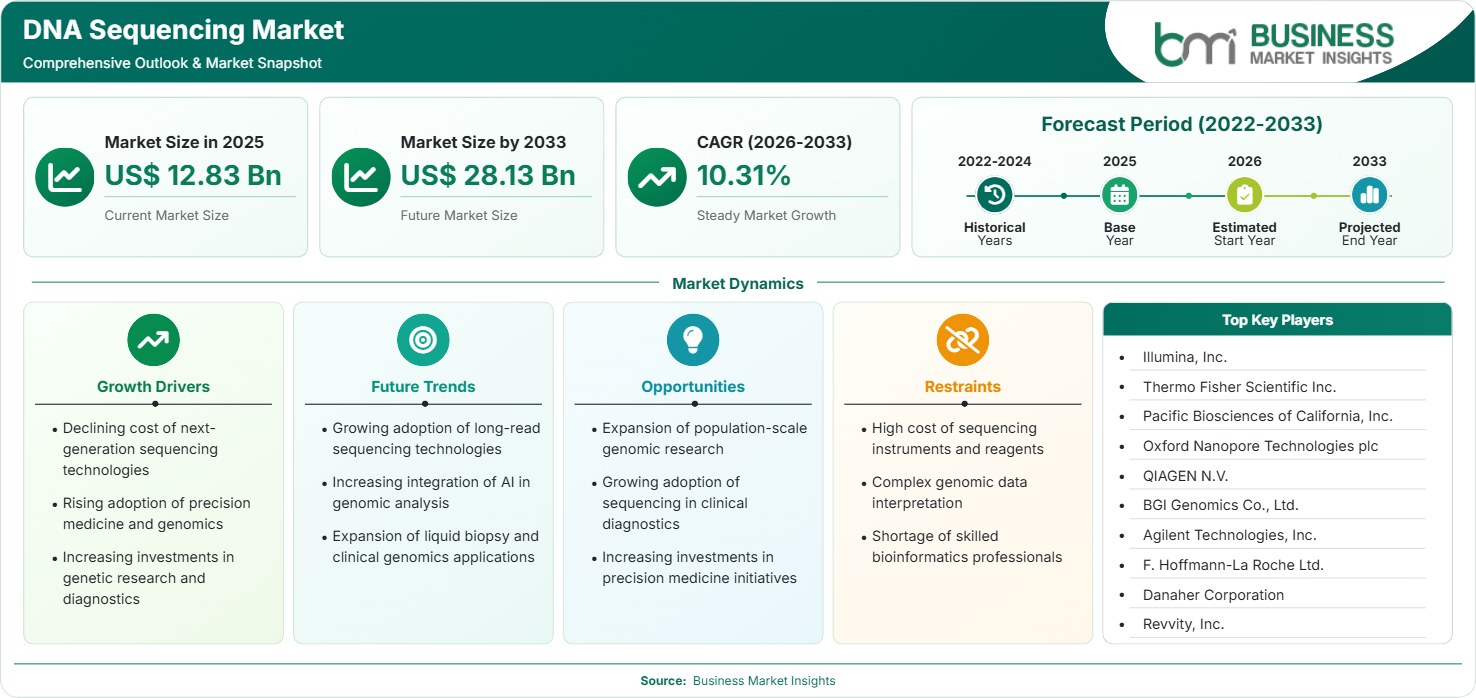
The DNA Sequencing Market size was valued at US$ 12.83 Billion in 2025 and is projected to reach US$ 28.13 Billion by 2033, growing at a CAGR of 10.31% from 2026 to 2033. Expanding precision medicine adoption, declining sequencing costs, rising genomic research investments, and growing clinical diagnostic applications are creating opportunities for technology providers and healthcare stakeholders.

Report Coverage
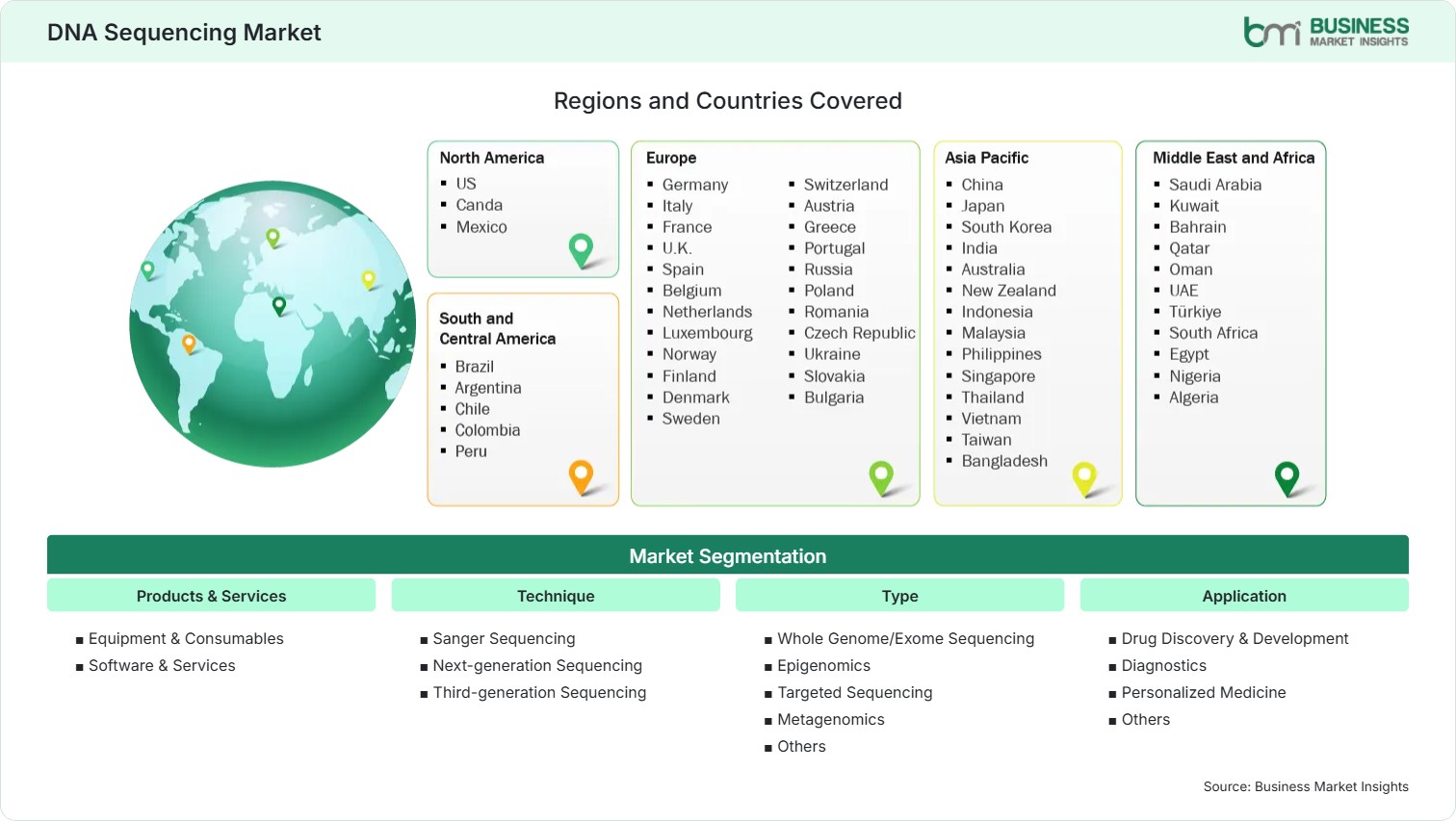
  • Products & Services: Equipment & Consumables, Software & Services
  • Technique: Sanger Sequencing, Next-generation Sequencing, Third-generation Sequencing
  • Type: Whole Genome/Exome Sequencing, Epigenomics, Targeted Sequencing, Metagenomics, Others
  • Application: Drug Discovery & Development, Diagnostics, Personalized Medicine, Others
  • End-user: Biotechnology & Pharmaceutical Companies, Diagnostic Centers, Academic & Research Institutes, Others
US$ 12.83 Bn Market size in 2025
US$ 28.13 Bn Market Size by 2033
10.31% CAGR, 2026 - 2033
2026-2033 Forecast Period

AI Overview

DNA Sequencing Market Summary

  • North America Region: North America accounted for approximately 38%–42% market share in 2025 and is projected to expand at a 9.8%–10.4% CAGR during 2026–2033. Growth is supported by strong genomic research infrastructure, pharmaceutical R&D investments, precision medicine programs, and widespread adoption of advanced sequencing platforms. The U.S. represents the dominant regional contributor due to extensive biotechnology activity, government-funded genomics initiatives, and clinical sequencing adoption, with an estimated 10.0%–10.6% CAGR during 2026–2033.
  • Fastest Growing Region: Asia Pacific held approximately 27%–31% market share in 2025 and is expected to grow at a 11.2%–11.8% CAGR from 2026 to 2033. Growth is driven by expanding healthcare infrastructure, increasing genomic research activities, rising biotechnology investments, and growing adoption of sequencing technologies in diagnostics and personalized medicine.
  • Leading Segment: Next-generation Sequencing accounted for approximately 72%–76% market share in 2025 and is expected to grow at a 10.5%–11.0% CAGR during 2026–2033. Broad applications in research, diagnostics, oncology, and population genomics continue to support segment leadership.
  • High Growth Segment: Personalized Medicine applications are projected to register 11.5%–12.2% CAGR during 2026–2033, supported by increasing use of genomic information for treatment selection, biomarker discovery, and targeted therapeutic development.
  • Key Market Opportunity: Expansion of population-scale genomic programs, increasing clinical adoption, and pharmaceutical partnerships are creating opportunities for sequencing companies to develop scalable platforms and data-driven healthcare solutions.
  • Major Market Players: Illumina, Inc., Thermo Fisher Scientific Inc., Pacific Biosciences of California, Inc., Oxford Nanopore Technologies plc, QIAGEN N.V., BGI Genomics Co., Ltd., Agilent Technologies, Inc., F. Hoffmann-La Roche Ltd., Danaher Corporation, and Revvity, Inc.
Strategic Insights

DNA Sequencing Market: Strategic Insights

DNA Sequencing Market Strategic Framework
FREE PDF
Request your free sample
Request free sample
Stakeholder View

Key Takeaways

  • The sequencing ecosystem is evolving from research-focused applications toward integrated healthcare solutions involving diagnostics, therapeutic development, and population-level genomic analysis.
  • Next-generation sequencing remains the primary growth engine due to broad adoption across oncology research, infectious disease testing, inherited disorder analysis, and pharmaceutical development.
  • Innovation priorities include faster sequencing workflows, portable sequencing devices, improved bioinformatics platforms, and artificial intelligence-enabled genomic interpretation systems.
  • Asia Pacific provides strong expansion potential due to increasing healthcare investments, growing biotechnology capabilities, and rising adoption of genomic diagnostics in emerging economies.
  • Strategic partnerships, acquisitions, and collaborations between sequencing companies, pharmaceutical firms, and healthcare providers are increasing to accelerate commercialization of genomic applications.
  • Data management capabilities are becoming a critical competitive factor as sequencing volumes increase, and healthcare organizations require secure genomic analysis platforms.
Geographic Outlook

DNA Sequencing Market Regional Highlights

North America DNA Sequencing Market

North America accounted for approximately 38%–42% of the DNA Sequencing Market in 2025 and is projected to expand at a 9.8%–10.4% CAGR during 2026–2033. The region benefits from advanced healthcare infrastructure, strong biotechnology ecosystems, significant research funding, and widespread adoption of precision medicine. The U.S. dominates regional demand due to extensive genomic research programs, pharmaceutical investments, and increasing clinical sequencing applications.

  • The U.S. remains the leading regional contributor due to strong investments in genomic research, biotechnology innovation, clinical diagnostics, and precision medicine programs.
  • Biotechnology and pharmaceutical companies are increasing sequencing adoption for drug discovery, biomarker identification, and development of targeted therapies.
  • Government-supported genomic initiatives are accelerating research collaborations and expanding access to large-scale sequencing databases.
  • Healthcare providers are adopting sequencing-based diagnostics to improve disease detection, treatment selection, and personalized healthcare delivery.

US DNA Sequencing Market

The United States represented approximately 80%–84% of North America's DNA Sequencing Market share in 2025 and is expected to grow at a 10.0%–10.6% CAGR from 2026 to 2033. The market is supported by strong biotechnology investment, increasing demand for molecular diagnostics, and growing adoption of genomic medicine

  • Pharmaceutical companies are increasing sequencing-based research activities to support drug discovery, clinical trials, and companion diagnostic development.
  • Diagnostic laboratories are expanding genomic testing capabilities as healthcare providers adopt molecular approaches for disease management.
  • Academic institutions continue investing in sequencing platforms to support biomedical research and population genomics initiatives.
  • Technology providers are improving sequencing speed, accuracy, and affordability to expand adoption beyond specialized research environments.

Europe DNA Sequencing Market

Europe accounted for approximately 23%–27% market share in 2025 and is expected to grow at a 9.5%–10.2% CAGR during 2026–2033. The region benefits from strong academic research networks, healthcare digitization, and increasing adoption of genomic medicine in DNA Sequencing Market. The United Kingdom, Germany, and France are leading markets due to government-supported sequencing programs and advanced healthcare systems. Investments in rare disease research, cancer genomics, and personalized medicine are strengthening regional demand.

  • The United Kingdom leads genomic adoption through national sequencing initiatives and collaborations between healthcare organizations and research institutions.
  • Germany is expanding sequencing applications across diagnostics, pharmaceutical research, and biotechnology development.
  • France is increasing investments in genomic medicine programs to improve disease diagnosis and treatment strategies.
  • European research collaborations are supporting large-scale genomic studies and cross-border healthcare innovation.
  • Regulatory frameworks supporting molecular diagnostics are encouraging commercialization of sequencing-based healthcare solutions.

Asia Pacific DNA Sequencing Market

Asia Pacific represented approximately 27%–31% of the in 2025 and is projected to achieve the fastest growth at a 11.2%–11.8% CAGR during 2026–2033. Growth is supported by increasing healthcare expenditure, expanding biotechnology sectors, rising research activities, and growing demand for advanced diagnostics. China, Japan, India, and South Korea are key markets, with increasing investments in genomic infrastructure and precision medicine programs in DNA Sequencing Market forecasts.

  • China is expanding sequencing capabilities through large-scale genomic research programs, biotechnology investments, and healthcare modernization initiatives.
  • Japan is adopting sequencing technologies across oncology, rare disease research, and personalized healthcare applications.
  • India is witnessing increased demand for genomic diagnostics due to expanding healthcare access and biotechnology development.
  • South Korea is investing in precision medicine and genomic research infrastructure to strengthen healthcare innovation.
  • Southeast Asian countries are gradually adopting sequencing technologies through research partnerships and healthcare modernization programs.

Rest of World DNA Sequencing Market

The Rest of World region accounted for approximately 8%–12% of global revenue in 2025 and is projected to grow at a 10.5%–11.2% CAGR from 2026–2033. Latin America, the Middle East, and Africa are gradually expanding sequencing adoption due to improving healthcare infrastructure, increasing disease research activities, and growing interest in molecular diagnostics in DNA Sequencing Market. Brazil, Saudi Arabia, and South Africa are emerging markets investing in genomic capabilities.

  • Brazil is increasing genomic research activities through academic collaborations and healthcare-focused sequencing applications.
  • Saudi Arabia is investing in genomic initiatives to support precision medicine and population health research.
  • South Africa is expanding molecular diagnostic capabilities through healthcare modernization and research programs.
  • Middle Eastern countries are adopting sequencing technologies to strengthen rare disease and inherited disorder analysis.
  • International partnerships are supporting infrastructure development and improving access to advanced genomic technologies.
Global Market Geography
FREE PDF
Request your free sample
Request free sample
Segment Analysis

DNA Sequencing Market Segmentation

Products & Services

Products and services segmentation reflect the increasing adoption of sequencing platforms, consumables, data analysis solutions, and support services across research and clinical environments. Equipment & Consumables accounted for approximately 68%–72% market share in 2025 and is projected to grow at a 9.9%–10.5% CAGR during 2026–2033. Demand is supported by recurring consumable requirements, technology upgrades, and expansion of sequencing applications in healthcare and research in DNA Sequencing Market.

  • Equipment & Consumables: Sequencing instruments, reagents, and consumables remain essential components due to recurring demand from research laboratories, diagnostic centers, and pharmaceutical companies.
  • Software & Services: Software and service adoption is increasing as organizations require advanced bioinformatics platforms, genomic data interpretation, cloud-based analysis, and workflow management solutions.

Technique

Technique segmentation is driven by technological improvements, sequencing accuracy, throughput capabilities, and application-specific requirements. Next-generation Sequencing accounted for approximately 72%–76% DNA Sequencing market share in 2025 and is expected to grow at a 10.5%–11.0% CAGR during 2026–2033.

  • Sanger Sequencing: Sanger sequencing continues to support targeted genetic analysis, validation studies, and smaller-scale research applications requiring high accuracy.
  • Next-generation Sequencing: Next-generation sequencing dominates due to high throughput capabilities, cost efficiency, and widespread use in genomic research, diagnostics, and personalized medicine.
  • Third-generation Sequencing: Third-generation sequencing is gaining attention through long-read capabilities, improved structural variant detection, and applications requiring complex genomic analysis.

Type

Type segmentation highlights diverse genomic applications across research, diagnostics, and therapeutic development. Whole Genome/Exome Sequencing accounted for approximately 35%–39% market share in 2025 and is projected to grow at a 10.2%–10.8% CAGR during 2026–2033 due to increasing use in disease research, inherited disorder analysis, and population genomics in DNA Sequencing Market.

  • Whole Genome/Exome Sequencing: These approaches are widely used for identifying genetic variations, supporting disease research, and enabling comprehensive genomic analysis.
  • Epigenomics: Epigenomic sequencing adoption is increasing due to rising research interest in gene regulation, disease mechanisms, and therapeutic target identification.
  • Targeted Sequencing: Targeted sequencing is preferred for focused genomic analysis, biomarker identification, and clinical applications requiring cost-effective testing.
  • Metagenomics: Metagenomic sequencing is expanding in infectious disease research, microbiome analysis, environmental studies, and pathogen identification applications.

Application

Application segmentation is expanding as sequencing technologies move from research environments into clinical and commercial healthcare applications. Drug Discovery & Development accounted for approximately 32%–36% market share in 2025 and is expected to grow at a 10.4%–10.9% CAGR during 2026–2033. Pharmaceutical companies are increasing sequencing adoption to identify biomarkers, improve clinical trials, and accelerate development of targeted therapies.

  • Drug Discovery & Development: Pharmaceutical companies use sequencing for target identification, biomarker discovery, and understanding disease pathways during therapeutic development.
  • Diagnostics: Sequencing-based diagnostics are expanding due to improved disease detection, genetic testing capabilities, and increasing adoption of molecular healthcare approaches.
  • Personalized Medicine: Personalized medicine applications are growing as genomic information supports treatment selection, patient stratification, and precision healthcare strategies.

End-user

End-user segmentation is influenced by increasing research investments, clinical adoption, and expanding genomic applications. Biotechnology & Pharmaceutical Companies accounted for approximately 38%–42% market share in 2025 and are projected to grow at a 10.1%–10.7% CAGR during 2026–2033. These organizations are major users of sequencing technologies for drug development, biomarker analysis, and clinical research activities.

  • Biotechnology & Pharmaceutical Companies: These companies represent major adopters due to extensive use of sequencing in drug discovery, clinical trials, and therapeutic research.
  • Diagnostic Centers: Diagnostic centers are increasing sequencing adoption for genetic testing, oncology diagnostics, and advanced disease detection services.
  • Academic & Research Institutes: Research institutions utilize sequencing platforms for genomics studies, biological research, and population-level genetic investigations.
Market Forces

DNA Sequencing Market Dynamics

Key Market Drivers

Declining cost of next-generation sequencing technologies

Reduced sequencing costs are accelerating adoption across research institutions, diagnostic laboratories, and healthcare providers by improving accessibility to genomic analysis. Advances in sequencing chemistry, automation, miniaturized platforms, and competitive technology development have lowered the cost per genome while increasing processing efficiency. The market growth is supported by wider implementation of next-generation sequencing in oncology, rare disease testing, and population genomics programs. These cost improvements are also shaping DNA Sequencing Market trends as companies focus on scalable platforms, higher throughput capabilities, and simplified workflows. Lower barriers to adoption are enabling smaller laboratories and emerging healthcare markets to integrate sequencing technologies into routine research and diagnostic applications.

Rising adoption of precision medicine and genomics

The trend towards incorporating genomic information into decision-making in clinical practice has increased demand for sequencing technologies in healthcare. Precision medicine initiatives take advantage of genomic data to classify diseases, target them, and treat them. The pharmaceutical industry is expanding the use of sequencing technologies in drug development and biomarker identification. Sequencing is being used in clinics by healthcare providers to diagnose cancer, inherited diseases, and rare diseases with greater diagnostic accuracy. With the rise in popularity of targeted therapy and data-driven healthcare, there are good prospects for sequencing technologies.

Increasing investments in genetic research and diagnostics

Growing investment in genetics, biomedicine, and molecular diagnosis is fueling the need for state-of-the-art sequencing technologies. Governments, universities, and companies are sponsoring extensive genome projects to enhance the comprehension of diseases and foster innovations in health care delivery. Biopharmaceutical companies are growing their research budgets to discover molecular targets and design drugs through genetic discoveries. Diagnostic centers are also building their sequencing capacity to carry out advanced tests for cancers, infectious diseases, and genetic disorders. Increasing genomic datasets, better bioinformatics infrastructure, and increased collaborations between research institutions and technology companies are facilitating greater adoption of sequencing.

Key Market Opportunities

Expansion of population-scale genomic research

Large genomic research projects have opened up considerable scope for sequencing technology vendors through increased use of high throughput sequencing and data analytics services. Government and other research institutions are setting up population genomics projects to study risks of diseases, genetic diversity, and healthcare trends. Such projects need sequencing technology with capacity, security, and data analysis solutions. Developing countries are also pursuing their own genomic projects to enhance their healthcare research and precision medicine capabilities. Companies that can provide sequencing technologies along with effective workflow and data analysis tools will be in a good position to take advantage of this trend.

Growing adoption of sequencing in clinical diagnostics

Clinical diagnostics have begun to utilize sequencing technologies more frequently, thus creating an environment that favors the companies that are able to develop highly accurate, fast, and affordable tests. The use of genomics in diagnostic services has started to increase because of the profiling of cancer, the identification of rare diseases, the analysis of infectious diseases, and genetic diseases. This trend has been made possible due to developments in sequencing technologies and due to the regulatory advancements. The companies operating in the field of diagnostics have begun to make investments on the automation of their workflows, on interpretation tools, and laboratory integration tools.

Increasing investments in precision medicine initiatives

The growing investment in precision medicine programs is creating opportunities for sequencing companies to collaborate with healthcare organizations, pharma companies, and research institutions. Precision medicine uses genomic data to inform treatment decisions and help identify patient-specific risks. The government is providing support for projects based on the personalized health care ecosystem, while pharmaceutical companies are integrating sequencing into their therapy development. The growing need for diagnostic tools and therapies targeted at specific genetic conditions will drive innovations in sequencing technology and analysis software.

Market Restraints and Challenges

High cost of sequencing instruments and reagents

Factor: Sequencing platforms require substantial investments in advanced instruments, specialized reagents, maintenance services, and laboratory infrastructure, creating financial challenges for smaller healthcare organizations and research facilities. Impact: High initial costs can limit adoption among budget-constrained institutions and delay implementation of sequencing technologies in emerging markets. Although the costs of sequencing have fallen in time, modern instruments need considerable costs of operation due to consumption and data handling. This issue is being solved by companies via scalable solutions, subscriptions, and improved work processes. Nevertheless, the affordability of technologies is a crucial issue for widespread usage in diagnostic labs, educational organizations, and hospitals.

Complex genomic data interpretation

Factor: Sequencing generates large volumes of complex genomic data requiring advanced bioinformatics tools, skilled professionals, and accurate interpretation frameworks. Impact: Limited availability of specialized expertise and challenges in translating genomic findings into clinical decisions can restrict adoption, particularly in healthcare settings with limited analytical capabilities. Data storage requirements, privacy considerations, and interpretation standardization also create operational challenges. Companies are investing in artificial intelligence-based analysis platforms, automated workflows, and cloud-based solutions to simplify genomic interpretation. Improving accessibility to analytical tools and strengthening workforce capabilities will remain important for expanding sequencing adoption across clinical, research, and commercial applications.

Company Analysis

Competitive Landscape

The competitive landscape is defined by sequencing platform manufacturers, biotechnology companies, diagnostic solution providers, and genomic data technology firms. The DNA Sequencing Market analysis highlights competition around sequencing accuracy, throughput improvement, bioinformatics capabilities, clinical applications, and strategic collaborations to expand genomic adoption.

Company Name

Overview

Products and Services relevant to this market

Illumina, Inc.

Leading genomic technology company specializing in sequencing platforms and genomic analysis solutions.

Next-generation sequencing systems, consumables, genomic workflows, and sequencing services.

Thermo Fisher Scientific Inc.

Life sciences company providing sequencing technologies and laboratory solutions worldwide.

Ion Torrent sequencing platforms, reagents, instruments, and genomic research solutions.

Pacific Biosciences of California, Inc.

Biotechnology company focused on high-accuracy long-read sequencing technologies.

Single-molecule sequencing platforms, consumables, and genomic analysis solutions.

Oxford Nanopore Technologies plc

Genomics company developing portable and real-time sequencing technologies.

Nanopore sequencing platforms, consumables, and data analysis solutions.

QIAGEN N.V.

Molecular diagnostics company offering sample preparation and genomic analysis technologies.

Sequencing workflows, molecular testing solutions, and bioinformatics platforms.

BGI Genomics Co., Ltd.

Genomics company providing sequencing services and research solutions globally.

High-throughput sequencing services, genomic testing, and bioinformatics solutions.

Agilent Technologies, Inc.

Life sciences company supporting genomic research and diagnostic applications.

Sample preparation systems, sequencing solutions, and genomic analysis technologies.

F. Hoffmann-La Roche Ltd.

Healthcare company providing diagnostics and personalized medicine solutions.

Molecular diagnostics, sequencing workflows, and genomic testing solutions.

Danaher Corporation

Life sciences and diagnostics company operating through advanced technology businesses.

Genomic analysis platforms, molecular diagnostics, and laboratory solutions.

Revvity, Inc.

Technology company providing solutions for diagnostics, research, and biotechnology applications.

Genomic analysis tools, sequencing support technologies, and laboratory solutions.

Trust & Transparency

Research Methodology

The market analysis combines proprietary research with secondary data from government agencies, company disclosures, regulatory filings, industry databases and expert interviews. Market estimates are validated through data triangulation, cross-market benchmarking and analyst review.

View Full Research Methodology

Questions Answered

Frequently Asked Questions

How does the DNA Sequencing Market Report support industry participants?

The report provides analysis of technology developments, competitive strategies, regional expansion opportunities, application trends, and market challenges, helping stakeholders evaluate investments and strategic decisions in the evolving genomics ecosystem.

What role does long-read sequencing play in genomic research?

Long-read sequencing enables detailed analysis of complex genetic regions, structural variations, and genomic patterns that may be difficult to detect using traditional methods. It is increasingly used in research areas requiring comprehensive genome analysis.

Why are pharmaceutical companies investing in sequencing technologies?

Pharmaceutical companies are using sequencing technologies to identify drug targets, discover biomarkers, improve clinical trial design, and develop personalized therapies. Genomic insights help companies understand disease mechanisms and improve efficiency during therapeutic development.

How is artificial intelligence influencing genomic sequencing?

Artificial intelligence is improving genomic data analysis by enabling faster interpretation of complex sequencing results, identifying genetic patterns, and supporting clinical decision-making. AI-based bioinformatics platforms are helping researchers and healthcare providers manage increasing volumes of genomic information.

What factors are accelerating DNA sequencing market adoption in healthcare?

Increasing demand for precision medicine, improved genomic diagnostics, declining sequencing costs, and rising investment in biotechnology research are accelerating adoption. Healthcare providers are increasingly using sequencing to support disease detection, treatment selection, and personalized healthcare strategies.

Access the Full DNA Sequencing Market Report

Get segment-level forecasts, regional estimates, competitive benchmarking, company profiles and downloadable Excel datasets.

Access the full DNA Sequencing Market Report
350 pages PDF & Excel | 2026-08-07
Similar Research

Related Market Reports