Gas Hydrates Market Regional Highlights
North America Gas Hydrates Market
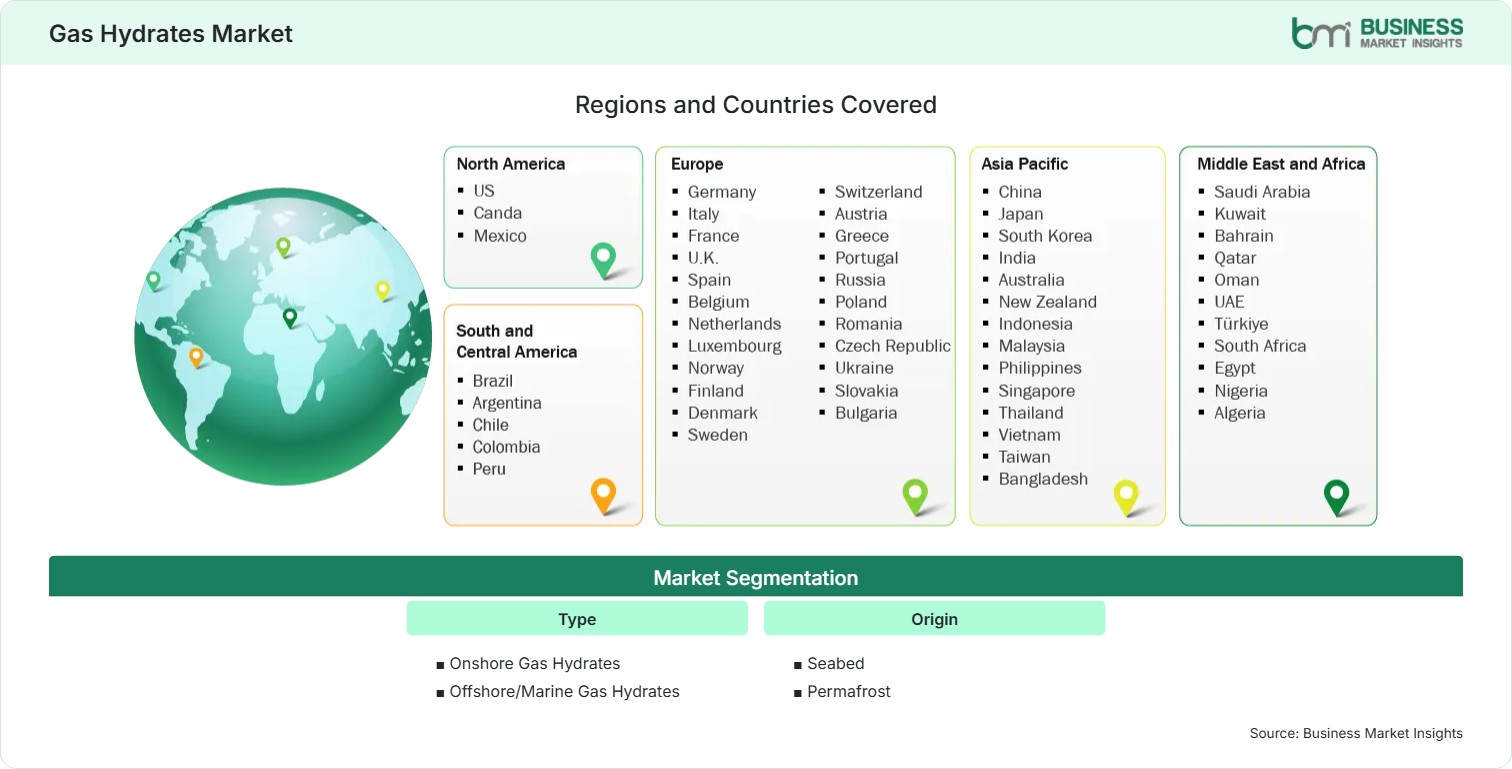
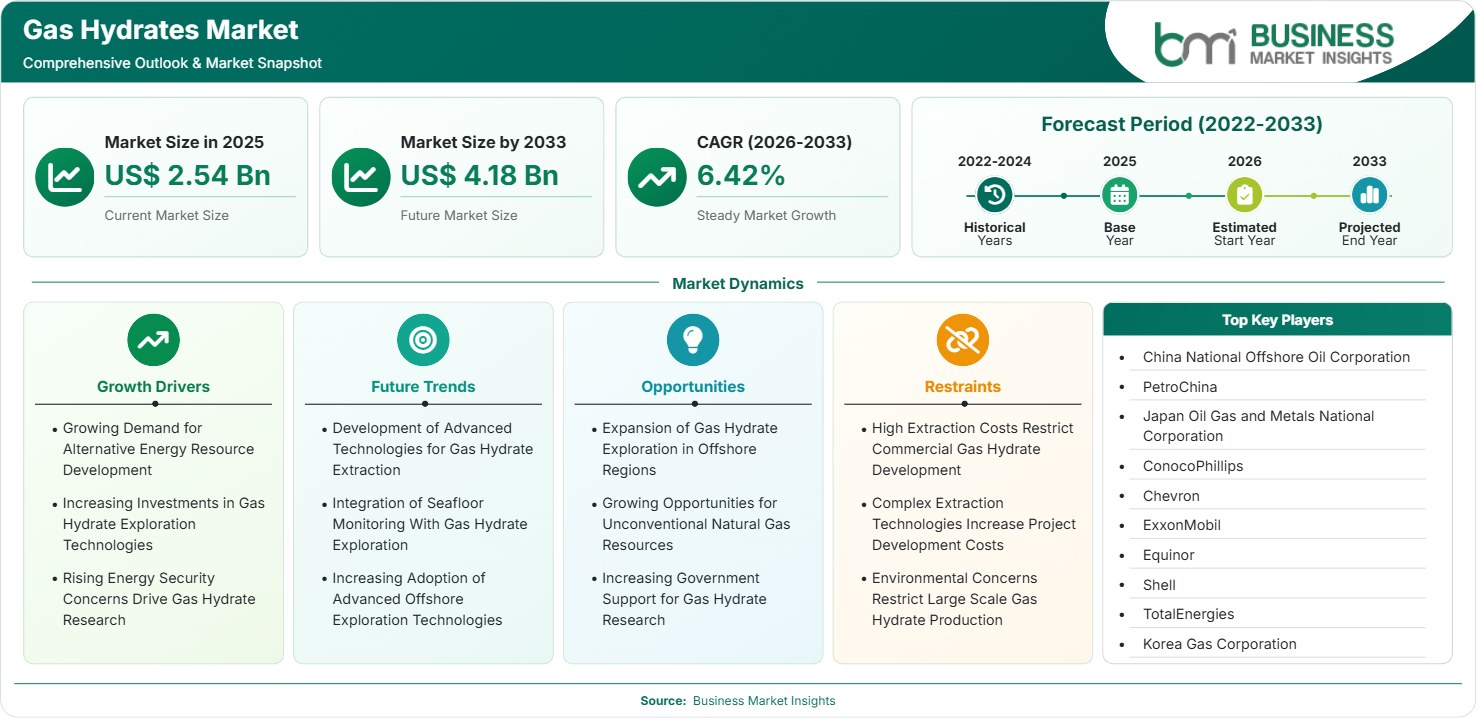
North America held 28%–31% share in 2025 and is projected to grow at a CAGR of 6.2%–6.7% during 2026–2033. The region benefits from advanced offshore exploration capabilities, research infrastructure, and experience in unconventional energy development. The Gas Hydrates Market share is supported by government-funded studies and technological expertise in methane resource assessment. The United States remains the leading contributor due to marine exploration programs, research partnerships, and energy security initiatives.
- The U.S. is conducting gas hydrate studies focused on resource evaluation, production technologies, and environmental impact assessment.
- Canada is evaluating Arctic permafrost hydrate resources due to its extensive northern geological formations.
- Energy companies are applying advanced exploration technologies to improve understanding of hydrate reservoirs.
US Gas Hydrates Market
The U.S. accounted for 60%–65% of North America’s share in 2025 and is expected to grow at a CAGR of 6.4%–6.9% during 2026–2033. The country maintains a strong position due to government research programs, offshore geological studies, and advanced energy technology capabilities. Continued investment in methane hydrate assessment is supporting knowledge development and improving potential commercialization pathways.
- Research institutions are collaborating with energy companies to evaluate offshore methane hydrate deposits.
- Advanced drilling and reservoir technologies are improving understanding of extraction feasibility.
- Energy security priorities are supporting continued investment in unconventional gas resource research.
Europe Gas Hydrates Market
Europe accounted for 12%–15% share in 2025 and is projected to grow at a CAGR of 5.8%–6.3% during 2026–2033. Regional activity is focused on scientific research, Arctic resource studies, and energy diversification initiatives. Norway, the United Kingdom, and Germany represent important markets due to offshore expertise and research capabilities. Environmental considerations and transition toward lower-carbon energy systems influence regional gas hydrate development strategies.
- Norway is leveraging offshore expertise for marine geological research and energy resource evaluation.
- European research institutions are studying hydrate behavior and environmental implications.
- Offshore technology providers are supporting advanced exploration and monitoring activities.
- Regulatory focus remains important for future commercial development pathways.
Asia Pacific Gas Hydrates Market
Asia Pacific represented 42%–45% share in 2025 and is expected to register a CAGR of 7.0%–7.5% during 2026–2033. The region leads market activity due to significant offshore hydrate deposits, energy demand growth, and government-supported exploration programs. Japan, China, India, and South Korea are major contributors. Increasing focus on domestic energy resources is encouraging research into methane hydrate extraction technologies.
- Japan continues investing in marine gas hydrate research through national energy development programs.
- China is advancing offshore hydrate exploration and pilot production initiatives.
- India is evaluating hydrate resources in offshore sedimentary basins.
- South Korea is supporting methane hydrate research to improve energy resource understanding.
Rest of World Gas Hydrates Market
Rest of World accounted for 10%–12% share in 2025 and is projected to grow at a CAGR of 6.0%–6.5% during 2026–2033. South America, the Middle East, and Africa are exploring unconventional gas opportunities through geological studies and resource assessments. Countries with offshore exploration capabilities are evaluating methane hydrate potential as part of long-term energy strategies.
Growing interest in alternative gas resources is encouraging international research collaboration and technology sharing.
- South American countries are evaluating marine geological resources and offshore energy potential.
- African coastal regions are conducting geological assessments to understand resource availability.
- Middle Eastern energy companies are monitoring emerging unconventional gas technologies.
- International partnerships are supporting research and exploration capability development.