Market Summary
Executive Summary and Global Market Analysis
Exhaust heat recovery systems are engineered solutions that capture thermal energy from engine exhaust gases and convert it into usable mechanical or electrical power. By utilizing energy that would otherwise be lost, these systems contribute to improved fuel economy and enhanced vehicle efficiency. Their application has gained attention across the automotive sector as manufacturers seek practical methods to optimize energy utilization while supporting compliance with evolving environmental and operational performance requirements.
Regulatory initiatives for reducing fuel consumption and vehicle emissions are driving the thermal energy recovery market. Automotive manufacturers are incorporating thermal energy recovery technologies into their existing vehicle platforms in order to improve performance with little or no vehicle modification. The market will also benefit from the need for more cost-effective improvements in vehicle efficiency across both passenger and commercial vehicles. As transportation systems continue to evolve, heat recovery systems will remain of interest in maximizing energy usage and improving the performance of vehicles in general.
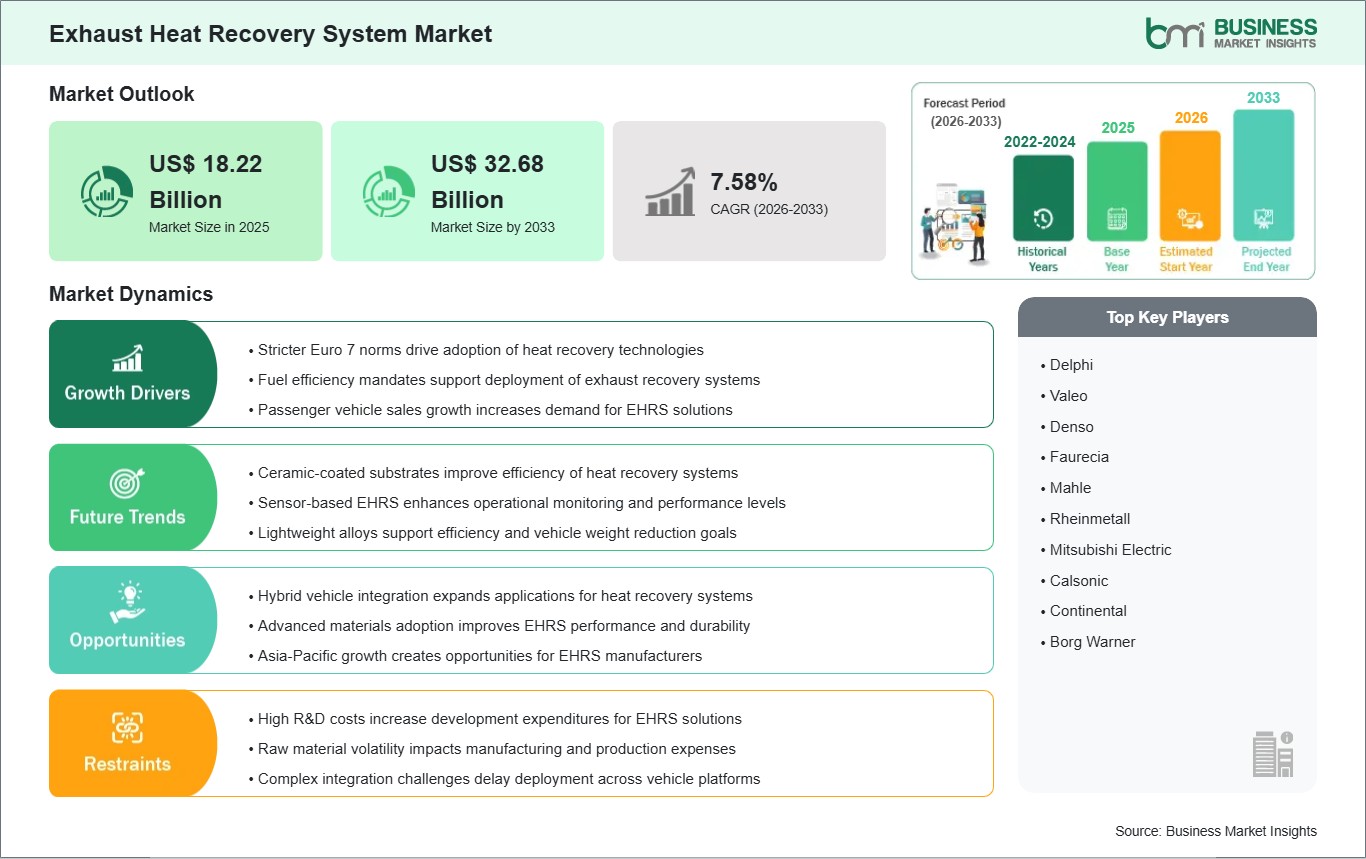
The technology segments of the thermal energy recovery market include EGR (exhaust gas recirculation) systems, turbochargers, and thermoelectric generators. These three technologies serve specific purposes; EGR technologies are used for managing emissions, turbochargers use exhaust to create more power from the engine, and thermoelectric generators convert heat to electricity. The thermal energy recovery market is made up of products used by passenger vehicles and by commercial vehicles, however, demand for these products is focused on OEM (original equipment manufacturer) manufacturing where system integration can be improved at the same time as vehicle design and manufacturing.
Developments in technology will continue to focus on increased thermal conversion efficiency, reduced complexity of systems, and improved compatibility with hybrid vehicle designs. Manufacturers are making ongoing investments in engineering development efforts to recover as much exhaust energy as possible for different operating conditions. Competitive activity will consist of new product development, integration know-how and performance improvements. These developments will affect the overall market environment and will support expanded acceptance of exhaust heat recovery technology in all areas of the automotive industry.
Segment Analysis
Exhaust Heat Recovery System Market Segmentation
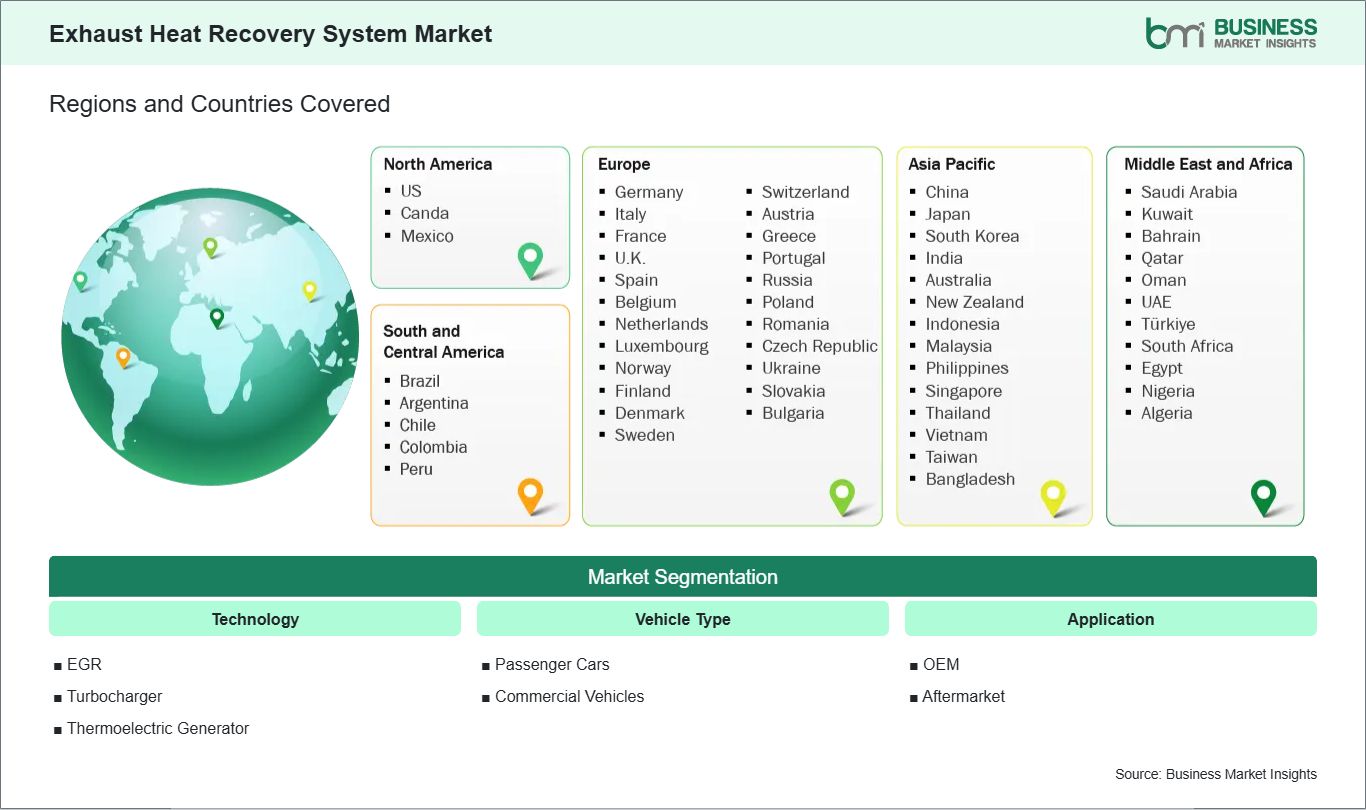
The exhaust heat recovery system market is segmented based on technology, vehicle type, and application, reflecting the industry's focus on energy efficiency enhancement, emission reduction, and advanced thermal management solutions across automotive platforms.
By Platform
- EGR - Facilitates emission control by recirculating exhaust gases into the engine system.
- Turbocharger - Utilizes exhaust energy to improve engine efficiency and power output.
- Thermoelectric Generator - Converts waste heat into electrical energy for auxiliary vehicle functions.
By Vehicle Type
- Passenger Cars - Incorporate compact recovery systems to enhance fuel economy performance.
- Commercial Vehicles - Benefit from higher exhaust heat availability for efficient energy recovery.
By Application
- OEM - Enables optimized system integration during vehicle manufacturing and assembly.
- Aftermarket - Addresses replacement needs and retrofit opportunities for existing vehicles.
Market Forces
Exhaust Heat Recovery System Market Drivers and Opportunities
Fuel Efficiency Mandates
The stringent regulations on fuel economy continue to affect how vehicles are engineered in all parts of the world. Manufacturers are investigating new technologies to improve their ability to utilize energy while at the same time delivering the performance levels anticipated by consumers. One of those technologies is known as an exhaust heat recovery (EHR) system and provides a solution to utilize thermal (heat) energy that would otherwise be wasted by converting this unused energy into active energy output. As compliance requirements continue to increase, thermal recovery technology becomes a more important consideration when designing new vehicles.
The impact of EHR systems is not limited to compliance with regulations; they also impact both operational economics and sustainability goals and, as a result, the auto manufacturers are continually evaluating and looking for new technologies that can provide measurable gains in overall efficiency without requiring significant changes to their designs. When manufacturers are comparing technologies to achieve emission reduction targets while meeting customer expectations for vehicle performance and fuel consumption, EHR systems are a viable option to consider.
Integration with Hybrid Vehicles
Hybrid automobile technology has created many options for new advanced thermal management technologies. Advanced thermal management systems that have been developed to help support auxiliary energy use and to recover waste heat from advanced thermal management systems have enhanced the overall architecture of today's modern hybrid automobiles. Additional improvements to the thermal conversion of energy from the exhaust systems of hybrid vehicles will allow for better use or consumption of this converted exhaust energy; therefore, the overall efficiency of the entire hybrid vehicle will improve. As such, improvements will increase the importance of utilizing heat recovery solutions in the future as hybrid electric types of transportation continue to evolve.
As hybrid electric transportation evolves over time, additional opportunities will emerge from three key areas: hybridization/efficiency enhancement/intelligent energy management. Vehicle manufacturers are increasingly opting for integrated systems that recover as much as possible from multiple sources of energy and then use that recovered energy. Technologies that recover energy from exhaust gases support the objectives above by providing an additional way to utilize recovered energy through heat. As technologies continue to develop and become compatible with hybrid technology, it is expected that heat recovery technologies will be adopted more broadly in the future generations of hybrid vehicles.
Size and Share Analysis
Exhaust Heat Recovery System Market Size and Share Analysis
The exhaust heat recovery system market size is expected to reach US$ 32.68 billion by 2033 from US$ 18.22 billion by 2025. The market is estimated to record a CAGR of 7.58% during 2026 to 2033.
Market expansion is supported by stricter fuel efficiency requirements, ongoing emission reduction initiatives, and increasing integration of energy recovery technologies in modern vehicles. Automotive manufacturers are focusing on optimizing thermal energy utilization to enhance vehicle performance, improve fuel economy, and support evolving environmental compliance standards.
By Technology, turbochargers account for a dominant share due to their widespread use in improving engine efficiency and performance through exhaust energy utilization. EGR systems maintain a significant presence as they support emission control objectives across multiple vehicle categories. Thermoelectric generators represent an emerging segment, benefiting from continued advancements in waste heat conversion technologies and growing interest in onboard electrical energy generation.
By Vehicle Type, passenger cars hold a substantial share owing to large-scale production volumes and increasing incorporation of efficiency-enhancing technologies. Commercial vehicles continue to represent an important segment due to higher fuel consumption levels and greater potential for thermal energy recovery.
By Application, OEM installations dominate the market as manufacturers integrate exhaust heat recovery systems during vehicle production to ensure optimal performance, regulatory compliance, and seamless system compatibility. Aftermarket applications maintain relevance through replacement demand and retrofit opportunities.
Report Coverage
Exhaust Heat Recovery System Market Report Coverage and Deliverables
The "Exhaust Heat Recovery System Market Size and Forecast (2022 - 2033)" report provides a detailed analysis of the market covering below areas:
- Market size and forecast at global, regional, and country levels for all key market segments covered under the scope
- Market trends, along with market dynamics such as drivers, restraints, and key opportunities
- Market analysis covering key trends, global and regional frameworks, major players, regulations, and recent developments
- Industry landscape and competitive analysis covering market concentration, heat map analysis, prominent players, and recent developments
- Detailed company profiles, including SWOT analysis
Geographic Insights
Exhaust Heat Recovery System Market Geographic Insights
The Exhaust Heat Recovery System Market shows diverse regional adoption patterns influenced by regulatory frameworks, vehicle manufacturing concentration, technology maturity, and energy efficiency priorities. Across the global automotive sector, manufacturers continue evaluating methods to improve thermal utilization and reduce fuel consumption. This environment supports broader incorporation of exhaust energy recovery technologies within conventional and hybrid vehicle platforms.
North America demonstrates sustained interest in advanced vehicle efficiency technologies supported by stringent environmental standards and established automotive production capabilities. Vehicle manufacturers increasingly emphasize integrated thermal management solutions to improve operational performance. The presence of advanced engineering expertise and ongoing investments in efficiency-focused vehicle development contribute to continued market progression across the region.
Asia Pacific represents a significant center for automotive manufacturing and technology deployment. Expanding vehicle production, evolving emission regulations, and heightened attention toward fuel economy encourage the integration of exhaust heat recovery systems. Countries with substantial automotive industries continue exploring advanced thermal management solutions, creating favorable conditions for technology deployment across both passenger and commercial vehicle segments.
Europe maintains a strong focus on emission reduction initiatives and vehicle efficiency optimization, supporting the implementation of sophisticated exhaust heat recovery technologies. Automotive manufacturers across the region prioritize innovative thermal management approaches to meet evolving regulatory requirements. Emerging markets in the Middle East, Africa, and South and Central America are gradually expanding interest in energy-efficient vehicle technologies as industrial development, transportation modernization, and environmental considerations gain greater prominence.
Industry Activity
Recent Developments
The exhaust heat recovery system market is evaluated by gathering qualitative and quantitative data post primary and secondary research, which includes important corporate publications, association data, and databases. Recent developments and news in the market include:
- In July 2025, Orcan Energy announced the launch of its new eP 1000 ORC waste heat recovery system, a modular megawatt-scale exhaust heat recovery solution designed for cement, steel, and heavy industry applications, enabling recovery of high-temperature exhaust heat (>200°C) into electricity through standardized containerized units.
- In November 2025, Samsung Heavy Industries (SHI) announced a sea trial agreement for its variable-pressure ORC exhaust heat recovery system, in collaboration with HMM and Panasia, involving installation of a 250 kW system on a container vessel to validate offshore performance and secure certification for maritime waste heat-to-power applications.
Trust & Transparency
Research Methodology
The market analysis combines proprietary research with secondary data from government agencies, company disclosures, regulatory filings, industry databases and expert interviews. Market estimates are validated through data triangulation, cross-market benchmarking and analyst
review.
View Full Research Methodology
Key Sources Referred:
International Energy Agency International Organization of Motor Vehicle Manufacturers European Automobile Manufacturers' Association United States Environmental Protection Agency National Highway Traffic Safety Administration Society of Automotive Engineers International International Council on Clean Transportation United Nations Economic Commission for Europe