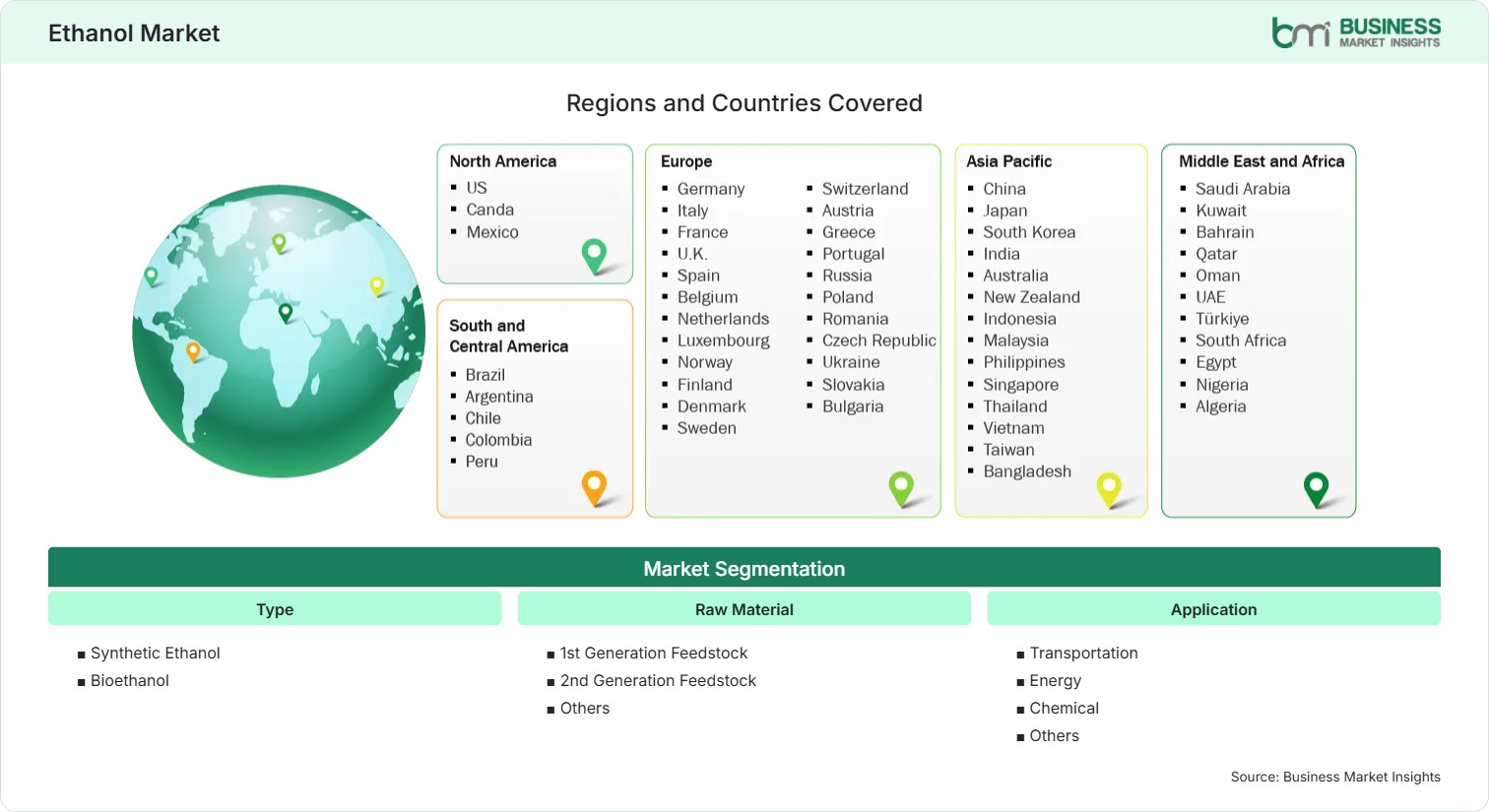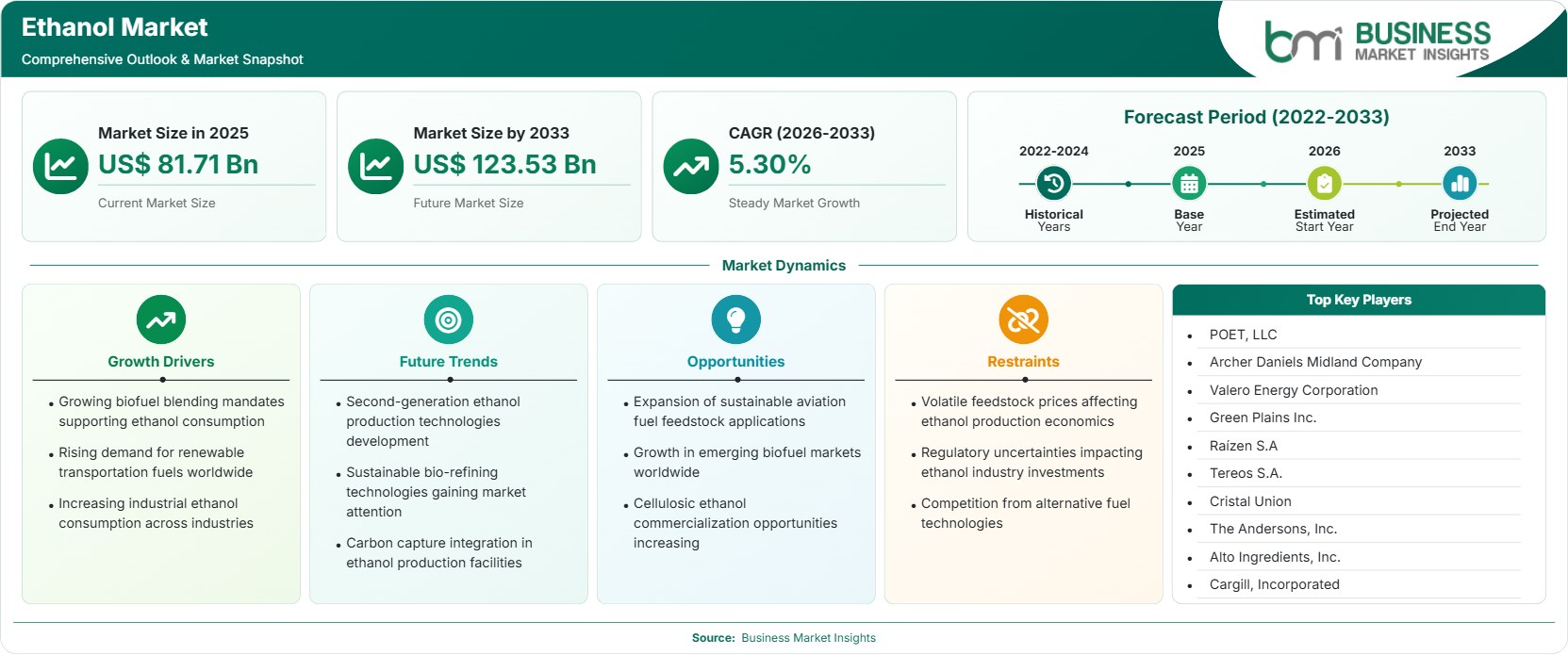
Ethanol Market Regional Highlights
North America Ethanol Market
North America accounted for 39%–42% of global revenue in 2025 and is projected to register a CAGR of 5.1%–5.6% during 2026–2033. The region continues maintaining a leading market position due to well-established biofuel production infrastructure, abundant agricultural feedstock availability, supportive renewable fuel policies, and increasing investments in low-carbon energy solutions. The Ethanol Market Share remains significant as governments and fuel suppliers continue expanding ethanol blending programs to reduce greenhouse gas emissions and improve energy security.
- The United States remains the largest regional market owing to extensive corn-based ethanol production, established renewable fuel standards, and significant investments in advanced biofuel technologies.
- Canada continues supporting regional growth through expanding renewable fuel regulations, increasing ethanol blending requirements, and investments in sustainable transportation fuels.
- Rising adoption of low-carbon fuel standards and carbon reduction initiatives continues encouraging long-term ethanol consumption.
- Growing investments in sustainable aviation fuel feedstock production and advanced ethanol technologies continue strengthening regional market development.
US Ethanol Market
The United States accounted for approximately 88%–91% of North American revenue in 2025 and is projected to register a CAGR of 5.2%–5.7% during the forecast period. Strong renewable fuel mandates, abundant agricultural resources, advanced production infrastructure, and increasing investments in next-generation biofuel technologies continue driving domestic market growth.
- Expanding renewable fuel blending requirements continue supporting stable ethanol demand across transportation applications.
- Increasing commercialization of cellulosic ethanol technologies is improving production sustainability and feedstock diversification.
- Rising investments in carbon capture technologies and production efficiency improvements continue strengthening ethanol market.
- Growing demand for renewable fuels from transportation and industrial sectors continues supporting long-term market expansion.
Europe Ethanol Market
Europe represented 26%–29% of global revenue in 2025 and is expected to expand at a CAGR of 5.0%–5.5% during 2026–2033. The region continues benefiting from ambitious decarbonization targets, renewable energy directives, expanding biofuel utilization, and increasing investments in sustainable transportation fuels. France remains the largest regional market, while Germany is projected to register the fastest growth with a CAGR of 5.6%–6.1% owing to increasing renewable fuel adoption, industrial decarbonization initiatives, and expanding advanced biofuel investments.
- France continues leading regional demand through established ethanol production capacity, strong agricultural feedstock availability, and supportive renewable fuel policies.
- Germany continues witnessing steady growth through increasing adoption of renewable transportation fuels, industrial sustainability initiatives, and investments in advanced biofuel technologies.
- The United Kingdom continues supporting ethanol market expansion through carbon reduction strategies, renewable fuel incentives, and growing sustainable aviation fuel development.
- European ethanol producers continue investing in advanced fermentation technologies, process optimization, and sustainable feedstock utilization.
- Increasing focus on circular economy initiatives and low-carbon fuel development continues strengthening long-term market prospects.
Asia Pacific Ethanol Market
Asia Pacific accounted for 24%–27% of global revenue in 2025 and is projected to register the highest CAGR of 6.0%–6.6% during the forecast period. Rising transportation fuel demand, expanding government biofuel mandates, growing energy security initiatives, and increasing investments in renewable fuel production continue driving regional market growth. China remains the leading regional market, while India is projected to register the fastest growth with a CAGR of 6.8%–7.3% owing to expanding ethanol blending programs, rising agricultural production, and increasing investments in domestic biofuel capacity.
- China continues dominating regional demand through expanding renewable energy investments, growing industrial ethanol applications, and increasing government support for cleaner fuels.
- India continues witnessing rapid growth due to aggressive ethanol blending targets, abundant agricultural feedstocks, and strong policy support for domestic ethanol production.
- Japan continues supporting premium biofuel demand through decarbonization initiatives, renewable energy investments, and industrial sustainability programs.
- Thailand continues contributing through sugarcane-based ethanol production, expanding export capabilities, and government biofuel incentives.
- Southeast Asian countries continue creating new opportunities through increasing renewable fuel adoption, agricultural resource utilization, and expanding transportation sectors.
Rest of World Ethanol Market
The Rest of World accounted for 8%–10% of global revenue in 2025 and is projected to register a CAGR of 5.3%–5.8% during 2026–2033. Latin America, the Middle East, and Africa continue experiencing increasing ethanol demand driven by expanding renewable fuel policies, growing transportation sectors, and rising investments in sustainable energy infrastructure.
Growing agricultural production, improving biofuel policies, and increasing industrial ethanol applications are creating new opportunities for ethanol producers across emerging economies.
- Brazil continues supporting regional demand through large-scale sugarcane ethanol production, established export capabilities, and strong domestic biofuel consumption.
- Argentina continues strengthening market growth through expanding agricultural feedstock production and increasing renewable fuel adoption.
- Middle Eastern countries continue exploring renewable fuel diversification strategies to support long-term energy transition objectives.
- South Africa continues contributing through growing industrial ethanol demand, renewable energy initiatives, and expanding biofuel production investments.
- Emerging economies across Latin America, the Middle East, and Africa continue creating long-term growth opportunities through expanding biofuel production capacity and supportive government policies.