
Enzyme Replacement Therapy Market Outlook: Size, Share, Trends, Growth Analysis, Competitive Landscape & Forecast, 2026-2033

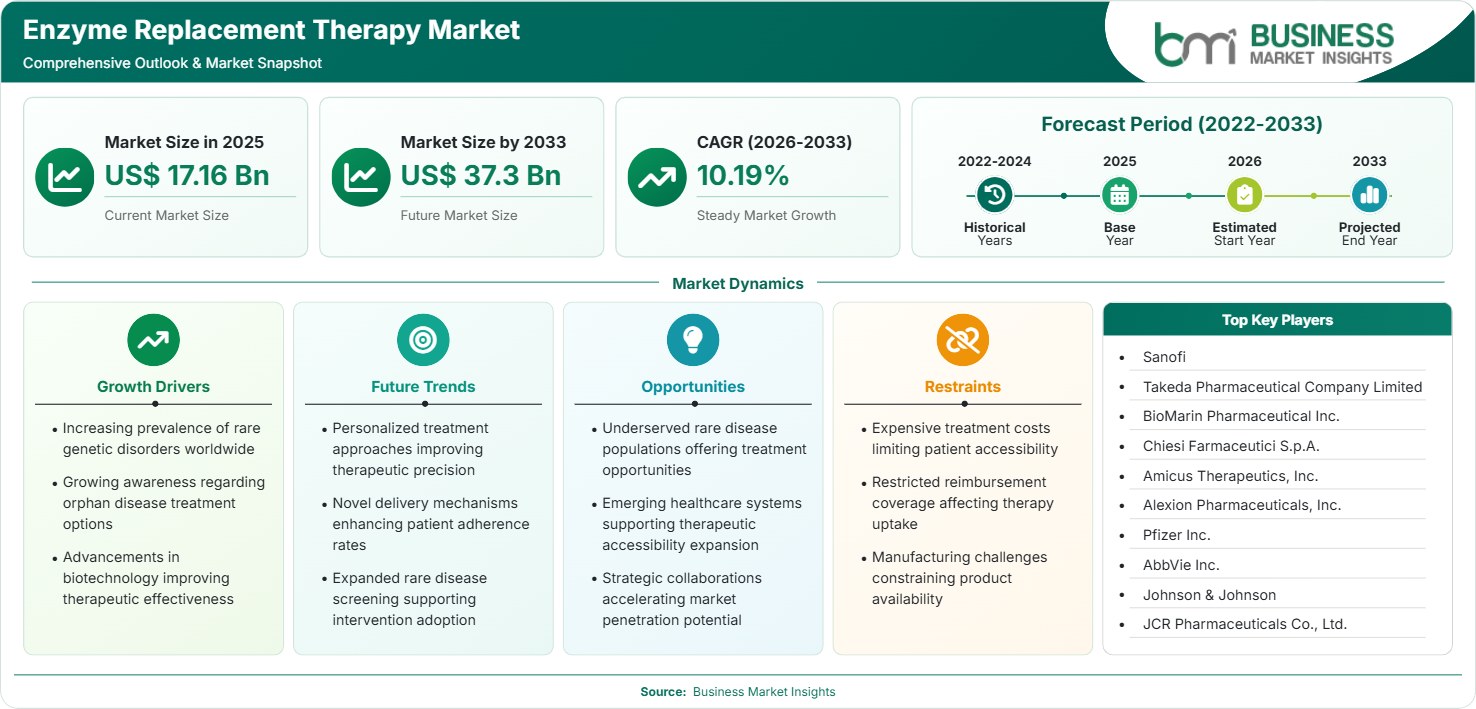
The Enzyme Replacement Therapy Market size was valued at US$ 17.16 Billion in 2025 and is projected to reach US$ 37.3 Billion by 2033, growing at a CAGR of 10.19% during 2026–2033. Increasing diagnosis of rare genetic disorders, expanding newborn screening programs, biologics innovation, and broader reimbursement coverage are driving demand, while home infusion expansion and next-generation enzyme platforms create opportunities.

Report Coverage
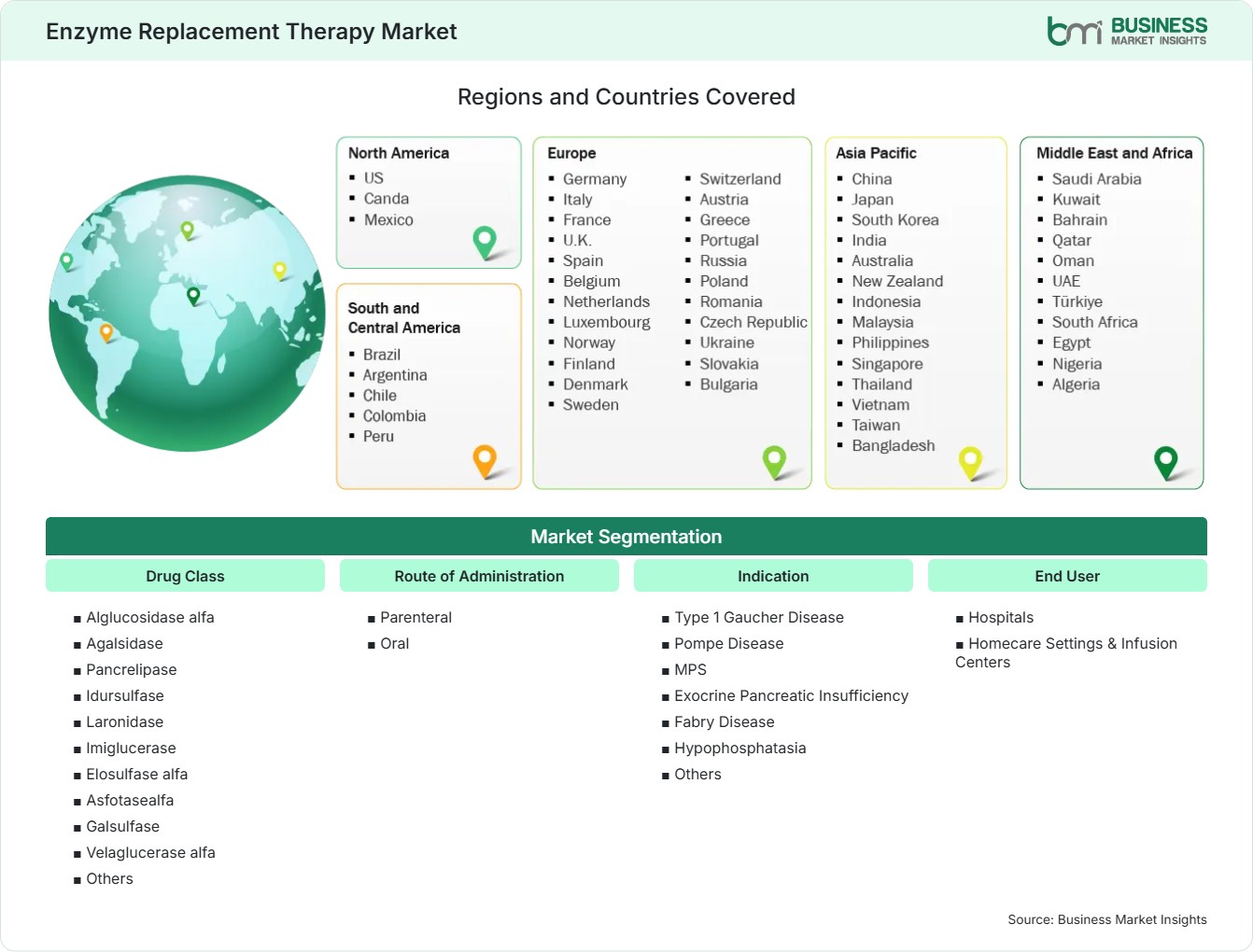
  • Drug Class: Alglucosidase alfa, Agalsidase, Pancrelipase, Idursulfase, Laronidase, Imiglucerase, Elosulfase alfa, Asfotasealfa, Galsulfase, Velaglucerase alfa, Others
  • Route of Administration: Parenteral, Oral
  • Indication: Type 1 Gaucher Disease, Pompe Disease, MPS , Exocrine Pancreatic Insufficiency , Fabry Disease, Hypophosphatasia, Others
  • End User: Hospitals, Homecare Settings & Infusion Centers
US$ 17.16 Bn Market size in 2025
US$ 37.3 Bn Market Size by 2033
10.19% CAGR, 2026 - 2033
2026-2033 Forecast Period

AI Overview

Enzyme Replacement Therapy Market Summary

  • North America Region: North America holds market share of 39%–42% in 2025, growing with a CAGR of 9.2%–10.0% during 2026–2033. Growth is supported by strong rare disease diagnostics, favorable reimbursement systems, advanced infusion infrastructure, biologics innovation, expanded newborn screening initiatives, specialist treatment centers, patient support programs, and clinical research investment. The US maintains regional leadership through extensive orphan-drug adoption, specialized treatment networks, and a CAGR of 9.4%–10.2%.
  • Fastest Growing Region: Asia Pacific holds market share of 22%–25% in 2025, growing with a CAGR of 11.8%–12.8% during 2026–2033. Expansion is supported by healthcare modernization, increasing rare disease awareness, wider diagnostic access, growing government funding, improving reimbursement mechanisms, rising biologics manufacturing capability, specialist center development, and patient advocacy initiatives.
  • Leading Segment: Parenteral administration holds market share of 87%–90% in 2025, growing with a CAGR of 9.8%–10.6% during 2026–2033. Dominance reflects established intravenous treatment protocols, high bioavailability, physician confidence, regulatory approvals, hospital infusion uptake, extensive clinical evidence, predictable therapeutic outcomes, and strong patient management frameworks.
  • High Growth Segment: Homecare Settings & Infusion Centers hold market share of 28%–32% in 2025, growing with a CAGR of 12.2%–13.2% during 2026–2033. Enzyme Replacement Therapy Market Growth stems from healthcare decentralization, patient convenience preferences, reimbursement support, lower administration burden, digital monitoring integration, specialized nursing availability, reduced hospital dependence, and optimized long-term treatment compliance.
  • Key Market Opportunity: Expanding access across emerging economies, integration of early genetic screening, development of longer-acting biologics, localized manufacturing investments, and broader home-based infusion services create attractive commercial opportunities through forecast periods.
  • Major Market Players: Sanofi, Takeda Pharmaceutical Company Limited, BioMarin Pharmaceutical Inc., Chiesi Farmaceutici S.p.A., Amicus Therapeutics, Inc., Alexion Pharmaceuticals, Inc., Pfizer Inc., AbbVie Inc., Johnson & Johnson, and JCR Pharmaceuticals Co., Ltd.
Strategic Insights

Enzyme Replacement Therapy Market: Strategic Insights

Enzyme Replacement Therapy Market Strategic Framework
FREE PDF
Request your free sample
Request free sample
Stakeholder View

Key Takeaways

  • The value chain is still very specialized, bringing together biotechnology manufacturers, contract production organizations, diagnostic laboratories, infusion providers, and centres which treat rare diseases, which makes supply reliability a key factor in competitive advantage.
  • The greatest potential for growth lies in Pompe disease, Fabry disease, and decentralized treatment delivery models, driven by rising diagnoses and patients' preference for receiving treatment outside traditional hospital settings.
  • The focus of product innovation is now on improving enzyme stability, reducing immunogenicity, extending dosing intervals, and enhancing tissue targeting to improve therapeutic outcomes and patient compliance.
  • Asia Pacific has a strong case for investment since measures such as improving reimbursement systems, launching campaigns to raise awareness of rare diseases, and developing healthcare infrastructure are all contributing to greater accessibility of treatment.
  • Companies are still forming strategic alliances, entering into licensing agreements, and carrying out acquisitions to enhance their portfolios of drugs for orphan diseases and to gain access to advanced biologics manufacturing capabilities.
  • The increasing use of genetic testing and newborn screening programs is leading to better identification of patients, allowing treatment to be started earlier and resulting in more favorable long-term clinical outcomes.
Geographic Outlook

Enzyme Replacement Therapy Market Regional Highlights

North America Enzyme Replacement Therapy Market

North America accounted for approximately 39%–42% of global revenue in 2025 and is projected to record a CAGR of 9.2%–10.0% through 2033. The area is privileged with excellent diagnostic technologies, effective newborn screening programs, reimbursement systems, and good rare diseases awareness. Big patient databases and specialized treatment centers facilitate proper diagnoses and treatment. The region also commands the highest Enzyme Replacement Therapy Market share due to the concentration of leading biotechnology firms, clinical research activities, and widespread access to approved enzyme replacement products.

  • The incentives offered for orphan drugs are still promoting the commercialization of innovative therapies, which in turn ensures continued patient access in the case of the main diseases and enhances the uptake of treatment within specialised healthcare networks.
  • The use of advanced infusion facilities and multidisciplinary treatment centres allows for efficient long-term management of the disease and at the same time helps to ensure that patients who need lifelong enzyme replacement therapy comply with their treatment.
  • The extent of patient involvement, together with reimbursement coverage, reduces difficulties relating to the affordability of treatment and thus improves the continuity of therapy in the cases of Gaucher disease, Fabry disease, Pompe disease, and MPS.
  • Increasing funding for genetic diagnostics and precision medicine projects leads to higher rates of identification for rare disorders and thus broadens the group of patients who can receive targeted treatment.
  • Clinical trial activity is still at one of the highest levels in the world and is helping to advance next-generation formulations, which are intended to improve efficacy and decrease the administration burden.

US Enzyme Replacement Therapy Market

The United States represents approximately 82%–86% of the North American Enzyme Replacement Therapy Market revenue and is expected to expand at a CAGR of 9.4%–10.2% through 2033. Good rare disease regulation, good centers for treatment, and biologics penetration ensure market dominance. Screening programs, orphan drug development policies, and spending on healthcare make it easier for patients to access healthcare.

  • Government-supported programs for rare diseases are still promoting quicker diagnosis and greater access to treatment by means of cooperation among healthcare institutions, advocacy groups, and biotechnology manufacturers.
  • The expansion of specialty pharmacy services, together with coordinated patient support schemes, helps to ensure continuity of treatment and better adherence among those who are on long-term biologic therapies.
  • Digital health integration is now increasingly used to support infusion monitoring, patient engagement, and outcome tracking, which in turn leads to better disease management strategies.
  • Academic research organizations and biotechnology companies have strong partnerships, which speed up innovation in the areas of enzyme engineering, administration methods, and personalized treatment approaches.

Europe Enzyme Replacement Therapy Market

Europe accounted for roughly 28%–31% of the global Enzyme Replacement Therapy Market revenue in 2025 and is anticipated to grow at a CAGR of 9.5%–10.4% through 2033. Universal health care systems, orphan drug reimbursement programs, and rare disease programs help drive regional growth. The German market continues to be the dominant source of revenues, but Central and Eastern European countries grow faster due to better diagnostic infrastructure.

  • Germany has the biggest share of the regional contributions as a result of the presence of specialist centers, a robust reimbursement system, and widespread access to approved treatments.
  • Spain and Italy are still increasing their investment in rare disease programs, which is leading to greater uptake of enzyme replacement products and to more extensive patient screening.
  • Poland has some of the fastest rates of regional growth, which is due to the modernization of its healthcare system and the improvement of its ability to diagnose inherited metabolic conditions.
  • Greater cooperation between the European reference networks leads to an improvement in the sharing of clinical expertise and helps to establish standardized care pathways for patients with rare diseases.
  • The greater the emphasis on home-based administration solutions, the more opportunities there are for optimizing treatment and improving the efficiency of healthcare resources.

Asia Pacific Enzyme Replacement Therapy Market

Asia Pacific represents approximately 22%–25% of the global Enzyme Replacement Therapy Market revenue in 2025 and is forecast to register the highest CAGR of 11.8%–12.8% through 2033. Fast development of healthcare infrastructure, increased genetic testing, and rising knowledge about rare diseases are the main factors behind the increasing popularity of the technology. Currently, Japan is the leader of the regional market, while China and India are the countries that demonstrate the fastest growth.

  • China is rapidly expanding its diagnostic services and rare disease funding schemes to accelerate access to treatments among underserved patient groups.
  • Japan holds on to its leading position due to its well-established healthcare systems, its strong clinical expertise, and its early use of advanced biologic therapies.
  • India is becoming a high-growth destination as a result of better access to healthcare, various government initiatives, and increasing awareness of inherited metabolic disorders.
  • Investments in biotechnology at a regional level help to strengthen local manufacturing capabilities and decrease long-term dependence on imported products within the supply chain.
  • The cooperation going on between healthcare providers and patient advocacy groups is still helping to increase awareness of diseases and make treatment more accessible.

Rest of World Enzyme Replacement Therapy Market

The Rest of World region accounts for approximately 7%–10% of global Enzyme Replacement Therapy Market revenue in 2025 and is expected to record a CAGR of 10.3%–11.1% through 2033. Increased healthcare coverage and better diagnosis for rare diseases will aid in the success of South & Central America. The Middle East & Africa market will be driven by increased healthcare spending and investment in treatment facilities. Brazil will drive the demand for the region, whereas Saudi Arabia and the UAE have the best potential due to healthcare modernization efforts.

  • Brazil is still the biggest market in South and Central America as a result of greater government support for programs aimed at treating rare diseases and the reimbursement of biologic therapies.
  • Saudi Arabia is still making investments in the infrastructure for genetic medicine and in the care of people with rare diseases, which in turn enables better identification of patients and greater adoption of therapies.
  • The United Arab Emirates is aiming to develop sophisticated specialty healthcare services to improve access to treatment and patient outcomes.
  • The increasing number of programs aimed at training physicians in emerging economies is leading to earlier diagnoses and greater awareness of metabolic disorders.
  • International partnerships and patient help schemes aid in increasing access to expensive treatments in healthcare systems that have limited resources.
Global Market Geography
FREE PDF
Request your free sample
Request free sample
Segment Analysis

Enzyme Replacement Therapy Market Segmentation

Drug Class

Drug class segmentation accounted for the largest therapeutic differentiation across the industry. This segment accounted for almost 100% market coverage by treatment modality in 2025 and is anticipated to see robust growth at 9.8%–10.7% CAGR in accordance with industry growth through 2033. Rising diagnosis of lysosomal storage diseases, increased treatment access, and the development of better recombinant enzymes remain major drivers of adoption. The Enzyme Replacement Therapy Market scope continues expanding as additional rare disease populations obtain access to targeted biologic interventions.

  • Alglucosidase alfa: Widely prescribed for Pompe disease management, supported by established efficacy data, long-term treatment protocols, and increasing newborn screening programs improving patient identification rates globally.
  • Agalsidase: Strong adoption in Fabry disease treatment due to demonstrated capability in reducing disease progression and improving long-term organ function when administered consistently.
  • Pancrelipase: Essential for exocrine pancreatic insufficiency treatment, supporting nutrient absorption and quality-of-life improvements among patients requiring chronic enzyme supplementation.
  • Idursulfase: Primarily utilized in Hunter syndrome management, benefiting from specialist referral networks and growing awareness of mucopolysaccharidosis disorders among clinicians.
  • Laronidase: Increasingly used for MPS I treatment through structured disease management programs and broader availability of specialized genetic diagnostic services.
  • Imiglucerase: Maintains significant demand in Type 1 Gaucher disease owing to extensive clinical experience, proven safety profile, and established reimbursement pathways.
  • Elosulfase alfa: Supports treatment of Morquio A syndrome, benefiting from improved rare disease recognition and expanded access initiatives in advanced healthcare markets.
  • Asfotase alfa: Experiencing rising utilization in hypophosphatasia management due to strong therapeutic outcomes and growing physician familiarity with disease identification.
  • Galsulfase: Continues supporting patients with MPS VI through specialist treatment centers and long-term disease management frameworks.
  • Velaglucerase alfa: Favored in select Gaucher disease patient populations because of differentiated treatment approaches and continued physician confidence.

Route of Administration

Route of administration remains a critical determinant of treatment adoption. The Parenteral segment accounted for 87%–90% Enzyme Replacement Therapy Market share in 2025 and is forecast to expand at 9.8%–10.6% CAGR through 2033. Dominance can be attributed to the biological nature of most of the approved drugs, which need to be delivered through systemic means. On the other hand, there have been developments in the areas of oral delivery methods and supportive enzymes.

  • Parenteral: Intravenous administration remains the standard for most approved treatments due to superior bioavailability, established clinical evidence, and validated effectiveness in treating rare metabolic disorders.
  • Oral: Adoption is increasing within specific therapeutic applications where convenience, treatment adherence, and easier long-term administration provide measurable patient-centered benefits.

Indication

Indication-based demand reflects the prevalence and diagnosis rates of rare metabolic disorders. Type 1 Gaucher Disease and Pompe Disease collectively account for a large treatment share, while Fabry disease and MPS continue showing strong uptake. The segment is projected to expand at 10.0%–11.0% CAGR through the Enzyme Replacement Therapy Market Forecasts as awareness initiatives, screening programs, and specialist referrals improve diagnosis and treatment rates worldwide.

  • Type 1 Gaucher Disease: Represents one of the most established treatment categories, supported by extensive clinical acceptance and long-standing reimbursement mechanisms.
  • Pompe Disease: Benefits from expanding newborn screening adoption and increasing physician awareness regarding early therapeutic intervention and disease management.
  • MPS (Mucopolysaccharidosis): Continues witnessing rising treatment demand due to broader recognition of disease burden and increasing access to specialist care.
  • Exocrine Pancreatic Insufficiency (EPI): Strong demand is driven by chronic digestive disorder management and the proven benefits of enzyme supplementation therapy.
  • Fabry Disease: Adoption continues increasing as diagnostic pathways improve and awareness among cardiology, nephrology, and genetics specialists expands.
  • Hypophosphatasia: Growing recognition of disease manifestations is strengthening treatment initiation rates and long-term management approaches.

End User

Hospitals remain the leading end-user category with a 68%–72% Enzyme Replacement Therapy Market share in 2025 and expected growth of 9.5%–10.3% CAGR through 2033. However, Homecare Settings & Infusion Centers represent the fastest-growing segment, advancing at 12.2%–13.2% CAGR. Expanding decentralized care models, nursing support availability, and digital monitoring capabilities continue reshaping therapy delivery and improving patient convenience.

  • Hospitals: Continue serving as primary treatment locations because of infusion expertise, specialist supervision requirements, and access to emergency care infrastructure.
  • Homecare Settings & Infusion Centers: Experiencing accelerated adoption due to healthcare decentralization, convenience benefits, reduced travel burden, and improved long-term treatment adherence.
Market Forces

Enzyme Replacement Therapy Market Dynamics

Key Market Drivers

Expansion of Rare Disease Diagnostic Programs

The increasing availability of newborn screening, next-generation sequencing, and genetic counseling services is substantially improving the identification of inherited metabolic disorders. Early detection means early treatment, especially for patients suffering from Pompe’s disease, Gaucher’s disease, Fabry’s disease, and certain forms of mucopolysaccharidoses. Health care systems in developed countries are working continuously on increasing the number of rare disease registries and genetic testing facilities. Better diagnostic penetration means less time between symptom onset and treatment initiation, which is crucial for determining treatment outcomes. Such trends help ensure patient inclusion in the treatment program along with increased demand for enzyme replacement therapies.

Growing Reimbursement Support for Orphan Drugs

Government agencies and healthcare payers increasingly recognize the value of rare disease treatments. The improvement in the reimbursement structures is providing more access to expensive biological medications, especially in North America and Europe. The orphan drugs remain attractive and keep on incentivizing investments, leading to innovations and increasing access to medication. More countries continue to develop national policies on rare diseases and implement access schemes to lower patient costs. With improvements in access, more underserved populations gain access to their approved medication. This will increase treatment adherence, ensure stable income for pharmaceutical companies, and help in integrating enzyme replacements as part of rare disease treatments.

Advances in Recombinant Enzyme Engineering

Continuous improvements in recombinant protein production, glycoengineering, and enzyme stabilization technologies are enhancing therapeutic performance. There are developments being made in the manufacture of drugs that have improved uptake properties, improved tissue specificity, and may even have lower immunogenicity. All these developments ensure better clinical results and better management of diseases. There are also advancements in the biologics manufacturing process, which lead to scalable and reliable production. Such improvements in products ensure better competitiveness in the future and also motivate healthcare practitioners to consider newer treatment options. All these developments will go a long way in boosting the clinical confidence in enzyme replacement therapy as a treatment modality.

Key Market Opportunities

Expansion into Emerging Healthcare Markets

The advancement of healthcare in the Asia Pacific, Latin America, and selected Middle Eastern nations has resulted in significant openings for treatment providers. Growing coverage for treatment, enhanced awareness of diseases, and better access to genetic diagnostics have allowed a greater number of patients to be able to enter into treatment channels. Current Enzyme Replacement Therapy Market Trends indicate that investments in the infrastructure and training of healthcare professionals increase access to healthcare. With growing awareness and increased screening, there is no doubt that many new patients will be brought under the ambit of diagnosis and treatment. Such dynamics present many business opportunities.

Development of Home-Based Infusion Ecosystems

Patient-focused care delivery models are reshaping treatment administration. There has been increased acceptance among healthcare providers for infusion treatments to be conducted in non-hospital settings using specialized nursing training, remote monitoring capabilities, and proper reimbursement models. Home administration helps make care more convenient while reducing strain on health facilities' infrastructure. Manufacturers will be able to get more involved and will be able to see patients become more adherent to treatments. Increased adoption of decentralized treatment methods provides many opportunities to service providers, technology firms, and drug manufacturers.

Integration of Precision Medicine Strategies

The development in the field of genomics and biomarker discovery has brought about new and personalized ways of handling rare diseases. Better patient stratification is contributing to better treatment choice and monitoring. The use of real-world evidence, registry data, and genetics by pharmaceutical firms has helped develop better treatment options for patients. Enzyme Replacement Therapy Market Forecasts increasingly incorporate precision medicine initiatives because personalized treatment approaches can expand market penetration, improve clinical performance, and strengthen long-term healthcare value propositions.

Market Restraints and Challenges

High Treatment Costs and Budget Impact

Factor: Enzyme replacement therapies often require lifelong administration, specialized manufacturing processes, and complex distribution networks, resulting in substantial annual treatment expenditures. Impact: High costs create access disparities, particularly in low-income and middle-income healthcare systems where reimbursement pathways remain limited. Budget pressures can delay therapy approval, restrict eligibility criteria, or reduce treatment continuity. Even within developed markets, payers increasingly scrutinize long-term healthcare value. These economic constraints challenge manufacturers seeking broader adoption and can slow penetration across emerging regions. Addressing affordability remains a critical requirement for sustained industry expansion and equitable patient access.

Immunogenicity and Treatment Burden Concerns

Factor: Some patients develop immune responses against administered enzymes, potentially affecting therapeutic efficacy and requiring additional clinical management. Impact: Immunogenicity concerns can complicate treatment optimization and increase monitoring requirements. Furthermore, frequent intravenous infusions impose logistical burdens on patients and caregivers, affecting quality of life and adherence. Infrastructure requirements also limit accessibility in regions lacking advanced infusion networks. These challenges encourage demand for next-generation biologics, improved formulations, and alternative therapeutic modalities. Overcoming clinical and administration-related limitations will remain important for maintaining long-term treatment acceptance and patient retention.

Company Analysis

Competitive Landscape

The competitive environment remains characterized by orphan-drug expertise, biologics manufacturing capabilities, extensive rare disease portfolios, and ongoing innovation. Enzyme Replacement Therapy Market Analysis indicates that leading participants are focused on lifecycle management, geographic expansion, patient support programs, and next-generation enzyme engineering to strengthen market positioning and improve long-term treatment outcomes.

Company Name

Overview

Products and Services relevant to this market

Sanofi

Global biopharmaceutical company with a strong rare disease franchise and broad commercial infrastructure supporting inherited metabolic disorder treatments worldwide.

Provides Cerezyme, Fabrazyme, Aldurazyme, and related patient support, rare disease treatment, and biologics development services.

Takeda Pharmaceutical Company Limited

Leading global pharmaceutical company with extensive expertise in rare diseases and plasma-derived as well as recombinant therapies.

Offers Elaprase, Replagal in selected markets, and comprehensive rare disease support and treatment programs.

BioMarin Pharmaceutical Inc.

Specialized biotechnology company focused on rare genetic disorders through innovative biologics and enzyme-based therapeutics.

Markets Naglazyme, Vimizim, and other therapies addressing lysosomal storage and metabolic diseases.

Chiesi Farmaceutici S.p.A.

International healthcare company strengthening its rare disease presence through targeted acquisitions and specialized treatment capabilities.

Provides enzyme replacement therapy commercialization, specialty care solutions, and rare disease support services.

Amicus Therapeutics, Inc.

Biotechnology company dedicated to developing treatments for rare metabolic and genetic disorders.

Offers Fabry disease-related therapies and patient-focused disease management solutions across multiple regions.

Alexion Pharmaceuticals, Inc.

Rare disease specialist focused on serious and ultra-rare disorders through innovative biologic therapies.

Delivers specialty treatments, rare disease support infrastructure, and advanced biologic development expertise.

Pfizer Inc.

Global pharmaceutical organization with diversified biologics capabilities and large-scale commercial operations.

Supports rare disease research, biologic development, specialty healthcare services, and strategic collaborations.

AbbVie Inc.

Research-driven biopharmaceutical company expanding advanced therapeutic capabilities across specialized treatment areas.

Provides biologics expertise, specialty medicine development, and support services for complex diseases.

Johnson & Johnson

Diversified healthcare leader with strong pharmaceutical innovation and global healthcare reach.

Offers advanced biotechnology capabilities, specialty therapeutics research, and healthcare delivery solutions.

JCR Pharmaceuticals Co., Ltd.

Japanese biotechnology company recognized for innovation in rare diseases and blood-brain barrier technologies.

Develops enzyme replacement therapies and novel delivery platforms for lysosomal storage disorders.

Trust & Transparency

Research Methodology

The market analysis combines proprietary research with secondary data from government agencies, company disclosures, regulatory filings, industry databases and expert interviews. Market estimates are validated through data triangulation, cross-market benchmarking and analyst review.

View Full Research Methodology

Questions Answered

Frequently Asked Questions

What insights does an Enzyme Replacement Therapy Market Report provide to stakeholders?

An Enzyme Replacement Therapy Market Report helps stakeholders assess competitive positioning, therapy adoption patterns, regional opportunities, regulatory trends, investment priorities, and long-term commercial prospects.

How are homecare infusion models influencing the industry?

Homecare infusion services reduce patient travel burdens, improve convenience, support treatment adherence, and help healthcare systems optimize hospital resource utilization.

Which region presents the strongest future expansion potential?

Asia Pacific offers the strongest long-term expansion potential due to growing rare disease awareness, expanding genetic diagnostics, healthcare modernization, and improving reimbursement support.

Why is parenteral administration dominant in this industry?

Most approved enzyme replacement products are biologic molecules requiring intravenous delivery to achieve effective systemic distribution, therapeutic activity, and predictable treatment outcomes.

Which disease indication generates the highest demand for enzyme replacement therapies?

Type 1 Gaucher Disease and Pompe Disease collectively represent major treatment categories because of established clinical pathways, long-term therapeutic requirements, and strong physician awareness in developed healthcare systems.

Access the Full Enzyme Replacement Therapy Market Report

Get segment-level forecasts, regional estimates, competitive benchmarking, company profiles and downloadable Excel datasets.

Access the full Enzyme Replacement Therapy Market Report
350 pages PDF & Excel | 2026-09-21
Similar Research

Related Market Reports