
Orthopedic Joint Replacement Market Outlook: Size, Share, Trends, Growth Analysis, Competitive Landscape & Forecast, 2026-2033

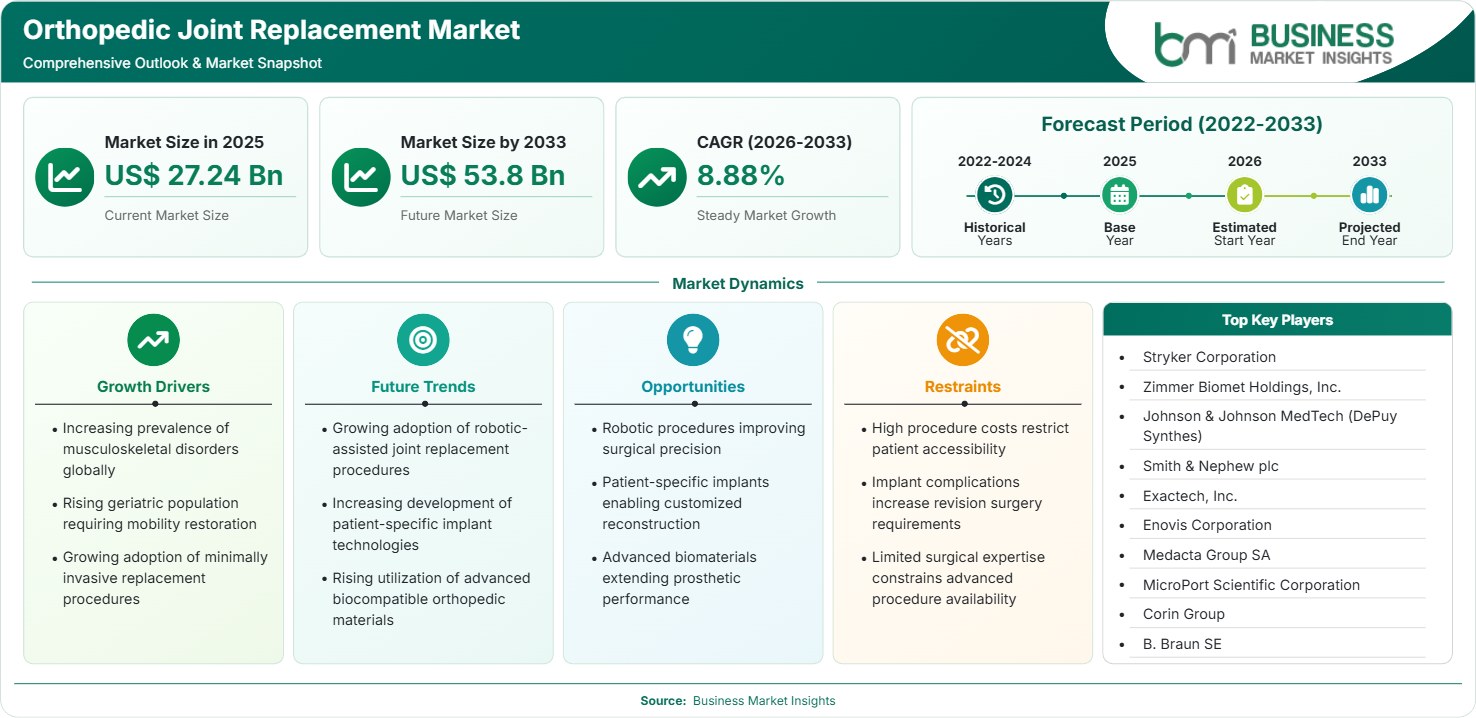
The Orthopedic Joint Replacement Market size was valued at US$ 27.24 Billion in 2025 and is projected to reach US$ 53.8 Billion by 2033, growing at a CAGR of 8.88% during 2026–2033, supported by rising osteoarthritis prevalence, aging populations, robotic-assisted surgeries, implant innovations, expanding ambulatory surgical centers, and increasing healthcare investments across developed and emerging economies.

Report Coverage
  • Product: Knee, Hip, Shoulder, Ankle, Others
  • Procedure: Total, Partial, Others
  • End User: Hospitals & ASCs, Orthopedic Clinics, Others
US$ 27.24 Bn Market size in 2025
US$ 53.8 Bn Market Size by 2033
8.88% CAGR, 2026 - 2033
2026-2033 Forecast Period

AI Overview

Orthopedic Joint Replacement Market Summary

  • North America Region: North America holds a 38%–41% share in 2025, growing at a 7.5%–8.2% CAGR during 2026–2033, supported by higher procedure volumes, robotic platforms, reimbursement support, and outpatient joint replacement adoption. Opportunity arises from personalized implants and digital surgical planning. US market benefits from strong hospital infrastructure and robotics adoption, advancing at 7.8%–8.5% CAGR through 2033.
  • Fastest Growing Region: Asia Pacific holds 24%–27% share in 2025, expanding at 10.2%–11.4% CAGR through 2033. Growth stems from healthcare modernization, orthopedic capacity expansion, medical tourism, and increasing elderly populations across China, India, and Southeast Asia.
  • Leading Segment: Knee replacement accounts for a 43%–46% share in 2025 and advances at 8.5%–9.2% CAGR. Demand is supported by osteoarthritis burden, favorable clinical outcomes, shorter recovery pathways, and expanding robotic-assisted procedures worldwide.
  • High Growth Segment: Hospitals & ASCs represent 58%–61% share in 2025 and grow at 9.3%–10.1% CAGR. Expansion reflects same-day surgery adoption, operational efficiency improvements, advanced imaging integration, and value-based care initiatives.
  • Key Market Opportunity: Broader deployment of robotic navigation, AI-driven surgical planning, and patient-specific implants creates opportunities to improve precision, reduce revision rates, enhance outcomes, and expand adoption across emerging healthcare systems.
  • Major Market Players: Stryker Corporation, Zimmer Biomet Holdings, Inc., Johnson & Johnson MedTech (DePuy Synthes), Smith & Nephew plc, Exactech, Inc., Enovis Corporation, Medacta Group SA, MicroPort Scientific Corporation, Corin Group, B. Braun SE.
Strategic Insights

Orthopedic Joint Replacement Market: Strategic Insights

Orthopedic Joint Replacement Market Strategic Framework
FREE PDF
Request your free sample
Request free sample
Stakeholder View

Key Takeaways

  • The value chain increasingly integrates implant manufacturers, robotics providers, navigation software developers, distributors, rehabilitation networks, and specialty care providers, creating a highly interconnected orthopedic ecosystem.
  • Knee and hip reconstruction continue offering the strongest revenue potential, while outpatient joint replacement pathways provide significant upside for providers and device companies.
  • Innovation is moving toward personalized implants, AI-enabled planning, robotic assistance, sensor-based monitoring, and materials engineered to extend implant longevity.
  • Asia Pacific presents the strongest long-term investment case due to aging demographics, expanding insurance coverage, and rapidly improving orthopedic care infrastructure.
  • Strategic acquisitions increasingly focus on robotics, navigation systems, software-enabled workflow solutions, and enabling technologies that strengthen surgeon engagement and procedural efficiency.
  • Companies capable of combining implant portfolios with digital surgical ecosystems are expected to improve surgeon loyalty and support premium pricing strategies.
Geographic Outlook

Orthopedic Joint Replacement Market Regional Highlights

North America Orthopedic Joint Replacement Market

North America accounted for approximately 38%–41% of the Orthopedic Joint Replacement Market share in 2025 and is projected to expand at a 7.5%–8.2% CAGR through 2033. Strong reimbursement systems, high obesity prevalence, advanced orthopedic infrastructure, and rapid robotic surgery adoption sustain demand. Revision procedures represent a growing revenue stream as implant populations age. The region also benefits from extensive surgeon training and strong adoption of outpatient procedures.

  • Robotic-assisted total knee procedures continue expanding across integrated health systems, improving procedural consistency and surgeon productivity.
  • Ambulatory surgical centers increasingly perform elective procedures, reducing costs while maintaining favorable clinical outcomes.
  • Strong payer support encourages earlier intervention among eligible patients with degenerative joint disorders.
  • Revision surgery demand rises as older implant cohorts require replacement or corrective intervention.

US Orthopedic Joint Replacement Market

The United States represents roughly an 82%–86% share within North America and advances at 7.8%–8.5% CAGR through 2033. Large procedure volumes, technology adoption, favorable reimbursement structures, and extensive orthopedic specialist networks support sustained demand. Digital planning tools and robotics remain important differentiators among healthcare providers.

  • Mako, ROSA, and VELYS robotic platforms continue influencing hospital capital spending priorities.
  • Same-day discharge pathways expand due to enhanced recovery protocols and patient preference.
  • Rising obesity prevalence contributes to increasing demand for knee reconstruction procedures.
  • Value-based care models emphasize outcomes, revision reduction, and procedural efficiency.

Europe Orthopedic Joint Replacement Market

Europe held a 27%–30% share in 2025 and is forecast to grow at a 7.9%–8.7% CAGR through 2033. Germany remains the leading revenue contributor, while Central and Eastern European markets display faster expansion due to healthcare modernization. Aging demographics and increasing osteoarthritis incidence support procedural demand across major healthcare systems.

  • Germany leads regional revenues, supported by established orthopedic centers and strong reimbursement coverage.
  • Spain and Poland demonstrate above-average growth with expanding surgical infrastructure.
  • Demand for cementless implants continues increasing among relatively younger patients.
  • Sustainability and procurement policies increasingly influence hospital purchasing decisions.
  • Robotic adoption expands gradually across tertiary care institutions.

Asia Pacific Orthopedic Joint Replacement Market

Asia Pacific accounted for a 24%–27% share in 2025 and is expected to register a 10.2%–11.4% CAGR, making it the fastest-growing regional market. China leads overall revenues, while India and Southeast Asia exhibit accelerated procedure growth. Expanding middle-class populations, healthcare investments, and orthopedic capacity development support regional expansion.

  • China benefits from hospital modernization and domestic manufacturing growth.
  • India records rapid procedure growth due to improving affordability and specialist availability.
  • Medical tourism strengthens procedure volumes in selected regional healthcare hubs.
  • Government healthcare initiatives improve treatment accessibility for elderly populations.
  • International manufacturers increasingly localize production and distribution activities.

Rest of World Orthopedic Joint Replacement Market

The Rest of World contributes 8%-10% and has the potential to grow at 8.8%-9.6% CAGR. South and Central America have benefited from the growth of private healthcare, whereas countries in the Middle East have been investing in specialized orthopedic treatments. Demand is focused on urban healthcare hubs with sophisticated surgical facilities.

  • Brazil remains the largest South American market due to expanding private healthcare investment.
  • Saudi Arabia and the UAE increase orthopedic capacity under healthcare diversification programs.
  • Limited specialist availability remains a constraint in several developing countries.
  • Premium implant demand grows among privately insured patient populations.
  • International partnerships support technology transfer and surgeon training initiatives.
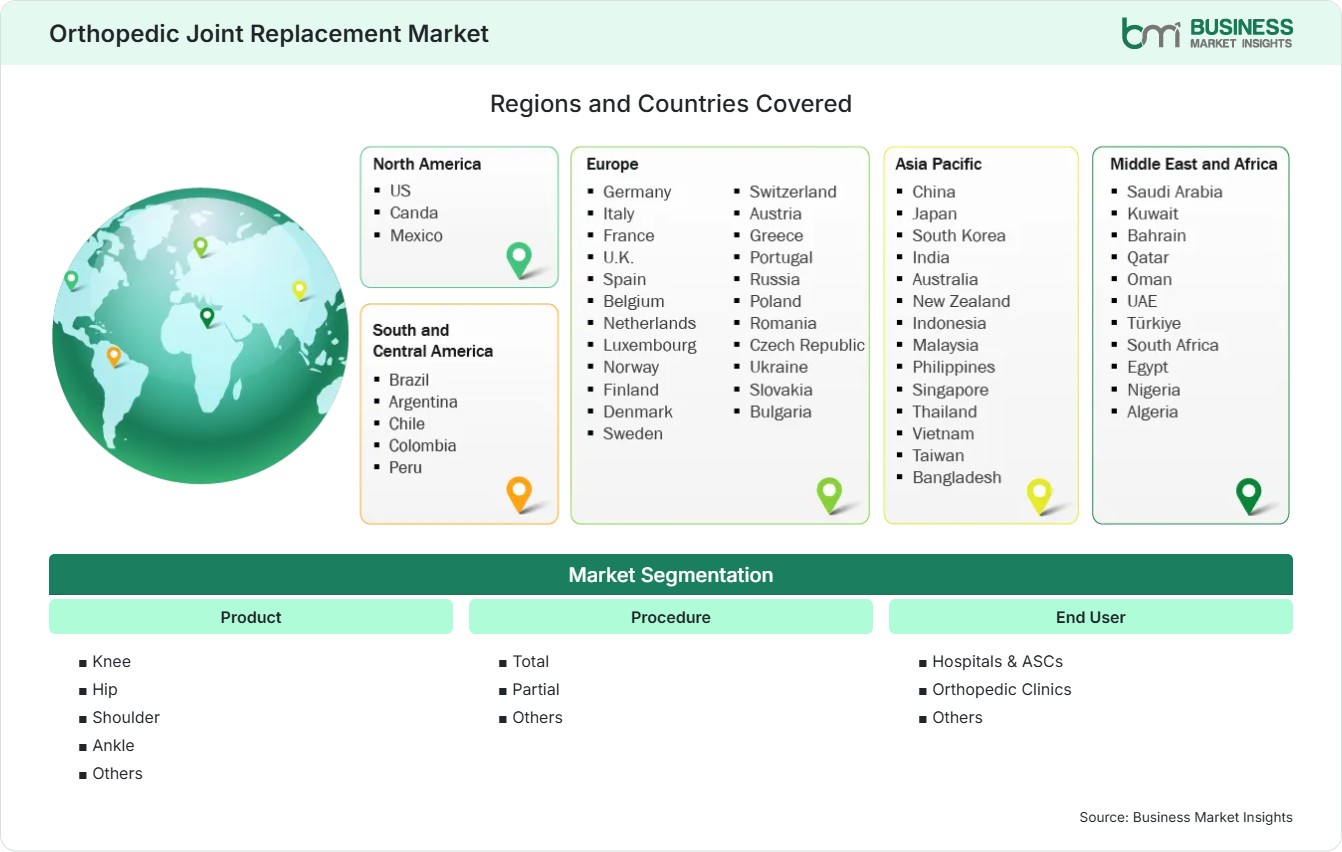
Global Market Geography
FREE PDF
Request your free sample
Request free sample
Segment Analysis

Orthopedic Joint Replacement Market Segmentation

Product

Product held a market share of around 43%-46% in 2025, and its growth rate is expected to grow at 8.5%-9.2% CAGR. Some factors that influence the scope of the Orthopedic Joint Replacement Market under the Product category include rising incidence of osteoarthritis, longer implant lifespans, and increased use of robotic surgical platforms.

  • Knee: Dominant product category driven by osteoarthritis prevalence, obesity rates, established reimbursement frameworks, and strong surgeon familiarity with advanced replacement procedures.
  • Hip: Sustained adoption supported by aging populations, mobility restoration benefits, and improvements in implant longevity and bearing surfaces.
  • Shoulder: Growing utilization linked to sports injuries, degenerative conditions, and technological improvements in reverse shoulder arthroplasty.
  • Ankle: Emerging category benefiting from greater surgeon experience and increasing awareness of motion-preserving treatment alternatives.

Procedure

Procedure segmentation accounted for 64%–67% of the market in 2025 and is expected to grow at a CAGR of 8.7%–9.4%. Improvements in clinical outcomes, innovations in implants, and increasing patient acceptance of surgery will drive future growth across developed and emerging healthcare systems.

  • Total: Largest procedure category due to proven long-term outcomes and broad applicability across severe degenerative joint diseases.
  • Partial: Demand increases among selected patient groups seeking preservation of healthy bone and faster recovery trajectories.

End user

The share held by hospitals and clinical practices was 58% to 61% in 2025, with growth at a CAGR of 9.3% to 10.1%. The market segment is driven by technology integration, multidisciplinary treatment methods, and growing digital workflow. Orthopedic Joint Replacement Market trends reveal the rise in outpatient procedures.

  • Hospitals & ASCs: Leading adoption environment due to access to robotics, imaging technologies, and comprehensive postoperative care capabilities.
  • Orthopedic Clinics: Increasingly participate through preoperative assessment, follow-up care, rehabilitation coordination, and specialist consultations.
Market Forces

Orthopedic Joint Replacement Market Dynamics

Key Market Drivers

Rising Global Burden of Osteoarthritis and Degenerative Disorders

Based on WHO estimates, musculoskeletal disorders impact over a billion people around the world. Osteoarthritis is one of those diseases that continues to become prevalent due to the aging population. An increase in life expectancy means more patients become eligible for procedures that require mobility and pain relief. Obesity and inactive lifestyles also increase the need. All these factors combined ensure an increase in the number of procedures performed on knees, hips, and shoulders. In recent years, hospitals have increasingly focused on developing their orthopedic practices due to stable demand. The resulting procedural expansion continues supporting manufacturer investment in implant platforms, surgeon education, and supply-chain capacity

Rapid Adoption of Robotic and Navigation Technologies

Surgical techniques in orthopedic surgery are being revolutionized by robotics, enabling accurate alignment, reliable outcomes, and data-driven planning. Robotics is becoming a significant choice for medical professionals because it helps attract surgeons and differentiate them from competitors. Precise implantation can reduce the need for future revisions. With increasing adoption rates, there are opportunities for implant manufacturers to bundle implants with technology that enables implantation. Increased digitalization throughout the process increases the physician's confidence. Greater evidence generation and expanding surgeon training programs continue to accelerate procedural acceptance within advanced healthcare systems worldwide.

Expanding Elderly Population and Mobility Expectations

According to United Nations demographic forecasts, there is rapid growth in the population aged 65 or older in key healthcare markets. The modern elderly patient population prefers an active lifestyle, which makes them more receptive to reconstruction surgery at younger ages. Better safety features of the technology and better implant materials contribute to its uptake. Greater awareness of the positive impact on quality of life promotes uptake by both practitioners and patients. These demographic shifts continue creating sustained demand across primary and revision replacement categories, supporting long-term market expansion.

Key Market Opportunities

Patient-Specific Implant and Digital Planning Expansion

Individualized Orthopedics can provide significant growth potential. Modern imaging, 3D printing, and artificial intelligence planning offer individualized solutions tailored to anatomical variations. In addition, such techniques enhance surgical precision and provide an opportunity to implement value-based pricing. Modern healthcare systems are increasingly interested in planning systems as infrastructure improves. Many producers start implementing interconnected ecosystems that include both planning software and implants. According to Orthopedic Joint Replacement Market Forecasts, personalization strategies can be considered a potential point of differentiation in the premium orthopedic care environment.

Acceleration of Ambulatory Surgical Centers

ASCs are gaining strategic significance due to their cost-effectiveness, shorter patient stays, and successful outcomes. Healthcare firms concerned about increasing their productivity are more inclined towards providing outpatient care services. Such developments represent a promising avenue for medical device companies to tailor implant kits and digital services. More insurers accepting outpatient care adds another dimension to the expansion of the market size. This transition creates meaningful demand for streamlined surgical systems that support consistent outcomes while reducing operational complexity.

Untapped Potential in Emerging Economies

The penetration of procedures still lags far behind that of developed countries in many emerging nations. Rising incomes, expanding insurance coverage, and investments in infrastructure development in the system make the conditions for adoption of the use of procedures. Manufacturers are making efforts to localize procedures to make them more affordable. The fundamentals for demand look good, given the aging population and the prevalence of chronic diseases.

Market Restraints and Challenges

High Procedure Costs and Reimbursement Variability

Factor: Joint replacement surgery incurs high costs due to the implantation process, required equipment, robotic surgery, hospital, and rehabilitation center costs. Impact: Due to its high cost, it may not be feasible to implement the procedure in the underinsured population or in underdeveloped health care facilities. Reimbursement methods vary across locations, affecting the adoption rate of the procedure. A shortage of funds might delay hospitals' acquisition of robotic technology. Expensive implants may also cause challenges. These factors collectively slow adoption rates despite strong fundamentals in clinical demand and favorable long-term demographic trends.

Risk of Revision Procedures and Clinical Complications

Factor: Implant wear, infection, loosening, and malalignment may lead to revision procedures that are both complicated and costly. Impact: Health care professionals will be put under increased pressure concerning their performance and results. Postmarket surveillance requirements are becoming increasingly stringent. Manufacturers need to make considerable investments to provide the necessary clinical data and improve their products. Concerns about complications may influence patients' decision-making. These dynamics raise development costs and increase competitive pressure across the industry.

Company Analysis

Competitive Landscape

The Orthopedic Joint Replacement Market analysis indicates a highly consolidated competitive environment led by global orthopedic specialists investing heavily in robotics, navigation systems, smart instrumentation, and implant innovation.

Company Name

Overview

Products and Services relevant to this market

Stryker Corporation

Global medical technology leader with strong orthopedic and robotic surgery portfolio.

Knee, hip, shoulder implants, Mako robotics, navigation technologies, surgical instruments.

Zimmer Biomet Holdings, Inc.

Major reconstructive implant provider focused on digital orthopedics and robotics.

Knee, hip, shoulder systems, ROSA robotics, patient-specific solutions.

Johnson & Johnson MedTech (DePuy Synthes)

Diversified orthopedic manufacturer with broad global distribution capabilities.

Joint reconstruction implants, VELYS platform, revision solutions, enabling technologies.

Smith & Nephew plc

Orthopedic specialist emphasizing reconstruction and surgical technologies.

Hip, knee, shoulder implants, robotic assistance, orthopedic devices.

Exactech, Inc.

Specialist developer focused on advanced implant systems and surgical technologies.

Knee, hip, shoulder replacement systems and planning software.

Enovis Corporation

Expanding orthopedic portfolio through innovation and strategic acquisitions.

Joint reconstruction solutions, orthopedic technologies, rehabilitation products.

Medacta Group SA

Known for personalized and kinematic alignment-focused orthopedic solutions.

Knee and hip implants, surgical planning systems, training platforms.

MicroPort Scientific Corporation

Growing orthopedic participant with international distribution footprint.

Hip, knee, and reconstructive implant systems.

Corin Group

Technology-focused orthopedic company emphasizing digital workflows.

Joint replacement implants, planning software, analytics tools.

B. Braun SE

Diversified healthcare manufacturer serving orthopedic surgery markets.

Arthroplasty implants, surgical instruments, orthopedic solutions.

Trust & Transparency

Research Methodology

The market analysis combines proprietary research with secondary data from government agencies, company disclosures, regulatory filings, industry databases and expert interviews. Market estimates are validated through data triangulation, cross-market benchmarking and analyst review.

View Full Research Methodology

Questions Answered

Frequently Asked Questions

What insights does the Orthopedic Joint Replacement Market Report provide?

The report evaluates market dynamics, regional opportunities, competitive positioning, technology adoption, segment performance, investment trends, and long-term growth prospects through 2033.

How are ambulatory surgical centers affecting industry development?

ASCs reduce treatment costs, shorten recovery pathways, and improve operational efficiency, encouraging migration of suitable procedures away from inpatient settings.

Which product category generates the highest revenue?

Knee replacement remains the largest revenue-generating category due to high osteoarthritis prevalence, strong clinical outcomes, and broad reimbursement support.

What role do robotics play in orthopedic surgery?

Robotics improve planning accuracy, implant positioning, workflow efficiency, and procedural consistency, helping providers optimize outcomes and strengthen competitive differentiation.

What factors are increasing demand for joint replacement procedures?

Growing osteoarthritis prevalence, aging populations, obesity-related joint deterioration, and advances in surgical technologies are increasing patient acceptance and procedure volumes worldwide.

Access the Full Orthopedic Joint Replacement Market Report

Get segment-level forecasts, regional estimates, competitive benchmarking, company profiles and downloadable Excel datasets.

Access the full Orthopedic Joint Replacement Market Report
350 pages PDF & Excel | 2026-09-10
Similar Research

Related Market Reports