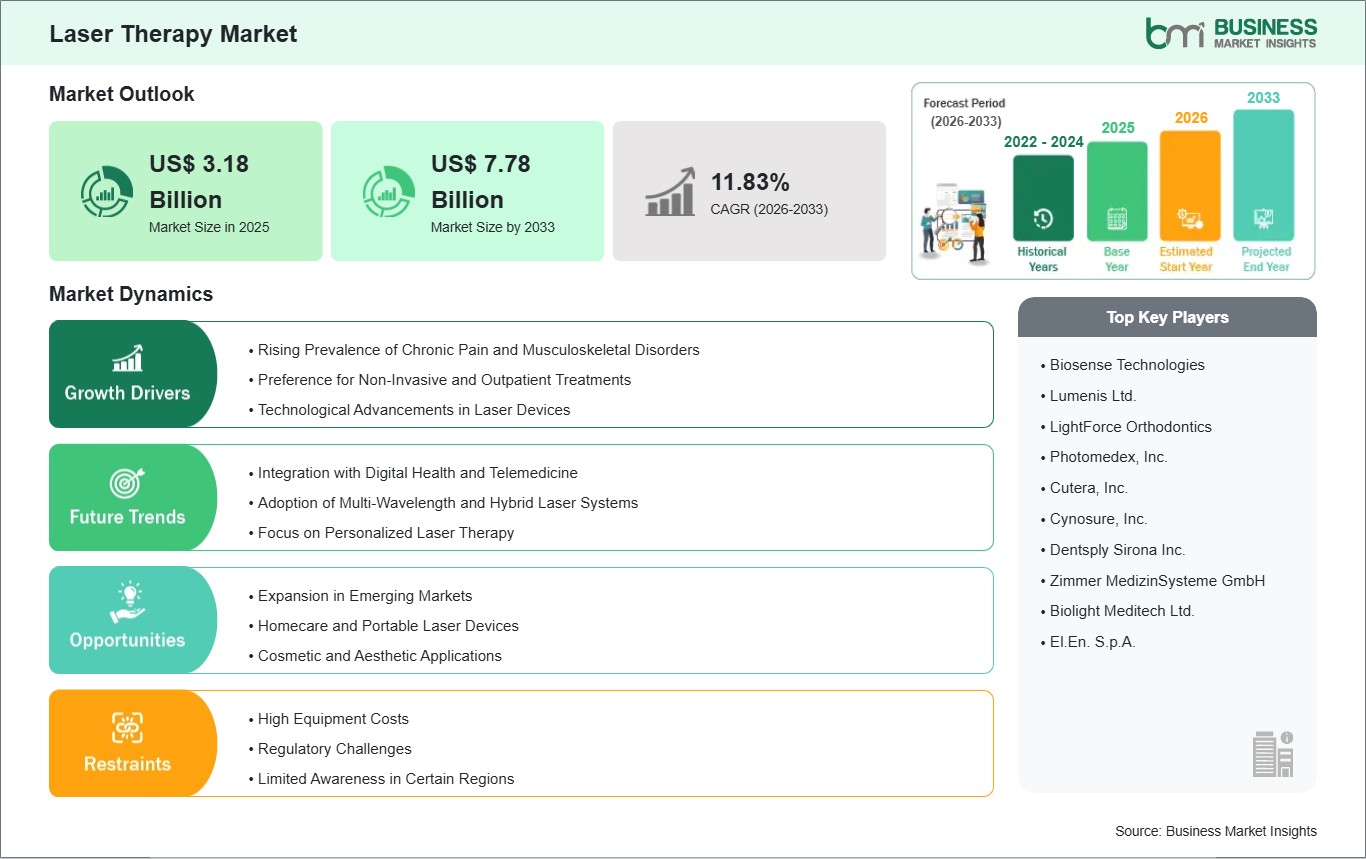
The Laser Therapy market size is expected to reach US$ 7.78 billion by 2033 from US$ 3.18 billion in 2024. The market is estimated to record a CAGR of 11.8% from 2025 to 2033.
The laser therapy market is growing steadily worldwide because many healthcare professionals and patients are choosing to utilize FDA approved, non-invasive therapies for many medical therapies. Laser therapies include Low Level Laser Therapy (LLLT), Fractional Lasers, and High Precision Laser Systems. Low Level Laser Therapy can help relieve pain, promote healing of damaged tissue, treat patients’ dermatological problems, provide a dental procedure with minimal discomfort to the patient and perform aesthetic treatment of patients’ skin with minimal discomfort and less downtime than traditional invasive surgical methods. The use of lasers offers the patient the ability to focus treatment on the area affected resulting in fewer side effects and a more rapid recovery. As a result, patients are increasingly turning to laser therapies to treat chronic pain, musculoskeletal issues, and perform skin resurfacing, hair removal, wound healing, and other therapeutic procedures. Advances in technology will provide hospitals, clinics, rehabilitation facilities, and outpatient clinics with access to portable, user-friendly devices that utilize improved delivery systems, including improvements in wavelengths and the way lasers are delivered to patients. As chronic diseases and age-related conditions continue to grow in number, as well as patient awareness of non-drug therapies, the demand for laser therapy will continue to grow in all regions. The market share of North America is high due to its advanced medical infrastructure and willingness for noninvasive approaches; on the other hand, Asia Pacific has a rapid emergence due to increasing investments into healthcare and growing demand for laser-based therapies (both medical and aesthetic). In general, the outlook for the overall marketplace remains positive because healthcare providers, as well as patients, are seeking more effective, accurate and less disruptive forms of treatment.

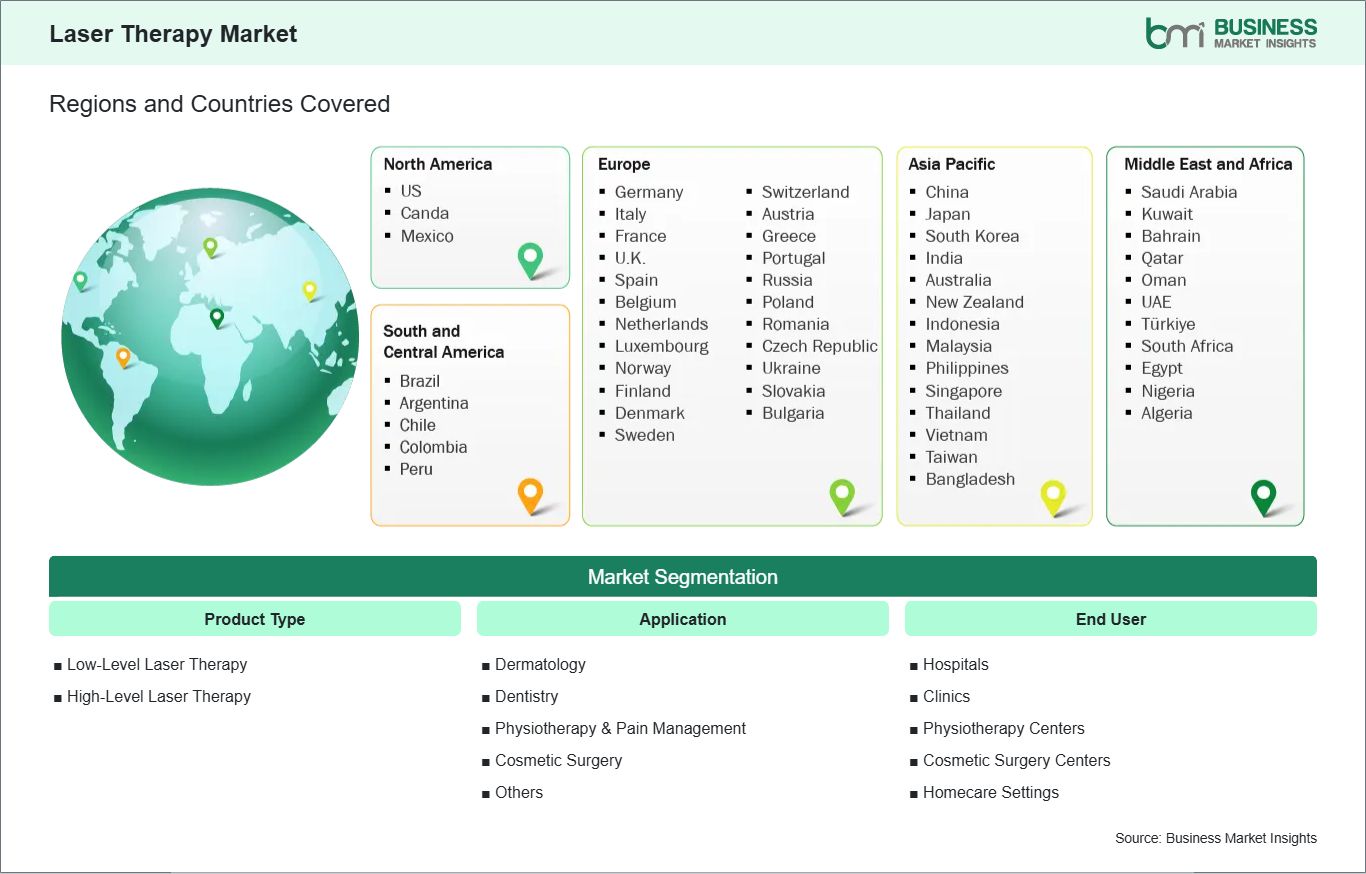
Key segments that contributed to the derivation of the Laser Therapy market analysis are product type, application, and end user.
Throughout the 21st century, the availability of laser therapy on an outpatient basis has expanded because of the increased number of people looking for non-invasive or minimally invasive ways to treat various health and aesthetic issues. Many patients are looking for solutions to their health issues that do not pose the same risks and painful recovery time associated with traditional surgical approaches. Laser therapy allows for very precise targeting of the affected tissue with less trauma to the surrounding area, which provides the patient with the quickest healing time after treatment. In addition to chronic pain and musculoskeletal disorders, laser therapy can be utilized for a wide range of dermatological uses (e.g., acne scars), wound healing and cosmetic enhancements (e.g., hair reduction). Technological improvements such as portable laser therapy devices, better laser policy and longer-lasting laser therapies have also played a role in the increased use of this modality in both outpatient and rehabilitative facilities like clinics and rehab centers. Healthcare providers are increasingly aware of the many benefits of non-pharmacological therapies, as well as the success of various modalities, including laser therapy, in managing pain, healing tissues and improving the appearance of human skin. Care providers are also beginning to recognize the impact of demographic trends on healthcare, such as the growing geriatric population and the increasing prevalence of chronic illnesses among older adults. The popularity and performance of laser therapy will continue to increase because of the speed with which it can work, as well as the safety and efficacy associated with laser therapy for pain management, tissue repair and aesthetic enhancement. Laser therapy is potentially the fastest-growing segment of the healthcare market.
The commercial potential of growth in the Laser Therapy Market can be achieved through expansion into emerging markets that are beginning to see the demand for cosmetic and aesthetic applications increase. "Emerging Economies" within the regions of Asia Pacific, Latin America and the Middle East are seeing increased disposable incomes, increased spending on healthcare services, and increasing access to clinic and hospital services. This is fuelling the growth potential within these regions. The awareness of available technology used for medical and cosmetic conditions is resulting in an increase in the acceptance and demand of Laser Therapy for Hair Removal, Skin Resurfacing, Acne, Scar Reduction and Anti-Aging Treatments. Additionally, social media platforms, celebrity influence, and an increased focus on personal appearance have increased the demand for Minimally Invasive Cosmetic Solutions in the Aesthetic Segment. Products that provide a Greater Portability, Affordability, and Ease of Use have increased the ability of Providers to reach larger patient populations within Urban and Semi-Urban Markets. The development of Partnerships with local Distributors, Training for Clinicians, and Marketing Campaigns to Increase Consumer Awareness of Laser Therapy also represents additional opportunities for companies to gain entry into emerging markets. Companies developing and creating Laser Therapies that are primarily focused on Cosmetic Applications in the Emerging Regions can leverage the current and anticipated future needs of the market, create Global Footprints, develop and support Sustainable, Long-Term Growth, and enhance the ability to provide greater access to Advanced Laser Therapies.
By product type, the laser therapy market is segmented into low-level laser therapy, high-level laser therapy. The low-level laser therapy segment dominated the market in 2024. The musculoskeletal disorders, chronic pains, and sports injuries are the main factors behind the growth of the LLLT segment. This growth is further augmented by patients opting for non, invasive and outpatient treatments.
By application, the market is segmented into dermatology, dentistry, physiotherapy and pain management, cosmetic surgery, others. The physiotherapy and pain management segment held the largest share of the market in 2024. The segment is witnessing an uptrend in demand due to the escalating occurrence of musculoskeletal and chronic pain disorders mainly attributed to aging populations and active adults.
By end user, the market is segmented hospitals, clinics, physiotherapy centers, cosmetic surgery centers, homecare settings. The hospitals segment held the largest share of the market in 2024. Higher patient volume for both therapeutic and rehabilitative interventions along with hospitals embracing sophisticated non, invasive technologies are the major contributors to the segment growth.
| Report Attribute | Details |
|---|---|
| Market size in 2025 | US$ 3.18 Billion |
| Market Size by 2033 | US$ 7.78 Billion |
| Global CAGR (2026 - 2033) | 11.83% |
| Historical Data | 2022 - 2024 |
| Forecast period | 2026-2033 |
| Segments Covered | By Product Type
|
| Regions and Countries Covered | North America
|
| Market leaders and key company profiles |
|
The "Laser Therapy Market Size and Forecast (2022–2033)" report provides a detailed analysis of the market covering below areas:
The geographical scope of the Laser Therapy market report is divided into five regions: North America, Asia Pacific, Europe, Middle East and Africa, and South and Central America. The Laser Therapy market in Asia Pacific is expected to grow significantly during the forecast period.
The Asia-Pacific Laser Therapy market is segmented into China, Japan, South Korea, India, Australia, New Zealand, Indonesia, Malaysia, the Philippines, Singapore, Thailand, Vietnam, Taiwan, Bangladesh, and the Rest of Asia. The Asia Pacific laser therapy market is experiencing rapid growth due to the increasing focus on healthcare expenditures, rising awareness among patients about different types of health care services, and the growing availability of medical technology to provide laser treatment options in different settings throughout the region. Some of the regions that have become significant markets include China, India, Japan, South Korea, and Australia, with a rising incidence of chronic diseases, musculoskeletal injuries, and skin disorders that can all be treated with either non-invasive or minimally invasive methods. The rise in the number of older people, as well as the number of lifestyle-related diseases, is driving up demand for laser therapy for pain management, rehabilitation and regeneration of tissues. The cosmetic and aesthetic category of laser treatment has far surpassed the therapeutic category in terms of revenue growth, with services for hair removal, skin resurfacing, acne treatment, scar healing, and anti-aging procedures gaining traction due to increased income levels and an increase in the perception of beauty by consumers. In addition to increased income and the perception of beauty, the market is growing through the introduction of new technologies that include portable, user-friendly and affordable laser treatment devices, AI or artificial intelligence based systems for precision laser applications, and better delivery of wavelengths. Improvements in healthcare infrastructure, the development of private medical clinics and spas, and increased training opportunities for healthcare workers are also contributing to the growth of the market. There is also a growing trend in the marketplace as consumers become more aware of the advantages of non-invasive laser therapy, and there are several campaigns and government programs that promote awareness of non-invasive healthcare treatment options.

The Laser Therapy market is evaluated by gathering qualitative and quantitative data post primary and secondary research, which includes important corporate publications, association data, and databases. A few of the key developments in the laser therapy market are:
The Laser Therapy Market is valued at US$ 3.18 Billion in 2025, it is projected to reach US$ 7.78 Billion by 2033.
As per our report Laser Therapy Market, the market size is valued at US$ 3.18 Billion in 2025, projecting it to reach US$ 7.78 Billion by 2033. This translates to a CAGR of approximately 11.83% during the forecast period.
The Laser Therapy Market report typically cover these key segments-
The historic period, base year, and forecast period can vary slightly depending on the specific market research report. However, for the Laser Therapy Market report:
The Laser Therapy Market is populated by several key players, each contributing to its growth and innovation. Some of the major players include:
The Laser Therapy Market report is valuable for diverse stakeholders, including:
Essentially, anyone involved in or considering involvement in the Laser Therapy Market value chain can benefit from the information contained in a comprehensive market report.
Please tell us your area of interest
(Market Segments/ Regions and Countries/ Companies)