
Home Infusion Therapy Market Outlook: Size, Share, Trends, Growth Analysis, Competitive Landscape & Forecast, 2026-2033

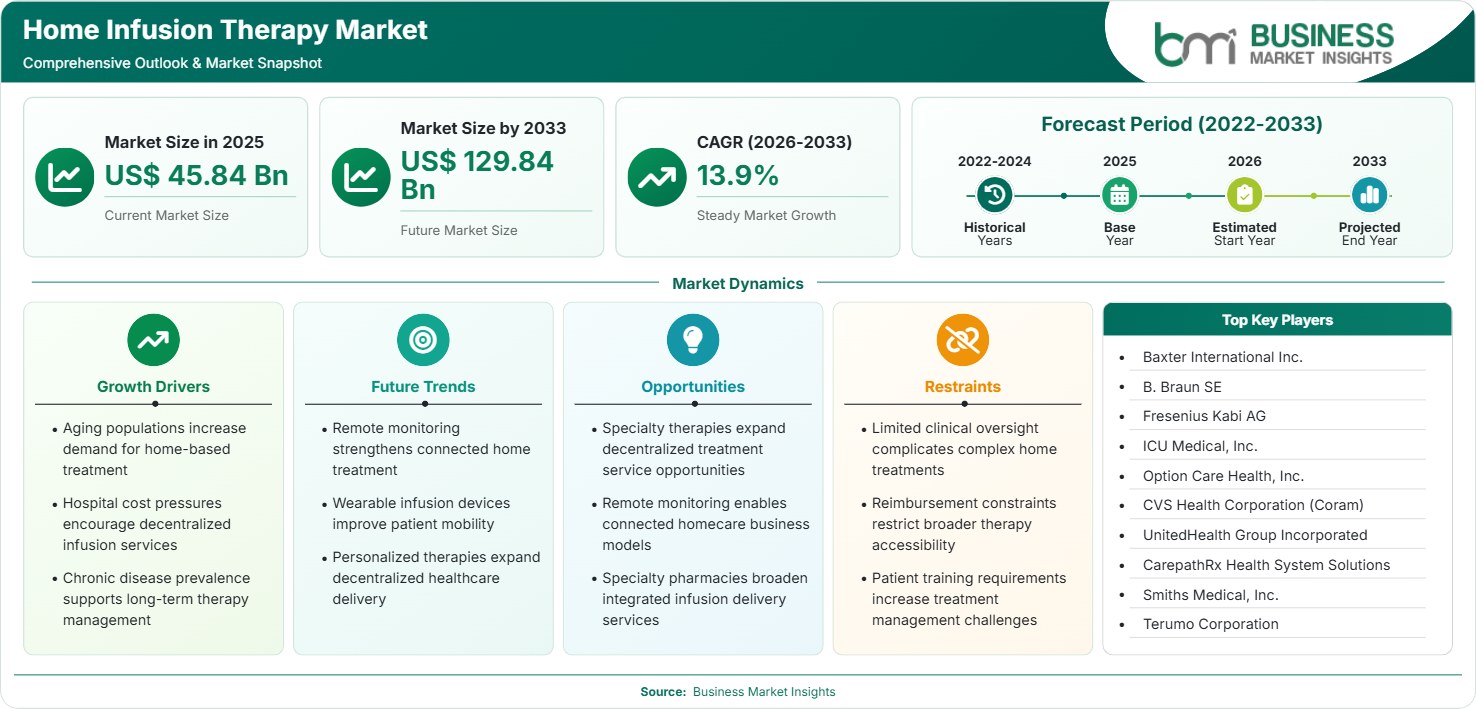
The Home Infusion Therapy Market size was valued at US$ 45.84 Billion in 2025 and is projected to reach US$ 129.84 Billion by 2033, growing at a CAGR of 13.9% during 2026–2033. Rising prevalence of chronic disease, increasing demand for cost-efficient post-acute care, expanding reimbursement support, and technological advances in infusion devices are creating substantial growth opportunities across home-based healthcare ecosystems.

Report Coverage
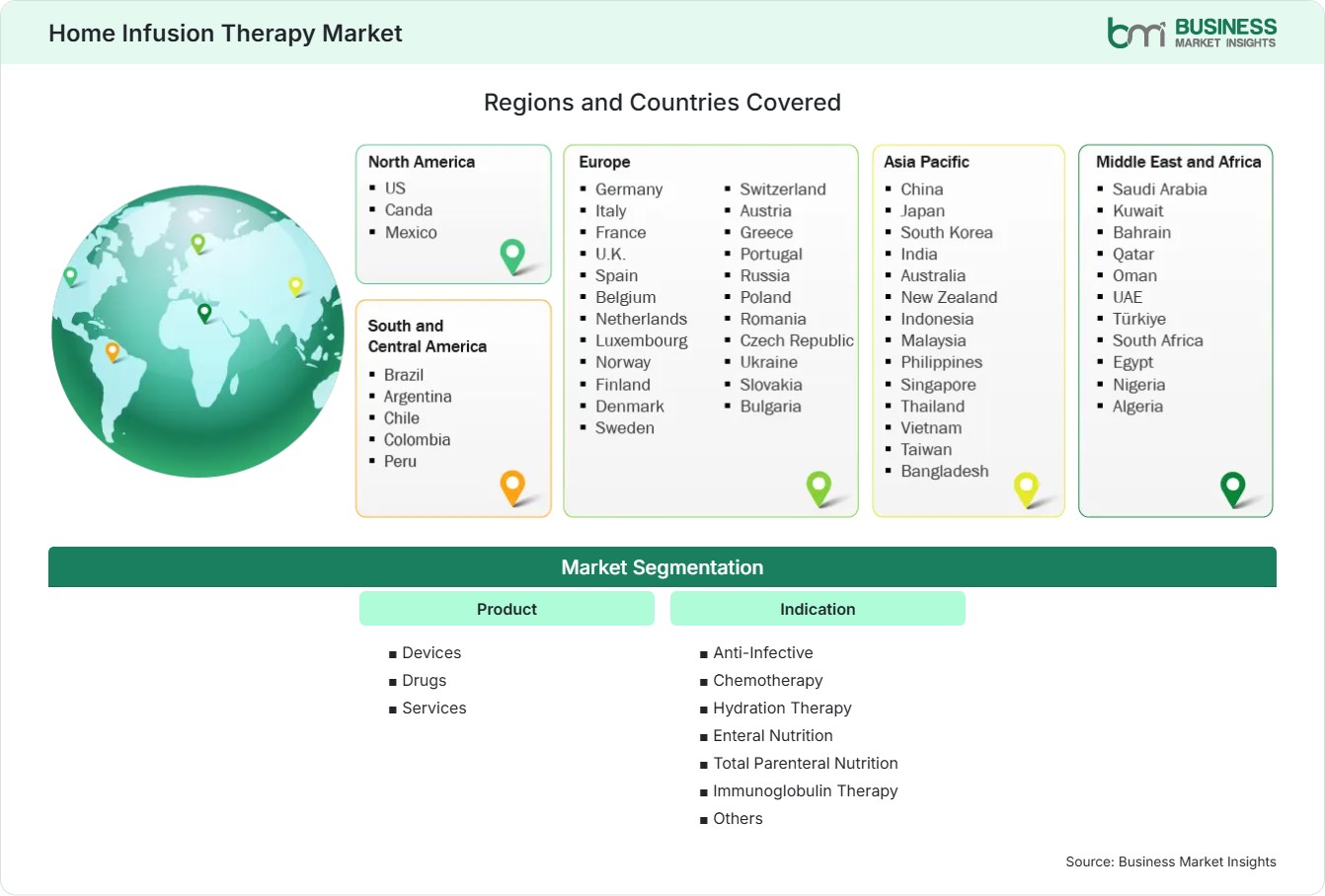
  • Product: Devices, Drugs, Services
  • Indication: Anti-Infective, Chemotherapy, Hydration Therapy, Enteral Nutrition, Total Parenteral Nutrition, Immunoglobulin Therapy, Others
US$ 45.84 Bn Market size in 2025
US$ 129.84 Bn Market Size by 2033
13.9% CAGR, 2026 - 2033
2026-2033 Forecast Period

AI Overview

Home Infusion Therapy Market Summary

  • North America Region: North America holds a market share of 38%–41% in 2025, growing with a CAGR of 12.5%–13.5% during 2026–2033, driven by strong reimbursement coverage, expanding home healthcare services, chronic disease burden, and integrated infusion care models. Opportunity stems from the adoption of digital monitoring and the expansion of specialty pharmacy. The US market remains dominant, supported by established providers, favorable reimbursement frameworks, and growing demand for home-based treatment, advancing at approximately 12.8%–13.8% CAGR.
  • Fastest Growing Region: Asia Pacific holds a market share of 21%–24% in 2025, growing with a CAGR of 15.5%–16.5% during 2026–2033, supported by healthcare infrastructure expansion, aging populations, chronic disease management initiatives, rising disposable incomes, and broader access to advanced infusion therapies in developing economies.
  • Leading Segment: Drugs hold a market share of 46%–49% in 2025, growing with a CAGR of 13.0%–14.0% during 2026–2033, supported by increasing biologics utilization, anti-infective treatment demand, specialty pharmaceutical innovation, and expanding clinical adoption of chronic disease therapies administered within residential environments.
  • High Growth Segment: Immunoglobulin Therapy holds a market share of 12%–15% in 2025, growing with a CAGR of 15.8%–16.8% during 2026–2033, fueled by rising immune deficiency diagnoses, long-term treatment adherence requirements, specialty biologic availability, and preference for decentralized care delivery.
  • Key Market Opportunity: Expansion of connected infusion platforms integrating remote patient monitoring, predictive analytics, specialty pharmacy coordination, and home nursing services enables treatment personalization, improved outcomes, reduced hospital utilization, and operational scalability.
  • Major Market Players: Baxter International Inc.; B. Braun SE; Fresenius Kabi AG; ICU Medical, Inc.; Option Care Health, Inc.; CVS Health Corporation (Coram); UnitedHealth Group Incorporated; CarepathRx Health System Solutions; Smiths Medical, Inc.; Terumo Corporation.
Strategic Insights

Home Infusion Therapy Market: Strategic Insights

Home Infusion Therapy Market Strategic Framework
FREE PDF
Request your free sample
Request free sample
Stakeholder View

Key Takeaways

  • The value chain is becoming more integrated, with specialty pharmacies, suppliers of infusion equipment, nursing agencies, reimbursement providers, and digital monitoring platforms being linked together to form coordinated treatment ecosystems that enhance patient continuity and reduce care fragmentation.
  • The most promising long-term commercial opportunities are in immunoglobulin therapies, biological treatments, and specialized anti-infective applications, as the number of patients requiring repeated doses administered outside traditional clinical settings is increasing.
  • Innovation is now focusing on connected infusion pumps, software that enables dose tracking, cloud-based patient management systems, and predictive analytics tools, all aimed at improving adherence and reducing treatment interruptions.
  • The investment potential remains greatest in the Asia Pacific region, especially in China and India, as the development of healthcare infrastructure and programs to manage chronic diseases is driving the rapid uptake of home-based therapies.
  • The pace of strategic acquisitions is still increasing, with specialty pharmacy operators, infusion service providers, and healthcare technology companies making more acquisitions to achieve a wider geographic presence and more integrated service capabilities.
  • As providers seek to expand their services while maintaining high standards of patient safety and therapeutic effectiveness, workforce development and remote clinical supervision have become important factors that distinguish them from competitors.
Geographic Outlook

Home Infusion Therapy Market Regional Highlights

North America Home Infusion Therapy Market

North America accounted for approximately 38%–41% of revenue in 2025 and is projected to expand at a 12.5%–13.5% CAGR through 2033. The region benefits from mature home healthcare infrastructure, extensive insurance coverage, advanced specialty pharmacy networks, and growing adoption of decentralized care models. The Home Infusion Therapy Market share remains highest in this region due to strong clinical acceptance of at-home administration for anti-infective, nutrition, and biologic therapies. Healthcare providers increasingly deploy connected infusion technologies and coordinated patient management programs to improve outcomes and reduce avoidable hospital admissions.

  • By integrating specialty pharmacy networks, it is possible to provide coordinated delivery of medication, monitoring of treatment, and management of patient adherence for large groups of patients who require long-term therapies.
  • Initiatives based on value in healthcare promote the transfer of appropriate infusion therapies from hospital settings to patients' homes, thus reducing treatment costs without affecting patient satisfaction.
  • Digital monitoring platforms enhance the level of visibility concerning patients' adherence to treatment, the accuracy of their dosing, and the management of adverse events among patients who are spread out over a wide geographical area.
  • The demand for safe and efficient ways of administering biologics and specialty pharmaceuticals is still growing.
  • The shortage of healthcare workers is leading providers to invest in remote supervision technologies and workflow automation solutions.

US Home Infusion Therapy Market

The United States represented approximately 82%–85% Home Infusion Therapy Market share within North America during 2025 and is advancing at a 12.8%–13.8% CAGR through 2033. Market growth will be facilitated by the usage of specialty drugs, the presence of chronic diseases, good reimbursement systems, and a strong provider structure. Big healthcare corporations are now considering home infusion solutions to cut costs and improve patient convenience. Investments in developing technologies for connected care will increase access to treatments.

  • Operators in the specialty pharmacy sector are extending care models that integrate medication management, nursing support, and digital patient engagement tools.
  • The therapies for oncology, immunology, and infectious diseases continue to be major sources of revenue because of the complicated way in which they need to be administered.
  • The uptake of remote patient monitoring is still expanding since healthcare providers are looking for better visibility regarding treatment and a greater ability to detect adverse events.
  • Increasingly, healthcare organizations are using home-based care programs to improve hospital capacity and lower the risks of readmission.

Europe Home Infusion Therapy Market

Europe accounted for approximately 27%–30% of global Home Infusion Therapy Market revenue in 2025 and is anticipated to expand at a 12.8%–13.8% CAGR through 2033. Growth is supported by aging demographics, rising prevalence of chronic illnesses, and government initiatives encouraging treatment outside acute-care facilities. Germany remains the leading regional market, while Spain and selected Central European countries represent higher-growth opportunities. Healthcare systems increasingly emphasize patient-centered care models that support safe delivery of anti-infective therapies, nutrition support, and specialty biologics within residential settings while reducing hospital occupancy pressures.

  • Germany leads regional adoption, benefiting from advanced healthcare infrastructure, extensive reimbursement coverage, and growing deployment of digital monitoring technologies for long-term infusion treatments.
  • The United Kingdom is still extending its community-based healthcare initiatives with the aim of reducing the need for inpatient care and enhancing access to treatment for people with chronic diseases.
  • Spain shows one of the most robust rates of growth, its estimated compound annual growth rate being above the regional average, due to its investments in modernizing healthcare and its strategy of decentralizing the delivery of care.
  • There is a growing trend for specialty biologics and immunoglobulin therapies to be administered on a residential basis to achieve the aims of improving patient convenience and reducing healthcare costs.
  • The collaboration between healthcare providers and pharmaceutical companies across borders is speeding up access to new infusion therapies in the area.

Asia Pacific Home Infusion Therapy Market

Asia Pacific represented approximately 21%–24% of Home Infusion Therapy Market revenue during 2025 and is forecast to record the fastest expansion at a 15.5%–16.5% CAGR through 2033. Rising healthcare expenditures, expanding middle-class populations, and increasing rates of chronic disease diagnosis are driving demand. China remains the largest regional market, while India exhibits some of the fastest growth prospects. Governments and private healthcare providers are investing in healthcare digitization, specialty pharmacy development, and community healthcare services that facilitate home-based treatment delivery and improve accessibility across both urban and rural cities.

  • China holds on to its leadership by making substantial investments in its healthcare infrastructure and by increasingly adopting advanced biologic therapies, which require ongoing administration support.
  • India is a high-growth market because of the improved access to healthcare, the growth of private healthcare networks, and the rising awareness of the advantages of home-based treatment.
  • Japan is still seeing steady demand due to its aging population and the fact that it is focusing on reducing the pressure on intensive healthcare facilities.
  • Healthcare providers are increasingly adopting remote patient management platforms to obtain scalable monitoring solutions for populations that are spread out over a large geographical area.
  • International pharmaceutical manufacturers are now seeing the Asia Pacific area as a strategic region for the growth of specialty infusion therapies and the related services.

Rest of World Home Infusion Therapy Market

The Rest of World region accounted for approximately 10%–13% of global Home Infusion Therapy Market revenue in 2025 and is projected to expand at a 13.5%–14.5% CAGR through 2033. South and Central America benefit from improving healthcare accessibility and increasing chronic disease management initiatives. Brazil remains the largest regional market.

  • In the Middle East and Africa, healthcare diversification programs and infrastructure investments are supporting adoption. Saudi Arabia and the United Arab Emirates demonstrate stronger growth potential than many neighboring markets due to healthcare modernization efforts and the expansion of private-sector participation in specialized home healthcare services.
  • Brazil gains from the expansion of its healthcare service networks and from increasing acceptance of outpatient treatment methods, which in turn enhance patient convenience and improve the efficiency of the system.
  • There is a growing demand in Mexico for infusion services, which is due to the development of the healthcare infrastructure and the focus on chronic disease management.
  • Because of its large-scale healthcare transformation initiatives and its investments in digital health, Saudi Arabia is becoming a center for growth in the region.
  • The United Arab Emirates is still drawing in healthcare investments with the aim of expanding its capabilities in advanced treatments and its home-based healthcare services.
  • Partnerships between the public and private sectors are helping to improve access to specialist infusion therapies in poorly served areas and are also contributing to the long-term development of the market.
Global Market Geography
FREE PDF
Request your free sample
Request free sample
Segment Analysis

Home Infusion Therapy Market Segmentation

Product

Product remains a critical category, with Drugs accounting for the dominant revenue contribution. The segment benefits from increased specialty pharmaceutical utilization and expanded adoption of biologic treatments. The Home Infusion Therapy Market scope continues to broaden due to technological advancements and integrated service delivery models. Product-related revenue generated approximately 46%–49% share in 2025 and is forecast to expand at 13.0%–14.0% CAGR through 2033.

  • Devices: Smart infusion pumps, ambulatory systems, and electronic monitoring technologies improve treatment precision, patient safety, and operational efficiency while supporting broader adoption of decentralized healthcare delivery models.
  • Drugs: Specialty pharmaceuticals, biologics, anti-infectives, and immunoglobulin products drive utilization as healthcare providers increasingly administer complex long-term therapies outside conventional clinical environments.
  • Services: Nursing support, specialty pharmacy coordination, patient education, therapy management, and reimbursement assistance strengthen treatment adherence while ensuring continuity of care across home settings.

Indication

Indication-based demand reflects the growing burden of chronic and acute illnesses requiring prolonged treatment. Anti-infective applications currently represent the largest category, whereas immunoglobulin therapy records the strongest growth momentum. This segment contributes roughly 51%–54% market share in 2025 and is expected to advance at a 13.8%–14.8% CAGR throughout the forecast period. The Home Infusion Therapy Market trends increasingly reflect movement toward personalized long-term therapy administration.

  • Anti-Infective: Widespread use for serious infections requiring prolonged intravenous antibiotic therapy supports consistent demand across hospital discharge programs and outpatient treatment pathways.
  • Chemotherapy: Growing preference for patient-centric cancer care contributes to adoption as healthcare providers seek comfortable treatment environments while maintaining therapy effectiveness and adherence.
  • Hydration Therapy: Utilization continues expanding among elderly populations, gastrointestinal disorder patients, and individuals requiring fluid replacement without repeated hospital visits.
  • Enteral Nutrition: Rising prevalence of neurological disorders, swallowing difficulties, and chronic illnesses supports demand for structured nutritional therapy within residential care environments.
  • Total Parenteral Nutrition: Critical nutritional support for patients experiencing gastrointestinal dysfunction or absorption limitations sustains demand from specialized healthcare providers.
  • Immunoglobulin Therapy: Increasing diagnosis of immune deficiency disorders and broadening biologic treatment access continue driving accelerated adoption within home healthcare settings.
Market Forces

Home Infusion Therapy Market Dynamics

Key Market Drivers

Rising Chronic Disease Burden and Aging Population

The growing prevalence of chronic illnesses continues to create sustained demand for infusion therapies delivered outside hospital environments. According to WHO assessments, chronic diseases account for the majority of global mortality, while aging populations require long-term treatment support for cancer, immune disorders, gastrointestinal diseases, and infectious conditions. Home-based infusion models reduce hospitalization requirements and improve treatment continuity. Home healthcare providers are increasingly supporting complex therapies historically administered in institutional settings. These structural shifts in healthcare are accelerating adoption across developed and emerging economies. The transition toward patient-centered treatment delivery remains a fundamental factor supporting long-term expansion and broader therapeutic utilization across multiple disease categories.

Expansion of Specialty Pharmaceuticals and Biologics

Specialty medicines are one of the main drivers of growth in the industry. The increasing use of biologics, immunoglobulins, monoclonal antibodies, and targeted therapies has led to a greater demand for controlled infusion administration outside of hospital settings. Since many specialty drugs require repeated treatments lasting months or years, providing residential care is an economically sound option for payers and healthcare systems. Ongoing pharmaceutical innovation is continually expanding the range of treatments available for autoimmune disorders, oncology conditions, rare diseases, and immune deficiencies. Whenever new biologic treatments receive regulatory approval, there is a corresponding increase in demand for skilled nursing care, infusion equipment, and coordination by specialty pharmacies. This ongoing development in therapy greatly enhances long-term revenue potential throughout the entire value chain.

Advancements in Connected Infusion Technologies

Technology is changing how treatments are delivered through intelligent pumps, remote monitoring systems, cloud-linked platforms, and digital tools that help patients adhere to their regimens. Nowadays, healthcare organizations are using connected infusion devices to improve dosing accuracy, patient safety, and treatment visibility. By integrating with electronic medical records, clinicians can monitor how therapy is progressing and respond more quickly when problems arise. Device makers keep coming out with new technologies that help patients in long-term care move around more easily and use devices more easily. These innovations are helping alleviate workforce shortages while increasing access to treatment. Improved data collection and the use of predictive analytics are leading to improved clinical outcomes and greater confidence in care models for decentralized infusion.

Key Market Opportunities

Remote Patient Monitoring and Digital Care Integration

Digital health platforms are creating substantial opportunities for healthcare providers and technology developers. Connected monitoring systems enable real-time supervision of infusion therapies, reducing adverse events and improving adherence. Providers can use digital engagement tools to enhance patient education, monitor treatment progress, and optimize resource allocation. Integration with telehealth services further expands the capability to manage complex conditions remotely. Investments in artificial intelligence-enabled care coordination and predictive healthcare analytics are expected to increase over the forecast period. Home Infusion Therapy Market Forecasts indicate significant value creation through technology-enabled service differentiation and improved healthcare delivery efficiency, particularly within high-volume chronic disease treatment programs.

Rapid Healthcare Expansion Across Emerging Economies

Because of healthcare modernization programs and the increasing burden of chronic diseases, emerging markets offer considerable opportunities. In the Asia-Pacific region, in Latin America, and in some countries in the Middle East, governments are boosting their investments in healthcare infrastructure and digital health capabilities. As insurance coverage rises and access to specialty pharmaceuticals improves, the conditions for adoption become more favorable. Private healthcare operators to extend independence in their community programs to decrease reliance on inpatient treatment. Greater awareness of the convenience and cost-effectiveness of treatment also increases demand. Companies that are able to create scalable and localized service models are likely to gain significant benefits from the growing patient populations and the rising healthcare spending in developing economies.

Growth of Specialty Pharmacy and Integrated Care Networks

The greater the convergence among specialty pharmacies, infusion providers, and digital healthcare platforms, the more opportunities there are to build comprehensive treatment ecosystems. When these services are integrated, treatment coordination, reimbursement navigation, medication delivery, and patient support services all improve. Nowadays, healthcare organizations are increasingly looking for partners who can take charge of the entire treatment journey rather than just offering individual service elements. Strategic partnerships between pharmaceutical companies and service providers help in the commercialization of new therapies that require long-term administration. The expansion of integrated care platforms also leads to better clinical outcomes while reducing operational complexity for both providers and patients. These developments offer appealing investment opportunities across the healthcare services sector.

Market Restraints and Challenges

Reimbursement Complexity and Treatment Access Delays

Reimbursement complexity remains a major challenge affecting treatment accessibility and provider profitability. Therapies administered in-home may be subject to different coverage guidelines across health care payers, making the administration process more complicated for both providers and patients. The prior authorization process, documentation requirements, and reimbursement details for individual products can hinder the initiation of therapy. The consequences might include slower patient onboarding, higher expenses, and difficulties with receiving reimbursement. Small healthcare organizations are especially exposed to such problems because of the limited number of people responsible for reimbursement issues.

Skilled Workforce Constraints and Capacity Limitations

Shortages of trained nurses, pharmacists, and infusion specialists present operational challenges across many healthcare systems. Home-based therapy models rely heavily on qualified personnel capable of managing complex treatments, patient education, and adverse-event response. Impact includes service capacity constraints, rising labor costs, and difficulties scaling operations in underserved regions. Workforce shortages are particularly pronounced in rural areas where provider availability remains limited. Organizations increasingly invest in remote monitoring technologies and workflow automation to mitigate staffing challenges. However, maintaining high clinical standards while expanding service coverage remains a critical barrier influencing market development and provider competitiveness.

Company Analysis

Competitive Landscape

The competitive environment is characterized by integrated healthcare providers, infusion device manufacturers, specialty pharmacy organizations, and service companies. Current Home Infusion Therapy Market analysis indicates increasing emphasis on integrated care delivery, digital monitoring technologies, and specialty pharmaceutical support.

Company Name

Overview

Products and Services relevant to this market

Baxter International Inc.

Global healthcare company with strong infusion therapy and medication delivery capabilities serving hospitals and alternate care environments.

Infusion pumps, IV solutions, nutrition products, infusion therapy technologies, connected medication management platforms.

B. Braun SE

Major medical technology provider focused on drug delivery systems and infusion therapy solutions worldwide.

Infusion pumps, vascular access devices, IV administration systems, medication delivery technologies.

Fresenius Kabi AG

Global pharmaceutical and medical device manufacturer serving nutrition, infusion, and critical care markets.

Clinical nutrition products, infusion therapies, IV pharmaceuticals, administration equipment.

ICU Medical, Inc.

Specialized infusion technology company focused on safe and connected medication delivery systems.

Precision infusion pumps, ambulatory infusion devices, infusion safety software, IV administration products.

Option Care Health, Inc.

Leading independent provider of home and alternate site infusion services in the United States.

Home infusion therapy, specialty pharmacy services, nursing support, patient management programs.

CVS Health Corporation (Coram)

Healthcare services organization providing specialty pharmacy and selected infusion-related patient support services.

Specialty infusion support, nutrition services, pharmacy management, clinical nursing coordination.

UnitedHealth Group Incorporated

Diversified healthcare enterprise supporting home-based care and specialty healthcare delivery.

Specialty healthcare services, home care coordination, pharmacy benefit management, clinical support.

CarepathRx Health System Solutions

Healthcare company specializing in specialty pharmacy and infusion service optimization.

Pharmacy management, infusion program support, patient engagement and reimbursement services.

Smiths Medical, Inc.

Medical device manufacturer with significant infusion and vascular access product portfolio.

Ambulatory infusion systems, syringe pumps, vascular access solutions, medication delivery devices.

Terumo Corporation

Global medical technology company supporting advanced infusion and vascular care applications.

Infusion systems, catheters, vascular access products, medication administration technologies.

Trust & Transparency

Research Methodology

The market analysis combines proprietary research with secondary data from government agencies, company disclosures, regulatory filings, industry databases and expert interviews. Market estimates are validated through data triangulation, cross-market benchmarking and analyst review.

View Full Research Methodology

Questions Answered

Frequently Asked Questions

What does the Home Infusion Therapy Market Report typically evaluate?

The Home Infusion Therapy Market Report provides an assessment of revenue performance, competitive positioning, technology developments, regulatory frameworks, regional opportunities, segment dynamics, investment activity, future demand outlook, and strategic growth opportunities across the industry value chain.

How are digital technologies influencing treatment delivery models?

Connected infusion pumps, remote patient monitoring solutions, telehealth integration, electronic clinical documentation, and analytics-based adherence management are improving treatment safety and supporting efficient large-scale home healthcare operations across patient populations.

Why is Asia Pacific considered a high-potential investment destination?

Healthcare infrastructure expansion, growing middle-class populations, rising healthcare spending, expanding insurance access, and increasing chronic disease diagnosis rates are creating attractive growth opportunities. China and India remain particularly important markets for future capacity expansion.

Which therapy indication generates the highest demand within the industry?

Anti-infective therapies currently account for the largest indication category due to widespread use of intravenous antibiotics for serious infections requiring extended treatment after hospital discharge. Demand also remains strong for nutrition support therapies and specialty biologic treatments.

What factors are accelerating adoption of home-based infusion treatments?

Growth is primarily supported by rising chronic disease prevalence, increasing specialty biologic utilization, healthcare cost optimization efforts, improved infusion device technologies, and expanding patient preference for treatment in non-hospital environments. These factors collectively support broader therapy migration toward home care settings.

Access the Full Home Infusion Therapy Market Report

Get segment-level forecasts, regional estimates, competitive benchmarking, company profiles and downloadable Excel datasets.

Access the full Home Infusion Therapy Market Report
350 pages PDF & Excel | 2026-09-17
Similar Research

Related Market Reports