
Infusion Pump Market Outlook: Size, Share, Trends, Growth Analysis, Competitive Landscape & Forecast, 2026-2033

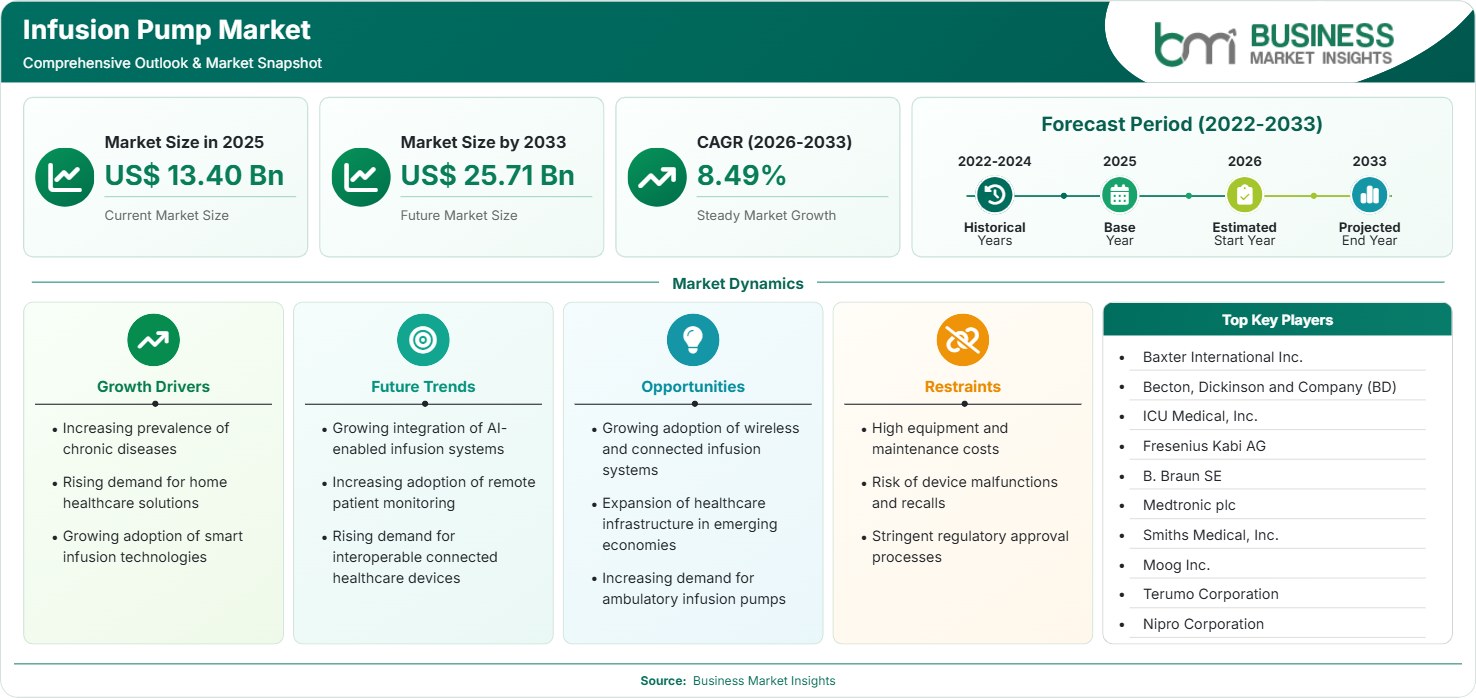
The Infusion Pump Market size was valued at US$ 13.40 Billion in 2025 and is projected to reach US$ 25.71 Billion by 2033, growing at a CAGR of 8.49% during 2026–2033. Rising incidence of chronic diseases, increasing demand for home-based therapies, and expanding adoption of smart infusion technologies continue supporting market expansion, while connected infusion systems and healthcare infrastructure investments create long-term growth opportunities.

Report Coverage
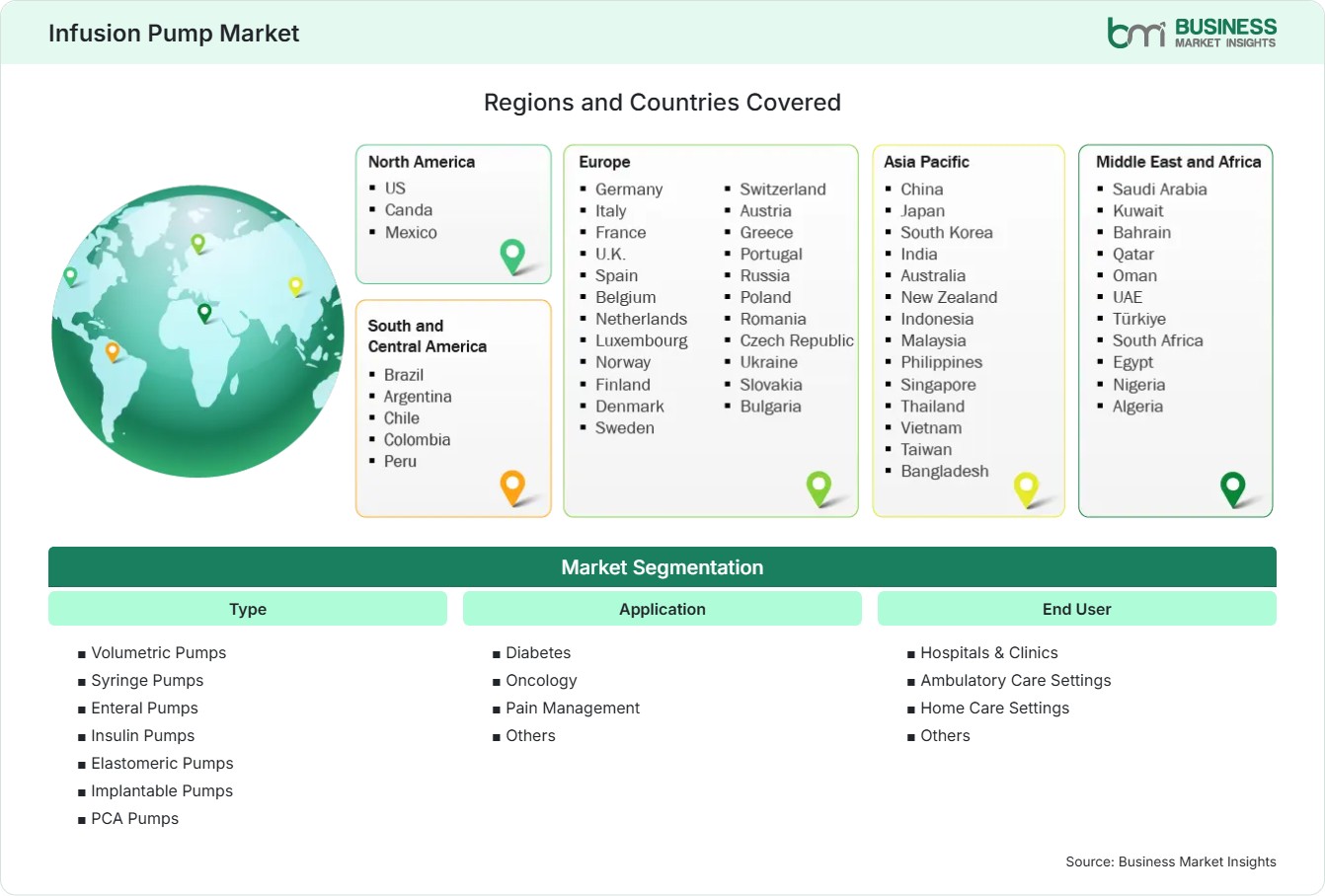
  • Type: Volumetric Pumps, Syringe Pumps, Enteral Pumps, Insulin Pumps, Elastomeric Pumps, Implantable Pumps, PCA Pumps
  • Application: Diabetes, Oncology, Pain Management, Others
  • End User: Hospitals & Clinics, Ambulatory Care Settings, Home Care Settings, Others
US$ 13.40 Bn Market size in 2025
US$ 25.71 Bn Market Size by 2033
8.49% CAGR, 2026 - 2033
2026-2033 Forecast Period

01 AI Overview

Infusion Pump Market Summary

  • North America Region: North America holds 39%–41% share in 2025 and is projected to expand at a 7.8%–8.3% CAGR during 2026–2033. Advanced healthcare infrastructure, widespread adoption of smart medical devices, increasing chronic disease burden, and favorable reimbursement policies continue driving technology investments. The United States remains the regional leader, expanding at a CAGR of 7.9%–8.5% owing to strong hospital investments, advanced diabetes care, and increasing outpatient infusion therapy adoption.
  • Fastest Growing Region: Asia Pacific accounts for 24%–27% share in 2025 while registering a 9.8%–10.4% CAGR during 2026–2033. Rising healthcare expenditure, expanding hospital capacity, increasing diabetes prevalence, and improving medical device accessibility continue accelerating regional demand.
  • Leading Segment: Hospitals & Clinics account for 52%–55% share in 2025 and are expected to grow at a 8.3%–8.8% CAGR during 2026–2033. High patient admissions, expanding surgical procedures, intensive care utilization, and continuous intravenous therapy requirements sustain strong demand.
  • High Growth Segment: Insulin Pumps contribute 20%–23% share in 2025 while expanding at a 10.2%–10.8% CAGR through 2033. Increasing diabetes prevalence, continuous glucose monitoring integration, and growing patient preference for automated insulin delivery continue supporting rapid segment growth.
  • Key Market Opportunity: Expanding deployment of wireless infusion platforms integrated with hospital information systems, remote patient monitoring, artificial intelligence, and cloud-based analytics is creating substantial opportunities for medical device manufacturers and healthcare providers.
  • Major Market Players: Baxter International Inc., Becton, Dickinson and Company (BD), ICU Medical, Inc., Fresenius Kabi AG, B. Braun SE, Medtronic plc, Smiths Medical, Inc., Moog Inc., Terumo Corporation, Nipro Corporation.
02 Strategic Insights

Infusion Pump Market: Strategic Insights

Infusion Pump Market Strategic Framework
FREE PDF
Request your free sample
Request free sample
03 Stakeholder View

Key Takeaways

  • The market ecosystem increasingly integrates medical device manufacturers, software developers, healthcare providers, component suppliers, and digital health companies to deliver interoperable infusion management solutions with enhanced patient safety.
  • Home healthcare and ambulatory infusion therapies present the strongest commercial opportunities as healthcare systems prioritize outpatient treatment, reduced hospitalization, and patient-centered care delivery.
  • Innovation increasingly focuses on wireless connectivity, smart dose error reduction systems, artificial intelligence, predictive maintenance, and seamless integration with electronic medical records.
  • Asia Pacific offers the most attractive long-term investment opportunity owing to expanding healthcare infrastructure, increasing chronic disease prevalence, growing medical device manufacturing, and supportive healthcare modernization initiatives.
  • Strategic acquisitions, technology partnerships, and product portfolio expansions continue strengthening competitive positioning as manufacturers develop connected infusion ecosystems and digital medication management platforms.
  • Regulatory emphasis on patient safety, cybersecurity, device interoperability, and software validation continues encouraging investment in next-generation infusion technologies that minimize medication errors while improving operational efficiency.
04 Geographic Outlook

Infusion Pump Market Regional Highlights

North America Infusion Pump Market

North America accounts for 39%–41% Infusion Pump Market share in 2025 and is projected to expand at a 7.8%–8.3% CAGR during 2026–2033. The region benefits from advanced hospital infrastructure, widespread adoption of connected medical technologies, increasing prevalence of chronic diseases, and strong regulatory oversight supporting patient safety supporting market.

  • Hospitals increasingly deploy interoperable smart infusion pumps integrated with electronic medical records to reduce medication errors and improve clinical workflow efficiency.
  • Rising prevalence of diabetes, cancer, cardiovascular diseases, and critical care admissions continues supporting demand for advanced infusion technologies.
  • Strong reimbursement frameworks encourage healthcare providers to adopt premium infusion management systems featuring dose error reduction software and wireless connectivity.
  • Medical device manufacturers continue investing in cybersecurity, interoperability, and predictive maintenance capabilities to improve system reliability and regulatory compliance.
  • Growing home infusion therapy services support broader utilization of portable and wearable infusion technologies beyond traditional hospital settings.

US Infusion Pump Market

The United States represents the largest national market with 31%–33% global share in 2025 while expanding at a 7.9%–8.5% CAGR through 2033. High healthcare expenditure, advanced digital health infrastructure, increasing outpatient care, and continuous innovation in infusion technologies continue driving sustained Infusion Pump market demand across hospitals and home healthcare settings.

  • Increasing integration of infusion pumps with electronic health records enhances medication safety, workflow automation, and treatment documentation.
  • Growing adoption of insulin pumps and ambulatory infusion systems supports personalized chronic disease management and improved patient outcomes.
  • Strong investment in healthcare cybersecurity strengthens protection against network vulnerabilities affecting connected medical devices.
  • Continuous technological innovation supports development of smaller, portable, and patient-friendly infusion systems suitable for long-term therapy.

Europe Infusion Pump Market

Europe represents 27%–29% share in 2025 while advancing at a 8.0%–8.6% CAGR through 2033. Expanding aging populations, increasing chronic disease incidence, and supportive healthcare modernization initiatives continue strengthening regional demand. Germany remains the leading Infusion Pump market, while Poland demonstrates the fastest growth with a projected 9.2%–9.8% CAGR during the forecast period.

  • Hospitals continue replacing conventional infusion systems with connected smart pumps to improve medication safety and operational efficiency.
  • Increasing oncology treatment volumes support wider adoption of programmable infusion systems for chemotherapy administration.
  • Rising demand for home healthcare services encourages deployment of portable infusion technologies across chronic disease management.
  • Medical device regulations continue promoting higher quality standards, cybersecurity enhancements, and interoperability improvements.
  • Investment in digital healthcare infrastructure strengthens integration between infusion devices and clinical information systems.

Asia Pacific Infusion Pump Market

Asia Pacific accounts for 24%–27% share in 2025 while recording the fastest expansion at a 9.8%–10.4% CAGR during 2026–2033 in infusion pump market. Rapid healthcare infrastructure development, increasing diabetes prevalence, expanding hospital networks, and rising healthcare expenditure continue supporting strong regional demand. China leads overall consumption, while India records the highest growth with a projected 10.6%–11.2% CAGR through 2033.

  • Government investments in healthcare modernization accelerate procurement of advanced infusion technologies across public hospitals.
  • Growing prevalence of diabetes and cancer significantly increases long-term infusion therapy requirements.
  • Domestic medical device manufacturing supports broader availability of technologically advanced infusion systems.
  • Expansion of private healthcare providers strengthens demand for intelligent medication delivery technologies.
  • Increasing awareness regarding patient safety promotes adoption of smart infusion systems featuring dose error reduction software.

Rest of World Infusion Pump Market

The Rest of World region contributes 8%–10% share in 2025 while expanding at a 8.4%–9.0% CAGR during 2026–2033 in infusion pump market. South & Central America benefit from improving healthcare accessibility, while Middle East & Africa experience growing investments in hospitals, specialty care centers, and advanced medical technologies supporting infusion therapy adoption.

  • Brazil remains the leading South & Central American market, while Mexico records the fastest expansion with a projected 9.3%–9.9% CAGR.
  • The United Arab Emirates leads Middle Eastern adoption through advanced healthcare investments, while Saudi Arabia grows at a 9.5%–10.0% CAGR supported by healthcare transformation initiatives.
  • Increasing oncology treatment capacity continues driving procurement of programmable infusion systems across regional hospitals.
  • Growing home healthcare services create additional demand for portable infusion devices supporting long-term patient care.
  • International manufacturers continue expanding regional partnerships to strengthen distribution networks and technical support capabilities.
Global Market Geography
FREE PDF
Request your free sample
Request free sample
05 Segment Analysis

Infusion Pump Market Segmentation

Type

The type segment forms the technological backbone of infusion therapy because the healthcare practitioners choose devices based on the type of medication, dose delivery requirements, portability, and usage in practice. Volumetric Pumps have maintained the dominance in this category because of the extensive use of this technology in hospitals. This segment accounted for approximately 29%–32% market share in 2025 and is projected to expand at a 8.4%–8.9% CAGR during 2026–2033. The Infusion Pump Market scope continues expanding as manufacturers integrate wireless connectivity, dose error reduction software, and interoperability features into modern infusion platforms.

  • Volumetric Pumps: Volumetric pumps remain extensively deployed in hospitals and intensive care units because they deliver highly accurate fluid administration across continuous intravenous therapies, surgical procedures, and emergency medical care.
  • Syringe Pumps: Syringe pumps continue witnessing strong demand for neonatal care, anesthesia, critical care, and precise low-volume drug delivery where controlled infusion rates are essential for patient safety.
  • Enteral Pumps: Enteral pumps are increasingly adopted for nutritional support across hospitals and home healthcare settings, ensuring controlled delivery of enteral nutrition while improving patient comfort and treatment consistency.
  • Insulin Pumps: Insulin pumps experience accelerating adoption owing to growing diabetes prevalence, integration with continuous glucose monitoring systems, automated insulin delivery, and increasing preference for personalized disease management.
  • Elastomeric Pumps: Elastomeric pumps remain widely utilized for outpatient antibiotic therapy, pain management, and chemotherapy because of their lightweight, disposable design and reliable continuous drug infusion capabilities.
  • Implantable Pumps: Implantable pumps continue serving specialized therapeutic applications requiring long-term targeted drug administration, particularly for chronic pain management and severe spasticity treatment.
  • PCA Pumps: Patient-controlled analgesia pumps enable patients to self-administer prescribed pain medication within programmed safety limits, supporting postoperative recovery and improved pain management outcomes.

Application

Application-based demand is driven by the increasing prevalence of chronic diseases requiring long-term medication administration and precise infusion therapy. Diabetes remains the largest application segment due to expanding insulin pump utilization, rising global diabetic populations, and continuous advancements in automated insulin delivery technologies. The segment represented approximately 36%–39% market share in 2025 and is expected to register a 9.3%–9.8% CAGR during the forecast period. The Infusion Pump Market share continues increasing across chronic disease management as healthcare providers prioritize personalized, continuous, and home-based treatment approaches.

  • Diabetes: Increasing adoption of insulin pumps integrated with continuous glucose monitoring supports improved glycemic control, enhanced patient convenience, and reduced long-term diabetes-related complications.
  • Oncology: Oncology applications continue expanding because chemotherapy administration requires highly accurate, programmable infusion systems capable of delivering complex treatment regimens while minimizing medication errors.
  • Pain Management: Pain management remains a significant application area through patient-controlled analgesia systems, implantable pumps, and ambulatory infusion technologies supporting postoperative and chronic pain treatment.

End User

End-user demand continues to be led by hospitals and large healthcare institutions owing to high patient volumes, intensive care requirements, and increasing adoption of connected medical technologies. Hospitals & Clinics accounted for approximately 52%–55% market share in 2025 and are projected to expand at a 8.3%–8.8% CAGR during 2026–2033. Increasing digital transformation, patient safety initiatives, and workflow automation continue strengthening adoption across both developed and emerging healthcare systems in Infusion Pump market.

  • Hospitals & Clinics: Hospitals remain the largest purchasers of infusion pumps because of continuous medication administration requirements across intensive care, surgery, oncology, emergency medicine, and inpatient treatment environments.
  • Ambulatory Care Settings: Ambulatory care facilities increasingly deploy portable infusion systems to support outpatient therapies, improve treatment accessibility, reduce hospitalization duration, and enhance healthcare delivery efficiency.
  • Home Care Settings: Home healthcare providers continue expanding utilization of portable infusion technologies for diabetes management, antimicrobial therapy, nutritional support, and chronic disease treatment, improving patient comfort while reducing healthcare costs.
06 Market Forces

Infusion Pump Market Dynamics

Key Market Drivers

Increasing prevalence of chronic diseases

The increasing pressure from chronic diseases remains the key factor in the development of infusion therapy globally. The statistics released by the World Health Organization (WHO) reveals that about 74% of all the global deaths are caused by non-communicable diseases, showing an increase in demand for drug delivery systems. The Infusion Pump Market growth has been propelled by increased cases of diabetes, cancer, cardiovascular diseases, and autoimmune diseases which demand precise delivery of medications to patients.

Rising demand for home healthcare solutions

Healthcare is progressively being restructured with a focus on home health care in order to minimize the number of patients admitted into hospitals and make healthcare cost-effective. Portable infusion devices ensure that patients can access intravenous antibiotics, nutrition, chemotherapy, pain control, and insulin treatment within the confines of their homes without compromising on the efficacy of such treatments. Increased longevity of the global population and the rising number of patients suffering from chronic conditions reinforce the need for miniaturized infusion devices.

Growing adoption of smart infusion technologies

Smart infusion pumps with dose error reduction software, wireless capabilities, barcode medication administration, and integration with electronic health records are being adopted quickly by hospitals and healthcare organizations. These innovations make it easier to administer medication safely and reduce programming mistakes by standardizing the clinical process.  The Infusion Pump Market trends show increasing funding of artificial intelligence, predictive analytics, and cloud monitoring technologies that are able to optimize infusion administration. With the focus on patient safety and technological modernization among healthcare organizations, the need for these technologies will continue to grow.

Key Market Opportunities

Growing adoption of wireless and connected infusion systems

The advent of wireless technologies and the Internet of Medical Things is changing the field of infusion therapy by means of real-time monitoring, device management, and integration into hospital information systems. Wireless infusion pumps contribute to improved drug delivery, predictive maintenance, and clinical decision making based on centralized analytics. Infusion Pump Market Forecasts show consistent growth in the development of interoperable systems that can integrate infusion pumps with medical records, pharmacy systems, and remote patient monitoring systems. Companies that focus on cybersecurity, cloud connectivity, and smart software platforms are likely to benefit from healthcare digitalization.

Expansion of healthcare infrastructure in emerging economies

Investments in the healthcare sector in the Asia-Pacific region, Latin America, Middle East, and Africa have been constantly offering considerable opportunities for infusion pump companies. Governments have been making efforts to increase the number of hospital beds, develop critical care facilities, and improve access to advanced healthcare equipment in order to respond to increased healthcare needs. Higher expenditure on healthcare, insurance coverage, and favorable public health policies are also conducive to the purchase of infusion devices. Companies that expand their operations in these regions are likely to benefit from the increased demand.

Increasing demand for ambulatory infusion pumps

The growing significance of ambulatory infusion pumps is a result of the increasing focus on outpatient care by healthcare service providers. Such devices allow one to administer chemotherapy, analgesics, antibiotics, hydration, and nutritional therapy while lowering hospitalization expenses and increasing the patient’s mobility. The improvement in terms of batteries, miniaturization, wireless capabilities, and programmable drug administration makes the devices easier to use for different purposes. The ever-growing preference for treatment methods that cause minimal disturbance is creating positive market conditions for innovative ambulatory infusion devices.

Market Restraints and Challenges

High equipment and maintenance costs

Factor: High acquisition costs associated with advanced infusion pumps, integrated software platforms, and wireless connectivity continue to present a significant barrier for healthcare providers, particularly small hospitals, ambulatory care centers, and healthcare facilities in emerging economies. Impact: Budget constraints often delay replacement of legacy infusion systems and reduce procurement of technologically advanced devices despite their clinical benefits. Healthcare organizations may continue operating older equipment with limited interoperability, affecting workflow efficiency and medication safety initiatives. Cost pressures also restrict adoption of smart infusion technologies in resource-constrained healthcare systems, creating uneven market penetration across regions.

Risk of device malfunctions and recalls

Factor: Software defects, hardware failures, cybersecurity vulnerabilities, component failures, and user programming errors can result in product recalls or temporary suspension of device usage, increasing regulatory scrutiny across global healthcare markets. Impact: Product recalls may disrupt hospital operations, delay procurement decisions, increase compliance costs, and reduce healthcare providers' confidence in affected product portfolios. Manufacturers often incur significant expenses related to corrective actions, regulatory reporting, product redesign, and post-market surveillance activities. Extended approval timelines for updated devices may also delay commercialization of innovative technologies and increase research and development expenditure in the Market.

07 Company Analysis

Competitive Landscape

The infusion Pump Market analysis indicates that leading manufacturers are focusing on smart infusion technologies, interoperability with electronic health records, wireless communication, cybersecurity enhancements, and AI-enabled medication management. Companies are strengthening their global presence through product portfolio expansion, regulatory approvals, and collaborations with healthcare providers to improve patient safety and operational efficiency.

Company Name

Overview

Products and Services Relevant to this Market

Baxter International Inc.

Global healthcare company providing advanced medication delivery technologies and critical care solutions for hospitals and home healthcare providers.

Volumetric infusion pumps, syringe pumps, IV therapy systems, infusion software, medication management, and connected healthcare solutions.

Becton, Dickinson and Company (BD)

Leading global medical technology company delivering innovative medication delivery, diagnostics, and patient safety solutions across healthcare environments.

Smart infusion pumps, infusion software, medication management systems, connectivity platforms, and dose error reduction technologies.

ICU Medical, Inc.

Medical device manufacturer specializing in infusion therapy, vascular access, and critical care technologies for hospitals worldwide.

Infusion pumps, IV consumables, oncology infusion systems, syringe pumps, and infusion management solutions.

Fresenius Kabi AG

Global healthcare company focused on infusion therapies, clinical nutrition, injectable medicines, and medical technologies.

Infusion pumps, enteral feeding pumps, IV therapy products, infusion disposables, and clinical nutrition systems.

B. Braun SE

International medical technology company offering integrated infusion therapy and patient safety solutions across healthcare settings.

Infusion pumps, syringe pumps, PCA systems, infusion software, IV administration sets, and medication delivery technologies.

Medtronic plc

Global healthcare technology leader recognized for innovative diabetes management and advanced medical device solutions.

Insulin pumps, continuous glucose monitoring integration, infusion systems, diabetes management software, and connected healthcare technologies.

Smiths Medical, Inc.

Medical device company delivering specialized infusion, vascular access, and patient monitoring technologies for acute care environments.

Ambulatory infusion pumps, syringe pumps, PCA pumps, infusion accessories, and medication delivery systems.

Moog Inc.

Engineering and medical technology company specializing in precision ambulatory infusion devices for long-term therapeutic applications.

Ambulatory infusion pumps, enteral feeding systems, portable infusion technologies, and wearable drug delivery solutions.

Terumo Corporation

Global medical device manufacturer providing cardiovascular, diabetes, and infusion technologies for healthcare institutions worldwide.

Syringe pumps, infusion pumps, infusion disposables, diabetes devices, and hospital medication delivery systems.

Nipro Corporation

International healthcare company manufacturing medical devices, pharmaceutical products, and renal care technologies for global markets.

Infusion pumps, infusion administration systems, IV therapy products, medical consumables, and hospital infusion technologies.


10 Trust & Transparency

Research Methodology

The market analysis combines proprietary research with secondary data from government agencies, company disclosures, regulatory filings, industry databases and expert interviews. Market estimates are validated through data triangulation, cross-market benchmarking and analyst review.

View Full Research Methodology

11 Questions Answered

Frequently Asked Questions

How does the Infusion Pump Market Report help industry participants?

The report provides comprehensive insights into market size, competitive landscape, regional performance, technology trends, segmentation, investment opportunities, regulatory developments, and future growth prospects, enabling informed strategic planning and investment decisions.

Which end-user segment generates the highest revenue?

Hospitals & Clinics remain the largest end-user segment because they require high volumes of infusion pumps for intensive care, surgical procedures, oncology treatments, emergency medicine, and continuous intravenous medication administration across inpatient settings.

Why is North America the leading regional market?

North America benefits from advanced healthcare infrastructure, widespread adoption of smart medical technologies, favorable reimbursement policies, high healthcare expenditure, and early implementation of connected infusion systems integrated with hospital information platforms.

Which infusion pump type is expected to experience the fastest growth?

Insulin pumps are projected to witness the fastest growth because of increasing diabetes prevalence, continuous glucose monitoring integration, automated insulin delivery advancements, and rising patient preference for personalized, wearable diabetes management solutions.

What factors are driving the Infusion Pump Market?

The market is driven by increasing prevalence of chronic diseases, rising demand for home healthcare, expanding use of smart infusion technologies, and growing emphasis on medication safety.

Access the Full Infusion Pump Market Report

Get segment-level forecasts, regional estimates, competitive benchmarking, company profiles and downloadable Excel datasets.

Access the full Infusion Pump Market Report
350 pages PDF & Excel | 2026-08-04