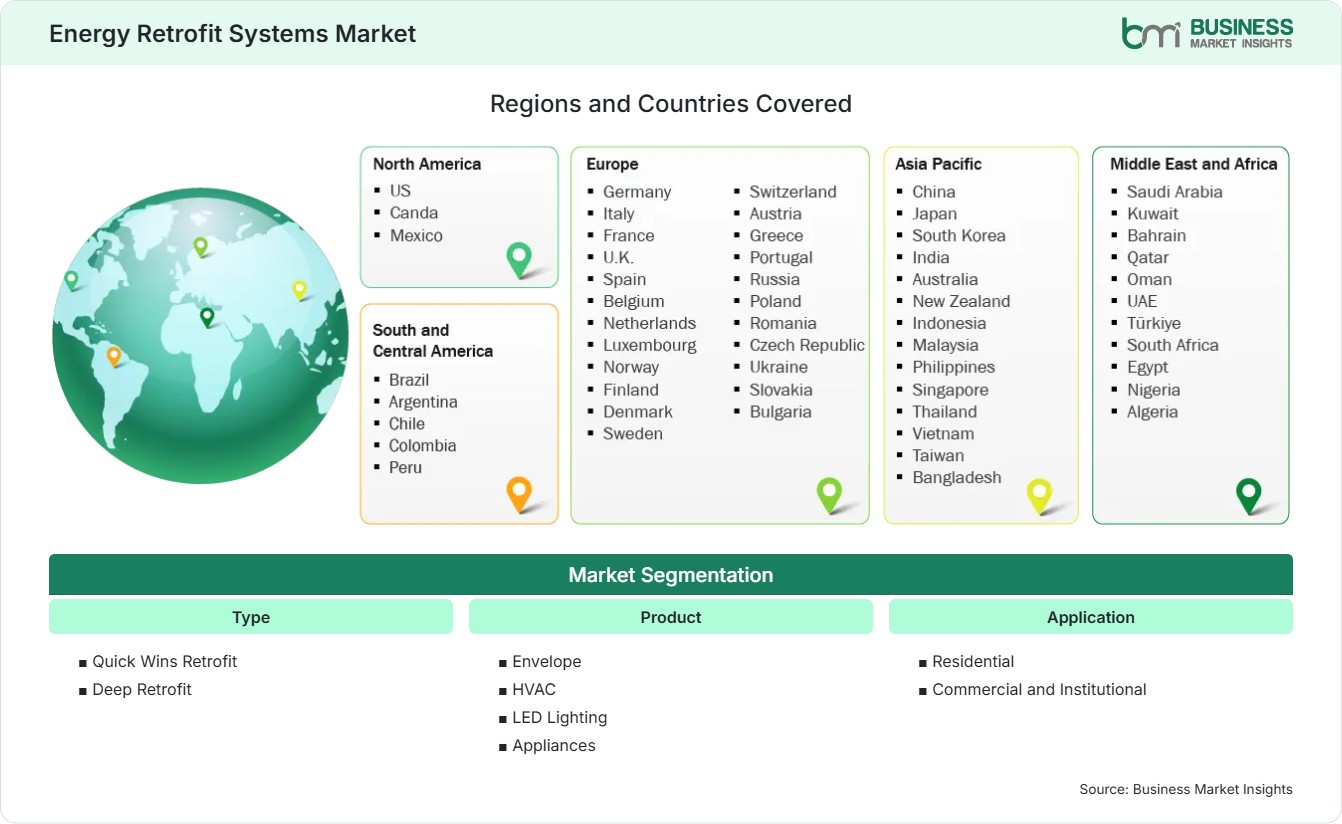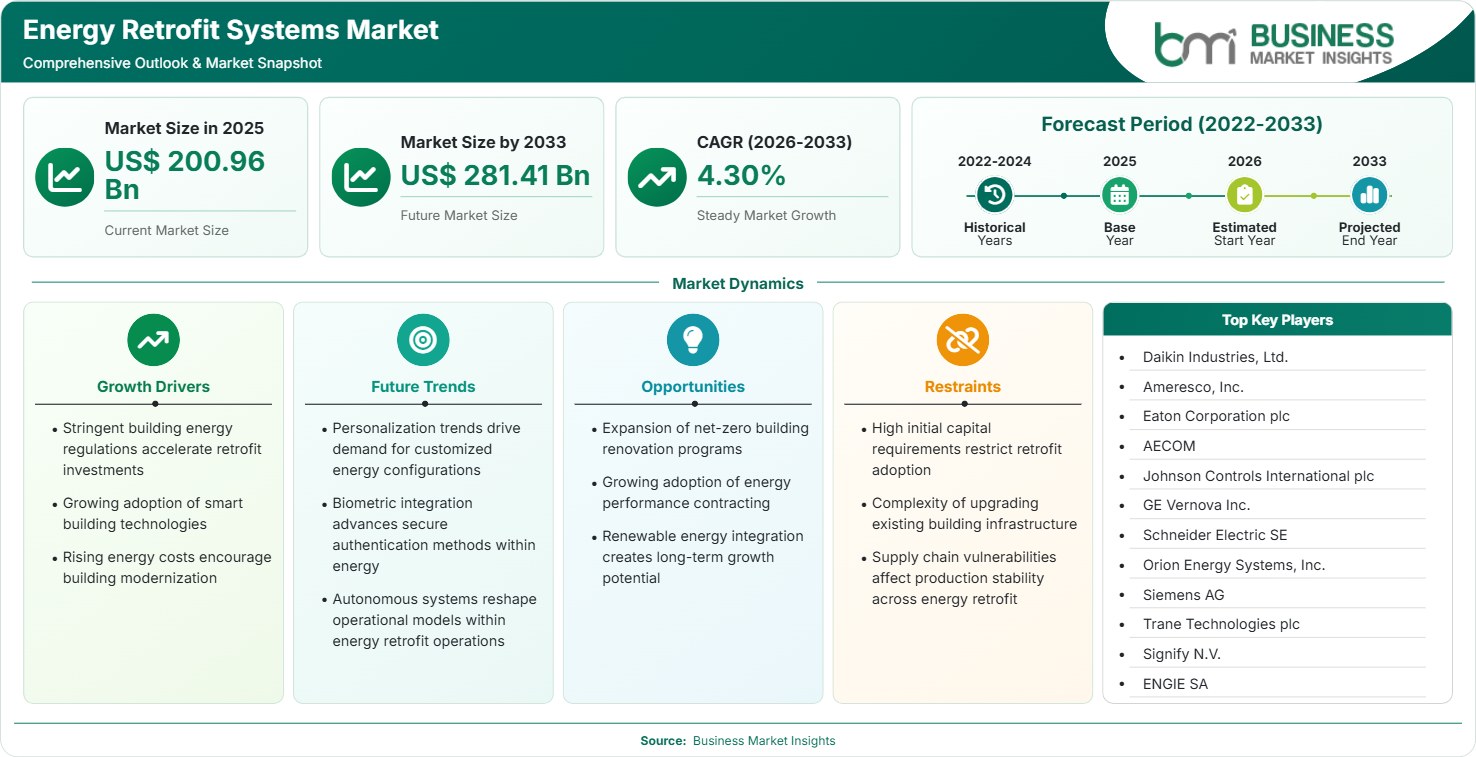
Energy Retrofit Systems Market Regional Highlights
North America Energy Retrofit Systems Market
North America accounted for 34%–37% of the global share in 2025 and is projected to expand at a 3.9%–4.3% CAGR during 2026–2033. Growth is supported by stringent building efficiency regulations, commercial infrastructure modernization, expanding Energy Service Company (ESCO) projects, and widespread deployment of smart building technologies. Government incentives, performance-based financing, and decarbonization policies continue encouraging retrofit investments across office buildings, healthcare facilities, educational institutions, industrial complexes, and public infrastructure. The Energy Retrofit Systems Market Growth in the region is also supported by digital energy management platforms, electrification initiatives, and growing adoption of intelligent HVAC systems.
- Federal and provincial incentive programs continue supporting large-scale building modernization projects through tax credits, grants, and energy-performance contracting models.
- Commercial property owners are increasingly deploying smart HVAC systems, LED lighting, intelligent controls, and automated energy management platforms to reduce operational costs.
- Growing electrification initiatives encourage replacement of conventional heating equipment with high-efficiency heat pumps and renewable-powered climate control technologies.
- Expansion of digital building management systems enables continuous monitoring, predictive maintenance, and optimization of energy consumption across institutional and commercial facilities.
- Utilities, engineering firms, and ESCOs continue collaborating to deliver integrated retrofit projects with guaranteed long-term energy savings.
U.S. Energy Retrofit Systems Market
The United States accounted for approximately 29%–32% of the global market in 2025 and is expected to register a 4.0%–4.4% CAGR through 2033. Market expansion is supported by Inflation Reduction Act incentives, increasing corporate sustainability commitments, and modernization of aging commercial buildings. Investments in hospitals, universities, airports, federal buildings, and large office complexes continue driving adoption of integrated retrofit solutions. The Energy Retrofit Systems Market Report identifies the U.S. as one of the leading markets for smart building technologies, energy management software, and performance-based retrofit financing.
- Federal incentives continue accelerating upgrades of HVAC equipment, lighting infrastructure, insulation systems, and intelligent building automation technologies.
- ESCOs are expanding performance-contracting services that reduce upfront investment requirements while guaranteeing measurable energy savings.
- AI-powered energy analytics platforms enable facility managers to optimize equipment performance and improve operational efficiency.
- Corporate ESG commitments continue encouraging investment in low-carbon buildings, renewable integration, and digital facility management solutions.
Europe Energy Retrofit Systems Market
Europe captured 30%–33% of global market sze in 2025 and is projected to grow at a 4.5%–5.0% CAGR through 2033. Regional expansion is driven by aggressive climate policies, stringent building energy performance regulations, and extensive renovation programs targeting carbon neutrality. Germany, France, the United Kingdom, Italy, and Nordic countries continue investing heavily in efficient HVAC systems, insulation technologies, smart controls, and renewable energy integration. The Energy Retrofit Systems Market Analysis indicates sustained demand from both public-sector renovation initiatives and private commercial building owners seeking long-term operating cost reductions.
- Germany continues leading retrofit adoption through industrial modernization and government-supported energy-efficiency initiatives.
- Nordic countries remain early adopters of advanced insulation technologies, intelligent heating systems, and digital building management platforms.
- The United Kingdom and France continue expanding public-sector renovation programs across schools, hospitals, and municipal infrastructure.
- European climate legislation continues encouraging building owners to improve energy efficiency while reducing lifecycle emissions.
- Growing investment in smart buildings and renewable integration strengthens regional retrofit opportunities.
Asia Pacific Energy Retrofit Systems Market
Asia Pacific accounted for 27%–30% of the global share in 2025 and is projected to register the fastest expansion at a 5.2%–5.8% CAGR through 2033. Rapid urbanization, redevelopment of aging infrastructure, expanding commercial real estate, and stricter green building regulations continue supporting regional demand. China remains the largest market owing to large-scale urban renewal projects, while India records the fastest long-term growth through government energy-efficiency initiatives and increasing commercial construction. Japan, South Korea, and Southeast Asian economies continue investing in smart buildings, digital energy management, and sustainable infrastructure, supporting long-term market growth.
- China continues leading regional demand through urban redevelopment, commercial modernization, and implementation of stringent green building standards.
- India demonstrates the strongest growth supported by smart city programs, expanding institutional infrastructure, and increasing adoption of efficient HVAC and lighting technologies.
- Japan strengthens retrofit investments through building modernization, intelligent automation, and energy conservation initiatives targeting aging infrastructure.
- South Korea continues expanding deployment of smart building technologies supported by advanced digital infrastructure and sustainability objectives.
- Southeast Asian countries are increasingly investing in commercial retrofits, efficient cooling systems, and energy management platforms to reduce electricity consumption.
Rest of World Energy Retrofit Systems Market
The Rest of the World represented approximately 7%–10% of the global Energy Retrofit Systems Market in 2025 and is forecast to expand at a 4.8%–5.3% CAGR through 2033. Growth is supported by infrastructure modernization, rising electricity costs, sustainability initiatives, and increasing investments in commercial and institutional buildings. Countries across Latin America, the Middle East, and Africa are gradually adopting integrated retrofit technologies to improve energy performance and reduce long-term operating expenses. The market forecast suggests expanding opportunities as governments continue investing in smart cities, efficient public buildings, and digital infrastructure.
- Brazil and Mexico continue modernizing commercial infrastructure through energy-efficiency programs and sustainable building investments.
- Saudi Arabia and the UAE are deploying advanced HVAC systems, digital building controls, and intelligent cooling technologies across commercial developments.
- Smart city initiatives across Gulf countries continue increasing adoption of integrated energy management platforms.
- African markets are gradually expanding retrofit activities through international funding programs, public infrastructure upgrades, and growing urban development.
- Rising awareness of operational cost savings continues encouraging adoption of efficient retrofit technologies across emerging economies.