Market Summary
Executive Summary and Global Market Analysis
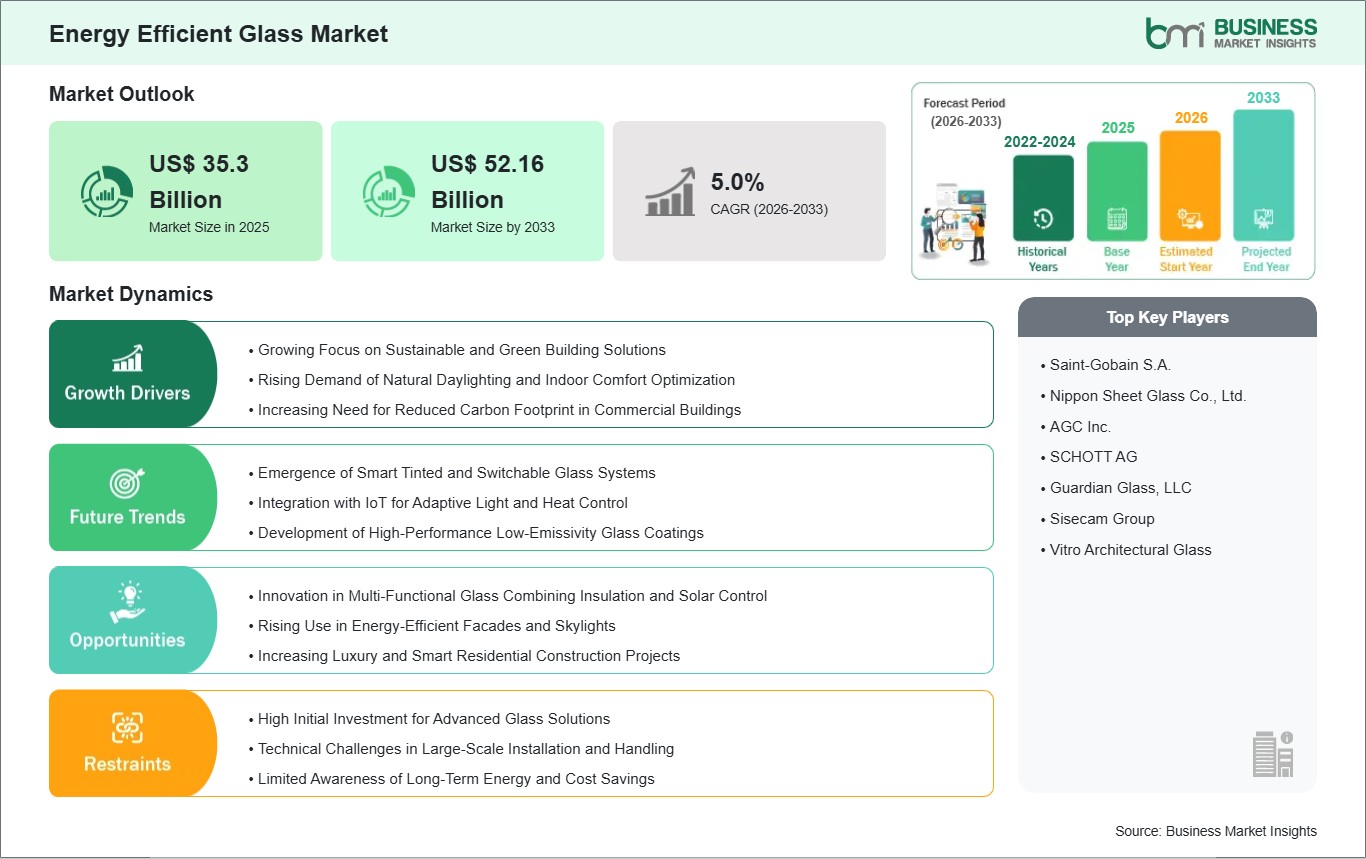
The global market for energy-efficient glass has started to gain momentum as buildings across the world are focusing on sustainability, comfort, and reducing costs. Energy-efficient glass, which utilizes various technologies such as low-e coatings, double or triple glazing, and solar reflective coatings, maintains the temperature of the building by reducing heat transfer. The growth of the market is attributed to the increasing need for green buildings, the implementation of regulations, and the emphasis on reducing greenhouse gas emissions. In addition, the awareness of consumers as well as corporate clients about the benefits of reducing costs has led to the adoption of energy-efficient glass in modern buildings.
One significant driver is the integration of advanced features, including smart and switchable glass, which can dynamically control light transmission and thermal insulation based on environmental conditions. This allows buildings to optimize energy efficiency while improving occupant comfort. However, market growth faces constraints, particularly due to higher upfront costs compared to conventional glass and the need for precise installation techniques to ensure performance. Furthermore, retrofitting older buildings with high-performance glazing can be challenging due to structural limitations. Despite these hurdles, innovations in coatings, smart technologies, and increased focus on sustainable construction are propelling the energy-efficient glass market forward, making it an essential material for next-generation building design globally.
Segment Analysis
Energy Efficient Glass Market Segmentation
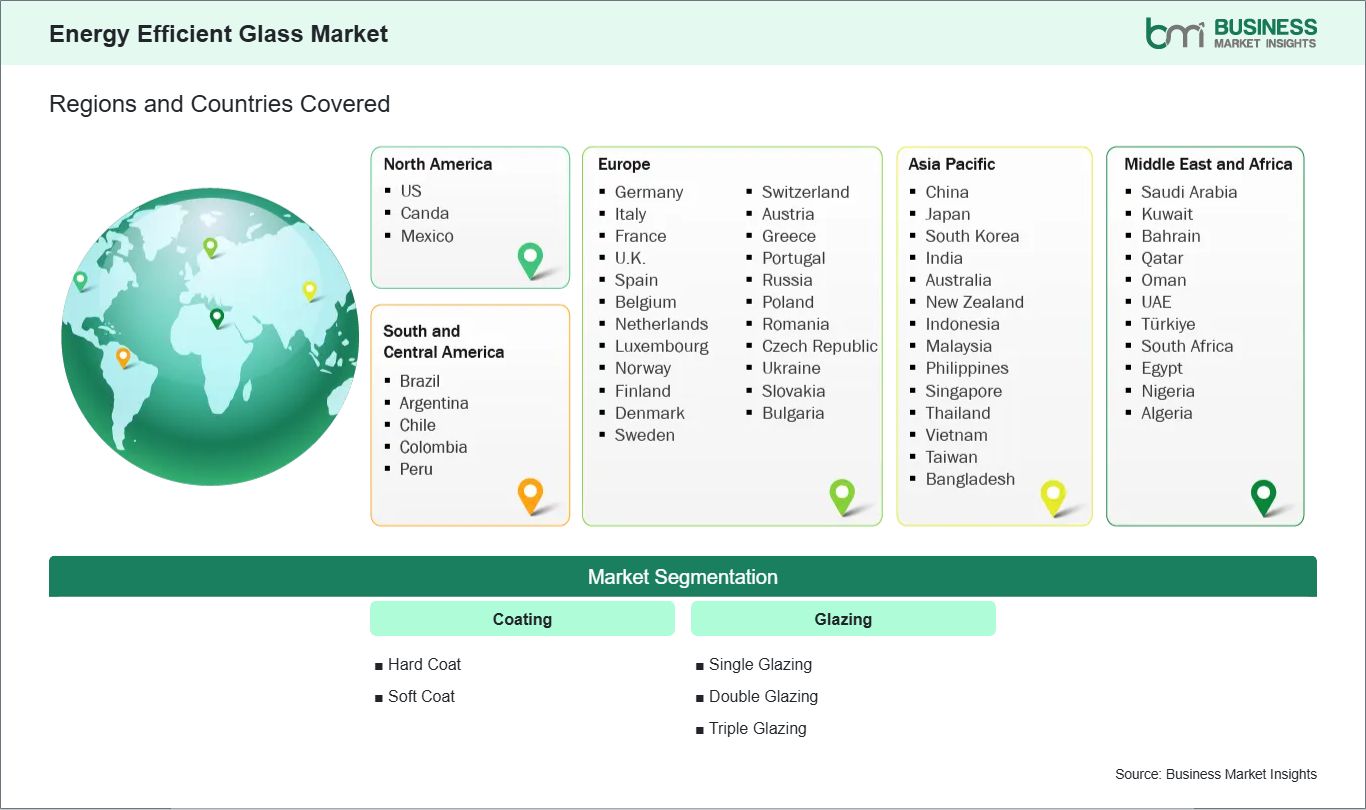
Key segments that contributed to the derivation of the energy-efficient glass market analysis are coating, glazing, and application.
- By coating, the energy-efficient glass market is segmented into hard coat and soft coat. The soft coat subsegment dominated the market in 2025.
- Based on glazing, the energy-efficient glass market is classified into single glazing, double glazing, and triple glazing. The double glazing subsegment dominated the market in 2025.
- In terms of application, the energy-efficient glass market is divided into building & construction, automotive, solar panel, and other applications. The building & construction subsegment dominated the market in 2025.
Market Forces
Energy Efficient Glass Market Drivers and Opportunities
Growing Focus on Sustainable and Green Building Solutions
The demand for energy-efficient glass is being driven by the global emphasis on sustainable and green construction practices. Architects and developers are increasingly incorporating high-performance glazing into building designs to reduce energy consumption, enhance occupant comfort, and meet environmental standards. Energy-efficient glass minimizes heat transfer, helping maintain indoor temperatures without over-relying on heating or cooling systems.
Government initiatives and building codes are further accelerating adoption. Many new constructions and retrofitting projects now require glazing that meets energy efficiency ratings or green building certifications. By installing energy-efficient glass, property owners can reduce utility costs and contribute to environmental sustainability, making it an appealing investment for both commercial and residential projects.
The aesthetic appeal of energy-efficient glass also reinforces its adoption. Modern coatings and tinted finishes allow designers to create visually striking façades while maintaining functional benefits. The combination of energy savings, regulatory compliance, and design flexibility positions energy-efficient glass as a central material in modern sustainable construction projects worldwide.
Innovation in Multi-Functional Glass Combining Insulation and Solar Control
Innovation in multi-functional glass presents significant growth opportunities. Modern energy-efficient glass products now combine thermal insulation with solar control, allowing buildings to reduce both heat gain and loss while maintaining natural light. This dual functionality addresses both energy efficiency and occupant comfort, offering a compelling solution for developers and facility managers seeking holistic building performance.
Advances in coatings and lamination technologies are expanding possibilities. Glass can now incorporate reflective or low-emissivity coatings, dynamic tinting, and embedded solar control films, providing customizable solutions for diverse building requirements. These innovations make energy-efficient glass adaptable to different climates, orientations, and building types, increasing its global applicability.
The opportunity also extends to retrofit and modernization projects. Older buildings can improve energy performance and aesthetics simultaneously by replacing traditional glazing with multi-functional energy-efficient glass. As urbanization and sustainable construction continue to grow worldwide, energy-efficient glass is positioned not only as a technical necessity but as a design and performance differentiator in both new and existing structures.
Size and Share Analysis
Energy Efficient Glass Market Size and Share Analysis
The energy-efficient glass market is experiencing steady growth, with market size and share analysis reflecting evolving treatment preferences and competitive dynamics among key players. The report evaluates important subsegments categorized within coating, glazing, and application, highlighting their respective contributions to overall market performance.
By coating, the Soft Coat subsegment dominated the Energy-Efficient Glass market in 2025. Soft coat glass offers superior thermal insulation, low-emissivity performance, and energy efficiency, making it highly suitable for modern building and construction applications, which drives its widespread adoption.
Based on glazing, the Double Glazing subsegment dominated the Energy-Efficient Glass market in 2025. Double-glazed units provide enhanced insulation, noise reduction, and energy savings, supporting strong demand across residential and commercial buildings.
In terms of application, the Building & Construction subsegment dominated the Energy-Efficient Glass market in 2025. Building and construction projects benefit from energy-efficient glass`s ability to reduce heating and cooling costs while improving occupant comfort, reinforcing the dominance of this segment.
Report Coverage
Energy Efficient Glass Market Report Coverage and Deliverables
The "Energy-Efficient Glass Market Size and Forecast (2022 - 2033)" report provides a detailed analysis of the market covering below areas:
- Energy-Efficient Glass market size and forecast at global, regional, and country levels for all the key market segments covered under the scope
- Energy-Efficient Glass market trends, as well as drivers, restraints, and opportunities
- Energy-Efficient Glass market analysis covering key trends, regional framework, major players, regulations, and recent developments
- Industry landscape and competition analysis covering market concentration, heat map analysis, prominent players, and recent developments for the Energy-Efficient Glass market
- Detailed company profiles, including SWOT analysis
Geographic Insights
Energy Efficient Glass Market Geographic Insights
The geographical scope of the Energy-Efficient Glass market report is divided into five regions: North America, Asia Pacific, Europe, Middle East & Africa, and South & Central America. The Energy-Efficient Glass market in North America is expected to grow during the forecast period.
The leading market for the energy-efficient glass industry is North America, due to the developed construction industry and the presence of robust environmental laws. Additionally, the region has a high level of awareness pertaining to sustainable practices. In the region, the application of energy-efficient glass is observed in commercial skyscrapers, institutional buildings, and residential apartments. This is because the region has a high requirement for reducing costs and attaining green building ratings. Furthermore, the government of the region provides incentives for the retrofitting of old structures.
The unique thing about the North American market is the use of advanced glazing technology, including electrochromic and thermochromic glass, which changes tint and amount of transmitted light in response to environmental conditions. These new products provide greater control over energy efficiency and comfort without compromising appearance. Renovation activities also contribute significantly to the market, with property owners upgrading existing glazing systems to minimize energy consumption and maximize property value. Although this may be a problem, the North American market`s focus on sustainable design, energy efficiency, and technology continues to ensure its dominance, making it a trendsetter in energy efficiency and aesthetic appearance for energy-efficient glass.
Industry Activity
Recent Developments
The energy-efficient glass market is evaluated by gathering qualitative and quantitative data post primary and secondary research, which includes important corporate publications, association data, and databases. A few of the key developments in the energy-efficient glass market are:
- In April 2024, Vitro Architectural Glass announced that it introduced Solarban 65 low‑emissivity glass a high‑performance solar control, energy‑efficient glass option that blocks ~65 % of solar heat while maintaining ~70 % visible light transmission, designed to improve thermal comfort and reduce building energy use.
- In March 2024, Guardian Glass and the VELUX Group announced that they entered a joint development agreement to co‑develop tempered Vacuum Insulated Glass (VIG), combining Guardian`s VIG expertise with VELUX`s roof window manufacturing to accelerate energy‑efficient glazing adoption and advanced insulation capabilities.
Trust & Transparency
Research Methodology
The market analysis combines proprietary research with secondary data from government agencies, company disclosures, regulatory filings, industry databases and expert interviews. Market estimates are validated through data triangulation, cross-market benchmarking and analyst
review.
View Full Research Methodology
Key Sources Referred:
International Organization for Standardization (ISO) American Society for Testing and Materials (ASTM International) Bureau of Indian Standards (BIS) Environmental Protection Agency (EPA), USA European Chemicals Agency (ECHA) Central Pollution Control Board (CPCB), India Ministry of Chemicals and Fertilizers, India American Chemistry Council (ACC) Indian Chemical Council (ICC) European Chemical Industry Council (Cefic) Specialty Chemical Association of India (SCAI) Company Websites Company Annual Reports Company Investor Presentations