Market Summary
Executive Summary and Global Market Analysis
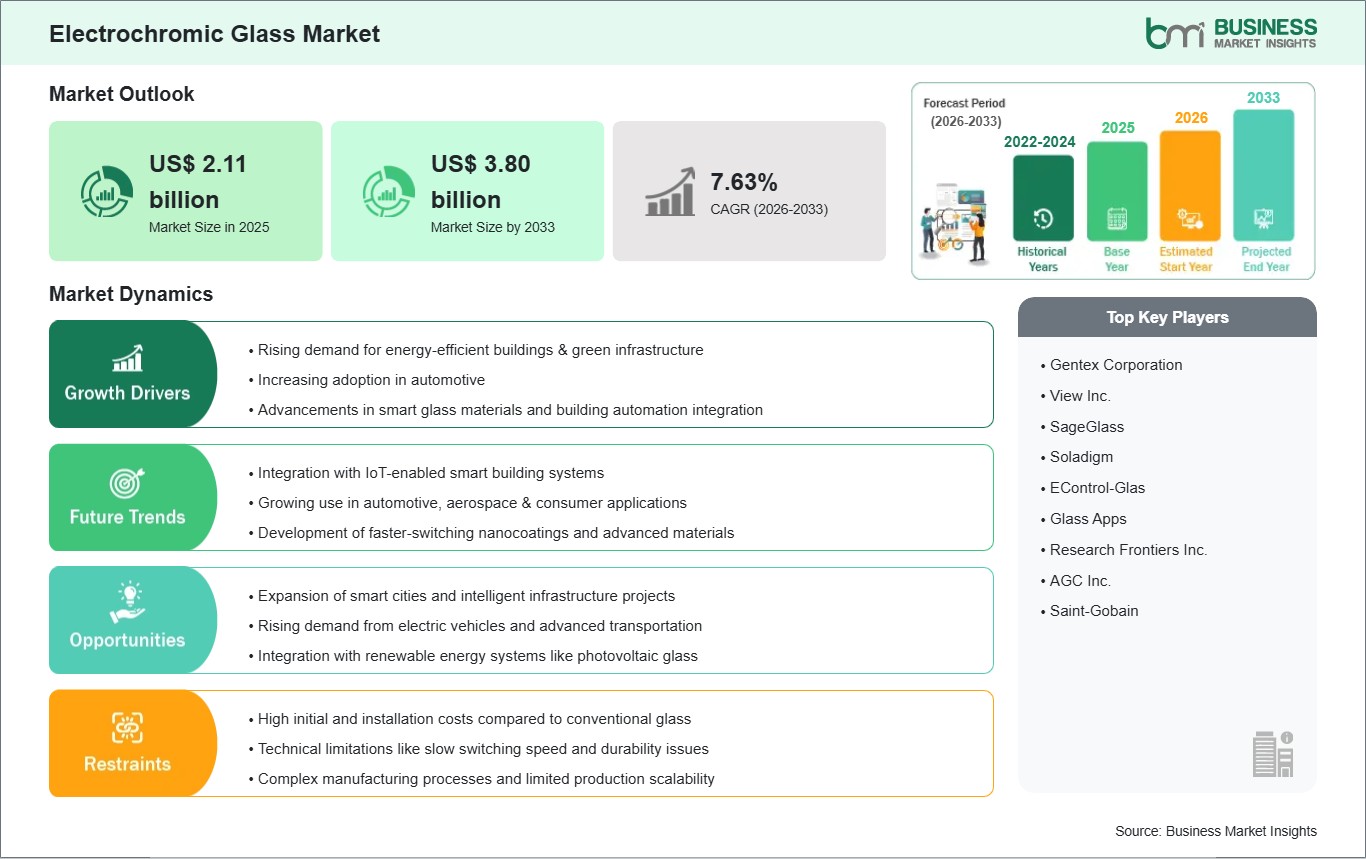
Electrochromic glass is a smart glazing solution that can change its light transmission properties when an electrical voltage is applied. It is mainly used to control glare, heat, and daylight in buildings and vehicles, which improves energy efficiency and occupant comfort. This dynamic glass technology is widely used in architectural spaces like commercial offices, residential buildings, healthcare facilities, and airports, as well as in the automotive and aerospace industries. Electrochromic glass comes in different forms, including windows, skylights, curtain walls, and rearview mirrors, and can be added to both new construction and retrofitting projects.
The market is growing steadily due to rising demand for energy-efficient building solutions and increasing awareness of sustainable infrastructure. More urbanization and stricter building energy codes are driving the use of smart glass technologies. Advances in technology, including better switching speed, durability, and color neutrality, are improving product performance and usability. Additionally, government programs that support green buildings and lower carbon footprints are helping the market grow, making electrochromic glass a vital part of modern energy management systems around the world.
Segment Analysis
Electrochromic Glass Market Segmentation
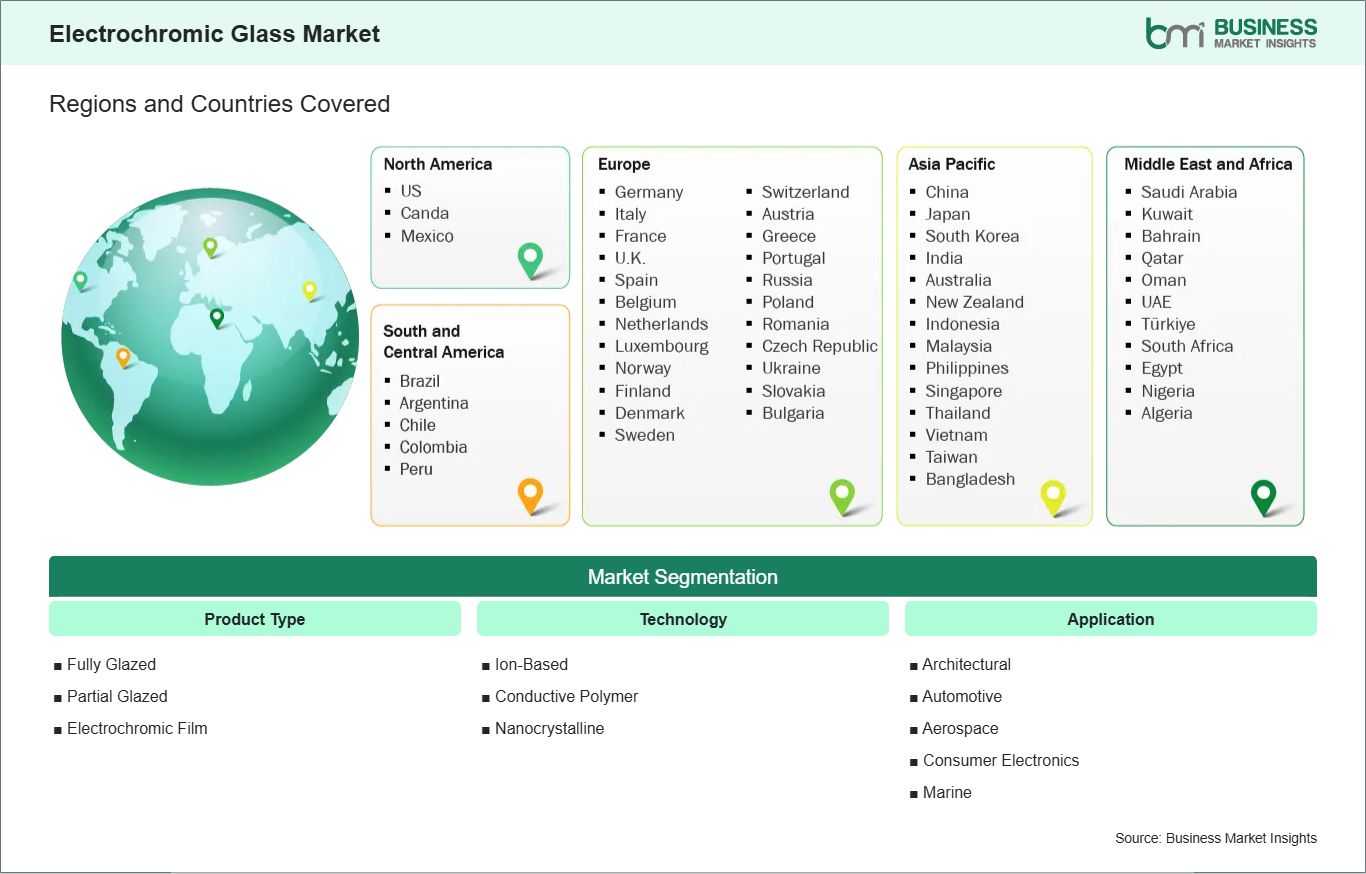
Key segments that contributed to the derivation of the electrochromic glass market analysis are product type, technology, and application.
- By product type, the electrochromic glass market is segmented into fully glazed, partial glazed, and electrochromic film. The fully glazed segment held the largest market share in 2025.
- By technology, the electrochromic glass market is segmented into ion-based, conductive polymer, and nanocrystalline. The ion-based segment held the largest market share in 2025.
- By application, the electrochromic glass market is segmented into architectural, automotive, aerospace, consumer electronics, and marine. The architectural segment held the largest market share in 2025.
Market Forces
Electrochromic Glass Market Drivers and Opportunities
Increasing Demand for Energy-Efficient Building Solutions
The rising focus on energy efficiency in construction is a major factor driving the electrochromic glass market. Buildings use a large portion of global energy, especially for heating, ventilation, and air conditioning systems. Electrochromic glass helps control indoor temperatures by managing solar heat gain and daylight. This reduces the need for artificial lighting and climate control systems. This feature meets changing building standards and energy codes that require better efficiency and lower carbon emissions.
Additionally, growing awareness among architects, developers, and users about sustainable building materials is speeding up adoption. The use of smart technologies in modern buildings further encourages the use of electrochromic solutions since they can work with building management systems. As governments and organizations focus more on green buildings and saving energy, electrochromic glass is becoming a recognized solution for improving building performance and achieving long-term cost savings.
Expansion in Automotive and Transportation Applications
The use of electrochromic glass in the automotive and transportation sectors offers a significant growth opportunity for the market. Automakers are increasingly adding smart glass technologies to vehicles to improve passenger comfort, safety, and energy efficiency. Electrochromic glass can be used in sunroofs, side windows, and rearview mirrors to reduce glare and control heat entry. This contributes to a more comfortable cabin environment and lessens the burden on air conditioning systems. This benefit is especially important for electric vehicles, where energy efficiency directly affects driving range.
Furthermore, improvements in lightweight materials and design integration are making electrochromic solutions more practical for mass-market vehicles. The aerospace and rail industries are also using this technology to improve passenger experience and cut energy use. As consumer expectations for comfort and features grow, and as manufacturers emphasize innovation and sustainability, the adoption of electrochromic glass in transportation is expected to increase sharply in the coming years.
Size and Share Analysis
Electrochromic Glass Market Size and Share Analysis
The electrochromic glass market demonstrates steady growth, with size and share analysis revealing evolving trends and competitive positioning among key players. The report examines subsegments categorized within product type, technology, and application, offering insights into their contribution to overall market performance. By application, the architectural segment has the largest market share. Electrochromic glass is widely used in residential, commercial, and infrastructure projects for windows, skylights, facades, and curtain walls. Builders and developers prefer electrochromic glass for its ability to dynamically control light and heat, improve energy efficiency, reduce glare, and enhance occupant comfort compared to conventional glass solutions. The industry values electrochromic glass because it supports smart building designs, reduces reliance on HVAC systems, offers modern aesthetics, and contributes to sustainability goals. Growth in this segment is driven by rapid urbanization, increasing adoption of green buildings, rising energy efficiency regulations, and growing demand for smart and adaptive construction materials worldwide.
Report Coverage
Electrochromic Glass Market Report Coverage and Deliverables
The " Electrochromic Glass Market Size and Forecast (2022 - 2033)" report provides a detailed analysis of the market covering below areas:
- Electrochromic glass market size and forecast at global, regional, and country levels for all the key market segments covered under the scope
- Electrochromic glass market trends, as well as market dynamics such as drivers, restraints, and key opportunities
- Electrochromic glass market analysis covering key market trends, global and regional framework, major players, regulations, and recent market developments
- Industry landscape and competition analysis covering market concentration, heat map analysis, prominent players, and recent developments for the electrochromic glass market
- Detailed company profiles, including SWOT analysis
Geographic Insights
Electrochromic Glass Market Geographic Insights
The geographical scope of the electrochromic glass market report is divided into five regions: North America, Asia Pacific, Europe, the Middle East & Africa, and South & Central America. North America holds a significant share of the electrochromic glass market. This growth is due to strong adoption of building technologies and a clear focus on energy efficiency. The region benefits from strict building rules and sustainability standards. These encourage the use of smart materials to cut down on energy use and carbon emissions.
The presence of top manufacturers and technology developers also boosts market growth, along with significant investment in research and development. In the US, the widespread use of green building certifications and energy codes has sped up the integration of electrochromic glass in commercial offices, airports, and healthcare facilities. The growing trend of smart homes and intelligent building systems has also led to greater product adoption. The automotive sector in North America contributes as well, with increasing demand for features that improve comfort and efficiency. Overall, the mix of regulatory support, innovation, and early use of smart infrastructure solutions has helped North America keep its top spot in the global electrochromic glass market.
Industry Activity
Recent Developments
The electrochromic glass market is evaluated by gathering qualitative and quantitative data post-primary and secondary research, which includes important corporate publications, association data, and databases. A few of the key developments in the electrochromic glass market are:
- In January 2026, POVEC Optics launched electrochromic sunglasses at CES 2026. Users can adjust the tint instantly with a touch. This product represents a shift toward consumer use of smart glass, bringing adaptive lens technology from industrial and aerospace fields into everyday use.
- In March 2025, Argotec and Miru Smart Technologies revealed one of the largest electrochromic sunroof windows in the automotive industry. This achievement increases the use of dynamic glass in vehicles. It enhances passenger comfort and energy efficiency while supporting the design of next-generation electric vehicles and smart glazing innovations.
Trust & Transparency
Research Methodology
The market analysis combines proprietary research with secondary data from government agencies, company disclosures, regulatory filings, industry databases and expert interviews. Market estimates are validated through data triangulation, cross-market benchmarking and analyst
review.
View Full Research Methodology
Key Sources Referred:
World Bank - Global Trade IndicatorsWorld Trade Organization (WTO)International Monetary Fund (IMF)International Trade Administration (ITA)Company WebsitesCompany Annual ReportsCompany Investor PresentationsNational Glass Association (NGA)International Window Film Association (IWFA)Smart Glass AssociationGlass Association of North America (GANA)