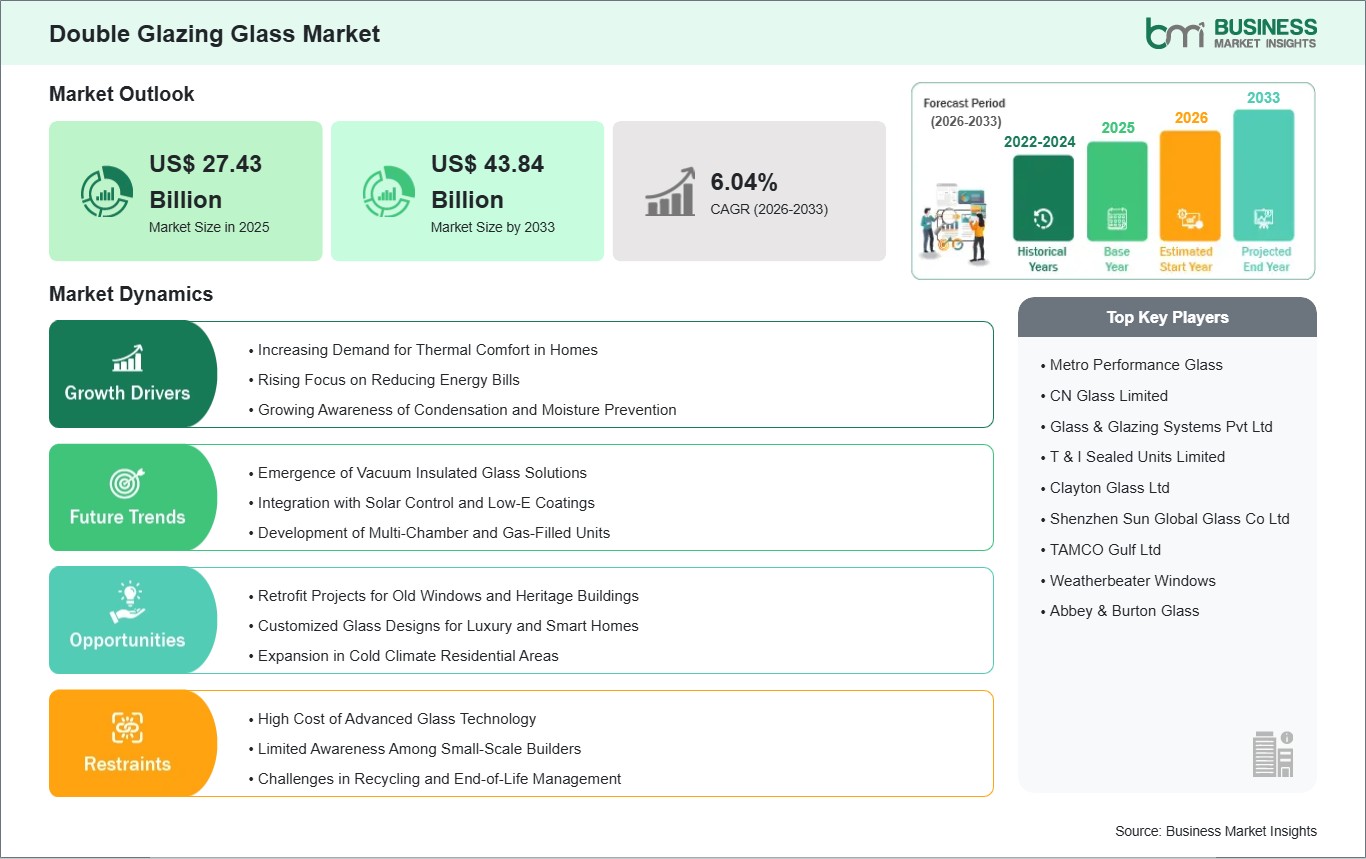
The Double Glazing Glass Market size is expected to reach US$ 43.84 Billion by 2033 from US$ 27.43 Billion in 2025. The market is estimated to record a CAGR of 6.04% from 2026 to 2033.
The world of global double glazing glass markets is dominated by architectural and engineering advancements that attempt to improve building performance through controlled interactions with environmental elements. Double glazing creates a physical barrier between the inner and outer environments of buildings, resulting in reduced loss of heat, reduction of external noise, and regulation of climates. However, these applications are also being used for architectural flexibility, enabling architects to create expansive glass facades without compromising building integrity. The trend towards daylight-optimized interior spaces and the need for visual transparency in modern commercial and residential building design have also increased the significance of double glazing. Some of the key market drivers are the growing interest in designing buildings with longevity and comfort, especially in places where temperature changes are common or where there is noise pollution. This has been driven by improvements in glass coating, lamination, and gas fill technologies, which allow for high-performance capabilities without significantly altering the visual characteristics of the glass, thus facilitating its integration into modern architectural designs. However, the complexity of the glazing process and maintenance needs pose a challenge, especially when installing the glass in older buildings. Durability of the glazing solution and sealing is important to prevent fogging and condensation, as these could impair the function and appearance of the glass. The need for high-performance glazing solutions continues to grow as innovation and regulation converge globally.

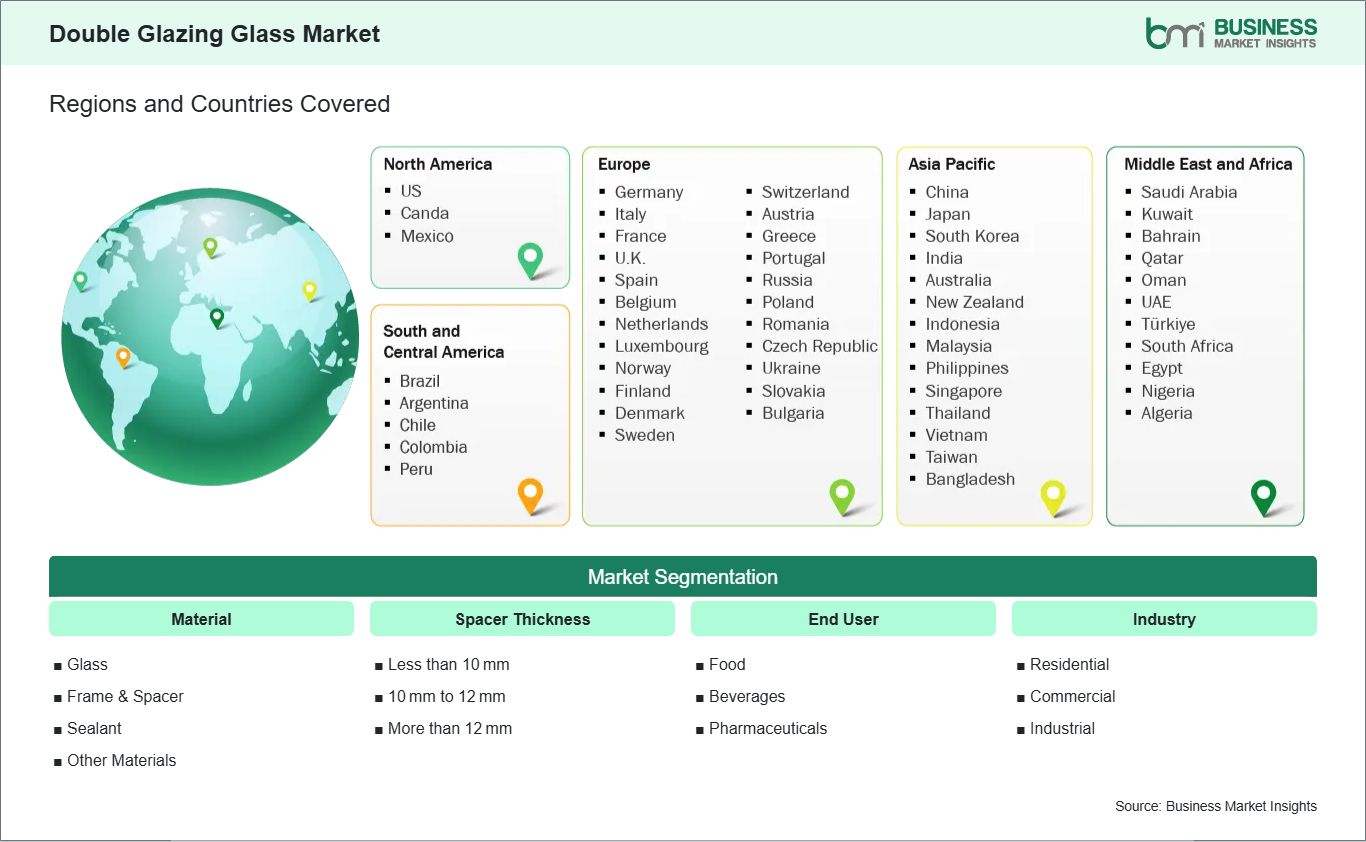
Key segments that contributed to the derivation of the double glazing glass market analysis are material, spacer thickness, application, and industry.
The global disposable protective clothing market is being driven by a growing awareness of workplace hygiene and safety standards. Organizations across healthcare, chemical, food processing, and manufacturing sectors are emphasizing worker protection to prevent contamination, chemical exposure, and the spread of infectious agents. Disposable garments such as gowns, coveralls, gloves, and masks provide a convenient and effective solution, offering protection without the need for laundering or long-term maintenance.
Compliance with regulatory and safety guidelines is a key factor driving adoption. Industries are required to meet stringent hygiene protocols, and the single-use nature of protective clothing ensures a high level of cleanliness while minimizing the risk of cross-contamination. This is particularly crucial in environments where exposure to pathogens or hazardous chemicals can have serious consequences for both employees and operational continuity.
In addition to protection, innovation in comfort and usability is contributing to market growth. Lightweight, breathable materials, ergonomic designs, and garments that allow freedom of movement make protective clothing more acceptable for extended use. By combining safety, efficiency, and worker comfort, disposable protective clothing continues to gain prominence as a critical component of modern workplace safety strategies.
The disposable protective clothing market presents opportunities for expansion in pharmaceutical manufacturing, laboratory research, and high-risk operational settings. These sectors demand consistent contamination control to maintain product integrity, protect personnel, and ensure compliance with strict regulatory standards. High-performance disposable garments offer barriers against microbes, chemicals, and particulates, enabling safe work in controlled environments such as cleanrooms and research laboratories.
New emerging uses are providing new opportunities for innovation. The development of specialized clothing with better chemical resistance, anti-static capabilities, or monitoring features is being pursued to serve the needs of complex industrial, healthcare, or research operations. These opportunities enable organizations to select specific solutions that address various risk scenarios, thereby enhancing operational safety, efficiency, and minimizing potential liabilities.
The growing importance of occupational health and safety programs worldwide is another area that is sustaining market growth. As industries grow in size and increasingly use advanced technologies, there is a corresponding requirement for reliable disposable protective clothing, thereby presenting opportunities to premium product manufacturers. The disposable protective clothing industry is not just seen as a safety requirement but also as a facilitator for industries that are in great demand worldwide.

The double glazing glass market is experiencing steady growth, with market size and share analysis reflecting evolving treatment preferences and competitive dynamics among key players. The report evaluates important subsegments categorized within material, spacer thickness, application, and industry, highlighting their respective contributions to overall market performance.
By material, the Glass subsegment dominated the Double Glazing Glass market in 2025. High-quality glass provides thermal insulation, soundproofing, and durability, driving its widespread adoption in construction and architectural applications.
Based on spacer thickness, the 10 mm to 12 mm subsegment dominated the Double Glazing Glass market in 2025. This spacer range offers optimal insulation performance and structural stability, supporting strong demand in modern glazing systems.
In terms of application, the Facade subsegment dominated the Double Glazing Glass market in 2025. Facade installations benefit from enhanced energy efficiency, aesthetics, and noise reduction, reinforcing the leading position of this segment.
Based on industry, the Commercial subsegment dominated the Double Glazing Glass market in 2025. Commercial buildings prioritize energy-efficient and visually appealing glazing solutions, driving the widespread adoption of double glazing glass in this sector.
| Report Attribute | Details |
|---|---|
| Market size in 2025 | US$ 27.43 Billion |
| Market Size by 2033 | US$ 43.84 Billion |
| Global CAGR (2026 - 2033) | 6.04% |
| Historical Data | 2022-2024 |
| Forecast period | 2026-2033 |
| Segments Covered | By Material
|
|
Regions and Countries Covered
| |
| North America | US, Canada, Mexico |
| Europe | Belgium, Austria, Finland, Denmark, Greece, Poland, Romania, Russia, Ukraine, Czech Republic, Slovakia, Bulgaria, Italy, Luxembourg, Germany, Switzerland, France, Netherlands, Norway, Portugal, Spain, Sweden, United Kingdom |
| Asia-Pacific | Australia, China, India, Japan, South Korea, Indonesia, Malaysia, Philippines, Singapore, Thailand, Vietnam, Bangladesh, New Zealand, Taiwan |
| South and Central America | Brazil, Argentina, Peru, Chile, Colombia |
| Middle East and Africa | Bahrain, Kuwait, Oman, Qatar, Saudi Arabia, United Arab Emirates, Turkiye, South Africa, Egypt, Algeria, Nigeria |
| Market leaders and key company profiles |
|
The "Double Glazing Glass Market Size and Forecast (2022 - 2033)" report provides a detailed analysis of the market covering below areas:
The geographical scope of the Double Glazing Glass market report is divided into five regions: North America, Asia Pacific, Europe, Middle East & Africa, and South & Central America. The Double Glazing Glass market in North America is expected to grow during the forecast period.
The North American region holds the largest share of the global market for double glazing glass. This is because the region is home to many innovative architecture and premium construction activities. In this region, many construction activities are using double glazing technology in their high-rise commercial developments, luxury residential developments, and retrofit initiatives that are focused on increasing the longevity of structures. In addition, there is an increased emphasis on the integration of environmental controls with interior comfort, such as solar gain and daylight, which makes double glazing an important part of modern architecture. The innovation in the North American market focuses on material science and functional customization. Laminated, tinted, and smart-coated glass products are being produced that filter UV rays, adjust the amount of light passing through, and reduce noise levels. Companies are also working in partnership with architects and construction companies to provide glazing solutions that are suitable for particular zones and look aesthetically pleasing. Some of the challenges in the North American region include the high initial costs of installing the product, as well as the requirement for trained installers to install the product in the best possible way. Maintenance also needs to be taken into consideration, especially when dealing with gas fills in the panes of the double-glazed windows. However, the use of technology, architectural innovations, and industry standards makes the North American region the leader in the field of double-glazed windows, setting an example for the rest of the world to follow.

The double glazing glass market is evaluated by gathering qualitative and quantitative data post primary and secondary research, which includes important corporate publications, association data, and databases. A few of the key developments in the double glazing glass market are:
The Double Glazing Glass Market is valued at US$ 27.43 Billion in 2025, it is projected to reach US$ 43.84 Billion by 2033.
As per our report Double Glazing Glass Market, the market size is valued at US$ 27.43 Billion in 2025, projecting it to reach US$ 43.84 Billion by 2033. This translates to a CAGR of approximately 6.04% during the forecast period.
The Double Glazing Glass Market report typically cover these key segments-
The historic period, base year, and forecast period can vary slightly depending on the specific market research report. However, for the Double Glazing Glass Market report:
The Double Glazing Glass Market is populated by several key players, each contributing to its growth and innovation. Some of the major players include:
The Double Glazing Glass Market report is valuable for diverse stakeholders, including:
Essentially, anyone involved in or considering involvement in the Double Glazing Glass Market value chain can benefit from the information contained in a comprehensive market report.
Please tell us your area of interest
(Market Segments/ Regions and Countries/ Companies)