Rising Security Concerns and Safety Regulations
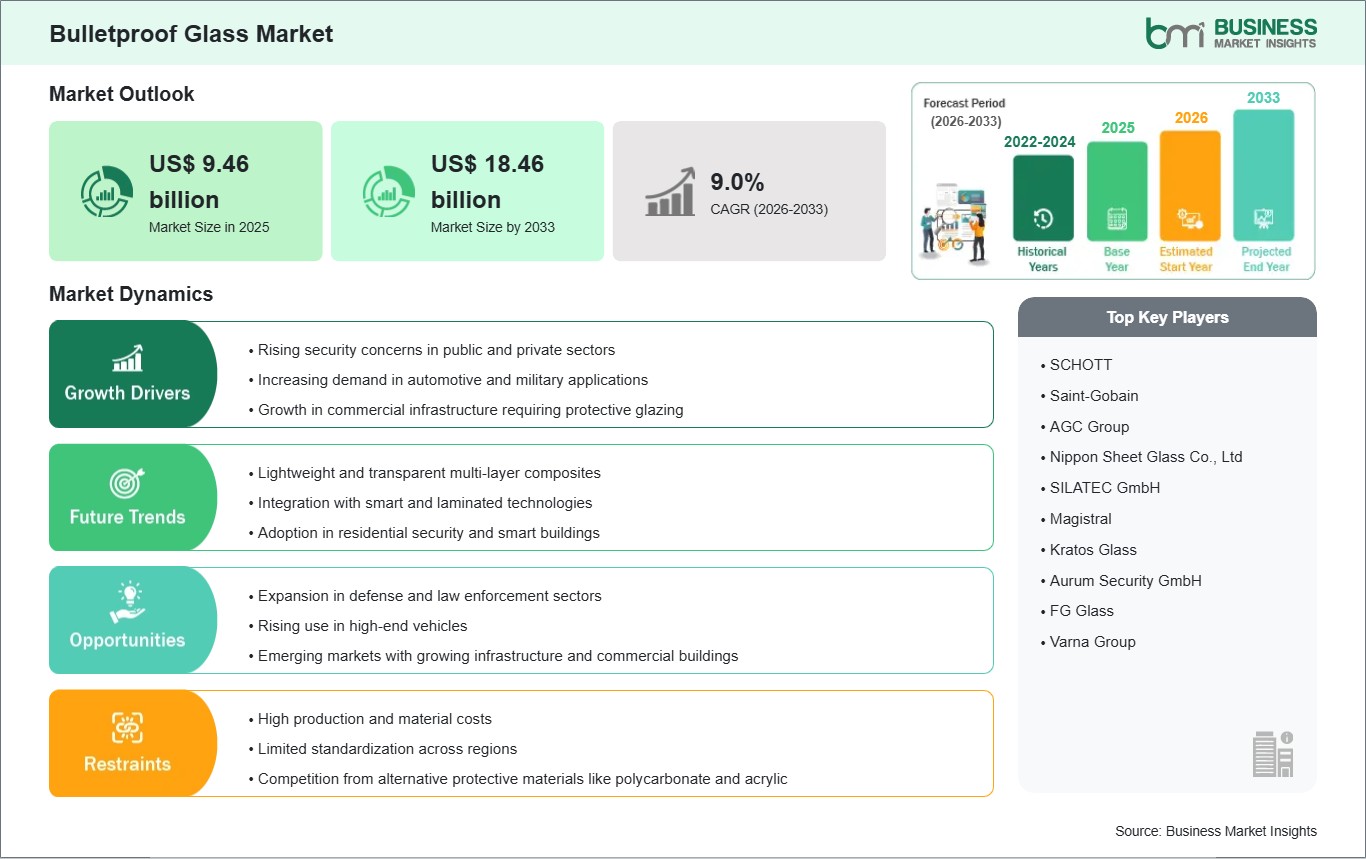
The bulletproof glass market is mainly driven by growing worries about personal, corporate, and government security. Increasing incidents of armed robberies, terrorist attacks, and civil unrest in various regions have raised the demand for better protective solutions in both public and private sectors. Organizations and institutions, such as banks, government buildings, military sites, and airports, are using bulletproof glass to improve safety and protect critical assets. Stricter safety rules and building codes in developed and emerging economies require better protective measures in high-risk areas, which boosts adoption.
In the automotive sector, rising consumer awareness about vehicle safety and the need for armored cars for VIPs and wealthy individuals is also increasing market demand. The use of bulletproof glass in commercial and residential spaces, including offices, shopping centers, and luxury homes, is part of wider safety and risk reduction strategies. As a result, these security concerns and regulatory requirements are key factors driving ongoing growth in the bulletproof glass market.
Technological Advancements and Lightweight Materials
Technological innovation offers a major growth opportunity for the bulletproof glass market, especially through the creation of lighter, stronger, and more versatile materials. Traditional ballistic glass often has issues with weight and thickness, which limit its use in vehicles, buildings, and personal protective gear. Improvements in laminated glass technology, hybrid polymer layers, and transparent ceramics allow manufacturers to make lighter and thinner bulletproof glass without losing ballistic resistance. These advances help more sectors adopt bulletproof glass, especially where weight and design are important, such as in automotive, aerospace, and commercial real estate.
Additionally, the rising interest in multifunctional glass solutions, like UV protection, anti-reflective coatings, and smart glass features, opens new market segments and applications. As architects, vehicle makers, and defense groups increasingly look for high-performance materials that balance safety with functionality and design, these technological changes create a clear chance to grow the market and meet changing consumer and industry needs.