Market Summary
Executive Summary and Global Market Analysis
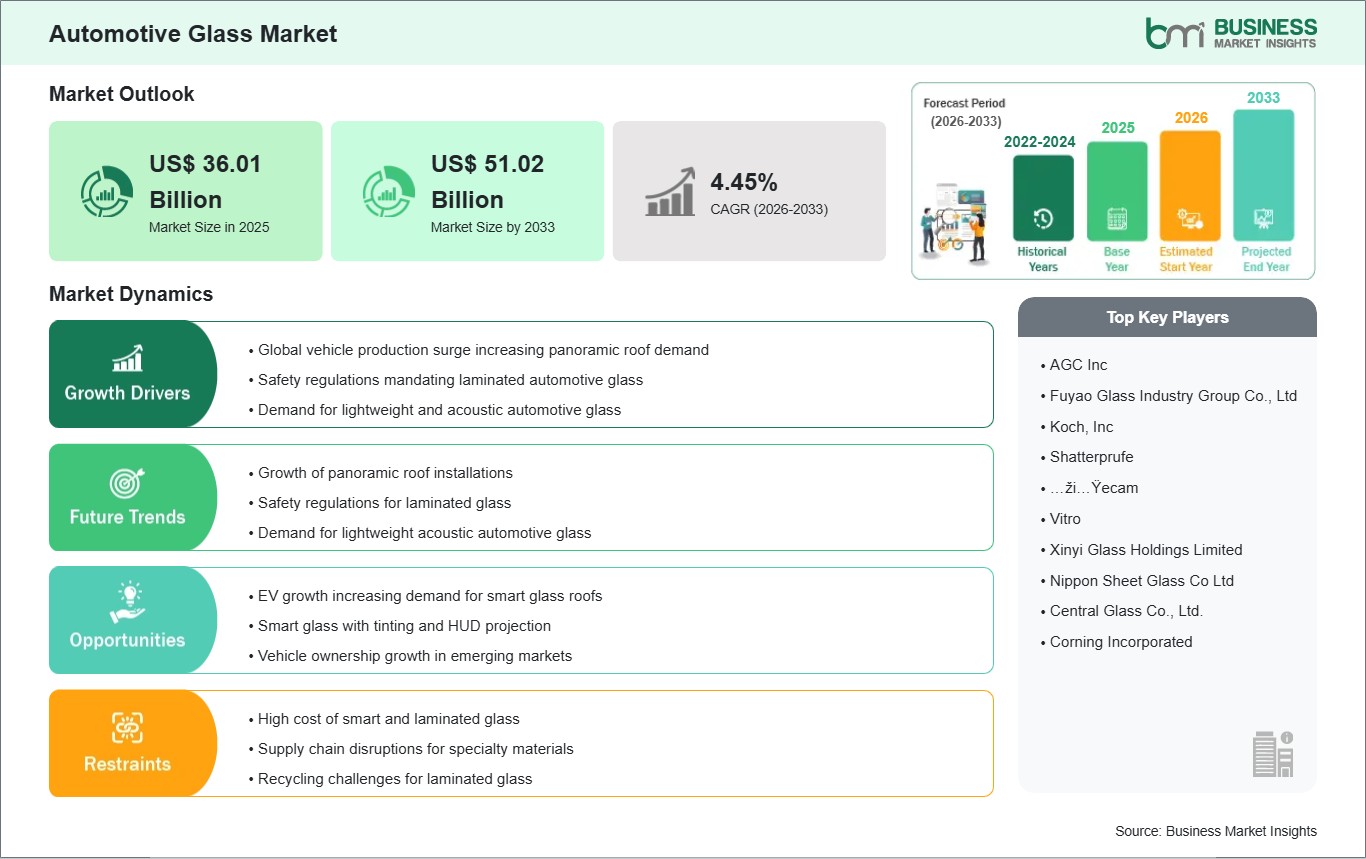
Automotive glass is crucial for modern vehicles to ensure safety, structural strength, and comfort. This glass is used in windshields, side and rear windows, sunroofs, and advanced driver-assistance systems (ADAS). These components provide clear visibility, passive safety through lamination, and improved looks. They also help reduce vehicle weight, noise, and manage temperature. Benefits include excellent optical clarity, impact resistance, better cabin insulation, and smooth integration with smart features like heads-up displays and rain sensors. Market growth mainly comes from rising vehicle production, strict safety rules, and growing consumer demand for comfort and style. The rise of electric vehicles and the use of advanced glazing technologies, like panoramic roofs and smart glass, also drive the industry forward.
However, there are challenges, such as fluctuating raw material prices, high production costs, and technical difficulties in making multifunctional glass. Despite these issues, there are significant opportunities in smart glass innovations, vehicle electrification, and the expanding aftermarket. Future trends will rely on research into ultra-thin, strong materials, sustainable production methods, and the development of autonomous and connected mobility solutions.
Segment Analysis
Automotive Glass Market Segmentation
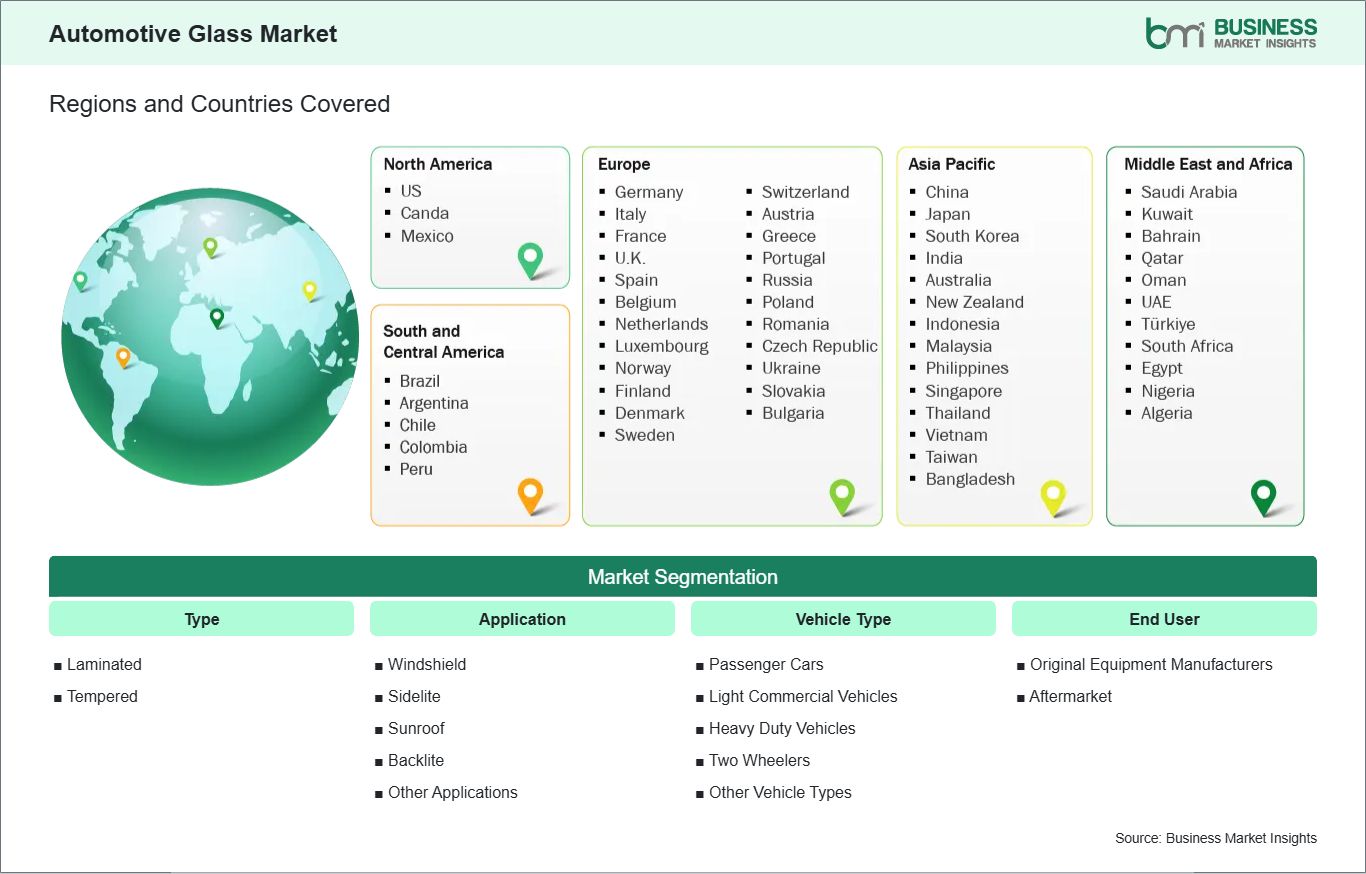
Key segments that contributed to the derivation of the automotive glass market analysis are type, application, vehicle type, and end user.
- By type, the automotive glass market is divided into laminated and tempered. The tempered segment dominated the market in 2025.
- By application, the market is categorized into windshield, side lite, sunroof, backlite, and other applications. The windshield segment dominated the market in 2025.
- By vehicle type, the automotive glass market is segmented into passenger cars, light commercial vehicles, heavy-duty vehicles, two-wheelers, and other vehicle types. The passenger cars segment dominated the market in 2025.
- By end user, the market is bifurcated into original equipment manufacturers (OEMs) and the aftermarket. The original equipment manufacturers (OEMs) segment dominated the market in 2025.
Market Forces
Automotive Glass Market Drivers and Opportunities
Growing Need for Advanced, Lightweight, and Smart Automotive Glass Solutions
Automakers are increasingly integrating high-performance automotive glass to enhance vehicle safety, improve aerodynamics, and elevate passenger comfort. These advanced glazing solutions offer superior optical clarity, impact resistance, and noise reduction while enabling features such as heads-up displays, electrochromic dimming, and integrated ADAS sensors. They meet modern demands for smarter, safer, and more connected vehicles without compromising structural integrity or design aesthetics. Their role in electric and autonomous vehicle platforms is particularly critical for optimizing range through lightweighting and enabling seamless sensor connectivity. The trend toward premiumization and enhanced in-cabin experiences is accelerating innovation in automotive glazing. The industry is focusing on ultra-thin, high-strength glass and embedded electronics to meet evolving OEM standards. Growth is further supported by rising consumer preference for panoramic roofs and intelligent glass features. The demand for specialized optical and thermal functionality continues to drive new material development, ensuring sustained market momentum.
Shift Toward Lightweighting, Electrification, and Sustainable Mobility
There is a growing focus on reducing vehicle weight, improving energy efficiency, and using eco-friendly manufacturing processes. This change reflects more pressure from regulations on emissions and a worldwide movement toward carbon neutrality. Products like chemically strengthened thin glass and recycled-content glazing solutions help lower vehicle weight and improve lifecycle sustainability, making them appealing to electric vehicle manufacturers. These glass solutions promote energy saving by lowering HVAC loads and improving battery range. They fit into broader environmental goals throughout the automotive industry. The increasing interest in circular economy principles and green supply chains shows a commitment to balancing performance with ecological responsibility. Strict fuel economy standards and global efforts to reduce transportation emissions are speeding up the development of lightweight, recyclable glazing technologies. The industry is focusing on glass solutions that offer durability and functionality while meeting strict sustainability goals. The drive for regulatory compliance, operational efficiency, and a lower environmental impact is compelling the global use of next-generation automotive glass.
Size and Share Analysis
Automotive Glass Market Size and Share Analysis
The Automotive Glass market demonstrates steady growth, with size and share analysis revealing evolving trends and competitive positioning among key players. The report examines subsegments categorized within type, application, vehicle type, and end user, offering insights into their contribution to overall market performance.
Based on type, the tempered subsegment dominates the automotive glass market. Tempered glass has high mechanical strength, excellent thermal resistance, and improved safety because it shatters into small, granular pieces when hit. These traits make it popular for side windows, rear windows, and sunroofs. Its dependable performance, cost efficiency, and adherence to strict safety regulations make it the primary choice for car manufacturers looking for durable, lightweight, and impact-resistant glazing options for both passenger and commercial vehicles.
Report Coverage
Automotive Glass Market Report Coverage and Deliverables
The " Automotive Glass Market Size and Forecast (2022–2033)" report provides a detailed analysis of the market covering below areas:
- Automotive Glass market size and forecast at global, regional, and country levels for all the key market segments covered under the scope
- Automotive Glass market trends, as well as market dynamics such as drivers, restraints, and key opportunities
- Automotive Glass market analysis covering key market trends, global and regional framework, major players, regulations, and recent market developments
- Industry landscape and competition analysis covering market concentration, heat map analysis, prominent players, and recent developments for the automotive glass market
- Detailed company profiles, including SWOT analysis
Geographic Insights
Automotive Glass Market Geographic Insights
The geographical scope of the Automotive Glass market report is divided into five regions: North America, Asia Pacific, Europe, the Middle East & Africa, and South & Central America. The Asia Pacific automotive glass Market is segmented into China, Japan, South Korea, India, Australia, New Zealand, Indonesia, Malaysia, the Philippines, Singapore, Thailand, Vietnam, Taiwan, Bangladesh, and the Rest of Asia Pacific. Asia Pacific's fast automotive industrial growth, especially in vehicle production, EV adoption, and infrastructure development, makes it an important region for market expansion.
The market growth is driven by the need for better safety, lightweight materials, passenger comfort, and ADAS-compatible glazing solutions. There is also a demand for strong, durable, and affordable glass materials. The region's growing middle class, increasing vehicle ownership, strict safety regulations, and heightened awareness of smart and sustainable mobility solutions support Asia Pacific's position as a leading producer and consumer of automotive glass globally.
Industry Activity
Recent Developments
The Automotive Glass market is evaluated by gathering qualitative and quantitative data post-primary and secondary research, which includes important corporate publications, association data, and databases. A few of the key developments in the automotive glass market are:
- In May 2025, AGC Automotive Czech began the construction of a laminated windshield production line at its Chudeřice plant, which will increase production capacity and technological capabilities through automation. The new line is expected to produce over 1 million laminated windshields per year and create 50 local jobs.
- In October 2025, Autoglass formed an exclusive strategic partnership with FleetCheck to deliver improved automotive glass services and priority support. As part of FleetCheck's Affinity Services programme, initiated in 2020, this collaboration aims to enhance fleet services for over 2,000 customers.
Trust & Transparency
Research Methodology
The market analysis combines proprietary research with secondary data from government agencies, company disclosures, regulatory filings, industry databases and expert interviews. Market estimates are validated through data triangulation, cross-market benchmarking and analyst
review.
View Full Research Methodology
Key Sources Referred:
World Bank – Global Trade IndicatorsEuropean Chemicals AgencyInternational Council of Chemical AssociationsInternational Monetary Fund (IMF)World Trade Organization (WTO)International Trade Administration (ITA)Company WebsitesCompany Annual ReportsCompany Investor Presentations