Market Summary
Executive Summary and Global Market Analysis
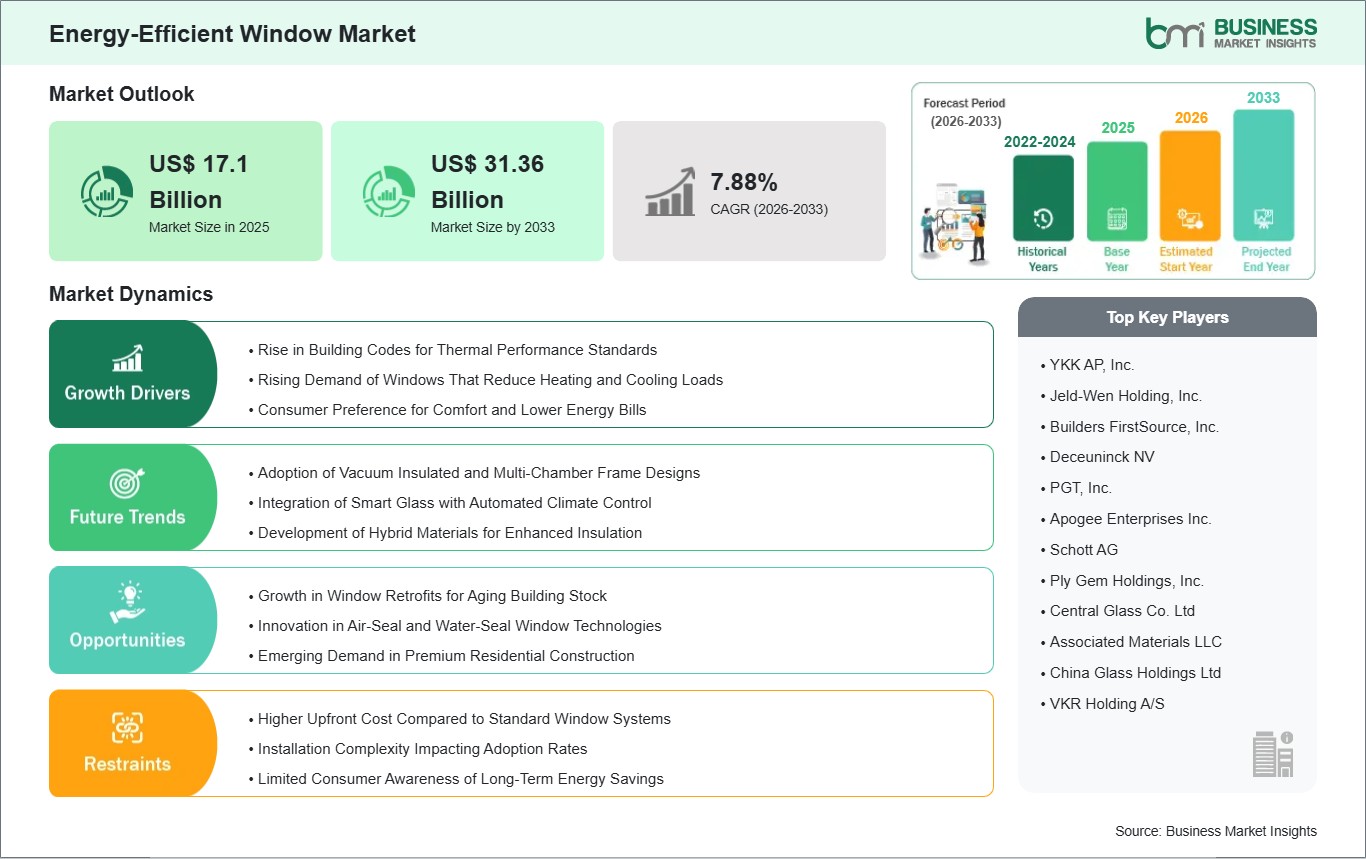
The global energy efficient window market is evolving rapidly as urbanization, climate awareness, and smart building trends reshape the construction landscape. Unlike conventional windows, energy efficient windows are engineered with multiple layers of advanced glass, insulated frames, and innovative gas fills to reduce heat loss in winter and limit heat gain in summer. This combination not only lowers energy consumption but also improves acoustic insulation and indoor comfort, making it increasingly desirable in modern residential, commercial, and institutional projects. One of the most prominent driving factors is the growing emphasis being placed on the retrofitting of existing structures with the best possible window systems. As cities are being modernized to adhere to new energy standards in these structures, the need for energy-efficient windows is being felt, so that the structures are optimized without the need for significant changes in the building itself. The restraints in the market include the higher costs of these windows in comparison to regular ones and the availability of materials in certain regions, which might be a hindrance in the development market in the case of developing countries. However, the advancements in the materials being used in these windows are making this market a necessity in the world of sustainable and modern constructions.
Segment Analysis
Energy‑Efficient Window Market Segmentation
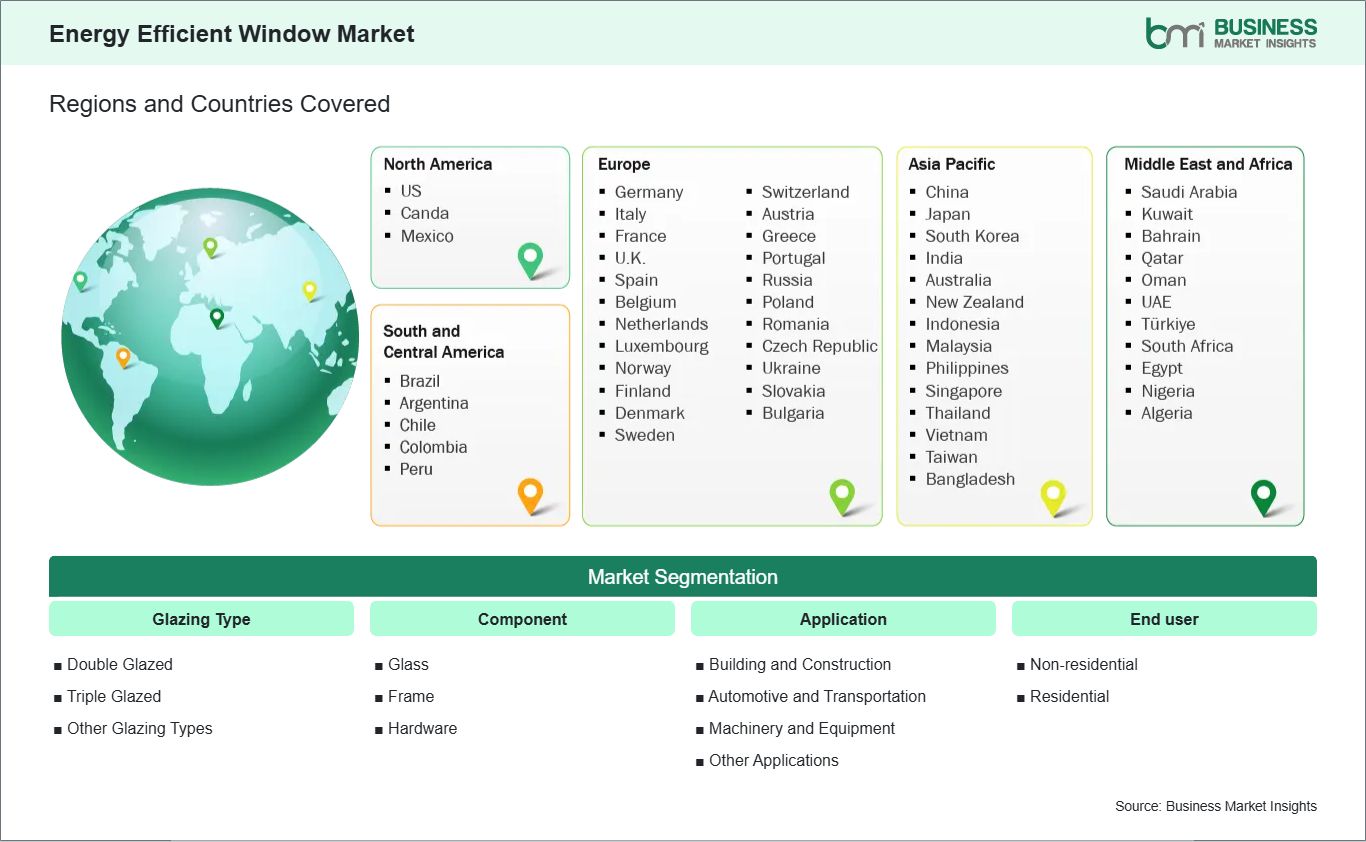
Key segments that contributed to the derivation of the energy‑efficient window market analysis are glazing type, component, application, and end user.
- By glazing type, the energy‑efficient window market is segmented into double glazed, triple glazed, and other glazing types. The double glazed subsegment dominated the market in 2025.
- Based on component, the energy‑efficient window market is classified into glass, frame, and hardware. The glass subsegment dominated the market in 2025.
- In terms of application, the energy‑efficient window market is divided into new construction and renovation & reconstruction. The new construction subsegment dominated the market in 2025.
- On the basis of end user, the energy‑efficient window market is segmented into non‑residential and residential. The residential subsegment dominated the market in 2025.
Market Forces
Energy‑Efficient Window Market Drivers and Opportunities
Rise in Building Codes for Thermal Performance Standards
The growth of the energy-efficient window market is largely driven by stricter building codes emphasizing thermal performance. Governments and regulatory bodies are increasingly mandating that new buildings meet minimum energy efficiency standards, including U-values, solar heat gain, and insulation performance. As a result, architects and developers are specifying high-performance windows to comply with these standards while ensuring occupant comfort and reducing operational energy costs.
Energy-efficient windows help minimize heat transfer between the indoor and outdoor environment, reducing reliance on heating and cooling systems. This is particularly important in urban areas and high-density constructions where maintaining indoor climate control is essential for both energy savings and occupant well-being. Developers view these windows not only as a compliance measure but also as a long-term investment in building performance.
The driver extends beyond compliance to market differentiation. Buildings equipped with energy-efficient windows often earn green certifications and higher market value, appealing to environmentally conscious tenants and buyers. The combination of regulatory pressure, energy cost reduction, and enhanced property value is making energy-efficient windows a standard choice for modern construction globally.
Growth in Window Retrofits for Aging Building Stock
Retrofitting existing buildings presents a significant opportunity for energy-efficient window manufacturers. Many urban centers have aging building stock with outdated glazing systems that allow heat loss, drafts, and condensation. Replacing these with modern energy-efficient windows not only improves thermal performance but also enhances indoor comfort and lowers energy bills, creating strong demand for renovation projects.
The retrofit opportunity is amplified by incentives and subsidies offered by governments and utilities for energy-saving upgrades. Programs targeting older commercial and residential properties encourage building owners to invest in high-performance windows, creating a steady market for replacement and refurbishment solutions. This makes retrofitting a cost-effective way to achieve sustainability targets without large-scale structural changes.
Innovation in window technology further strengthens this opportunity. Solutions such as triple glazing, low-emissivity coatings, insulated frames, and smart tinting allow retrofits to achieve performance comparable to new construction. As global urban areas focus on improving the energy efficiency of existing infrastructure, the market for energy-efficient window retrofits is poised to grow steadily and sustainably worldwide.
Size and Share Analysis
Energy‑Efficient Window Market Size and Share Analysis
The energy‑efficient window market is experiencing steady growth, with market size and share analysis reflecting evolving treatment preferences and competitive dynamics among key players. The report evaluates important subsegments categorized within glazing type, component, application, and end user, highlighting their respective contributions to overall market performance.
By glazing type, the Double Glazed subsegment dominated the Energy‑Efficient Window market in 2025. Double-glazed windows offer superior thermal insulation, energy savings, and noise reduction, making them highly suitable for modern residential and commercial applications, which drives their widespread adoption.
Based on component, the Glass subsegment dominated the Energy‑Efficient Window market in 2025. Glass components provide high transparency, durability, and thermal efficiency, supporting strong demand for energy-efficient window solutions.
In terms of application, the New Construction subsegment dominated the Energy‑Efficient Window market in 2025. New construction projects benefit from energy-efficient windows’ ability to enhance building performance and reduce operational costs, reinforcing the dominance of this segment.
On the basis of end user, the Residential subsegment dominated the Energy‑Efficient Window market in 2025. Residential applications require high-performance windows for energy conservation, comfort, and sustainability, driving widespread adoption in this segment.
Report Coverage
Energy‑Efficient Window Market Report Coverage and Deliverables
The "Energy‑Efficient Window Market Size and Forecast (2022 - 2033)" report provides a detailed analysis of the market covering below areas:
- Energy‑Efficient Window market size and forecast at global, regional, and country levels for all the key market segments covered under the scope
- Energy‑Efficient Window market trends, as well as drivers, restraints, and opportunities
- Energy‑Efficient Window market analysis covering key trends, regional framework, major players, regulations, and recent developments
- Industry landscape and competition analysis covering market concentration, heat map analysis, prominent players, and recent developments for the Energy‑Efficient Window market
- Detailed company profiles, including SWOT analysis
Geographic Insights
Energy‑Efficient Window Market Geographic Insights
The geographical scope of the Energy‑Efficient Window market report is divided into five regions: North America, Asia Pacific, Europe, Middle East & Africa, and South & Central America. The Energy‑Efficient Window market in North America is expected to grow during the forecast period.
North America leads in the energy-efficient window market due to its advanced building standards, weather-specific constructions, and robust environmental regulations. The focus in this market is not only on saving energy but also on protecting the structures from extreme weather changes like hurricanes and snowfall, making the structures extremely durable and resistant. The focus is shifting towards the development of multi-functional properties in the energy-efficient windows, which include thermal insulation, UV protection, and soundproofing in a single product. A special feature of the North American market is that smart control systems are increasingly being linked to energy-efficient windows. With such windows, buildings can regulate temperatures and provide natural light, reducing the need for artificial light and air-conditioning. In terms of renovations and retrofits, the North American market is doing very well. Older buildings are being retrofitted to meet energy regulations. Although the high costs and installation requirements may act as a deterrent in certain sectors, due to the emphasis on resilience, comfort, and innovation in building technologies, North America is likely to maintain its lead in the global smart windows market and set the pace for energy-efficient technologies.
Industry Activity
Recent Developments
The energy‑efficient window market is evaluated by gathering qualitative and quantitative data post primary and secondary research, which includes important corporate publications, association data, and databases. A few of the key developments in the energy‑efficient window market are:
- In June 2025, AGC Inc. announced that it inaugurated a new global research and development center focused on high‑performance insulating glass and energy‑saving window technologies in Japan, aimed at accelerating innovations in coating technologies and glazing systems for thermal performance improvements in buildings worldwide.
- In February 2024, Saint‑Gobain S.A. announced that it launched production of India`s first low‑carbon glass, a new substrate with an estimated ~40% lower carbon footprint compared with its existing products, which will be integrated into its energy‑efficient glass solutions for windows and faç
Trust & Transparency
Research Methodology
The market analysis combines proprietary research with secondary data from government agencies, company disclosures, regulatory filings, industry databases and expert interviews. Market estimates are validated through data triangulation, cross-market benchmarking and analyst
review.
View Full Research Methodology
Key Sources Referred:
World BankWorld Health Organization (WHO)S. Occupational Safety and Health Administration (OSHA)European Commission - Construction & Built EnvironmentInternational Trade Centre (ITC)Engineering News-Record (ENR)Building Design + Construction (BD+C)Company WebsitesCompany Annual ReportsCompany Investor Presentations