Market Summary
Executive Summary and Global Market Analysis
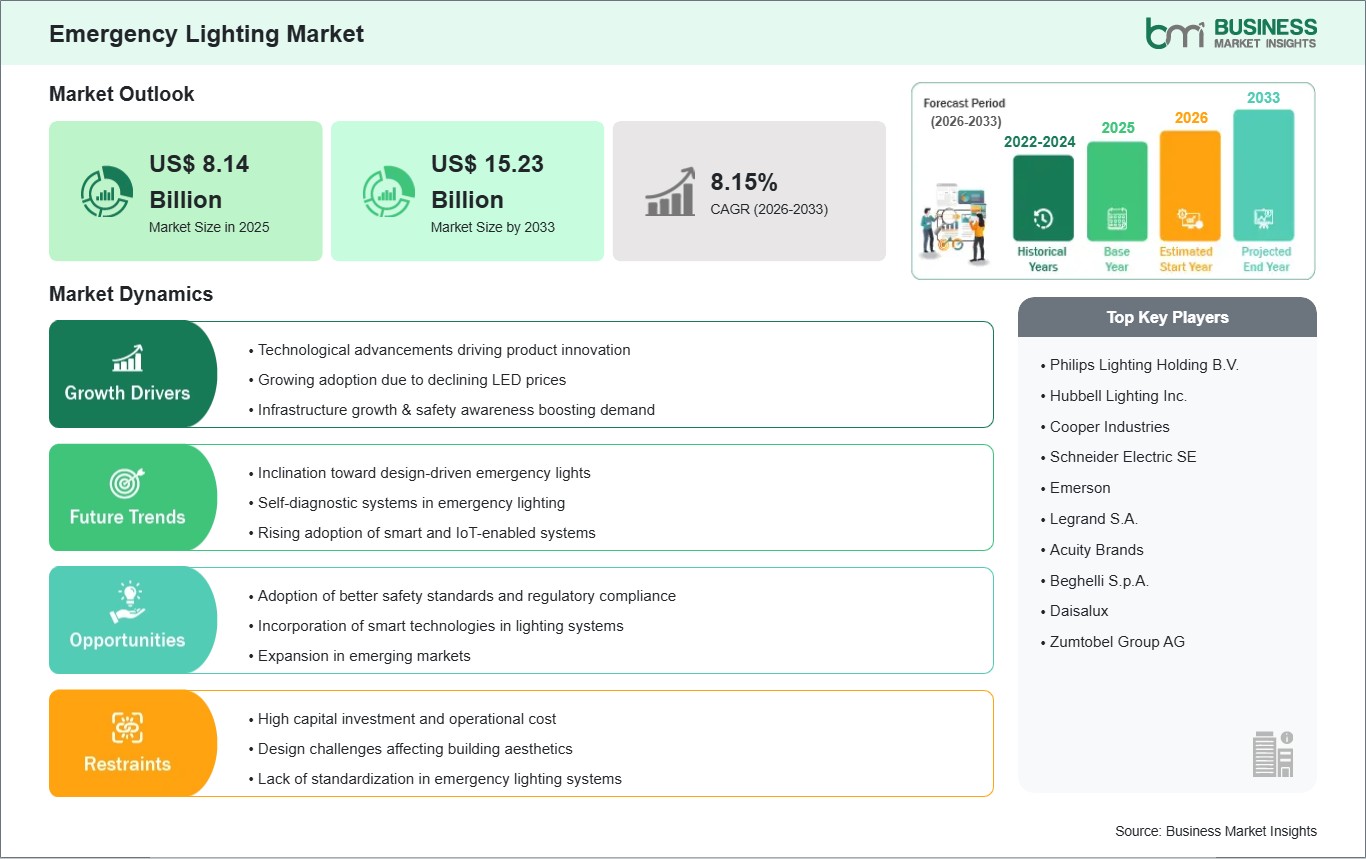
Emergency lighting systems refer to a set of lighting systems designed to operate during power outages or emergencies in various places, including residential areas, commercial buildings, and industrial facilities. These systems play a crucial role in maintaining safety standards and ensuring compliance with regulatory requirements in various buildings. The global emergency lighting systems market is growing significantly due to increased awareness of safety standards and the implementation of stringent building codes. Governments and regulatory authorities are enforcing regulations regarding the installation of emergency lighting systems in commercial and industrial buildings. These factors contribute significantly to the growth of the global emergency lighting systems market. The growing infrastructure in cities is also a factor in the installation of these systems.
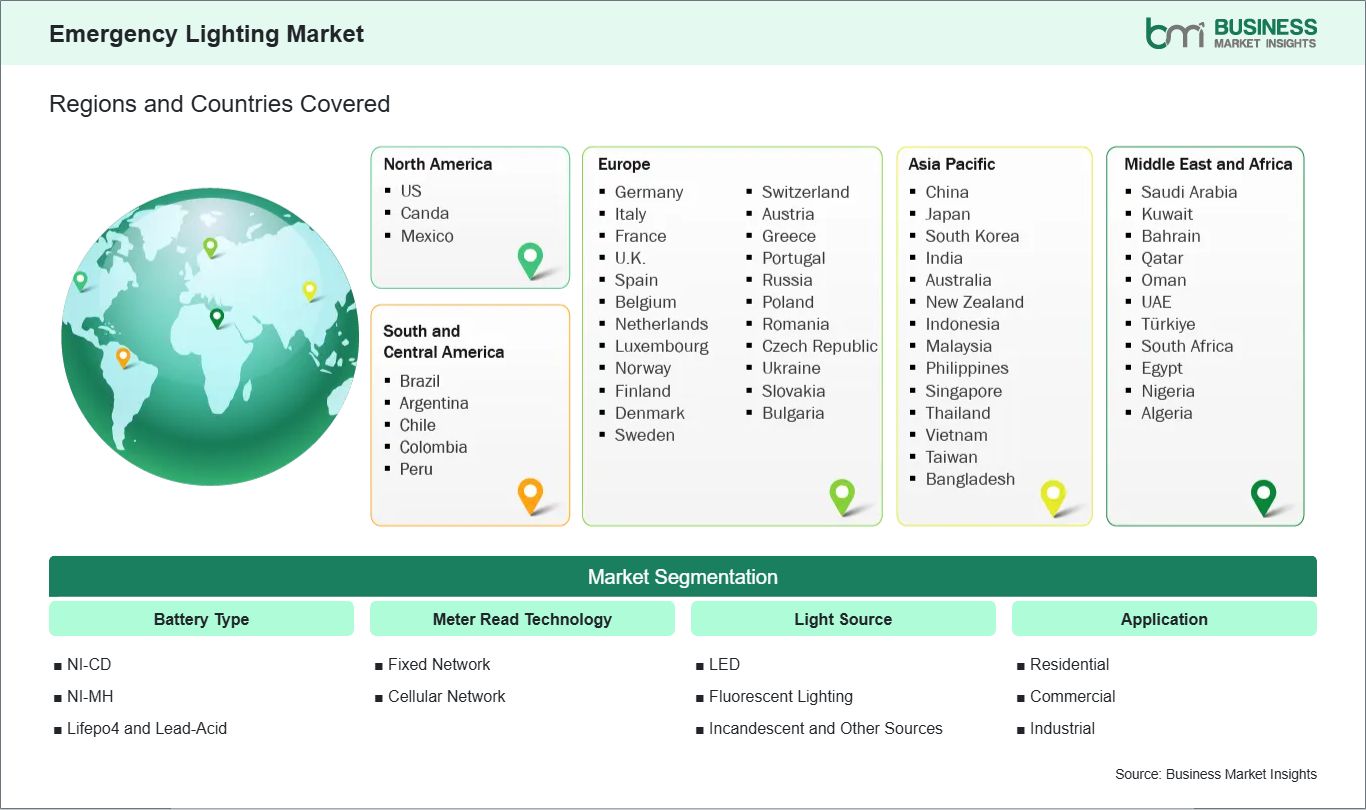
Segmental analysis reveals that lithium iron phosphate (Lifepo4) is gaining popularity due to its longer lifespan and efficiency compared to conventional types. Other types of batteries used in these systems include NI-CD and lead-acid batteries; however, nickel metal hydride is a popular choice due to its sustainability.
In terms of light sources, LED-based emergency lighting systems are being preferred due to their energy efficiency and longer lifespan compared to conventional types of light sources. Fluorescent and incandescent light sources are losing popularity due to their low efficiency compared to LED-based systems.
Based on application, commercial buildings dominate the global emergency lighting systems market due to stringent safety standards in these buildings. Industrial buildings also require these systems due to safety concerns during operations; however, residential buildings are becoming popular due to growing infrastructure in cities.
The competitive landscape of the Emergency Lighting Market is characterized by continuous product innovation, energy-efficient solutions, and integration with smart building systems. Market participants are focusing on improving reliability, compliance, and performance to meet evolving industry standards.
Market Forces
Emergency Lighting Market Drivers and Opportunities
Increasing Safety Regulations and Building Compliance Requirements
One of the prime reasons for the growth of the emergency lighting market is the implementation of strict safety measures through building codes. Governments worldwide are enforcing the implementation of emergency lighting systems in various infrastructure, such as commercial, industrial, and public infrastructure. This is creating an increased demand for the implementation of such systems in newly constructed infrastructure, as well as the retrofitting of existing infrastructure. This is also creating an increased demand for the replacement of existing systems with new, energy-efficient systems.
The increased awareness regarding safety measures is also resulting in the implementation of strict building codes, which is creating an increased demand for the emergency lighting market.
Adoption of Smart Lighting and Energy-Efficient Technologies
The rising trend of smart technology in buildings is creating new avenues for the Emergency Lighting Market. Smart technology has the potential to allow for features such as testing, monitoring, and predictive maintenance.
The trend of efficient use of resources, such as the use of energy-efficient lighting solutions in combination with advanced battery technology, is also creating new avenues for growth. Not only does this help in saving resources, but it also has the potential to increase the efficiency of the solution. The development of smart technology in infrastructure, such as smart cities, is also creating new avenues for growth for emergency lighting solutions.
Size and Share Analysis
Emergency Lighting Market Size and Share Analysis
The Emergency Lighting Market is projected to grow from US$ 8.14 billion in 2025 to US$ 15.23 billion by 2033, registering a CAGR of 12.2%. This growth is driven by increasing regulatory compliance requirements and the adoption of advanced lighting technologies.
By battery type, Lifepo4 batteries are gaining a larger share due to their efficiency and longer lifespan, while NI-CD and lead-acid batteries continue to hold a significant share in traditional applications. NI-MH batteries are gradually expanding their presence as a balanced alternative.
In terms of light source, LED technology dominates the market due to its energy efficiency and durability. Fluorescent and incandescent lighting systems are gradually declining but still contribute to the installed base of legacy systems.
By application, the commercial segment holds a major share due to strict safety regulations and high occupancy levels. Industrial applications also represent a significant portion due to safety requirements in hazardous environments, while residential adoption is increasing with urbanization and awareness.
Geographic Insights
Emergency Lighting Market Geographic Insights
Europe is a developed market for emergency lighting systems and is backed by strong regulatory systems and infrastructure. Countries such as Germany, the UK, and France have stringent safety regulations and require the use of emergency lighting systems in commercial and public buildings. The focus of European countries on sustainable and energy-efficient solutions is driving the demand for LED-based systems and new battery technologies. The presence of infrastructure and the renovation of existing infrastructure are also driving the demand for modern and upgraded emergency lighting systems.
Asia-Pacific is an emerging and growing market for emergency lighting systems. The construction of new residential, commercial, and industrial buildings in countries such as China, India, and Japan is driving the demand for emergency lighting systems. The awareness of safety standards and the development of regulations are also driving the demand for these systems in the region. The development of infrastructure and the emergence of smart city projects are also driving the demand for these systems. With the development of infrastructure, the demand for modern and upgraded emergency lighting systems is expected to rise significantly.
Industry Activity
Recent Developments
The Emergency Lighting Market is analyzed using a combination of primary and secondary research sources, including corporate publications, industry associations, and established databases. This ensures accurate tracking of technological advancements and regulatory developments influencing the market.
- In June 2025, Signify announced the launch of an advanced emergency lighting system integrated with smart monitoring capabilities. The solution enhances system reliability through automated testing and real-time diagnostics, supporting the growing demand for connected building solutions.
- September 2025-Ovia has broadened its emergency lighting portfolio by incorporating the Orbik brand. This acquisition grants Ovia the rights to distribute Orbik’s well-established emergency lighting products, enhancing its offerings for commercial, industrial, and residential safety applications. The move strengthens Ovia’s market presence and underscores its commitment to providing reliable, energy-efficient emergency lighting solutions globally.
Trust & Transparency
Research Methodology
The market analysis combines proprietary research with secondary data from government agencies, company disclosures, regulatory filings, industry databases and expert interviews. Market estimates are validated through data triangulation, cross-market benchmarking and analyst
review.
View Full Research Methodology
Key Sources Referred:
International Energy Agency (IEA)International Electrotechnical Commission (IEC)National Fire Protection Association (NFPA)European Committee for Standardization (CEN)US Department of Energy (DOE)Lighting Industry AssociationsResearch Institutions in Electrical and Lighting SystemsTrade Journals on Lighting TechnologyCompany Annual Reports and Technical DocumentsGovernment Regulatory Bodies for Building Safety