Market Summary
Executive Summary and Global Market Analysis
Electronic Flight Instrument System's (EFIS) market is a critical segment within advanced avionics, forming the digital backbone of modern aircraft cockpits. EFIS replaces traditional analog flight instruments with integrated electronic displays that present real-time flight data such as attitude, altitude, airspeed, navigation, and system diagnostics. By consolidating multiple flight parameters into intuitive digital interfaces, EFIS enhances situational awareness, reduces pilot workload, and improves overall flight safety across commercial, military, and general aviation platforms.
A key driver of market growth is the widespread modernization of aircraft fleets and the transition toward fully digital cockpit architectures. Aircraft manufacturers are increasingly adopting glass cockpit configurations that rely heavily on EFIS for seamless data integration and improved human-machine interaction. The growing demand for fuel-efficient aircraft and advanced navigation capabilities is also reinforcing the adoption of EFIS, as it supports optimized flight paths, improved operational efficiency, and better decision-making during complex flight conditions.
The growth of the industry will also be supported by the development in avionics computer systems, display technologies, and sensors integration. Recent developments in EFIS technologies have witnessed the increased use of advanced display technologies such as high-resolution multifunction displays, synthetic vision technologies, and advanced terrain awareness capabilities. Such technological developments will enable pilots to gain access to more accurate information about their flights. Moreover, EFIS technologies are being integrated with flight management systems and autopilots.
However, the market faces challenges related to high system development costs, certification complexity, and the need for continuous software updates to maintain operational reliability and compliance with aviation standards. Retrofitting older aircraft with EFIS systems can also be technically complex and cost-intensive. Despite these constraints, the ongoing digital transformation of aviation and the strong emphasis on flight safety and operational efficiency continue to support the long-term expansion of the global EFIS market.
Segment Analysis
Electronic Flight Instrument System (EFIS) Market Segmentation
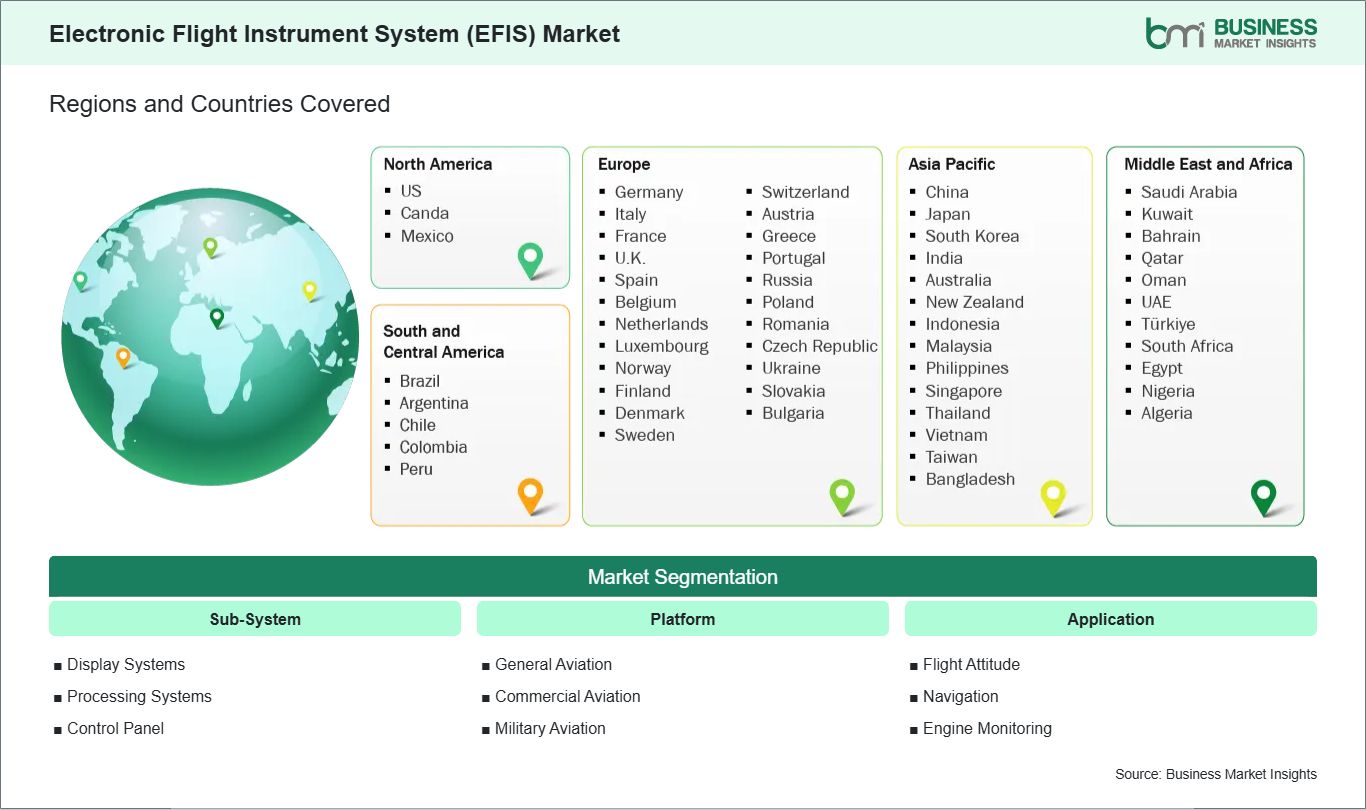
The electronic flight instrument system (EFIS) market is segmented based on sub-system, platform, and application, driven by the increasing adoption of advanced avionics, improved cockpit digitization, and the need for enhanced flight safety, situational awareness, and operational efficiency across modern aircraft.
By Sub-System
- Display Systems: Includes primary flight displays (PFD) and multi-function displays (MFD) that present critical flight data such as altitude, airspeed, attitude, and navigation information in a digital format, improving pilot situational awareness.
- Processing Systems: Central computing units that collect, integrate, and process flight data from multiple sensors and avionics systems to generate real-time, accurate flight information for display and decision-making.
- Control Panel: Pilot interface units used to input commands, configure display settings, and manage navigation and flight parameters, enabling efficient interaction with EFIS components.
By Platform
- General Aviation: Includes private jets, light aircraft, and business aviation platforms adopting EFIS for improved navigation accuracy, safety, and reduced pilot workload.
- Commercial Aviation: Represents the largest segment, driven by widespread adoption in passenger and cargo aircraft to enhance operational efficiency, flight safety, and regulatory compliance.
- Military Aviation: Utilizes rugged and mission-critical EFIS solutions in fighter jets, transport aircraft, and surveillance platforms, supporting advanced mission execution and combat operations.
By Application
- Flight Attitude: Provides real-time information on aircraft orientation, including pitch, roll, and yaw, ensuring stable and safe flight control.
- Navigation: Supports route planning, positioning, and guidance using integrated avionics and GPS-based systems for accurate and efficient flight paths.
- Engine Monitoring: Displays real-time engine performance parameters such as temperature, fuel consumption, and pressure, enabling predictive maintenance and operational efficiency.
Market Forces
Electronic Flight Instrument System (EFIS) Market Drivers and Opportunities
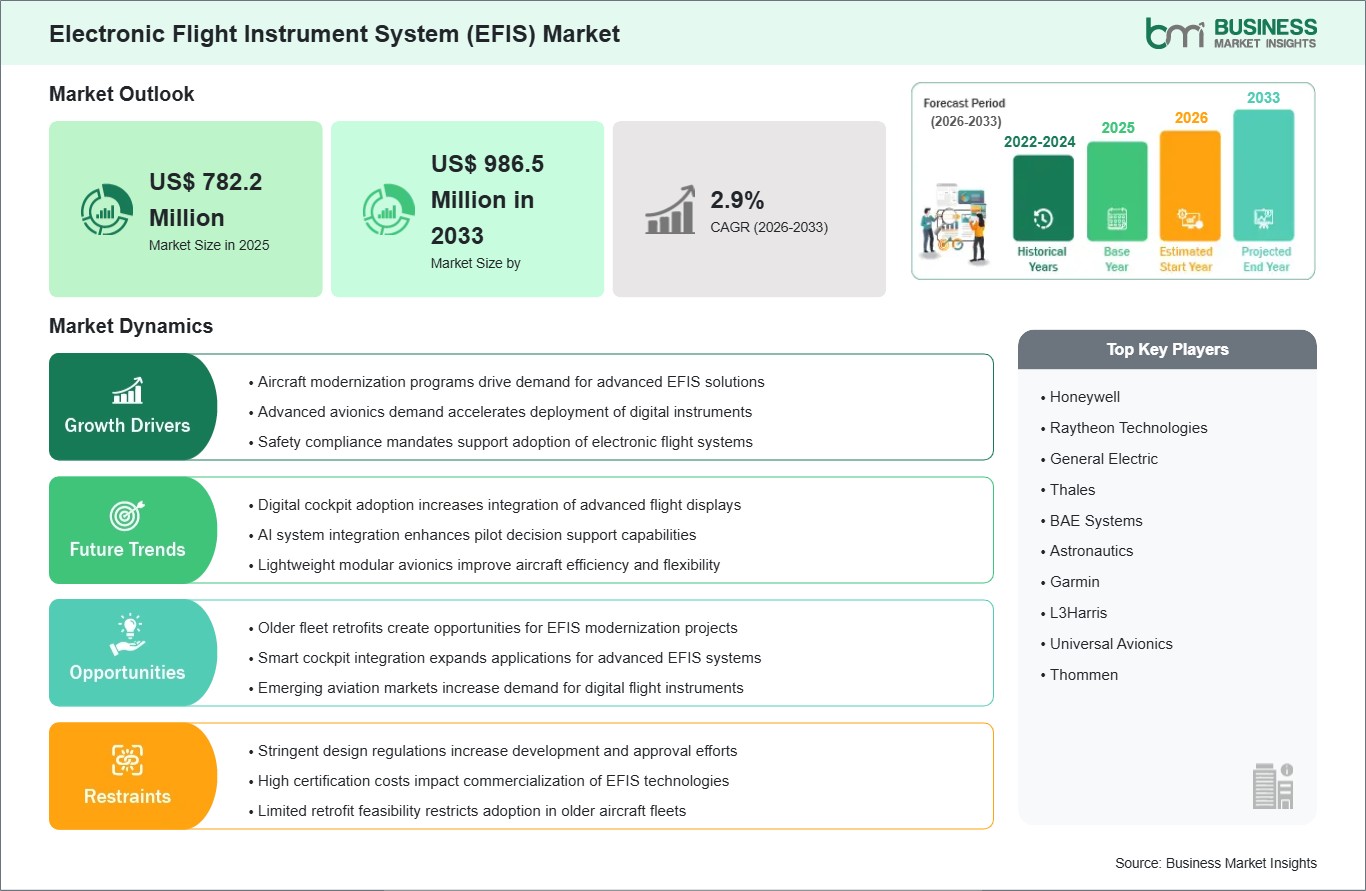
Aircraft Modernization Programs
The market for the Electronic Flight Instrument System (EFIS) is growing at a steady pace owing to various aircraft modernization initiatives. This is because airlines as well as militaries have started upgrading their cockpits in an attempt to enhance their performance levels, efficiency, and even ensure flight safety. The Electronic Flight Instrument System provides information relating to the aircraft in real time to the pilot through digital screens.
There is a tendency for modern aircraft to be designed with glass cockpits, in which EFIS serves a key part in minimizing pilot work load and assisting in decision making. Due to the incorporation of avionics, autopilots, and communications devices, it is imperative that the future aircraft include EFIS. With the advancement in avionics witnessed continually, there is a need for reliable and modular displays.
Another key driver is the growing focus on operational efficiency and safety enhancement. Digital flight instrument systems can help provide accurate data, fast processing of information, and higher redundancy. This is very important for airliners to improve their fuel efficiency and reduce their maintenance costs while meeting aviation safety regulations. As modernization programs accelerate globally, EFIS adoption continues to grow across new aircraft deliveries.
Retrofit Opportunities In Older Fleets
A significant opportunity in the EFIS market lies in the retrofitting of older aircraft fleets with modern digital cockpit systems. Many aircraft that currently operate in the aviation industry have analog or partly digital instruments installed, reducing operational efficiency as well as integration with contemporary air traffic management systems. Retrofitting such aircraft with EFIS systems helps increase their lifespan while ensuring better performance and safety standards.
Retrofit projects have been gaining increasing influence due to costs, as replacing the whole fleet of planes proves to be much more costly than installing avionics upgrades on current planes. The installation of an EFIS allows old planes to meet new regulatory standards, enhance navigational precision, and provide compatibility with current communication and surveillance systems.
Moreover, the advances in the airspace management systems and complexities of air traffic are forcing the operators to upgrade their cockpit systems. With the advent of the EFIS system, situational awareness is enhanced, and efficient route planning can take place, which leads to less delay and less fuel wastage. The increased age of the aircrafts along with new regulations will increase the demand for the installation of the EFIS system, which will ultimately foster future market growth.
Size and Share Analysis
Electronic Flight Instrument System (EFIS) Market Size and Share Analysis
The electronic flight instrument system (EFIS) market is projected to grow from US$ 782.2 million in 2025 to US$ 986.5 million by 2033, registering a CAGR of 2.9% from 2026 to 2033.
By sub-system, the display systems segment dominates the market due to its critical role in presenting real-time flight data in an integrated digital format. The transition from analog gauges to glass cockpit architectures in modern aircraft has significantly increased demand for high-resolution multifunction displays that enhance situational awareness and pilot efficiency.
By platform, commercial aviation dominates the market owing to large-scale aircraft deliveries, rapid fleet modernization programs, and widespread adoption of advanced avionics in next-generation aircraft. Airlines increasingly prioritize EFIS integration to improve operational safety, reduce pilot workload, and enhance fuel efficiency.
By application, navigation dominates the market as accurate and real-time positioning data is essential for safe and efficient flight operations. The integration of satellite-based navigation systems and advanced flight management technologies has made EFIS-based navigation a core function in modern cockpit systems.
Report Coverage
Electronic Flight Instrument System (EFIS) Market Report Coverage and Deliverables
The "Electronic Flight Instrument System (EFIS) Market Size and Forecast (2022-2033)" report provides a detailed analysis of the market covering below areas:
- Market size and forecast at global, regional, and country levels for all key market segments covered under the scope
- Market trends, along with market dynamics such as drivers, restraints, and key opportunities
- Market analysis covering key trends, global and regional frameworks, major players, regulations, and recent developments
- Industry landscape and competitive analysis covering market concentration, heat map analysis, prominent players, and recent developments
- Detailed company profiles, including SWOT analysis
Geographic Insights
Electronic Flight Instrument System (EFIS) Market Geographic Insights
In terms of geographical distribution of the Electronic Flight Instrument System (EFIS) Market, there is a varied pattern of adoption based on factors such as aircraft production rates, modernization of avionics systems, increasing demand for digital cockpits, and rising investments in commercial and military aviation programs. The growing need for enhanced flight safety, improved situational awareness, and efficient aircraft navigation is one of the major drivers behind market growth.
North America is a leading market for electronic flight instrument systems, supported by the presence of major aircraft manufacturers, advanced avionics suppliers, and strong defense aviation programs. Both the U.S. and Canada are constantly undergoing the upgrade of their current aircraft fleet with high-tech glass cockpits and digital flight displays. Next-gen avionics adoption in commercial airliners, private jets, and military aircrafts is leading to the growing need for EFIS systems. Furthermore, the emphasis placed by the region on enhancing flight safety norms, fuel economy, and situational awareness of pilots is fostering the growth of the market.
Asia Pacific is experiencing strong growth in the EFIS market due to rising aircraft deliveries, expanding airline fleets, and increasing investments in aviation infrastructure.Some major players in the market include nations like China, India, Japan, and South Korea. Modern avionics are being used increasingly in newly designed aircraft and in retrofitting older models with avionics systems. Increased low-cost carrier services, rising air traffic, and efforts to upgrade militaries through modernization campaigns are driving the demand for electronic flight instrument systems.
Both regions play a significant role in the expansion of the electronic flight instrument system market, driven by increasing aircraft production, ongoing avionics modernization programs, and the growing integration of digital cockpit technologies that enhance safety, efficiency, and operational performance in modern aviation.
Industry Activity
Recent Developments
The electronic flight instrument system (EFIS) market is evaluated by gathering qualitative and quantitative data post primary and secondary research, which includes important corporate publications, association data, and databases. Recent developments and news in the market include:
- In July 2025, Garmin announced that it had expanded its aviation display portfolio by launching a new 12.1-inch TXi touchscreen flight display, designed for retrofit and modern cockpit installations, enhancing primary flight display (PFD), multi-function display (MFD), and engine indication system (EIS) capabilities for general aviation, turboprop, and jet aircraft.
- In December 2025, Aspen Avionics announced that it had launched an upgraded Evolution MAX engine instrument integration package, developed in collaboration with Electronics International, enabling improved real-time engine monitoring and integration of digital flight display systems within its EFIS/MFD ecosystem for general aviation aircraft.
Trust & Transparency
Research Methodology
The market analysis combines proprietary research with secondary data from government agencies, company disclosures, regulatory filings, industry databases and expert interviews. Market estimates are validated through data triangulation, cross-market benchmarking and analyst
review.
View Full Research Methodology
Key Sources Referred:
World Bank World Trade Organization (WTO) International Monetary Fund (IMF) International Trade Administration (ITA) International Civil Aviation Organization (ICAO) Federal Aviation Administration (FAA) European Union Aviation Safety Agency (EASA) International Air Transport Association (IATA) International Organization for Standardization (ISO) Society of Automotive Engineers (SAE International) Radio Technical Commission for Aeronautics (RTCA) European Organisation for Civil Aviation Equipment (EUROCAE) S. Department of Transportation (USDOT) National Aeronautics and Space Administration (NASA) Company Websites Company Annual Reports Company Investor Presentations