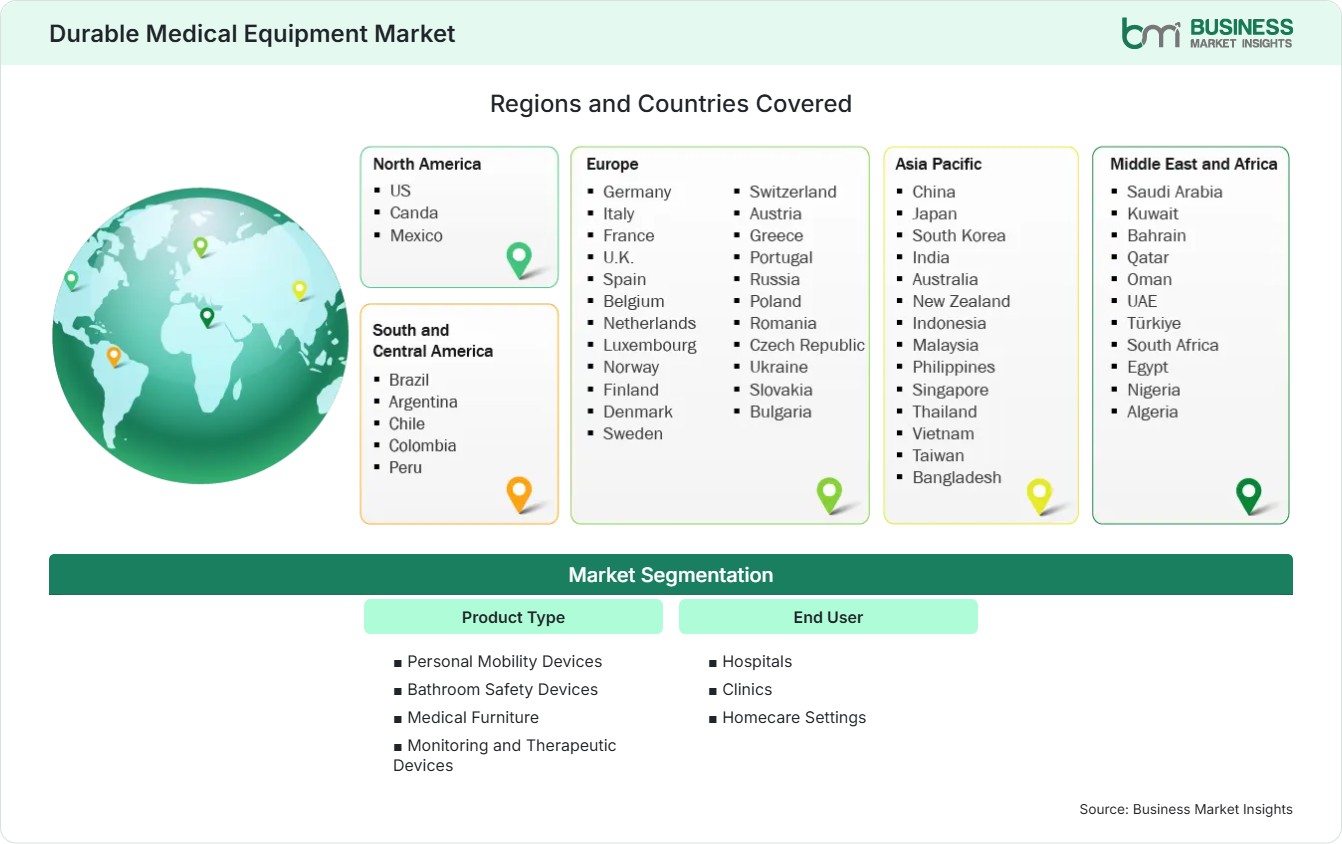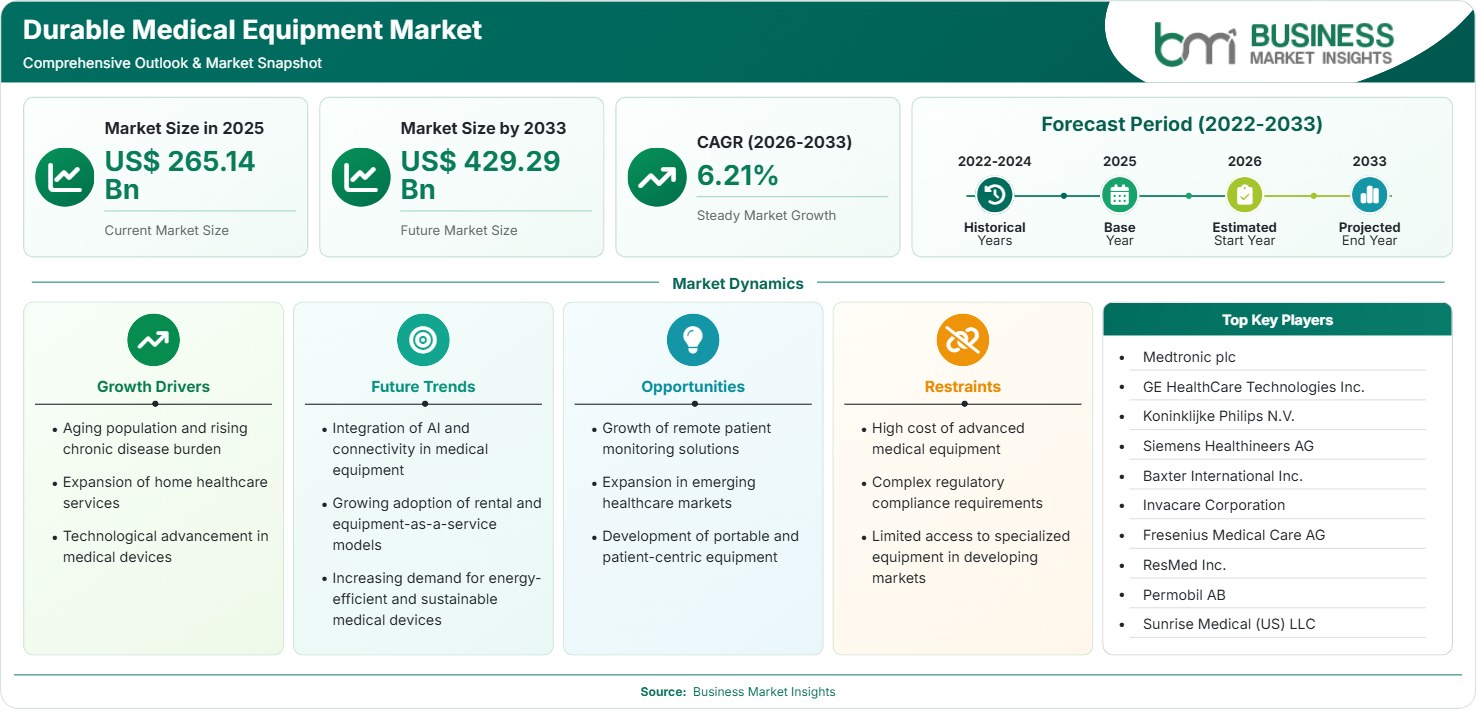
Durable Medical Equipment Market Regional Highlights
North America Durable Medical Equipment Market
North America accounted for 38%–41% market share in 2025 and is projected to expand at a CAGR of 5.8%–6.4% during 2026–2033. The region maintains a leading position due to advanced healthcare infrastructure, favorable reimbursement systems, high healthcare expenditure, and strong adoption of homecare technologies. The United States represents the largest contributor, supported by increasing demand for mobility equipment, respiratory care devices, monitoring systems, and rehabilitation solutions. Canada continues expanding through healthcare modernization initiatives.
- The United States drives regional demand through advanced hospitals, home healthcare adoption, chronic disease management, and increasing utilization of therapeutic and monitoring equipment.
- Aging demographics and rising disability prevalence are increasing demand for mobility devices including wheelchairs, scooters, walkers, and rehabilitation equipment.
- Strong reimbursement policies and healthcare coverage systems support patient access to durable medical equipment across institutional and homecare environments in durable medical equipment market.
- Manufacturers are investing in connected devices, remote monitoring solutions, and technologically advanced equipment to improve patient outcomes and care efficiency.
US Durable Medical Equipment Market
The United States represented approximately 82%–85% of North America's market share in 2025 and is forecast to achieve a CAGR of 5.9%–6.5% through 2033. The country benefits from extensive healthcare infrastructure, high adoption of advanced medical technologies, and increasing preference for home-based care. Demand is supported by chronic disease management, aging population requirements, rehabilitation needs, and increasing use of respiratory and monitoring devices. Healthcare providers continue integrating durable equipment into long-term patient management strategies.
- Respiratory equipment adoption is increasing due to rising demand for oxygen therapy solutions, sleep-related breathing devices, and chronic respiratory disease management.
- Homecare settings are expanding as patients and healthcare providers seek cost-effective alternatives to prolonged hospital-based treatment and rehabilitation services.
- Medical technology companies are developing connected equipment with digital monitoring capabilities to support personalized healthcare delivery and remote patient management.
Europe Durable Medical Equipment Market
Europe captured 28%–31% market share in 2025 and is estimated to grow at a CAGR of 5.7%–6.3% during 2026–2033. The region benefits from established healthcare systems, aging populations, medical technology innovation, and increasing demand for home-based care solutions. Germany leads regional adoption due to advanced medical infrastructure and strong device manufacturing capabilities, while France, the U.K., and Nordic countries contribute through healthcare modernization and rehabilitation programs. European manufacturers are focusing on digital healthcare integration and patient-centered equipment design.
- Germany remains the leading European durable medical equipment market due to strong medical device manufacturing, healthcare infrastructure, and adoption of advanced therapeutic equipment.
- The United Kingdom and France are expanding durable equipment utilization through healthcare accessibility programs and increasing homecare service requirements.
- European healthcare systems are promoting remote monitoring and connected devices to improve chronic disease management and reduce hospitalization pressure.
- Regulatory emphasis on safety, quality standards, and healthcare efficiency is encouraging manufacturers to develop innovative medical equipment solutions.
Asia Pacific Durable Medical Equipment Market
Asia Pacific held 25%–28% market share in 2025 and is expected to achieve the fastest growth with a CAGR of 6.8%–7.4% from 2026–2033. The factors that play a crucial role in contributing to the growth of the region include development of health care infrastructure, higher spending on health care, increased number of elderly people, and awareness about medical equipment. China is the largest player in this sector, while India is one of the fastest-growing players.
- China dominates regional demand through healthcare infrastructure development, medical equipment manufacturing capabilities, and increasing adoption of homecare solutions.
- India is experiencing rapid expansion in durable medical equipment market due to healthcare investments, rising chronic disease management requirements, and improving access to durable medical equipment.
- Japan continues adopting advanced mobility devices, monitoring systems, and rehabilitation equipment due to its aging population and healthcare technology leadership.
- Southeast Asian countries are creating opportunities through healthcare modernization, increasing medical accessibility, and expansion of private healthcare facilities.
Rest of World Durable Medical Equipment Market
The Rest of World region accounted for 5%–7% market share in 2025 and is projected to grow at a CAGR of 6.0%–6.6% through 2033. South & Central America are expanding through healthcare infrastructure improvements, rising chronic disease prevalence, and increasing medical accessibility programs. Middle East and Africa are developing because of the development of hospitals, modernization of healthcare systems, and increased demand for patient care devices. Brazil is the largest market in Latin America, whereas Gulf countries are building up their healthcare infrastructure.
- Brazil is increasing durable medical equipment adoption through healthcare expansion, aging population requirements, and rising demand for rehabilitation and mobility solutions.
- Middle Eastern countries are strengthening healthcare systems through hospital construction, medical technology investments, and adoption of advanced patient care equipment.
- African markets are gradually expanding through healthcare development programs, international partnerships, and improving access to essential medical devices.
- Regional healthcare investments are encouraging manufacturers to establish distribution networks and partnerships to improve equipment availability.
- Growing awareness of homecare solutions is creating additional opportunities for portable and user-friendly durable medical equipment products.