Market Summary
Executive Summary and Global Market Analysis
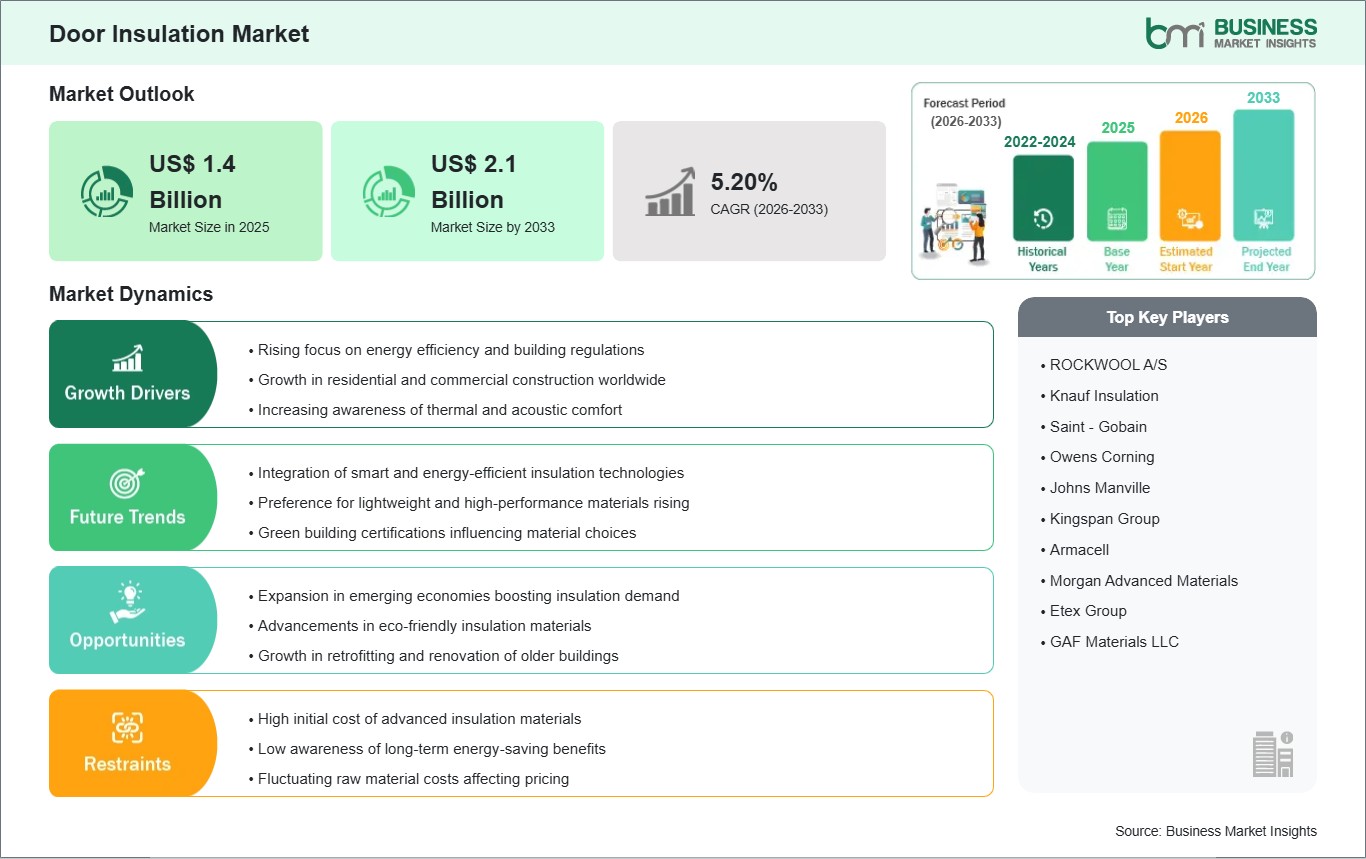
Door insulation materials are important for improving energy efficiency, indoor comfort, and noise control in buildings. They reduce heat transfer, prevent air leaks, and improve sound performance in homes, offices, and industrial spaces. These materials are commonly used in entry doors, garage doors, and internal walls. They are effective for managing temperature, lowering energy use, and keeping indoor environments stable. Door insulation products create better seals, help regulate temperature, and contribute to overall sustainability. They also aid in noise reduction and protect against dust and moisture. The benefits include energy savings, durable weather-resistant materials, better indoor comfort, and lower utility bills. Market growth mainly stems from increased awareness of energy efficiency, stricter building rules, and more construction projects worldwide. Improvements in high-performance insulation materials and smart sealing technologies also drive market growth.
However, the door insulation market has its challenges. Fluctuations in raw material prices and supply chain issues can affect production costs. Performance problems in extreme weather and compatibility issues with various door types may limit use. Higher initial costs can deter cost-sensitive buyers, especially in developing areas. Proper installation and choosing the right product often need technical skills, which can be a barrier in some markets. Despite these challenges, the market offers strong opportunities due to growing interest in eco-friendly buildings, retrofitting existing structures, and a greater focus on energy saving. Future trends will likely be influenced by innovations in eco-friendly and recyclable insulation materials, integration with smart home technologies, and ongoing emphasis on sustainability and energy-efficient construction methods.
Segment Analysis
Door Insulation Market Segmentation
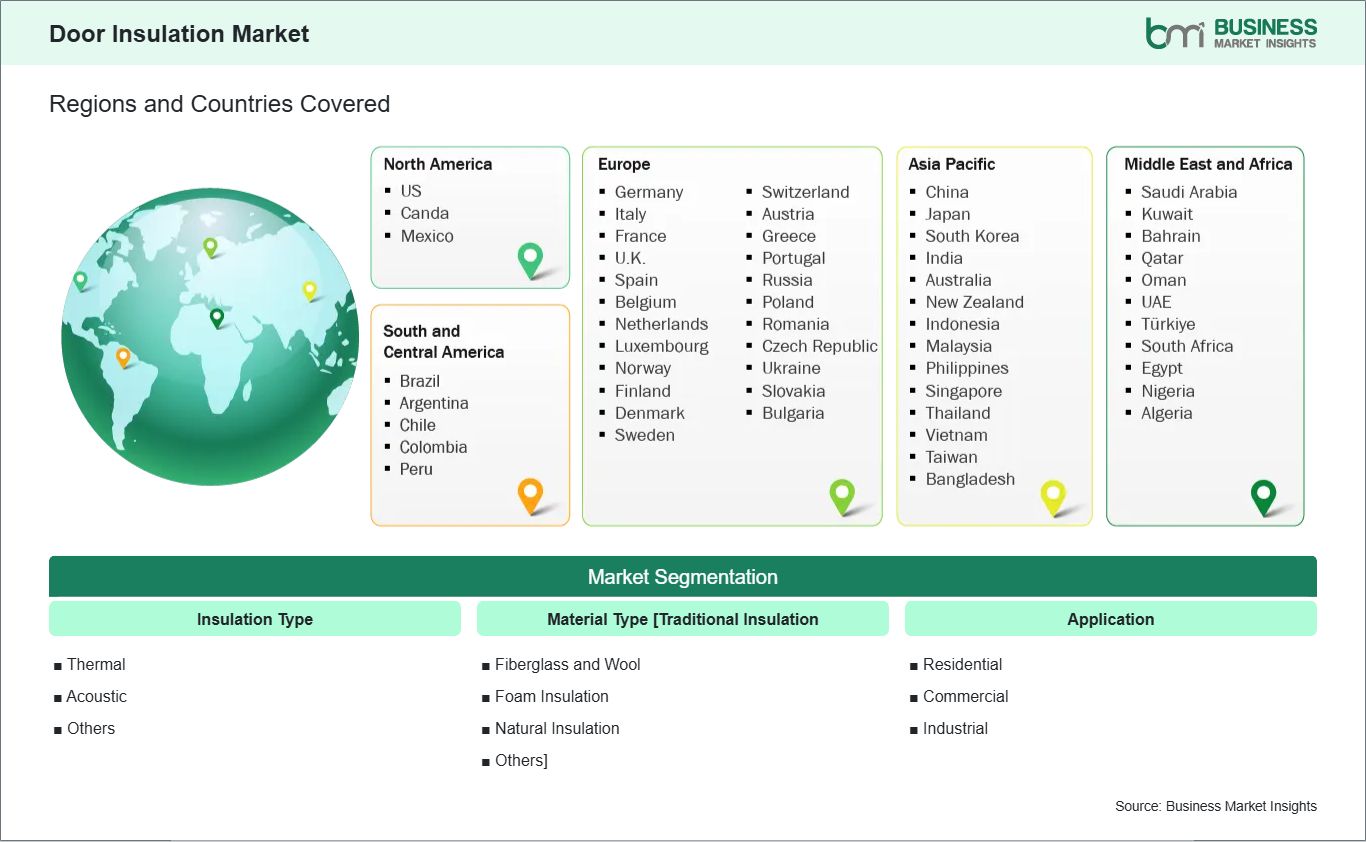
Key segments that contributed to the derivation of the Door Insulation market analysis are insulation type, material type, and application.
- By material type, the door insulation market is segmented into thermal, acoustic, and others. The thermal segment dominated the market in 2025.
- By material type, the market is categorized into traditional insulation (fiberglass and wool), foam insulation (polyurethane foam and polystyrene foam), natural insulation (cotton, sheep wool, cork, and others), and others. The foam insulation segment dominated the market in 2025.
- By application, the market is categorized into residential, commercial, and industrial. The residential segment held the largest share of the market in 2025.
Market Forces
Door Insulation Market Drivers and Opportunities
Rising Demand for Energy-Efficient Buildings and Thermal Management Solutions
Builders and property owners are increasingly using better door insulation solutions to reduce energy loss, improve indoor comfort, and meet modern efficiency standards. These insulation systems offer a cost-effective way to improve thermal sealing, reduce air leakage, and keep indoor temperatures steady without major structural changes. They help meet the growing need for sustainable construction by lowering heating and cooling demands, which ultimately cuts energy bills. This is especially crucial in residential and commercial buildings, where energy performance affects operating costs. The global move toward energy-efficient infrastructure and green building certifications is speeding up innovation in insulation materials and sealing technologies. The industry is focusing on high-performance, customizable solutions that meet changing building codes. Growth is further supported by urbanization, infrastructure development, and greater awareness of long-term energy savings, driving ongoing growth of the door insulation market.
Growing Opportunities in Sustainable Materials and Retrofit Applications
There is a growing focus on eco-friendly, recyclable, and high-performance insulation materials. This change reflects the rising demand for sustainable construction methods and a smaller environmental impact. Modern door insulation solutions made from bio-based or recycled materials help lower carbon footprints and improve lifecycle performance. This appeals to consumers and businesses that care about the environment. These products increase energy efficiency and support global sustainability goals. More retrofitting activities in older buildings present significant chances, as upgrading door insulation is an easy and effective way to boost energy performance. Improvements in smart insulation technologies, such as integrated sealing systems and adaptive materials, show the industry`s commitment to combining performance and sustainability. Strict environmental regulations and green building efforts are speeding up innovation in this area. The ongoing drive for energy savings, meeting regulations, and eco-friendly building methods continues to create strong growth opportunities in the global door insulation market.
Size and Share Analysis
Door Insulation Market Size and Share Analysis
The door insulation market demonstrates steady growth, with size and share analysis revealing evolving trends and competitive positioning among key players. The report further examines subsegments categorized within insulation type, material type, and application, offering insights into their contribution to overall market performance.
Based on insulation type, the thermal subsegment dominates the door insulation market. Thermal insulation materials offer great heat resistance, energy efficiency, and indoor comfort. They help reduce heat transfer, cut energy loss, and keep indoor temperatures steady in various climates. These materials are commonly used in both exterior and interior doors, including residential entry doors and commercial access systems. Their reliable performance, simple installation, and long-term savings make them the first choice for builders and property owners who want effective and lasting insulation options. The increasing focus on saving energy, green building standards, and lower utility costs is driving their demand, making thermal insulation the top segment in the door insulation market.
Report Coverage
Door Insulation Market Report Coverage and Deliverables
The " Door Insulation Market Size and Forecast (2022 - 2033)" report provides a detailed analysis of the market covering below areas:
- Door Insulation market size and forecast at global, regional, and country levels for all the key market segments covered under the scope
- Door Insulation market trends, as well as market dynamics such as drivers, restraints, and key opportunities
- Door Insulation market analysis covering key market trends, global and regional framework, major players, regulations, and recent market developments
- Industry landscape and competition analysis covering market concentration, heat map analysis, prominent players, and recent developments for the door insulation market
- Detailed company profiles, including SWOT analysis
Geographic Insights
Door Insulation Market Geographic Insights
The geographical scope of the Door Insulation market report is divided into five regions: North America, Asia Pacific, Europe, Middle East & Africa, and South & Central America. The Asia Pacific Door Insulation Market is segmented into China, Japan, South Korea, India, Australia, New Zealand, Indonesia, Malaysia, the Philippines, Singapore, Thailand, Vietnam, Taiwan, Bangladesh, and the Rest of Asia Pacific. Asia Pacific`s rapid urbanization and infrastructure development, especially in residential construction, commercial buildings, and industrial facilities, help make it a key region for door insulation market expansion.
The market growth is also driven by the need for improved energy efficiency, indoor comfort, and noise reduction solutions, along with rising demand for durable, weather-resistant, and cost-effective insulation materials. The region`s expanding population, increasing construction activities, and growing awareness of sustainable and energy-efficient building practices reinforce Asia Pacific`s position as a major producer and consumer in the global door insulation market.
Industry Activity
Recent Developments
The Door Insulation market is evaluated by gathering qualitative and quantitative data post-primary and secondary research, which includes important corporate publications, association data, and databases. A few of the key developments in the door insulation market are:
- In April 2025, Steel-Line launched Mammoth Modern Insulation, designed to elevate your home's energy efficiency, comfort, and overall value. Whether you're looking to upgrade your existing garage or convert it into a more functional space, our new insulation product is the perfect solution.
- In June 2025, ASSA ABLOY announced the launch of its insulated high-performance door system, designed to improve thermal efficiency and noise reduction in residential and commercial buildings. The system features advanced core insulation materials, enhanced sealing technology, and durable construction to minimize heat loss and air leakage. It supports energy-efficient building standards while offering improved comfort, security, and long-term durability, strengthening the company`s position in innovative door insulation solutions.
Trust & Transparency
Research Methodology
The market analysis combines proprietary research with secondary data from government agencies, company disclosures, regulatory filings, industry databases and expert interviews. Market estimates are validated through data triangulation, cross-market benchmarking and analyst
review.
View Full Research Methodology
Key Sources Referred:
World Bank - Global Trade IndicatorsEuropean Chemicals AgencyInternational Council of Chemical AssociationsInternational Monetary Fund (IMF)World Trade Organization (WTO)International Trade Administration (ITA)Company WebsitesCompany Annual ReportsCompany Investor Presentations