
Chronic Lower Back Pain Treatment Market Outlook: Size, Share, Trends, Growth Analysis, Competitive Landscape & Forecast, 2026-2033

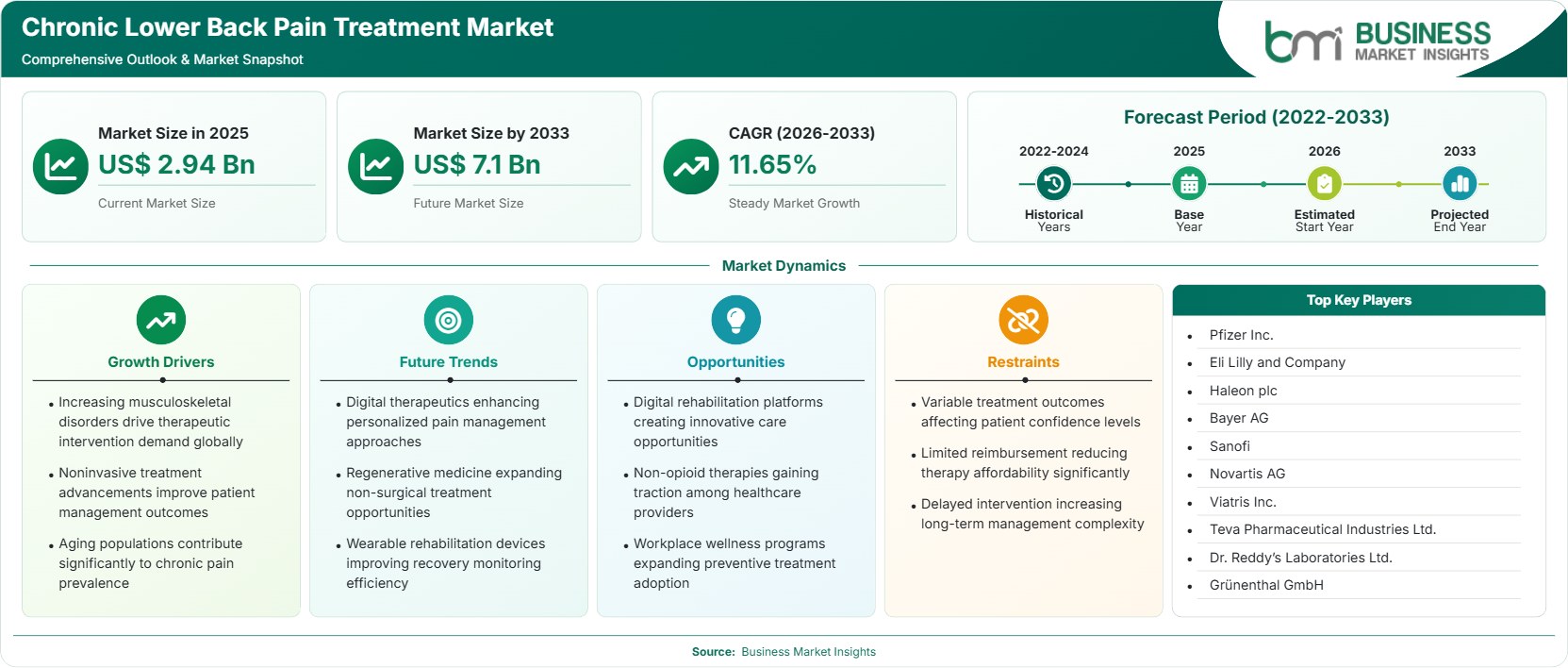
The Chronic Lower Back Pain Treatment Market size was valued at US$ 2.94 Billion in 2025 and is projected to reach US$ 7.1 Billion by 2033, growing at a CAGR of 11.65% during 2026–2033, supported by persistent disease burden, non-opioid innovation, localized delivery, and expanding access to multimodal pain management.

Report Coverage
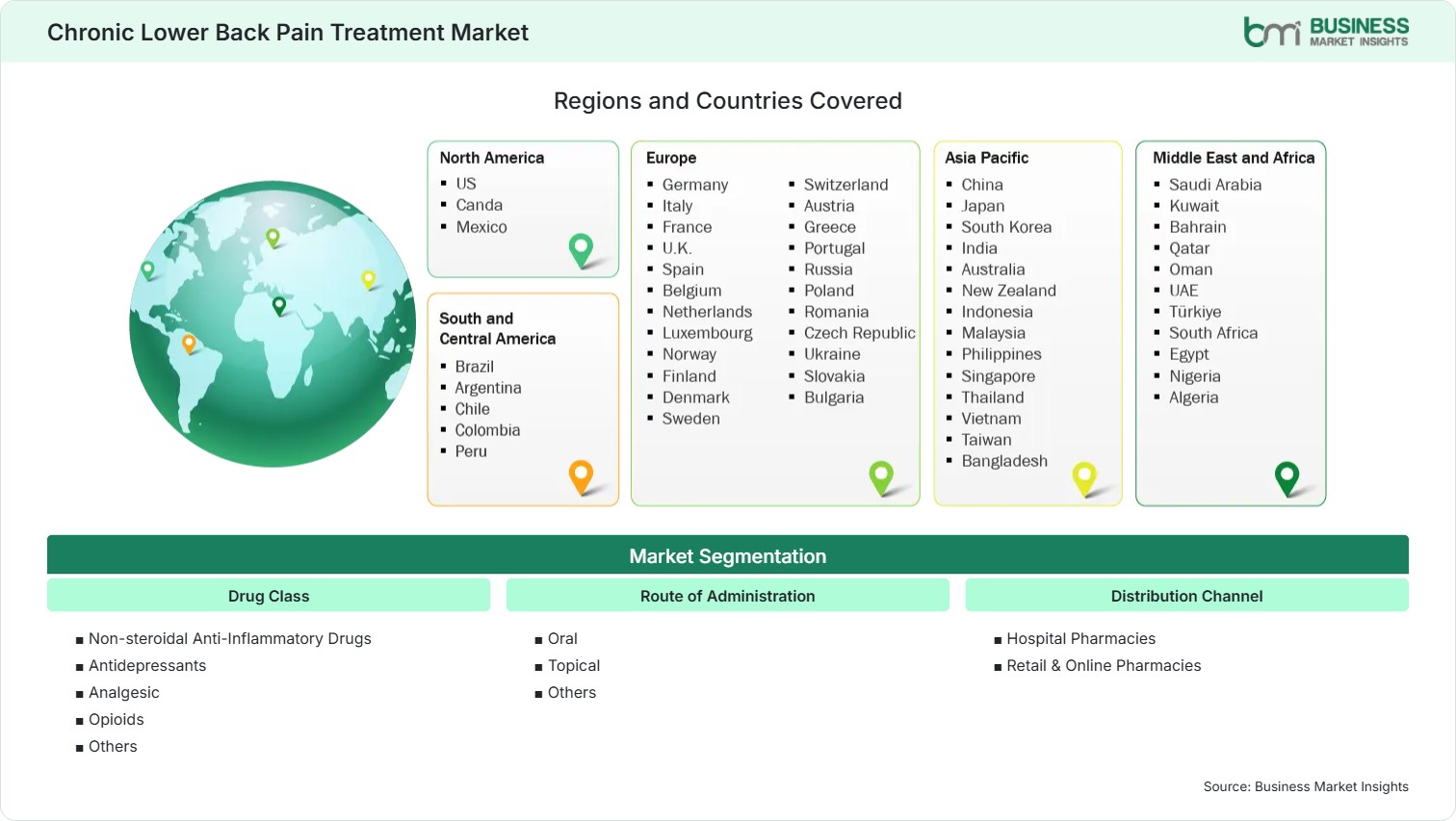
  • Drug Class: Non-steroidal Anti-Inflammatory Drugs, Antidepressants, Analgesic, Opioids, Others
  • Route of Administration: Oral, Topical, Others
  • Distribution Channel: Hospital Pharmacies, Retail & Online Pharmacies
US$ 2.94 Bn Market size in 2025
US$ 7.1 Bn Market Size by 2033
11.65% CAGR, 2026 - 2033
2026-2033 Forecast Period

AI Overview

Chronic Lower Back Pain Treatment Market Summary

  • North America Region: North America holds a 42%–46% Chronic Lower Back Pain Treatment Market share in 2025 and is growing at a CAGR of 9.8%–10.8%, influenced by established pain clinics, prescription access, OTC penetration, reimbursement, and investment in non-opioid therapies and digital monitoring solutions. The U.S. accounts for most regional demand, supported by extensive pharmacy access, specialist care, established reimbursement pathways, and continuing interest in safer chronic pain options at 9.7%–10.7% CAGR.
  • Fastest Growing Region: Asia Pacific represents 18%–22% share in 2025 and is growing at 13.2%–14.4%, supported by aging populations, expanding healthcare coverage, generic manufacturing, urban workforces, and rising specialist access across China, India, Japan, and South Korea.
  • Leading Segment: Non-steroidal Anti-Inflammatory Drugs hold 39%–43% share in 2025, with a 10.8%–11.8% CAGR, supported by first-line prescribing, broad availability, familiar dosing, generic competition, and continued demand for affordable symptom control.
  • High Growth Segment: Topical administration holds 12%–16% Chronic Lower Back Pain Treatment Market share in 2025 and records a 13.5%–14.8% CAGR, driven by localized delivery, convenience, lower systemic exposure, consumer acceptance, combination formulations, and expansion through retail channels.
  • Key Market Opportunity: The opportunity is centered on safer long-duration therapies, localized formulations, digital adherence, and emerging-market access, enabling manufacturers to differentiate through efficacy, tolerability, convenient dosing, and evidence-based care pathways.
  • Major Market Players: Pfizer Inc., Eli Lilly and Company, Haleon plc, Bayer AG, Sanofi, Novartis AG, Viatris Inc., Teva Pharmaceutical Industries Ltd., Dr. Reddy’s Laboratories Ltd., and Grünenthal GmbH.
Strategic Insights

Chronic Lower Back Pain Treatment Market: Strategic Insights

Chronic Lower Back Pain Treatment Market Strategic Framework
FREE PDF
Request your free sample
Request free sample
Stakeholder View

Key Takeaways

  • The value chain combines active pharmaceutical ingredient suppliers, generic manufacturers, branded pharmaceutical companies, specialty pain developers, hospitals, retail pharmacies, online pharmacies, and patient-support platforms. Competitive differentiation increasingly depends on formulation quality, regulatory compliance, supply reliability, and channel reach rather than molecule availability alone.
  • Localized topical products and differentiated non-opioid therapies provide attractive expansion avenues because they address demand for convenient administration while potentially reducing systemic exposure. Manufacturers can strengthen positioning through combination formulations, sustained-release technologies, and evidence supporting functional outcomes alongside pain reduction.
  • Research is moving toward peripheral sodium-channel modulation, targeted mechanisms, abuse-deterrent formulations, and delivery systems designed to improve tolerability and adherence. Eli Lilly’s 2025 acquisition of SiteOne Therapeutics illustrates continued pharmaceutical investment in non-opioid pain mechanisms.
  • Asia Pacific combines a large and aging population with expanding healthcare infrastructure and strong generic pharmaceutical capabilities. China, India, Japan, and South Korea offer different commercialization models, creating opportunities for localized pricing, hospital partnerships, pharmacy expansion, and differentiated formulations.
  • Strategic activity is increasingly directed toward non-opioid assets, consumer-health distribution, and pain portfolios. Haleon’s 2025 acquisition of the remaining stake in its Chinese OTC joint venture strengthened control over brands including Fenbid and Voltaren and expanded its local operating platform.
  • Retail and online pharmacies can broaden treatment access for established oral and topical products, while hospital pharmacies remain important for prescription initiation and complex cases. Manufacturers that coordinate physician education, pharmacy availability, patient support, and adherence programs can improve treatment continuity.
Geographic Outlook

Chronic Lower Back Pain Treatment Market Regional Highlights

North America Chronic Lower Back Pain Treatment Market

North America accounted for 42%–46% of the Chronic Lower Back Pain Treatment Market share in 2025 and is projected to expand at a 9.8%–10.8% CAGR through 2033. The region benefits from mature pharmaceutical distribution, extensive specialist infrastructure, high OTC awareness, established reimbursement systems, and strong adoption of differentiated pain formulations. The U.S. represents the principal regional market, while Canada contributes through broad prescription access and public healthcare coverage. Chronic disease management programs, opioid stewardship, and demand for non-opioid alternatives continue reshaping prescribing patterns. The region also supports clinical development because manufacturers can access sophisticated pain centers, established trial infrastructure, and commercially attractive patient populations.

  • Established reimbursement and pharmacy networks support broad access to prescription and OTC pain products across major population centers.
  • Demand is increasingly influenced by opioid stewardship, encouraging manufacturers to develop non-opioid mechanisms and formulations with improved tolerability profiles.
  • Specialty pain clinics create opportunities for differentiated therapies targeting patients inadequately managed through conventional analgesic approaches.
  • Digital patient monitoring and telehealth can improve follow-up, adherence, and treatment adjustment for long-duration therapy.

US Chronic Lower Back Pain Treatment Market

The U.S. Chronic Lower Back Pain Treatment Market represents approximately 82%–86% of North American demand in 2025 and is modeled to grow at 9.7%–10.7% through 2033. Its scale reflects extensive physician networks, high pharmaceutical expenditure, sophisticated specialty care, and established retail and online pharmacy channels. Product competition spans branded medicines, generics, OTC analgesics, and emerging non-opioid assets. Clinical and regulatory attention to opioid prescribing continues influencing treatment selection. The commercial environment favors therapies demonstrating differentiated efficacy, safety, adherence, and convenient administration. Manufacturers also benefit from established payer relationships and a mature environment for clinical research and specialty commercialization.

  • Large retail pharmacy networks support rapid availability of established analgesics, while online channels increasingly facilitate recurring purchases and patient convenience.
  • Specialty pain centers provide commercialization opportunities for differentiated therapies targeting patients with persistent symptoms or inadequate response.
  • Investment in non-opioid mechanisms reflects continuing demand for treatment options that address chronic pain without relying primarily on opioids.

Europe Chronic Lower Back Pain Treatment Market

Europe Chronic Lower Back Pain Treatment Market accounted for 25% – 28% of total market consumption in 2025 and is forecast to grow at a CAGR of 10.6% – 11.5% through 2033. Germany, the UK, France, Italy, and Spain have significant commercial potential due to well-developed healthcare infrastructure and drug distribution systems. Germany and the UK provide considerable demand, whereas Poland and some Central European countries have good growth potential. Cost containment, generic substitution, prescribing practices, and safety concerns affect the adoption of new products. European companies have good skills in analgesics, specialty pain management, OTCs, and formulations.

  • Germany remains a major pharmaceutical market, supported by extensive physician access, established pharmacy infrastructure, and demand for evidence-based chronic pain management.
  • The United Kingdom combines strong primary-care infrastructure with expanding digital healthcare services and structured approaches to medication safety.
  • Poland and selected Central European markets offer higher growth potential as healthcare access, diagnosis, and pharmaceutical expenditure continue expanding.
  • European manufacturers can differentiate through localized formulations, combination products, patient support, and evidence addressing long-term tolerability.

Asia Pacific Chronic Lower Back Pain Treatment Market

Asia Pacific Chronic Lower Back Pain Treatment Market represented 18%–22% of 2025 demand and is projected to expand at 13.2%–14.4%, making it the fastest-growing regional market. Demand hubs include China, Japan, India, and South Korea, while India and China present strong opportunities for expansion due to their large populations and capacity for drug production. The country is aging and has a well-developed healthcare system. Growing urban employment, sedentary habits, improved diagnostics, and wider coverage by pharmacies create more opportunities for treatment. Generic manufacturers in the region and foreign competitors compete on price, accessibility, and formulation differences.

  • China benefits from expanding healthcare infrastructure, a large aging population, domestic pharmaceutical manufacturing, and increasing availability of branded and generic therapies.
  • India combines substantial patient potential with strong generic production capabilities, expanding pharmacy networks, and increasing awareness of chronic pain management.
  • Japan maintains a mature pharmaceutical market, with aging demographics supporting sustained demand for chronic musculoskeletal pain therapies and convenient administration.
  • South Korea provides opportunities for specialty pharmaceutical commercialization through advanced healthcare infrastructure and increasing demand for innovative pain management.

Rest of World Chronic Lower Back Pain Treatment Market

South and Central America Chronic Lower Back Pain Treatment Market contributed significantly to the remainder of 2025 demand, with major markets including Brazil, Mexico, Argentina, Chile, and Colombia. Growth will be facilitated by increased access to healthcare services, pharmacy development, urbanization, and the management of chronic conditions. Price still plays a crucial role, promoting generic competition and local marketing initiatives. Brazil and Mexico offer the greatest commercial prospects in the region, whereas Chile and Colombia can facilitate the development of specialized segments through their existing healthcare systems and pharmaceutical access.

The Middle East and Africa together accounted for roughly 7%–10% of 2025 demand and are expected to grow at 12.0%–13.0%. Saudi Arabia, the UAE, South Africa, and Turkey present strong possibilities, driven by developments in healthcare infrastructure, private investment, pharmacy development, and specialist growth. The market is diverse, thus requiring a variety of pricing, distribution, regulatory, and partner approaches. Expansion of manufacturers will be made possible through collaboration with hospitals, regional distributors, and pharmacies.

  • Brazil and Mexico offer scale-driven opportunities through large populations, established pharmacy networks, and increasing demand for affordable chronic pain treatment.
  • Saudi Arabia and the United Arab Emirates are strengthening healthcare infrastructure, creating opportunities for specialty products and premium pharmaceutical distribution.
  • South Africa remains an important African pharmaceutical hub, supported by established healthcare facilities and regional distribution capabilities.
  • Türkiye combines a large population with domestic pharmaceutical capabilities and an expanding healthcare ecosystem, supporting wider treatment availability.
Global Market Geography
FREE PDF
Request your free sample
Request free sample
Segment Analysis

Chronic Lower Back Pain Treatment Market Segmentation

Drug Class

The drug class segment remains highly important for treatment choice, with NSAIDs dominating, accounting for 39%–43% of the Chronic Lower Back Pain Treatment Market and a CAGR of 10.8%- 11.8% through 2033. The demand is driven by effectiveness, doctors' knowledge, affordability of generics, and wide availability. Antidepressants and analgesics cover other patient segments, whereas the usage of opioids is defined by safety aspects and other factors.

  • Non-steroidal Anti-Inflammatory Drugs: Widely used for inflammatory and mechanical pain symptoms, NSAIDs benefit from extensive generic availability, familiar dosing, established physician experience, and broad retail pharmacy distribution.
  • Antidepressants: Selected for patients with persistent or neuropathic pain characteristics, antidepressants gain relevance where centralized pain modulation and treatment of overlapping symptoms influence therapeutic decisions.
  • Analgesics: Conventional analgesics remain important for symptom control, particularly where patients seek accessible therapies, although long-duration use increasingly depends on safety, efficacy, and patient-specific considerations.
  • Opioids: Opioids retain a role for selected severe cases requiring specialist oversight, while prescribing controls, abuse concerns, and preference for non-opioid approaches constrain broader chronic utilization.

Route of Administration

The oral route dominates the pipeline because of its convenience, familiarity among physicians, existing manufacturing processes, and high availability in pharmacies. Oral routes constitute the largest group of route pipelines, and topical routes have become the fastest-growing, with a CAGR of 13.5%-14.8% through 2033. This growth can be attributed to localized drug application, convenience of use, and desire to minimize exposure to drugs.

  • Oral: Oral treatment dominates established prescribing because tablets and capsules provide convenient dosing, extensive generic availability, predictable manufacturing, and broad distribution across hospitals and retail pharmacies.
  • Topical: Topical therapies benefit from localized administration, consumer familiarity, convenience, and demand for formulations that can complement systemic treatment while supporting patient preferences.

Distribution Channel

The market has been classified into hospital pharmacies and retail/internet pharmacies. Retail and internet pharmacies have an edge due to convenience, OTC purchases, refill programs, and wider consumer reach. The importance of hospital pharmacies lies in initiating prescriptions, managing difficult pain cases, providing specialized treatment, and managing inpatients. Distribution has begun to feel the impact of digital orders, pharmacy consolidations, medication adherence services, and direct-to-consumer information. Manufacturers can improve Chronic Lower Back Pain Treatment Market penetration by coordinating availability across institutional and consumer-facing channels.

  • Hospital Pharmacies: Hospital pharmacies support prescription initiation, specialist treatment, complex patient management, and controlled dispensing, particularly for patients requiring closer clinical supervision.
  • Retail & Online Pharmacies: Retail and online pharmacies expand accessibility through convenience, recurring purchases, broad geographic reach, consumer health products, and increasingly integrated digital ordering systems.
Market Forces

Chronic Lower Back Pain Treatment Market Dynamics

Key Market Drivers

Growing Global Burden of Persistent Low Back Pain

WHO reported that low back pain affected 619 million people globally in 2020 and projected 843 million cases by 2050, creating a substantial addressable population for treatment and rehabilitation services. The burden is related to aging, population growth, occupation, and impairment. It is estimated that about 90 percent of cases belong to the non-specific burden category. It is another reason to manage symptoms rather than the disease. Such an epidemiological background supports market development in both developed and developing healthcare systems. The ongoing burden determines the Chronic Lower Back Pain Treatment Market trends towards cost-effective multimodal treatment with rehabilitation and functional recovery.

Shift Toward Non-Opioid and Patient-Centered Treatment

More focus on potential problems associated with opioids is motivating drug companies to explore alternatives in terms of non-opioid mechanisms, targeted delivery, and special formulations that will increase the safety or patient compliance. According to the WHO, a person-centered approach and proper treatment without surgery for chronic primary low back pain should be used. The consequence of this trend is a gradual shift from traditional painkillers to innovative, proven-effective treatments. In 2025, Eli Lilly Company acquired SiteOne Therapeutics for its promising product, STC-004, which targets the Nav1.8 protein and demonstrates investment in non-opioid pain mechanisms.

Expansion of Accessible Pharmacy-Based Pain Management

The retail pharmacy, the e-pharmacy, and the hospital pharmacy now contribute to drug access by linking patients to prescription and non-prescription drugs. The oral pain relievers will be available in generic form, while the topical pain relievers will be available through consumer health routes. Haleon’s move to expand its Chinese OTC platform is a good example of how control over manufacturing and distribution helps position it in the pain relief category. Pharmacy-based access also supports recurring purchases and patient convenience, particularly for long-duration conditions where treatment may continue across multiple care settings.

Key Market Opportunities

Development of Differentiated Non-Opioid Therapies

Pharmaceutical companies may exploit unmet needs in ways not constrained by opioid pathways. There is differentiation and safety benefit in approaches involving sodium-channel manipulation, peripheral targets, or other non-opioid techniques. The acquisition of SiteOne Therapeutics by Eli Lilly highlights the strategic importance of early-stage pain assets, with possible applications in chronic pain indications. Proof of efficacy in terms of pain relief, functional improvement, tolerability, and dosing would be key to commercial success. Additionally, there are lifecycle development options based on the exploration of known mechanisms in selected segments of patients with chronic pain.

Localized and Convenient Formulation Innovation

There is room for topical formulations to reach patients who require localized treatment and value ease of delivery. Differentiation by formulation companies can be achieved by how well the formulation penetrates, which actives are combined in a single formulation, how often the treatment is supposed to be used, packaging, and application methods that are easy for the patient. This can even extend beyond traditional formulations such as creams and gels to include patches and slow-release formulations. This is especially pertinent in retail and online sales channels, where consumer convenience determines purchases.

Emerging-Market Commercialization and Digital Care

There are many growth opportunities for emerging markets as healthcare spending improves, diagnostic and treatment capabilities expand, and insurance and pharmacy distribution capabilities increase. Companies can use localization in pricing and production, combined with distributor partnerships, to overcome affordability barriers. This can be further augmented with digital solutions such as refill reminders, virtual consultations, patient adherence programs, and patient education. As a result, Chronic Lower Back Pain Treatment Market Forecasts can rely not only on new medications but also on existing ones as more people gain access to them.

Market Restraints and Challenges

Medication Safety and Long-Term Tolerability

Factor: Chronic administration of analgesics can involve gastrointestinal, cardiovascular, renal, hepatic, sedation, dependency, or interaction-related considerations depending on the therapy and patient profile. Impact: The limitations imposed by safety criteria may include restrictions on therapy duration, patient selection, increased monitoring, and switching to agents with a different risk profile. NSAIDs are used extensively, although their use may depend on the presence of individual contraindications and drug exposure levels. Stewardship is an extra requirement for opioids because of issues related to misuse, dependence, and abuse. Such restrictions delay drug implementation and increase the evidence required to differentiate treatments.

Uneven Healthcare Access and Affordability

Factor: Access to specialized pain services, rehabilitation, prescription medications, insurance, and advanced diagnostic capabilities varies widely across countries and among population segments. Impact: lack of access can lead to delays in diagnosis, promote self-medication, reduce continuity of care, and limit access to higher-value treatments. Emerging economies may have high demand for drugs but lack the financial resources and specialized capabilities. There is pressure on the pharmaceutical industry to make its products affordable while staying commercially viable, especially in highly competitive generics markets.

Company Analysis

Competitive Landscape

The Chronic Lower Back Pain Treatment Market analysis indicates a diversified competitive environment spanning multinational pharmaceutical companies, consumer-health specialists, generic manufacturers, and pain-focused innovators. Competition is shaped by product breadth, formulation expertise, regulatory capabilities, manufacturing scale, pharmacy relationships, and investment in non-opioid mechanisms. The following companies represent a balanced set of active global and specialist participants.

Company Name

Overview

Products and Services relevant to this market

Pfizer Inc.

Global pharmaceutical company with broad prescription medicine capabilities and established pain-management experience.

Analgesics, prescription pain medicines, research capabilities, clinical development, and pharmaceutical distribution.

Eli Lilly and Company

Research-driven pharmaceutical company expanding investment in novel pain mechanisms and neuroscience assets.

Non-opioid pain research, investigational therapies, clinical development, and specialty pharmaceutical commercialization.

Haleon plc

Consumer-health company with extensive OTC pain-relief brands and global pharmacy distribution.

Advil, Voltaren, Fenbid, topical and oral pain-relief products, consumer education, and retail distribution.

Bayer AG

Diversified healthcare company with established OTC analgesic and consumer-health capabilities.

Pain-relief products, OTC analgesics, topical formulations, pharmaceutical manufacturing, and distribution.

Sanofi

Global healthcare company with pharmaceutical and consumer-health capabilities across multiple therapeutic areas.

Analgesic products, consumer healthcare, pharmaceutical distribution, and regional pain-management portfolios.

Novartis AG

Research-focused multinational pharmaceutical company with broad clinical and commercialization infrastructure.

Specialty medicines, innovative drug development, clinical research, and global pharmaceutical distribution.

Viatris Inc.

Global healthcare company combining branded, generic, and complex pharmaceutical capabilities.

Generic analgesics, branded medicines, complex formulations, manufacturing, and global distribution.

Teva Pharmaceutical Industries Ltd.

Major generic and specialty pharmaceutical manufacturer with broad international reach.

Generic analgesics, specialty medicines, pharmaceutical manufacturing, and extensive regional distribution.

Dr. Reddy’s Laboratories Ltd.

India-based pharmaceutical company with strong generic and international commercialization capabilities.

Generic pain medicines, oral formulations, pharmaceutical manufacturing, and emerging-market distribution.

Grünenthal GmbH

Pain-focused pharmaceutical company with dedicated research and commercialization expertise.

Pain medicines, specialty pain management, established brands, clinical development, and pain-focused research.

Trust & Transparency

Research Methodology

The market analysis combines proprietary research with secondary data from government agencies, company disclosures, regulatory filings, industry databases and expert interviews. Market estimates are validated through data triangulation, cross-market benchmarking and analyst review.

View Full Research Methodology

Questions Answered

Frequently Asked Questions

How can manufacturers expand in emerging markets?

Manufacturers can combine affordable formulations, localized production, distributor partnerships, retail pharmacy expansion, hospital relationships, and digital patient-support tools. Market-specific regulatory strategies and pricing models are important because healthcare infrastructure and purchasing power differ substantially across countries.

What role do online pharmacies play in treatment access?

Online pharmacies can improve convenience, geographic reach, recurring purchasing, and access to established OTC and prescription products where permitted. Their role is particularly relevant for long-duration conditions requiring recurring medication purchases and patient adherence support.

Why are topical products gaining commercial attention?

Topical products offer convenient administration and localized application. They can appeal to patients seeking alternatives to systemic therapy and provide manufacturers with opportunities to differentiate through formulations, combination ingredients, dosing frequency, packaging, and consumer-health positioning.

How is the market affected by opioid stewardship?

As per the Chronic Lower Back Pain Treatment Market report, opioid stewardship affects prescribing, monitoring, duration of treatment, and demand for alternative therapies. It also encourages pharmaceutical developers to investigate non-opioid mechanisms, localized formulations, and treatment approaches that can address persistent pain while reducing reliance on opioids.

What factors determine treatment selection for chronic lower back pain?

Treatment selection depends on pain characteristics, duration, severity, patient age, comorbidities, previous treatment response, contraindications, medication interactions, and functional goals. Pharmacological treatment is generally considered alongside rehabilitation and other non-pharmacological approaches.

Access the Full Chronic Lower Back Pain Treatment Market Report

Get segment-level forecasts, regional estimates, competitive benchmarking, company profiles and downloadable Excel datasets.

Access the full Chronic Lower Back Pain Treatment Market Report
350 pages PDF & Excel | 2026-10-12
Similar Research

Related Market Reports