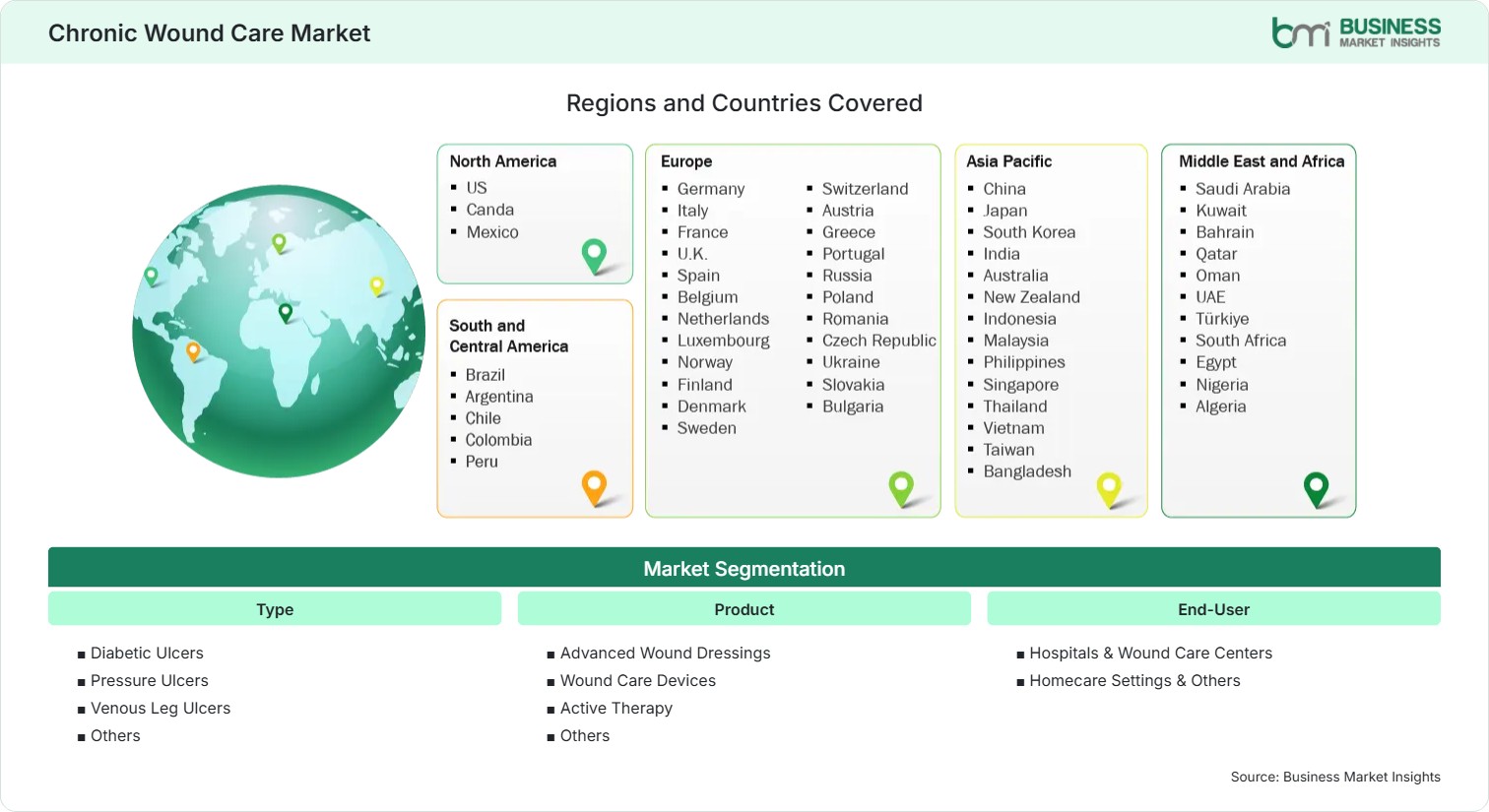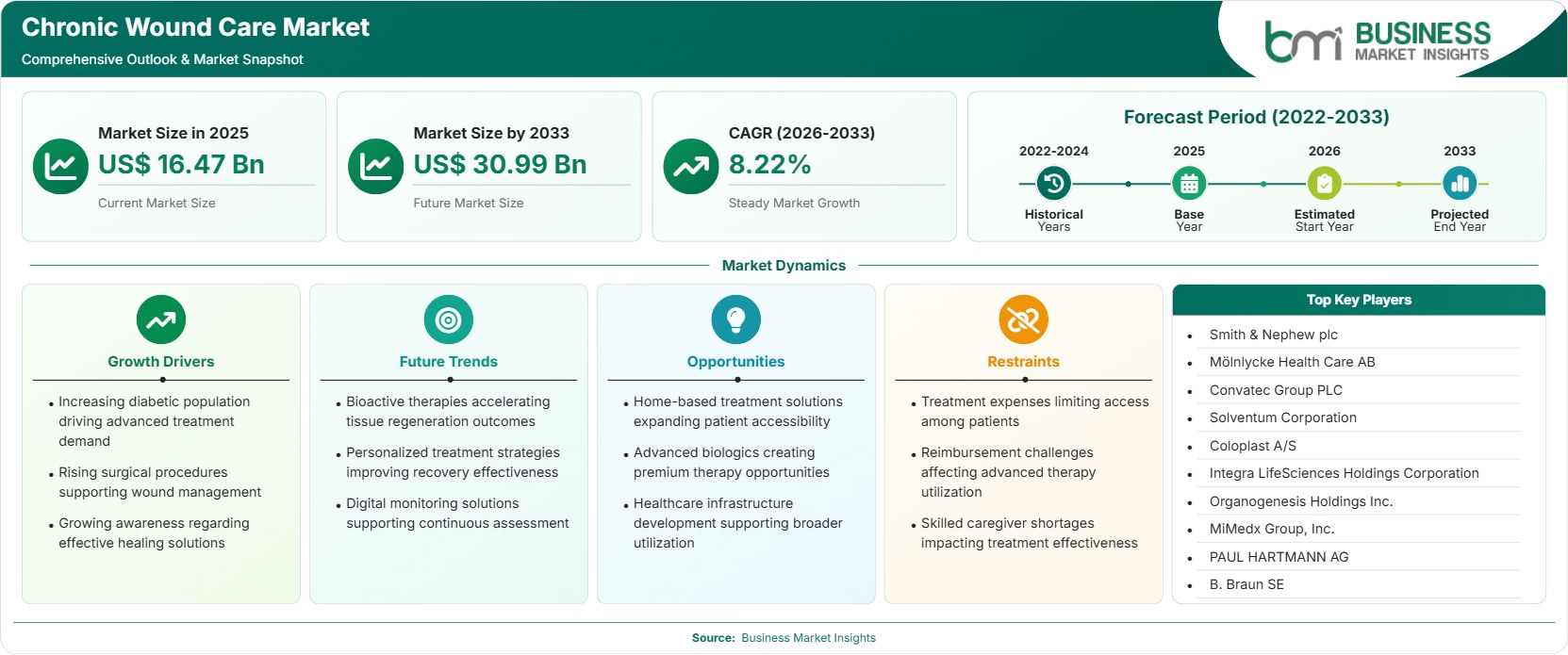
Chronic Wound Care Market Regional Highlights
North America Chronic Wound Care Market
North America remains the largest regional market with a 38%–41% market share in 2025 and a projected CAGR of 7.4%–7.8% through 2033. Strong reimbursement mechanisms, specialized wound centers, growing diabetic populations, and the adoption of advanced wound technologies sustain regional leadership. Significant utilization of negative pressure wound therapy, biologics, and antimicrobial dressings supports market expansion. Healthcare providers continue emphasizing outcome-driven treatment pathways, helping accelerate Chronic Wound Care Market growth across acute and ambulatory care settings.
- The need for treatment of chronic ulcers is continuing to grow alongside increasing rates of obesity, especially in the area of managing diabetic foot ulcers within healthcare networks.
- The strong commercial presence of global wound care manufacturers gives people access to technology and clinical education programs, and allows for the adoption of new products.
- Hospital systems are now implementing sophisticated wound care protocols to reduce readmission rates, infection-related complications, and treatment costs.
- Home-based healthcare services are expanding rapidly as providers seek ways to manage wounds in noninstitutional settings at lower cost.
US Chronic Wound Care Market
The United States contributes 78%–82% of North American Chronic Wound Care Market revenue and records a CAGR of 7.5%–7.9% through 2033. Well-developed wound clinics, good reimbursement systems, and innovative product usage contribute to maintaining the company’s lead in the market. Growing numbers of people suffering from diabetes and an aging population create more patients. The market benefits from active innovation in regenerative medicine, advanced therapy products, and telemedicine technologies.
- The Medicare system and the reimbursement system of commercial insurers both promote greater use of advanced dressings, biologics, and negative-pressure wound therapies.
- Academic medical centers are actively involved in clinical research designed to help advance next-generation wound-healing technologies and to obtain pertinent evidence.
- The more people prefer for outpatients to get treatment, the more likely they are to adopt portable wound care devices and solutions that are compatible with homecare.
- Digital wound imaging and various AI-supported platforms contribute to the standardization of care in healthcare organizations with multiple sites.
Europe Chronic Wound Care Market
Europe holds 28%–31% Chronic Wound Care Market share in 2025 and advances at a CAGR of 7.8%–8.3% through 2033. Germany continues to be the dominant market player, while Spain and Poland reflect rapidly developing markets. The aging population, combined with the growing number of chronic diseases, continues to drive up demand for the provision of long-term wound care. The focus on cost-efficient treatment by public healthcare systems becomes more apparent.
- The increasing number of older people leads to a higher occurrence of pressure ulcers and venous leg ulcers in healthcare settings.
- Government-backed healthcare systems establish standardized procedures for wound treatment with a focus on outcomes.
- Putting money into community care helps to promote the use of new products beyond hospital settings.
- Germany has the highest regional revenues, while Poland's growth is near the upper end of the regional CAGR ranges.
Asia Pacific Chronic Wound Care Market
Asia Pacific captures 24%–27% Chronic Wound Care Market share in 2025 and records the fastest CAGR of 10.1%–10.6% through 2033. China is at the forefront of regional demand, and India shows the strongest growth trend. Improving infrastructure in the healthcare sector, increased numbers of diabetics, urbanization, and investments in the healthcare sector have all been aiding in the development and use of innovative wound care technologies.
- China continues to lead in regional revenues due to its large patient population and the ongoing expansion of its healthcare capacity.
- India is growing quickly due to the rising number of diabetes cases and the expanding specialized wound-care infrastructure.
- International manufacturers are working to enhance their regional capabilities in manufacturing and distribution to gain better access to the market.
- Investments in healthcare by the government increase the availability of high-end wound management technologies in developing economies.
Rest of World Chronic Wound Care Market
The Rest of World region accounts for 6%–8% Chronic Wound Care Market share in 2025 and advances at a CAGR of 8.4%–8.9% through 2033. Improvements in healthcare access and increasing awareness about wounds would be advantageous for South & Central America. The growth in the Middle East & Africa markets would be driven by hospital upgrades and the increased prevalence of chronic diseases. Brazil and Saudi Arabia would be dominant in their respective regions, whereas the UAE would have tremendous growth prospects owing to its healthcare advancements.
- Brazil remains a major market due to the expansion of its private healthcare infrastructure and the increasing use of advanced dressings.
- Saudi Arabia is meeting the demand through its healthcare transformation initiatives and hospital modernization programs.
- Campaigns aimed at providing education in wound care are helping improve how wounds are diagnosed, treated, and managed within healthcare systems.
- International partnerships aid in improving access to advanced therapeutic products in developing countries.