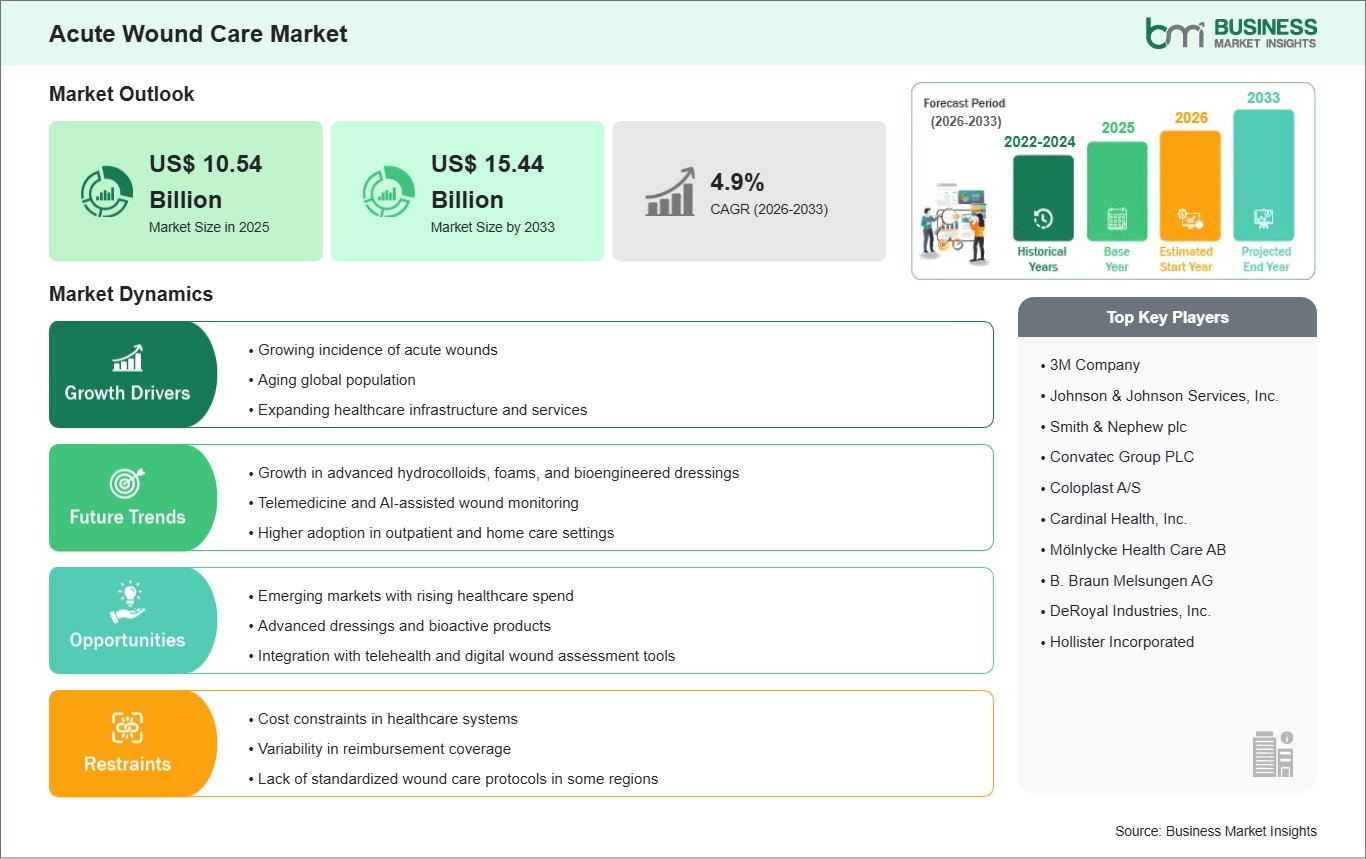
The Acute Wound Care Market size is expected to reach US$ 15.44 Billion in 2033 from US$ 10.54 Billion in 2025. The market is estimated to record a CAGR of 4.9% from 2026 to 2033.
Acute wound care products are indispensable in modern healthcare, as they help manage sudden injuries and surgical wounds, such as cuts, tears, scrapes, and traumatic wounds. They are intended to facilitate rapid healing, prevent infection, restore tissue strength and normal function, and cause the least possible discomfort and complications for the patient. Wound care products for acute wounds are used in a wide range of clinical areas, including general surgery, orthopedics, cardiovascular, gynecology, and plastic surgery, as well as emergency trauma care.
The market for acute wound care products is gradually but steadily growing worldwide, with the increasing number of surgical treatments, rise in incidents of accidents and injuries, and the increasing prevalence of chronic diseases making wounds harder to heal, such as diabetes and obesity, as the major driving factors. The aging population is another factor supporting market growth, as the elderly are at a higher risk of sustaining injuries and undergoing surgeries that require effective wound care. Also, the increased use of less invasive, outpatient surgical procedures has driven demand for advanced acute wound care products that facilitate faster healing and reduce hospital stay length.
Wound care materials based on technology have made breakthroughs, and these include antimicrobial dressings, advanced sutures, and bioengineered products, which are not only enhancing healing outcomes but also reducing the risk of infections. Among healthcare professionals, the developments in biocompatibility, moisture control, and tensile strength are resulting in greater acceptance. On the other hand, global market growth will be sustained due to the expanding healthcare infrastructure and rising awareness of proper wound management even though there are challenges like the higher cost of advanced products and price sensitivity in emerging markets.

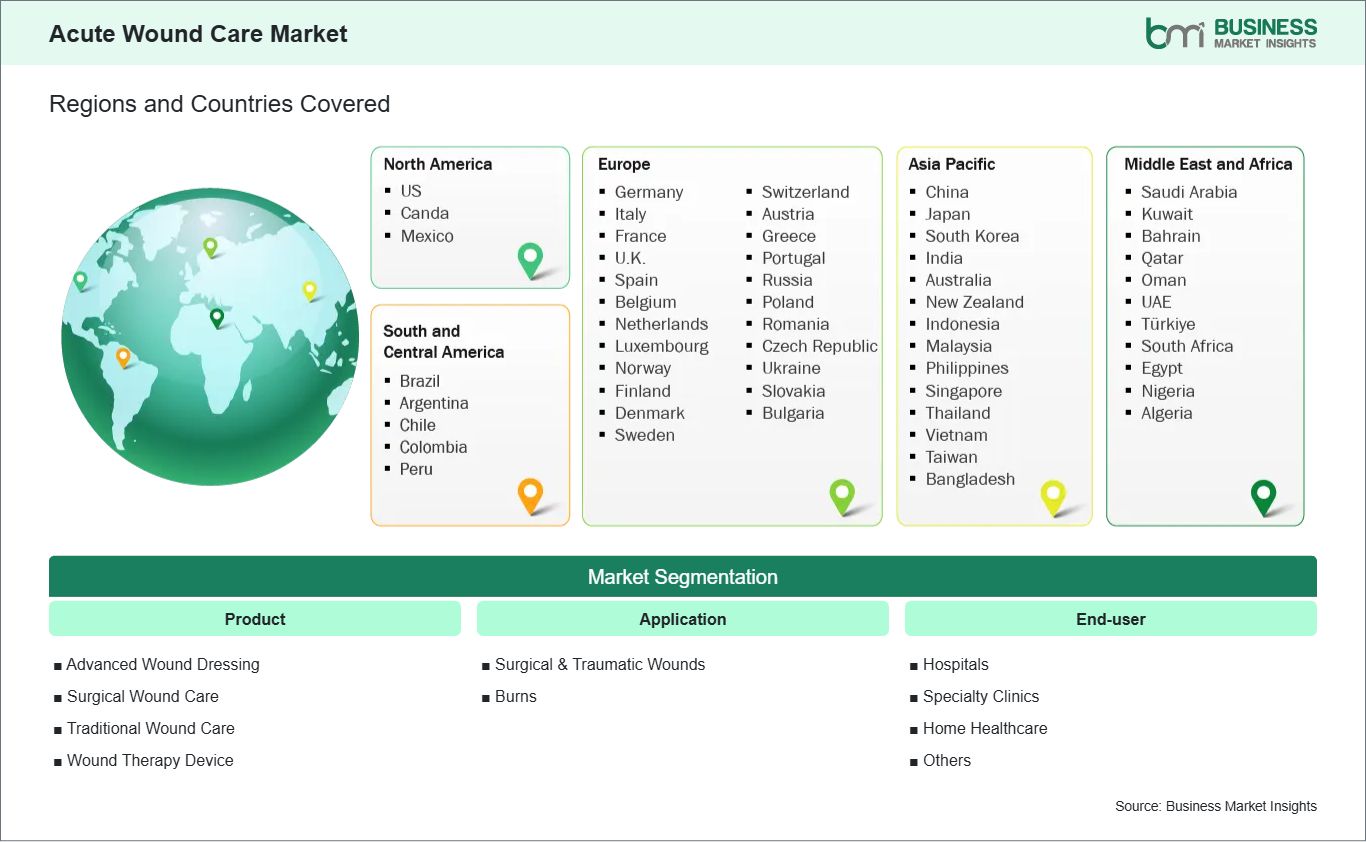
Key segments that contributed to the derivation of the acute wound care market analysis are product, application, and end user.
The acute wound care market primarily owes its growth to the global rise in surgical procedures and the increase in acute injuries and trauma cases. The growth of chronic diseases like diabetes and cardiovascular disorders has led to an increased demand for surgical interventions and thus hastened the demand for wound management solutions. Also, the geriatric population, which is more susceptible to surgeries, accidental injuries, and slower healing, is another factor driving market growth.
Wound care technology, among others, has been a major driver of demand for inpatient and outpatient surgical procedures, which has also been a major development. End closure of wounds and the like has a short recovery period, less infection, and faster healing. Recent advancements in wound care technology, such as antimicrobial coatings and bioabsorbable materials, are not only improving clinical outcomes but also patient comfort. In addition, the rise in hospitals and clinics using acute wound care solutions has been facilitated by healthcare professionals' increased awareness of these practices.
The acute wound care market offers significant growth opportunities, especially in developing countries where healthcare infrastructure is rapidly improving. Hospitals, trauma centers, and surgical facilities are receiving increasing investment across Asia-Pacific, Latin America, and the Middle East, thereby creating strong demand for advanced wound care products. Additionally, government initiatives to expand healthcare coverage and access to surgical care are contributing to market growth in these regions.
Yet another main opportunity lies in product innovation and technological advancements. Advanced wound dressings with antimicrobial, moisture-balancing, and bioactive properties are among recent developments enabling quicker healing and fewer complications. The growing focus on home healthcare and outpatient wound management is also paving the way for new, portable, easy-to-use acute wound care solutions. Not to mention, the increasing awareness of infection control and cost-effective wound management among healthcare professionals is likely to lead the market for innovative products to secure long-term growth.
By product, the acute wound care market is bifurcated into advanced wound dressing, surgical wound care, traditional wound care, wound therapy device. The advanced wound dressing segment held the largest share of the market in 2025. The increasing surgical procedures and trauma cases requiring faster healing, reduced infection risk, and better patient outcomes. Superior materials and moisture-control technologies, products that maintain an optimal wound environment by regulating moisture, along with rising clinician preference for effective, cost-efficient care, drove strong adoption globally.
By application, the acute wound care market is classified into surgical & traumatic wounds, burns. The surgical & traumatic wounds segment dominated the market in 2025. The high volumes of hospital surgeries and emergency trauma treatments, which boosted demand for acute wound care products. Urgent care needs and focus on minimizing complications further strengthened this application’s market share.
By end user, the market is segmented into hospitals, specialty clinics, home healthcare, and others. The hospitals segment dominated the market in 2025. They manage most acute wound care cases and offer advanced facilities, higher procedural volumes, and integrated care pathways. Broad product utilization, reimbursement access, and specialist teams reinforced hospitals’ leading role in the acute wound care market.
| Report Attribute | Details |
|---|---|
| Market size in 2025 | US$ 10.54 Billion |
| Market Size by 2033 | US$ 15.44 Billion |
| Global CAGR (2026 - 2033) | 4.9% |
| Historical Data | 2022-2024 |
| Forecast period | 2026-2033 |
| Segments Covered | By Product
|
|
Regions and Countries Covered
| |
| North America | United States, Canada, Mexico |
| Europe | Belgium, Austria, Finland, Denmark, Greece, Poland, Romania, Russia, Ukraine, Czech Republic, Slovakia, Bulgaria, Italy, Luxembourg, Germany, Switzerland, France, Netherlands, Norway, Portugal, Spain, Sweden, United Kingdom |
| Asia-Pacific | Australia, China, India, Japan, South Korea, Indonesia, Malaysia, Philippines, Singapore, Thailand, Vietnam, Bangladesh, New Zealand, Taiwan |
| South and Central America | Brazil, Argentina, Peru, Chile, Colombia |
| Middle East and Africa | Bahrain, Kuwait, Oman, Qatar, Saudi Arabia, United Arab Emirates, Turkiye, South Africa, Egypt, Algeria, Nigeria |
| Market leaders and key company profiles |
|
The "Acute Wound Care Market Size and Forecast (2022 - 2033)" report provides a detailed analysis of the market covering below areas:
The geographical scope of the Acute Wound Care market report is divided into five regions: North America, Asia Pacific, Europe, Middle East & Africa, and South & Central America. The acute wound care market in Asia Pacific is expected to grow significantly during the forecast period.
The Asia-Pacific Acute Wound Care market is segmented into China, Japan, South Korea, India, Australia, New Zealand, Indonesia, Malaysia, the Philippines, Singapore, Thailand, Vietnam, Taiwan, Bangladesh, and the Rest of Asia. The Asia-Pacific acute wound care market is set to grow rapidly, driven by rising surgeries, increasing trauma cases, and greater access to healthcare services across the region. The regions of China, India, Japan, South Korea, Australia, and Southeast Asia are the main demand centers for acute wound care solutions, driven by an aging population, rapid urbanization, and lifestyle-related health challenges.
China, Japan, and India are the top three countries that contribute significantly to market growth in the region due to their large patient populations, growing hospital numbers, and ongoing need for investment in healthcare infrastructure. Government initiatives to introduce better surgical standards in the country, increase health insurance coverage, and develop public healthcare systems are driving the acceptance of new acute wound care products.
The shift toward less invasive, outpatient surgeries in the Asia-Pacific region is a critical factor in the growing popularity of wound care solutions that accelerate healing and thus require less hospital time. The growth of ambulatory surgical centers and specialty clinics, particularly in urban centers, is a great support for the market's expansion. Additionally, the acquisition of knowledge by surgeons and healthcare staff in advanced wound management techniques is considered one of the main drivers of the market's continued growth over the forecast period in the Asia-Pacific region.

The acute wound care market is evaluated by gathering qualitative and quantitative data post primary and secondary research, which includes important corporate publications, association data, and databases. A few of the key developments in the Acute Wound Care market are:
The Acute Wound Care Market is valued at US$ 10.54 Billion in 2025, it is projected to reach US$ 15.44 Billion by 2033.
As per our report Acute Wound Care Market, the market size is valued at US$ 10.54 Billion in 2025, projecting it to reach US$ 15.44 Billion by 2033. This translates to a CAGR of approximately 4.9% during the forecast period.
The Acute Wound Care Market report typically cover these key segments-
The historic period, base year, and forecast period can vary slightly depending on the specific market research report. However, for the Acute Wound Care Market report:
The Acute Wound Care Market is populated by several key players, each contributing to its growth and innovation. Some of the major players include:
The Acute Wound Care Market report is valuable for diverse stakeholders, including:
Essentially, anyone involved in or considering involvement in the Acute Wound Care Market value chain can benefit from the information contained in a comprehensive market report.
Please tell us your area of interest
(Market Segments/ Regions and Countries/ Companies)