Market Summary
Executive Summary and Global Market Analysis
Animal Wound Care products function as essential components within contemporary medical practice because their design enables effective wound healing while delivering better protection and wound care management than traditional dressings. Healthcare facilities use these solutions which include advanced wound dressings and bioactive materials and skin substitutes and wound therapy devices to handle both acute and chronic wounds. The implementation of Animal Wound Care solutions results in higher patient comfort levels while providing faster healing times and decreasing both infection rates and complication chances.
The Animal Wound Care market across the world has reached its current state because more people develop chronic and non-healing wounds which diabetic patients and cardiovascular disease patients and obesity patients and elderly individuals develop. The implementation of evidence-based wound management practices by hospitals and care centers enables them to decrease hospital-acquired infections while attaining better treatment results which creates additional growth factors.
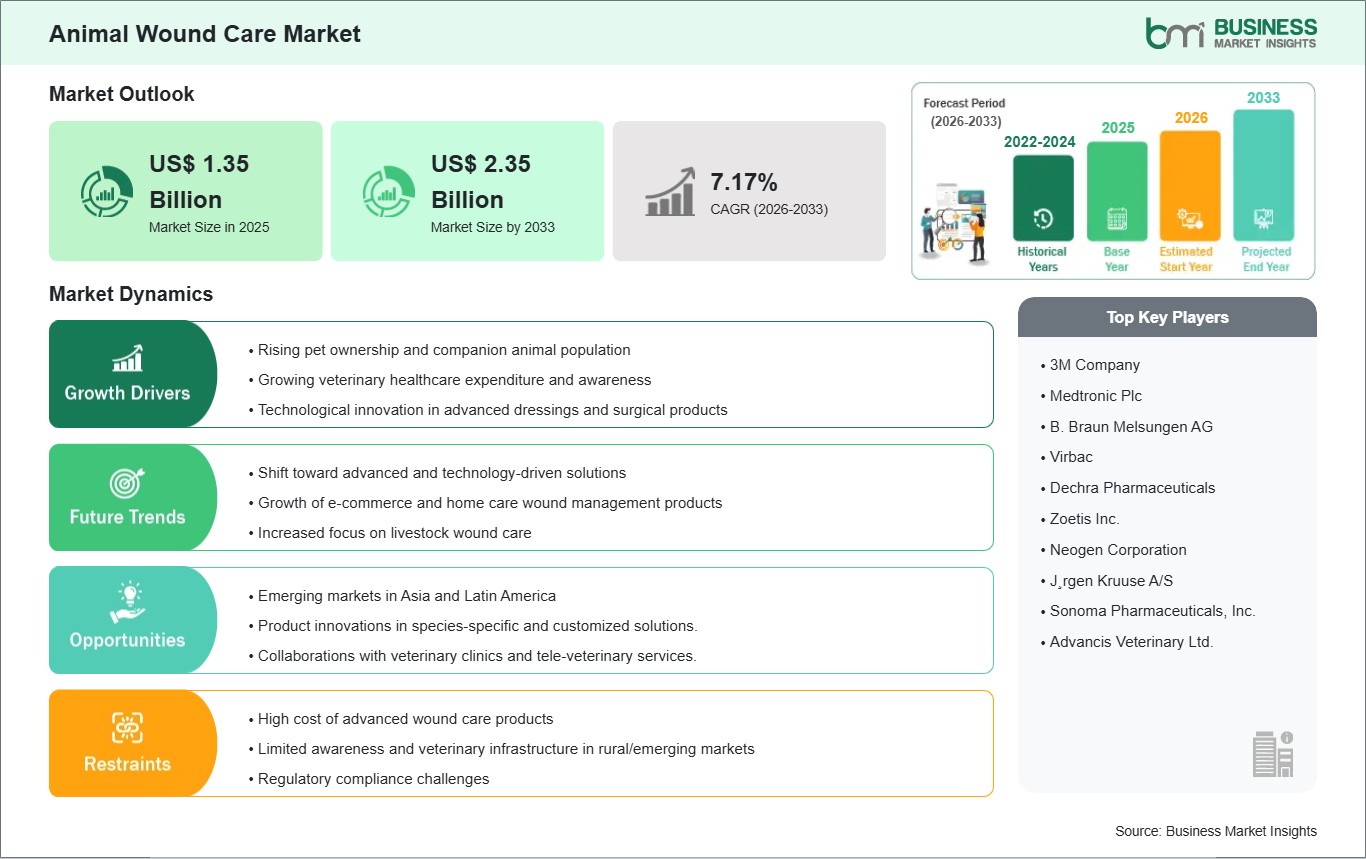
The market shows strong potential for growth, yet it encounters obstacles which include the expensive nature of Animal Wound Care products and the shortage of reimbursement options in specific areas and the necessity for trained medical staff who can handle intricate wound treatments. The developing healthcare infrastructure in emerging markets together with increased knowledge about advanced wound care solutions and ongoing medical research and development work will create major business expansion opportunities throughout the upcoming years.
Segment Analysis
Animal Wound Care Market Segmentation
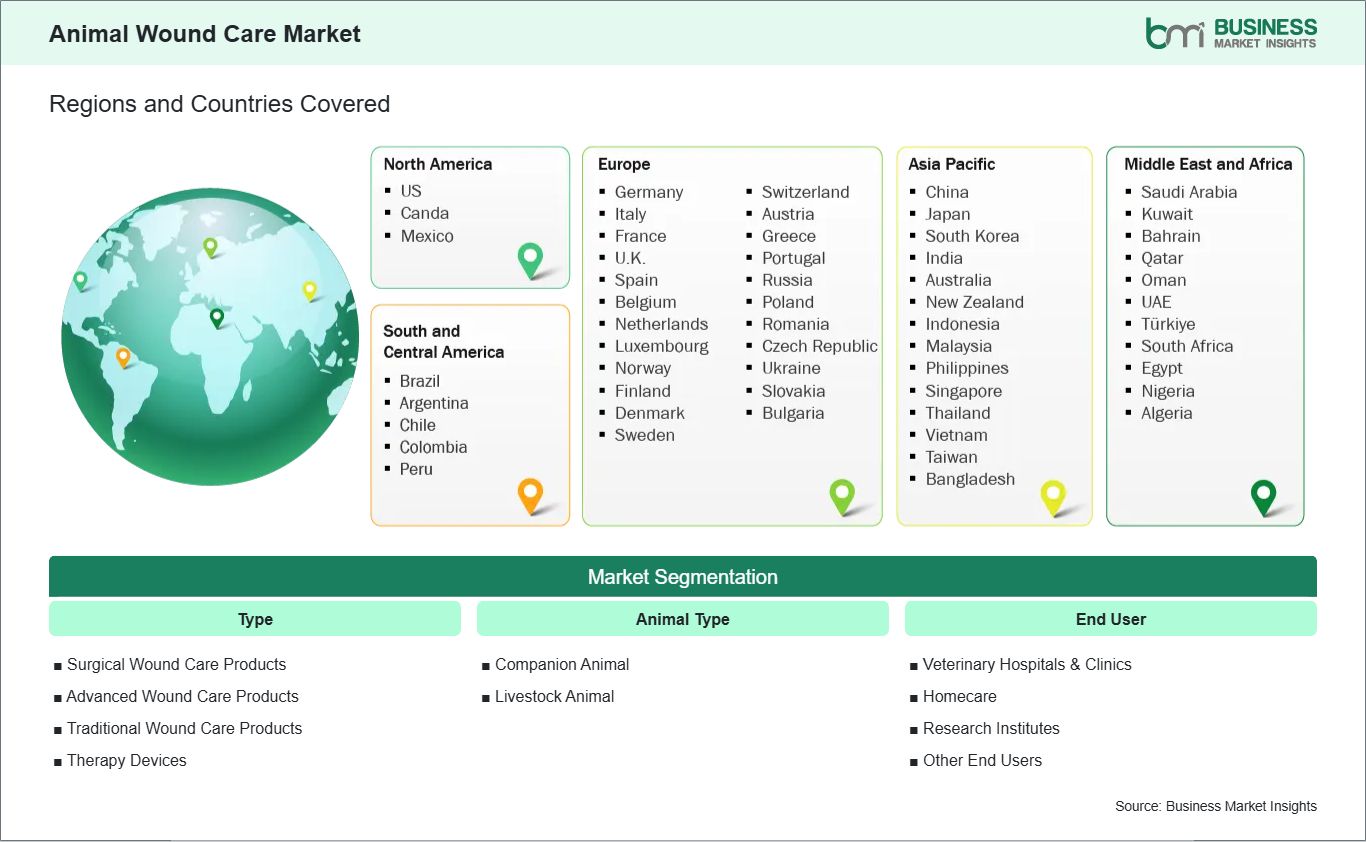
Key segments that contributed to the derivation of the animal wound care market analysis are type, animal type, and end user.
- By type, the animal wound care market is segmented into surgical wound care products, advanced wound care products, traditional wound care products, therapy devices. The surgical wound care products segment dominated the market in 2025.
- By application, the market is segmented into companion animal and livestock animal. The companion animal segment held the largest market share in 2025.
- By end user, the animal wound care market is segmented into veterinary hospitals & clinics, homecare, research institutes, others. The veterinary hospitals & clinics segment dominated the market in 2025.
Market Forces
Animal Wound Care Market Drivers and Opportunities
Rising Prevalence of Chronic Diseases
The Animal Wound Care market keeps growing because more people worldwide develop chronic wounds that need medical treatment. The combination of diabetes with vascular disorders and extended periods of mobility loss has led to an increase in wounds which require long-term medical treatment. Animal Wound Care products gain popularity because they protect against infections and control moisture levels and promote tissue healing better than standard dressings. The global increase in diabetes has led to more cases of diabetic foot ulcers which require continuous
Animal Wound Care to stop serious complications like infections and amputations. The demand for specialized wound care solutions has risen because more pressure ulcers occur in hospitalized patients and elderly individuals which helps the market to expand.
Technological Advancements and Expanding Clinical Applications
The ongoing development of Animal Wound Care technology has created new possibilities for its use in clinical settings. The healing process has become faster because of advancements in antimicrobial dressings and collagen-based products and foam and hydrocolloid dressings and bioactive wound care materials. Healthcare professionals increasingly depend on negative pressure wound therapy systems and advanced wound therapy devices to treat their patients with complex and post-surgical wounds.
The adoption of digital wound monitoring systems, smart dressings, and data-driven wound assessment tools is rising, as these technologies enable more accurate treatment and personalized care. The strong clinical evidence that supports these innovations has led manufacturers to develop new products while they investigate additional therapeutic fields. The global Animal Wound Care market is expected to show continuous growth because of increasing healthcare spending and better understanding of clinician requirements.
The introduction of new technological features has improved the effectiveness of Animal Wound Care products. The use of antimicrobial and silver-based dressings together with NPWT systems and bioengineered skin substitutes and moisture-regulating materials has produced better clinical outcomes which lead to faster recovery times and lower recurrence rates. Animal Wound Care products now find application in hospitals and specialty clinics and home healthcare environments because of these recent technological breakthroughs.
Size and Share Analysis
Animal Wound Care Market Size and Share Analysis
By type, the animal wound care market is segmented into surgical wound care products, advanced wound care products, traditional wound care products, and therapy devices. The surgical wound care products segment dominated the market in 2025. The segment shows increasing growth because veterinary surgical procedures for orthopedic and trauma and soft tissue surgeries have become more common. The demand for surgical wound care products will continue to rise because pet ownership increases and veterinary facilities improve and hospitals develop better methods to control infections and help patients recover from surgery.
By application, the market is segmented into companion animal and livestock animal. The companion animal segment held the largest market share in 2025. Companion animal segment dominates as pet ownership and pet humanization increase globally. The rising demand for effective wound care solutions for pets comes from increased pet healthcare spending and more pets developing injuries and chronic conditions and better access to top-tier veterinary care.
By end user, the animal wound care market is segmented into veterinary hospitals & clinics, homecare, research institutes, others. The veterinary hospitals & clinics segment dominated the market in 2025. The largest market share belongs to veterinary hospitals and clinics because they have skilled veterinarians and advanced wound care technologies and full treatment options. The market will keep growing because more clinics open and surgical procedures increase and pet owners choose to take their animals to professional veterinarians for treatment.
Report Coverage
Animal Wound Care Market Report Coverage and Deliverables
The "Animal Wound Care Market Size and Forecast (2022&2033)" report provides a detailed analysis of the market covering below areas:
- Animal wound care market size and forecast at global, regional, and country levels for all the key market segments covered under the scope
- Animal wound care market trends, as well as market dynamics such as drivers, restraints, and key opportunities
- Animal wound care market analysis covering key market trends, global and regional framework, major players, regulations, and recent market developments
- Industry landscape and competition analysis covering market concentration, heat map analysis, prominent players, and recent developments for the animal wound care market
- Detailed company profiles, including SWOT analysis
Geographic Insights
Animal Wound Care Market Geographic Insights
The geographical scope of the animal wound care market report is divided into five regions: North America, Asia Pacific, Europe, Middle East & Africa, and South & Central America. The Animal Wound Care market in Asia Pacific is expected to grow significantly during the forecast period.
The Asia-Pacific Animal Wound Care market is segmented into China, Japan, South Korea, India, Australia, New Zealand, Indonesia, Malaysia, the Philippines, Singapore, Thailand, Vietnam, Taiwan, Bangladesh, and the Rest of Asia. The Asia-Pacific animal wound care market is showing fast development because more people develop chronic diseases and the population grows older and people learn about new wound treatment methods. The market expansion receives additional support from healthcare infrastructure development in China, Japan, India, South Korea, and Australia as these countries enhance their healthcare system accessibility.
The combination of China, Japan, and India shows strong growth potential because these countries have large patient bases who require advanced wound care services in hospitals and specialized treatment centers. The region is experiencing faster Animal Wound Care product adoption because governments in the area implement initiatives that increase healthcare access and insurance coverage while improving diagnostic and therapeutic services.
The market demand for Animal Wound Care products has increased due to major technological advances, which introduced antimicrobial dressings and NPWT systems and bioengineered skin substitutes into the market. The growth of urban specialty clinics and ambulatory care centers drives patients to choose treatment methods that require fewer invasive procedures and allow them to receive care at home. The Asia-Pacific region will maintain its position as the second-fastest-growing market for Animal Wound Care products until the end of the forecast period.
Report Guidance
Animal Wound Care Market Report Guidance
The report includes qualitative and quantitative data in the animal wound care market across type, animal type, end user, and geography.The report starts with the key takeaways (chapter 2), highlighting the key trends and outlook of the Animal Wound Care market.Chapter 3 includes the research methodology of the study.Chapter 4 further includes ecosystem analysis.Chapter 5 highlights the major industry dynamics in the animal wound care market, including factors that are driving the market, prevailing deterrents, potential opportunities, as well as future trends. Impact analysis of these drivers and restraints is also covered in this section.Chapter 6 discusses the Animal Wound Care market scenario, in terms of historical market revenues, and forecast till the year 2033.Chapters 7 to 10 cover Animal Wound Care market segments by type, animal type, end user, and geography across North America, Europe, Asia Pacific, Middle East and Africa, and South and Central America. They cover the market volume revenue forecast and factors driving the market.Chapter 11 describes the competitive analysis along with the heat map analysis for the key players operating in the market.Chapter 12 describes the industry landscape analysis. It provides detailed descriptions of business activities such as market initiatives, new developments, mergers, and joint ventures globally, along with a competitive landscape.Chapter 13 provides detailed profiles of the major companies operating in the Animal Wound Care market. Companies have been profiled on the basis of their key facts, business descriptions, products and services, financial overview, SWOT analysis, and key developments.Chapter 14, i.e., the appendix is inclusive of a brief overview of the company, list of abbreviations, and disclaimer.
Industry Activity
Recent Developments
The animal wound care market is evaluated by gathering qualitative and quantitative data post primary and secondary research, which includes important corporate publications, association data, and databases. A few of the key developments in the Animal Wound Care market are:
- In April 2025, Neogen Corporation announced the introduction of new products to its dependable Prozap insect control line, featuring Prozap Protectus Pour-On Insecticide IGR. This triple-acting formula kills chewing and sucking lice, horn flies, stable flies, horse and deer flies, and other insects on beef cattle and calves.
- In September 2024, CytaCoat AB and Absorbest AB partnered to develop superabsorbent advanced wound care dressings, including solutions for the veterinary market. This collaboration focuses on enhancing wound care products with improved comfort, ease of use, and anti-biofilm properties to prevent infections, with commercial availability expected in 2025.
Trust & Transparency
Research Methodology
The market analysis combines proprietary research with secondary data from government agencies, company disclosures, regulatory filings, industry databases and expert interviews. Market estimates are validated through data triangulation, cross-market benchmarking and analyst
review.
View Full Research Methodology
Key Sources Referred:
World Bank - Global Trade IndicatorsAmerican Medical Association (AMA)National Center for Biotechnology Information (NCBI)National Library of Medicine (NLM)Centers for Disease Control and Prevention (CDC)Company websiteNational Institutes of Health (NIH)International Hospital Federation (IHF)Company annual reportsCompany investor presentations