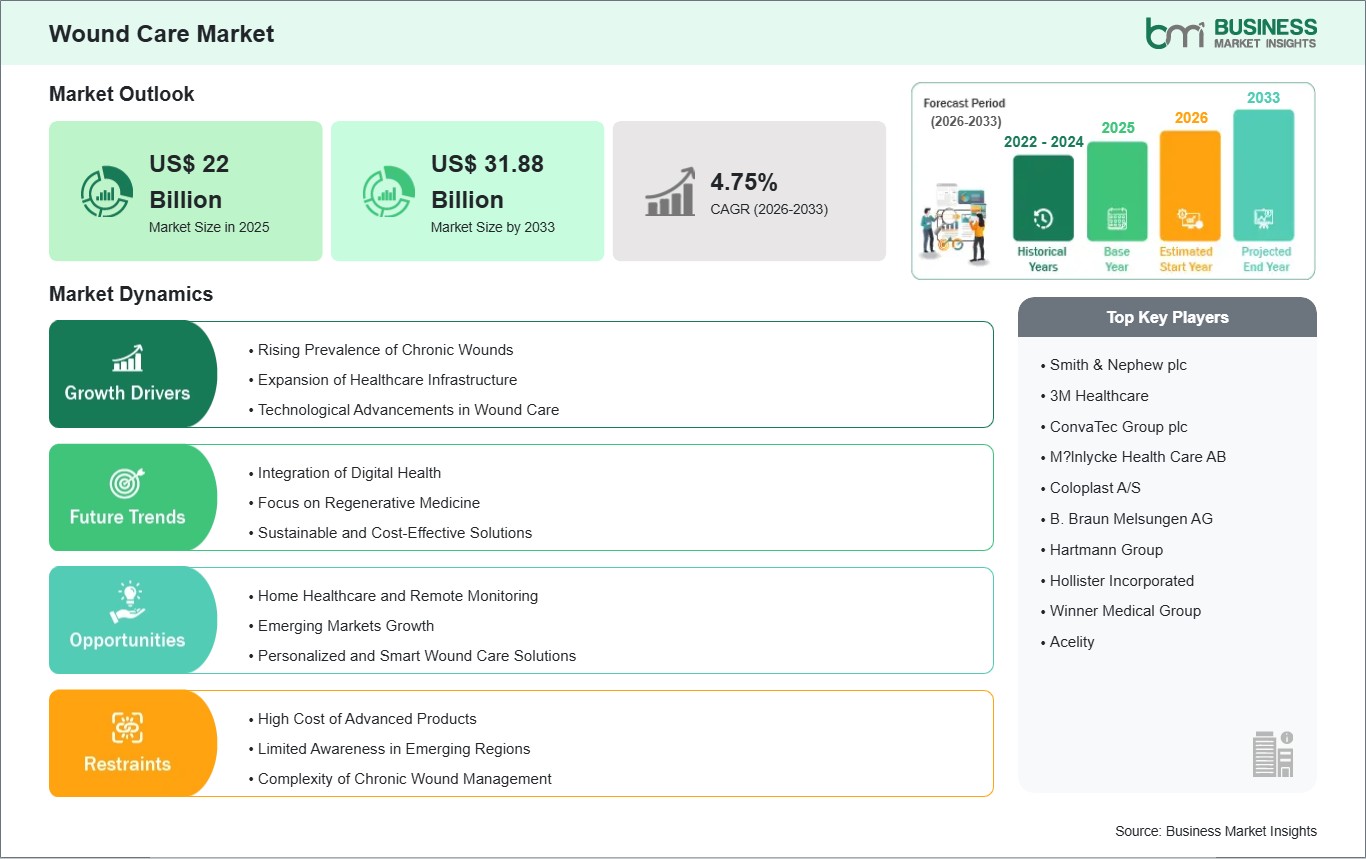
The Wound Care market size is expected to reach US$ 31.88 billion by 2033 from US$ 22 billion in 2025. The market is estimated to record a CAGR of 4.75% from 2026 to 2033
The global wound care market is experiencing steady growth owing to the increasing prevalence of chronic and acute wounds, the rise in the number of surgical procedures, and the expansion of the healthcare sector globally. Chronic wounds such as diabetic foot ulcers, pressure ulcers, and venous leg ulcers, mainly caused by the aging of the population, diabetes, and lifestyle, related diseases that affect wound healing, account for most of the market. Hospitals, clinics, and the home care sector are increasingly using advanced wound care products which include antimicrobial dressings, hydrocolloid and foam dressings, and negative pressure wound therapy systems thus accelerating healing, infection prevention, and hospital stay reduction.
Technological innovations such as bioengineered tissues, smart dressings with integrated sensors, and digital wound monitoring platforms are improving treatment and patient management. In terms of the regional market, North America is leading the market due to the presence of a sound healthcare infrastructure, high awareness level, and early adoption of advanced products while the Asia, Pacific region is becoming a fast, growing market due to increasing healthcare expenditure, patient awareness, and modern wound care product availability. The market outlook is positive as the demographic trends, the growing burden of chronic diseases, and continuous innovation in wound care products and technologies which are the main drivers of long, term growth and better patient outcomes worldwide.

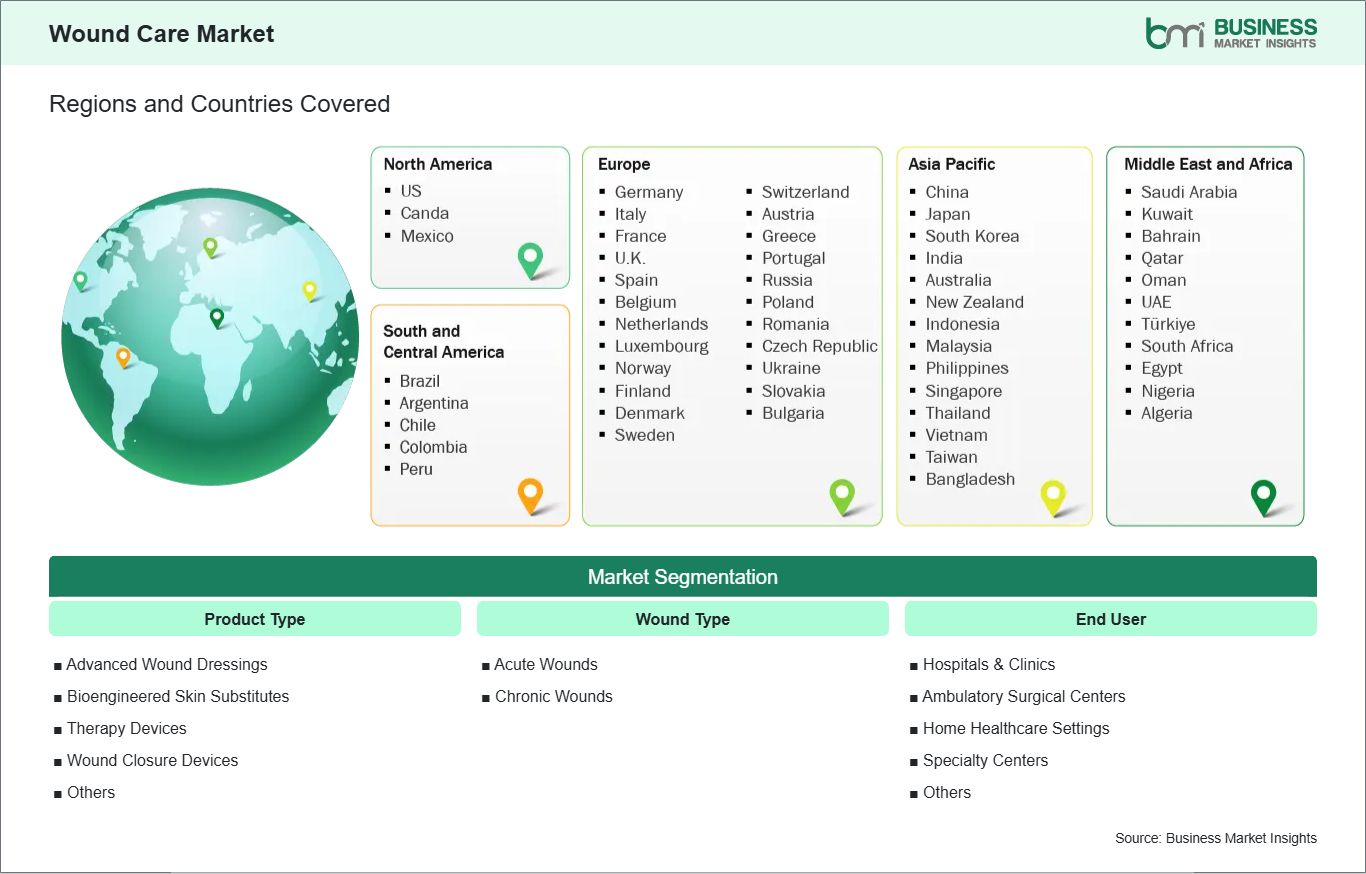
Key segments that contributed to the derivation of the Wound Care market analysis are product type, wound type, end user.
The wound care market is largely propelled by the rising incidence of chronic and acute wounds globally. These trends are primarily due to the increase in diabetes, obesity, aging population, and lifestyle, related health conditions. Chronic wounds, such as diabetic foot ulcers, pressure ulcers, and venous leg ulcers, are extremely difficult to manage and therefore, they become infected, cause prolonged hospital stays and increase healthcare costs. Meanwhile, acute wounds from surgical procedures, traumatic injuries, and burns also account for a significant portion of the demand for effective wound care solutions. Elevated global prevalence of diabetes, which causes wound healing impairment due to neuropathy and poor circulation, has been singled out as a key factor behind the adoption of advanced wound care products. Evidence, based interventions such as hydrocolloid and foam dressings, antimicrobial products, negative pressure wound therapy, and bioengineered skin substitutes have become the priority of healthcare providers to not only promote faster healing but also prevent complications. On top of that, patient awareness and quality of care focus, among others, are some of the factors that have facilitated the early treatment and consistent use of wound care products. Besides that, regulatory guidelines and clinical protocols that emphasize proper wound management also contribute to the adoption of advanced solutions. Taken together, the increasing prevalence of chronic and acute wounds and their clinical and economic burden is still the main factor behind the sustained growth in the global wound care market.
Innovative damage treatment technology advancements and the swift implementation of advanced, smart technology are creating significant growth opportunities in the wound care business. For example, items like engineered tissues, growth-factor therapies, antimicrobial bandages, and vacuum assisted closure devices have introduced new concepts to the way we manage treating injuries, such as fast-tracking healing, lowering infection rates, and enhancing overall patient satisfaction. The combination of digital technologies with innovative products such as smart bandages that contain sensors and programs to enable real-time monitoring of patients' progress towards healing has given providers the ability to manage and control how quickly they are healing, adjust treating strategies, and help patients remain compliant. This is especially helpful for patients who receive home care or for those who receive care at a distance and may not have access to a clinician. This also means that companies will be able to provide individualized wound care therapies to individual patients based upon the types of wounds they have and their current health situation, which may affect healing times. Also, there is a significant growth potential within developing regions such as Asia-Pacific, Latin America, and the Middle East, based on the increasing spend on healthcare, awareness of wound care practices, and availability of both hospital and home care services. By utilizing the latest technologies and providing access to innovative therapies, the wound care market is a burgeoning area for opportunity in the business space and should encourage companies to continue to pursue growth potential while addressing unaddressed clinical problems.

By product type, the wound care market is segmented into advanced wound dressings, bioengineered skin substitutes, therapy devices, wound closure devices, and others. The advanced wound dressings segment dominated the market in 2024. The advanced dressings segment leads the industry because of their versatile nature, user friendly design, and ability to provide the best recovery time possible by helping to heal wounds more quickly and preventing infection
By wound type, the market is segmented into acute wounds and chronic wounds. The chronic wounds segment held the largest share of the market in 2024. A rising prevalence of diabetes, obesity, and aging populations, which are all factors that slow wound healing, is significantly increasing the demand for chronic wound management solutions. Chronic wounds, in general, lead to prolonged hospital stays and increased treatment costs, thereby prompting healthcare providers to implement advanced, efficacious, and evidence, based therapies.
By end user, the market is segmented hospitals and clinics, ambulatory surgical centers, home healthcare settings, specialty centers, others. The hospitals and clinics segment held the largest share of the market in 2024. The segment growth is driven by their role as primary care providers for both acute and chronic wounds.
| Report Attribute | Details |
|---|---|
| Market size in 2025 | US$ 22 Billion |
| Market Size by 2033 | US$ 31.88 Billion |
| Global CAGR (2026 - 2033) | 4.75% |
| Historical Data | 2022 - 2024 |
| Forecast period | 2026-2033 |
| Segments Covered | By Product Type
|
|
Regions and Countries Covered
| |
| North America | US, Canada, Mexico |
| Europe | Belgium, Austria, Finland, Denmark, Greece, Poland, Romania, Russia, Ukraine, Czech Republic, Slovakia, Bulgaria, Italy, Luxembourg, Germany, Switzerland, France, Netherlands, Norway, Portugal, Spain, Sweden, United Kingdom |
| Asia-Pacific | Australia, China, India, Japan, South Korea, Indonesia, Malaysia, Philippines, Singapore, Thailand, Vietnam, Bangladesh, New Zealand, Taiwan |
| South and Central America | Brazil, Argentina, Peru, Chile, Colombia |
| Middle East and Africa | Bahrain, Kuwait, Oman, Qatar, Saudi Arabia, United Arab Emirates, Turkiye, South Africa, Egypt, Algeria, Nigeria |
| Market leaders and key company profiles |
|
The "Wound Care Market Size and Forecast (2022–2033)" report provides a detailed analysis of the market covering below areas:
The geographical scope of the Wound Care market report is divided into five regions: North America, Asia Pacific, Europe, Middle East and Africa, and South and Central America. The Wound Care market in Asia Pacific is expected to grow significantly during the forecast period.
The Asia-Pacific Wound Care market is segmented into China, Japan, South Korea, India, Australia, New Zealand, Indonesia, Malaysia, the Philippines, Singapore, Thailand, Vietnam, Taiwan, Bangladesh, and the Rest of Asia. The Asia Pacific wound care market is expected to grow considerably due to increased prevalence of chronic diseases such as obesity, diabetes and vascular diseases. This increased prevalence of chronic diseases has influenced the development of many types of chronic, non-healing wounds including; diabetic foot ulcers, pressure ulcers, and venous ulcers. The increase in demand for effective wound care solutions has been exacerbated by the use of an aging population within the nations of China, Japan and India. In addition, the increase in healthcare infrastructure development, increase in the number of hospitals and clinics, and an increase in governmental initiatives to improve patient care have led to a more rapid adoption of technological advances including; antimicrobial dressings, negative pressure wound therapy systems, and bioengineered skin substitutes. Furthermore, the increase in healthcare professionals' and patients' awareness of modern wound management practices has contributed to an early intervention, thus improving the identification of and decreasing the amount of complications that occur as a result of non-healing wounds and increasing the overall outcomes of healing.
Telemedicine and remote monitoring technologies have increased the level of home healthcare service delivery and have also provided the means to provide continued wound management after hospital-sourced care has been given to the patient. Lastly, enhanced access and affordability of advanced technological wound care products in the developing geographical regions of the Asia Pacific will continue to contribute to increased levels of penetration of these products in the developing economies. The Asia Pacific wound care market represents excellent opportunities for future growth as a result of several factors including; the growth in population, a rise in the prevalence of chronic disease, continual technological improvement, and the increased emphasis placed on providing quality patient care in both the urban and rural areas of the region.

The Wound Care market is evaluated by gathering qualitative and quantitative data post primary and secondary research, which includes important corporate publications, association data, and databases. A few of the key developments in the wound care market are:
The Wound Care Market is valued at US$ 22 Billion in 2025, it is projected to reach US$ 31.88 Billion by 2033.
As per our report Wound Care Market, the market size is valued at US$ 22 Billion in 2025, projecting it to reach US$ 31.88 Billion by 2033. This translates to a CAGR of approximately 4.75% during the forecast period.
The Wound Care Market report typically cover these key segments-
The historic period, base year, and forecast period can vary slightly depending on the specific market research report. However, for the Wound Care Market report:
The Wound Care Market is populated by several key players, each contributing to its growth and innovation. Some of the major players include:
The Wound Care Market report is valuable for diverse stakeholders, including:
Essentially, anyone involved in or considering involvement in the Wound Care Market value chain can benefit from the information contained in a comprehensive market report.
Please tell us your area of interest
(Market Segments/ Regions and Countries/ Companies)